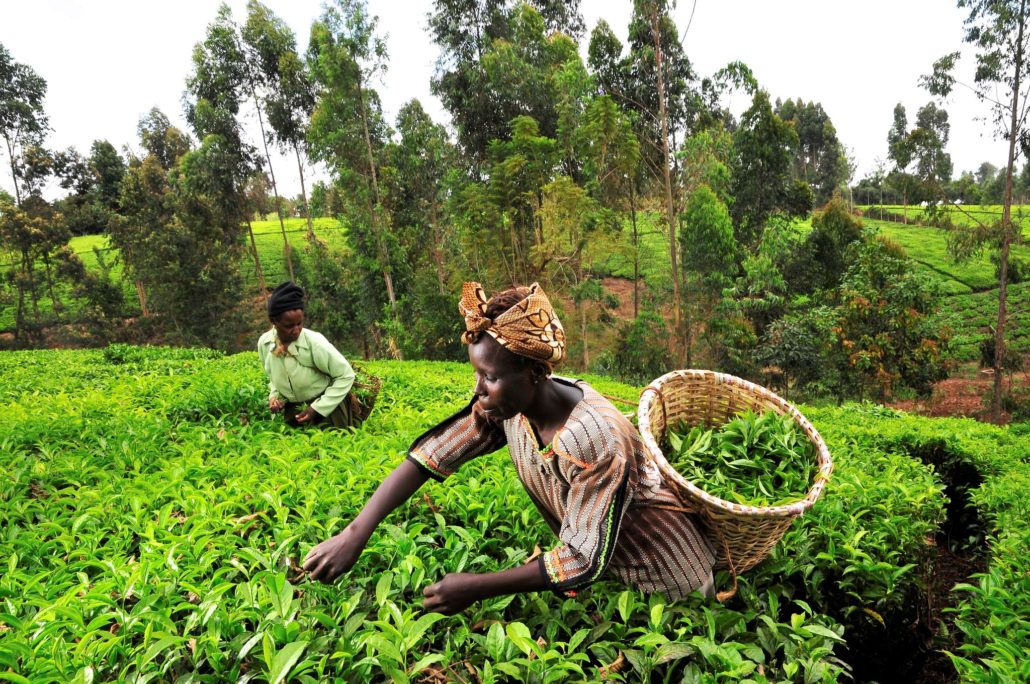
Maureen Muketha is working to deliver gender equality and food security to Kenya. The 26-year-old nutritionist and native Kenyan is a woman delivering food security to Kenya through Tule Vyema. It is a nonprofit that emphasizes education, sustainable farming techniques and female empowerment.
About Tule Vyema
Tule Vyema means “let’s eat right” in Swahili. Ms. Muketha founded the nonprofit in 2018, after graduating from Jomo Kenyatta University of Agriculture in Kenya. Instead of looking for opportunities outside beyond the borders, she focused her attention on her own community, a pastoral region outside of Nairobi called Kajiado. Here, malnutrition is a major issue.
WHO reported that chronic diseases such as diabetes, obesity and hypertension are becoming more prevalent worldwide, especially in sub-Saharan Africa. In Kenya, 55% of total deaths have links to these non-communicable diseases, which are often a result of malnutrition.
While it is no secret that eating vegetables is fundamental to sound nutrition, vegetables are simply a luxury that many people in the Kajiado cannot afford. The average household in the region lives on $1.50 per day, while one bunch of vegetables costs about 50 cents or one-third of its daily income. Impoverished households must then rely on cheap, highly processed food rich in sugar, salt and fat.
Industrialization is exacerbating this issue, from the emerging prevalence of cheap fast food options to motorcycles and scooters, which are taking the place of walking. As a result, people are consuming more empty calories and exercising less. Through Tule Vyema, Maureen is addressing this issue with education, first and foremost.
Education
Tule Vyema offers free education on the fundamentals of nutrition in order to address food security in Kenya. The organization teaches women how to prepare produce so they can retain their nutrients, and conversely, which preparation methods to avoid. For example, boiling vegetables leaves many of the nutrients behind in the water.
The program also emphasizes the value of indigenous vegetables such as African nightshade, amaranth, cowpeas and spider plant. Tule Vyema also teaches sack farming, which is an efficient method of growing crops.
Sack Farming
Sack farming turns a simple sack into a vertical garden. Farmers fill the bags with a combination of manure, soil and pebbles, and then, the crops grow out of the top and the sides. This technique requires less water than other growing methods, which makes it more viable in an arid climate and helpful in the mission of delivering food security to Kenya. This method also requires less land, which allows farmers without large plots the option of growing food in their own backyard. Additionally, sack farming results in better pest control, leading to fewer lost crops. Finally, it enables farmers to grow indigenous crops without using harmful pesticides, thus maximizing crops’ nutritional value. Not only has sack farming increased food security in Kenya, but the women who have adopted the technique are also enjoying the newfound economic freedom it provides.
Empowering Women
Most women in Kajiado households are homemakers. However, often their main source of income is household chores for neighboring houses. This type of work is frequently unreliable and low-paying. With sack gardens, women can sell surplus vegetables within their community.
The women of Kajiado are taking on leadership roles within the organization, handling logistics such as scheduling classes and bringing education straight to the doorstep of those who do not have the time to seek it out on their own. The administrative people who live within the communities give Tule Vyema real staying power.
Looking to the Future
In just two years, Tule Vyema has helped over 800 households achieve food security. With its early success in delivering food security to Kenya, Maureen Muketha wants the program to expand beyond its borders.
“God willing it expands to various other countries because this is a problem not only in my county but it cuts across the country and even globally,” said Maureen.
– Greg Fortier
Photo: Flickr

The Story of Hebron in the Context of Global Poverty
Life in Gaza
More than half of Palestinians living in Gaza, another site of frequent dissension, are currently in poverty. Furthermore, 33% of the Palestinian population suffers from unemployment. Food insecurity is an unfortunate but harsh reality among this segment of the population. This occurs due to trade boycotts and economic barriers. A variety of obstructions deter Palestinians from obtaining the resources they require. These range from physical checkpoints that divide the land and military frisking to international embargos as well as local trade impediments imposed by the Israeli state. On top of the hunger and poverty that families face, thousands of Palestinians experience homelessness and displacement.
The Israel-Palestine Conflict During COVID-19
As a result of the multitude of issues associated with trade and resource accessibility in Palestinian territory, more members of the population than ever before are presently struggling with extreme poverty. With the recent developments brought about by the COVID-19 pandemic, medical resources have become a new source of internal conflict. The unequal distribution of vaccines has caused an uproar across all sides of the ongoing political dispute.
As the death rate among Palestinians rises and more than 2,670 Palestinians have passed away as of March 22, 2021, it is evident that government authorities must equalize the distribution of medical resources to meet citizens’ needs. However, due to the contentious conditions within Israel-Palestine, it is unclear exactly who is responsible for ensuring equal distribution among communities. The United Nations has shrugged off the burden. It instead stated that it is the state of Israel’s duty to vaccinate Palestinians in Gaza and the West Bank. Such a designation of tasks has not proven successful. Political divides continue to affect the manner in which the population receives access to the vaccine.
The International Trade Drought in Hebron
In terms of the far-reaching effects of the pandemic in Hebron specifically, lack of access to foreign imports from China and East Asia has greatly weakened the already fragile Palestinian market. Many Palestinian business owners rely on Chinese-produced goods to make ends meet. With the increase of trade restrictions due to the global health crisis, merchants are no longer able to acquire the products that they normally sell to consumers. With much of agricultural sources of income blocked off by political circumstances, local trade is one of the few ways that Palestinian individuals are able to make a sustainable income.
According to Abdo Idrees, the head of Hebron’s Chamber of Commerce, another major source of income for Palestinian workers, factory work, has also suffered severely since 2020. The COVID-19 pandemic has made the successes and downfalls of globalization in the local economy extremely apparent. The profits of exports have become unavailable and citizens cannot obtain a majority of the imported products upon which they depend.
Future Relief for the City of Al Khalil
Although current Israeli-Palestinian relations remain tense in the city of Al Khalil, particularly after the decision of the Biden administration to leave the U.S. embassy in Jerusalem, a shred of hope still remains for Hebron and its citizens. The United Nations and other international bodies have expressed a firm commitment to attaining stability in the sacred city. The Temporary International Presence in Hebron (TIPH) pledged to preserve its mission of protecting the citizens of Hebron and supporting a safe two-state solution that may be the key to finally achieving long-awaited peace and statehood for Palestine.
– Luna Khalil
Photo: Flickr
Female Empowerment in Politics & Maternal Mortality
Reasons for High Maternal Mortality in Developing Countries
Female Representation in Government
Global female representation in government has increased to more than 20% while maternal mortality has declined by 44% since 1990. Is this a cause-and-effect scenario or merely coincidence? A recent study titled, “Maternal Mortality and Women’s Political Participation” offers data to support that it is not just happenstance and that female empowerment in politics has a direct effect on maternal mortality levels.
In 2020, female participation in parliament reached 24.9% globally. One reason for the rise in women’s representation in government is the fact that several countries are adopting gender quotas. Gender quotas secure a number of seats in government for women. At least 130 countries have adopted gender quotas and have an average of 26.9% female representation. Countries that have implemented quotas have seen maternal mortality decline at an accelerated rate. Estimates have determined that gender quota application results in an average of a 9-12% drop in maternal mortality.
Female Policymakers Prioritize Women’s Health
Health is a vital contributing factor in empowering women. Women statistically prioritize policies aimed at improving female conditions at a higher rate than their male counterparts. These policies often target issues such as education, child marriage and maternal health. Countries with gender quotas in place show an estimated 8-11% rise in “skilled birth attendance” and a 6-11% rise in the use of prenatal care.
A paper that Cambridge University published in 2016 asserted that an increase of only 1% in women’s representation in government resulted in five fewer maternal deaths and 80 fewer infant deaths out of 100,000 live births. These studies and statistics conclude that women’s participation in legislatures improves the health of its female constituents.
Eradicating Maternal Mortality
Female empowerment in politics contributes to the Sustainable Development Goals (SDGs). The Sustainable Development Goals, which the U.N. established, include reducing maternal mortality (SDG 3.1) and increasing the number of women in government (SDG 5.5). These goals are complementary to each other. By working toward SDG 5.5, which is to “Ensure women’s full and effective participation and equal opportunities for leadership at all levels of decision-making in political, economic and public life,” it is reasonable to conclude that the world could achieve, SDG 3.1, which is to “reduce the global maternal mortality ratio to less than 70 per 100,000 live births” by 2030, in tandem.
– Rachel Proctor
Photo: Flickr
5 Organizations Ending Furniture Poverty in the UK
The U.K. has one of the fastest-growing populations in the world, but nearly 40% of citizens do not have access to basic items. Furniture poverty in the U.K. is prevalent with over 14 million families living without basic furniture or in fear of not being able to replace or repair an appliance. Children come home from school without a table to do homework at, parents leave a hard day’s work with no bed to come home to and families have no couch to spend time together on.
Social landlords and government authorities are beginning to work together to end furniture poverty in the U.K. and rehouse people in need. Until the U.K. hones policies to account for the low quality of living that comes with furniture poverty and work to help struggling families furnish their homes, several organizations have a commitment to getting these families the items they need to feel normal.
5 Organizations Ending Furniture Poverty in the UK
Ending furniture poverty in the U.K. may not be the foremost struggle in the world, but without a sturdy mattress or a working fridge, it becomes hard for people to lead normal lives and be successful. For example, many consider items like tables, couches, dressers, stoves and washing machines essential for people to feel comfortable in their homes. It gives them the confidence to pull themselves out of poverty.
– Veronica Booth
Photo: Wikipedia Commons
Femicides in Germany: The Search for Solutions
Violence and Discrimination Against Women
Domestic violence numbers have been steadily increasing worldwide, especially during COVID-19 lockdowns. Germany is no exception to this. By the age of 16, about 40% of women have experienced sexual or physical violence. Great oppression of women facilitates a place for domestic violence, indirectly encouraging femicides in Germany. Roughly 100 years ago German women gained the right to vote yet women are not properly protected in other aspects. Gender inequality can also be seen in the workplace as women earn 6.6% less than men in Germany, for the same work.
With the ongoing femicides in Germany, the country is trying to combat the crisis.
Gender Equality in the Workplace
In 2017, Germany turned its focus to implementing equal rights in the workforce, regardless of gender. About 20 countries came together to stop discrimination and reduce pay gaps between males and females. During this time, Germany signed onto the Women Entrepreneurs Finance Initiative. This was done with the country’s full support of the Women’s Empowerment Principles created by U.N. Women and the U.N. Global Compact. These seven principles offer guidance on how to empower women in the workplace and community.
Additionally, Germany committed to ending the oppression of women in the workforce with an attempt at a stronger relationship using the Development Policy Action Plan on Gender Equality 2016-2020. This partnership is imperative to the empowerment of women’s voices in Germany.
Convention to Prevent Violence Against Women
In 2018, Germany signed the Council of Europe’s Istanbul Convention. The convention is a first-of-its-kind document spelling out a new legal binding to prevent femicides in Germany. In 2018, 45 of the 47 member states of the Council of Europe signed and 28 states ratified it. This convention promotes gender equality and the protection of women from violence.
Germany still struggles to care for domestic violence victims. Every year, 30,000 German women look for shelters but only half of them can be accommodated. Germany has shelters that can be accessed online and a hotline for victims of violence. It is clear, however, that efforts are needed to increase resources and services for victims of violence.
The Road Ahead
Femicide in Germany is such a controversial topic that only one in three domestic violence cases gets reported. Because of this taboo, femicides continue. German prosecutor, Julia Schäfer, tells Deutsche Welle, “Domestic violence occurs in all parts of society, it is not a question of religion or nationality or education.” She says further, “It is our obligation not to turn a blind eye.” When human beings are being impacted by violence, it is a clear indication of another pandemic that is taking place amid COVID-19. Simply having more support to find the right resources is lifesaving for female victims of violence in Germany.
– Libby Keefe
Photo: Flickr
Examining The Impact of Pura Utz
Anna Andrés has always admired jewelry. When she traveled to Guatemala at the age of 10, she learned how she could create jewelry and volunteer to create change. In 2019, she and her partner Bernabela built the brand Pura Utz, which has been helping women sustain themselves in tough economic times. The impact of Pura Utz makes women not only look but also feel beautiful.
Pura Utz
The name Pura Utz means “pure good” in the Mayan language. Since the culture of Guatemala reflects strong Mayan and Spanish influences, these details go into every handmade piece Pura Utz sells. Recently, Pura Utz has collaborated with the bag manufacturer M2Malletier. As a result, the team of artisans, designers and distributors expanded to 100 women.
The details in the Pura Utz products demonstrate the talent of the artisans. The collection features glass beads in bags, handwoven sweaters, earrings and necklaces that artisans delicately shape into an assortment of fruits like strawberries, grapes and lemons. This collection also includes ornamental features, such as handmade flowers like poppies, white nun orchids and blue cornflowers.
Empowering Women at Pura Utz
Even though dramatic changes in the Guatemalan economy are stabilizing, the gap between the wealthier and impoverished citizens is not. The yearly minimum wage in Guatemala is $2,734. However, the impact of Pura Utz is significant because women’s pay with the company is four times more than what they would make working for a corporate manufacturer. The Pura Utz website even provides consumers a breakdown of where the money goes when they purchase an item: one-third of the price goes toward the salary for the working women, one-third goes toward indirect costs like shipping and packaging materials and one-third covers the margins.
Working to empower women has always been a goal for Andrés. In an open letter to supporters, she wrote that “Many of the women in our group and here in the village do have an education, but there are no jobs for them and if there is, they are being paid very poorly.” The essential goods that families need are medicine, food, clothes, electricity and housing. Guatemala is the fifth poorest country in Latin America, making some of these essentials hard to come by. Working at Pura Utz gives these women a way to sustain their lives, through flexible working hours and an empowering community environment.
The impact of Pura Utz has been expanding since helping Bernabela and her daughter Elisa—the first people the brand empowered. Bernabela was the first official team member of Pura Utz. Her current role is as the supervisor of production. She thoroughly enjoys her work and thoroughly enjoys being a part of a company that creates change for women. Bernabela’s daughter Elisa now also works at Pura Utz as an assistant while attending college.
The Future for Women in Guatemala
Poverty brings unimaginable hardships, which makes creating change in the community so important to Andrés. Andrés labeled her brand as an empowerment project because she wanted the economic prospects for women in Guatemala to have no limits.
– Nancy Taguiam
Photo: Flickr
Facts About Indigenous Poverty in Mexico
Mexico has a rich tapestry of cultures mixed together. Its indigenous community reflects its own diversity with many different traditions and languages. However, indigenous poverty in Mexico is very prevalent and many seldom discuss or address the issue. Here are some facts to shed light on the challenges indigenous people face along with examples of their opportunities for a thriving future.
Poverty Statistics
Nearly 26 million indigenous people live in Mexico today. Furthermore, 68 different indigenous communities live in the country. A staggering 75% of these families live in extreme poverty. The majority work in low-skilled, manual labor jobs with little hope of upward social mobility. As a result, many have to migrate from their homes to find economic opportunities elsewhere.
The Government’s Clumsy Attempts To Help
Mexico’s government has noticed indigenous poverty in Mexico. In fact, Mexico has attempted to address the vast economic disparity by investing in large infrastructure projects and supplemental programs. However, the government did not consult with indigenous communities on implementation or whether it may unintentionally harm social and cultural values. Mexican President Obrador announced the construction of a 948 mile-long train to boost tourism in historic Mayan territory in 2018. Many activists perceived the Maya Train as an encroachment on indigenous sovereignty as it would cut through ancient jungles in the Yucatan Peninsula. Furthermore, environmental concerns arose when the construction of the train uncovered thousands of artifacts.
Education Challenges
The 2018 Report on the Evaluation of Social Development Policy indicated some harsh truths about education levels within indigenous Mexican communities. It indicated that adults between the ages of 30 and 64 had an illiteracy rate of almost 20%. More than half of the indigenous population never sought education past the primary level. This reinforces extreme poverty.
Unique Challenges of Indigenous Women
Indigenous poverty in Mexico puts women at a greater disadvantage. A study by the National Institute of Statistics and Geography revealed that indigenous women showed the lowest literacy rates and education retention. In addition, the report showed indigenous women reported high rates of domestic violence, health problems, pregnancy risks and mortality. Psydeh is an NGO that launched projects to empower women from indigenous communities. Furthermore, it is currently raising thousands of dollars to train women to launch self-sustaining initiatives for long-term community growth such as distributing stove ovens and growing organic farms.
Indigenous poverty in Mexico has a lack of upward mobility, poor quality of life and a lack of educational opportunities. Many measures have undergone implementation to alleviate inequality. Moreover, the Mexican government has provided mixed results. However, with help from organizations such as Psydeh, indigenous people can obtain more opportunities for a better life.
– Zachary Sherry
Photo: Flickr
How Ethical Fashion Can Help End World Poverty
Slow fashion, also called ethical fashion, has become more popular over the last several years. Surveys showed that shoppers were 10% more interested in knowing how manufacturers make their clothes in 2020 than they were two years before. Meanwhile, the surveys showed that around 66% considered sustainability when purchasing products. Slow fashion has countless benefits from alleviating environmental strain to stopping animal cruelty. Also, slow fashion can help end world poverty. By buying ethical fashion, consumers directly aid companies that care about their employees. These shoppers are also opening many new industries within world economies and providing the makers who sew their clothes a better quality of life.
Brands that Care
People who desire change in the fashion industry and better working conditions for garment makers have created many ethical fashion brands. These companies seek to spread awareness about harmful working practices. They want to give back to the communities that contribute to their work. They aim to show the public that customers can have beautiful clothes without exploiting people in the process. These brands strive to support garment workers who would, otherwise, be living in poverty.
One brand that recognizes that slow fashion can help end world poverty is Able. The brand started in Ethiopia in 2010 to give women who wanted to leave the sex industry a chance to find work. Since 2018, Able has started a movement called the “Accountable” and published its worker’s wages. The movement aimed to give its customers full transparency and educate the public on what a “living wage” includes and inspire them to demand the same for other brands.
Another example of an ethical fashion brand is Seza’ne. Starting in 2013, Seza’ne’s focus is on “helping the next generation.” This led it to start the nonprofit Demain (meaning “tomorrow” in French) in 2017, which is focusing on improving education access for disadvantaged children worldwide. Partnering with other education charities, Demain has started a monthly program named “The Call of the 21st.” This program includes donating 10% of the profit Seza’ne makes on the 21st of each month to its supported charities. It also ensures that Seza’ne releases a new design each month with the intent of donating 100% of the profit. Demain supported over 30,000 children and has collected over $3 million for its supported charities.
Buying Less
Since ethical fashion pieces are more expensive, customers receive encouragement to buy less. Besides considering the price, the clothes last much longer and thus buyers do not have to replace them as frequently. Buying less helps garment workers because they have less pressure to make more clothing in exploitive working conditions.
A typical fast-fashion brand expects to put out a new fashion line every two weeks. Garment workers often experience inhumane working days, working 11 hours or so with no breaks due to the high demand. To make the clothing cheap for customers, these companies pay their employees very little. Sometimes, they receive as little as 50 cents an hour. This system limits workers to poverty, as they have no time to find other sources of income.
Boosting the Economy
Perhaps it is counterintuitive that buying less clothing could have a positive impact on our economy. However, slow fashion opens up many new industries that do not exist under the fast fashion model, particularly through a system called “circular fashion.” This aims to use and restore clothing for as long as possible.
Because people throw most clothes away when they do not want them or when garments have damage, they lose more than $500 billion every year. Meanwhile, clothing from slow fashion brands tends to last longer and customers can wear them longer, which opens up many new industries to increase a garment’s life. Examples of possible industries include clothing repair, fixing damaged clothing as well as adjusting clothing sizes or altering clothes to fit new trends. Furthermore, one can also partake in clothing resale, selling clothes so people who want sustainable clothing on a smaller budget can purchase them second-hand. Lastly, people can utilize clothing rental, especially in the case of when they will use clothing for a short amount of time such as in the case of formal clothing for children.
Outside Fashion
Outside of the fashion industry, slow fashion can help end world poverty and boost the economy in the same way other industries can. Giving the people who make clothing a livable wage and helping them rise out of poverty allows them to purchase more U.S./European products.
Slow fashion can help alleviate world poverty because it allows the people behind these brands to continue carrying out their beneficial work. It demands that the people making clothing receive just pay and have safe working conditions. When garment workers obtain support, they are able to have access to resources for themselves and their families.
– Mikayla Burton
Photo: Wikipedia Commons
Dr. Angeli Achrekar: US Global AIDS Coordinator
On January 20, 2021, President Joe Biden appointed Dr. Angeli Achrekar as the new U.S. Global AIDS Coordinator and Special Representative for Global Health Diplomacy, which means she will be leading the President’s Emergency Plan for AIDS Relief (PEPFAR).
Who is Dr. Angeli Achrekar?
Dr. Achrekar is remarkably qualified for her position. She has earned her doctorate from UNC-Chapel Hill, a master’s degree from Yale and her bachelor’s degree from UCLA. In addition to her academic accomplishments, Dr. Achrekar has a career of public service under her belt, involving combating HIV/AIDS around the globe, public health development and women and girls’ health. She originally worked in India and with UNICEF. She then started working with the CDC starting in 2001, where she led the National Initiative to Improve Adolescent Health. This initiative spanned across multiple agencies and consisted of professionals from a variety of disciplines in more than 100 organizations.
Following her leadership of the National Initiative to Improve Adolescent Health, Dr. Achrekar started her work with PEPFAR to fight HIV/AIDS around the world in 2003. In working with PEPFAR, she traveled to South Africa. There, she coordinated with local governments to assess risk patterns that occur through drug use and among sex workers. Dr. Achrekar then became Senior Public Health Manager for the CDC in its Division of Global HIV/AIDS. Lastly, she started in 2011 with the U.S. State Department where she helped come up with and develop the Saving Mothers program, as well as the Giving Life program.
Developments Since Her Appointment
Since her appointment, Dr. Achrekar has already made strides in her position to fight AIDS and other diseases around the world. Notably, under her leadership, PEPFAR has been part of a joint effort with other organizations and agencies including USAID which will bring a new treatment to TB patients in Ghana, Ethiopia, Kenya, Mozambique and Zimbabwe. Rather than patients needing to take a combination of drugs for treatment, the new treatment will combine two drugs so patients will be able to take fewer drugs in total. The new development is a big leap forward and Dr. Achrekar said, “The availability of a shorter, more easily tolerated, and safer regimen for TB prevention that is also affordable is critical for accelerating the fight against TB. The new development is big news as latent tuberculosis is said to affect up to a quarter of the world’s population.”
The Importance of Fighting AIDS in Relation to Global Poverty
PEPFAR’s work to fight AIDS holds much significance to the fight against global poverty because the two interconnect considerably. AIDS disproportionately affects those in poverty. Considering that the prevalence of AIDS has been commonly linked with poverty, a critical component of fighting the disease is fighting poverty. In his article “Is HIV/AIDS Epidemic Outcome of Poverty in Sub-Saharan Africa?” Noel Dzimnenani Mbirimtengerenji wrote, “Unless and until poverty is reduced or alleviated, there will be little progress either with reducing transmission of the virus or an enhanced capacity to cope with its socio-economic consequences.”
– Sean Kenney
Photo: Wikipedia Commons
The Woman Delivering Food Security to Kenya
Maureen Muketha is working to deliver gender equality and food security to Kenya. The 26-year-old nutritionist and native Kenyan is a woman delivering food security to Kenya through Tule Vyema. It is a nonprofit that emphasizes education, sustainable farming techniques and female empowerment.
About Tule Vyema
Tule Vyema means “let’s eat right” in Swahili. Ms. Muketha founded the nonprofit in 2018, after graduating from Jomo Kenyatta University of Agriculture in Kenya. Instead of looking for opportunities outside beyond the borders, she focused her attention on her own community, a pastoral region outside of Nairobi called Kajiado. Here, malnutrition is a major issue.
WHO reported that chronic diseases such as diabetes, obesity and hypertension are becoming more prevalent worldwide, especially in sub-Saharan Africa. In Kenya, 55% of total deaths have links to these non-communicable diseases, which are often a result of malnutrition.
While it is no secret that eating vegetables is fundamental to sound nutrition, vegetables are simply a luxury that many people in the Kajiado cannot afford. The average household in the region lives on $1.50 per day, while one bunch of vegetables costs about 50 cents or one-third of its daily income. Impoverished households must then rely on cheap, highly processed food rich in sugar, salt and fat.
Industrialization is exacerbating this issue, from the emerging prevalence of cheap fast food options to motorcycles and scooters, which are taking the place of walking. As a result, people are consuming more empty calories and exercising less. Through Tule Vyema, Maureen is addressing this issue with education, first and foremost.
Education
Tule Vyema offers free education on the fundamentals of nutrition in order to address food security in Kenya. The organization teaches women how to prepare produce so they can retain their nutrients, and conversely, which preparation methods to avoid. For example, boiling vegetables leaves many of the nutrients behind in the water.
The program also emphasizes the value of indigenous vegetables such as African nightshade, amaranth, cowpeas and spider plant. Tule Vyema also teaches sack farming, which is an efficient method of growing crops.
Sack Farming
Sack farming turns a simple sack into a vertical garden. Farmers fill the bags with a combination of manure, soil and pebbles, and then, the crops grow out of the top and the sides. This technique requires less water than other growing methods, which makes it more viable in an arid climate and helpful in the mission of delivering food security to Kenya. This method also requires less land, which allows farmers without large plots the option of growing food in their own backyard. Additionally, sack farming results in better pest control, leading to fewer lost crops. Finally, it enables farmers to grow indigenous crops without using harmful pesticides, thus maximizing crops’ nutritional value. Not only has sack farming increased food security in Kenya, but the women who have adopted the technique are also enjoying the newfound economic freedom it provides.
Empowering Women
Most women in Kajiado households are homemakers. However, often their main source of income is household chores for neighboring houses. This type of work is frequently unreliable and low-paying. With sack gardens, women can sell surplus vegetables within their community.
The women of Kajiado are taking on leadership roles within the organization, handling logistics such as scheduling classes and bringing education straight to the doorstep of those who do not have the time to seek it out on their own. The administrative people who live within the communities give Tule Vyema real staying power.
Looking to the Future
In just two years, Tule Vyema has helped over 800 households achieve food security. With its early success in delivering food security to Kenya, Maureen Muketha wants the program to expand beyond its borders.
“God willing it expands to various other countries because this is a problem not only in my county but it cuts across the country and even globally,” said Maureen.
– Greg Fortier
Photo: Flickr
A Pandemic in a Refugee Camp
Since the Venezuelan refugee crisis began in 2015, over 360,000 Venezuelans have fled to Ecuador where they have sought political and economic asylum away from the tumultuous governing in Venezuela. In Ecuador, Venezuelan refugees have created camps and have attempted to rebuild their lives to little avail due to xenophobia, limited job opportunities and harsh living environments. While these harsh living conditions have continued for the Venezuelan refugees for years, the beginning of the COVID-19 pandemic has intensified hardships. Spending the pandemic in a refugee camp involving cramped and overflowing shelters has caused refugees to become extremely vulnerable to contracting and dying from COVID-19.
No Access
For the hundreds of thousands of impoverished and unemployed Venezuelan refugees living in cramped refugee camps, it is challenging to social distance or to retrieve information on COVID-19. Moreover, with limited money focused on food, shelter and provisions, refugees have little left to spend on personal hygiene or personal protective equipment. As a result, refugees do not have access to much-needed medical supplies to keep safe from virus transmissions such as masks, sanitizers, gloves or vitamins. Consequently, transmission rates in refugee camps are disproportionately higher than their urban Ecuadorian city counterparts, yet the medical care is disproportionately lower.
As hospitals in Ecuador have become overrun by sick patients and Ecuadorian first responders have become absorbed with endless virus-related emergencies, Ecuadorian healthcare workers have had to choose which patients they will actually provide medical care to. This decision oftentimes coincides with heavy racism against Venezuelan refugees. Consequently, first responders have often chosen to respond to the rich Ecuadorian citizens living in urbanized areas over the far away, impoverished Venezuelan refugee camps. Similarly, Ecuadoran doctors prefer to provide medical care to the more affluent Ecuadorian citizens who can surely pay their hospital bills rather than the refugees. In turn, Venezuelan refugees are not always able to use Ecuadorian healthcare and instead have to fend for themselves without medical supplies, information about the virus or the ability to social distance.
A Solution for Refugees Surviving a Pandemic in a Refugee Camp
Because solving xenophobia in Ecuador or empowering and enriching refugees could not rapidly happen in time so that they could receive proper treatment during the pandemic, refugees had to take matters into their own hands by looking to new initiatives to prevent the spread of COVID-19. Alongside the United Nations High Commissioner for Refugees (UNHCR), Venezuelan refugee communities in Ecuador developed the Community Epidemiological Surveillance System in an attempt to rapidly discover COVID-19 cases in refugee camps. The system can detect individuals with COVID-19 for quarantine purposes and consequently reduce the risk of COVID-19 transmission amongst refugee communities.
Once the system detects them, patients receive information about their diagnosis along with referrals for proper treatment. The system reports all cases to the national health authorities so that Venezuelan refugees can identify who they were in contact with so that all parties can undergo quarantine and testing for the virus.
How it Works
Since launching in July 2020, the Community Epidemiological Surveillance System has detected hundreds of cases and has prevented the further spread of the virus for thousands of refugees. By identifying a suspect COVID-19 case, the system is able to assess a localized community point of potential exposure for other refugees. Once discovered, the system registers all information upon a public health database that records exposed individuals and provides them with information and medical treatment for the virus. Furthermore, the Community Epidemiological Surveillance System records if a COVID-19 patient or exposed individual has access to personal protective equipment, has preexisting conditions or lives in overcrowded environments that would make them and their neighbors more susceptible to the virus.
UNHCR taught six refugee camps across Ecuador the process of contact tracing. Trained refugees can utilize the Community Epidemiological Surveillance System. This results in using telephone hotlines, community visits by healthcare workers and providing medical provisions. The system is curbing COVID-19 spread in a pandemic in a refugee camp for vulnerable Venezuelans who would have very few medical opportunities otherwise.
– Caroline Largoza
Photo: Flickr