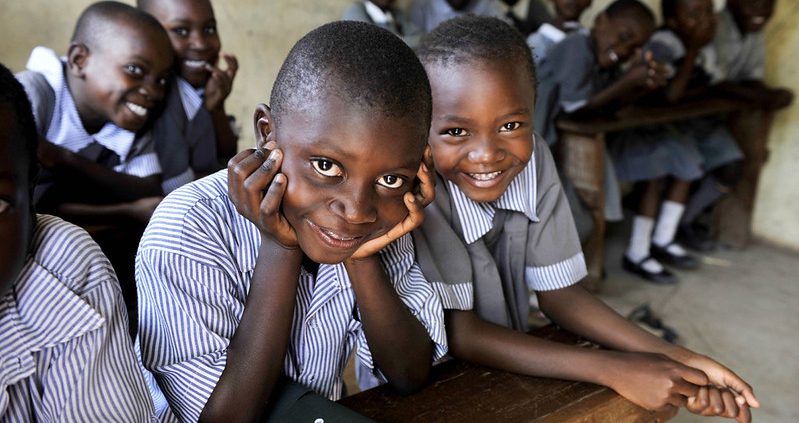
 Just Be A Child is a U.K.-based organization that works to improve education in Kenya and it relies on U.K. volunteers and donations. It has multiple programs both in Kenya and in the U.K.
Kwale County Programs
Just Be A Child began its work in Kenya’s Kwale County, where access to educational resources, training and safe spaces for children to learn and play was limited. To address this, the organization built libraries and learning centers in 40-foot shipping containers. These centers provide a place for all community members to access books, skills training and play-based learning programs.
Now, the organization has six libraries set up in Kenya. These libraries engage residents as community members convert shipping containers and local volunteers are trained to run the spaces. The libraries are stocked with thousands of books and are restocked annually by Just Be A Child. Each library also includes a playground, giving children a space to play alongside accessing educational resources.
Library Starter: Small Books Donation Scheme
This scheme provides approximately 1,000 books to public benefit organizations that apply. The organization charges 5,000 Kenyan Shillings (about $40) for four boxes of books, each containing approximately 250 books. It has so far delivered more than 50,000. This helps schools and other community organizations set up and maintain libraries, improving educational access for children in the area.
Library Builder: Large Book Donation Scheme
This scheme provides anywhere from 1,000 to 30,000 books to NGOs, government bodies, schools and community groups. It offers a wide range of books at affordable rates to help create learning environments with varied materials that might otherwise be difficult to access. This supports literacy and learning for local children and communities, further improving education in Kenya.
Dr. Kathleen Anangwe from the University of Nairobi told Just Be a Child: “JBAC helped us establish in a community that lost hope after forceful resettlement. Now they flourish and thrive.”
Targeted Giving
This program ensures that books, toys and sports kits donated to Just Be A Child reach the places where they are most needed. For example, specialized books are given to students, professors or educational institutions that require them. In contrast, toys are given to vulnerable children who may need comfort and support.
The organization’s U.K. programs revolve around volunteering. These include book packers, the Art Brigade and the Crafters Crew. Book packers help count, organize and pack donated learning supplies.
The Art Brigade provides art sessions for children in Kenya, equipping them with the skills and resources to express themselves creatively. The Crafters Crew knits, crochets or sews to provide handmade baby blankets, clothes and knitted toys to vulnerable children across Kenya. Volunteers who sew also donate fabric bags for Kenyan schoolchildren to help them physically access school.
All of this allows U.K. volunteers to feel personally involved in improving education in Kenya.
The Impact of Just Be A Child
Just Be A Child reports that it has trained more than 17,000 teachers and volunteers in Kenya, reaching around five million readers and creating or stocking almost 60 libraries. Across these libraries, it has distributed more than a million books and engaged 3,500 school-aged children across Kenya.
The impacts have also been extensive in the U.K., with the organization engaging more than 5,000 participants and nearly 800 corporate volunteers. It has also helped save more than a million books from landfill.
Final Remarks
Just Be A Child is an organization that supports improving education in Kenya. While it does accept monetary donations, the ability to donate books and handmade items makes it a great option for those who may not have the means to give money. This allows the organization to engage a wider range of people across the U.K., raising awareness of the impact international aid can have.
– Ryan Cowen
Ryan is based in Brighton, UK and focuses on Good News and Politics for The Borgen Project.
Photo: Flickr

Elderly Poverty in Lesotho
According to the World Bank, about 49% of Lesotho’s population lives below the national poverty line, with poverty rates significantly higher in rural areas where most older people reside. As people age, their ability to earn income through physical labor declines, yet access to formal pension systems remains limited. Many elderly individuals worked in informal employment or subsistence agriculture during their productive years, leaving them without stable retirement income.
The Impact of HIV/AIDS on Elderly Households
Lesotho’s high HIV/AIDS prevalence has further deepened elderly poverty. The country has one of the highest HIV prevalence rates globally, estimated at around 22% among adults, according to UNAIDS. As a result, many older adults have become primary caregivers for grandchildren after losing adult children to the disease. UNICEF reports that elderly caregivers often use their limited income to cover food, school fees and healthcare costs for dependents, increasing financial strain and vulnerability within already poor households.
Lesotho’s high HIV/AIDS prevalence has further deepened elderly poverty. The country has one of the highest HIV prevalence rates globally, estimated at around 22% among adults, according to UNAIDS. As a result, many older adults have become primary caregivers for grandchildren after losing adult children to the disease. UNICEF reports that elderly caregivers often use their limited income to cover food, school fees and healthcare costs for dependents, increasing financial strain and vulnerability within already poor households.
Government Support Through the Old Age Pension
To address elderly poverty, the government of Lesotho introduced a non-contributory Old Age Pension (OAP) in 2004, providing monthly cash transfers to citizens aged 70 years and above. The pension reaches more than 80% of eligible older persons, making it one of the most extensive social protection programs in the country. Research by HelpAge International shows that the pension supports more than 83,000 older people in Lesotho and has helped reduce extreme poverty, improve food security and increase access to basic healthcare among beneficiaries. However, the pension amount remains modest and is often insufficient to fully cover rising living costs, especially as food prices and medical expenses increase.
Healthcare Access and Ongoing Challenges
Healthcare access remains a major challenge for elderly people living in poverty in Lesotho. Many older adults suffer from chronic illnesses such as hypertension, diabetes and arthritis. While the country has expanded primary healthcare services, barriers such as transportation costs, long travel distances and limited access to specialized care persist, particularly in rural communities. The World Health Organization (WHO) notes that older adults in low-income countries face higher risks of untreated chronic conditions due to financial and structural barriers within healthcare systems.
The Role of NGOs in Supporting the Elderly
Non-governmental organizations also play a key role in supporting elderly people living in poverty in Lesotho. HelpAge International works with local partners to provide social protection support, healthcare outreach and advocacy for older people’s rights. In some communities, elderly beneficiaries report using pension income and NGO support to afford food, access healthcare services and care for dependents, helping to improve overall household stability. These programs help bridge gaps where government support alone is insufficient, particularly for elderly caregivers responsible for grandchildren.
Looking Ahead
Reducing elderly poverty in Lesotho requires sustained investment in social protection, healthcare services and community-based support systems. Strengthening the Old Age Pension, expanding age-friendly healthcare access and supporting families caring for older relatives can help reduce vulnerability.
As Lesotho continues its efforts toward poverty reduction, greater attention to the needs of its ageing population is essential. Ensuring that older adults can live with dignity, access basic services and remain socially included is a critical part of inclusive and sustainable development.
– Segun Oyekale
Photo: Flickr
The Internet Shutdown in Iran
Potential European Support
According to the European Council on Foreign Relations (ECFR), help can be offered for the Iranians to acquire connectivity from France and the United Kingdom. France and the U.K. have the capacity to use their own satellite terminals. A significant option to the internet issue in Iran is the Eutelsat satellite terminal. It can be used to transmit online network service from space to regions in need, providing internet connection to Iran. Furthermore, in case there is a risk of another disconnection, Iranians could then send messages offline with the help of Bluetooth technology.
Snowflake: A Circumvention Tool
A way for the Iranians’ situation to improve is with the help of a software tool called Snowflake. Anyone in possession of a device can help through the following steps.
A volunteer downloads Snowflake software on their device. It is a convenient extension that can be used on all the common browsers that internet users are familiar with. This software works through the Tor Project, which is constructed with the intent to bypass internet censorship. However, the issue is that there are times when the user’s identity can be recognized. It is here that Snowflake becomes necessary.
Once this software is activated, the user’s computer registers with a broker. This broker enables Iranian users to use a volunteer’s location as their own. The volunteer’s Snowflake proxy will serve as the temporary location for the Iranian user.
A significant part of this procedure is that the identities of both parties are concealed and not revealed to the public. The volunteer has the right to know if someone has used their address. However, the Iranian’s personal information is undisclosed. The volunteer outside Iran will then act as a sort of bridge for an Iranian user. This software prioritizes the safety of both users, as their data is secure.
According to Amir Rashidi, this software includes a component called the Starlink satellite system. This system connects to satellites in low-earth orbit, which in turn avoids terrestrial filters.
Rashidi recommended that people who live in Iran or other countries with unstable internet download the Snowflake extension or application when they get the chance. This will help them have internet access in times of crisis.
Looking Ahead
The internet is an important part of daily life. With Iranians losing access, that brings challenges. However, many solutions can be provided with help from outside Iran. Countries like France and the U.K. could use their satellite terminals to provide Iranians with connections. The software tool Snowflake facilitates people outside Iran to help those in Iran. These solutions show that Iranians have opportunities to acquire an internet connection with international support.
– Lara Ibrahim
Photo: Flickr
Disability and Poverty in Suriname
Disability as a Poverty Multiplier
Studies considering the intersectional nature of poverty have demonstrated that disability and poverty are strongly interdependent in Suriname.
When examining multidimensional poverty headcount rates, 25% of those with “at least a lot of functional difficulty” are multidimensionally poor. This compares with 21% of those with “some functional difficulty” and 16% of those with “no difficulty.”
There is also an 8% difference between disabled and non-disabled groups in reported access to safely managed sanitation. Among respondents, 96% of those experiencing “no difficulty” reported full access, compared to 87% of those with “at least a lot of functional difficulty.”
Access to the Job Market and Education
People with disabilities in Suriname also face several barriers to social mobility compared to the non-disabled population.
According to 2020 International Labour Organization (ILO) statistics, 39.9% of the disabled population was employed in Suriname, compared with 53.2% of non-disabled people. Similarly, there was a difference of almost 15% between rates of economic activity, with 42.3% of disabled adults ages 15-64 considered economically active compared to 57.9% of non-disabled respondents.
Access to education also varies between disabled and non-disabled groups. Out of a group of surveyed children ages 6-14, 69% of those experiencing “a lot of difficulty” attended school, compared with 82% of those with “some difficulty” and 94% of non-disabled children.
Disabled populations in Suriname are therefore particularly vulnerable to cycles of poverty, especially given their increased likelihood of unemployment, which is a major contributor to poverty.
Action Toward Addressing Disability Poverty
In 2024, a project spearheaded by the Inter-American Development Bank (IDB) was approved to strengthen the country’s social protection system. $40 million was allocated to the initiative, which aims to protect the most vulnerable Surinamese populations, including people with disabilities. The IDB pledged to support 20,000 disabled people and their families.
Several organizations also continue to provide services and support to people with disabilities in Suriname.
Opo Doro, an institution providing home-based services to people living with disabilities in Suriname, expanded its impact with recent funding support. As a result, it established a day care and workshop service that provides disabled communities with practical skills.
Surcare is another project founded to raise funds for a residential care home for people with disabilities in Suriname.
An American organization launched in 2024, Surcare supports the In de Ruimte care home by helping address funding gaps not covered by local donations or government support. The foundation also works to raise awareness about the work of the home.
Looking Ahead
Although there is still work to be done to address the interconnected challenges of disability and poverty in Suriname, the scale of investment from the IDB suggests increased attention to supporting disabled communities. Both international projects and community initiatives indicate progress toward improving conditions for this vulnerable population.
– Phoebe Lang-Clapp
Photo: Flickr
5 Key Statistics on the Gender Wage Gap in Mali
The Gap
The gender wage gap in Mali stood at 41.9% in 2023, according to the International Labour Organization. In other words, a woman in Mali earns, on average, 58 cents for every dollar a man earns in the same working context.
In 2025, the World Bank estimated that 52.8% of Mali’s female population over 15 years of age participate in the labour force, compared to 81% of males over fifteen. This percentage dropped significantly from 60.5% of women in 1990, and is expected to keep decreasing.
A 2022 study on unpaid labour by the National Observatory of the Demographic Dividend found that Malian women spend four times as much as men carrying out domestic tasks and unpaid care. This limits the time they could be spending to pursue an education or hold a paid position. The study also estimated that if this unpaid labour was accounted for in 2019, it would have represented 17.6% of Mali’s GDP
Education and Literacy
Roughly one in six girls enroll in secondary school in Mali. Some significant obstacles, apart from gender discrimination, that prevent girls from continuing their education include child marriage, child labour and domestic work.
Adult literacy rates for both women and men in Mali are significantly lower than the average rate of the Sub-Saharan Africa aggregate. The female literacy rate stood at 25.7% in Mali, in contrast to 62.7% in Sub-Sahara Africa, according to the World Bank. In comparison, the male literacy rate stood at 46.2% in Mali and 74.9% in sub-Saharan Africa. There is not only an overall lower literacy rate in Mali, but also a much larger gap between women and men.
Inequality and Social Norms
The United Nations Development Programme (UNDP) measured Mali’s Gender Inequality Index (GII) value at 0.612 in 2023. The world’s average score of the same year stood at 0.455. In this metric scale from 0 to 0.900, the closer the measurement is to 0, the less inequality exists between genders.
Despite numerous initiatives and actions taken by humanitarian aid groups and NGOs, such as U.N. Women and Women for Women International, to raise awareness on the gender wage gap in Mali, as well as overall gender inequalities, deeply rooted patriarchal norms significantly obstruct the path towards progress.
At the end of the day, closing the gender wage gap in Mali could require dismantling social norms that impede women from getting an education and entering the workforce. It could require paying close attention to each statistic outlined above and navigating how to ameliorate them.
Breaking the cycle of girls and women disproportionately handling domestic tasks, for example, could allow them to get an education, enter the work force and occupy positions that will eventually bridge the gender wage gap.
The Future
There are a few organizations working in Mali to break these cycles of inequality. The Forum for African Women Educationalists (FAWE) works in Mali, among many other African countries, to help girls gain access to quality education by eliminating the barriers preventing them from doing so. It offers bursaries, advocate and collaborate with the government, spread community awareness and train educators for their cause.
Journalists for Human Rights (JHR) is another organization operating in Mali to empower women by giving them an outlet to use their voice. They train journalists, mostly women, to report on ethics and women’s rights with a goal to “boost public accountability on human rights issues.”
– Brittany Buscio
Photo: Flickr
Vocational Education Training Centers in Bulgaria
Bulgaria’s History
Recent history of not just Bulgaria, but the entire region of the Balkan peninsula has not been in the favor of the people living there and provided a substantial obstacle for the reform and redevelopment of these institutions. After World War 2, Bulgaria became part of the Soviet Union and it imposed its same communist ideology onto its new puppet. As described in Christopher J. Smith’s thesis on the subject “A centrally planned economy was one of the main tenets of communist ideology. Working ‘for the good of society,’ industrial and agricultural output was determined not by supply and demand, but by central administrators.”
Essentially, they were to shield the negative effects of business from the economy by having the government centrally plan the entire thing. While that seems all right on paper, in reality, it diminishes peoples’ incentive to learn the skills they need for a job when the government will just assign someone to it. That philosophy resulted in the vocational institutions of Bulgaria and it worked well during that time.
Vocational Education Training Centers in Bulgaria
When communism fell and the nation was looking to transition into a free-market economy, it just couldn’t keep up. Inflation rose to historic highs, making the currency almost worthless, and people in general just couldn’t afford to get groceries or heat up their homes. However, as the years of the regime recede further and further into the past, reforms have gradually made their way into the system and the results can be seen from the databases the European Center for the Development of Vocational Training keeps on the member states.
It describes drastic measures that the Bulgarian government took in recent years to establish “centers of vocational excellence” and they are described as “funded by the Bulgarian Recovery and Resilience Plan (NRRP) and are located in leading VET schools across the country. Their aim is to equip students with high-demand skills for the evolving labor market and to foster regional innovation ecosystems.” Bulgaria has established 28 of these CoVEs already and the result is to strengthen the collaboration between education and businesses and local communities.
Mission Possible and the Bulgarian Industrial Association
A specific school in Bulgaria called Mission Possible is actively offering courses for trades such as internet maintenance and hotel services, while also serving disadvantaged communities. In June 2025 alone, 20 women in the city of Sliven who have lost their factory jobs enrolled in the program. These women never had experience with information technology before enrolling and they eventually completed their certification. The course helped these women find jobs and be able to provide for their families.
The Bulgarian Industrial Capital Association runs a more national program. It has bases providing vocational training in every major city in the country, including training in industries like business management/administration, production and architecture/construction. Students completing courses at these centers receive the equivalent of a college degree in their respective industries. This provides a fresh start for those that wish to renew their lives and have a new chance at life.
– Alexander K. Petrov
Photo: Flickr
Poverty Reduction in Italy Strengthens Communities
Because of these challenges, the Italian government and partner organizations have pursued policies and programmes that support families, help people find work and improve local economies as part of broader poverty reduction in Italy efforts. These actions focus on income support, job services, skills training and community development.
Income Support and Job Services
Even though income support helps families meet basic needs, long‑term stability often depends on access to employment opportunities. Italy’s Citizens’ Income program, which was in place until 2024, provided conditional financial assistance to low‑income households alongside job training and job search support. The program helped many families connect with employment services while easing short‑term financial stress.
When individuals receive both financial assistance and employment support, they have a better chance of finding stable work. Government employment centres across Italy provide job search assistance, vocational reviews and connections to employers. These services help people transition from immediate support to long‑term economic independence.
Nonprofit Organizations Supporting Vulnerable People
While government programs are important, nonprofit organizations also play a key role in helping communities respond to economic hardship. Caritas Italiana is one of Italy’s largest charities that works directly with people experiencing poverty and exclusion.
Caritas works with a network of local groups across Italy to provide food assistance, counselling, basic services and community support. It also promotes inclusive education and training for vulnerable people such as youth and families struggling with financial hardship. These services help people build confidence, access services and find work when they are ready.
In addition to direct services, Caritas conducts research on poverty and social exclusion so that policymakers and civil society can better understand the root causes of economic hardship and develop effective responses. The organization also coordinates with Catholics charities across Europe to broaden its support network.
Education and Workforce Development
Although income support and immediate services help families meet basic needs, long‑term stability often depends on people gaining employment and important skills. According to the OECD Employment Outlook, Italy’s unemployment rate has declined in recent years but still remains above the OECD average and job growth could be moderate in the near future. These trends show how critical workforce development and labour market programmes are for increasing opportunities for people at risk of poverty.
While employment support is essential, government and EU programs for training and labour inclusion also play a key role. Italy’s National Program for Guaranteed Employability of Workers (GOL) is an active labour market policy that offers retraining, skills upgrading and job placement services to unemployed and vulnerable workers. The program has already reached hundreds of thousands of people, and that number could hopefully increase in the future.
Because lifelong learning and skills development boost a person’s chances of finding work that pays a living wage, ongoing education initiatives are important for future progress. According to a survey by European training authorities, adult participation in learning increased in Italy in recent years, and reforms tied to national recovery plans aim to strengthen vocational training and workforce readiness across sectors. These efforts help individuals adapt to evolving labour market demands and improve their economic prospects.
Progress and Path Forward
Even though regional inequalities and economic hardship still affect many families, coordinated policies and partnerships show that poverty can be addressed through targeted solutions. Employment initiatives, income support services and education programmes work together to help people build confidence, connect with employers and gain stable incomes. These efforts contribute to broader poverty reduction in Italy by giving people stronger tools to support themselves and their families.
Since improving economic opportunity is an ongoing process, continued investment in workforce development, social services and community programmes could be essential for sustained poverty reduction in Italy and the well-being of future generations.
– Anaisha Kundu
Photo: Flickr
How the Sehlumile Project is Saving Girls’ Education in Zimbabwe
In addition, 62% of girls in Zimbabwe miss school during their periods, which demonstrates that the stigma surrounding a woman’s body is costing much more than a pink tax. There is a global poverty of information happening, derived from cultural shame and a lack of understanding about women’s health.
Girls’ Education in Zimbabwe
It may come as no surprise that Zimbabwe struggles with female school attendance, given the issues with feminine health care and period poverty. In fact, when UNICEF reviewed 50 studies on menstrual hygiene management (MHM), it found that dysmenorrhea, or period pain, was a major complaint amongst teenage girls, yet despite the effect on their quality of life and these girls’ education, medical care was not sought out.
These reviews also showed the reasons for this inaction, being that the same girls felt shame and low self-esteem due to embarrassment. In Zimbabwe, 70% of rural schools reported having no clean water or soap needed for menstruating girls. The 62% of girls missing school due to this issue of shame equates to a lost 20% of the school year.
Further research shows that only 14% of girls finish higher secondary level education. This drastic drop in the completion of girls’ education emphasises the obstacle of ignoring feminine health care, as does the fact that 76.5% of women, as of 2024, work in vulnerable employment. The absence of a formal and comprehensive education has immeasurable knock-on effects for a girl’s future economic opportunities, and therefore, the intersectionality between female health care, girls’ education, and professional exclusion is unavoidable.
The Efforts
None of this is to say that work is not being done. Charities and NGOs are working to encourage girls to stay in school, such as Education Out Loud, which interviews and empowers young girls in primary school. One girl, Tabeth Jasi, stated, “When I came to Nyakabau Primary School, I identified Period Poverty as a barrier to education,” and detailed how 15 of every 20 girls regularly missed school during their periods, losing up to four days every month. Working to instil pride and confidence in young girls before they feel the effects of socially embedded shame is invaluable to promoting their education, medically and academically speaking.
A group that highlights the shifting mindset in Zimbabwe are the Zimbabwe Medical Students Association (ZiMSA), which has worked to unite and represent the issues previously sidelined in their health care system. One of its projects is the Sehlumile initiative, which translates to “she has sprouted”. A transformative project such as this reframes the idea of female health care, rewriting the narrative of stigmatised menstruation. Sehlumile started in 2021, at a time when there was a gross secondary level enrolment rate of 46% for girls.
The initiative helped distribute more than 600 reusable pads, reaching more than 100 girls in awareness training and support sessions, and recording that 50% of girls in Zimbabwe now have better access to resources and information, which has allowed them to stay in school.
The Future
The effect ZiMSA and Sehlumile have had on the country can be seen at a political level as well as an educational one. In the 2025 national budget, Zimbabwe’s government allocated approximately $3.27 million to provide free feminine hygiene resources in schools to safeguard girls’ education, according to Education Out Loud. This contribution reinforces the government’s efforts on their Girls’ Education Accelerator (GEA) grant that aims to improve their schools’ infrastructure to create a more equal environment that further decreases female dropout rates.
The landscape of female health care and education in Zimbabwe looks brighter thanks to the efforts of these students and volunteers, and the hope is that with continued efforts, all girls will have the resources to follow any path they desire, uninhibited by a lack of confidence or knowledge.
– Jaya Noonan
Photo: Flickr
Clean Water Access in Sub Saharan Africa Expands
Water Access Challenges in Sub-Saharan Africa
According to the World Health Organization (WHO) and UNICEF, more than 400 million people in Sub-Saharan Africa lack access to safely managed drinking water services. Many families must travel long distances each day to collect water from rivers, ponds or unsafe wells. This often affects women and children the most, as they are typically responsible for collecting water. In many communities, children miss school because they must spend hours each day helping their families gather water. Unsafe water also contributes to diseases such as cholera, diarrhea and typhoid, which remain major health risks across the region.
The economic impacts of limited water access are also significant. When families spend hours collecting water, they have less time for work, education or other opportunities that could help them escape poverty. In rural communities, a lack of clean water can also reduce agricultural productivity and limit food security. Improving water systems can therefore strengthen both health and economic stability.
Organizations Expanding Water Access
Several organizations are working to expand clean water access in Sub-Saharan Africa through sustainable projects and innovative technologies. One of the most well-known organizations is Water.org, a nonprofit that helps communities finance water and sanitation solutions. Through its WaterCredit initiative, the organization has helped more than 68 million people gain access to safe water or sanitation by providing small, affordable loans for household water systems.
Another organization making progress is charity: water, which funds community water projects in developing countries. Since its founding, the organization has supported more than 111,000 water projects in 29 countries, helping bring clean water to millions of people. These projects include drilling wells, installing filtration systems and building rainwater collection systems designed to provide safe drinking water for years.
Technology Supporting Water Solutions
Technology is also playing an increasing role in addressing water challenges. Solar-powered water pumps and advanced filtration systems allow communities to access safe water without relying on expensive fuel or electricity. In some areas, digital monitoring tools track performance and help ensure systems continue operating efficiently.
Experts working in water development emphasize that long-term success requires community involvement. Local training programs help residents maintain water infrastructure and manage resources responsibly. When communities participate in the planning and management of water systems, projects are more likely to remain sustainable over time.
The Bigger Picture
Although challenges remain, progress in clean water access in Sub-Saharan Africa demonstrates how collaboration between governments, nonprofits and communities can create meaningful change. Expanding access to safe water improves health, supports education and strengthens economic opportunity. Continued investment in water infrastructure and technology will be essential to ensure that more communities across the region gain reliable access to one of life’s most basic necessities.
– Nishanth Pothapragada
Photo: Flickr
Humanitarian Aid in Sudan & Gaza: Celebrities Raise $5.5 Million
The Inspiration
This concert was very different from typical fundraising events, as none of the music directly addressed the atrocities occurring around the world right now; in fact, all the artists were focused solely on creating a good atmosphere. The love and effort put into this event are evident in interviews with the co-hosts, such as Sudanese artist Mustafa the Poet, who has organized similar events in London and New Jersey and often speaks of artists’ power to spread empathy. Furthermore, Hadid spoke at length about her Palestinian heritage and the community and rich traditions in which she was raised.
The breadth of artists who volunteered to perform at the LA concert was evident in the range of genres: from Mendes and rock bands to a surprise performance from Chappell Roan. The artists split the proceeds equally between the Sudanese American Physicians Association and the Palestine Children’s Relief Fund. Not only are these organizations close to the hearts and heritages of some of the hosting artists, but they are also at the forefront of delivering humanitarian aid in Sudan and Gaza.
What these organizations do is something rare and complex at a time when these regions can be rife with corruption and political agendas.
Significance
This event not only raised substantial funds for humanitarian aid in Sudan and Gaza but also demonstrated how celebrities and artists can leverage their enormous platforms for advocacy and humanitarian efforts. In a time when we read about so much violence and hatred on all media outlets, readers may feel overwhelmed and detached from current affairs. However, events such as “Artists for Aid” can be incredibly refreshing, as they strengthen messages of love and community, which have made the past three concerts so successful.
The dollars raised in the recent LA concert will reach tens, if not thousands, of Palestinian and Sudanese children, who are currently in dire need of immediate humanitarian relief. In an era when many may feel helpless, events such as these serve a vital purpose by reminding us of the power of community. Moreover, “Artists for Aid” should serve as a reminder to other artists and A-list celebrities of the power of their platforms and the boundless possibilities for using them for good.
– Vittoria Cortese
Photo: Flickr
Just Be A Child: Volunteers in the UK Improve Education in Kenya
Kwale County Programs
Just Be A Child began its work in Kenya’s Kwale County, where access to educational resources, training and safe spaces for children to learn and play was limited. To address this, the organization built libraries and learning centers in 40-foot shipping containers. These centers provide a place for all community members to access books, skills training and play-based learning programs.
Now, the organization has six libraries set up in Kenya. These libraries engage residents as community members convert shipping containers and local volunteers are trained to run the spaces. The libraries are stocked with thousands of books and are restocked annually by Just Be A Child. Each library also includes a playground, giving children a space to play alongside accessing educational resources.
Library Starter: Small Books Donation Scheme
This scheme provides approximately 1,000 books to public benefit organizations that apply. The organization charges 5,000 Kenyan Shillings (about $40) for four boxes of books, each containing approximately 250 books. It has so far delivered more than 50,000. This helps schools and other community organizations set up and maintain libraries, improving educational access for children in the area.
Library Builder: Large Book Donation Scheme
This scheme provides anywhere from 1,000 to 30,000 books to NGOs, government bodies, schools and community groups. It offers a wide range of books at affordable rates to help create learning environments with varied materials that might otherwise be difficult to access. This supports literacy and learning for local children and communities, further improving education in Kenya.
Dr. Kathleen Anangwe from the University of Nairobi told Just Be a Child: “JBAC helped us establish in a community that lost hope after forceful resettlement. Now they flourish and thrive.”
Targeted Giving
This program ensures that books, toys and sports kits donated to Just Be A Child reach the places where they are most needed. For example, specialized books are given to students, professors or educational institutions that require them. In contrast, toys are given to vulnerable children who may need comfort and support.
The organization’s U.K. programs revolve around volunteering. These include book packers, the Art Brigade and the Crafters Crew. Book packers help count, organize and pack donated learning supplies.
The Art Brigade provides art sessions for children in Kenya, equipping them with the skills and resources to express themselves creatively. The Crafters Crew knits, crochets or sews to provide handmade baby blankets, clothes and knitted toys to vulnerable children across Kenya. Volunteers who sew also donate fabric bags for Kenyan schoolchildren to help them physically access school.
All of this allows U.K. volunteers to feel personally involved in improving education in Kenya.
The Impact of Just Be A Child
Just Be A Child reports that it has trained more than 17,000 teachers and volunteers in Kenya, reaching around five million readers and creating or stocking almost 60 libraries. Across these libraries, it has distributed more than a million books and engaged 3,500 school-aged children across Kenya.
The impacts have also been extensive in the U.K., with the organization engaging more than 5,000 participants and nearly 800 corporate volunteers. It has also helped save more than a million books from landfill.
Final Remarks
Just Be A Child is an organization that supports improving education in Kenya. While it does accept monetary donations, the ability to donate books and handmade items makes it a great option for those who may not have the means to give money. This allows the organization to engage a wider range of people across the U.K., raising awareness of the impact international aid can have.
– Ryan Cowen
Photo: Flickr