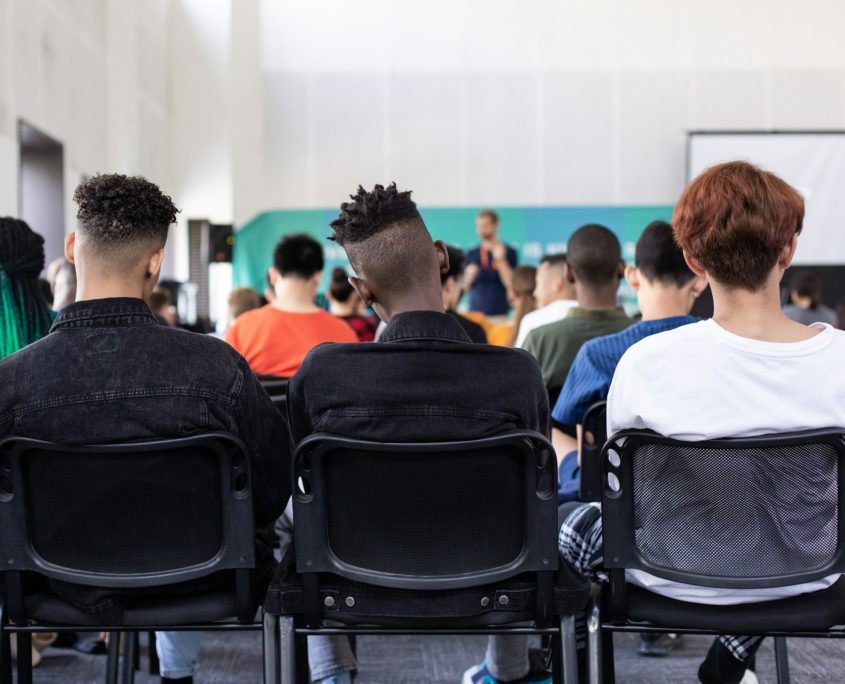
 In 2023, the United Nations Educational, Scientific and Cultural Organization (UNESCO) initiated a significant educational reform in Guyana. Funded by a System Capacity Grant from the Ministry of Education, this reform aims to enhance the skills of school and district leaders and to overhaul the mechanisms for allocating resources to schools and districts. This initiative seeks to provide further education for the people of Guyana.
The Evolution of Educational Media
The technical lead of UNESCO’s reform includes placing middle-tier actors in the space of education systems including classrooms. Alongside these actors, maybe having a television system can help provide education for the people of Guyana. In the 1950s, Boston University President Dr Daniel L. Marsh warned about the television craze turning young Americans into a nation of morons.
However, National Educational Television (NET) emerged just four years after his claim, challenging its uniqueness. Educational television aims to blend learning with entertainment and as of 2024, social media has surpassed television as the primary learning source for the youth. Popular children’s programs like Sesame Street and Bluey now offer educational content through YouTube channels, granting free access to young viewers.
Technology Gaps in Guyana
Unfortunately, many areas do not have access to the internet or a television license. The country of Guyana, whilst it does have access to both TV and the internet, is reportedly below the regional benchmark for example despite a significant increase from 13.8% in 2007 to 37.3% in 2019 the overall internet usage is minimal indicating a gap in technology advances between Guyana and other countries.
In many countries, a television license is not required unless one watches taxpayer-funded or local television, such as the BBC in the U.K. or Fox News in the USA, which is available for free viewing.
Guyana’s primary television network, Channel One, offers its audience news, talk shows and events at no cost. The nation also features a variety of channels available either through subscription or for free. While areas like Guyana’s capital, Georgetown, enjoy relatively better access to technology and current events, rural regions face significant challenges. These hardships are often a result of poverty exacerbated by climate change impacts on the natural environment and oil spills in Guyana’s waters.
Bridging Guyana’s Educational Gap
For regions impacted by poverty with limited access to technology, such as televisions or the internet, portable televisions equipped with VHS or DVD inputs can prove invaluable. Video-based learning enhances communication skills through visual and auditory stimulation and supports the acquisition of fundamental academic skills in reading, writing and mathematics.
The Common-Sense Census: Media Use by Tweens and Teens reports that television media educates and entertains 62% of children globally, with 58% of teenagers also acquiring many of their skills from television. Despite a minor decrease, a significant majority of young people worldwide still rely on television for learning. Therefore, equipping educational settings with a DVD or VHS player connected to an electric cable can provide access to numerous educational videos without the need for Wi-Fi or internet access.
The country of Guyana makes primary education mandatory with approximately 1000 students enrolled a year. The idea of using visual materials in education seems to be becoming a reality as in 2011, Guyana’s Ministry of Education set up an organisation called the Guyana Learning Channel which became widely available to Guyana families providing them with a mixture of physical and virtual education content.
The Learning Channel, unlike private schools in Guyana, offers its educational services for free, dedicating itself to enhancing resources through the recruitment of teachers and community outreach that involves students’ families. Since 2020, the Learning Channel has broadened its curriculum beyond basic math and literacy to include science, chemistry and language classes. During the COVID-19 pandemic, it offered online classes for students with Wi-Fi access and with support from the Guyana Ministry of Education, it provided radio and television programs for students without internet access.
Looking Forward
The education of young people is considered worldwide as a vital importance as it goes beyond teaching Maths and Literature. It also provides them with social interaction, promises them a higher-paid job in the future and keeps them away from destructive influences. Education for the people of Guyana is also receiving a focused push.
The ongoing efforts by the Guyana Ministry of Education, alongside partners like Learning Channel and UNESCO, shine as crucial steps toward securing a brighter future for Guyana’s youth. By investing in education, these initiatives not only aim to reduce poverty and criminal activity but also open up global opportunities for all children. As this collaboration continues, it holds the promise of crafting a safer, more prosperous world for the next generation.
– Phoebe Vaughan
Photo: Unsplash

Michael & Susan Dell Foundation
Efforts in India
The Michael & Susan Dell Foundation provides improved access to financial services, employment opportunities, education and sustainable livelihoods for India’s urban poor. With 149 active projects spanning the nation, this commitment exceeds $180 million in investments, enriching the lives of children and fostering enduring changes within their communities.
In India, half of students need to catch up in reading and arithmetic, while 33% drop out before completing high school. Additionally, 60% of 18- to 21-year-olds need more preparation for the job market. To address these challenges and enhance educational outcomes for underserved students, the Michael & Susan Dell Foundation invests in large-scale statewide projects to improve student learning, teaching skills, school administration and educational leadership.
The foundation has provided crucial financial support to two leading school finance companies in India. It enables school leaders to enhance learning environments and broaden access to high-quality education. This effort aims to bring about significant changes in India’s educational system and is now implementing in Rajasthan, Haryana and Himachal Pradesh.
Additionally, in India, more than 400 million people are between the ages of 15 and 29, but many lack the skills needed for job opportunities. Acknowledging this pressing necessity, the Michael & Susan Dell Foundation continues to work to improve families’ financial security.
One noteworthy project is a partnership with the Lighthouse Communities Foundation, which empowers young people with the horizontal and vertical skill sets necessary for workforce integration. With 16,000 job placements and 25,000 students enrolled, the Michael & Susan Dell Foundation is pivotal in providing India’s youth with the essential tools to obtain meaningful employment, cultivating a road toward enduring prosperity and success.
Efforts in South Africa
Another primary goal is to provide people in South Africa with employment opportunities. The foundation plays a vital part in promoting financial stability among South African households by utilizing brilliant collaborations with entities such as SweepSouth, which provides job placement services to the unemployed.
The Michael & Susan Dell Foundation’s collaboration with SweepSouth has had a profound impact. Their technology is actively engaging more than 4,000 domestic workers, with a noteworthy 97% of them being women with children. Impressively, more than 80% of these individuals were previously unemployed. This initiative creates job opportunities and instills a sense of empowerment, enabling individuals to experience continuous personal and professional growth in South Africa.
In their commitment to enhancing educational opportunities for underserved youth in South Africa, the Michael & Susan Dell Foundation supports the Funda Wande initiative, specifically the “Teach Reading for Meaning” program. This innovative project focuses on equipping teachers with advanced techniques to effectively teach reading, a skill crucial for academic success.
The distinguishing feature of this program lies in its approach. Teachers in South Africa receive training in their classrooms alongside their pupils. With this approach, the Michael & Susan Dell Foundation and “Teach Reading for Meaning” strive to bridge the educational gap, ensuring that all children attending no-fee schools have access to a high-quality education in South Africa.
Conclusion
The Michael & Susan Dell Foundation initially focused its charitable activities in the U.S. Its influence has expanded globally over time, becoming a positive change in the lives of children facing urban poverty. The foundation has never shied away from setting lofty objectives and this unshakable commitment will keep opening doors of transformation for those most in need.
– Olivia Pitrof
Photo: Freepik
INTERPOL’s Illegal Timber Bust a Win Against Poverty
INTERPOL partnered with the United States Agency for International Development (USAID) and organizations from the U.N., Norway and the region’s governments. USAID’s connection, in this case, to an international policing force may seem surprising at first, but not so when considering the organization’s longstanding commitment to biodiversity and sustainable development.
A Call for Sustainable Evaluation
USAID has striven to uphold the ideal of global development that aligns with environmental conservation for decades. For many years, funding projects have gone towards conservation efforts in areas of high biodiversity, focusing on tropical forests, home to most of the world’s biodiversity. Additionally, all projects require an environmental impact assessment before implementation to reduce the impacts of development on the environment.
In 2014, USAID developed a new Biodiversity Policy. The main features of this policy are:
These efforts align with the U.N.’s Sustainable Development Goal 15, which aims to “protect, restore and promote sustainable use of terrestrial ecosystems,” including through preventing deforestation.
Unveiling the Co-Benefits of Biodiversity
All the efforts by USAID and the U.N. to highlight the importance of sustainability and conservation in global development reflect how vital biodiversity is to alleviating poverty. Biodiversity is not just important for its own sake. The services provided to local communities in highly biodiverse areas are essential.
To sustain their communities, many people rely on the following:
Despite their importance in decreasing and preventing poverty, these services are nearly impossible to restore or reproduce through humanitarian relief. If there is any damage to these ecosystems, the consequences might be catastrophic, including starvation, sickness and the loss of a sustainable local economy.
Environmental Crime Across the World
Illegal threats to local ecosystems, like illegal timber or wildlife trading, can have adverse ripple effects in local communities beyond just a loss of biodiversity. These industries bring with them a level of crime and corruption. They can have vast impacts on local and even national safety and can exacerbate poverty.
The illegal timber trade is estimated to be worth as much as $51-152 billion annually, representing 15-30% of all timber traded globally. The illicit timber trade takes almost half the money in all environmental violations globally. This category also includes wildlife trafficking, overfishing and pollution crimes. Illegal industries like these leave communities with greater levels of crime and poverty.
INTERPOL’s ongoing efforts and arrests, with the support of USAID, are therefore not just a win for biodiversity but also in the fight against poverty.
– Lyle Seeligson
Photo: Pexels
Preventing Chronic Obstructive Pulmonary Disease in Nigeria
On the other hand, in developing countries, air pollution and the living environment are much more significant factors. Interestingly, estimates suggest that 50% of COPD cases in Sub-Saharan Africa occur in individuals who have never smoked and it often remains undiagnosed. It is a silent killer of so much of the population simply because they are impoverished.
Chronic Obstructive Pulmonary Disease in Nigeria
The lifestyle of the people in Nigeria likely causes chronic obstructive pulmonary disease in the country. Whether or not people smoke tobacco, most African kitchens suffer from poor ventilation due to biomass smoke. Biomass fuel includes anything from a living thing, mostly wood or animal waste. Fires, often fueled by more biomass or kerosene, are also constant for heating or light. Although women are less likely to smoke than men, they have the same amount of COPD cases because they spend far more time inside the house.
COPD prevalence in Nigeria is attributable to factors beyond solely toxic air. Malnourishment at birth is a high-risk factor, potentially leading to weaker or misshapen lungs. Unborn and newborn infants, sharing environmental exposures with their mothers, may also encounter lung defects. Moreover, in economically disadvantaged African communities, high rates of HIV and tuberculosis persist. These diseases, if causing lung damage, contribute to the risk factors for COPD.
Prevention
COPD remains incurable, with survival strategies centered around removing oneself from potential dangers, such as tobacco use, engaging in regular exercise and maintaining optimal lung health. Ideally, addressing this concealed epidemic involves preventive measures to stop it before it begins.
However, the World Health Organization has implemented multiple steps to protect Africans from chronic obstructive pulmonary disease. The first is the WHO Framework Convention on Tobacco Control, approved by 180 countries, including Nigeria, which aims to help protect people from tobacco smoke. The second is the Global Alliance against Chronic Respiratory Diseases (GARD), a network aimed solely at eliminating respiratory illnesses like COPD and asthma in low- and medium-income countries.
Various other proposals have been suggested to prevent illnesses caused by indoor air pollution. One approach involves the construction of homes equipped with chimneys or flues, allowing smoke to exit the living spaces efficiently. Creating infrastructure to provide homes with electricity or gas for cooking could eliminate the use of biomass fuel and its associated smoke.
Enhancing housing conditions goes beyond improving living standards; it has the potential to not only create better living environments but also to save lives.
– Varsha Pai
Photo: Pixabay
The Danish Refugee Council’s Humanitarian Aid Efforts In Lebanon
Crisis in Lebanon
The DRC is providing humanitarian aid efforts in Lebanon because the ongoing refugee crisis in the region heavily affects the Middle Eastern nation. Despite its small size, it plays host to a large number of refugees in proportion to its population, with around 1.5 million Syrian refugees seeking shelter. Ever since the onset of the Syrian conflict in 2011, Lebanon has witnessed a substantial influx of Syrian refugees. Furthermore, the country already accommodates a significant number of Palestinian refugees who have been struggling with displacement since long before the outbreak of this conflict.
Lebanon is also currently grappling with one of the most severe economic catastrophes. By 2023, the Lebanese currency has lost 98% of its value. This significant decline has caused a distressing rise in poverty levels, leading to the closure of several businesses and a surge in unemployment rates. Consequently, the prices of basic goods have skyrocketed, making it difficult for people to afford basic necessities such as food, shelter and health care.
The refugees face many significant challenges, including the lack of access to adequate housing and health care. Many live in overcrowded settlements or informal tented settlements, which only puts them at risk of further exploitation and marginalization.
Humanitarian Aid Efforts In Lebanon
DRC has been distributing humanitarian aid efforts in Lebanon since 2004, working closely with local communities, government authorities, such as the U.S. Department of State and other humanitarian agencies to address the needs of refugees and displaced people. Its presence and expertise provide rapid and effective assistance to those most in need. One of the ways this is done is through the CHASE program.
The Capable, Hopeful, Accepted, Safe and Engaged (CHASE) youth empowerment program aims to enhance social and economic empowerment and foster self-reliance among young Syrian refugees and other youths who feel the impacts of conflict. Before creating this program, the DRC conducted a study and found that Lebanese and Syrian youth are facing widespread feelings of hopelessness due to limited opportunities for further education and decent employment, leading to a lack of optimism for the future.
The program employs a holistic approach to support communities, incorporating activities such as skills training, capacity building, awareness campaigns and advocacy efforts.
Economic Recovery Programming
The DRC’s Economic Recovery Programming is a program that aims to support individuals and their households in rebuilding their financial stability after a crisis or shock. Its main focus is to empower individuals to sustain themselves through self-production for income generation in a secure manner. Within this program, there are three sub-sectors: Food Security, Financial Inclusion and Decent Livelihoods.
Supporting Refugees and IDPs
The DRC’s humanitarian aid efforts in Lebanon demonstrate its commitment to supporting refugees and IDPs. Through a comprehensive range of services, the DRC empowers displaced individuals to rebuild their lives. With a focus on long-term solutions and advocacy, the DRC contributes significantly to humanitarian efforts in Lebanon.
– Sara Hatab
Photo: Flickr
Alleviating Child Malnutrition in North Macedonia
The Interplay of Malnutrition and Poverty
Malnutrition and poverty share a complex and intertwined relationship, forming a cycle that disproportionately affects children in this country. In North Macedonia, where poverty rates remain consistently high, malnutrition intensifies the challenges faced by families already struggling to make ends meet. According to the World Bank, approximately 22% of North Macedonia’s population lived below the national poverty line as of 2021, with children being among the most vulnerable groups.
Impact on Children’s Health
Child malnutrition in North Macedonia also poses threats to physical and cognitive development, which can have effects such as weakened immune systems and cognitive impairments. These effects can extend far beyond childhood as well, affecting individuals’ long-term health outcomes and economic prospects. Malnourished children are more susceptible to illnesses and less likely to perform well academically, for example, which perpetuates the cycle of poverty into adulthood.
Economic Implications
The economic consequences of child malnutrition in North Macedonia are widespread as well. A new World Bank report warns that malnutrition is costing low-income countries up to 3% of their yearly GDP, while malnourished children are at risk of losing more than 10% of their lifetime earnings potential. This cost not only undermines economic growth but perpetuates the cycle of poverty in North Macedonia by depriving the nation of a healthy and educated workforce, however, this is a cost that can be remedied by alleviating child malnutrition in North Macedonia.
Progress and Ongoing Efforts
While these challenges are considerable, North Macedonia has taken significant steps toward alleviating child malnutrition. Government initiatives such as the National Food and Nutrition Strategy and the School Meal Programme, for example, are working to improve access to nutritious food and promote healthy eating habits among children. Collaboration between government agencies, NGOs, health care providers and communities has also been crucial in delivering services to individuals in need. These steps, as well as those listed below, provide examples of what must continue to be done to alleviate childhood malnutrition in North Macedonia.
Working with NGOs
Nongovernmental organizations (NGOs) play a crucial role in alleviating child malnutrition in North Macedonia. Organizations such as the Red Cross of North Macedonia and World Vision have implemented nutrition programs targeting vulnerable communities, providing food assistance, nutrition education and access to health care services. These approaches ensure that interventions are tailored to the specific needs of each community, fostering lasting change in North Macedonia.
Investing in Nutrition Education and Health care
Nutrition education is another key to alleviating child malnutrition in North Macedonia. Schools, health care facilities and community centers can serve as platforms for delivering nutrition education to children and caregivers throughout the country. Similarly, improving access to health care services, particularly in underserved areas, is critical for early detection and treatment of child malnutrition. Investing in health care infrastructure and training health care professionals can strengthen the system’s capacity to address the nutritional needs of children in North Macedonia more effectively.
Looking Forward
North Macedonia stands at a crucial juncture in its fight against child malnutrition and poverty. While the country has made significant progress, more work is necessary to guarantee every child the chance to thrive and fulfill their potential. Collaborative efforts among government agencies, NGOs, health care providers and communities are essential to further reduce child malnutrition in North Macedonia, ensuring a future where no child falls behind due to malnutrition and poverty.
– Olivia Pitrof
Photo: Unsplash
Organizations Fighting for Mental Health in Liberia
In 2016, the World Health Organization (WHO) estimated that one out of five of Liberia’s population experienced a mental disorder. Subsequent research by WHO indicates an improvement in Liberia’s mental health, with a notable increase in the mental health workforce. Initially, only one psychiatrist served the country, but as of 2020, Liberia has more than 450 mental health professionals, including four psychiatrists, two psychologists and more than 400 mental health nurses. That said, here are some organizations fighting mental health in Liberia.
LiCORMH
The Liberia Center for Outcome Research on Mental Health’s (LiCORMH) health initiatives target unique, often ignored, areas of mental health in Liberia. For instance, LiCORMH now situates sexual abuse under a “fallout of war,” raising attention to the issue as connected to disorders like post-traumatic stress disorder (PTSD). Many of the citizens reaching adulthood today are survivors of a civil war in the country that began when they were children. A study showed that 50% of Liberians are coping with PTSD. The country’s growing dedication to mental health helps these survivors deal with their PTSD.
The Carter Center
The Carter Center, as indicated by its motto prominently displayed on the front page of its website — “Waging Peace, Fighting Disease, Building Hope” — grapples with the challenge of realizing this mission in Liberia’s fight against mental afflictions. The organization has trained an army of public health workers in mental health care, ranging everywhere from crisis intervention to diagnoses of mental health afflictions. Additionally, The Carter Center has played a crucial role in community education on mental health, empowering individuals with tools for self-help. Furthermore, the organization focuses on training health workers in self-care.
John F. Kennedy Medical Health Center
Located in the capital city, Monrovia, boasting 50 years of experience, 1000 employees and 57,000 patients a year, the JFK Medical Health Center is Liberia’s “largest referral hospital.” The E.S Grant Mental Health Hospital, a part of the JFK Medical Health Center, is the only hospital combatting mental health in Liberia. It has enough room to care for 80 patients and the workforce to offer outpatient advice to those suffering from mental health concerns.
Child Resource Institute
Tackling mental health is a lofty goal and its aims and strategies must have broad reach and circumspect plans. The Child Resource Institute connects women and children to programs that enable them to become self-sufficient and proactive members of their societies. Despite its economic goals, the institute’s actions affect mental health, too. It builds pathways for Liberian citizens toward brighter futures.
Final Remark
The struggle is far from over, but support for mental health in Liberia will guarantee that the country continues to move in the right direction and that every citizen receives the care they deserve.
– Antonio Muhs
Photo: Flickr
Education for the People of Guyana
The Evolution of Educational Media
The technical lead of UNESCO’s reform includes placing middle-tier actors in the space of education systems including classrooms. Alongside these actors, maybe having a television system can help provide education for the people of Guyana. In the 1950s, Boston University President Dr Daniel L. Marsh warned about the television craze turning young Americans into a nation of morons.
However, National Educational Television (NET) emerged just four years after his claim, challenging its uniqueness. Educational television aims to blend learning with entertainment and as of 2024, social media has surpassed television as the primary learning source for the youth. Popular children’s programs like Sesame Street and Bluey now offer educational content through YouTube channels, granting free access to young viewers.
Technology Gaps in Guyana
Unfortunately, many areas do not have access to the internet or a television license. The country of Guyana, whilst it does have access to both TV and the internet, is reportedly below the regional benchmark for example despite a significant increase from 13.8% in 2007 to 37.3% in 2019 the overall internet usage is minimal indicating a gap in technology advances between Guyana and other countries.
In many countries, a television license is not required unless one watches taxpayer-funded or local television, such as the BBC in the U.K. or Fox News in the USA, which is available for free viewing.
Guyana’s primary television network, Channel One, offers its audience news, talk shows and events at no cost. The nation also features a variety of channels available either through subscription or for free. While areas like Guyana’s capital, Georgetown, enjoy relatively better access to technology and current events, rural regions face significant challenges. These hardships are often a result of poverty exacerbated by climate change impacts on the natural environment and oil spills in Guyana’s waters.
Bridging Guyana’s Educational Gap
For regions impacted by poverty with limited access to technology, such as televisions or the internet, portable televisions equipped with VHS or DVD inputs can prove invaluable. Video-based learning enhances communication skills through visual and auditory stimulation and supports the acquisition of fundamental academic skills in reading, writing and mathematics.
The Common-Sense Census: Media Use by Tweens and Teens reports that television media educates and entertains 62% of children globally, with 58% of teenagers also acquiring many of their skills from television. Despite a minor decrease, a significant majority of young people worldwide still rely on television for learning. Therefore, equipping educational settings with a DVD or VHS player connected to an electric cable can provide access to numerous educational videos without the need for Wi-Fi or internet access.
The country of Guyana makes primary education mandatory with approximately 1000 students enrolled a year. The idea of using visual materials in education seems to be becoming a reality as in 2011, Guyana’s Ministry of Education set up an organisation called the Guyana Learning Channel which became widely available to Guyana families providing them with a mixture of physical and virtual education content.
The Learning Channel, unlike private schools in Guyana, offers its educational services for free, dedicating itself to enhancing resources through the recruitment of teachers and community outreach that involves students’ families. Since 2020, the Learning Channel has broadened its curriculum beyond basic math and literacy to include science, chemistry and language classes. During the COVID-19 pandemic, it offered online classes for students with Wi-Fi access and with support from the Guyana Ministry of Education, it provided radio and television programs for students without internet access.
Looking Forward
The education of young people is considered worldwide as a vital importance as it goes beyond teaching Maths and Literature. It also provides them with social interaction, promises them a higher-paid job in the future and keeps them away from destructive influences. Education for the people of Guyana is also receiving a focused push.
The ongoing efforts by the Guyana Ministry of Education, alongside partners like Learning Channel and UNESCO, shine as crucial steps toward securing a brighter future for Guyana’s youth. By investing in education, these initiatives not only aim to reduce poverty and criminal activity but also open up global opportunities for all children. As this collaboration continues, it holds the promise of crafting a safer, more prosperous world for the next generation.
– Phoebe Vaughan
Photo: Unsplash
The Second Term of Nayib Bukele: Impact on El Salvador
Security Policy
Domestic security was a significant plank on Bukele’s re-election campaign platform. The reduction of violent crime in the country has been startling. So, too, are the numbers behind it: 76,000 Salvadorans have been jailed, around 1% of the country’s population. The vast majority have been incarcerated without due process.
The suspension of civil liberties in March 2022 allowed the Bukele administration to move quickly and efficiently. This crackdown has been, it seems, almost universally popular in a country that was, until recently, considered one of the world’s most dangerous and arguably was the most significant factor in Bukele’s landslide re-election.
However, behind the overwhelming public support, key voices have called these policies unsustainable and unlawful. Human rights groups have highlighted instances of both torture and death in custody (218 deaths). The United States (U.S.), El Salvador’s largest trading partner, has raised concerns about human rights violations. Additionally, the International Monetary Fund (IMF) has put its mooted billion-dollar bailout on pause due to, among other factors, Bukele’s “State of Exception.”
Economic Policy
One of those above “other factors” has been Bukele’s attempt (beginning in late 2021) to introduce cryptocurrency as El Salvador’s principal form of money, replacing U.S. dollars. During his first term, Bukele used his preferred choice of communication, social media, to drum up investment for his plan to turn the country into a cryptocurrency haven.
However, through the bluster and rhetoric, it is clear that El Salvador will still rely on its ties to foreign investors and trading partners. Hesitation by the U.S. to continue its aid program ($629 million between 2019 and 2022) due to fears over the increasingly undemocratic direction the country was heading has led Bukele to start a high-wire policy of cozying up to China. This brinkmanship has resulted in closer diplomatic ties with the U.S., with both superpowers competing for influence in the region.
Since 2019, the start of the first term of Nayib Bukele, extreme poverty has doubled and El Salvador’s national debt stands at a record high of $25 billion. Most foreign investors see the cryptocurrency dream as risky to gamble on. Bukele’s desire to minimize U.S. influence in El Salvador is historically understandable. However, the more reckless and authoritarian his policies become, the less inclined he will be to help the U.S. or the IMF.
The Election
Bukele’s supermajority is confirmed, winning 54 of 60 seats. The hand count revealed irregularities in the electronic voting system. Opposition parties have raised concerns over fraud, manipulation and intimidation at various points in the electoral process. However, it is doubtful that these concerns will be followed up on.
The election of Nayib Bukele to the office of President for a second term was unconstitutional until the rule on second terms was scrapped. One of the many issues with his re-election from a democratic perspective is that Bukele will have unprecedented power (even more so than in his first term) to change the constitution. In many ways, the “world’s coolest dictator” has followed the classic authoritarian playbook and many believe he will continue to do so.
Final Remark
A combination of authoritarian security policies and reckless economic decisions have left El Salvador in a precarious position. However, the next few years will reveal how foreign aid to the country can best be spread around to foster stability.
The potential for a more democratic path to stability in El Salvador exists if the U.S. strategically influences the situation through judicious financial measures rather than the old-school method of going in all guns blazing.
– Rory Giles
Photo: Flickr
Bangladesh’s Health Workers Restore Vision for 2 Million Adults
Presbyopia is an age-related refractive vision error that makes it difficult to focus on subjects at a closer distance and affects income avenues. At the moment, 1.8 billion of the world’s population is affected by the epidemic. An estimated 826 million are close to visual impairment due to the lack of access to affordable vision correction.
Presbyopia in Bangladesh
One in every two adults in Bangladesh loses livelihood opportunities due to presbyopia, yet appropriate eyewear can significantly mitigate this impact. BRAC and VisionSpring have expanded their efforts to conduct vision tests and distribute spectacles across 61 of Bangladesh’s 64 districts through the Reading Glasses for Improved Livelihoods (RGIL) initiative.
This program has equipped volunteers with the skills to evaluate visual impairments in remote communities, provide affordable reading glasses and make referrals for advanced eye care to ophthalmologists and optometrists. These volunteers receive compensation based on the number of spectacles they distribute.
The Role of Bangladesh’s Health Workers
Moreover, community health workers lie at the heart of primary health care in rural Bangladesh, assisting with family planning, adolescent hygiene, vaccinations and safe antenatal and prenatal care. Health worker’s acceptance within communities fosters participation in the program. Regular visits create a feedback loop that allows for timely adjustments and sustained effectiveness.
Morseda Chowdhury, director of the BRAC Health Nutrition and Population Programme, lauds the contribution of community volunteers to this achievement. He states, “This is a perfect example of an effective public health intervention scalable in a low-resource setting. A multitasking CHW can be utilized to tackle a stubborn problem that impedes the quality of life as well as reduces productivity and thus the economic potential of a country.”
Vision Correction in Addressing Poverty
Vision impairment disproportionately affects poorer economies. In Europe, only 4% of the population experiences presbyopia, but in lower-income countries, up to 94% suffer from poor vision. Studies indicate that presbyopia decreases individuals’ quality of life by 22%. Adults with farsightedness face challenges in performing daily tasks, from winnowing grain and cooking food to maintaining hygiene.
A World Economic Forum survey reported that near-vision impairment affected the earnings of 23% of office workers in Bangladesh. The study also found that workers in Rwanda with poor vision faced termination three times faster than their counterparts. Additionally, 2011 research indicated that inadequate vision correction among the global working population under 50 contributed to an annual productivity loss of $11 billion.
A randomized control trial by VisionSpring, Orbis and Queen’s University Belfast observed a 21.7% increase in productivity among presbyopic tea pickers in India using corrective lenses. The success of the Reading Glasses for Improved Livelihoods (RGIL) program in Bangladesh has paved the way for lower- and middle-income countries to promote the distribution of reading glasses. This neglected yet affordable solution helps restore employment and reduce poverty in the global south.
– Soham Mitra
Photo: Flickr
UNESCO Global Education Monitoring Report’s Call to Action
In fact, the UNESCO Global Education Monitoring Report highlights a critical concern—a $97 billion funding shortfall necessary to meet the ambitious Sustainable Development Goal 4 (SDG 4) by the year 2030. This analysis delves into the critical need to address this educational funding gap and the intricate challenges introduced by the COVID-19 pandemic, identifying key strategies for creating a more equitable future in education.
The $97 Billion Question
The 2023 UNESCO Global Education Monitoring Report illuminates a significant financial shortfall obstructing the achievement of global educational goals by 2030. To guarantee universal access to quality education at the pre-primary, primary and secondary levels in low and lower-middle-income countries from 2023 to 2030, an additional $97 billion in funding is necessary. This figure is particularly concerning compared to the initial annual financing gap of $39 billion estimated for the period from 2015 to 2030.
This shortfall poses a risk of leaving numerous countries behind in their commitment to SDG 4. This dire financial situation necessitates a comprehensive reassessment of how education is financed globally, with sub-Saharan Africa most in need, facing a $70 billion yearly shortfall to meet its educational needs: it is estimated, that around 20% of children of primary school age and nearly 60% of upper secondary school age are currently not attending school.
A Crisis Within a Crisis
The onslaught of the COVID-19 pandemic has deepened pre-existing educational inequities, bringing to the forefront additional complexities in both funding and educational access. On top of the GEM Report, insights from UNESCO and the World Bank shed light on the significant toll the pandemic has taken on educational outcomes, with projections indicating potential losses amounting to $21 trillion in lifetime earnings for learners at the moment.
This alarming scenario underscores the critical need for a substantial increase in pre-primary teaching staff in economically disadvantaged countries and a concerted effort to address the widespread learning deficits that have emerged globally as a result of the pandemic.
A Rallying Cry for Action
Responding to emerging crises, the World Bank has outlined a five-pillar strategy to revitalize global education. This strategy focuses on preparing and motivating learners, enhancing teacher skills, improving the relevance and availability of learning resources, creating safe and inclusive schools and managing education systems effectively.
This plan demonstrates the Bank’s dedication to systemic reform and outcomes-based methods, providing a guide to navigate the current challenges toward a future where everyone has access to quality education.
Furthermore, the UNESCO Global Education Monitoring Report emphasizes the crucial role of technology in unlocking the full potential of education systems worldwide. This includes digital learning platforms, online resources and teacher training in ICT, aiming to reduce the pandemic-induced funding gap by up to 75%.
It highlights three foundational pillars necessary for the effective integration of technology in education:
Investing in the Future
The UNESCO Global Education Monitoring Report highlights a journey fraught with challenges yet brimming with opportunities for transformative reforms. Tackling these obstacles requires evidence-based policymaking and enhanced international cooperation, now more critical than ever.
These actions represent a worldwide commitment to ensure education is an inalienable right, available to everyone regardless of their socioeconomic status.
– Matilde Liboni
Photo: Pixabay