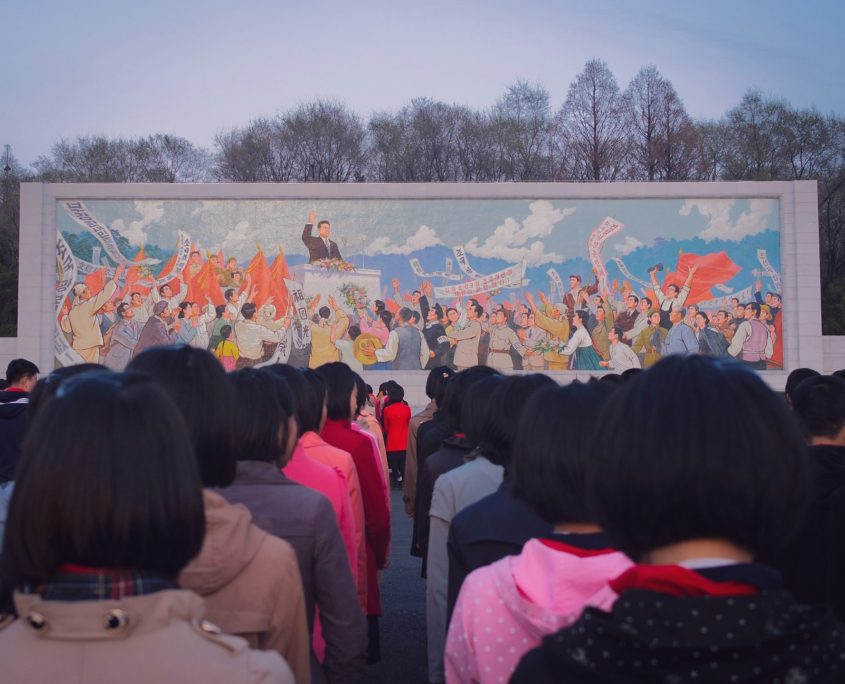
 In North Korea, under the rule of Kim Jong-Un, the country stands as one of the world’s most repressive nations, where the government prioritizes collective interests over individual freedoms. Basic rights and freedoms are severely restricted, with citizens lacking access to what many consider everyday freedoms, including the choice of hairstyles, access to Western television, computers, phones and the enjoyment of foreign music. However, South Korean charities play a crucial role in addressing these challenges, offering support to those who manage to escape this oppressive environment.
Unfortunately, North Koreans caught engaging in activities deemed illegal, face imprisonment or even execution in public. Since the death of Kim Il-Sung from 1994 to 1998, a period referred to as “The Arduous March,” many citizens have suffered from malnutrition and health issues.
The Journey of North Korean Defectors
Many North Koreans face a daunting choice to defect in pursuit of a better life, risking immediate death if caught using secret escape routes. Hence, some resort to bribing brokers for assistance in crossing the Yalu River, yet even with such help, evading capture along the border remains uncertain.
Furthermore, those who escape to South Korea and seek asylum consider themselves fortunate, yet they encounter challenges adjusting to an unfamiliar environment. Defectors gain the freedom to listen to music, watch movies and make life choices not dictated by their previous government. However, navigating these changes proves difficult and stressful, particularly for individuals who flee alone, without the support of family or friends.
Following are five South Korean charities that focus on aiding North Korean defectors in starting anew.
Hanawon
A prominent resettlement center for North Korean defectors, often compared to a mix between a halfway house and a trade school, opened its doors in 1999 with funding from Korea’s Ministry of Unification. At Hanawon, defectors undergo a 12-week program where they learn essential skills like using ATMs and navigating banks, grocery stores and public transport. Raised in an atheistic environment where religious materials were banned to ensure allegiance to their leader, North Korean defectors at Hanawon receive visits from volunteers across various faiths—Buddhist, Catholic, Christian—who introduce them to religious beliefs and practices, offering services for those interested in exploring newfound religious freedom.
Teach North Korean Refugees (TNKR)
Moreover, a Seoul-based nongovernmental organization specializes in teaching English to North Koreans. Teach North Korean Refugees commits to aiding refugees through one-on-one tutoring, speech competitions and mentoring for employment and educational opportunities. Consequently, it equips North Korean refugees with the skills to thrive in any setting where English is the primary language.
People for Successful Corean Reunification (PSCORE)
A nonprofit, nongovernmental organization located in Seoul actively promotes human rights in North Korea. It offers English classes and tutoring programs for North Korean defectors, emphasizing its global mission to advocate for North Korean human rights. The organization states, “Our global mission revolves around advocacy for North Korean human rights, with a core focus on empowerment through education and tutoring programs.”
Liberty in North Korea
An international nongovernmental organization focuses on aiding North Korean refugees in adjusting to their new lives. Liberty in North Korea achieves success in its resettlement program by fostering self-efficacy. The organization pairs newly arrived North Korean refugees with resettled North Koreans as role models. These mentors offer advice and encouragement on managing stress and trauma, providing relatable support from someone who has faced similar challenges, thus facilitating growth and adaptation.
Saejowi
A nonreligious, nonprofit organization in South Korea specializes in refugee counseling licensing and documenting the medical needs of North Korean refugees. Reports indicate that “90% of North Korean refugees arrive with untreated physical illnesses and Post-Traumatic Stress Disorder (PTSD).” However, Saejowi supports North Korean refugees who wish to become counselors for their peers by offering classes to develop and practice counseling skills. Consequently, more than 220 counselors have received licenses, enabling them to provide counseling to fellow refugees.
Looking Ahead
These five South Korean charities are diligently working to help North Korean defectors adjust to their new lives, emphasizing self-care and the importance of recognizing their worth. These organizations assist defectors in discovering their passions and deciding on future pursuits. In addition, by offering safety and protection, South Korean charities support defectors through the process of change, acknowledging that while change can be exhilarating, it can also be daunting.
– Nevin Guler
Photo: Unsplash

How LFAM is Helping in Liberia
Challenges for Midwives
Midwives in Sub-Saharan Africa face severe challenges due to outdated equipment, lack of training and insufficient drugs. They struggle without the necessary tools and knowledge to save mothers’ lives during pregnancy and childbirth complications. This is where the vital support of nongovernmental organizations like LFAM becomes crucial in reducing maternal mortality rates and impacting the lives of both midwives and mothers positively.
Life for African Mothers
Since 2005, LFAM, a United Kingdom (U.K.)-based nongovernmental health organization, has been saving the lives of mothers and babies in Sub-Saharan Africa. Angela Gorman, a neonatal nurse, founded LFAM to address the region’s high maternal mortality rates. LFAM achieves its mission through various means, including distributing medication to prevent post-partum hemorrhage and conducting skill-sharing workshops to provide essential training to hundreds of midwives.
In 2007, the United Nations Population Fund (UNFPA) partnered with LFAM to support Liberia in reducing its high maternal mortality rate. Since then, LFAM has actively collaborated with four hospitals in Liberia, conducting clinical skills-sharing workshops and distributing medication to address the critical situation.
LFAM’s Impact on Liberian Communities
LFAM is helping in Liberia by training midwives and distributing maternal medication across multiple counties in Liberia. Furthermore, it has enhanced maternal health in Liberia by distributing more than $250,000 worth of medication at no cost. LFAM stands as the exclusive provider in Liberia of Misoprostol, a drug to prevent hemorrhaging. Pharmaceutical companies in the U.K. donate much of the medication with the stipulation that it be distributed free of charge.
Furthermore, LFAM collaborates with charities like IHP and Muntada Aid to secure medicine donations and finance midwifery trips. By supplying medications for childbirth complications, LFAM supports hospitals and health centers across Liberia, significantly reducing maternal mortality rates. Additionally, LFAM distributes infant clothing to underprivileged mothers. As of January 2023, it was noted that since 2016, LFAM has trained more than 500 traditional and medical midwives throughout Liberia.
LFAM facilitates visits to Liberia by clinical staff to share clinical experiences and provide additional resources to hospitals and communities. Overall LFAM is helping in Liberia, making significant contributions to maternal health care and helping lower the maternal mortality rate.
Looking Forward
The remarkable efforts of LFAM in Liberia are paving the way for a future where maternal mortality is not a foregone conclusion but a challenge to overcome. Through training midwives, distributing essential medications and fostering international partnerships, LFAM is crafting a legacy of improved health care for mothers and their infants. Moreover, this trajectory of progress promises not only healthier futures for families in Liberia but also serves as a beacon of hope for similar communities across Sub-Saharan Africa.
– Arabella Wood-Collins
Photo: Unsplash
Save the Children and Princess Anne’s Charity Efforts
Long-standing Commitment to Child Welfare
During the last 50 years, The Princess Royal’s work with Save the Children has gained a great deal of insight concerning the needs of children throughout the world. Having served as President since 1970, HRH became the Patron of Save the Children in 2017. The Princess Royal devotes time to visiting Save the Children’s projects, overseas and in the U.K. Princess Anne also serves as patron or president to more than 300 organizations including WISE, Riders for Health and Carers Trust. Countries included in her trips include Uganda, Bangladesh, Sierra Leone, Mozambique, Bosnia and Herzegovina. HRH’s work centers on health, sports, people with disabilities and science in developing countries.
Initiatives and Innovations in Pediatric Care in Sri Lanka
HRH visited Lady Ridgeway Hospital (LRH) for Children in Colombo, the largest pediatric hospital in Sri Lanka that serves more than 340,000 patients annually without charge. Princess Anne witnessed innovative health care approaches from Kangaroo Care to Little Hearts during her visit. She engaged in discussions with pediatric consultants and Save the Children’s child protection experts about the organization’s support for children affected by the dual challenges of the COVID-19 pandemic and Sri Lanka’s severe economic crisis. Save the Children has focused on identifying vulnerable children in need of support for their physical, social and emotional well-being.
Kangaroo Care (KC) is a successful practice of using skin-to-skin contact between infant and parent. In developing countries, KC for low-birthweight infants reduces mortality, severe illness, infection and length of hospital stay. KC is also beneficial for preterm infants in high-income countries.
Little Hearts, a government-approved national fundraising project exceeding 2 billion, to build a 12-story cardiac and critical care wing expanding Lady Ridgway Hospital’s capacity to serve. In Sri Lanka, congenital heart disease is the leading cause of infant mortality, with 10 out of 1,000 infants dying before their first birthday.
Future Goals and Achievements of Save the Children
In 1989, the United Nations General Assembly adopted the U.N. Convention on the Rights of the Child. Rooted in Eglantyne Jebb’s initial declaration, this convention now stands as the most universally accepted human rights treaty in history.
In 2024, with the support of donations, volunteers and ambassadors such as Jennifer Garner, Enrique Iglesias and Ms. Rachel, along with Patron Princess Anne, Save the Children aims to increase vaccination coverage in 15 countries, enhance the quality of programming and health equity actions in at least 10 countries and support 15 million children, adolescents and mothers across 15 countries in preventing and treating malnutrition.
Looking Ahead
Sri Lanka Country Director of Save the Children, Julian Chellappah stated “As Save the Children marks its 50th anniversary of operating in Sri Lanka, we couldn’t be more thrilled that Her Royal Highness The Princess Royal has chosen to return here to witness first-hand our life-changing work – and see something of the impact we’ve had over the past 50 years. Her presence is vital to raising awareness of the challenges faced by vulnerable children and their families here.”
Looking forward, Save the Children is poised to continue its vital work, inspired by the support and recognition that such high-profile visits bring, including Princess Anne’s charity efforts, driving further progress in the years to come.
– Pamela Fenton
Photo: Unsplash
Teacher.AI Revolutionizes Sierra Leone Education System
Despite introducing the “Free Quality School Education” initiative in 2018, Sierra Leone’s education system faces many challenges. One is the spike in students attending schools after the initiative, leaving one underqualified teacher to 40 or more students.
Sierra Leone Education
Sierra Leone’s education system struggles immensely with not only getting kids to school with a 40% enrollment rate but also having a high-caliber teacher force to manage the ones who do have the opportunity to learn. The spike in students attending school after the introduction of “Free Quality School Education” caused a need for more supplies, space and teachers to go around for everyone.
This influx, however, has resulted in a scarcity of crucial one-on-one interaction between students and teachers, a vital element for individualized attention and correction. Compounding the issue is the fact that one in three teachers does not have the standard qualifications to be genuinely effective.
Moreover, a significant portion of educators, likely native to the area, may not have completed their secondary education, with statistics indicating that 65.8% of girls and 44.4% of boys fail to complete lower secondary school.
Teacher.AI
Teacher.AI is an advanced artificial intelligence created to aid teachers in under-resourced areas and give students the quality education they deserve. Teachers within Sierra Leone’s education system have had limited experience with technology since only 8% of schools have internet access. However, access to 2G is more prevalent as 86% of schools are in the range of said coverage.
The AI uses a WhatsApp-integrated chatbot for teacher support, upheld by the 2G coverage available to most developing countries, including Sierra Leone. Teacher.AI allows educators to put facts and organization behind their lesson plans and student questions.
Since the financial means to hire strong candidates is not within view for places like Sierra Leone, Teacher.AI has teamed with EducAid and developed plans to train and implement this tool in Sierra Leone classrooms.
The Affect of Teacher.AI
In April 2023, EducAid helped Teacher.AI train 1,000 teachers to use the tool successfully to their advantage. About “10% of the 116 teachers who used the chatbot on their phones during that session have continued to use it regularly since then.” Since many educators in areas like Sierra Leone have little experience using advanced technology, it will take longer for something like this to be seen as beneficial for the community.
Looking to the Future
Poor education in Sierra Leone leads to a cycle of poverty as it limits the employment opportunities for young people, forcing many into low-paying manual labor jobs like agriculture. However, with proper education, children could access higher-level jobs, offering more stability and potentially decreasing poverty rates.
Educated individuals can contribute to economic growth and urbanization, benefiting businesses and government. Moreover, they can use their knowledge to advocate for improved education systems, breaking the cycle of poverty for future generations. Investing in education now is crucial as it empowers children to improve their lives and positively impact their communities.
– Tristen Jerkins
Photo: Flickr
Informal settlements and Slum Upgrading in the Philippines
President Marcos’ urban development initiative
In 2023, President Marcos launched a flagship urban development initiative. The ambitious project set out to construct six million housing units by 2028 to benefit 30 million Filipinos and generate employment opportunities. Demonstrating a commitment to collaborative efforts, the government has successfully entered into memorandums of understanding with 47 local government units to facilitate cooperation on this housing initiative. Ten months in, the Department of Human Settlement and Urban Development reported 1.2 million housing units built across the country, exceeding program targets.
Community-based development is effective
Poor urban populations that work with rather than receive aid from institutions have been successful in the Philippines. According to the World Resources Institute, one participatory housing program in Iloilo City relocated two-thirds of the population to safer areas without evictions. With the help of the local government’s community-based housing programs, 1,250 households in Iloilo could relocate to safer places. This 2022 approach became a model for programs in other parts of the Philippines and Asia.
Reliable data is lacking
About 4.5 million people are homeless or living in informal settlements in the Philippines. Three million of this population are in Metro Manila, “the capital region and largest metropolitan area of the Philippines.” Due to the consistent risk of eviction, occupants are unwilling to give information for surveys on informal settlements.
Residents do not have formal addresses and there is no consistent data collection method for recording the size of squatting communities. As a result, most statistics given are low estimates. Prominent studies highlight the lack of data on urban poverty, hindering effective policies for people experiencing poverty.
Half of the population lives in urban areas
Rural-to-urban migration patterns are rapid and driven by the need for work. In the Asia-Pacific region alone, 150,000 people migrate daily to cities. This migration is driven by economic opportunity, a lack of jobs in rural areas and the allure of a better lifestyle. Many Filipinos from rural regions relocate to urban centers like Metro Manila, Cebu City and Davao City in search of employment, education, health care and more.
Cities are only sometimes built to handle this constant influx from rural areas. Due to overcrowding in city centers, the government continues to encourage rural development. Urban migration has led to nearly 115,000 units of public housing lying empty in rural areas. Efforts to address this migration include initiatives to promote rural development, create job opportunities outside major cities and improve living conditions in rural and urban settings.
Housing affordability is key
According to the Philippines Institute for Development Studies, low-income households cannot afford housing priced at 30% of their income, while middle-income households can. Coupled with rapid urbanization, this results in a need for more affordable housing near jobs for lower-income populations.
When housing costs are too high, families may be forced to live in inadequate or unsafe conditions, compromising their health and overall quality of life. Moreover, high housing costs can lead to financial strain, limiting individuals’ ability to save, invest or spend on other essential needs. Addressing housing affordability is crucial for promoting social inclusion, reducing poverty and fostering sustainable economic development in the Philippines.
Up to 20 typhoons and 150 earthquakes each year
In addition to flooding and active volcanoes, the Philippines is highly susceptible to natural disasters. It is located along the Pacific Ring of Fire and in the path of typhoons. Coastal and low-lying areas are particularly prone. Additionally, the country’s many active volcanoes, such as Mayon and Taal, pose risks of eruptions.
Informal settlements are among the most vulnerable to natural disasters. However, nonprofits like Habitat for Humanity, Build Change and CARE Philippines are spearheading projects to replace informal settlements with typhoon-resistant housing units so that communities don’t have to spend months every year rebuilding their homes.
– Ava Johnson
Photo: Unsplash
LWML: Mission Grants for the Children of Kenya
Lutheran Women’s Missionary League (LWML)
Founded in 1942, the Lutheran Women’s Missionary League (LWML) is an official auxiliary of the Lutheran Church. Its purpose is to encourage and equip Christian women to live in active ministry and support global missions. Each year, the members of LWML vote on a list of missions to support and establish a financial goal to reach for them. A few missions working on improving the lives of Kenyan children have made the list. Here are two of LWML’s mission grants for the children of Kenya.
Water and the Word for Rural Schools in Kenya
This is one of the mission grants for the children of Kenya that started in 2008 when a man from Nebraska was traveling around East Africa and saw the need for clean drinking water in rural areas and took action. Through help from social workers and educators in Nakuru, he developed a system of water harvesting equipment. The team installed water storage, filters, hand-washing systems, rain gutters and tanks in schools across Kenya.
In 2016, the Lutheran Church Missouri Synod took over the project. It became an organization that continues to bring clean water resources and religious teachings to schools in Kenya. In 2019, LWLM members approved the mission grant to continue supporting this project.
Capstone Ministries
Capstone Ministries is another project on the list of mission grants for the children of Kenya that LWML supports. Founded in 2005, the organization focuses on bringing street children in Kenya, especially the areas in and around Kisumu, back to their families. There are many challenges that this process includes such as children who feel shame, hopelessness or poverty burden and do not want to go back home. By 2016, Capstone Ministries reconciled 678 children with their families, according to its website. The project’s members frequently visit these children and their families to ensure all is going well.
In Kenya, high school education is not free. The average yearly price is $650 and many cannot afford it. Capstone Ministries started a scholarship fund to provide affordable opportunities for kids to continue school. In 2016, the organization sponsored 42 boys in secondary school, according to its website.
LWML Involvement
In addition to providing mission grants for the children of Kenya, members of LWML become personally involved with the missions themselves. Shurie Scheel was one of these hands-on people in 2022 when she visited Kenya to see the progress of the Water and the Word project. Scheel is the grant administrator for Water and the Word and is an active member of LWML at her local Lutheran church in Wyoming.
While visiting the schools, Scheel and her group brought the children soccer balls, books, school supplies, as well as sanitary supplies for the schoolgirls to keep them going to school. Representing the LWML, she established groundwork and connections with the people working on the mission. She was able to bring back information and visual evidence that the money LWML was giving to the project was having a positive impact on the lives of the schoolchildren therefore encouraging more donations.
Missionary groups like the LWML are helping to provide financial support for projects like Water and the Word and Capstone Ministries. This process relieves the time-consuming fundraising efforts so the missions can work on important things like improving the lives of impoverished children.
– Heather Gisi
Photo: Unsplash
A Progress Report on HIV/AIDS in Benin
Significant Progress Has Been Made on HIV/AIDS in Benin
UNAIDS data shows the total number of Beninese people living with HIV/AIDS was 72,000 in 2022, down from a high of 77,000 in 2014. The World Bank put these numbers into percentages. In 2021, 0.8% of Benin’s population was living with HIV/AIDS, a 0.7% decline from the 1.5% peak in 2001.
UNAIDS announced that half of adults with HIV/AIDS in Benin were on antiretroviral treatments in 2017. That percentage increased to 81% in 2022. New annual HIV infections in Benin plummeted from 8,600 in 1996 to 1,800 in 2022. Similarly, AIDS-related deaths fell sharply, from 6,100 in 2007 to 1,900 in 2022. UNAIDS will continue to implement community-focused approaches to improve access to care, reduce transmission and end discrimination against Beninese people infected with HIV.
Fighting HIV/AIDS Reduces Poverty
A 2005 report from the International Labour Office and UNAIDS explains the link between HIV/AIDS and poverty. HIV/AIDS infections have an outsized impact on household, local and national economies. HIV infections can make people too ill to work. Families often have to drain their savings to pay for medical care and fill in for missing income. Children may need to take time off school to care for an infected parent or work. Missing school has a significant impact on long-term economic livelihood. Data indicate that high rates of HIV/AIDS infections slow economic growth and reduce the size of the labor force. The report argues that countries that are an exception to this trend may have implemented a more organized response to the HIV/AIDS epidemic.
Interventions for Sex Workers
Research published in 2012 by S. Baral and others in the journal Lancet Infectious Diseases found female sex workers (FSW) and their clients to be focal points of HIV/AIDS in Benin. In a 2013 study by L. Béhanzin and others published in the National Library of Medicine, researchers focused their FSW-targeted interventions on three fundamental areas:
The HIV/AIDS rate among FSWs in Benin who received the interventions declined from 53.3% in 1993 to 30.4% in 2008. According to UNAIDS, the infection rate among sex workers was 7.2% in 2022, and condom use was at 90.4%. Researchers also speculate that these interventions may have reduced the spread of HIV/AIDS in Benin outside the FSW and client populations.
Planning for the Future
HIV/AIDS in Benin is a significant and continuing public health and economic issue for the country. More work is necessary to reduce the total number of people living with HIV/AIDS. However, targeted and effective interventions have reduced the spread of HIV/AIDS in Benin over the last several decades, especially among vulnerable populations. Fewer people living with HIV/AIDS means more labor force participation, household savings, economic development and kids in school. Overall, HIV/AIDS programs in Benin have a positive economic impact and reduce poverty in the country.
– Joey T. McFadden
Photo: Unsplash
Drug Rehabilitation in Brazil and How the Government Is Tackling It
Psychoactive Drugs and Access To Help
The use of psychoactive drugs is becoming more common in all treatment centers, leading to challenges in recovery and an increased likelihood of relapse. This has led to studies to better understand the most effective ways of reaching individuals struggling with such addiction. Fortunately, some authors have discovered that economic position played a significant role in the issue. Those in poverty have less access to education and are still determining how to help themselves. The Brazilian public health system, in the past, has neglected those in poverty, restricting access to treatment facilities for individuals with limited financial resources. Considering these shortcomings, drug rehabilitation in Brazil is now more accessible in urban areas, where mental health services have been increasing since 2008. Rural areas still lag, but the advancement in urban areas is a good start for facilitating drug rehabilitation in Brazil.
Alcohol Abuse Help
In terms of alcohol abuse, Brazil has taken great strides. The Brazilian health care system has tackled the problem via three programs. First is the “Family Health Strategy,” which utilizes the services of community health workers to engage in outreach activities and home visits. Second is the “CAPS” program, which provides outpatient clinics catering to individuals requiring mental health services. A specialized staff team comprising “nurses, social workers, psychologists and psychiatrists” operate these clinics. The team is well-equipped to provide comprehensive and customized care to patients with varying mental health needs. The third is a novel program devised to assist individuals who have recently undergone addiction treatment in obtaining employment through post-treatment care. The primary objective of the program is to facilitate employment opportunities for individuals who have previously struggled with addiction by addressing any barriers or challenges that may impede their progress.
Use of Religion To Help
This approach provides an opportunity to establish connections with like-minded individuals, engage in volunteer work, receive personalized psychological care and obtain financial support early on. By incorporating religion into drug rehabilitation programs, a more comprehensive range of resources and support systems become accessible, thereby increasing the likelihood of long-term recovery and overall well-being. In addition, this approach fosters an atmosphere that acknowledges personal potential and encourages camaraderie among individuals, all while offering unwavering and impartial support. The effectiveness of spiritual therapy ultimately rests on the willingness of those seeking help to embrace it.
Conclusion
The aspects above underscore the effectiveness of drug rehabilitation programs in Brazil, which have proven to be a valuable resource for many underprivileged individuals seeking support and assistance. It is hoped that such efforts will continue unabated, not only in Brazil but also in other countries facing comparable challenges.
– Jordan Cunningham
Photo: Unsplash
Digital Health in Developing Nations: The Pioneering WHO Initiative
GIDH: A Network Spearheaded by WHO
The GIDH operates as a network overseen by the WHO, providing a vital platform for consolidating global standards, disseminating best practices and facilitating essential resources. This strategic collaboration is pivotal in accelerating the transformation of digital health systems in developing nations. The WHO serves as a secretariat for the initiative. Reaffirms its commitment to aiding countries in enhancing their health care capacities and ensuring access to quality digital health solutions.
The Evolution of Digital Health and COVID-19’s Impact
The digital health domain has significantly transformed since the WHO endorsed e-health in 2005. More than 120 members of the WHO have established national digital health policies or strategies, marking a worldwide trend toward integrating technology within the health care sector.
Before the outbreak of COVID-19, the field of digital health was steadily progressing. Telemedicine has shown significant potential in improving health care delivery and alleviating poverty in developing countries. Studies have indicated that telemedicine can effectively address health care needs in regions with limited resources and hard-to-reach populations. By offering remote medical services, telemedicine can ease the burden on overtaxed health care systems and relieve those most affected by health care costs.
In Africa, telemedicine is crucial for delivering health care to isolated villages without access to traditional medical facilities. It promotes social transformation and mobility while significantly enhancing the treatment of communicable and non-communicable diseases and supporting health infrastructure. Adoption of telemedicine in these regions can alleviate poverty among vulnerable groups.
In this context, the pandemic accelerated widespread adoption and integration into health care systems worldwide. This period has highlighted the crucial need for robust digital health infrastructures, emphasizing effective governance, well-developed policy frameworks and a proficient workforce that adapts and maintains digital health technologies.
During the G20 Health Ministers’ Meeting in August, participants emphasized the vital role of digital health in developing nations and across various national health care systems. For instance, the Health Minister of Saudi Arabia highlighted the significant contribution of telemedicine and the potential of innovative technologies like artificial intelligence in health care. The Indonesian representative discussed efforts to establish health databases, which are crucial for digitizing health records. Brazil’s Health Minister also underscored the importance of digital health in achieving universal health coverage, focusing on data protection and ensuring equitable access.
Goals and Focus of the GIDH
The GIDH is committed to achieving measurable outcomes through:
The Transformative Potential of Digital Health
The role of digital health initiatives in enhancing health care outcomes is gaining significant recognition, especially in achieving Universal Health Coverage and meeting Sustainable Development Goals by 2030. These digital interventions encompass a wide array of applications, ranging from aiding individuals in managing their health to assisting health care providers in upholding exemplary standards of care. Moreover, they are pivotal in fortifying health care systems by enhancing supply chain management and optimizing workforce efficiency.
A Milestone in Global Health Efforts
The G20 Health Working Group witnessed a historic moment with the inception of GIDH, showcasing a collective commitment by G20 nations toward a common health goal. This initiative, especially crucial amid the challenges posed by the COVID-19 pandemic, aims to promote collaboration, exchange of knowledge and the establishment of robust digital health infrastructures. It aligns with the overarching objective of improving health services delivery, significantly advancing global health cooperation and innovation, particularly in developing nations.
– Matilde Liboni
Photo: Pexels
Supporting North Korean Defectors: 5 South Korean Charities
Unfortunately, North Koreans caught engaging in activities deemed illegal, face imprisonment or even execution in public. Since the death of Kim Il-Sung from 1994 to 1998, a period referred to as “The Arduous March,” many citizens have suffered from malnutrition and health issues.
The Journey of North Korean Defectors
Many North Koreans face a daunting choice to defect in pursuit of a better life, risking immediate death if caught using secret escape routes. Hence, some resort to bribing brokers for assistance in crossing the Yalu River, yet even with such help, evading capture along the border remains uncertain.
Furthermore, those who escape to South Korea and seek asylum consider themselves fortunate, yet they encounter challenges adjusting to an unfamiliar environment. Defectors gain the freedom to listen to music, watch movies and make life choices not dictated by their previous government. However, navigating these changes proves difficult and stressful, particularly for individuals who flee alone, without the support of family or friends.
Following are five South Korean charities that focus on aiding North Korean defectors in starting anew.
Hanawon
A prominent resettlement center for North Korean defectors, often compared to a mix between a halfway house and a trade school, opened its doors in 1999 with funding from Korea’s Ministry of Unification. At Hanawon, defectors undergo a 12-week program where they learn essential skills like using ATMs and navigating banks, grocery stores and public transport. Raised in an atheistic environment where religious materials were banned to ensure allegiance to their leader, North Korean defectors at Hanawon receive visits from volunteers across various faiths—Buddhist, Catholic, Christian—who introduce them to religious beliefs and practices, offering services for those interested in exploring newfound religious freedom.
Teach North Korean Refugees (TNKR)
Moreover, a Seoul-based nongovernmental organization specializes in teaching English to North Koreans. Teach North Korean Refugees commits to aiding refugees through one-on-one tutoring, speech competitions and mentoring for employment and educational opportunities. Consequently, it equips North Korean refugees with the skills to thrive in any setting where English is the primary language.
People for Successful Corean Reunification (PSCORE)
A nonprofit, nongovernmental organization located in Seoul actively promotes human rights in North Korea. It offers English classes and tutoring programs for North Korean defectors, emphasizing its global mission to advocate for North Korean human rights. The organization states, “Our global mission revolves around advocacy for North Korean human rights, with a core focus on empowerment through education and tutoring programs.”
Liberty in North Korea
An international nongovernmental organization focuses on aiding North Korean refugees in adjusting to their new lives. Liberty in North Korea achieves success in its resettlement program by fostering self-efficacy. The organization pairs newly arrived North Korean refugees with resettled North Koreans as role models. These mentors offer advice and encouragement on managing stress and trauma, providing relatable support from someone who has faced similar challenges, thus facilitating growth and adaptation.
Saejowi
A nonreligious, nonprofit organization in South Korea specializes in refugee counseling licensing and documenting the medical needs of North Korean refugees. Reports indicate that “90% of North Korean refugees arrive with untreated physical illnesses and Post-Traumatic Stress Disorder (PTSD).” However, Saejowi supports North Korean refugees who wish to become counselors for their peers by offering classes to develop and practice counseling skills. Consequently, more than 220 counselors have received licenses, enabling them to provide counseling to fellow refugees.
Looking Ahead
These five South Korean charities are diligently working to help North Korean defectors adjust to their new lives, emphasizing self-care and the importance of recognizing their worth. These organizations assist defectors in discovering their passions and deciding on future pursuits. In addition, by offering safety and protection, South Korean charities support defectors through the process of change, acknowledging that while change can be exhilarating, it can also be daunting.
– Nevin Guler
Photo: Unsplash
Innovations Against Poverty: Prosperity Through Cooperation
It enables the development of creative solutions for unique challenges and fosters large-scale collaboration among diverse stakeholders to address global problems. As a World Bank official emphasized in 2015, “Without collaboration that is both broad and deep, we have little hope of ending extreme poverty by 2030 and to boost shared prosperity.”
The Innovations Against Poverty (IAP) Challenge Fund
The program aims to carefully select innovative projects for their potential to benefit large numbers of people living in poverty and their scalability. It challenges private sector companies in the agriculture, energy, wash and ICT sectors across Cambodia, Ethiopia, Uganda and Zambia to innovate products.
Acting as a risk-sharing mechanism, the fund effectively supports innovative producers, offering them economic protections otherwise unavailable. This approach assists companies that fall between the cracks of microfinance and commercial lending. The top proposals receive up to €200,000 in funding per company.
The Challenge Fund is financed by the Swedish International Development Cooperation Agency (SIDA). It aims to support ambitious entrepreneurs overcome a lack of capital to innovate. The fund works via an announcement that the fund is looking for proposals for the best solution to a pre-defined development problem that is not addressed by market forces.
Competitors are assessed against each other. The businesses that best fill several pre-set criteria are given a grant to implement their ideas. Following the first round of investments in companies from the four countries, more than 1.5 million people were calculated to have benefitted from improved access to basic goods and services, as well as more than 500,000 benefitting from cost savings and income, with knock-on effects for the wider communities.
The multi-stakeholder partnership approach plays a crucial role in reducing poverty. It brings together innovators, NGOs and investors, each contributing unique skills and experiences. Numerous instances document the success of this process through the Innovations Against Poverty program.
Agriculture: Afriseed
The IAP program demonstrates its effectiveness through the financing of Afriseed. IAP not only provides initial funding but also helps entrepreneurs build relationships with local financiers. With an IAP grant exceeding €300,000, Afriseed expanded its legume production. It engaged more smallholder farmers and aimed to enlarge its market share in Southern Africa. Consequently, smallholder farmers enjoyed better access to quality seeds, higher crop yields and incomes, better integration into value chains and new market connections.
Sustainable Business: Raising Gabdho Foundation (RGF)
RGF, a social enterprise, provides clean cooking solutions and energy-efficient products. Through its collaboration with the IAP, RGF launched a new factory in June 2023 to develop effective ways to reduce air pollution from production. This partnership has already led to more than a doubling of the enterprise’s bio-briquette production capacity, with potential for even more expansion.
Furthermore, RGF introduced its Zeed Energy brand in Uganda, serving as a community marketplace for clean energy products. As the business expands, it will create more jobs, increase local revenue and benefit the environment by reducing the carbon footprint and promoting more sustainable practices among consumers and producers.
The initial opportunity presented to RGF has grown and grown into something with huge potential. RGF aims to establish a waste collection system to secure the biomass needed for briquette production. The foundation also aims to expand its sales routes beyond the capital city.
Looking Ahead
When we challenge creative individuals and small companies to innovate, the results can be transformative. Supporting anti-poverty innovations through targeted ventures that unite stakeholders seeking profit with workers aiming to improve their living conditions enhances the well-being of entire communities.
An independent impact assessment measured the success of the IAP. It revealed customers experienced better quality of life and access to new products and services. Additionally, 80% of female customers generating income from these offerings reported improved decision-making power over their earnings.
Incentivizing innovations against poverty among various stakeholders yields widespread and significant benefits for local communities. Encouraging and initiating creative solutions to persistent poverty-related issues across the developing world is well-supported by evidence.
– Arshiya Eslamdoust
Photo: Pixabay