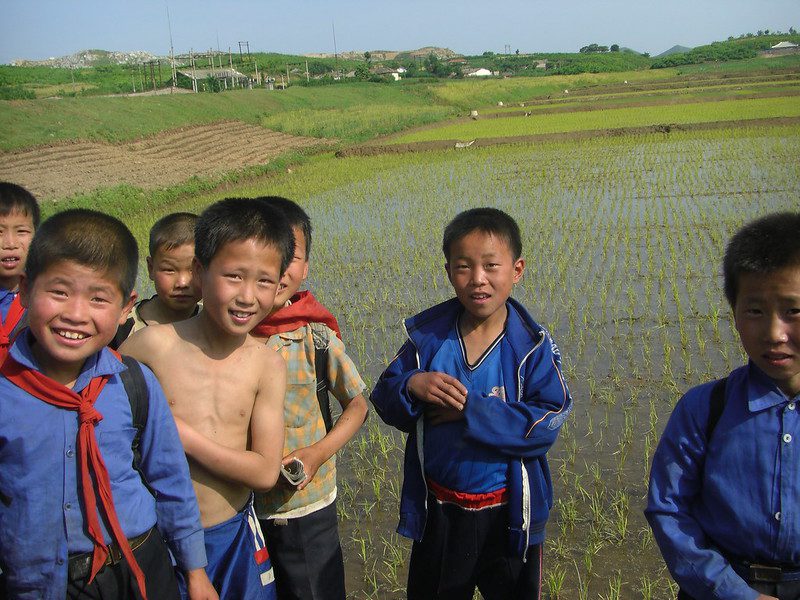
 North Korea, once known as the Democratic People’s Republic of Korea, is a country in East Asia, bordered by Russia, China and South Korea. Formed in 1948 in the aftermath of World War II, North Korea has long been defined according to its authoritarian models of government. In the early ‘50s, North Korea’s first leader, Kim Il Sung, attempted to conquer South Korea, but an ensuing conflict with U.S. and U.N.-backed forces forced North Korea’s defeat. Since then, North Korea has typically eschewed Western influence, centralizing instead the concept of juche or self-reliance and structuring itself around a dynasty of autocratic leaders. North Korea’s current leader, Kim Jong-un, exercises supreme authority, bolstered by tight party control and the subjugation of the nation’s ranking elites.
However, economic mismanagement, inadequate food production and military overspending have hindered North Korea’s potential for growth. At the mercy of an authoritarian regime, its population of 26 million grapples with restrictions on travel, free expression and economic opportunity. According to some estimates, 60% of North Koreans live in poverty, ranking it among the poorest countries in Asia. Children in North Korea often suffer the worst, denied adequate resources and even subjected to forced labor.
Lack of Opportunity Hinders Children’s Potential
In the mid-’50s, Kim Il Sung, aiming to neutralize political opposition, implemented a country-wide class system, ranking citizens according to their perceived political loyalty. The Songbun system arrives at its determination by closely considering ancestral ties, patriotism during the Korean War and associations with South Korea or China. Those with better songbun–those more politically loyal–receive better education, health care and employment opportunities.
In the early ’90s, widespread famine and the fall of the Soviet Union necessitated that the Songbun system ease its ban on independently earned wealth. However, its emphasis on conformity still haunts North Korea’s children. Often judged according to their family history, North Korean children face a shortage of opportunities. The quality of their education and job potential suffers accordingly and many struggle to enjoy upward mobility.
Children in North Korea Are Subjected To Forced Labor
As a nominally communist country, the North Korean state tightly controls all facets of its economy, promoting state-run industries and funding military upgrades instead of resource production. To support this economic system, North Korean officials mobilize adults and school-age children to contribute to various sectors, including agriculture, mining and construction. Schools sometimes send children to complete short-term projects in fields or factories in exchange for a boost in funding. Similarly, children who are unable to join the military or whose families are too poor to bribe government officials are enrolled in military-like shock brigades, working long hours in hazardous conditions.
Vaccination Rates Have Plummeted
Hoping to counteract the spread of COVID-19, North Korean officials closed the country’s borders, stymying foreign trade. Without any influx of supplies, vaccines and other medical necessities have grown extremely limited. As the World Health Organization (WHO) and the United Nations Children’s Fund (UNICEF) reported, North Korea’s childhood immunization coverage dropped from 97% in 2020 to 0% by 2022, risking the reemergence of diseases like measles, polio and whooping cough. Any outbreaks could strain the country’s health system, weakening its communities’ herd immunity. Without access to routine vaccination, children’s health can only suffer.
Children in North Korea Struggle Against Food Insecurity
In the ’90s, North Korea experienced a severe famine, exacerbated by the fall of the Soviet Union. Though technically recovered, the country still faces widespread food shortages, especially after closing its borders in the wake of COVID-19. Committed to a model of self-sufficiency, North Korea has turned to its agricultural resources to nourish its population despite recent drought and typhoon rains severely undercutting crop production. As a result, in 2020, UNICEF estimated that 10 million people were food insecure, with 140,000 children under 5 suffering from acute malnutrition. In some cases, families have even dropped off their children at local orphanages, hoping to ensure better care and a chance at proper nourishment.
Looking Ahead
In striving to protect children across the globe, UNICEF has maintained a presence in North Korea. In 1990, the nation signaled its support for the Convention on the Rights of the Child, a UNICEF-sponsored international agreement that protects children’s rights and freedoms. However, in many ways, North Korea has failed to maintain its promise, compromising children’s well-being through mandated labor and oppressive class systems.
As a result, UNICEF has worked to restore children’s rights, developing a strategic program that would target food insecurity, social development, sustainability and data management. Also, as COVID-19 restrictions have eased across Asia, North Korea has gradually re-opened its borders, resuming conversations with neighboring Russia and China. Hopefully, renewed trade and foreign support can direct vital resources toward children in North Korea.
Finally, a committed humanitarian and international community remains focused on North Korea’s struggles, noting the oppression of its citizens and pushing for political reform. In advocating this, UNICEF and other organizations hope to restore children’s rights, freedoms and potential for self-determination.
– Sydney Verdi
Photo: Flickr

Heart for Africa: Fighting Hunger in Eswatini
Despite efforts to address this, the hunger challenge along with other health concerns continues to cast a shadow over the lives of many Eswatini citizens. However, amid these realities, nonprofits such as the Heart for Africa Organization have emerged as helpful allies committed to combating hunger and malnutrition through innovative and sustainable initiatives. Its unwavering dedication and support signal a potential turning point for the communities fighting hunger in Eswatini.
The Genesis of Heart for Africa
Janine and Ian Maxwell founded Heart for Africa in 2003, driven by a desire to find purpose following the September 11 attacks in the United States. Janine’s journey took her to Africa, where she confronted the harsh realities of hunger and illness.
Witnessing the daily battles of children, mothers and grandmothers for survival propelled Janine to use her corporate experience for a greater cause. Together, Janine and Ian established Heart for Africa, a nonprofit organization committed to tackling hunger, poverty and disease in Eswatini.
Addressing Eswatini’s Pressing Needs
Janine and her husband’s founding of Heart for Africa quickly positioned the organization as a critical player in addressing Eswatini’s severe challenges. Its focus on this particular nation stems from its acute hunger and health crises. Eswatini, home to just more than one million people, faces some of the world’s harshest conditions, with an average life expectancy of merely 29 years, a stark contrast to the United States (U.S.), where the life expectancy stands at 78 years for its 320 million inhabitants.
This dramatic difference underscores the health care disparities that contribute to nearly half of Eswatini’s population living below the poverty line. Given these dire statistics, Heart for Africa’s commitment to providing hunger and medical aid is both urgent and essential for improving the lives of Eswatini’s residents.
Addressing Child Hunger in Eswatini
In 2009, Heart for Africa launched a feeding program in partnership with rural churches in Eswatini, aiming to feed orphaned children within these communities. More than 350 churches sought support from this initiative, with selections favoring those in the country’s most remote areas. This marked a significant effort to combat child hunger and provide essential aid, laying the groundwork for sustainable development.
By its tenth anniversary in 2019, the organization had not only continued to feed hungry children but had also introduced “well-child check-ups” at its church partner sites to monitor health and wellness. Heart for Africa aims to eliminate malnutrition among the populations it serves through its network of 30 church partners. Additionally, there are plans to increase the feeding program from two to seven days per week at all partner churches, furthering its commitment to nurturing the well-being of Eswatini’s children.
Project Canaan: Combating Hunger
Heart for Africa has introduced initiatives like Project Canaan, focusing on long-term solutions to hunger in Eswatini. This comprehensive land development program introduces various approaches to teaching agriculture by utilizing outdoor and greenhouse crop production, dairy farming, livestock raising and fruit and crop production where feasible. The produce supports Eswatini’s populations, with participants working in sustainable communities.
In addition, Project Canaan aims to foster self-sufficiency and long-term resilience against food insecurity and poverty within local communities. It includes employment training and educational programs to equip community members with sustainable agricultural practices, empowering them with essential skills and knowledge for their future.
Agricultural Projects by Heart for Africa
At the core of this nonprofit is a deep-seated commitment to effect real change in the lives of people and communities throughout Eswatini. Heart for Africa is at the forefront of transformative change through its wide array of innovative programs and unwavering dedication, tackling crucial issues and driving sustainable development.
In addition, this commitment has led to significant infrastructure developments, including the construction of a greenhouse in 2015. This project is part of its ongoing efforts to enhance and diversify agricultural activities, signifying a move toward sustainable farming practices and the cultivation of high-value crops like vanilla. This venture not only promises future income but also creates numerous job opportunities, given its labor-intensive nature.
Food Security through Innovative Farming
Another development that benefits those struggling with hunger in Eswatini is the 30 acres of irrigated fields maintained by Heart for Africa where food is grown for local communities. This farming practice was recently incorporated into the organization’s strategic approach to addressing food insecurity and promoting sustainable agriculture. Since Eswatini currently imports 95% of its fruits and vegetables, the country’s population must shift toward growing food to reduce the reliance on and cost of importation.
In addition to the irrigation fields, Heart for Africa has developed 140 acres of dry fields for maize silage and hay production. This is also integral for fighting hunger in Eswatini since it ensures a sustainable resource for livestock, further contributing to food security and economic stability in the region.
– Caleb Ilayan
Photo: Unsplash
Transforming Waste in India Into Sustainable Jobs
The Importance of Waste-Pickers
People like Salma are the backbone of recycling initiatives in many developing nations, collectively known as the informal recycling sector. These waste pickers and recyclers contribute significantly, representing 1-2% of Asia’s and Latin America’s urban populations. Roughly 20% of the waste produced in India is recycled by an estimated 1.5 to 4 million waste pickers, mostly Adivasis and Dalits. Adivasis are indigenous or tribal peoples of India with distinct cultures and traditions. Dalits are marginalized groups traditionally regarded as “untouchables” within the Indian caste system, facing discrimination and social exclusion.
Despite their indispensable role, waste-pickers endure discrimination, health hazards and economic insecurity. Exposure to hazardous materials daily causes them to face various health risks without health care schemes. Privatizing waste collection further exacerbated their plight, leading to many job losses and income instability. Yet, amid these challenges lies an economic opportunity. The waste management market in India is forecasted to reach $13.62 billion by 2025, with a promising growth rate of 7.17%, which means transforming waste into sustainable jobs has enormous upsides.
Under the prevailing system in India, waste pickers face limited prospects for advancement. However, one social enterprise, “Ashaya,” aims to overturn this reality by prioritizing human development.
Unlocking the Human and Economic Potential of Waste Management
Ashaya’s “Without” project aims to transform trash into long-term jobs. This results from founder Anish Malpani’s commitment to finding sustainable solutions for social, economic and environmental problems. Ashaya has grand hopes rooted in humble beginnings. The enterprise’s mission is to increase the value of “waste.” It is considered a resource by those in the waste-picking business and redistributes that value to stakeholders in the supply chain. By concentrating on the frequently disregarded and neglected waste-pickers and utilizing their potential in conjunction with internal technical advancements, they want to build from the bottom up.
Furthermore, Ashaya’s passion is to bring transformative change. They focus on post-consumer metaled Multi-layered plastic packaging (MLP), such as flexible plastic like candy bar wrappers or chip bags. That is how they created the world’s first pair of sunglasses entirely out of “impossible” to recycle MLP. Ashaya transforms MLP waste into high-quality materials by directly sourcing waste from pickers. For this transformation, they offer a premium incentive for MLP and integrate informal workers into the supply chain.
Most of Ashaya’s employees are former waste-pickers. Waste pickers experience stability and dignity through formal agreements and increased wages. Their incomes rise from 1.2x to 3x compared to the informal sector. Moreover, partnerships with cooperatives ensure that 10% of sales support the education of waste-pickers children, fostering long-term community development.
The Way Forward
As for the future, Ashaya expects sub-district-level decentralized “Material Cradles” to act as long-term recycling hubs. These hubs, supported by centralized research facilities, will drive technological advancements to enhance waste value. Through its “Cradle” programs, Ashaya seeks to offer an alternative to profit-driven enterprises, prioritizing social impact and environmental sustainability as the cornerstones of its vision.
As Ashaya continues its journey, the promise of sustainable livelihoods for waste-pickers heralds a transformative era in India’s waste management landscape by transforming waste into sustainable jobs.
– Spencer Springob
Photo: Flickr
How The BOGO Model Is Fighting Poverty
The Rise of the BOGO Model
The BOGO model is often traced to TOMS, a California-based company founded in 2006. TOMS gained widespread recognition for its application of the innovative business scheme, pledging to donate a pair of shoes to a person in need for every pair sold. Following promising success, TOMS expanded the program to include a range of other products including sunglasses (through a partnership with Seva Foundation).
Blake Mycoskie, the founder of TOMS, initially sought to aid children restricted by lack of footwear in getting to school. While partnering with IMA World Health, TOMS initiated its BOGO scheme in Haiti in 2011, distributing hundreds of thousands of pairs of new shoes to children in need in an attempt to break the cycle of poverty.
Evolution and Impact of TOMS’ Giving Model
TOMS was compelled to reassess its approach after facing financial challenges nearing bankruptcy. In 2019, the company decided to move away from the BOGO model to a broader social-giving approach, donating 1/3 of its profits to community-led philanthropy. Overall, despite criticism and financial pressure, the company has made an outstanding dent in the realm of poverty alleviation through the remarkable scale of provision of footwear, sight restorations and access to safe water using the one-one model.
To date, TOMS has provided:
Analyzing the Critiques of the BOGO Model
While the BOGO model initially garnered praise for its direct impact on impoverished communities, criticisms arose regarding its long-term effectiveness and unintended consequences on local markets.
According to a study of the model, consumer interest is boosted by 60% when tied to charitable donations, but this enthusiasm drops to 52% when consumers consider potential negative outcomes such as aid dependency. During an independent impact study specific to TOMS shoes, several key insights were revealed. The study, which focused on TOMS Shoes’ charitable efforts in El Salvador, sought to address two main questions that have been subjects of criticism toward the BOGO model.
TOMS’ Response to Criticism and Adaptation
The study first examined the effect of distributing free shoes on local markets, discovering that for every 20 pairs of donated shoes, local vendors sold one less pair. It then evaluated the impact of receiving donated shoes on the children. While 95% of the children viewed the shoes positively and wore them regularly, evidence of transformative effects on children’s lives was minimal.
In fact, some concerning findings emerged, such as a slight increase in dependency among the children who received the shoes. Despite criticisms, the study praised TOMS’ responsiveness and commitment to enhancing its program. Through flexibility and transparency, such as offering sports shoes and exploring alternative distribution methods, TOMS demonstrates a commendable approach to poverty alleviation, showcasing the strength of adaptation for continuous improvement in the field.
BOGO Model Evolution: Spotlight on B1G1
TOMS’ move away from the BOGO model does not mark the end of one-for-one schemes but instead signals a shift toward newer strategies that focus on long-term effects and include nonproduct-based contributions.
The model has evolved to counter dependency and negative impacts on local businesses, now emphasizing donations that precisely meet the needs of recipient communities. Leading this transformation is ‘B1G1’, a social movement from Singapore, launched in 2007, that has engaged in 330 million projects worldwide to combat poverty.
So far, through its collaborating businesses, the B1G1 community has provided:
Combating Poverty: The Initiative’s Impact
These initiatives foster self-sufficiency by promoting job creation and entrepreneurship, vital elements for stimulating economic growth, enhancing productivity and increasing innovation.
Looking Ahead
At the moment, initiatives like TOMS and B1G1 highlight the Buy-One-Give-One (BOGO) model’s significant role in poverty alleviation, underscoring the value of transparency and adaptability in ending poverty cycles.
As its approach to reducing poverty matures, the BOGO model’s evolution teaches that impactful change demands collaboration across all societal sectors. By offering sustained support to impoverished areas within a framework of social enterprise, these initiatives successfully contribute to breaking the poverty cycle.
– Freddie Ledger
Photo: Flickr
5 Charities Operating in Guatemala
In 2023, the World Bank estimated that in Guatemala’s population of about 17 million people, 55.2% could be considered poor. Many efforts and programs to improve the living conditions of the country’s poor have arisen from its abhorrent circumstances. Poverty in Guatemala is estimated to increase by three or four times without the intervention of charities and organizations. These are 5 charities operating in Guatemala that work tirelessly to fill this need.
Charities Operating in Guatemala
A Vision for the Future
With 66% of the population living on less than $2 per day, poverty is a constant reality for most Guatemalan citizens. These 5 charities operating in Guatemala have sparked meaningful change. From empowering women in impoverished communities to breaking cycles of injustice and poverty, these organizations provide critical and indispensable support by addressing various issues that many Guatemalans face daily.
– Danielle Schaafsma
Photo: Unsplash
Understanding Poverty in Estonia
Issues Being Faced
The high poverty levels in Estonia cannot be attributed to just one key factor. Several issues are contributing to the current crisis. However, one significant issue is the political divide facing the nation. Estonia’s rural and urban sectors are experiencing a high level of division as the Centre Party (representing the majority of the rural areas) lost more than half of its seats in parliament. At the same time, the Reform Party has seen electoral victories resulting in increased power and influence.
According to the Friedrich Ebert Foundation, roughly half of the Estonian population lives in the underrepresented rural regions, which also contain around two-thirds of municipalities. These rural communities lack many of the social and welfare services available to the urban areas of Estonia. Rural communities lack social programs and need to catch up in basic modern amenities. According to a survey by EUROSTAT, only 89% of rural Estonian households have access to the internet.
Urban Areas
While the division between resources available to rural and urban sectors contributes to Estonia’s struggles, this divide does not mean that urban areas are not also struggling. The amount of people living in relative poverty in Estonia has grown dramatically in the last few years. According to the most recent statistics, 48,000 Estonians live in absolute poverty, a rise from 18,000 in 2021. Additionally, the data indicates that nearly 303,900 Estonians now experience relative poverty, an increase of about 3,000 compared to the figures reported in 2021.
Another factor contributing to Estonia’s economic situation is the influx of immigrants arriving in the country. Low birth rates and declining quality of life have affected Estonia’s population. While immigration has positively impacted maintaining a healthy population count, the influx of immigrants has strained resources and heightened regional disparities. According to the Centre for Eastern Studies, around 49,400 immigrants arrived in Estonia in 2022. Immigrants tend to stick to Urban areas, which could further exacerbate the growing disparities between urban and rural communities already struggling to share social resources, potentially worsening poverty in Estonia.
Possible Solutions
Despite Estonia’s struggles, solutions are being proposed to right the ship and alleviate economic pressures on citizens. WHO has proposed several adjustments that could lead to more affordable health care for the most disadvantaged members of Estonian society. In summary, WHO suggests that the Estonian government adjust the Estonian Health Insurance Fund (EHIF) in the following ways:
These suggestions from WHO are based on data gathered from various surveys conducted in Estonia from 2015 – 2023.
Wrap Up
Estonia is facing a period of hardship and uncertainty. Political unrest, a struggling population and regional divides are putting intense stress on the country’s economy and people. Yet, solutions are being presented to achieve lasting improvements in the struggle against poverty. As time marches, hope for Estonia’s recovery remains with assistance from guiding forces outside the country, such as WHO, working to solve poverty in Estonia.
– Beau Sansom
Photo: Flickr
Renewable Energy in Kenya
In the 21st century, particularly in the past few years, Kenya has begun to harness this geological advantage to become a global powerhouse in clean energy. With a total geothermal power capacity of 988.7MW, of which 799MW stems from the Great Rift Valley, Kenya is the 6th largest producer of geothermal energy worldwide. According to KenGen, there is potential for this capacity to rise to 10,000MW, with a view to Kenya being powered entirely by renewable energy by 2030.
What Does This Mean for the World?
In a declaration by Kenyan President William Ruto, who is leading the campaign for the country’s shift from fossil fuel reliance, he claimed that: “Despite Africa having an estimated 40% of the world’s renewable energy resources, only $60bn or 2% of $3tn renewable energy investments in the last decade have come to Africa.”
Increases in foreign aid investments could be mutually beneficial for both Kenya and Western nations. If foreign aid budgets increased in focus on expanding upon Africa’s renewable energy infrastructure, for example, by helping to expand operations in Kenya, this could potentially provide a solution to the West’s continued reliance on fossil fuels and give a boost to the West’s efforts in fighting the climate crisis through trade alliances with African nations.
What Does This Mean for Kenya and Africa as a Whole?
A substantial economic boost could be anticipated with increased foreign aid investment into renewable energy infrastructure projects in Africa. Infrastructure projects will likely require a significant uptake in local workers to assist with building power plants and wellheads, providing local people with new employment opportunities and the prospect of newfound wealth in the region.
The potential transformation of Africa’s power grid through these investments also cannot be understated: “According to the U.N., more than half of the sub-Saharan population does not have access to power, making it the lowest region due to the lack of a grid that distributes power to consumers. Large African economies like Nigeria and South Africa rely heavily on fossil fuels to supply their booming population.”
For decades, Africa’s troubles with poor power grid infrastructure have constrained the continent’s capacity for economic growth. Manufacturing, infrastructure and retail sites cannot operate without a sufficient and reliable power supply. Therefore, the economic boost these developments could provide is unequivocally huge, as well as the employment opportunities that are so desperately needed.
Kenya’s geothermal operations already provide enough to power approximately 3,800,000 homes through state and private commercial projects. It is, therefore, relatively simple to imagine the extraordinary impact further investment from Western states could have on alleviating millions of Kenyans and Africans across the continent out of poverty.
– Ethan Leyden
Photo: Flickr
The Growth of E-Health Startups in Southeast Asia
New Path to Health Care: E-Health Startups
E-health startups in Southeast Asia are pioneering a variety of solutions that address the region’s unique health care challenges. These innovations range from telemedicine platforms that connect patients with medical professionals remotely, to AI-driven diagnostic tools that provide faster and more accurate assessments. The accessibility of mobile technology and internet connectivity has been a key enabler, allowing these startups to reach underserved communities in remote areas.
In addition, one of the most significant impacts of e-health startups is its ability to provide essential health care services to those who previously had limited or no access. By offering consultations, health monitoring and access to medical information through smartphones and computers, these startups are making health care more inclusive. This is especially critical in regions with a shortage of health care professionals and facilities.
Case Studies of E-Health Startups Impact
Challenges and Limitations
Despite the promising growth, e-health startups in Southeast Asia face several challenges. Regulatory hurdles, data privacy concerns and the need for digital literacy among both health care providers and patients are significant barriers. Additionally, ensuring the quality of health care services delivered through digital platforms remains a priority.
Looking Forward
The future shines bright for e-health startups in Southeast Asia, as innovation flourishes and investment surges in the sector. The COVID-19 pandemic catalyzed the rapid adoption of digital health services, underscoring its vital role in contemporary health care systems. As these startups continue to develop, they are poised to significantly influence the region’s health care landscape, making it more resilient, accessible and efficient.
The growth of e-health startups in Southeast Asia represents a pivotal shift toward more accessible, efficient and inclusive health care services. Through innovation and technology, these startups are bridging significant gaps in health care delivery, offering hope and improved care to millions. Furthermore, as the sector continues to mature, it holds the promise of transforming health care in once unimaginable ways, making a lasting impact on the health and well-being of the region’s diverse populations.
– Hosna Hossain
Photo: Unsplash
How the Regime Affects Children in North Korea
However, economic mismanagement, inadequate food production and military overspending have hindered North Korea’s potential for growth. At the mercy of an authoritarian regime, its population of 26 million grapples with restrictions on travel, free expression and economic opportunity. According to some estimates, 60% of North Koreans live in poverty, ranking it among the poorest countries in Asia. Children in North Korea often suffer the worst, denied adequate resources and even subjected to forced labor.
Lack of Opportunity Hinders Children’s Potential
In the mid-’50s, Kim Il Sung, aiming to neutralize political opposition, implemented a country-wide class system, ranking citizens according to their perceived political loyalty. The Songbun system arrives at its determination by closely considering ancestral ties, patriotism during the Korean War and associations with South Korea or China. Those with better songbun–those more politically loyal–receive better education, health care and employment opportunities.
In the early ’90s, widespread famine and the fall of the Soviet Union necessitated that the Songbun system ease its ban on independently earned wealth. However, its emphasis on conformity still haunts North Korea’s children. Often judged according to their family history, North Korean children face a shortage of opportunities. The quality of their education and job potential suffers accordingly and many struggle to enjoy upward mobility.
Children in North Korea Are Subjected To Forced Labor
As a nominally communist country, the North Korean state tightly controls all facets of its economy, promoting state-run industries and funding military upgrades instead of resource production. To support this economic system, North Korean officials mobilize adults and school-age children to contribute to various sectors, including agriculture, mining and construction. Schools sometimes send children to complete short-term projects in fields or factories in exchange for a boost in funding. Similarly, children who are unable to join the military or whose families are too poor to bribe government officials are enrolled in military-like shock brigades, working long hours in hazardous conditions.
Vaccination Rates Have Plummeted
Hoping to counteract the spread of COVID-19, North Korean officials closed the country’s borders, stymying foreign trade. Without any influx of supplies, vaccines and other medical necessities have grown extremely limited. As the World Health Organization (WHO) and the United Nations Children’s Fund (UNICEF) reported, North Korea’s childhood immunization coverage dropped from 97% in 2020 to 0% by 2022, risking the reemergence of diseases like measles, polio and whooping cough. Any outbreaks could strain the country’s health system, weakening its communities’ herd immunity. Without access to routine vaccination, children’s health can only suffer.
Children in North Korea Struggle Against Food Insecurity
In the ’90s, North Korea experienced a severe famine, exacerbated by the fall of the Soviet Union. Though technically recovered, the country still faces widespread food shortages, especially after closing its borders in the wake of COVID-19. Committed to a model of self-sufficiency, North Korea has turned to its agricultural resources to nourish its population despite recent drought and typhoon rains severely undercutting crop production. As a result, in 2020, UNICEF estimated that 10 million people were food insecure, with 140,000 children under 5 suffering from acute malnutrition. In some cases, families have even dropped off their children at local orphanages, hoping to ensure better care and a chance at proper nourishment.
Looking Ahead
In striving to protect children across the globe, UNICEF has maintained a presence in North Korea. In 1990, the nation signaled its support for the Convention on the Rights of the Child, a UNICEF-sponsored international agreement that protects children’s rights and freedoms. However, in many ways, North Korea has failed to maintain its promise, compromising children’s well-being through mandated labor and oppressive class systems.
As a result, UNICEF has worked to restore children’s rights, developing a strategic program that would target food insecurity, social development, sustainability and data management. Also, as COVID-19 restrictions have eased across Asia, North Korea has gradually re-opened its borders, resuming conversations with neighboring Russia and China. Hopefully, renewed trade and foreign support can direct vital resources toward children in North Korea.
Finally, a committed humanitarian and international community remains focused on North Korea’s struggles, noting the oppression of its citizens and pushing for political reform. In advocating this, UNICEF and other organizations hope to restore children’s rights, freedoms and potential for self-determination.
– Sydney Verdi
Photo: Flickr
USAID/BHA Food Assistance
Strategies and Funding Allocations
For this reason, the USAID/BHA allocates much funding towards its food assistance programs: more than $6 billion in the Fiscal Year 2022 alone, helping more than 167 million individuals worldwide. It also partners with the World Food Program (WFP) and various humanitarian NGOs to provide funding and food provisions to even more needy people. The methods by which this assistance reaches those experiencing food insecurity go beyond providing food and are adapted to the specific conditions facing the countries and communities requiring food aid. These strategies vary from direct food assistance from the U.S. to locally procured food products and even cash or food vouchers given to those who need them to use at local markets.
In-Kind Food Assistance: A Rapid Response System
One common method of providing food aid is through provisions directly delivered by the U.S. to those in need. Referred to as “in-kind food assistance,” food parcels are taken from USAID distribution centers in Miami, Florida; Dubai, UAE; Durban, South Africa; and Djibouti City, Djibouti.
These warehouses are stocked with up to 50 million metric tons of food supplies, enabling a swift and robust response to urgent food needs worldwide. Basic staples such as rice, vegetable oil and lentils are readily available for deployment in critical situations. The reliability of the in-kind food assistance system proves particularly effective in addressing acute hunger resulting from emergencies, including conflicts or natural disasters.
A recent example highlighting the efficacy of this assistance occurred in Kenya, where years of drought made food both scarce and prohibitively expensive in 2022. It necessitated importing food aid into the country through USAID/BHA and WFP. Another instance underscores the crucial role of this assistance in Yemen, currently grappling with one of the world’s most severe humanitarian crises. Conflict in Yemen has severely disrupted local food supplies and markets, necessitating the importation of in-kind food assistance to address the insufficient capacity of local resources to provide for its citizens.
Supporting Economies and Meeting Local Preferences
USAID/BHA also utilizes other methods of providing food aid to those who need it beyond in-kind food assistance. One such method is using USAID/BHA funds to buy food provisions from local markets to distribute to those experiencing food insecurity. This allows USAID/BHA funds to support the local economy and provide foods that are more familiar and comforting to those experiencing hunger. It also can often be a more affordable and quicker method of food assistance for aid groups in places where conflict has made locally procured food assistance an essential supplement to in-kind food assistance, which can sometimes be costly to provide in these areas and can often be delayed. This recently has been the case in South Sudan and Afghanistan, where locally procured food products have helped aid groups provide food to those who need it.
Direct Cash Assistance
Another method is giving money directly to those in need so that can buy food at local markets. This is more common in places where there is technically enough food to feed the population locally, but it is unaffordable for those experiencing food insecurity or crisis. An example of USAID/BHA utilizing this approach is in Guatemala, where much of the population experiences hunger and malnutrition. Guatemala has the highest rate of childhood stunting in Latin America and the Caribbean. USAID/BHA efforts in Guatemala are entirely based on cash transactions, rather than in-kind food transfers or local procurement, in conjunction with other programs that partner with local farmers to strengthen agricultural supply and resiliency.
Food Vouchers
Finally, the last method utilized by USAID/BHA to help those experiencing hunger is by providing food vouchers, which can then be redeemed at local markets. A voucher, rather than monetary assistance, ensures that the funding is used for specific nutritious food items and decreases the possible dangers of possessing cash in certain volatile situations. An instance of this method in action is in Syrian refugee camps, where electronic vouchers are often provided to those living in these camps to procure food for themselves and their families.
Conclusion
Overall, USAID/BHA food assistance, as well as food aid provided by WFP and various NGOs supported by USAID/BHA, offers a range of methods to provide food to those experiencing food insecurity. This multifaceted approach allows these programs to adapt to the changing conditions and needs of different communities and situations globally. The flexibility inherent in utilizing all of these approaches, often in conjunction with each other, ensures that food reaches those in need efficiently while providing the added benefits of giving back to the local economy and providing some autonomy and comfort to those facing hunger. Most importantly, USAID/BHA food assistance helps keep people worldwide from having to go to bed hungry.
– Lyle Seeligson
Photo: Wikimedia Commons
Facts About Poverty Among the Māori
The History of Discrimination and Root of Māori Poverty
Landing approximately between “1200AD and 1300AD,” the first settlers of New Zealand, ancestors of the Māori, established a small hunter-gatherer society known for its rich cultural traditions and expert warfare. Four hundred years later, in 1642, the Europeans reached the southern shores and by 1840, New Zealand fell under British Colonial control. In the same year, the Treaty of Waitangi was signed, determining land ownership rights; however, few Māori had the authority to contribute and distribution was unequal, leaving the Māori with insufficient reserves. The Māori have yet to recover these promised lands. Many argue that “this colonial history and subsequent structural racism has caused high rates of poverty among Māori.”
Māori and Other Races’ Levels of Poverty
While all nationalities face poverty in New Zealand, the rates are not proportionate. This is starkly apparent in recorded child poverty rates, with an average of 10.3% of all children living in households experiencing material hardship. However, rates reach 18.8% for Māori children, almost double the average. The impacts of these inequalities are undeniable, leading to “poorer health, higher death rates,” and overrepresentation in the prison population.
Causes of Poverty
An explanation for ongoing poverty among the Māori is the system of inheritance, whereby each generation is born into the poverty of their parents. Many view poverty as a “generational curse,” as are the words of Māhera Maihi and feel as though they were “rarely a priority for [their] parents.” Another explanation is that Maori face discrimination in all areas of life.
However, its occurrence in the workplace severely impacts an individual’s or family’s economic situation. Whether discrimination prevents one from acquiring a job or within the job itself, impacts on economic attainment are undeniable. The good news is that this issue is being addressed. The unemployment rate for Māori is now 5.5%, down from 7.8% in 2021-22. However, there is still much room for improvement as the unemployment rate among Europeans, including first and subsequent generations, has remained low at 2.8% in 2023.
Effects of Poverty
The impact of poverty on the Maori community extends far beyond economic constraints, delving into critical aspects of health, education and even crime rates. Numerous studies have underscored a clear and “documented association between experienced racial discrimination and poor health.” Those “growing up in poverty have two to three times worth of health outcomes” compared to those who did not, including both “higher rates of infection and trauma.”
Education, often hailed as a pathway to breaking the cycle of poverty, becomes an uphill struggle for Maori students. They “spend less time in the education system and do less well in it than non-Māori students as a group.” This disparity persists throughout the early and later years of education but becomes even more pronounced in higher education. Despite comprising 17.3% of the population, Māori representation in universities is only 13%, reflecting the systemic barriers hindering community educational attainment.
The effects of poverty among the Maori are not confined to health and education; they spill over into the realm of crime. Alarming statistics reveal that Maori individuals, burdened by poverty, make up a disproportionately high percentage of crime victims. They represent 37% of crime victims, with an incident rate of 61.89 offenses for every 100 adults, despite constituting only 17% of the population.
This overrepresentation is particularly pronounced among Maori women, who face an incidence rate of 59 offenses per 100 adults. The repercussions of poverty are glaringly evident within the criminal justice system, with Maori individuals comprising 50% of all persons in prisons. This disturbing statistic is compounded by the fact that Maori women constitute around 60% of the female prison population.
What Is Being Done
Although the challenges posed by poverty among the Māori people are considerable, measures are being implemented to overcome these. A “Whanau-centred program has had a positive effect in reducing child poverty among Māori,” demonstrating how progress occurs when it is compatible with the culture and community framework. Furthermore, there are plans to not only “deliver more housing, but [also] placing a huge focus on repairs of Māori-owned homes to increase the standard of living for Māori.” Around $30 million will be allocated to ensure these plans succeed, aiming to provide 1000 homes.
To achieve long-term, conscious progress, it is paramount that this change is not just legislative or economic but also a change of attitudes. The Māori have faced centuries of racial discrimination, which has seen an erasure of their culture from the local environment. When New Zealand was colonized, British imports replaced original place names. However, some original place names have recently been honored alongside the English. There has been an increase in the “revitalization of Te Reo Māori” in the last few years and with it comes an increasing appreciation and respect for Māori culture.
Conclusion
Having faced centuries of discrimination, the Māori are disproportionately affected by poverty. These impacts span all areas of life and prove nearly impossible to break away from. Although the threat of poverty is considerable, there has been an increased effort in recent years to reduce this suffering.
– Chloe Thomas
Photo: Wikimedia Commons