Informal settlements and Slum Upgrading in the Philippines
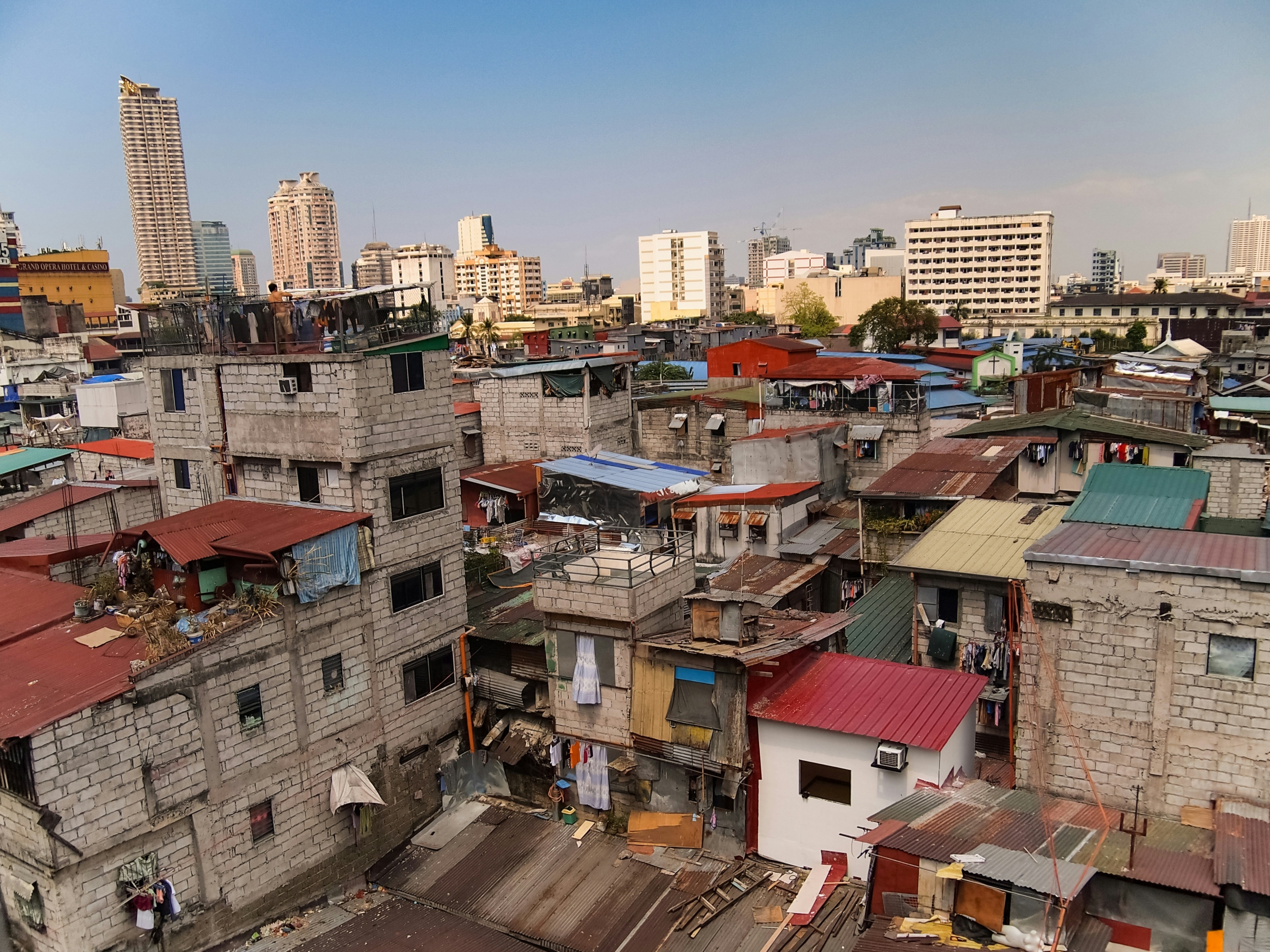 The Philippines is an archipelagic country in Southeast Asia, about 500 miles off the coast of Vietnam. In 2018, almost 43% of the urban population lived in informal settlements. These slum communities endure cramped living spaces, insecure tenure and inadequate access to essential services such as water and sanitation.
President Marcos’ urban development initiative
In 2023, President Marcos launched a flagship urban development initiative. The ambitious project set out to construct six million housing units by 2028 to benefit 30 million Filipinos and generate employment opportunities. Demonstrating a commitment to collaborative efforts, the government has successfully entered into memorandums of understanding with 47 local government units to facilitate cooperation on this housing initiative. Ten months in, the Department of Human Settlement and Urban Development reported 1.2 million housing units built across the country, exceeding program targets.
Community-based development is effective
Poor urban populations that work with rather than receive aid from institutions have been successful in the Philippines. According to the World Resources Institute, one participatory housing program in Iloilo City relocated two-thirds of the population to safer areas without evictions. With the help of the local government’s community-based housing programs, 1,250 households in Iloilo could relocate to safer places. This 2022 approach became a model for programs in other parts of the Philippines and Asia.
Reliable data is lacking
About 4.5 million people are homeless or living in informal settlements in the Philippines. Three million of this population are in Metro Manila, “the capital region and largest metropolitan area of the Philippines.” Due to the consistent risk of eviction, occupants are unwilling to give information for surveys on informal settlements.
Residents do not have formal addresses and there is no consistent data collection method for recording the size of squatting communities. As a result, most statistics given are low estimates. Prominent studies highlight the lack of data on urban poverty, hindering effective policies for people experiencing poverty.
Half of the population lives in urban areas
Rural-to-urban migration patterns are rapid and driven by the need for work. In the Asia-Pacific region alone, 150,000 people migrate daily to cities. This migration is driven by economic opportunity, a lack of jobs in rural areas and the allure of a better lifestyle. Many Filipinos from rural regions relocate to urban centers like Metro Manila, Cebu City and Davao City in search of employment, education, health care and more.
Cities are only sometimes built to handle this constant influx from rural areas. Due to overcrowding in city centers, the government continues to encourage rural development. Urban migration has led to nearly 115,000 units of public housing lying empty in rural areas. Efforts to address this migration include initiatives to promote rural development, create job opportunities outside major cities and improve living conditions in rural and urban settings.
Housing affordability is key
According to the Philippines Institute for Development Studies, low-income households cannot afford housing priced at 30% of their income, while middle-income households can. Coupled with rapid urbanization, this results in a need for more affordable housing near jobs for lower-income populations.
When housing costs are too high, families may be forced to live in inadequate or unsafe conditions, compromising their health and overall quality of life. Moreover, high housing costs can lead to financial strain, limiting individuals’ ability to save, invest or spend on other essential needs. Addressing housing affordability is crucial for promoting social inclusion, reducing poverty and fostering sustainable economic development in the Philippines.
Up to 20 typhoons and 150 earthquakes each year
In addition to flooding and active volcanoes, the Philippines is highly susceptible to natural disasters. It is located along the Pacific Ring of Fire and in the path of typhoons. Coastal and low-lying areas are particularly prone. Additionally, the country’s many active volcanoes, such as Mayon and Taal, pose risks of eruptions.
Informal settlements are among the most vulnerable to natural disasters. However, nonprofits like Habitat for Humanity, Build Change and CARE Philippines are spearheading projects to replace informal settlements with typhoon-resistant housing units so that communities don’t have to spend months every year rebuilding their homes.
– Ava Johnson
Photo: Unsplash
