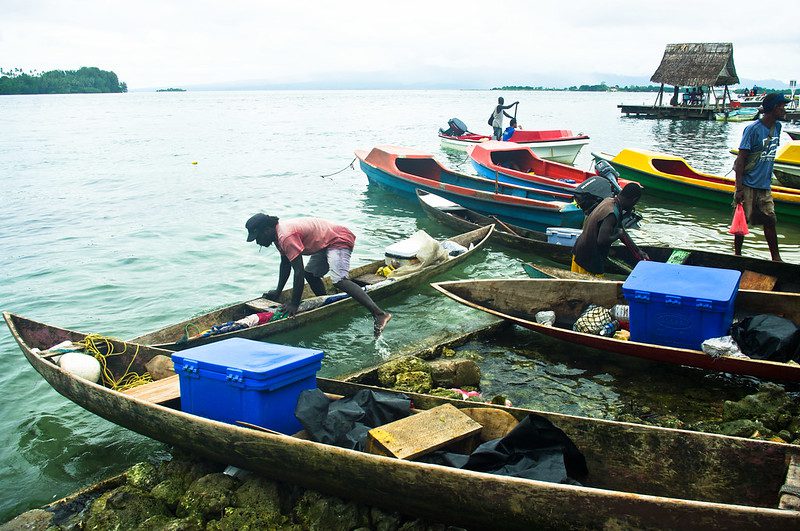
 The Pacific Islands are composed of 12 countries, including Papua New Guinea, Fiji and Samoa, each with its own vibrant culture and environment. However, according to the United Nations Department of Economic and Social Affairs, a quarter of Pacific Islanders cannot attain basic needs, especially as natural disasters drastically destroy livelihoods and food security. Nonetheless, the United States Agency for International Development (USAID) programs in the Pacific Islands address development, illegal fishing and adverse weather conditions.
Protecting Biodiversity: OurFish OurFuture
Illegal, unreported and unregulated (IUU) fishing threatens the livelihoods of coastal communities and ocean ecosystems. It costs the global economy between $26 and $50 billion annually, harming local and international economies. In the tuna industry in the Pacific Islands, commercially caught Pacific tuna generated $22 billion in 2012 and 2014, while IUU fishing generated $616 million a year. IUU fishing affects more than the economy; it also affects fish populations and oceanic biodiversity, as it accounts for one out of every five fish caught.
The OurFish Our Future program works to combat IUU fishing. It is five years long, spanning from 2021 to 2026 and provides $15 million to address the factors of IUU fishing that degrade coastal biodiversity and impact food stability. This program focuses on the Federated States of Micronesia, Palau, Papua New Guinea, the Republic of the Marshall Islands, the Solomon Islands and Vanuatu.
The program brings together communities, providing opportunities for all ages and genders to participate in the design and implementation of security programming. Its ecosystem approach to fisheries management (EAFM) contributes to policies that will “improve coastal fisheries data systems, improve enforcement capacities and strengthen collaboration of enforcement authorities.”
Fostering Development: Pacific American Fund
As a result of the Pacific Island Countries’ (PICs) geography, they are vulnerable to environmental disasters perpetuated by changing climatic conditions, instability in government and present gender inequities, all while maintaining a critical role in the global economy. PICs are small and isolated, which leaves them prone to tsunamis, floods, earthquakes, droughts and volcanic activity that destroys their buildings and crops. PICs also suffer from unsafe living conditions, including unclean water, pollution and harmful chemicals, which lead to a rate of 70% of deaths related to noncommunicable diseases such as cancer and chronic respiratory diseases.
The Pacific American Fund (PAF) is a “five-year grant facility that addresses critical development challenges.” It supports the countries of the Federated States of Micronesia, Fiji, Kiribati, Nauru, Palau, Papua New Guinea, the Republic of Marshall Islands, Samoa, Solomon Islands, Tonga, Tuvalu and Vanuatu. The PAF aims to “improve the quality of life in vulnerable communities and improve access to services for remote communities in the region” through increased preparation for natural disasters and climate change, economic development and access to health care and education. One of its programs is small-scale construction in the Malita Province to improve and adapt the environment for increased trade and expansion into agribusiness.
Agribusiness in the Solomon Islands
The Solomon Islands are prone to natural disasters that affect their economy, requiring their communities to seek agribusiness advancements to protect and revive their economy. In October 2023, tropical cyclone Lola caused severe damage, affecting more than 22,000 people and 100 buildings and damaging water sources. Furthermore, many of the crops were destroyed, including breadfruit trees, which are one of the Solomon Islands’ main sources of carbohydrates. This left locals scared of starvation as they relied on their local agriculture for sustenance.
USAID programs in the Pacific Islands include the Solomon Islands Strengthening Competitiveness, Agriculture, Livelihoods and Environment (SCALE) plan. SCALE is a five-year, $25 million project focused on developing the agribusiness sector in the Solomon Islands. Additionally, SCALE Trade and Investment (T&I) “focuses on reducing the cost and steps of obtaining business permits and licenses; strengthening trade and investment facilitation; and improving agribusiness value chain growth.”
SCALE engages community members in its program through its T&I plan. It aims to increase its exports and the role of women in trade. SCALE T&I oversaw the creation of the Advisory Committee for Agribusiness in Malaita Province, which will work with the Solomon Islands Chamber of Commerce. USAID programs in the Pacific Islands, such as SCALE, improve conditions of poverty by providing funding and opportunities for locals to work, innovate and protect against environmental factors.
Impact of USAID Programs in the Pacific Islands
USAID programs in the Pacific Islands strengthen their economic and environmental resilience through advancing policies and funds. Through USAID help, PICs have accessed more than $500 million in climate financing to prepare for adverse climatic conditions and natural disasters. USAID programming supports local development, marine ecosystems and access to affordable energy. Its work in the Pacific Islands will continue through these long-term programs to ensure stability.
One success story from USAID’s programs for Pacific Islanders came through its partnership with Aquaculture Technologies of the Marshall Islands. USAID provided a $1.7 million grant to allow the company to manufacture its own fish feed and to train individuals such as Sonya. Sonya remained in the Solomon Islands after her family moved because she wanted to pursue aquaculture and secure a stable future in her home country.
Sonya now manages the fish hatchery and nursery, inspiring more women to become trained as independent aqua farmers and fish feed manufacturers. The Marshall Islands now produce 400 pounds of moi fish per week, which supplies local businesses and is exported.
– Astrid Burns
Astrid is based in Roseland, NJ, USA and focuses on Technology and Politics for The Borgen Project.
Photo: Flickr

Protecting the Future: USAID Programs in the Pacific Islands
Protecting Biodiversity: OurFish OurFuture
Illegal, unreported and unregulated (IUU) fishing threatens the livelihoods of coastal communities and ocean ecosystems. It costs the global economy between $26 and $50 billion annually, harming local and international economies. In the tuna industry in the Pacific Islands, commercially caught Pacific tuna generated $22 billion in 2012 and 2014, while IUU fishing generated $616 million a year. IUU fishing affects more than the economy; it also affects fish populations and oceanic biodiversity, as it accounts for one out of every five fish caught.
The OurFish Our Future program works to combat IUU fishing. It is five years long, spanning from 2021 to 2026 and provides $15 million to address the factors of IUU fishing that degrade coastal biodiversity and impact food stability. This program focuses on the Federated States of Micronesia, Palau, Papua New Guinea, the Republic of the Marshall Islands, the Solomon Islands and Vanuatu.
The program brings together communities, providing opportunities for all ages and genders to participate in the design and implementation of security programming. Its ecosystem approach to fisheries management (EAFM) contributes to policies that will “improve coastal fisheries data systems, improve enforcement capacities and strengthen collaboration of enforcement authorities.”
Fostering Development: Pacific American Fund
As a result of the Pacific Island Countries’ (PICs) geography, they are vulnerable to environmental disasters perpetuated by changing climatic conditions, instability in government and present gender inequities, all while maintaining a critical role in the global economy. PICs are small and isolated, which leaves them prone to tsunamis, floods, earthquakes, droughts and volcanic activity that destroys their buildings and crops. PICs also suffer from unsafe living conditions, including unclean water, pollution and harmful chemicals, which lead to a rate of 70% of deaths related to noncommunicable diseases such as cancer and chronic respiratory diseases.
The Pacific American Fund (PAF) is a “five-year grant facility that addresses critical development challenges.” It supports the countries of the Federated States of Micronesia, Fiji, Kiribati, Nauru, Palau, Papua New Guinea, the Republic of Marshall Islands, Samoa, Solomon Islands, Tonga, Tuvalu and Vanuatu. The PAF aims to “improve the quality of life in vulnerable communities and improve access to services for remote communities in the region” through increased preparation for natural disasters and climate change, economic development and access to health care and education. One of its programs is small-scale construction in the Malita Province to improve and adapt the environment for increased trade and expansion into agribusiness.
Agribusiness in the Solomon Islands
The Solomon Islands are prone to natural disasters that affect their economy, requiring their communities to seek agribusiness advancements to protect and revive their economy. In October 2023, tropical cyclone Lola caused severe damage, affecting more than 22,000 people and 100 buildings and damaging water sources. Furthermore, many of the crops were destroyed, including breadfruit trees, which are one of the Solomon Islands’ main sources of carbohydrates. This left locals scared of starvation as they relied on their local agriculture for sustenance.
USAID programs in the Pacific Islands include the Solomon Islands Strengthening Competitiveness, Agriculture, Livelihoods and Environment (SCALE) plan. SCALE is a five-year, $25 million project focused on developing the agribusiness sector in the Solomon Islands. Additionally, SCALE Trade and Investment (T&I) “focuses on reducing the cost and steps of obtaining business permits and licenses; strengthening trade and investment facilitation; and improving agribusiness value chain growth.”
SCALE engages community members in its program through its T&I plan. It aims to increase its exports and the role of women in trade. SCALE T&I oversaw the creation of the Advisory Committee for Agribusiness in Malaita Province, which will work with the Solomon Islands Chamber of Commerce. USAID programs in the Pacific Islands, such as SCALE, improve conditions of poverty by providing funding and opportunities for locals to work, innovate and protect against environmental factors.
Impact of USAID Programs in the Pacific Islands
USAID programs in the Pacific Islands strengthen their economic and environmental resilience through advancing policies and funds. Through USAID help, PICs have accessed more than $500 million in climate financing to prepare for adverse climatic conditions and natural disasters. USAID programming supports local development, marine ecosystems and access to affordable energy. Its work in the Pacific Islands will continue through these long-term programs to ensure stability.
One success story from USAID’s programs for Pacific Islanders came through its partnership with Aquaculture Technologies of the Marshall Islands. USAID provided a $1.7 million grant to allow the company to manufacture its own fish feed and to train individuals such as Sonya. Sonya remained in the Solomon Islands after her family moved because she wanted to pursue aquaculture and secure a stable future in her home country.
Sonya now manages the fish hatchery and nursery, inspiring more women to become trained as independent aqua farmers and fish feed manufacturers. The Marshall Islands now produce 400 pounds of moi fish per week, which supplies local businesses and is exported.
– Astrid Burns
Photo: Flickr
3 Initiatives Tackling Child Poverty in Suriname
In 1993 and again in 2014, government-led solutions sought to combat child poverty in Suriname by reinforcing children’s right to education and decreasing the likelihood of child exploitation. Suriname’s Human Development Index figure of 0.690 in 2022, as opposed to the earliest recording of 0.667 in 2004, indicates a steady increase in child poverty alleviation, a positive achievement compared to neighboring countries. However, work remains to tackle the challenges faced by the young demographic. Therefore, here are some key initiatives working to tackle child poverty in Suriname:
Move Forward Suriname
The Move Forward Organization is a nonprofit organization based in the Netherlands, with efforts extending abroad to Suriname. In 2017, it kick-started a project in the neighborhood of Sunny Side, a suburb outside the capital Paramaribo. Move Forward Suriname offers an opportunity for greatly disadvantaged children to foster a sense of community through a program of lessons in music, dance and sport.
Between 2017-2018 and again in 2023, the initiative proved successful in providing these children with facilities, coaching and, crucially, a positive environment that prioritizes their well-being. The initiative is free and accessible, with bus transport provided for the weekly events.
The organization launched a new funding target of $3,000 with the ambition of returning to Sunny Side and providing the local children with these benefits once again. Currently, this round of funding aims to use its growing team of coaches to grant these children a robust skill set for employment opportunities as they move into adulthood. These skills include filming, photography and social media creation.
School Meals Coalition
According to the World Factbook, around 6.7% of children younger than the age of 5 in Suriname were underweight in 2018. This level of malnourishment often leads to multifaceted issues for young, growing children. These include diseases such as anemia, stunting during critical stages of growth and a general lack of concentration in day-to-day life. All of these issues pose a threat to these children’s well-being and future.
School Meals Coalition is an organization that focuses on policy change and works both in Suriname and internationally. Its initiative ensures that school children are entitled to meals that are equally nutritious and sustainable. Accordingly, it works closely with local producers and farmers to monitor and ensure the quality of the products fueling children as they learn and play.
In September 2023, the Surinamese government joined its scheme, supported by the Minister of Education, H.E. Henri Ori. Currently, 15,000 children are recipients of these life-altering meals and the Minister’s goal is to have all Surinamese children across the country benefit from this initiative by the end of the decade.
UNICEF and Telesur Partnership
For Suriname’s youth, mental health decline relating to living in deprived conditions presents an urgent issue. According to the United Nations Children’s Fund (UNICEF), around 36% of young Surinamese people have thought about committing suicide and 76% have recorded feeling anxiety and depression in their day-to-day lives.
In March 2024, UNICEF Suriname announced a cooperative effort with the Latin American news service Telesur to help improve the well-being and prosperity of all Surinamese children. The new partnership seeks to incorporate awareness programs to support children’s mental health. More specifically, it is concerned with developing assertiveness, self-confidence and self-sufficiency in the underprivileged Surinamese youth.
At the signing of this partnership, the UNICEF representative for Guyana and Suriname, Nicolas Pron, argued that private “partnerships are at the heart of how we deliver results for children” and that the devised programs will be stimulated by private equity. The partnership also targets private companies wielding influence in the region. It aims to rally their corporate responsibility to pursue aid for Surinamese children.
Final Thoughts
For Suriname, alarming figures surrounding malnourishment, mental health and lack of opportunity jeopardize hope for prosperity among the country’s youth. However, nongovernmental initiatives intend to turn those statistics on their head, tackling child poverty in Suriname by improving immediate conditions and fostering wider, long-term social development.
– Ramiro Ruiz Martinez
Photo: Wikimedia Commons
The Child Nutrition Fund
Launch of the Child Nutrition Fund
UNICEF launched the CNF as one of its initiatives. The CNF, led by UNICEF, serves as a financing mechanism to address malnutrition in children and women sustainably through policies, programs, practices and supplies. It has brought together countries, donors, partners and civil society organizations to collaborate on this critical issue.
CNF Governance Structure
The governance structure of the CNF was formally established in Nov. 2023 with three distinct members: financial partners, government partners and operational partners. Financial partners contribute to the cause by donating financial resources and participating in a funding agreement with the CNF(via UNICEF). Government partners are national governments collaborating with the CNF to access its funds for child nutrition issues through partnership agreements. Operational partners are nonstate entities that implement child nutrition programs using funds from the CNF and operational partners’ agreements with UNICEF.
Strategic Actions and Goals
The CNF is actively supporting 23 countries that are implementing operational plans under the United Nations Secretary-General’s Global Action Plan on Child Wasting. These countries are taking steps that include promoting breastfeeding during the first two years of life, enhancing nutritious complementary food with micronutrient powders, monitoring weight gain and providing nutrition counseling, using mid-upper arm circumference (MUAC) measurements and ready-to-use therapeutic foods (RUTF) for early detection of child wasting and distributing food supplements. The Global Action Plan on Child Wasting sets a goal to reduce wasting, which is low weight-for-height, to less than 5% by 2025 and less than 3% by 2030.
Impact and Future Goals of the CNF
Despite the fact that the history of the CNF is short, with this structure and vision, the CNF has been making a meaningful contribution to child nutrition. The CNF has funded $25 million in country programs in Kenya, Malawi, Pakistan and the Philippines. These funds work towards the prevention, detection and treatment of child wasting. In addition, partnerships are formed for many projects including a $30 million project with Gavi in Ethiopia. Additionally, the CNF has matched $15 million in domestic resources in 14 countries. The CNF also increased access to RUTF by providing funding to RUTF suppliers. Between its launch in Dec. 2022 and 30 Sept. 2023, the RUTF Advance Payment Facility has financed $89 million to RUTF suppliers, which resulted in more than 4.8 million cartons of RUTF available to children in need. RUTF is useful in treating waste because of its high nutrition and digestibility.
The history of the CNF demonstrates its lasting impact on improving children’s lives and their health. By 2025, the CNF expects to expand its reach to 33 countries. The CNF will continue to work to end child wasting and malnourishment with a current goal of impacting 368,116,890 children and women.
– Sein Kim
Photo: Flickr
Nuclear Solutions to Angola’s Rural Poverty
Rural Reliance on Subsistence Agriculture
In this region, families primarily earn their income from informal work in an unregulated agricultural sector. Although the unemployment rate stood at 15% in 2022, 80% of the labor force is self-employed. Agricultural productivity frequently suffers due to the high instability of crops and the fact that families own about 80% of all cattle in southwestern Angola.
These figures of low income and limited opportunities reflect an overreliance on subsistence agriculture to sustain impoverished families. Essentially, the nutrition of these Angolan families depends entirely on the success of seasonal harvests, with virtually no social safety nets in place for farmers facing poor yields. Additionally, the war in Ukraine has led to skyrocketing prices for basic imported foodstuffs, further limiting access to alternative food sources.
Multi-Year Drought Affects Livestock
According to the Red Cross, over the last four harvest seasons, this region of Angola has experienced its most severe drought since the 1980s. This drought has worsened the region’s semi-arid conditions, already challenging livestock pasture grazing and crop harvesting. Increasing desertification due to lack of rainfall has caused agricultural production to falter. By the end of 2023, Huìla’s water reserves were completely depleted. Farmers can no longer feed their cattle as green pastures have turned arid and unusable. Consequently, harvest success is declining because oxen, which plow the crop fields, are also dying off. To find viable grazing areas, farmers often have to travel long distances with the remaining members of their herds.
IAEA Partnerships
In June 2021, the International Atomic Energy Agency (IAEA) initiated its ‘Nuclear Saves’ partnerships series, aimed at enhancing the prosperity of disadvantaged communities amid severe climate change. Employing nuclear energy as a solution also bolsters public confidence in this technology. Specifically, the Animal Production and Health Subprogram of these partnerships focuses on improving the nutritional value of indigenous pasture grasses and other feed to ensure food security for local populations.
Nuclear Solution to Angola’s Rural Poverty
The Angolan government has partnered with the IAEA to reduce rural hunger and poverty in its southwestern communities. This partnership aims to estimate cattle pasture intake and identify sustainable, weather-resistant pasture grasses. Angola is setting up a nutrition laboratory to pinpoint nutritious grasses for widespread use, replacing current cattle feed. The technical operation adopts a nuclear solution, using stable isotopes to analyze key nutrients in cattle feed and excrement. These nonradioactive isotopes are commonly used to measure nutrient concentrations. Victor Tsuma, project leader at the Joint FAO/IAEA Centre of Nuclear Techniques in Food and Agriculture, asserts that this solution will help “design a balanced diet for cattle with a mix of natural pastures and feed supplements.” This strategy aims to enhance animal production accordingly.
Fending Off Future Droughts
This initiative also aligns with ecological goals. By isolating and producing more nutrient-dense feeds, it can reduce greenhouse gas emissions from cattle in the region, which helps mitigate the irregular climate conditions that cause events like droughts in southwestern Angola. This approach not only prioritizes climate by aiming to lower carbon emissions through the feed that cattle consume but also enhances cattle productivity, which is linked to the health of pastures. Additionally, as the risk of overgrazing diminishes, it further protects the environment, improving the quality of grazing for farmers’ herds.
Looking Ahead
The partnership between Angola and the IAEA aims to alleviate Angola’s rural poverty and hunger by improving cattle nutrition through nuclear techniques. By identifying sustainable and nutritious pasture grasses, this initiative seeks to enhance livestock productivity and food security. Additionally, it addresses ecological concerns by reducing greenhouse gas emissions and protecting the environment from overgrazing, offering a comprehensive solution to the challenges faced by Angola’s southwestern rural provinces.
– Ramiro Ruiz Martinez
Photo: Flickr
Education in Latin America: Social Development through Football
Foundation of the Digital Education Program
FIFA Foundation Digital Education Program is a three-year initiative that seeks to implement computer science and robotics into the curriculum of primary schools. The program aims to help 10,000 children from vulnerable communities. The FIFA Foundation founded the campaigns in collaboration with the United Nations (U.N.) Sustainable Development Goals, aim to enhance the lives of disadvantaged children and youth globally, with a focus on education. The initiative aims to enhance education in Latin America to break the cycle of poverty and stimulate sustainable development in local and regional communities.
The collaboration of football, technology and education closes the digital gap in modern curriculums. As the digital world has grown since COVID-19, employment rates and economic development depend on digital literacy, which requires technological proficiency. So, in addressing socioeconomic barriers and modern learning, the FIFA Foundation introduces programming and robotics education in the classroom.
It integrates digital education with soccer through “play-based learning.” For example, participants can apply digital creativity skills to create “robotic prototypes” that can call penalties, pass and shoot balls. Due to FIFA’s humanitarian efforts, soccer has become a fundamental element of computation thinking, problem-solving and creativity.
FIFA’s Launch in Belize
From April 22 to 26, 2024, computer science and robotics workshops were delivered across Belize, marking the official launch of the program. In July 2023, a memorandum of understanding (MOU) was signed with the Ministry of Education, Culture, Science and Technology (MOECST) and the Football Federation of Belize (FFB). This memorandum outlines the effort to enhance education with soccer. The program involves 40 primary schools and equips students aged 8 to 11 with Chromebooks, robotics kits, projectors and more tools essential to digital learning. Moreover, the program will train up to 300 teachers in computer science.
With the help of the FIFA foundation, improving resources and expertise results in Belize’s educational innovation. The President of the FFB, Sergio Chuc, reflects that the “domestic market is too small to contemplate industrialization.” He considers this partnership with the Ministry of Education as “a leap into the future with digital education.”
FIFA’s Launch in Paraguay
In June 2024, Paraguay signed this memorandum, hoping to benefit 10,000 children in Paraguayan public schools. To achieve this goal, Paraguay must ensure the “distribution and utilization of technological resources” and “the support and training for teachers.” Student engagement is another significant component of the program’s success. Fortunately, soccer’s popularity is leveraged under this initiative and it can only attract students’ entertainment and attention.
The launch of the FIFA Foundation Digital Education Program in Paraguay commences an education transformation within the country. FIFA demonstrates how soccer brings together people from different social and economic backgrounds and improves education in Latin America.
– Caroline Albright
Photo: Pexels
The World Bank’s Education Reform in Africa
Rwanda: Quality Basic Education
Rwanda has made substantial strides in education reform through the Quality Basic Education for Human Capital Development (QBE) project. The World Bank has supported Rwanda’s vision of expanding and improving basic education to develop its human capital. Here are the key achievements:
The Rwandan government, with support from the World Bank, has signed a $200 million agreement to further advance human capital development. This investment emphasizes the nongovernmental organization’s (NGO) commitment to education reform in Africa so that underprivileged communities can access quality schooling.
Kenya: Enhancing Secondary Education Quality
Kenya has seen remarkable progress in programs such as the Secondary Education Quality Improvement Project (SEQIP) and the Primary Education Equity in Learning Project. Key achievements include:
The World Bank’s $200 million boost to Kenya’s education sector has been pivotal in driving these reforms.
The DRC: Empowering Girls
The DRC faces unique educational challenges, but the World Bank’s initiatives have brought about notable improvements, particularly in equity and girls’ empowerment.
The World Bank’s $900 million investment in the DRC is a testament to its commitment to supporting girls’ learning and empowerment, which will ultimately contribute to the country’s long-term stability and growth.
Summary
The World Bank’s initiatives in Rwanda, Kenya and the DRC highlight the significant progress in education reform in Africa. Expanding access, improving quality and promoting equity have transformed educational systems. The initiatives have contributed to broader economic development to reduce poverty levels. The successes in these countries serve as a model for other regions. They demonstrate the transformative power of strategic investments in education.
– Asiya Siddiqui
Photo: Pixabay
Salar de Uyuni: CODESPA’s Efforts to Alleviate Poverty
Economic Struggles in Salar de Uyuni:
The people of Salar de Uyuni, due to their rural environment, have limited access to education. Most children complete primary school, but boys often receive priority for secondary education. Girls who cannot attend school typically stay home to help with work and chores. Additionally, a lack of sex education contributes to teen pregnancy, which exacerbates the high illiteracy rates among women—up to 6% higher than the national average of 13%. In poor families, children attend public schools where educational quality is low. Educators in rural areas are twice as likely to lack proper training compared to their urban counterparts. Furthermore, rural areas offer fewer educational opportunities than urban areas. Without adequate education, securing well-paying jobs becomes significantly harder, leading many to resort to manual labor, such as working in salt farms.
Health Care Challenges and Its Effects
In addition to limited educational opportunities, the people of Salar de Uyuni face significant health challenges, including unsafe drinking water. The rivers and lakes on which these communities rely are often contaminated and they lack the means to purify the nonpotable water. Drinking unsafe water can lead to many illnesses, including diarrhea, which is a leading cause of death among children under the age of 5 in Bolivia.
Malnutrition is another leading cause of death among children under the age of 5 in Bolivia. In poor rural areas like Salar de Uyuni, where the majority of the population lives, children are more likely to suffer from malnutrition. A poor child from a rural town is eight times more likely to be malnourished than a child from a wealthier urban family. Poverty is the primary driver of malnutrition in these areas.
CODESPA’s Initiatives and Impact
The NGO CODESPA is committed to transforming the future for residents of Salar de Uyuni, focusing particularly on one of the most disadvantaged groups: the indigenous Quechan women. By leveraging tourism as a viable economic market, CODESPA assists these women in starting small tourism-related businesses, including accommodations, services, products and experiences. The organization provides training in business operations and management and supports sales efforts. CODESPA also utilizes its connections with tour operators, government ministries and other stakeholders to forge lasting partnerships. Its efforts have reached 102 Indigenous Quechan women and have created more than 230 new jobs in the area, empowering women to become leaders in their businesses and communities.
CODESPA’s initiatives in Salar de Uyuni demonstrate the potential of targeted efforts to alleviate poverty in developing areas. By addressing challenges such as lack of education, unsafe living conditions and limited employment opportunities, CODESPA is driving significant and lasting change. The organization focuses on supporting indigenous Quechan women by helping them start tourism-based businesses, which not only offers immediate economic benefits but also promotes a self-sustaining economic model.
Looking Ahead
CODESPA’s initiatives in Salar de Uyuni are transforming the region by addressing its economic challenges and improving access to education, health care and sustainable employment. By empowering indigenous Quechan women through tourism-based businesses, the organization is fostering economic growth and enhancing the quality of life. These ongoing efforts are creating a more promising future for the people of Salar de Uyuni, breaking the cycle of poverty and ensuring lasting change.
– Rachel Venable
Photo: Pixabay
Empowering Women Boosts Southeast Asia’s Energy Sector
Increasing women’s education, specifically preparing them for careers in the energy sector, could be a driving force in reducing energy poverty. The United States Agency for International Development’s (USAID’s) Mission Director for Regional Development Mission for Asia, Dr. Steven G. Olive, says that “it is a missed economic opportunity for countries, companies and communities” to keep women on the periphery of the energy sector.
USAID
USAID is spotlighting the connections among women, education and the workforce in Southeast Asia through its Enhancing Equality in Energy for Southeast Asia (E4SEA) program. This initiative seeks to address gender disparities in the region’s predominantly male energy industry. E4SEA is opening up deeper career opportunities for women in this sector. USAID’s priorities for this initiative include increasing the number of women entering the industry. The initiative provides support for women currently employed in the industry and offers scholarships and internship programs to women.
Spotlight: Scholarship Programs
Thai universities, in partnership with E4SEA, have developed the Gender Inclusive Energy Scholarship. This scholarship program aims to break down gender discrepancies within the energy sector. This opportunity encourages women to apply for either a two-year full-time master’s degree program or for a part-time semesterly scholarship. Women can also apply for a four-month paid energy internship – an opportunity available to bolster career outcomes. The flexible options demonstrate E4SEA’s commitment to women’s education.
ASEAN
ASEAN’s Plan of Action for Energy Cooperation (APAEC) is now in its second phase, which began following the 2016-2020 initiative and will extend through 2025. This plan aims to increase the integration of renewable energy throughout the region. In its efforts, APAEC emphasizes the vital role of women in the energy sector, recognizing them as key contributors. Under APAEC, women notably make up the majority of the ASEAN Climate Change and Energy Project (ACCEPT) team. The ACCEPT team focuses on three main priorities: understanding women’s perspectives in the energy sector, acknowledging the critical roles women play in this field and promoting women as leaders of change.
Spotlight: Monika Merdekawati
After graduating with a degree in mechanical engineering Monika now works for the Association of Southeast Asian Nations (ASEAN) as a researcher. With ASEAN, she focuses her efforts on policy, technology and mitigation while encouraging other young women to enter the energy sector field. Monika’s advice for women looking to enter the field is to “focus on enhancing your knowledge and skills, to be confident and to be generous in empowering fellow women.”
Looking Ahead
USAID and ASEAN initiatives are actively addressing energy poverty and improving Southeast Asia’s energy sector. This is achieved by promoting women’s education and careers in the energy sector. Programs like E4SEA and APAEC provide scholarships and internships, encouraging greater female participation and leadership in this field. By integrating more women into the energy sector, these ongoing efforts aim to reduce energy poverty and support sustainable economic development throughout the region.
– Carlee Unger
Photo: Flickr
GPEI Eliminating Polio: Ongoing Efforts and Future Challenges
Polio Aftermath
There is no consensus on the number of polio survivors experiencing the effects of paralytic polio; however, estimates from 2014 suggest about 20 million people are affected. Most of these cases occur in countries where polio remains endemic or has only recently been eradicated, such as Pakistan, Afghanistan and Nigeria.
Research indicates that most individuals living with paralytic polio reside in rural, low-income and isolated communities. A 2019 study found that nearly 80% of polio survivors develop post-polio symptoms, which can lead to chronic medical issues if not addressed. Apart from local community support groups, these survivors have limited resources to aid their rehabilitation and recovery. Consequently, due to this lack of resources, polio survivors often must manage their chronic post-polio or paralytic polio symptoms on their own. This combination of isolation and limited access to medical care creates a poverty spiral that is incredibly difficult to break.
GPEI and Polio Eradication
UNICEF received funding to support vaccinations for 370 million children worldwide. Recently, the Global Polio Eradication Initiative (GPEI) enhanced its relationship with Pakistan, boosting funding and resources to eliminate polio in the nation’s endemic regions.
In 2024, Luxembourg and Japan pledged significant funds toward the global eradication of polio. In May, authorities officially ended two wild poliovirus outbreaks in Malawi and Mozambique. Amid these successes, there is a growing need to focus more on polio survivors and the needs of individuals beyond vaccination. The effort to eliminate polio is incomplete until all those affected by polio, especially survivors who will never fully recover, receive the proper medical and social care necessary to ensure their quality of life and safety.
Current Support Systems
While many polio support and survival groups exist, most primarily function as support networks and often lack the resources to provide extensive post-polio disability care, although some can finance care in certain instances. When these groups do offer medical assistance, it typically comes from volunteer medical professionals who face challenges due to insufficient funding and equipment, much like the Turkish Polio Society.
Most major relief organizations focusing on global polio eradication develop infrastructure to distribute vaccines to as many people as possible. Historically, polio disability care centers have primarily been established for high-income populations in wealthy nations like France and the United States (U.S.) However, there is minimal effort to establish similar care centers in regions with higher rates of polio-related disabilities, where medical and social support could have the greatest impact.
Looking Ahead
Efforts to eradicate polio have made significant strides, with UNICEF securing funding to vaccinate 370 million children in 2024 and additional pledges from Luxembourg and Japan. However, addressing the long-term needs of polio survivors, especially in regions with limited medical access, remains crucial. Comprehensive support systems could ensure the well-being and quality of life for those affected by the aftermath of polio.
– Jamie Sackett
Photo: Flickr
How Green Finance is Reducing Poverty in Southeast Asia
Renewable Energy Initiatives
Renewable energy projects are a major part of green finance in Southeast Asia. These projects create long-term energy from renewable sources. They reduce carbon emissions, create jobs and promote energy security, such as expanding solar farms in the Philippines. The country has used its abundance of sunlight to develop large-scale solar farms. These projects are supported by green finance mechanisms that attract investments from both public and private sectors.
Sustainable Agriculture
Sustainable agriculture is another area where green finance is making an impact. Projects that promote eco-friendly farming practices and support small-scale farmers help improve food security and livelihoods but also reduce environmental degradation and climate change. In countries like Vietnam and Thailand, green finance initiatives have included organic farming, agroforestry and sustainable technologies.
Solar Farms in the Philippines
The Philippines has become a leading influence in solar energy development in Southeast Asia. The country’s solar farms, such as the Cadiz Solar Power Plant, are great examples of successful green projects. The Cadiz Solar Power Plant, one of the largest in Southeast Asia, has a capacity of 132.5 megawatts and provides clean energy to more than 167,000 households. By providing reliable and affordable energy, these projects were able to improve the quality of life in rural areas, where access to electricity was limited. Additionally, with the amount of construction and maintenance of solar farms, numerous jobs were created, contributing to local economic development.
Eco-Friendly Infrastructure in Indonesia
Indonesia has also made strides in green finance for sustainable infrastructure development. Its focus is creating an eco-friendly environment with projects like the Green Bond Initiative, which finances green buildings, waste management systems and sustainable transport solutions. The Greater Jakarta Light Rail Transit (LRT), one of the projects, is the development of eco-friendly public transportation systems in Jakarta. The goal is to reduce traffic congestion and lower carbon emissions. The Green Bond Initiative in Indonesia has not only attracted investments but also generated employment opportunities and improved urban living conditions, reducing poverty in Southeast Asia.
Sustainable Fisheries in Brunei
Brunei has implemented initiatives aimed at conserving marine biodiversity while trying to protect fishing communities. By promoting responsible fishing practices and investing in sustainable technologies, these projects ensure the long-term availability of marine resources. Financial support from green finance initiatives enables small-scale fishers to adopt sustainable methods, securing their livelihoods and improving food security. The ASEAN Catalytic Green Finance Facility (ACGF) supports such initiatives, providing funding and technical assistance to these projects.
Project Selection Criteria
The selection of these projects is based on their potential environmental and socio-economic benefits. Renewable energy projects, such as solar farms, are chosen to provide clean energy, reduce greenhouse gas emissions and create jobs. Sustainable agriculture projects are selected for their capacity to enhance food security, promote sustainable farming practices and improve people’s livelihoods.
Implementation and Impact
The implementation of green finance projects in Southeast Asia involves project planning, financing and monitoring. Financial institutions, such as the ADB and the World Bank, provide technical assistance and funding to support the execution of these projects. The involvement of local communities is also crucial for varying reasons from gaining support to extra financing.
Green finance is becoming a crucial part of poverty reduction in Southeast Asia by creating jobs, improving access to essential services and improving the economy. Investments in renewable energy, sustainable agriculture and eco-friendly infrastructure are providing numerous employment opportunities, increasing incomes and reducing the cost of living. As Southeast Asia continues to develop sustainably, its future potentially looks greener.
– Danica Lourdu Nelson
Photo: Flickr