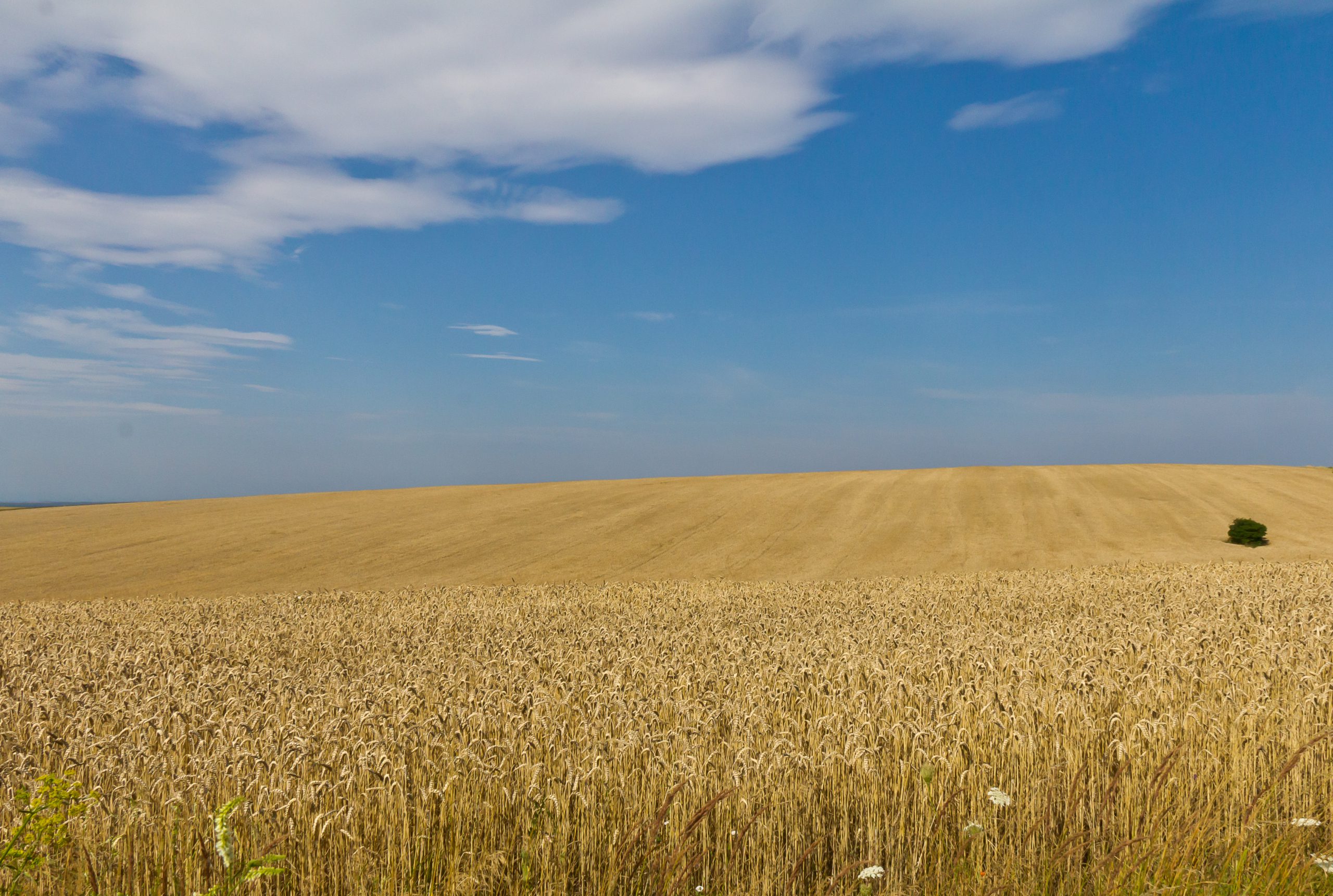
 Ukraine’s agricultural sector underpins its national economy and global food security. Therefore, the support of the United States (U.S.) for Ukrainian agriculture is a strategic priority. The European Union (EU), meanwhile, has balanced supporting Ukraine with protecting EU agricultural markets.
The Importance of Ukraine’s Agricultural Sector
Ukraine’s agricultural sector employs 14% of its population. Ukraine was the largest global producer of sunflower, the second largest producer of sunflower oil and meal, the sixth for rapeseed and corn and the seventh for wheat. Following an Association Agreement with the EU, agriculture’s share of Ukraine’s exports increased from 27% in 2013 to 41% by 2021, with agricultural exports to the EU accounting for $7.7 billion out of a total of $27.8 billion.
The war in Ukraine has worsened food price inflation and acute global food insecurity, particularly in the Middle East and Africa. An estimated 400 million people in 36 of the 55 food-insecure countries rely on Ukrainian food products. Previously, half of the World Food Programme’s (WFP) grain stock came from Ukraine. The country also supplied a third of the cereal imported into the Middle East and North Africa. Nations like Libya, Pakistan, Yemen and Lebanon import 30% of their wheat from Ukraine, while 45% of wheat imports to East Africa come from the country.
Global food prices and acute food insecurity reached record highs in 2022, partly due to the war’s disruptions of supply chains and the price of fertilizer, food commodities and fuel. This also raises humanitarian assistance costs.
The Extent of Damage Inflicted
Russia has strategically destroyed, damaged and seized farms, food storage facilities, agricultural machinery and irrigation systems. This allows Russia to diminish Ukraine’s income and ability to resist, acquire the nation’s exports and create pressure by provoking food crises. Russia inflicted $10.3 billion in damages to the agricultural sector and $69.8 billion in losses by the end of 2023. Agricultural machinery accounts for 56.7 % of lost value.
Among the seized or lost products are 2.8 million tonnes of grain, 1.2 million tonnes of oilseeds, 124,000 tonnes of fertilizer and 11.6 million liters of fuel. The conflict caused seven million Ukrainians to experience moderate or severe acute food insecurity in September 2023. The regions of Zaporizhya, Kherson and Luhansk suffered the most, with 65% of the total damages. An estimated 7.5% of Ukrainian cropland has been abandoned.
The U.S. Department of Agriculture (USDA) estimates that harvested area is down from 2021 levels for wheat, corn and barley for 2023 are down 32%, 27% and 37%, respectively. Nearly 20% of Ukraine’s storage capacity on its territory is lost.
Global Support
Following Russia’s capture of key ports by May 2022, exports went through Poland, Hungary, Slovakia and Romania by land and river through EU Solidarity Lanes and later via a corridor with Turkey. The high weight-to-value ratio of agricultural products renders transportation by land expensive, reducing the level of grain exported and making sea routes crucial. The U.N.-brokered Black Sea Grain Initiative enabled the export of nearly 33 million metric tons of grains and other agricultural products from July 2022 to July 2023. To further alleviate food security pressures, international sanctions against Russia (and Belarus) exempted agricultural products, including fertilizer.
The EU has also been crucial in supporting Ukraine’s agricultural sector, with 50% of Ukrainian wheat exports going to Europe in February 2022. However, opposition from EU farmers led to restricted grain sales from May 2022 to September 2023. Now, the EU has implemented quotas for Ukrainian agricultural products and emergency breaks for certain products to protect their farmers while also re-exporting grain.
Similarly, the United States Agency for International Development (USAID) Agriculture Resilience Initiative (AGRI-Ukraine) supported the production and export of seeds, fertilizers and agricultural equipment. Investment totaled $350 million in its first year. In July, USAID announced it secured $510 million in private sector and donor investments for Ukraine’s agricultural sector. The program helped 32% of Ukraine’s registered farmers access seeds, fertilizers, crop protection, storage and financing.
Conclusion
Ukraine’s agricultural sector benefited from global economic support, trade reconfiguration and the recovery of some ports. Despite increased production and exports, recovering Ukraine’s agricultural output and income is challenging amid hostilities. However, it is crucial in tempering global food crises and sustaining Ukraine’s resistance effort. The biggest challenges include extensive infrastructure damage, landmine prevalence, trade costs and disruptions and coordination between Ukraine’s government, international actors and the private sector.
– Luke Ravetto
Luke is based in Boston, MA and focuses on Politics for The Borgen Project
Photo: Wikimedia Commons

4 Charities Combating Child Poverty in Brazil
ChildFund
Since 1966, ChildFund has been helping impoverished children in Brazil, focusing on improving the lives of children and families in disadvantaged areas. The organization’s efforts center on education, health care and protecting children from violence and exploitation. ChildFund also aims to train community members to monitor water quality and has partnered with multiple programs to implement measures that promote safe water drinking—one of these partnerships accomplished providing clean water to more than 24,000 people in Brazil’s Jequitinhonha Valley.
One of ChildFund’s key initiatives in Brazil is its focus on education and skills training. The organization provides educational support to children, ensuring access to quality schooling and essential resources for success. This includes reducing violence in classrooms and socioeducational activities promoting leadership. Additionally, ChildFund Brazil empowered 8,200 children through its “Taking Care of the First Years of Life” program.
Children of Bahia
Children of Bahia is a nonprofit organization dedicated to supporting children in one of Brazil’s most impoverished regions, the state of Bahia. Established in 2005, the organization provides food, education and health care to children living in extreme poverty. By working directly with local communities, Children of Bahia addresses the needs of the children it serves and provides targeted support where needed most.
The organization also supports projects where children receive meals, access necessary health care and participate in extracurricular activities like the Wednesday Club. In addition to providing direct support, Children of Bahia strengthens families and communities by offering workshops and community development programs. This approach ensures children get the support they need to thrive at home and within their communities.
GlobalGiving
GlobalGiving is an international crowdfunding platform connecting donors with grassroots projects worldwide, including Brazil. The platform supports various initiatives to combat child poverty in Brazil through its platform. These projects are run by local organizations that deeply understand the communities they serve, ensuring that donations are used effectively to create lasting change.
In Brazil, GlobalGiving supports projects that provide education, health care and necessities to needy children. For example, some projects focus on improving rural communities’ access to clean water and sanitation. In contrast, others provide scholarships and educational resources to children who would otherwise be unable to attend school. The organization’s model allows donors to choose specific projects they want to support, providing transparency and ensuring that their contributions make a direct impact.
Compassion International
Compassion International is a well-known organization that works to alleviate child poverty through its child sponsorship programs. The organization provides children access to education, health care and spiritual guidance in Brazil. Compassion’s sponsorship programs connect donors with individual children. It provides them with the financial support needed to attend school, receive medical care and participate in extracurricular activities.
The organization has also served 223 churches to create safe and nurturing environments for the children, for which approximately 69,000 have received aid. In addition to meeting basic needs, Compassion’s programs emphasize the importance of emotional and spiritual well-being. They offer counseling and support to help children overcome the challenges they face.
Conclusion on Charities in Brazil
The work of charities such as ChildFund, Children of Bahia, GlobalGiving and Compassion International demonstrates that the power of collective action. These organizations have sufficiently reduced child poverty in Brazil via education, health care, food and water supply and sponsoring.
– Christian Core
Photo: Flickr
Battling Diseases in El Salvador
El Salvador is a country in the west of Central America. The country is the smallest and most densely populated of the seven Central American countries. Countries with dense populations tend to have more problems with disease. The dense population, among other factors, has led to the rise of diseases in El Salvador.
The Impact of Mosquitoes
Mosquitoes tend to spread diseases in El Salvador, similar to many Central and South American countries. This is partly due to the hot climate. The CDC has warned against several diseases that mosquitos pass when traveling to El Salvador. One of these diseases is Zika. For most, Zika is a minor inconvenience. Some of the symptoms include fever, rash, headache, joint pain, red eyes and muscle pain. Although uncommon, it is possible for zika to cause Guillain-Barre syndrome, which causes one’s immune system to attack their nerve cells. The people most at risk with Zika are pregnant women. Zika can cause serious birth defects in the child and other pregnancy problems.
Although mosquitoes are dangerous, they are not the only insects that can cause problems. Leishmaniasis is spread from the bite of a sand fly. Sand flies are present in many areas, including Central America. There are three forms of the disease. The first is cutaneous, which causes skin sores, the second is mucosal, which causes sores in the nose, mouth and throat and visceral, which impacts internal organs. The first two forms can lead to lifelong disability if left untreated. Meanwhile, the last one has a 90% mortality rate without treatment, making it one of the most dangerous diseases in El Salvador.
Leptospirosis
Bug bites and other diseased animals are a very common vector for disease, but far from the only ones. Leptospirosis is spread through urine, body fluids and contaminated water. Leptospirosis is not as common in Latin America as the other diseases, but El Salvador still has 4.65 cases per 100,000 people. Some symptoms include high temperature, headache, body aches and pains, stomach ache, diarrhea and yellowing of the skin. The survival rate depends on the severity of the disease, but in severe cases, the mortality rate is around 40%. Unfortunately, El Salvador has some of the most polluted water in Latin America. Some causes for the issue are considered poor waste management and overexploitation from companies. One can attribute both of these to the country’s poverty. The poverty rate in El Salvador is higher than the Latin American and Caribbean average.
Tuberculosis
Although one can take precautions to avoid bugs and contaminated water, prevention is more difficult when a disease is airborne. One example is tuberculosis. The disease is not as common in El Salvador as it is in other countries, as there are 49 cases per 100,000 people. However, it is still on the watchlist for traveling to El Salvador. Some symptoms of tuberculosis are an extended cough, chest pain, coughing up blood, weakness or fatigue, weight loss, loss of appetite, chills, fever and sweating at night. Tuberculosis can be fatal without treatment.
Bill S.288
Bill S.288 aims to refocus U.S. actions on prevention, address virulent drug-resistant TB strains and provide support for the best practices and technologies in TB diagnosis and treatment. The bill establishes new goals for U.S. efforts and employs prevention and treatment suggestions based on the latest scientific data while also increasing accountability and transparency. The last action on the bill was that it was referred to the Committee on Foreign Affairs.
Although fighting these diseases can be hard for governments it is not impossible. In 2021, the World Health Organization (WHO) certified El Salvador as malaria-free. This was the final result of a 50 year commitment by the government to fight Malaria, making them the first country in Central America to be malaria-free. This was accomplished through vector control, early detection, rapid treatment, community engagement and education, international funding and overall government commitment to the cause.
The World Mosquito Program
Some organizations like the World Mosquito program are helping to fight diseases spread by mosquitos all over the world. In 2022, El Salvador’s Ministry of Public Health announced they would collaborate with the World Mosquito program for the Wolbachia project. The Wolbachia project is releasing non biting male mosquitos into areas with high disease rates. These mosquitoes hold a bacteria which prevents eggs they produce with females from hatching.
Looking Ahead
In conclusion, the dense population and tropical climate of El Salvador create a challenging environment for controlling the spread of various diseases. Mosquito-borne illnesses like Zika and Leishmaniasis, as well as rodent-transmitted diseases such as hantavirus, pose significant health risks. Additionally, diseases like leptospirosis and tuberculosis highlight the complexity of the health landscape. Despite these challenges, El Salvador’s achievement of being declared malaria-free by the WHO demonstrates that with sustained effort and effective public health strategies, progress is possible. Continued support from global organizations and comprehensive health initiatives are essential to further reduce the burden of infectious diseases and improve public health in El Salvador.
– Matthew Mendives
Photo: Flickr
The Challenge of Sustaining Ukraine’s Agricultural Sector
The Importance of Ukraine’s Agricultural Sector
Ukraine’s agricultural sector employs 14% of its population. Ukraine was the largest global producer of sunflower, the second largest producer of sunflower oil and meal, the sixth for rapeseed and corn and the seventh for wheat. Following an Association Agreement with the EU, agriculture’s share of Ukraine’s exports increased from 27% in 2013 to 41% by 2021, with agricultural exports to the EU accounting for $7.7 billion out of a total of $27.8 billion.
The war in Ukraine has worsened food price inflation and acute global food insecurity, particularly in the Middle East and Africa. An estimated 400 million people in 36 of the 55 food-insecure countries rely on Ukrainian food products. Previously, half of the World Food Programme’s (WFP) grain stock came from Ukraine. The country also supplied a third of the cereal imported into the Middle East and North Africa. Nations like Libya, Pakistan, Yemen and Lebanon import 30% of their wheat from Ukraine, while 45% of wheat imports to East Africa come from the country.
Global food prices and acute food insecurity reached record highs in 2022, partly due to the war’s disruptions of supply chains and the price of fertilizer, food commodities and fuel. This also raises humanitarian assistance costs.
The Extent of Damage Inflicted
Russia has strategically destroyed, damaged and seized farms, food storage facilities, agricultural machinery and irrigation systems. This allows Russia to diminish Ukraine’s income and ability to resist, acquire the nation’s exports and create pressure by provoking food crises. Russia inflicted $10.3 billion in damages to the agricultural sector and $69.8 billion in losses by the end of 2023. Agricultural machinery accounts for 56.7 % of lost value.
Among the seized or lost products are 2.8 million tonnes of grain, 1.2 million tonnes of oilseeds, 124,000 tonnes of fertilizer and 11.6 million liters of fuel. The conflict caused seven million Ukrainians to experience moderate or severe acute food insecurity in September 2023. The regions of Zaporizhya, Kherson and Luhansk suffered the most, with 65% of the total damages. An estimated 7.5% of Ukrainian cropland has been abandoned.
The U.S. Department of Agriculture (USDA) estimates that harvested area is down from 2021 levels for wheat, corn and barley for 2023 are down 32%, 27% and 37%, respectively. Nearly 20% of Ukraine’s storage capacity on its territory is lost.
Global Support
Following Russia’s capture of key ports by May 2022, exports went through Poland, Hungary, Slovakia and Romania by land and river through EU Solidarity Lanes and later via a corridor with Turkey. The high weight-to-value ratio of agricultural products renders transportation by land expensive, reducing the level of grain exported and making sea routes crucial. The U.N.-brokered Black Sea Grain Initiative enabled the export of nearly 33 million metric tons of grains and other agricultural products from July 2022 to July 2023. To further alleviate food security pressures, international sanctions against Russia (and Belarus) exempted agricultural products, including fertilizer.
The EU has also been crucial in supporting Ukraine’s agricultural sector, with 50% of Ukrainian wheat exports going to Europe in February 2022. However, opposition from EU farmers led to restricted grain sales from May 2022 to September 2023. Now, the EU has implemented quotas for Ukrainian agricultural products and emergency breaks for certain products to protect their farmers while also re-exporting grain.
Similarly, the United States Agency for International Development (USAID) Agriculture Resilience Initiative (AGRI-Ukraine) supported the production and export of seeds, fertilizers and agricultural equipment. Investment totaled $350 million in its first year. In July, USAID announced it secured $510 million in private sector and donor investments for Ukraine’s agricultural sector. The program helped 32% of Ukraine’s registered farmers access seeds, fertilizers, crop protection, storage and financing.
Conclusion
Ukraine’s agricultural sector benefited from global economic support, trade reconfiguration and the recovery of some ports. Despite increased production and exports, recovering Ukraine’s agricultural output and income is challenging amid hostilities. However, it is crucial in tempering global food crises and sustaining Ukraine’s resistance effort. The biggest challenges include extensive infrastructure damage, landmine prevalence, trade costs and disruptions and coordination between Ukraine’s government, international actors and the private sector.
– Luke Ravetto
Photo: Wikimedia Commons
Making Space for Menstruation: Key to Girls’ Participation in School
Periods as an Obstacle to Education
In Bangladesh, 32% of girls were unaware of what menstruation was before they got their first period. One in five girls in rural Ethiopia has no access to materials to manage their menstruation. With 1.5 billion people lacking basic sanitation facilities, many women and girls do not have a private space to menstruate. As a result of the period taboo, period poverty and the lack of hygiene facilities, many girls see their periods not as “a natural and healthy process” but as a significant interruption to everyday life. This interruption is felt most fully in the context of school.
Take the mundane and everyday experience of leaking. Accidental leaking is made all the more likely for girls in developing countries as a result of reduced access to materials to manage menstruation and extended journeys to school. The lack of sanitation and clean water facilities limits girls’ ability to deal with leaking in privacy. Finally, often left without support from family or teachers, girls can be subjected to ridicule from peers. It is clear to see how periods may dissuade girls from attending school. One in 10 girls in Africa will miss school when menstruating: 3-5 days every month of lost schooling.
In Madagascar, menstruation has been aptly identified as a lead cause of absenteeism for girls. In some cases, menstruation is also a catalyst for them dropping out altogether. This not only limits their future economic opportunities, drawing them away from the productive labor market, but also increases their risks of child marriage and pregnancy.
Talking Periods: Peer-To-Peer Conversation
Funded by the Fund for Innovation in Development (FID), the PSE is pursuing a research project with periods in mind: the “Young Girls Leaders” program. Its research goal is to determine whether promoting healthy and productive discussions between girls to reduce the stigma around menstruation at the forefront can increase girls’ participation in school. The program is being run in three districts in Amoron’i Mania, Madagascar. Between three and six girls will be chosen and educated in menstrual management. The girls will be encouraged to converse with their female peers without the discomfort that often accompanies these exchanges.
To determine the benefits of the Young Girls Leaders program, 70 schools will receive both the U.N. Water, Sanitation and Hygiene (WASH) intervention and the Young Girls Leaders program. An additional 35 schools will only receive the WASH program. In comparison, another 35 schools will serve as a control group, receiving neither intervention. The research program predicts that healthy conversations surrounding periods will cause a “social norm shift.” Furthermore, when used with the WASH intervention, significantly increases the likelihood of girls staying in schools during their menstrual cycles.
Conclusion
The research conducted by the PSE is not focused on the direct implementation of long-term programs to address period poverty. Instead, it aims to produce evidence that can be used to develop broader, large-scale interventions globally, ensuring that girls remain in school while menstruating. By supporting this research, the FID highlights the importance of international funding in driving innovation with a development-centered outlook.
– Tilly Phillips
Photo: Flickr
The United States Announces $39 Million in Aid for Zimbabwe
Weather Patterns Exacerbate Suffering in Zimbabwe
The Global Hunger Index has identified severe food insecurity in Zimbabwe that has only worsened with persistent droughts. Considering the existing food insecurity in the country, the El Niño weather patterns and the subsequent droughts plaguing sub-Saharan countries have worsened an already severe situation of food insecurity in Zimbabwe. Throughout the 2024 October-May agricultural season, around 80% of Zimbabwe received reduced rainfall, which resulted in the loss of almost 70% of crops across the country. Consequently, the Government of Zimbabwe has predicted that around 6 million citizens will require food assistance in the coming months.
Additionally, hits to the agricultural sector have numerous implications for Zimbabweans’ economy and general livelihoods. Thus, changes in weather patterns imply more than just elevated rates of food insecurity; they can also have resounding impacts across multiple sectors of the country’s infrastructure. The International Trade Administration (ITA), a subsection of the United States Department of Commerce, addresses the importance of the agricultural sector for Zimbabwe’s economy by stating that “Zimbabwe’s economic growth potential largely depends on developments in its agricultural sector.” The farming industry in the country is responsible for millions of jobs, 30% of export earnings, 15% of the country’s gross domestic product (GDP) and the livelihoods of more than 60% of the population of Zimbabwe heavily rely on the success
USAID’s Plan for Improvement
USAID recognizes agriculture’s critical role in the economy of Zimbabwe and has prioritized foreign aid to the nation for many years. Most recently, USAID announced $39 million in aid to help Zimbabwe address the impacts of weather change on its agriculture, bringing the total foreign assistance for the 2024 fiscal year to $62 million. In 2019 and 2020, USAID provided $86.9 million to combat food insecurity caused by droughts during the 2019-2020 agricultural season.
With the recently announced $39 million in aid from USAID, humanitarian partners will have the funding to support more than 500,000 severely food-insecure people during the 2024/2025 lean season. USAID partners provide food assistance in response to drought impacts, distribute supplies and livestock and improve water quality and sanitation for both consumption and agriculture, making a significant difference for thousands of Zimbabweans facing extreme food insecurity.
Final Note
Zimbabwe has frequently faced severe food insecurity due to its heavy reliance on agriculture for sustenance and economic stability. Weather changes have significantly disrupted everyday life in recent years, prompting USAID to provide critical funding to support the country’s humanitarian partners. In 2018 and 2019, droughts caused substantial crop losses during the agricultural season, leading to similar nationwide consequences as those seen in the 2023-2024 season. These recurring weather patterns have exacerbated Zimbabwe’s vulnerability to food insecurity, underscoring the ongoing need for support from USAID and other foreign aid initiatives.
– Juliana Granville
Photo: Flickr
UNICEF Supports Children in Liberia
The Lasting Impact on Former Child Soldiers
A BBC interview with a former child soldier, Miatta, reveals how her childhood was traumatized by the war. At only 14 years old, she was forced to kill. The hurt she endured led her to fall victim to drugs and sex work in her later teenage years, a fate which, sadly, is often met by many child soldiers. Miatta’s story is a testimony to how the livelihoods and futures of a young generation are haunted by this conflict. A UNICEF report reveals that Liberia is witnessing a growing population, with 63% under 25 years old. Yet statistics drawn by Save the Children reveal that challenges still prevail, with 50% of children out of school and 32% suffering from malnutrition.
UNICEF’s Pivotal Role in Child Protection
UNICEF’s involvement has been crucial in supporting children born into poverty in Liberia. The organization began its efforts in 1986 with a focus on child protection. Additionally, they have financially assisted the government with projects aimed at supporting youth. UNICEF advocates for laws that ensure the safety and rehabilitation of children in violent situations. A key achievement is the passage of the Children’s Law in 2011, which explicitly defines the human rights entitled to children. UNICEF also champions the protection of children’s rights from birth, emphasizing the importance of birth registration to ensure their access to services and legal protections.
UNICEF collaborates with several organizations, including Save the Children and Catholic groups like Don Bosco Homes, to support Liberia’s recovery. During the Ebola outbreak, Save the Children notably provided foster homes and educational kits to ensure the health and education of children. Liberia continues to grapple with the scars left by its civil wars and the traumatic use of child soldiers. Issues like violence, drug use, malnutrition and poverty persist among the youth. However, the dedicated efforts of these organizations, especially UNICEF, offer a glimmer of hope for the future generations of Liberia.
Looking Ahead
Despite the end of Liberia’s civil wars more than two decades ago, the nation still faces significant challenges in rebuilding its society. This is particularly so in the case of supporting its youth. UNICEF, alongside other organizations, continues to play a critical role in addressing the needs of children in Liberia. They focus on protection, education and health. Furthermore, with ongoing efforts to improve living conditions and ensure the rights of every child, these initiatives aim to help Liberia’s young population recover from the lingering effects of conflict and build a brighter future.
– Grace Sammartini
Photo: Flickr
Improving Health Care in Somalia
Medair
Medair provides free health and nutrition services to those who cannot afford care, significantly reducing mortality and morbidity rates, especially among children. It has also integrated health services with education on disease prevention to improve overall community health. Additionally, recognizing the impact of family issues like domestic violence, family separation and child labor on mental health, Medair has established child-friendly spaces in Somalia. These spaces offer a supportive environment where children can receive therapy and other assistance to alleviate stress.
For instance, Medair has been invaluable for people like Fadumo and her son Hassan. Their family relies on the father’s income as a construction worker, insufficient to cover their health care needs. With few hospitals accessible due to general shortages in Somalia, Medair’s support has been crucial. Fadumo joined the malnutrition program for pregnant mothers, which helped her regain her strength. Her son, who was also malnourished, received prompt treatment and was able to recover.
International Committee of the Red Cross
In extreme natural disasters like droughts, families in Somalia often struggle to reach the nearest hospital. To address this challenge, the International Committee of the Red Cross (ICRC) works to improve access to health care. The ICRC supports four hospitals and 27 primary care centers in Somalia, ensuring they are adequately staffed to prevent check-up delays. Additionally, the organization provides material assistance by ensuring health care facilities have access to clean water and the necessary tools to address malnutrition. The ICRC also offers rapid support for patients who are shot or severely injured.
The ICRC also engages with local citizens to ensure their safety and protection, particularly during conflict. In response to large-scale armed attacks or the use of explosives, the ICRC has a designated plan and delivery strategy to provide extensive support and prioritize care for the most severely wounded.
Somalia’s First Aid and Pre-Hospital Emergency Care program facilitates comprehensive pre-hospital care by recruiting staff and ensuring the correct delivery of medicine. Additionally, the program offers first aid training for communities, empowering individuals to contribute to improving their community’s overall safety and health.
Somali Universal Health Coverage
After three decades of conflict, health care in Somalia has significantly deteriorated, with up to 70% of the population living in poverty. Recognizing the need for improvement, the government has prioritized primary health care as a crucial initiative to enhance community health. This approach aims to provide comprehensive care for individuals throughout their lives, ensuring the highest quality of treatment. Somalia has undertaken several key actions to advance toward universal health coverage.
First, a coordination system was established to ensure adequate staffing at every district level and monitor hospital medicine availability. Emergency preparedness is a critical component of Somali Universal Health Coverage; one approach includes strengthening warning systems to allocate health services before sudden droughts or floods impact food supplies. Additionally, the role of the Ministry of Health has been expanded to regulate better and finance these initiatives effectively.
Final Note
Somalia’s health care system, severely impacted by decades of conflict and high poverty rates, has seen some improvements through various initiatives. Efforts by organizations like Medair and the ICRC, along with government-led actions such as enhanced coordination and emergency preparedness, are working to address critical health needs and provide essential services. Despite progress, significant challenges remain, highlighting the need for comprehensive support and development in Somalia’s health care sector.
– Linda Yoonseo Lee
Photo: Flickr
Aid in Yemen: Three Charities Providing Support
Aid in Yemen
UNICEF report from August 2024 suggests that acute malnutrition in Yemen is “rapidly increasing.” It states that the rate of acute malnutrition in Yemen threatens to surge during the lean-season months between July and October, where agricultural activity is minimal. Continuing the provision of aid in Yemen is therefore more important than ever. Numerous charities are doing crucial work to ensure the delivery of aid in Yemen. Islamic Relief Worldwide, Doctors without Borders and Yemen Relief U.K. are all notable examples of charities whose ongoing work is incredibly important, particularly during these critical upcoming months.
Islamic Relief Worldwide
Founded in 1984, Islamic Relief Worldwide is one of the world’s largest relief and development charities and provided £193 million worth of aid in 2022 alone.
Islamic Relief has been active in Yemen since 1998, having strengthened its programming significantly since the outbreak of the civil war. The organization has helped 800,000 people gain access to safe drinking water, providing support for children and establishing 167 new health facilities in the country. Islamic Relief provided food aid in Yemen to at least 2 million people each month until the World Food Programme (WFP) paused its food distribution into the northern regions of Yemen last December.
Doctors Without Borders
Medecins Sans Frontieres (MSF), also known as Doctors Without Borders first started in 1971 in France. MSF provides medical care in situations of unprecedented humanitarian disaster, including during disease outbreaks, natural disasters and conflict. It takes care to be impartial in providing medical care and prioritizing assistance to those most in need. It is currently active in more than 70 countries across the world
In 2023, MSF provided significant medical aid in Yemen, supporting 17 hospitals and 18 health facilities across the country. This includes the support of feeding centres in response to the rising rates of acute malnutrition. For instance, they expanded the therapeutic feeding centre in Abs General Hospital in Hajjah from 45 beds to 88. https://www.doctorswithoutborders.org/what-we-do/where-we-work/yemen
A recent MSF publication describes how a health care facility in the neglected mountain town of Mafraq Al Mokha now provides care free of charge, thanks to the support of MSF since 2022.
Yemen Relief UK
Yemen Relief U.K. is a U.K.-based charity solely that focuses on providing humanitarian assistance, alleviating poverty and easing suffering in Yemen. It undertakes several programs and projects to provide support.
It provides a charity bakery through the support of donors, supplying bread to thousands of families daily to tackle food insecurity. Yemen Relief also provides food packs and clean water wells through the support of donors. In Yemen, 1.1 million children have lost a parent in the ongoing conflict, leaving many dependent on humanitarian aid to survive. Willing donors can also sponsor an orphan through Yemen Relief U.K.
Willing donors can also sponsor an orphan through Yemen Relief UK. 1.1 million children have lost a parent in the ongoing conflict, leaving many dependent on humanitarian aid to survive. https://www.yemenrelief.org.uk/yemen-orphan-sponsorship/
The Future of Aid in Yemen
As UNICEF highlights, the continued support of Yemen is crucial in the next couple of months when acute malnutrition threatens to rise.
The rising rate of malnutrition can be mitigated if charities such as Islamic Relief, MSF and Yemen Relief U.K. continue to be supported in providing medical care and aid in Yemen. These charities, among many others, have already had a positive impact on the livelihoods of thousands of families in Yemen. The world’s largest humanitarian crisis has been devastating, yet there is hope for Yemen’s future thanks to the continued charitable work and support being done in the country.
– Joshua Marriott
Photo: Flickr
Tackling Poverty Through Education in the Middle East
Hamoud notes that “a serious educational development plan must be implemented for at least a generation” to see significant societal changes. Unfortunately, the political instability in many Middle Eastern countries often disrupts long-term developmental planning, leading to inconsistent progress. For example, the 1967 Six-Day War between Egypt and Israel severely interrupted Egypt’s educational programs, demonstrating how conflict can derail efforts to improve schooling and, by extension, economic stability.
Current Educational Programs
Several initiatives throughout the region aim to address disparities. The World Bank’s Arabic Initiative focuses on improving the quality of education in the Middle East. This program emphasizes curriculum development, teacher training and technology integration in the classroom to provide students with the skills needed to compete in a globalized economy.
Amideast is another crucial player in the region. It offers academic opportunities that promote cross-cultural understanding and scholarly achievement. By providing professional training, English language instruction and scholarships, Amideast helps students from underprivileged backgrounds access quality education and improve their economic prospects. The organization’s initiatives have benefitted more than 1,900 exchange and scholarship students and empowered 19,000 youths and women through special programs.
Save the Children, known for its work in crises, has also been instrumental in the Middle East. The organization runs programs that provide schooling to youth in conflict zones, ensuring that even in the most challenging circumstances, young people have the opportunity to learn. These initiatives are crucial in regions where conflict and displacement have disrupted traditional education systems.
New Possibilities to Bridge the Inequality Gap
While existing programs have made significant strides, much work still exists to ensure all youth have access to quality education in the Middle East. One promising approach is the implementation of cash transfer programs, which provide financial incentives for families to keep their children in school. Cash transfer programs give money to increase a household’s income, reduce poverty and improve well-being. They have been successful in other regions and could help reduce economic barriers in the Middle East.
Investments from governments and nongovernmental organizations (NGOs) are also essential. Hamoud highlights the importance of sustained efforts, noting that “governments tend to avoid seriously investing in education.” He points to examples like Singapore, Malaysia and Kuwait, where long-term investment in education has led to significant improvements. Similar commitments in the Middle East could yield substantial benefits, facilitating a more educated and economically stable population.
Digital solutions offer another route for expanding educational access. Online learning platforms, mobile teaching initiatives and cyber classrooms can reach students in remote areas or conflict zones. These technologies can also standardize education across the region, ensuring that all students have access to the same high-quality resources. Despite physical and logistical challenges, today’s technology offers avenues to bridge inequality.
Looking Forward
Access to education in the Middle East is critical in reducing poverty levels. While current programs have made significant contributions, there is still a need for innovative solutions and sustained investment. With new possibilities such as cash transfers, investments and digital solutions, the region can work toward a future where every child can receive a quality education, regardless of socioeconomic background. Hamoud pointed out, “A serious educational development plan must be implemented for at least a generation.” With the right strategies, the Middle East can make significant strides toward alleviating poverty and achieving long-term economic stability.
– Asiya Siddiqui
Photo: Flickr
Ray of Hope for Visually Impaired Women in Afghanistan
Disabilities in Afghanistan
The prevalence of disabilities in Afghanistan has seen a significant increase, primarily attributed to the ongoing conflict, widespread destruction and the lack of accessible medical facilities. The 2019 Model Disability Survey revealed that around 80% of the population aged 18 and above experiences some form of disability, with women disproportionately affected, experiencing a 14.9% higher impact compared to men. Afghanistan has one of the highest numbers of people with any form of disability per capita in the world. This situation is exacerbated by widespread poverty, limited access to education and health care, minimal job opportunities and cultural stigmatization.
Visual Impairment
A report published by The Fred Hollows Foundation has estimated that 1.5 million individuals in Afghanistan are living with some form of visual impairment, with 600,000 of them experiencing complete blindness. A report published in The Kabul Times has indicated that many of these individuals are women. This data underscores the significant impact of visual impairment, particularly among women, in Afghanistan.
In Afghanistan, women face substantial discrimination. They are particularly vulnerable due to limited access to education, minimal job opportunities and economic freedom. These challenges are exacerbated when women also have a disability, as they face even greater levels of marginalization and discrimination in the form of physical and emotional abuse and social isolation.
Ray of Hope
The United Nations High Commissioner for Refugees (UNHCR), in partnership with the Welfare Association for the Development of Afghanistan (WADAN), has launched a project in two provinces in eastern Afghanistan. The project focuses on teaching braille, basic math and essential life skills such as cooking and using a cane. Additionally, the project provides psychosocial counseling to empower women to address daily societal challenges and confront violence. In 2022, the project benefited 90 women, with another 200 women currently enrolled, offering them hope for the future. UNHCR and WADAN plan to expand the program further.
The Rayhab School for Children with Disabilities is another initiative supporting disabled Afghans. The school offers primary education, food and transportation for blind, deaf and speech-impaired boys and girls from impoverished families in Kabul. The school welcomes more than 400 children daily, with 40% of them being girls.
The current efforts to address the situation in Afghanistan are commendable, yet they are insufficient compared to the enormity of the issue. Despite this, they serve as a beacon of hope for millions impacted.
– Maria Waleed
Photo: Flickr