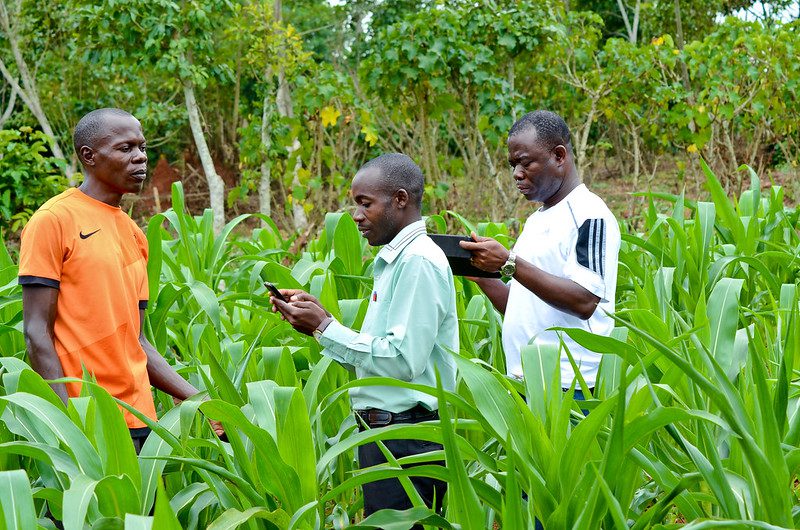
 Artificial intelligence (AI) holds considerable promise for redefining agriculture in Kenya and Nigeria, two of Africa’s leading tech hubs. Recent estimates suggest AI could markedly improve Africa’s economy, potentially adding up to $2.9 trillion by 2030. In 2023, African tech startups attracted approximately $4 billion in investments, with Kenya’s AI sector receiving $15 million and Nigeria’s $2.9 million, making them two of the leading recipients. A substantial portion of these funds is being directed to the agricultural sector.
Kenya
Kenya, with a population of about 55 million, has enjoyed relative economic and political stability recently, with a projected growth rate of 5.2% from 2024 to 2026. Despite these positivities, the country faces ongoing issues such as poverty, inequality and natural disasters.
Agriculture, which employs more than 40% of Kenya’s workforce and contributes 33% to GDP, is central to the economy. Smallholder farmers, making up more than 70% of the farming population, are essential for both economic stability and food supply. However, farmers battle unpredictable weather, limited access to information and insufficient resources to cope with the effects of natural disasters.
In 2023, approximately 4.4 million Kenyans experienced severe food insecurity, reflecting the sector’s difficulties with financing, quality inputs and crucial information such as weather forecasts and market prices, according to the 2024 GSMA report.
Nigeria
Nigeria, Africa’s most populous nation with more than 220 million people, is experiencing rapid growth at an annual rate of more than 2.6%. Despite this, the nation faces substantial economic and social challenges, including stagnant GDP per capita, high poverty rates, and inadequate infrastructure. Agriculture, which employs 40% of the workforce and contributes 24% to GDP, is critical to the economy, yet only 35% of arable land is actively farmed.
Nigerian farmers deal with erratic weather, security issues, poor infrastructure as well as problems like poor seeds, labour shortages, and the loss of farmland to urbanisation, according to ICT Works.
In July 2023, Nigeria declared a food insecurity emergency, forecasting that 26.5 million people could face acute hunger in 2024 due to frequent droughts and floods impacting food production.
The Impact of AI on Agriculture in Kenya
Launched in 2023, Digital Green’s Farmer Chat improves farming advice by offering personalized support to extension workers. It uses information from videos, call logs and factsheets to provide real-time assistance, having already sent more than 134,000 messages in Swahili and English, according to the 2024 GSMA report. Plans are underway to expand its coverage to more crops and regions.
Founded in 2023, Amini addresses the lack of environmental data – such as soil quality and rainfall patterns – which the World Bank identified in 2022. Amino’s platform uses AI and satellite technology for crop monitoring, yield predictions and risk assessments.
Partnering with TensorFlow technology, PlantVillage U.S. nonprofit has developed an AI-powered app to identify plant diseases. The app detects issues on plant leaves such as and recognizes patterns indicating disease outbreaks, helping to combat the 33% crop loss Kenyan farmers face each year due to pests and diseases. The app has attracted more than 10,000 users, who have reported an average 40% increase in crop yields.
The Impact of AI on Agriculture in Nigeria
Crop2Cash offers FarmAdvice, a hotline that gives farming advice via a toll-free number. Since its launch in July 2024, FarmAdvice has provided personalized recommendations in local languages to more than 500,000 farmers across 13 states, helping them increase their incomes and crop yields, according to the 2024 GSMA report.
AirSmart provides AI-driven solutions by collecting and analyzing data from drones, satellites, soil sensors and loT devices. The insights help manage water, fertilizer, and pesticide usage, predict yields and offer data-driven farm management recommendations, according to ICT Works.
The World Food Program (WFP) has developed a predictive model that forecasts food shortages up to 30 days in advance, according to the 2024 GSMA report. By looking at past food consumption data alongside market prices and weather conditions, this tool helps provide early warnings of potential food shortages.
Staying on Track
The impact of AI on agriculture is already being felt in Kenya and Nigeria, but keeping an eye on persistent issues is essential to fully realize its potential. AI is advancing especially in data-driven advisory and financial services, but the high costs of precision tools like loT sensors and drones are problematic. Making these technologies more accessible is important for maximizing the impact of AI on agriculture. While generative AI could assist farmers with low literacy or disabilities, improving digital literacy and ensuring AI services are accessible on affordable mobile devices will enable wider adoption of new agricultural practices among smallholder farmers.
– Georgia O’Keeffe
Georgia is based in Wiltshire, UK and focuses on Technology and Politics for The Borgen Project.
Photo: Flickr

Twaweza: A Mission to Empower Citizen Voices in East Africa
We Can Make It Happen
Twaweza means “we can make it happen” in Swahili, and its name captures the charity’s commitment to putting citizens at the center of change. The organization believes in an open society where citizens are informed, engaged and organized to drive positive change in their communities and hold authorities accountable. Twaweza’s mission is centered on three key areas:
Uwezo – Revolutionizing Education Assessment
Launched in 2009, Twaweza’s Uwezo initiative, meaning “capability” in Swahili, targets the learning crisis in Kenya, Tanzania and Uganda. Uwezo assesses millions of children for basic literacy and numeracy skills through a citizen-led approach.
Volunteers conduct large-scale assessments and provide instant feedback to households, engaging communities in educational advocacy. Uwezo’s findings, revealing that many children lack foundational skills, have influenced policy and highlighted educational inequities. The program also demonstrated adaptability by assessing learning in crisis contexts, such as Uganda’s refugee settlements. UNESCO recognized Uwezo in its 2018 Global Education Monitoring Report.
Sauti za Wananchi – Giving Citizens a Voice
In a region where access to reliable data is often limited, Twaweza’s Sauti za Wananchi, meaning ‘Voices of the Citizens’ in Swahili, emerged as a groundbreaking initiative. Launched in 2013, it is Africa’s first nationally representative mobile phone survey. It gathers real-time, nationally representative data on citizens’ views in Kenya, Tanzania and Uganda.
The survey, which engages 2,000 participants, led to significant policy impacts, with more than 150 pieces of media coverage and reaching hundreds of policymakers annually. The data collected plays a crucial role in influencing government transparency, policy-making and public debate on issues like education, health and governance. By providing a representative panel and facilitating direct interactions, it amplifies citizen voices, promotes government accountability and drives informed decision-making.
Open Government Partnership
Through its Open Government Partnership (OGP) initiative, Twaweza collaborates with governments. The organization develops and implements action plans that promote transparency, fight corruption and enhance public access to information. Furthermore, it calls on members to enhance reforms in 10 key policy areas over five years to strengthen democracies. The Challenge engages multiple public institutions globally, inspiring policy changes and public debate. With high participation, OGP recognizes outstanding efforts in international forums. Additionally, it boosts global democratic practices and reinforces Twaweza’s advocacy for accountable governance.
Looking Ahead
Twaweza’s work is a powerful reminder of the importance of NGOs for citizen engagement in combating poverty and fostering accountability. Furthermore, the charity is actively helping to create a future where all East Africans can access the services and opportunities they deserve. It stands as a beacon of hope for marginalized communities, demonstrating that through collective action, real change is possible.
– Fatima Naqavi
Photo: Flickr
Prevention Strategy: HIV/AIDS in Cambodia
Correlation Between HDI and the Rate of HIV Incidence
According to a study into the correlation between the Human Development Index (HDI) and the rate of HIV incidence, populations with a higher average socioeconomic strength are more likely to avoid outbreaks of HIV infections. For Cambodia, the country’s HDI has doubled since the ’90s, currently at 0.600 (148th worldwide), supporting the conclusions found in the study.
Ultimately, to satisfy the conditions of the UNAIDS 95-95-95 HIV prevention scheme by the end of the decade, support for the most vulnerable has to be further reassured. These key populations include pregnant mothers, sex workers, people injecting and children living with HIV in impoverished communities. Integrated in 2023, the National Social Assistance Fund (NSAF) envelops efforts to support impoverished individuals living with HIV/AIDS in Cambodia.
Covering Medical Costs for Vulnerable Families
In 2023, Hun Manet’s newly elected government launched the NSAF to centralize health care planning, targeting protection toward the more economically vulnerable across all provinces of Cambodia. Broadly, the fund provides crucial health care benefits for older adults, retired civil servants and those living in impoverished communities.
The social safety nets this fund provides include insurance or cash transfers to cover existing medical costs. While health care is not guaranteed as a dedicated right, it is subsidized based on the approval of a government grant through an application process. This safety net is HIV-sensitive, meaning that individuals living with HIV receive prioritized access. Statistics dating back from 2019 show that beneficiaries of the insurance support amounted to nearly 350,000 pregnant women and children aged less than 2. Recipients of the cash bank transfer scheme were approximately 17,000 impoverished or disabled people.
Tia Phalla, Deputy Director of the National AIDS Authority in Cambodia, argues that people living with HIV can benefit more from financial coverage. She states that nutritional and wage support are as integral as medicinal support and both are offered effectively with economic aid.
Seeking Treatment Anonymously
The new government has nevertheless outlined a new priority to provide upward of 450,000 vulnerable families with health care cards to offer them complete health services coverage. As of December 2023, 13,600 people living with HIV have registered for health care coverage schemes using IDPoor, a smartphone application that alerts HIV treatment centers when a family member is living with the virus. By notifying health care professionals of their status, registrants become eligible for an Equity Card.
This card provides a straightforward and universal way to share their HIV status with treatment centers and other officials. A significant obstacle during the HIV crisis has been the stigmatization of the virus by some uninformed members of the public. The IDPoor registration addresses this issue by offering anonymity to people living with HIV seeking treatment, as their status is revealed through the platform without disclosing their identity publicly.
Final Thoughts
UNAIDS and nonprofit organizations combating HIV/AIDS in Cambodia highlight that an effective health care strategy to counteract increasing HIV infection rates needs to include the following:
Continued efforts in these areas will be essential for maintaining the progress made and ensuring Cambodia’s HIV/AIDS protection strategy is effective. By prioritizing vulnerable populations and strengthening health care infrastructures, Cambodia can move closer to achieving the UNAIDS 95-95-95 targets and eventually eradicating HIV/AIDS in Cambodia.
– Ramiro Ruiz Martinez
Photo: Flickr
Innovative Ways to Tackle Food Insecurity in Botswana
Alongside unreliable food chains, approximately 70% of Botswana’s landscape is made up of desert and poor soils. Collectively, this contributes to food insecurity in Botswana. Thus, since the COVID-19 pandemic, the government of Botswana has focused on building resilience in food supply chains and domestic production, to improve food security across the country. Addressing food insecurity in Botswana has become a national priority, especially given the increasing vulnerability of the land to natural disasters such as droughts. It is crucial to use innovative solutions to promote food security for their population.
Project Anton Technology
Anton Tech has grown to become an AI research start-up, aiming to transform Botswana’s agriculture industry. It directly addresses the looming threat of food insecurity across the country. The project uses image data, from drones to satellites to cameras, to detect pests and diseases. It can also predict soil organic carbon levels, in turn giving recommendations on the treatments and interventions needed. Additionally, Project Anton uses WhatsApp and Facebook Messenger to increase its accessibility for farmers across Botswana.
Climate-Smart Agriculture
Climate-smart agriculture includes weather forecasting apps and satellite imagery, which can assist in analyzing weather patterns and social moisture levels. The International Institute of Tropical Agriculture collaborated with the Botswana Ministry of Agriculture to assist local farmers in climate-smart practices. This led to a 30% crop yield increase for small-scale farmers, according to the African Leadership Magazine.
Furthermore, another climate-smart agriculture technology includes the practice of zero tillage. This is a way to conserve soil carbon, soil structure and moisture. This sustainable management of soil resources has improved crop yields. In the long term, this technology has encouraged farmers to innovatively repurpose their old plows into ripper tools.
Bushvet
Across Botswana, veterinary health services are accessible and efficient. The geography of Botswana often made it difficult for rural cattle to access animal health services. Thus, the Botswana Agricultural Marketing Board initiated the “Bushvet” call-out service, providing farmers with on-farm veterinary services. Additionally, many retired veterinary paraprofessionals could support in delivering basic services such as animal drugs and advisory support. This means Bushvet can operate at a community level, increasing the long-term sustainability of this programme, as well as ensuring peak cattle health for farmer’s businesses.
Capacity Building and Knowledge Bridging
Educational online platforms post up-to-date agricultural techniques, the best practices for pest control, and general market information, and much more. This information is invaluable to farmers across Botswana, bridging their knowledge gap. UShare is a social media platform specifically for farmers, allowing them to exchange knowledge, ask questions, and vitally, connect to experts in the field, according to the African Leadership Magazine.
Tackling Food Insecurity in Botswana
The future of the country’s food security is filled with an abundance of innovative and technological solutions that have the potential to successfully eradicate food insecurity in Botswana. As per Mr. Kgabeng, Co-Founder of Anton Tech, “Put it out there and continue to iterate on it, that is how we improve as innovators and drive toward a better Africa,” the U.N. reports.
– Sian Ameer-Beg
Photo: Flickr
Reducing Unemployment in Somalia
High rates of unemployment worsen already concerning rates of poverty; more than 60% of the population live on less than $2 a day. This means many struggle to feed their families or access education or healthcare. With low employment rates looming over the country, there seems to be no way out of these cycles of poverty.
The Nation of Poets
Somalia has a chance at a different future; known as “The Nation of Poets,” the country is investing more in the arts to help reduce unemployment, especially for younger people. President Sheikh Mohamud launched the National Youth Development Initiative to get more young people into work, with the help of U.S. investments, the World Bank reports.
The World Bank defines the Orange Economy as “a range of economic activities in cultural and creative industries where the main objective is the production or reproduction, promotion, distribution, or commercialisation of goods, services, and activities of content derived from cultural, artistic or heritage origins” and it generates around 30 million jobs every year. Harnessing this area of the economy could be Somalia’s answer to unemployment.
Unemployment in Somalia
Creative industries in Somalia thrived before the civil war but declined during it – now younger people are reviving them, according to the World Bank. The arts are a particularly effective way of reducing unemployment as they offer opportunities for both women and young people, the most affected by unemployment in Somalia.
The Solutions 4 Youth Employment report notes that four areas require changes to improve unemployment rates: training and mentorship; finance and grants; access to international markets; and local community networks for self-sufficiency.
The British Council’s East Africa Arts program is helping provide necessary financial aid to fund training and support people entering the workforce, according to the World Bank. The arts can provide prospects for so many to escape cycles of poverty, through providing opportunities for women and young people, and those whose careers and livelihoods have been impacted by extreme weather and natural disasters.
Other Initiatives
Alongside this investment in the creative industries, there have also been efforts to improve employment rates in numerous different sectors. The U.N. Joint Programme on Youth Employment worked to provide both long and short-term employment for young people by focusing on key areas like agriculture, resulting in 5,000 new jobs.
Organizations like UNFPA and SOLO have been offering training to young people in Somalia to improve their soft skills, a crucial aspect of being employable. This training means that young people are ready and equipped to take up jobs that other programs are helping to create.
Investing in the arts and creative industries could help reduce unemployment in Somalia and provide life-changing chances for so many living in poverty. This focus on harnessing the skills and gifts of Somalia’s young people is instrumental in securing Somalia’s future.
– Eryn Greenaway
Photo: Flickr
Milky Way Program Transforms the Dairy Sector and Poverty
Milky Way Program
The Milky Way program is supported by Heifer International – a development organization working to end hunger and poverty around the world through the provisions of livestock to supplement dairy farming endeavors – in addition to local and Korean partners to upscale the dairy sector in Nepal.
The initiative supplies high-quality Korean Holstein cattle to households in Nepalese villages to engender better-quality output in the dairy sector. For instance, it supplied 100 cows and eight bulls from Korea to the Kamamalai municipality in the Sindhuli district of Nepal. Farmers received training to help them make the most of these cows and learn to produce milk for money thereby increasing their living standards and income while having the ancillary effect of improving their vocational skillsets.
Bishnu Chopai and Heifer International
Aside from the Milky Way program, the main sponsor – Heifer International – has played a crucial role in improving the quality of life in Nepal. Residing in Phalebas, Nepal, Bishnu recounts the trying days when her husband worked as an expatriate in India, and money was still scarce. She was the primary caretaker for the family during the time and worked on raising their goats to earn more money, but only merely survived on that income. She states “I wished for a time when we could all be together as a family… and we could create a better life for ourselves” until Heifer International supplied their family with cows to raise, alongside training for handling those cows. They recognized dairy farming as a legitimate chance to change the fate of their family, and “transitioned from raising goats to cows.”
Raising cows that Heifer provided proved to be life-changing for Bishnu. Their income increased exponentially, and with that so did their living conditions. It also enabled them to break generational poverty by bestowing a guaranteed better future for their children. Both of their children, aged 12 and 14, are now able to receive an education there in Phalebas, thanks to the newfound income. Bishnu and her husband now operate a full-fledged dairy farm, being able to afford to educate their children and cover health expenses, according to Heifer.
Reinforcing These Initiatives
Initiatives like the Milky Way program in Kamamalai, and the provision of cows in Phalebas, have been instrumental in encouraging the growth of the dairy sector and engendering increased dairy farming interest in struggling households. Considering that the extreme poverty rate could rise from 4.9% to 5.1% in the 2024 fiscal year, it is more important than ever to ensure that the progress seen by the country is not undone.
– Disheta Anand
Photo: Flickr
Ekti Bari Ekti Khamar: How Enterprise is Transforming Bangladesh
Ekti Bari Ekti Khamar
Ekti Bari Ekti Khamar focuses on encouraging farming and welfare practices in rural Bangladesh as a means of alleviating poverty. This focus on enterprise has changed the lives of 470,556 people since its inception in 2009.
Agriculture is naturally one of the largest producing sectors in Bangladesh, with approximately 13.31% of its GDP being dependent on it. Furthermore, 43% of the total Bangladeshi labor force are agricultural employees. This has rendered the sector appropriate to focus on for a poverty alleviation program. With this program, the government grants small sums in the form of loans to poor Bangladeshi people to encourage enterprise and improve their living standards.
The Story of Selina
A prime example of the success of Ekti Bari Ekti Khamar is Selina. The job of Selina’s husband was not well-paying, which rendered living a normal life “tough.” They could not maintain their family and expenses, which changed with Ekti Bari Ekti Khamar. Selina, alongside seven other women, decided to change their lives by purchasing a sewing machine and beginning to sell clothes, according to The Daily Messenger. After this, they opened a shop and took a loan from Palli Sanchay Bank as a means of funding the shop and investing in its growth.
Palli Sanchay Bank is the bank responsible for running Ekti Bari Ekti Khamar, and its role is to provide low-interest loans per this initiative. She was soon able to repay the initial loan and sought another one with the hopes of expanding and operating her business on a much larger scale, The Daily Messenger reports. Eventually, her business expanded immeasurably, and her clothes store was found to have changed the lives of Selina and her husband. This was, of course, in addition to the several other women involved with Selina’s store, as she also helped increase employment opportunities for the impoverished in her community by providing them with jobs.
These helpers earned “250 to 300 Taka each day” and Selina’s monthly income now stands at “Taka 50,000 to 60,000 each day.” In addition to the salary by her husband, Selina and the women in her store are now able to lead more comfortable lives.
Tackling Poverty in Bangladesh
Enterprise has been effective in tackling poverty in Bangladesh. Ekti Bari Ekti Khamar has improved the lives of many impoverished people in the country. Furthermore, it has proved that enterprise-focused initiatives can help with the development and prosperity of a nation. Taking small, positive steps in the right direction involves advocacy and amplifying the aims/results of great initiatives like these, to ensure greater visibility and eventually more parity on the global stage.
– Disheta Anand
Photo: Flickr
The Impact of AI on Agriculture in Kenya and Nigeria
Kenya
Kenya, with a population of about 55 million, has enjoyed relative economic and political stability recently, with a projected growth rate of 5.2% from 2024 to 2026. Despite these positivities, the country faces ongoing issues such as poverty, inequality and natural disasters.
Agriculture, which employs more than 40% of Kenya’s workforce and contributes 33% to GDP, is central to the economy. Smallholder farmers, making up more than 70% of the farming population, are essential for both economic stability and food supply. However, farmers battle unpredictable weather, limited access to information and insufficient resources to cope with the effects of natural disasters.
In 2023, approximately 4.4 million Kenyans experienced severe food insecurity, reflecting the sector’s difficulties with financing, quality inputs and crucial information such as weather forecasts and market prices, according to the 2024 GSMA report.
Nigeria
Nigeria, Africa’s most populous nation with more than 220 million people, is experiencing rapid growth at an annual rate of more than 2.6%. Despite this, the nation faces substantial economic and social challenges, including stagnant GDP per capita, high poverty rates, and inadequate infrastructure. Agriculture, which employs 40% of the workforce and contributes 24% to GDP, is critical to the economy, yet only 35% of arable land is actively farmed.
Nigerian farmers deal with erratic weather, security issues, poor infrastructure as well as problems like poor seeds, labour shortages, and the loss of farmland to urbanisation, according to ICT Works.
In July 2023, Nigeria declared a food insecurity emergency, forecasting that 26.5 million people could face acute hunger in 2024 due to frequent droughts and floods impacting food production.
The Impact of AI on Agriculture in Kenya
Launched in 2023, Digital Green’s Farmer Chat improves farming advice by offering personalized support to extension workers. It uses information from videos, call logs and factsheets to provide real-time assistance, having already sent more than 134,000 messages in Swahili and English, according to the 2024 GSMA report. Plans are underway to expand its coverage to more crops and regions.
Founded in 2023, Amini addresses the lack of environmental data – such as soil quality and rainfall patterns – which the World Bank identified in 2022. Amino’s platform uses AI and satellite technology for crop monitoring, yield predictions and risk assessments.
Partnering with TensorFlow technology, PlantVillage U.S. nonprofit has developed an AI-powered app to identify plant diseases. The app detects issues on plant leaves such as and recognizes patterns indicating disease outbreaks, helping to combat the 33% crop loss Kenyan farmers face each year due to pests and diseases. The app has attracted more than 10,000 users, who have reported an average 40% increase in crop yields.
The Impact of AI on Agriculture in Nigeria
Crop2Cash offers FarmAdvice, a hotline that gives farming advice via a toll-free number. Since its launch in July 2024, FarmAdvice has provided personalized recommendations in local languages to more than 500,000 farmers across 13 states, helping them increase their incomes and crop yields, according to the 2024 GSMA report.
AirSmart provides AI-driven solutions by collecting and analyzing data from drones, satellites, soil sensors and loT devices. The insights help manage water, fertilizer, and pesticide usage, predict yields and offer data-driven farm management recommendations, according to ICT Works.
The World Food Program (WFP) has developed a predictive model that forecasts food shortages up to 30 days in advance, according to the 2024 GSMA report. By looking at past food consumption data alongside market prices and weather conditions, this tool helps provide early warnings of potential food shortages.
Staying on Track
The impact of AI on agriculture is already being felt in Kenya and Nigeria, but keeping an eye on persistent issues is essential to fully realize its potential. AI is advancing especially in data-driven advisory and financial services, but the high costs of precision tools like loT sensors and drones are problematic. Making these technologies more accessible is important for maximizing the impact of AI on agriculture. While generative AI could assist farmers with low literacy or disabilities, improving digital literacy and ensuring AI services are accessible on affordable mobile devices will enable wider adoption of new agricultural practices among smallholder farmers.
– Georgia O’Keeffe
Photo: Flickr
The UN Early Childhood and Sustainable Development Program
Overview
The goal and impact of the Early Childhood and Sustainable Development Program are noteworthy since it has worked toward breaking the cycle of intergenerational poverty and inequalities for the most vulnerable groups: women, children, girls, people with disabilities, Indigenous groups and migrants. Promoting access to equitable childhood care services would provide an opportunity for children to get the proper intervention and education needed for their development, leading to a higher possibility of economic mobility. Additionally, child care services could allow parents to work or continue their education, enhancing the families’ economic stability.
In collaboration with the International Labor Organization (ILO), the United Nations Resident Coordinator Office (RCO), the United Nations Commission for Latin America and the Caribbean (U.N. ECLAC), the United Nations Development Program (UNDP) and the United Nations Children’s Fund (UNICEF), the Early Childhood and Sustainable Development Program has benefited 5.2 million children aged 0-6, including 2.7 million from low-income backgrounds. The program aimed to reduce inequality gaps through strategies such as policy enforcement, funding and training for child care workers.
Impact in Argentina
The program supported the Argentine government to initiate the national early childhood strategy (ENPI) at regional and national levels. The government’s ongoing commitment is anticipated to guarantee that child care services remain well-distributed and accessible across the country, even beyond the duration of the U.N.’s joint program.
Another initiative of the U.N.’s Early Childhood and Sustainable Development Program in Argentina was the creation of the Federal Care Map. This tool collects and monitors data on child care services using geo-referenced information. It helps assess which regions require funding most urgently. It also ensures the effective allocation of resources, particularly for Indigenous children in rural areas.
Lastly, the Early Childhood and Sustainable Development Program trained 3,000 early childhood education and service care workers across Argentina. The program provided tools to address the psychosocial effects and developmental issues in children caused by the pandemic. It also supported the implementation of a new curriculum that emphasizes child care centers as places of belonging, care and comfort.
Moving Forward
The U.N.’s Early Childhood and Sustainable Development Program in Argentina is a remarkable example of an effort to confront the root cause of continued poverty. It is anticipated that the long-lasting poverty can be overcome with national and sub-national efforts and active participation from the residents.
– Sein Kim
Photo: Wikimedia Commons
An Unusual Cookery Show is Supporting Refugees in Algeria
Refugees in Algeria
Sahrawi refugees, who have lived in camps around Tindouf for decades, are now struggling more than ever to access food for their families. With food rations reduced to less than five kilograms per person per month, many are receiving far below the minimum caloric intake needed to maintain health.
Abdel Halim Elfaki, acting representative for the UNHCR in Algeria, expressed concern over the situation. According to UNHCR, this reduction has forced refugees like Muna Hamid, a 35-year-old single mother of two, to make heartbreaking decisions as she watches her children skip meals due to the lack of affordable food.
A Creative Response
In response to the escalating food crisis in the Sahrawi refugee camps, Haha’s cookery show, Min chway nadal chi zayn (translated as “With few ingredients, we make meals”), has become a vital resource for many struggling families. The show, which has been on air since 2012, started as part of a broader initiative from the Italian NGO CISP in collaboration with the Sahrawi Red Crescent and the World Food Programme (WFP). The initiative aims to strengthen food security by raising awareness about nutrition and making the most of the food distributed in the camps.
Haha’s show provides practical lessons on how to create nutritious meals from the limited and often unconventional ingredients available in the desert environment of Tindouf. By creatively blending traditional Sahrawi recipes with new ideas, the show empowers families to maximize their reduced rations. In addition to recipe demonstrations, the show educates viewers on the nutritional benefits of these meals, helping them understand how to combat malnutrition with the resources they have.
The program is filmed in a fully equipped television studio and is part of a broader effort to improve food practices among the refugees in Algeria, according to CISP. It also includes post-distribution monitoring of food availability, access and consumption, as well as training sessions on cooking techniques that enhance the nutritional value of distributed food items.
A Lifeline for Refugees in Algeria
The impact of the cookery show is felt deeply among the refugee community. For instance, Deheba, a 55-year-old grandmother, credits the show with helping her find new ways to provide essential nutrition to her family despite the food shortages, UNHCR reports. The show has introduced her to new recipes that incorporate available vegetables, helping her grandchildren maintain their health.
Deheba mentioned that what she has learned from Haha’s cooking show has been very helpful and has contributed to her family’s well-being, even with the food shortages they face.
Another refugee, Mohamed, a 65-year-old widower and father of six, also relies on the show’s advice. According to UNHCR, after losing his herd of goats during the pandemic, Mohamed has struggled to provide for his children. Yet, thanks to Haha’s guidance, he finds creative ways to use the little he has to keep his family fed.
Empowering Families Through Knowledge
Haha, began her journey as a TV chef driven by the desire to help her community in the Tindouf camps, where she has lived for decades. Despite starting with a simple goal, the show gained popularity and expanded its reach. She invites doctors and nutritionists to her show to educate people about healthy diets.
Haha began collaborating with the WFP to extend her efforts beyond the television screen, taking her knowledge to local schools. She worked with WFP to incorporate her recipes into school feeding programs, which could improve the nutrition of young students.
Looking to the future, Haha hopes that her show will continue to expand, not only providing practical cooking tips but also fostering a greater sense of resilience and hope within the refugee community. She envisions the show as a long-term platform that can inspire healthier eating habits, improve nutrition and perhaps even offer a model for other refugee communities facing similar challenges.
– Sumaiya Sultana
Photo: Flickr
4 Charities Fighting Poverty in Honduras
CEPUDO Honduras
CEPUDO Honduras, one of the charities fighting poverty in Honduras, has empowered communities by providing them with the tools they need to succeed. With a mission to develop communities and eradicate extreme poverty, CEPUDO works closely to provide shelter for those in need> Furthermore, they reduce hunger through monthly aid. The organization also focuses on improving access to education and health care. By working with a network of volunteers and donor organizations (such as Food for the Poor), CEPUDO has created long-lasting change in the communities it serves.
Additionally, CEPUDO Honduras has been involved in numerous projects to cultivate integral communities nationwide. These initiatives focus on essential aspects of basic living, including agriculture, infrastructure, education and access to clean water. The organization has established 26 communities nationwide, building approximately 20 schools and 45 water wells annually. Its mission also extends to health care, where it helps construct clinics and provides medical supplies to hospitals and health centers in Honduras through its partnership with Food for the Poor.
Feed the Children
Feed the Children is an international nonprofit organization that has been active in Honduras for several years, focusing on alleviating child hunger and malnutrition. The organization’s work in Honduras is part of a broader global effort to ensure that no child goes to bed hungry. Feed the Children’s approach in Honduras involves a combination of direct food distribution, educational support and community development programs designed to address the underlying causes of hunger.
In Honduras, Feed the Children operates feeding programs that provide nutritious meals to children in schools and community centers. These meals are often the only reliable source of nutrition for many children, helping to improve their health, concentration and academic performance. Beyond feeding programs, the organization also works to empower 10 different communities in the country by teaching parents and caregivers about ways to generate income and save money, along with providing vocational training. By focusing on the well-being of children, Feed the Children is not only addressing immediate hunger but also contributing to the long-term development of communities in Honduras.
Honduras Hope
New Hampshire-based Honduras Hope is a grassroots organization dedicated to improving people’s lives in rural Honduras through health care, education and community development. Endorsed by the United Federal GiveDirect Campaign as one of America’s best charities, the organization operates in some of the country’s most impoverished and remote areas, where access to essential services is limited or nonexistent. Honduras Hope’s mission is to empower these communities by providing the resources and support needed to overcome the challenges of poverty.
One of the core components of Honduras Hope’s work is its health care initiative. The organization provides a weekly nutrition program for San Jose and Plan Grande young children. In addition to health care, Honduras Hope is deeply involved in education, providing uniforms, school supplies, scholarship support, tutoring and a supervised boarding house for students attending school via long-distance travel. Through the approach above, the organization is helping to lift entire communities out of poverty and create a brighter future for the next generation.
Action Against Hunger
In Honduras, Action Against Hunger implements programs that address acute and chronic malnutrition, ensuring that children and families have the nutrition they need to survive and thrive. The organization also responds to emergencies, such as natural disasters and food crises, by providing food aid, clean water and other essential resources. Additionally, Action Against Hunger is actively involved in advocacy, raising awareness about the root causes of Hunger and pushing for policy changes to help reduce poverty and improve food security in Honduras. Last year, the organization helped more than 150,000 people in Honduras, demonstrating its commitment to eradicating global hunger.
Conclusion
The fight against poverty in Honduras is a strenuous process. However, organizations like CEPUDO Honduras, Feed the Children, Honduras Hope and Action Against Hunger significantly improve the lives of those in need. Through their combined efforts in education, health care, nutrition and community development, these charities provide hope and opportunity to the most vulnerable populations in Honduras.
– Christian Core
Photo: Flickr