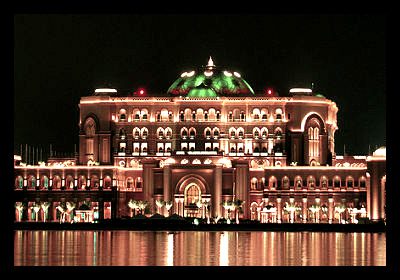
When we think of ruling families in a monarchist state, the pre-modern design points to the United Kingdom and Vatican City as “successful” post-modern governance. The UK employs what we call a Constitutional Monarchy, in which the title of King or Queen undertakes various ceremonial and diplomatic duties, while an elected Prime Minister holds most executive power.
The Vatican as we know constitutes an Absolute Monarchy in the form of an appointed Catholic Church official declared as Pope, meaning father. Western media gives heavy precedence to these forms of monarchist states, one being religious, the other hereditary, while dissipating the absolutist power of several other governing states in the Eastern world. The monarchy wielding the most absolutist power for the past 80 years has been the House of Saud in Saudi Arabia.
Saudi Arabia became a kingdom in 1932 as King Abdulaziz, also known as Ibn Saud, conquered most of Arabia following his capture of Riyadh in 1902. This led to the Saud family regaining power and controlling Arabia until this day. Unlike the UK, which has about 50 hereditary options in the line of succession for King or Queen, Saudi Arabia’s House of Saud has an estimated 15,000 members of the royal family vying for the throne. 2,000 of these family members control a vast majority of the wealth and power in Saudi Arabia. Here, the king holds absolute political power.
In most political states, corruption occurs in the form of politicians taking advantage of the state and, in a sense, stealing from the state. Here, the king is the state, so he does not have to “steal” from what is already under his power and ownership. This leads to corruption being a part of the inherent structure of its monarchist system, as opposed to a form of political undertaking.
Estimates of the royal net worth are around $1.4 trillion, which the over 10,000 princes use as a means for political influence to keep the commoners at bay, while there is a new form of dissension brewing between the state and the people. The inevitable attack against the state is being constantly postponed by paying commoners to favor the state, while distrust among the people grows even larger.
Given the exorbitant amount of wealth Saudi Arabia possesses, poverty should not be an issue. However, about a month ago, a twitter campaign with the Arabic hashtag, #الراتب_مايكفي_الحاجة, meaning “The salary does not meet my needs,” reached over 17 million tweets in the first two weeks. At its peak, it reached 1.2 million tweets a day and was the 16th most popular hashtag around the world, while being the most popular hashtag in Arabic.
This is a massive online demonstration that shows Saudi Arabia’s wealth (precisely allocated to the royal’s) is not allowing for its common citizens to live a genuinely comfortable life. Meanwhile, the House of Saud is paying handouts that amount to about a third of the government budget to countries like Egypt, Jordan, and Tunisia, while also paying for the new Riyadh Metro “mega project.”
The online protests against the disparity of wealth distribution are a sign of small demonstrations that have already been taking place in Saudi Arabia against the House of Saud. People are realizing the more they delay this process of rebellion, the more self-destructive this so-called revolution could be.
Change is occurring in Saudi Arabia, and a paradigm shift in this absolutist monarchy is seemingly shifting, albeit gradually.
– Sagar Jay Patel
Sources: CNN, Independent, Royalty, Borgen Project
Photo: Kings of the World

Child Poverty in Africa
The state of many developing countries in Africa is no secret. Africa has been deadlocked in extreme poverty for an extended period of time. However, recent trends have shown that the poverty situation worldwide is slowly improving. Despite these various improvements, much more can be accomplished in the poverty-stricken continent of Africa. African children in particular are still mired in terrible situations, causing quite a predicament. While every life is worth saving in Africa, the lives of the children are crucial to the future of developing countries.
The issues have abundantly mounted to oppose healthy children in Africa. Lack of suitable food plays a major role. The world in general produces enough food to feed these children, yet they have no access to a consistent food supply. The key to eradicating the hunger crisis is providing an outlet for starving people in Africa and other poverty-stricken locations worldwide.
However, food is not the only major problem for African children. Other issues, such as slavery, armed forces participation, and the inability to prevent disease all stake a claim to the death toll of African children.
An estimated 200,000 children are sold into slavery yearly in Africa. This has become a major problem for developing countries–how can a country grow and learn if the children are routinely captured and used as slaves? Without any children learning and growing in a safe environment, the developing countries do not have much hope for a productive future, instead they are mired in the darkness that child slavery provides.
Not only is child slavery a major issue but children being forced to participate in the armed forces also causes another dilemma. An estimated 12,000 children are participating in the armed forces, further halting the advancement of African economies. The children are being trained and deployed in military situations instead of learning and cultivating the land, leaving fewer able bodies and even fewer educated people to grow and produce for their country.
Child participation in armed forces and slavery are major hindrances to furthering child development. However, the problem of disease also runs rampant among the children. Measles, malaria, and diarrhea are the three biggest killers of children, yet all three are preventable or treatable. Children lack access to proper treatments and vaccinations, resulting in deaths that could have been prevented. If these children could be immunized or properly treated, the number of deaths would exponentially drop.
The high mortality rate of children in Africa plays a significant role in the African poverty situation. The deaths related to child slavery, child participation in armed forces, and treatable diseases can be reversed. These problems can be solved; they require continued aid from outside help, but also a stand to fight for the lives of children. Without growing children, there is no growth for the future.
– Zachary Wright
Sources: CARE, Fight Poverty Pravda, Pravda
Photo: The Telegraph
Top 7 Facts about Modern Day Slavery
The facts about modern day slavery are shocking and remain largely unknown to much of society. Below are the top modern day slavery facts.
Top Modern Day Slavery Facts
1. When Americans think about slavery, what often comes to mind is the transatlantic slave trade, Africans displaced from their homeland and the Underground Railroad. Though slavery has officially been abolished, modern day slavery exists. Slavery is not simply a thing of the past. It is estimated that there are anywhere from 20 to 30 million people who are in slavery at this moment. This is a large increase from the 12.3 million slaves estimated in the 2005 study done by the International Labour Organization (ILO). The number is huge and leaves many wondering what can be done to help those who endure the cruelties of others who enslaved and stripped these individuals of their freedom.
2. Contemporary slavery is not restricted to just one area. Forced labor lies within the realms of sexual abuse and prostitution, state-enforced work and many others. According to the ILO, someone is enslaved if he or she is:
3. As of 1981, slavery is not considered legal anywhere. That year, Mauritania became the last country in the world to abolish slavery. However, the act of owning slaves didn’t become a crime in Mauritania until 2007. That being said, many in the country defied the law regardless. In fact, only one slave-owner has been successfully prosecuted in Mauritania. Despite the fact that slavery is illegal, it continues to happen and the practice affects all ages, races and genders.
4. Slave-owners often use euphemisms instead of the term “slavery” in order to avoid getting caught. Such euphemisms include: debt bondage, bonded labor, attached labor, restavec (a French word that means “one who stays with”), forced labor and indentured servitude.
5. According to the U.S. Department of State’s 2007 Trafficking in Persons report, there are 800,000 people trafficked across international borders every year; 80 percent of those victims being female. Even more shocking is the fact that 50 percent of these people are children under the age of 18. These victims live within 161 different countries.
6. Slavery doesn’t just reach adults; children are a very large part of contemporary slavery, especially in prostitution. According to the U.S. Department of State, one million children are exploited by the global sex trade every year. The average age a teen enters the American sex trade is 12-14 years of age. These children are typically runaways who were abused sexually at an even younger age.
7. The average cost of a slave is about $90.
– Samantha Davis
Sources: CNN: Freedom Project, Antislavery.org, CNN, AbolitionMedia.org
Photo: Lisa Kristine
What The Top 10 Searched for People Tell Us About Humanity
Who is the world intrigued with? Look no further than the top searches on Google. The top 10 searched for people provides a very interesting sampling of who represents humanity.
1. Whitney Houston. She became a beloved artist, actress, producer, and model. Guinness world records called her the most awarded female of all time. In later years she had a drug problem but recovered. She was posed to become the next judge on the show “The X-Factor” and revive her career right before she died.
2. Kate Middleton. She is a modern day Cinderella. Now Kate has been voted number one on the Vanity Fair’s best dressed list for three years in a row. Before she won the prince’s heart, she was considered simply “a beautiful commoner.” Today she works closely with five charities which mainly work with children.
3. Amanda Todd. Released a YouTube video about how she was bullied before she committed suicide. The video went viral and is now used to support anti-bullying movements.
4. Michael Clarke Duncan. Became famous when appearing in “The Green Mile” which won him an Academy Award nomination. He was an avid advocate for PETA. Michael died at age 54.
5. One Direction. Popularized by the show “The X-Factor,” the boy band has sold over seven million records. The teenage heart throbs are avid advocates for the organization Comic Relief.
6. Felix Baumgartner. Broke the world record height for sky diving. During his decent, he became the first person to break the sound barrier without using mechanical power.
7. Jeremy Lin. A lesser known professional basketball player until he led a winning streak for the New York Knicks.
8. Morgan Freeman. He acts, directs, and narrates. Some of his recent films include Oblivion, Now You See Me, and The Dark Knight Rises.
9. Joseph Kony. Leader of the Lord’s Resistance Army. He was made famous by an Invisible Children documentary that went viral.
10. Donna Summer. Known as the “undisputed queen of the Seventies disco boom.” Four of her singles topped the billboard chart within a thirteen month period. She held five Grammy Awards.
How can this diverse group of people be summarized? They usually come from the entertainment business. The good outnumber the bad. They are overwhelmingly represented in the media. When given power or influence most chose to represent the underprivileged and fight for inequality. Many gain a following in the wake of their death. Their lives read like a very dramatic story. The kind of story that gets them on the top ten Google searched list.
– Nicole Yancy
Sources: Biography, Wonder’s List, Fox News, E Online
Photo: LoL Forum
Vindhya Offers Employment to the Disabled
For many people living with disabilities, seeking employment is often a grueling process. Sometimes, despite their qualifications, those with disabilities are denied jobs, because employers fear that job performance will suffer. While disabled people are awarded equal opportunity employment in theory, this is not always the case in reality. Unable to find employment, the disabled can end up in a perpetual state of poverty, unable to remedy the situation.
Companies like Vindhya are slowly changing this trend. A global IT company located in India, Vindhya is primarily staffed by those with disabilities, who are referred to as “different-abled” rather than “disabled.” It is a title that recognizes that certain physical disabilities don’t necessarily make someone entirely “disabled.”
Though in many ways Vindhya is like any other company, working to ensure the quality of its products and fulfill the demands of companies like Yahoo!, Metlife and Wipro. It offers its “differently-abled” employees an important opportunity: the chance to be self-sufficient. Without such opportunities, it is hard to imagine where the “differently-abled” would find recourse. Employment at Vindhya opens many doors its workers, including the chance to improve their economic status.
Giving employment opportunities to groups that are often discriminated against, such as the disabled, is the first step to liberating generations from the ugly cycle of poverty.
– Aalekhya Malladi
Sources: Vindhya, Next Billion
Photo: LOREWO
Villgro Addresses Rural Agricultural Needs
Many farmers in rural India are unaware of the newest innovations in agriculture. There are many possible causes for this, including lack of marketing, lack of access to information regarding advancements, and a farmer’s financial inability to buy new products. According to the National Council of Applied Economic Research, only 40-45 percent of farmers know about these new technologies, and fewer than that have the financial ability to access the new advancements.
Without the ability to access or buy these products, farmers continue to use obsolete technology, which is not only inefficient, but also more expensive, due to repairs and replacements. Over time, lack of access to the best technology will keep the rural farmers from improving their financial situation.
Villgro Innovation Marketing, recognizing that Indian rural farmers need information about, and access to, the most recent technology, has decided to address the situation.
It has developed a “low cost distribution method” that will send salespeople to rural locations to inform farmers of technologies that could significantly increase their crop yield and, in turn, their annual revenue. In the long term, this could help farmers rise out of relative poverty. Additionally, because Villgro hires salespeople to visit various villages and rural areas, it also offers employment opportunities to the surrounding area.
By addressing the needs of poor rural farmers, organizations such as Villgro give them the chance to overcome poverty. Moreover, the improved economic status of rural farmers would, in turn, advance the regional and national economy of India. Villgro, therefore, has the potential not only to change the lives of individual farmers, but to help a wider community as well.
– Aalekhya Malladi
Sources: Unitus Seed Fund, Villgro
Photo: Baltimore Sun
The House of Saud is a Hotbed for Poverty
When we think of ruling families in a monarchist state, the pre-modern design points to the United Kingdom and Vatican City as “successful” post-modern governance. The UK employs what we call a Constitutional Monarchy, in which the title of King or Queen undertakes various ceremonial and diplomatic duties, while an elected Prime Minister holds most executive power.
The Vatican as we know constitutes an Absolute Monarchy in the form of an appointed Catholic Church official declared as Pope, meaning father. Western media gives heavy precedence to these forms of monarchist states, one being religious, the other hereditary, while dissipating the absolutist power of several other governing states in the Eastern world. The monarchy wielding the most absolutist power for the past 80 years has been the House of Saud in Saudi Arabia.
Saudi Arabia became a kingdom in 1932 as King Abdulaziz, also known as Ibn Saud, conquered most of Arabia following his capture of Riyadh in 1902. This led to the Saud family regaining power and controlling Arabia until this day. Unlike the UK, which has about 50 hereditary options in the line of succession for King or Queen, Saudi Arabia’s House of Saud has an estimated 15,000 members of the royal family vying for the throne. 2,000 of these family members control a vast majority of the wealth and power in Saudi Arabia. Here, the king holds absolute political power.
In most political states, corruption occurs in the form of politicians taking advantage of the state and, in a sense, stealing from the state. Here, the king is the state, so he does not have to “steal” from what is already under his power and ownership. This leads to corruption being a part of the inherent structure of its monarchist system, as opposed to a form of political undertaking.
Estimates of the royal net worth are around $1.4 trillion, which the over 10,000 princes use as a means for political influence to keep the commoners at bay, while there is a new form of dissension brewing between the state and the people. The inevitable attack against the state is being constantly postponed by paying commoners to favor the state, while distrust among the people grows even larger.
Given the exorbitant amount of wealth Saudi Arabia possesses, poverty should not be an issue. However, about a month ago, a twitter campaign with the Arabic hashtag, #الراتب_مايكفي_الحاجة, meaning “The salary does not meet my needs,” reached over 17 million tweets in the first two weeks. At its peak, it reached 1.2 million tweets a day and was the 16th most popular hashtag around the world, while being the most popular hashtag in Arabic.
This is a massive online demonstration that shows Saudi Arabia’s wealth (precisely allocated to the royal’s) is not allowing for its common citizens to live a genuinely comfortable life. Meanwhile, the House of Saud is paying handouts that amount to about a third of the government budget to countries like Egypt, Jordan, and Tunisia, while also paying for the new Riyadh Metro “mega project.”
The online protests against the disparity of wealth distribution are a sign of small demonstrations that have already been taking place in Saudi Arabia against the House of Saud. People are realizing the more they delay this process of rebellion, the more self-destructive this so-called revolution could be.
Change is occurring in Saudi Arabia, and a paradigm shift in this absolutist monarchy is seemingly shifting, albeit gradually.
– Sagar Jay Patel
Sources: CNN, Independent, Royalty, Borgen Project
Photo: Kings of the World
10 Facts about HIV/AIDS in Africa
Human immunodeficiency virus, and its later, more severe stage, acquired immune deficiency syndrome (HIV/AIDS) is a virus that affects people all over the world. HIV/AIDS is especially prominent in Africa, where many people are not educated on how to prevent spreading the illness, and even more do not have access to treatment. Here are 10 facts about HIV/AIDS in Africa:
1. 1,000 children are infected with HIV every day.
2. 23 percent of children infected with HIV/AIDS are being treated.
3. 17 million Africans have died of AIDS since the virus was discovered.
4. There are 25 million Africans living with with the HIV virus.
5. 13 million African children are orphans because of HIV/AIDS.
6. 67 percent of people infected with HIV live in sub-Saharan Africa
7. 90 percent of children with HIV (about 2 million) live in sub-Saharan Africa.
8. Only 11 percent of pregnant HIV-positive women in sub-Saharan Africa receive treatment to prevent spreading the virus to their child.
9. HIV/AIDS is the cause of about 1 million deaths in Africa every year.
10. HIV/AIDS has caused the life-expectancy in sub-Saharan Africa to drop to 54.4 years and, in some countries, less than 49 years.
Although these statistics seem disheartening, there has been vast progress in treating and preventing the virus in Africa. More and more people are gaining access to contraceptives and antiviral drugs due to international aid. The end of HIV/AIDS may be a difficult goal to achieve, but every year the number of people dying from the HIV/AIDS decreases, leading the world one step closer to completely eradicating the virus.
– Mary Penn
Sources: Compassion, UNICEF, Just Like My Child
Photo: United Nations Association of Norway
World Hunger is Biggest Threat to Global Health
Though it is rarely featured in the daily headlines, world hunger has become the greatest problem facing the world today. Every day, 1 in 8 people go hungry worldwide. The situation has become so severe that experts now recognize hunger as the largest risk to health – surpassing AIDS, malaria, and tuberculosis combined.
Hunger is the worst in developing nations, where nearly 98 percent of the world’s hungry reside. Africa has the greatest number of countries with the highest categories of hunger – in at least 19 of its nations more than 25 percent of the population goes hungry. These issues are exacerbated by war and crisis. For people forced from their homes by violence and for other refugees, food is scarce.
The United Nations spends about $30 million weekly to keep food aid flowing to these problem areas. The efforts of the UN alone are not enough, however. In order to combat this global health risk, the hunger problem needs to be addressed on a global scale.
“It’s getting to a point where if the international community doesn’t wake up and realize that they have to, they must make efforts to find a political solution, otherwise we are not going to be able to sustain this level of response,” said Mathew Hollingworth of the World Food Program. Without the help of the international community, world hunger will continue to endanger people around the world.
– Sonia Aviv
Sources: ENCA, World Food Programme, 15 Min. News
Photo: The Inspiration Room
South Africa’s Transgender Community Denied Rights
For most people, it is difficult to imagine the immense significance of an identification card, as it seems to be a common part of daily life. However, without one, essential tasks become impossible. Without an ID, an individual cannot apply for a job. An individual cannot access medical care or educational records. An individual cannot open a bank account, drive, travel, or vote.
In South Africa, the transgender community is keenly aware of the struggles involved in life without an appropriate source of identification. Those who display a different gender presentation from their originally assigned one are constantly humiliated and debased because of this exact discrepancy. Many even face verbal or physical abuse.
In light of this gross inequality, many transgender and inter-sex activists — both nationally and internationally — have campaigned the South African government to overturn their strict and inhumane laws regarding gender changes and identification cards. Before 2003, these aforementioned laws had made a legally recognized gender change in South Africa impossible. That year, Parliament passed “Act 49,” which elucidated the process in which one might legally be able to make such a change.
The act made a medical report mandatory for such a change, but did not require any sort of genital surgery, a process that remains precarious and unfeasible for many in the transgender community. If the application were to be denied, the Act stipulated that written reasons needed to be provided, and even further, appeals would be possible.
However, in 2013, ten years after “Act 49” passed, little tangible progress has been made in providing proper identification for transgender and intersex individuals. These communities point to the continuing denial of safeguards provided by “Act 49.”
Applicants have waited years for responses from the application process, meanwhile facing the severe inequalities that exist for an individual lacking a tenable identification card. Upon inquiring in regards to their application status, many inter-sex and transgender individuals have faced endless hostilities. When denied, the sanctioned written response detailing the basis of the decision rarely comes.
The changes made to provide basic rights and human services to the transgender and inter-sex communities of South Africa have been legislatively approved. The political fight has ended.
However, in order to provide true equality for all of its citizens, the South African government must, by law, fulfill its promises.
– Anna Purcell
Sources: Human Rights Watch, Humanity in Action
Photo: My Broadband
Is Big Philanthropy Democratic?
In an article in Dissent magazine, Joanne Barkan observes that big philanthropy “aims to solve the world’s problems–with foundation trustees deciding what is a problem and how to fix it. They may act with good intentions, but they define ‘good.’” For Barkan, the implication of this system is that the powerful and wealthy define the problem and how to solve it with little or no democratic controls. The article raises an interesting question: is big philanthropy democratic? It answers that question with a resounding “No.”
Barkan is quick to dismiss the laws and regulations that purportedly govern philanthropic organizations. These rules include restrictions on self-dealing, lobbying, and endorsing or supporting candidates for political office. Due to a variety of factors such as loopholes, deregulation, and lack of resources, these rules have been rendered ineffective in governing the operation of these organizations. And, of course, what has become something of a mantra in our society, the wealthier are able to get away with more indiscretion.
With little public oversight, these mega-organizations are free to govern themselves and raise tax-exempt funds from other wealthy donors. What is done with the money, of course, is up to the board of trustees that governs the organization. Although there is a 5 percent payout rule, which requires foundations pay out at least 5 percent of their endowment’s value each year, Barkan points out that this payout rule includes all reasonable expenses of administering the foundation, including salaries, trustee’s fees, travel, and receptions. Salaries for philanthropic-executives can sometimes reach seven figures, allowing for something of a lavish lifestyle.
Another issue is the type of people that trustees choose to hire for their organizations. Traditionally, management consists of “insider” individuals that come from a business background–management consultants, businesspeople, lobbyists or scientists. Kavita Ramdas, Executive Director of the Program on Social Entrepreneurship at the Freeman Spogli Institute for International Studies at Stanford University, has pointed out that these hiring decisions are reflective of a metrics-driven and efficiency-seeking approach to social change—an approach that is not effective in handling, “the nuance and inherent humility of the social sciences.”
As government resources continue to shrink, those services once considered public will be controlled by private organizations. Philanthrocapitalism is filling the public void and its proving to be big business. In America today, there are 67 grant-awarding foundations with assets totaling more than $1 billion. Many will argue that these actors are using the money they have earned to fund humane endeavors. Others, like Barkan, see mega-philanthropies as another way for the wealthy to decide how to improve humanity and promote an agenda that serves their interests and ideas.
– Daniel Bonasso
Sources: Dissent Magazine, Reuters, Stanford Social Innovation Review
Photo: The Emily Dickinson International Society