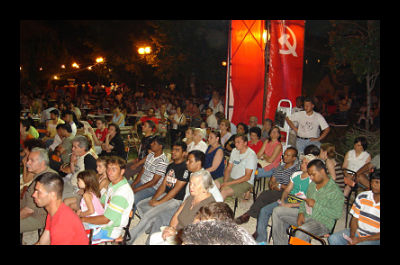
Since the fall of socialism in 1991, Albania has made great strides in establishing itself as an economic and political power in Europe. The country has joined the United Nations, NATO, World Trade Organization and the Council of Europe. It is poised to join the European Union.
One of the factors holding the country back has been the exclusion of its minorities, primarily the Roma and Egyptians. This exclusion has left 75 percent of Roma and 70 percent of Egyptians categorized as very poor, compared to the 28.8 percent of Albanians with the same rating.
This socioeconomic status is due largely to of a lack of education, employment and basic infrastructure. This has led many members of these groups to seek wages in the informal labor market, which includes prostitution, women and child trafficking and drug trafficking.
While the government has claimed to include these minority groups in Albania, Egyptians have not been given minority status. The government claims they have not met the criteria necessary. Egyptians must share the same language (other than Albanian), have documentation to prove its distinct ethnic origin or national identity and have distinct customs and traditions or a link to a kinship state outside of the country.
However, the Roma have met these criteria, and, as of 2005, the Albanian government has signed up for the Decade of Roma, a World Bank initiative designed to help in four key areas: education, employment, health and housing and gender and non-discrimination. To date however, the results are not very encouraging, as the number of Roma still labeled as very poor continues to rise.
Against this very bleak picture, several rays of hope have begun to shine on the Roma and Egyptian communities from several organizations. One of these organizations is the United Nations Development Plan, implemented by the Ministry of Social Welfare and funded by the European Union.
These organizations have constructed a project designed to promote social inclusion of Roma and Egyptians through vocational training to increase their employability and strengthen artisan and entrepreneurship skills, especially for women and girls.
The training entailed learning how to cultivate medicinal plants. It was a week-long program where participants were trained how to cultivate, collect and dry medicinal plants. They also learned how to start a business. Additionally, women who owned pieces of land were given sage seeds to help get them started.
Within six months, several of the women who took the course were entrepreneurs employing up to three other women in their businesses. The UNDP recruited sage specialists to assist farmers throughout the process and help them in timing their sales and marketing their product.
Luan Ahmetaj, Director of the Medicinal Plant Institute in Tirana, Albania said, “What makes this intervention unique is the involvement of women in business dominated and run by men. This contributes in empowering those communities.”
There is a huge potential for Albanian medicinal plants. According to the U.S. Agricultural Department, 57 percent of sage imports into the U.S. come from Albania. There are close to 300 members of Roma and Egyptian communities in the regions of Berat, Korca and Vlora that are now benefiting from the initiative, almost half of them women.
Another aspect of this program has been the support of interventions into infrastructure identified by Roma and Egyptian Community Councils, such as kindergartens, road rehabilitations and other interventions. These programs also support the Government of Albania in its efforts to achieve the objectives set forth in the Decade of Roma Inclusion 2005 – 2015. It also promotes respect for human rights and appreciation for cultural diversity, as prerequisites for the country’s EU accession.
– Frederick Wood
Sources: Minority Rights 1, Minority Rights 2, UNDP, UN Albania, ERRC
Photo: Flickr

Suicide Bomber in Nigeria Kills Students
On November 10th, in the Northeastern Nigerian town of Potiskum, a suicide bomber killed around 46 students ranging from 10 to 20 years of age during a school assembly. The bomber was wearing a school uniform and entered the boys’ school in Yobe state unnoticed. Yobe’s state governor has shut down all public schools in the region and requested urgent action be taken by the Nigerian government.The suicide bomber was among the dead, another 79 were severely wounded.
Police have suggested the terrorist organization Boko Haram is responsible for the attack. The militants have continuously targeted schools “during a deadly five-year insurgency” with the aim of establishing an Islamic state. Boko Haram, whose name translates to “Western education is sin”, believes that girls should not be able to go to school and boys should only receive an Islamic education.
The group has conducted a series of attacks and kidnappings, the most recent at the Government Science Secondary School. Boko Haram’s attack against the non-Quranic school was one of the worst attacks to date.
In Potiskum alone, Boko Haram has attacked roughly 10 schools, while another 5 schools in the surrounding parts of Yobe state have been targeted. However, the militant group rarely claims responsibility for individual attacks. Despite the large number of bombings against schools, there is still a huge lack of security for students.
The Nigerian military has not been deployed to safeguard school grounds in the North and the only protection at the Government Science Secondary School included a few local guards armed with sticks.
Citizens have been requested to report suspicious activities to security agencies. In addition, and in order to identify people with ill intent, people who rent property are asked to thoroughly check renters so criminals cannot hide in their midst.
Government officials have indicated to local communities that security is a collective responsibility, and that peace can only be achieved through collaboration with all interested parties.
– Leeda Jewayni
Sources: BBC, The New York Times, Reuters
Photo: Daily Mail
Inflatable Baby Incubator Wins James Dyson Award
The main focus of the James Dyson Award is on design and engineering, but there is also encouragement and support given to medical and scientific research to bring great change. The organization itself has donated over $14 million to these causes through grants, machine donations and fundraising endeavors led by the people at Dyson.
The James Dyson Award is aimed towards young people from 18 countries who think differently than others and come up with ideas to change the future. “Whatever the design, as long as it solves a problem, it’s got a chance of winning the James Dyson Award,” its website reads.
Along with the recognition, a $45,000 prize is given to the international winner to help take the idea from a prototype and launch it into a commercial product. The winner for this year’s award goes to a product called the inflatable baby incubator. The inventor is a Loughborough University graduate by the name of James Roberts. The project overall is called and referred to as “MOM” and is said to cost a fraction of the price of other alternatives currently in the market.
With the award money, Roberts is planning on continuing the project and perfecting it to bring to the market in 2017. The remarkable thing about this project is that it is delivered as a flat package to wherever its destination may be. The product is meant to be assembled at the site where it will be used. The inflatable incubator is a sheet of plastic that contains inflatable panels that can be blown up manually and heated by a ceramic element, which then keeps the newborn baby warm. When opened, it will stay open and not collapse on the baby. An Arduino computer keeps the temperature at a stable heat and also controls the humidification, a lamp and an alarm.
This product is huge step in taking care of infants, because it is safe for the baby and costs a lot less. Other incubators cost more because shipping the incubator requires large boxes. This incubator as mentioned above, ships flat and is easy to assemble once it is received.
The main purpose of this incubator is to decrease the number of premature child deaths within refugee camps. According to the MOM Incubator website, “Every year, an estimated 150,000 child births occur within refugee camps. Of these child births, 27,500 will die due to lack of sufficient incubation.”
Moving forward, the plans for MOM include using the money to perfect the prototypes and, if needed, doing a possible redesign to gain the best possible outcome for an inflatable incubator system.
– Brooke Smith
Sources: MOM Incubators, BBC, James Dyson Foundation
Photo: Flickr
Girl Scouts Arise in Refugee Camps
The Girl Scouts of the U.S.A. is an organization known for building girls’ confidence, courage and character in order to make the world a better place. Girl Scouts is active in more than 92 countries across the globe and is a part of the World Association of Girl Guides and Girl Scouts (WAGGGS), which comprises of over 10 million girls and adults in 145 countries. The Association’s purpose is to connect member organizations and promote girls and young women to develop to their fullest potential.
Two U.S. college students have taken the initiative further and brought Girl Scouts to refugee camps in Jordan. U.S. college students Howlader Nashara and Ameera Naguib are the troop’s leaders. They started with helping the girls get to know each other, and they planned the different badges they wanted the girls to earn throughout the year. Because of the troop, the girls are now versed in skills that they would not have had the opportunity to learn otherwise, such as first-aid, self-defense, gardening, computer skills and financial literacy.
A grassroots effort, the Collateral Repair Project, has joined forces with the Girl Scouts and is sponsoring more than 20 Girl Scout troops, assisting girl refugees of the Syrian civil war three years ago. The mission of this grassroot effort is to bring assistance to refugees and other victims of war/conflict. The Collateral Repair Project seeks to repair this damage, offer guidance, assistance and even temporary homes to thousands of Iraqis and Syrian refugees.
Girl Scouts empowers girls and encourages them to discover that life can be filled with fun, friendship and the power of forming a community. Through field trips, sports clinics, community service projects, cultural exposure, environmental stewardship and basic life-skills training, girls are able to grow and reach their true full potential.
– Charisma Thapa
Sources: The Girl Scouts, Good News Network Collateral Repair Project
Photo: Flickr
PAK-Energy Saves Lives
In Pakistan, 16 million families don’t have access to clean-burning fuels for cooking and heating. The result of this is increased health problems, especially for women and children. A solution has been developed by PAK-Energy to help reduce this issue. Ranked in the list of “10 Incredible Tech Innovations from 2014 that will Benefit Humanity” on the ONE website, PAK-Energy knows where the need lies and seems to be working towards a better alternative for people living in Pakistan.
Ali Raza of PAK-Energy has created a small, sustainable domestic biogas unit that produces biogas good enough to take care of a family’s cooking and heating needs. This biogas unit will also help the family save money by reducing the cost of fuel. The other benefits of it include reducing waste production and producing nontoxic organic residues that can be sold later on for fertilizer.
PAK-Energy has a vision that is committed to becoming part of a green revolution for Pakistan. It does this by providing energy solutions that are more cost efficient and better for the community like the one mentioned above.
So what is biogas exactly? Organic waste like animal manure, kitchen waste, agricultural residue and even industrial waste can be turned into biogas. This biogas can be used for cooking, heating, lighting and electricity generation for families. There are also economic benefits to biogas such as employment generation, industrial growth, additional source of income with fertilizer, rural development, low cost product and create a sustainable economy.
PAK-Energy has received a lot of recognition for its progress in helping the poor for example in 2011, it received an invitation from the Prime Minister of Turkey to attend the Global Entrepreneurship Summit. Also within that same year, it one the first prize in the Young Entrepreneurs Business Challenge in Lahore, Pakistan.
So far, PAK-Energy has made a big impact by creating seven pilot projects in Lahore, Pakistan. This helps families save money and it helps the environment as well. As a plan moving forward, PAK-Energy has a goal of 25,000 units to be installed within the next five years.
– Brooke Smith
Sources: ONE, PAK Energy Solution
Photo: Flickr
Senegal Fights Ebola With Text Messages
In late August, Senegal’s first case of Ebola was confirmed in a man who had previous direct contact with a patient in Guinea and then traveled to Dakar, the capital city of Senegal. In collaboration with the World Health Organization, the Government of Senegal took immediate measures to stop the virus dead in its tracks.
Nearly 5,000 people have died from the Ebola virus and over 10,000 people have been infected. To prevent the spread of Ebola within Senegal, the Ministry of Health sent out over 4 million SMS messages to the general population warning of the new Ebola case and ways to individually prevent the contraction of the virus. The messages, based off a social campaign previously used for diabetes, were sent to citizens in Dakar and Saint-Louis, another heavily populated region in the country. The SMS campaign entailed multiple partnerships with local mobile phone companies and urged people to contact health authorities with news of anyone showing signs of fever and bleeding by calling the number provided. The messages received were then broadcast in large public events, such as sports games and rallies.
Dr. Mbayange Ndiaye Niang, a project leader at the Ministry of Health, says the “SMS campaign was part of a much larger national project in Senegal focused on awareness, prevention and care for people with Ebola.” Other awareness methods included flyers, radio announcements and messages posted on government websites. Washing hands regularly and avoiding contact with infected persons and animals was heavily reinforced.
The SMS campaign was extremely successful and, to date, there has only been one Ebola case in Senegal. The efficient and quick reaction by the Ministry of Health was possible due to the existing platform designed to help people manage their diabetes, called mDiabetes. The campaign began during the holy month of Ramadan, where fasting elevated risks associated with having diabetes. By registering with the program, persons with diabetes could receive free tips and advice via text messages on how to control problems associated with fasting. Thus, when Ebola reached Senegal, the government already had mechanisms in place to send text messages on a large scale.
The SMS campaign in Senegal proves that the technology platform can present an opportunity to target awareness on any disease, ranging from HIV/AIDS to the flu. In a world where phones and mobile devices have taken over all forms of paper, governments should invest in more technology-based initiatives.
– Leeda Jewayni
Sources: World Health Organization, UN Multimedia
Photo: Text Magic
Movement Made Toward Sustainable Communities
Sustainable communities are achievable when a community is economically, environmentally and socially healthy and resilient. A sustainable community, just like any other, is faced with many challenges, but it takes more community-based approaches to tackle the issues and meet their goals. A sustainable community is defined by the Environmental Protection Agency as a community that “should establish goals and a vision by developing more efficient and effective ways in which to live and grow. It also will involve the participation of the entire community in creating a vision of the community’s future that balances economic, environmental and social needs.” The Institute for Sustainable Communities focuses on empowering communities so they can achieve the state of sustainability in their environment, social and economic sects of the community.
The Institute for Sustainable Communities was formed in 1999 by former Vermont Governor Madeleine M. Kunin. ISC focuses on communities uplifting and motivating themselves towards a built sustainable environment.
“A sustainable community seeks a better quality of life for the whole community without compromising the wellbeing of other communities, healthy ecosystems, effective governance supported by meaningful and broad-based citizen participation and economic security,” said Governor Kunin.
The ISC works in different countries across the world, focusing on the climate, citizen, industry and urban situations. The countries include the U.S., Serbia, China, Bangladesh and India. The ISC recognizes that each country, city and community is unique and has its own adversaries to face. These communities are used as a stepping stone for countries that already have working visions of becoming a fully-functional sustainable community. Countries that are most vulnerable to climate change, with the largest outputs of Greenhouse Gas Emissions, include the U.S., China and India. They are given ideas for successful urban systems and sustainable manufacturing.
Urban systems focus on creating alliances, academies, educational services, etc. that can be utilized in the different countries. For example, the Western Adaptation Alliance (WAA) focuses on connecting 13 different cities in Southwest USA, who all have similar climate adaptation plans to form a support group discussing future ideas, impacts, benefits and drawbacks of their current situation. The urban systems are specific to issues in an area, as climate change is very region specific. So the urban systems for each area could be entirely different, depends of the resiliency of the city, current infrastructure and typical weather patterns in the area.
On the other hand, sustainable manufacturing can be more universal. All areas need a sustainable system of manufacturing as a solid basis towards a sustainable built environment. Sustainable manufacturing through training centers, global partnerships and technologies try to reduce the amount of greenhouse gases in an area. For example, in China there are centers located in the two most industrious cities in China that trains factory managers to focus on reducing greenhouse gases in the industry, the environment, health safety, lowering hazards and overall improving the quality of life of worker’s.
Through outreach, training, agencies, alliances, conferences, workshops and education, the Institute for Sustainable Communities is achieving their goals towards a more sustainable built environment. They measure their successes in real-time based on the initiatives that the place in a community and the sustainability they achieve. Through their commitment to the climate, industry, citizens, and urban infrastructure, they are able to transform communities into fully-functioning sustainable places to live.
– Charisma Thapa
Sources: EPA, ISCVT
Photo: RE Sources
Empowering Minority Groups in Albania
Since the fall of socialism in 1991, Albania has made great strides in establishing itself as an economic and political power in Europe. The country has joined the United Nations, NATO, World Trade Organization and the Council of Europe. It is poised to join the European Union.
One of the factors holding the country back has been the exclusion of its minorities, primarily the Roma and Egyptians. This exclusion has left 75 percent of Roma and 70 percent of Egyptians categorized as very poor, compared to the 28.8 percent of Albanians with the same rating.
This socioeconomic status is due largely to of a lack of education, employment and basic infrastructure. This has led many members of these groups to seek wages in the informal labor market, which includes prostitution, women and child trafficking and drug trafficking.
While the government has claimed to include these minority groups in Albania, Egyptians have not been given minority status. The government claims they have not met the criteria necessary. Egyptians must share the same language (other than Albanian), have documentation to prove its distinct ethnic origin or national identity and have distinct customs and traditions or a link to a kinship state outside of the country.
However, the Roma have met these criteria, and, as of 2005, the Albanian government has signed up for the Decade of Roma, a World Bank initiative designed to help in four key areas: education, employment, health and housing and gender and non-discrimination. To date however, the results are not very encouraging, as the number of Roma still labeled as very poor continues to rise.
Against this very bleak picture, several rays of hope have begun to shine on the Roma and Egyptian communities from several organizations. One of these organizations is the United Nations Development Plan, implemented by the Ministry of Social Welfare and funded by the European Union.
These organizations have constructed a project designed to promote social inclusion of Roma and Egyptians through vocational training to increase their employability and strengthen artisan and entrepreneurship skills, especially for women and girls.
The training entailed learning how to cultivate medicinal plants. It was a week-long program where participants were trained how to cultivate, collect and dry medicinal plants. They also learned how to start a business. Additionally, women who owned pieces of land were given sage seeds to help get them started.
Within six months, several of the women who took the course were entrepreneurs employing up to three other women in their businesses. The UNDP recruited sage specialists to assist farmers throughout the process and help them in timing their sales and marketing their product.
Luan Ahmetaj, Director of the Medicinal Plant Institute in Tirana, Albania said, “What makes this intervention unique is the involvement of women in business dominated and run by men. This contributes in empowering those communities.”
There is a huge potential for Albanian medicinal plants. According to the U.S. Agricultural Department, 57 percent of sage imports into the U.S. come from Albania. There are close to 300 members of Roma and Egyptian communities in the regions of Berat, Korca and Vlora that are now benefiting from the initiative, almost half of them women.
Another aspect of this program has been the support of interventions into infrastructure identified by Roma and Egyptian Community Councils, such as kindergartens, road rehabilitations and other interventions. These programs also support the Government of Albania in its efforts to achieve the objectives set forth in the Decade of Roma Inclusion 2005 – 2015. It also promotes respect for human rights and appreciation for cultural diversity, as prerequisites for the country’s EU accession.
– Frederick Wood
Sources: Minority Rights 1, Minority Rights 2, UNDP, UN Albania, ERRC
Photo: Flickr
Sex Workers At High Risk for HIV/AIDS
Sex workers, along with other marginalized groups, are at high risk for contracting HIV/AIDS due to a multitude of reasons. The levels of risk vary greatly from country to country, depending on whether they work on the “streets” and have access to contraceptives, among other things. Even within countries, there can be great variance with the rates of HIV/AIDS. In Mumbai, India, sex workers have a HIV/AIDS prevalence of 4.6 percent, whereas brothels in Maharashtra have a rate of 29 percent. No matter the diversity, sex workers all over the world share common obstacles that increase their exposure to HIV/AIDS.
A sex worker usually has an extremely high number of sexual partners. If condoms are used consistently, then transmission of the disease is diminished, but that is not likely to be the case abroad. The 2010 UNAIDS global report found that only a third of the 86 countries researched reported 90 percent of workers using condoms with their last client. In many instances, sex workers lack access to condoms or are not aware of their importance. Moreover, many sex workers are not able to negotiate condom use, because it can mean he or she will be paid a lesser amount.
In addition, laws in many countries do little to protect sex workers, often ostracizing them from society. Although sex work can be partially legal in a few countries, legislation and policies do not punish the action of clients that can put these sex workers at risk for HIV/AIDS. For instance, a sex worker who has been raped will most likely be unsuccessful in taking the perpetrator to court. The lack of protection in these cases puts sex workers at very high risk of getting HIV/AIDS.
Despite all of this, there has been progress in places like Nairobi, Kenya, where women are taking charge of their own fate. Viviane Muasi, a female sex worker, is a peer educator with the Sex Workers Outreach Progamme. When she is not working at night, she spends most of her time advocating for HIV testing and consistent condom use. SWOP, run by the University of Nairobi and Canada’s University of Manitoba, has enabled over 3,000 women to get tested for a variety of sexually transmitted infections, including HIV/AIDS. During the clinic visits, medical staff hands out prevention packages to halt the transmission of HIV/AIDS. These packages include instructions for condom use, different family planning methods and treatment for sexually transmitted infections. Hopefully by promoting and supporting condom use and early detection, the rates of HIV/AIDS among sex workers will greatly decrease.
– Leeda Jewayni
Sources: IRIN News, ADVERT
Photo: BAM
Top Five Games for Charity: More Points, Less Poverty
If you are a gamer, then you know exactly what it feels like the moment you beat your highest score after what can be hours of not blinking or eating—excitement, pride and pure joy.
It’s an amazing feeling, really. Whether it’s seeing your name at the top of the scoreboard or earning more points for free upgrades and new features, gaming is a world of its own. But what if you expanded that world by sharing your skills with people who actually can not afford to eat or blink away a virtual reality? What if there was a way to give without losing?
Here are the top five games for charity that let gamers do just that: lend gaming skills to people in need by winning more points and lowering poverty.
1. Free Rice
Free Rice is a nonprofit website run by the United Nations World Food Programme that not only provides education to everyone for free, but also helps end world hunger by giving rice to hungry people. This is a fun way for anyone with a computer to invest in something greater than the education absorbed from the game. Not only do players learn new vocabulary, but for each correct answer, Free Rice donates 10 grains of rice through the World Food Programme to help end world hunger.
2. Quingo
Quingo combines trivia and bingo in a game that gives players the power to use points to donate to one of six charities, five of which are based in Seattle. In the game founded by Seattle-based development, Game It Forward, players around the world can choose from the following charities to which to donate: Fred Hutchinson Cancer Research Center, Kiva, PAWS, Seattle Children’s, Splash or The Martinez Foundation. The revenue generated from ads and in-game purchases is split between Game It Forward and its charity partners. This game is accessible through iTunes.
3. Charitii
Charitii is a free word game that donates unlimited, clean drinking water to communities living in poverty. For every correct word selected by the player, five ounces of water will be donated to a charity. Charitii is able to use all the money it raises to fund water and sanitation projects in 11 of the poorest communities in Africa and Asia. These projects range from hand-dug wells, boreholes, spring protections, rehabilitations and more.
4. Spin for Good
Spin for Good turns gamers into gamblers in the best way possible. With real money at stake, players compete in online tournaments on behalf of their selected charity, turning a small donation into a larger charitable gift. There’s no real loss at hand as 100 percent of the winnings go toward the charity of choice; charities include WonderWork, PEER International and the Music Resource Center. Here’s a chance for gamers to win big to give big!
5. Goodgames
Good Games allows visitors to earn a penny for every three times a game is played. These games range from arcades, cards, word searches, puzzles, strategy and much more. Every video or display ad the player sees will also generate funds for donations.
– Chelsee Yee
Sources: Free Rice, Geek Wire, PR Web, Spin for Good, Good Search
Photo: Lazy Gamer
Mark Zuckerberg Giving to Ebola Relief
Facebook CEO Mark Zuckerberg, along with his wife Priscilla, has donated $25 million to help eradicate the Ebola epidemic sweeping the world. According to a Forbes article that quoted Zuckerberg, the disease has already infected 8,400 people and is projected to infect over a million in the coming months if it continues at this rate.
The money donated by Zuckerberg will be put toward the Center for Disease Control’s Global Disaster Response Fund. The money will support safe burials, services for the dead, the training of more medical staff, medical supplies and more. Approximately 150 members of the CDC will be heading to West Africa to address the issue in person.
Zuckerberg posted on Facebook, “We need to get Ebola under control in the near term so that it doesn’t spread further and become a long term global health crisis that we end up fighting for decades at large scale, like HIV or polio.”
Ebola has quickly become a topic of concern, constantly permeating airwaves and worrying the majority of the world. Accordingly, there are other wealthy philanthropists reaching out in the campaign against this deadly disease.
The Bill & Melinda Gates Foundation has donated $50 million to U.N. agencies and other groups giving supplies to those suffering from Ebola. Bill Gates’ business partner, Paul Allen, initiated the Tackle Ebola campaign, setting an example by giving $20 million. Allen strongly remarks, “A winnable battle should never be lost.”
Zuckerberg is considered one of the top philanthropists in the United States, he is involved in various charities and willing to donate financially. With contributions like Zukerberg’s, Ebola relief efforts can advance.
– Kathleen Lee
Sources: Business Insider, Forbes
Photo: Flickr