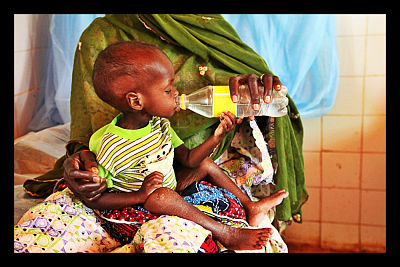
Senegal is no stranger to malnutrition. Each year, the country sees cases of malnutrition spike in the summer months. Coupled with volatile harvests, climatic events and political instability, malnutrition will remain an enduring challenge for Senegal in the coming years. Despite these concerns, the Senegalese government has recently shown a strong commitment to alleviate malnutrition through close cooperation with humanitarian organizations.
Malnutrition in Senegal centers on what many call the “lean season.” This grimly-named period usually lasts from June through September, when food stocks from the previous year’s harvest approach depletion. In rural areas, where residents depend on the annual harvest for both income and sustenance, the lean season requires locals to reduce the quantity and the quality of their meals. The lean season thus delivers a double whammy, adding the specter of a malnutrition crisis to food security concerns.
In recent years, poor harvests have brought malnutrition in Senegal to crisis levels. Low harvest yields in 2011 led to the declaration of a malnutrition emergency in April of 2012. In the regions of Diourbel and Matam, identified the previous year as priority regions, national nutritional surveys had predicted under 5,000 cases of severe acute malnutrition, or SAM, during the 2012 lean season. These regions saw more than 13,000 cases of SAM. To make matters worse, Diourbel and other western regions were struck by floods in August and September of that year, destroying health facilities and affecting more than 300,000 people. The nutritional situation in rural Senegal, particularly in Diourbel, remained precarious the next year, with United Nations Regional Humanitarian Coordinator Robert Piper paying the region a special visit.
Harvest yields in 2014 were once again inadequate—down 16 percent from the previous year’s harvest and 20 percent below the five-year average, according to the World Food Programme. In regions suffering from insufficient rainfall, 2014 and 2015 harvest yields fell by up to 80 percent, according to USAID. If summer 2015 rains fall short, malnutrition in Senegal may reach crisis levels in the coming months.
Despite this concerning outlook, recent developments give cause for optimism. Before the declaration of a malnutrition emergency in 2012, the Senegalese government had made fighting malnutrition a key priority. During the 2012 crisis, the government collaborated closely with UNICEF, the World Food Programme, the World Health Organization and numerous NGOs to plan its response. Additionally, humanitarian organizations have pioneered innovative tactics to assist families at risk of malnutrition. The World Food Programme, for instance, began transferring money to vulnerable families in southern Senegal via text message during the 2014 lean season.
Though these steps are encouraging, malnutrition in Senegal remains a chronic issue. The lean season is still a defining feature of rural Senegalese life, and weak seasonal rainfall all but guarantees a malnutrition crisis. Political instability also poses difficulties. A history of separatist activity in the Ziguinchor region (struck by the 2012 floods) has left locals particularly susceptible to malnutrition emergencies.
Perhaps most critically, humanitarian initiatives that tackle malnutrition in Senegal are regularly underfunded. UNICEF’s response to the 2012 malnutrition crisis received only two-thirds of its desired funding, while food security and nutrition initiatives in 2013 met only 36 percent of their funding goals, according to U.N. sources. In spite of recent strides, malnutrition will likely continue to affect Senegal for years to come.
– Leo Zucker
Sources: Scaling Up Nutrition, UNICEF, IAEA, Relief Web 1, European Commission, WFP 1, WFP 2, Relief Web 2, Wikipedia
Photo: Thomson Reuters Foundation

Brothels Bred from the Broke
In many parts of the world, including the United States, brothels exist. They have astounding symmetry in areas with high rates of poverty and gender inequality. Workers receive little to no pay. Often former victims of human trafficking and prostitution become brothel owners. Women make up the majority of owners. The end of the road for women and children who have been trafficked for commercial sex purposes is usually a club or brothel.
Sadly, what many do not realize is that the women found in brothels are often not forced, but only do so as a result of economic desperation. However, some of the younger victims are held captive, sold by their families or born into the brothel.
Born into the Brothel refers to children of brothel workers, whose other female family members have been brothel workers. These children grow up living in the brothel. Recruitment for brothels is often easy due to the extreme poverty and vast need for economic resources. Essentially, brothels target low income areas as a primary source for recruitment.
Brothels generally avoid areas with a high concentration of NGOs and law enforcement. Therefore, rural areas absent of NGOs are now being targeted by brothels. In these areas, there is a lack of law enforcement involvement and organizations to empower women. The recruitment efforts are based on the use of economic exploitation.
Recruitment is often done by elderly women who are either former brothel workers or came from impoverished communities. Now, having obtained their own brothels, they exploit their own past experience of economic need. These women send older prostitutes back to their own villages or villages known to be poor to recruit new staff for their establishment.
Recruiters have direct and personal knowledge of an area, and know exactly which families to target. They are aware of who is struggling the most, which families have too many daughters and which families have had the death of a parent or a marital breakdown.
According to reports from UNICEF of the women that end up in brothels in Asian countries such as Nepal, 86 percent did not know that they were going to become apart of the sex market when they left home. Furthermore, of those victims, 82 percent were promised jobs that did not include working at a brothel in prostitution. Families that covet advanced earnings due to economic need, willingly send their daughters. In regions such as Southeast Asia, husbands are permitted to sell their wives to brothels legally. Rural areas have become breeding grounds for girls who become forced into the sex industry. The supply is continuous due to the cycle of poverty in these regions.
– Erika Wright
Sources: Hist-Chron, UNICEF
Photo: Flickr
AGOA’s Ticking Clock
Senate Finance Committee Chairman Orrin Hatch (R-Utah) and Ranking Member Senator Ron Wyden (D-Ore.), and House Ways and Means Committee Chairman Paul Ryan (R-Wisc.) and Sander Levin (D-Mich.) have introduced The AGOA Extension and Enhancement Act of 2015 that will renew the act for ten years.
Originally signed into law in May of 2000, the AGOA was a bipartisan initiative intended to strengthen economic relations between the United States and Africa. By creating trade preferences for African products that allowed for duty-free entry into the United States, the AGOA sought to provide an exclusive economic partnership with budding African industries and American consumers. The Brookings Institution, a Washington, DC-based think tank, estimates that the AGOA has created several hundred thousand direct s in Africa—particularly in textiles.
Under the agreement, eligible African nations would receive “unlimited duty free and quota free access to the U.S. market for apparel made in Africa from U.S. fabric and U.S. thread.” Several African nations saw unprecedented growth in exports to the United States. For example, Kenya saw a 1,375% increase in exports to the U.S. between 2000 and 2001.
“The legislation [AGOA] has helped transform the economic landscape for Sub-Saharan Africa by stimulating new trade opportunities for African and Americans businesses, creating new jobs, and investments worth hundreds of millions of dollars,” wrote a U.S. Administration 2002 report.
The AGOA was initially set to expire in 2008 until a new round of legislation pushed the expiration date back to September 2015.
In addition to the African jobs created by the AGOA, there are many American jobs dependent on the trade network that this legislation has formed. The United States Trade Representative has estimated that exports to Africa are responsible for more than 120,000 American jobs. The AGOA has provided a level of security that have lead to a four-fold increase in exports to Africa—something that helped to pay thousands of salaries stateside.
“This legislation will promote American trade and strengthen our economic ties with important countries,” said Sen. Paul Ryan in April. “It will encourage our friends in Africa and Haiti to pursue free enterprise and solidify the rule of law. This legislation demonstrates that more trade can create opportunity at home and promote our economic values abroad.”
Brookings has argued that uncertainty over the act’s renewal could halt the progress made so far by the AGOA. Without the stability of the legislation, textile factories are less likely to receive orders in enough time to produce clothing for a new season of shopping. In the void left by the AGOA, competing manufacturers like China will be eager to step in and soak up the businesses that were once protected by the AGOA.
– Emma Betuel
Sources: WPI, IB Times, Brookings
Photo: Global Vison
4 Global Poverty Facts to Share
Most people are aware of the existence of poverty on the global level. Many frequently receive flyers in the mail or run into something on the Internet asking to donate to the cause. However, many people are unaware of how concentrated and gendered poverty is and exactly how much money it would take to tackle worldwide poverty. Here are four facts on global poverty to help expand your understanding.
1. Sixty-five Percent of the World’s Hungry Are Located in Seven Countries
Most of the hungry people in the world can be found in India, China, the Democratic Republic of the Congo, Ethiopia, Pakistan, Indonesia and Bangladesh. Because of the concentration of these people, those born in these countries are at a greater risk of living in deplorable conditions. The poor economic opportunities and limited availability of education in these countries perpetuates the cycle of poverty; thus, expanding and continuing hunger, malnutrition and vulnerability to natural disasters.
2. Global Poverty has a Different Affect on Women
Sixty percent of the hungry people in the world are women. Like men, poverty forces impoverished women to be at risk of starvation, malnutrition and poor health. However, unlike men, poverty makes it harder for women to have access to education and contraceptives. Because of the lack of gender equality in many of these countries, poverty disproportionately affects women. Women have even less access to education than men and they often times do not have the opportunity to utilize contraceptives because of the lack of availability and the cost. The minimal access to contraceptives puts women at a greater risk of dying during childbirth. The lack of gender equality also makes it harder for women to utilize education to exit the cycle of poverty.
3. Global Poverty Can End with the Help of 100 People
Often times, poverty seems like a hard giant to tackle because of the seemingly massive price tag. However, if one hundred of the world’s richest people contributed some of their net worth, poverty could be eliminated “four-times over.” This option is not particularly favorable among many because it seems to put unwanted pressure on people who seem to have no obligation to help those they have not met. However, there is another alternative that would alleviate pressure on the world’s wealthiest people.
4. $30 Billion per year From the U.S. Government Would Eradicate Global Hunger
One of the biggest resources is a national government. Many have estimated that $30 billion a year could end global poverty. This may seem like a lot of money to the casual onlooker, but when taking into consideration that $530 billion was committed to the U.S. military in the 2010 national budget, it is a doable amount. Through the reallocation of money into the foreign aid budget, the U.S. could be the biggest contributor to eliminating global poverty.
– Erin Logan
Sources: U.N. Millennium Project, Poverties.org, The Hunger Project, The Borgen Project, Oxfam, FAO, UNDP
Photo: Huffington Post
Doctors Without Borders: An Advocate for the Poor
The organization known as Doctors Without Borders or Médecins Sans Frontières (MSF) sustains viable resources for emergency medical attention for the millions of individuals worldwide experiencing crisis in impoverished areas.
Catastrophic events are the focal point of the organization’s efforts to aid in the overwhelming demand that health systems receive as a result of the event. These events include epidemics, malnutrition, military conflict and natural disasters. The secondary focus of the organization is to provide care for those who are without healthcare or discriminated against due to their economic status. They aim to assist the people that are in need of advanced and quality health care. Doctors Without Borders or Médecins Sans Frontières (MSF i) stands as a neutral humanitarian organization. There is no desire among the organization’s goals to promote the agenda of any government interests, pharmaceutical incentives, country, political party or religious faith.
The mission of their humanitarian action is to save the lives of those suffering from global poverty around the world. They do so by providing medical resources, services and surgical needs for those suffering and ailments of people experiencing acute health issues. In resolving these health issues, the health organization assists in the restoration of health and the ability to be more effective in the individual’s life and communities. Doctors without Borders provides medical treatment for over a dozen countries, including the Democratic Republic of Congo, Syria, Haiti, Nigeria, Iraq, South Sudan, Somalia and Jordan, in addition to other countries. In addition, they provide services to refugees and displaced individuals.
Doctors without Borders has over 30,000 medical staff consisting of doctors, nurses, logisticians, water-and-sanitation experts and administrators providing medical care around the world. The number of those treated is abundant. It is estimated that 8.3 million consultations occur annually.
The organization has delivered more than 185,000 babies, as well as provided medical treatment for more than 1.6 million people for Malaria. They have treated nearly 350,000 of severely and moderately malnourished children, and have provided antiretroviral resources for over 284,000 people living with HIV and AIDS. Cumulatively, the organization has performed more than 78,000 surgeries, vaccinated 690,000 individuals against Measles and over 495,000 individuals against Meningitis.
The organization also focuses its efforts toward countries whose communities are riddled with the impact of armed conflict many individuals become victims through injuries, sexual violence and detrimental wounds. Many times during this turmoil, medical treatments are not available or individuals are simply denied the treatment so desperately needed. The response to conflicts have health consequences, therefore it is necessary to respond with care, determination, speed, focus and the ability to adapt in order to deliver the necessary medical care and treatment to those most in need.
To supplement the medical treatment services, the organization runs vaccination campaigns, design campaigns to introduce clean water systems as well as health clinics in impoverished areas. In extreme cases, they also provide resources for acute survival by providing basic supplies. Doctors without Borders consciously supports efforts to treat diseases that affect the impoverished populations.
Doctors Without Borders continues to serve as an effective advocate for access to healthcare around the world in order to improve access to essential medicines and healthcare in impoverished areas.
– Erika Wright
Sources: Time, Doctors Without Borders
Photo: Flickr
Malnutrition in Saudi Arabia
Saudi Arabia is the world’s largest exporter of petroleum oil and has an unemployment rate approximately 64 percent lower than the rest of the world. Through this economic success, malnutrition in Saudi Arabia remains a prevalent issue.
The indicators of nutritional imbalances among children 5 years or younger include stunting, wasting, being underweight and overweight. Stunting refers to a low height at a given age and wasting refers to a low weight for a specific height at a given age. Nutritional imbalances such as these result in malnutrition.
In the 2000s, malnutrition in Saudi Arabia for children 5 or younger was significant: 5.3 percent of the youth were underweight, 9.3 percent of the children were stunting, 11.8 percent of children were wasting and 6.1 percent of children were overweight.
These percentages of malnourished youth in Saudi Arabia may seem small and insignificant, but when compared to U.S. percentages of malnourishment it provides perspective to the real issue at hand.
During that same years, only 0.5 percent of children in the U.S. were underweight, 2.1 percent were stunted, 0.5 percent of children were wasting, and only 6 percent of children were overweight.
Although a portion of Saudi Arabia’s 28.7 million population live in wealth, approximately 20 percent of Saudi Arabia live in severe poverty. This percentage of individuals living in poverty correlates to malnutrition in Saudi Arabia.
Malnutrition in Saudi Arabia stems directly from families living in poverty who lack the resources to eat meals that supplement a healthy, balanced diet.
Saudi Arabia provides free healthcare and education resources to families who cannot afford it but Saudi Arabia neglects assisting families in poverty with food and meals. It is common for poverty ridden families to rely on citizens to give them free food handouts.
Malnutrition is not only affecting Saudi Arabia but also nations across the entire globe. According to Action Against Hunger, malnutrition is the cause of 50 percent of all child deaths.
While Saudi Arabia is working to boost citizen health and nutrition, the U.S. is implementing programs to help cut hunger in poverty struck nations.
In 2009, President Barack Obama developed the Feed the Future initiative which is a global food nutrition program working to reduce hunger and poverty. Feed the Future is currently running in 19 countries; unfortunately, Saudi Arabia is not one of those countries.
Although programs like Feed the Future are engaging the U.S. in helping reduce hunger and malnutrition in 19 countries, nations like Saudi Arabia are being neglected. With the implementation of more food nutrition programs, the U.S. could strive to make a global impact in increasing health and nutrition.
– Danielle Koontz
Sources: MSU, WHO, Time, Feed the Future, Action Against Hunger
Photo: Sat7UK
“Big Push” Poverty Solution Program
In 1981, more than 50 percent of the world was in poverty. In 1990, only 43 percent lived on $1.25 a day. Today, only 21 percent are under the poverty line.
There’s no doubt that poverty is declining around the globe. But almost all of the gains have come from pulling up those just under the poverty line, rather than from those considered “ultra-poor.”
The ultra-poor and the poor, although both suffer from poverty, cannot be compared. The ultra-poor cannot send their children to school because they simply cannot afford it. They can’t take out loans or use banks because they lack the skills to do so. If they receive money or animals for free, they immediately spend the money and savor the food. The ultra-poor are in a trap so deep it’s almost possible to escape.
The ultra-poor have been in need of a new approach, a comprehensive solution that will train, prepare, challenge and ultimately bring them hope of a future with traction and sustainable success.
One such approach offers a viable solution. In 2002, the Bangladesh Rural Advancement Committee, an antipoverty group, started a program in Rangpur to help the severely impoverished “graduate” from poverty. The Ultra-Poor Graduation Initiative included the following key ingredients: money-making assets such as goods to start a store or land to plant seeds; training on how to use these assets as well as financial opportunities; a small regular grant of food or cash to provide time off from labor or begging to learn new skills; access to basic health services and frequent check-ins.
The program was complex and expensive. It required working with the families intensively for over two years. The results, however, were astonishing and worth the hard work.
Almost all the participating families changed their lives. A year after the program ended 97 percent were considered graduated; they had satisfied most of the basic indicators such as having cash savings, steady food sources, diversified income, a tin roof and latrine, among other things. Three years later the number was 98 percent.
Since then, 1.4 million households have participated in this program.
The Consultative Group to Assist the Poor at the World Bank along with local NGOs in India, Pakistan, Ethiopia, Ghana, Honduras and Peru have carried out similar, successful programs, focusing on people living on less than $1.25 a day.
Aid groups around the world have been refining the “big push” approach, a burst of intensely focused help for a limited period of time, for over 25 years. This concept isn’t ground-breaking, but the results of this study definitely are, showing that the positive effects of a well-designed “big push” approach can continue even after the program stops.
The most important effect from this study has been the improved mental state of those who participated. Many of the researchers have attributed the continual success of the families to the fact that they have found hope of liberation from the cyclical nature of poverty.
– Alison Decker
Sources: Christian Science Monitor, The New York Times , China Daily, Yahoo News, Futurity, National Public Radio
Photo: Flickr
Afghan Taliban Pledge Support for Women’s Education
Historically, the Taliban’s regime in Afghanistan is notorious for its brutal oppression of women. Now, the Taliban has reportedly pledged its support for women’s rights.
The Taliban put forward this ‘softer stance’ on women’s issues at recent meetings with Afghan officials and activists in Qatar. Taliban representatives at the talks said that should they return to power, they would support not only women’s access to education, but also their right to work outside the home.
Many hope that these talks will lead to formal peace negotiations between the Taliban and the U.S.-backed Afghan government.
After coming to power in Afghanistan in the mid-1990s, the Taliban began a harsh crackdown on women’s rights. The group specifically targeted women’s education. Soon after taking over the Afghan capital, Kabul, in 1996, the Taliban closed the city’s women’s university and prohibited women from studying at Kabul University. In 1998, the Taliban banned all girls over the age of eight from attending school.
It is no secret that women’s education plays an integral part in a country’s economic and social development. It can both lift individual women and families out of poverty and increase an entire country’s GDP. Investing in girls’ education can also lower child and maternal mortality rates and reduce the likelihood of child marriages. By prohibiting women from attending schools and universities, the Taliban effectively ensured that Afghan women would lack the skills needed to participate in society and therefore sink deeper into poverty.
Though the Taliban fell from power in Afghanistan in 2001, its repressive views of women’s right to education are still widespread. In the years since, women have made only gradual progress toward reentering the educational system. World Bank reports show that as of 2014, 36 percent of Afghan girls attend school.
The three Afghan women who attended the talks in Qatar reported that they were pleased with the Taliban’s pledge to not roll back the progress Afghan women have made. Malalai Shinwari, a former Afghan member of parliament, said, “They said they won’t make the same mistakes that they made in the past. They said they would accept the rights we have today.”
However, many women’s activists remain skeptical about the Taliban’s statements. Shaharzad Akbar, a Kabul-based activist, revealed, “My worry is that the Taliban have a very different understanding of women’s right to education and political participation, and that it is based on their view that women are inherently inferior to men.”
Many delegates from the Qatar talks have expressed their surprise over the Taliban’s supposed willingness to compromise on both women’s rights and other political issues. However, whether the Taliban will follow through on its promises still remains to be seen.
– Caitlin Harrison
Sources: Wall Street Journal, Christian Science Monitor, BBC, Global Partnership, U.S. Department of State
Photo: Blogging for Barakat
Crowdfunding for Development
In 2014, the space-based video game ‘Star Citizen’ raised almost 40 million dollars via crowdsourcing, earning it a Guinness World Record for the largest single amount ever raised through crowdfunding. To put this in context, funding for all of the specialized agencies of the U.N., including WHO, UNICEF and UNDP, totalled about 20 billion dollars in 2011, only 500 times the amount raised for a single video game.
Crowdfunding, the raising of funds for a particular venture or project directly from the population through the internet, has been gaining considerable steam in recent years. Worldwide crowdfunding volume in 2011 was over one billion dollars. In the U.S. alone, there are over 190 platforms for crowdsourcing.
In 2012, social causes made up 30 percent of all crowdfunded projects. This statistic reveals that it is possible to enthuse the public about socially beneficial projects, consequently reducing the burden on the government.
Floating Doctors is just one example of such a project. The organization aims to provide free medical care and deliver medical supplies to isolated populations of Central America. The unique approach of this project is that they voyage by ships to reach these populations and their ships are completely self-sustained in their ability to serve as a doctor’s office. They do not require the existence of a permanent hospital building in the locations they serve. In 30 days, they have been able to raise 3,000 U.S. dollars on KickStarter, a crowdfunding platform.
Another example is Energy for Old Fadama. It is trying to provide solar energy to a large urban slum in Ghana. In 18 months, the organization has equipped 20 community buildings with solar energy and are also trying to empower women in the community by providing them the opportunity to be small solar system entrepreneurs. So far, Energy for Old Fadama has raised 17,000 euros from 59 backers.
Several platforms dedicated specifically to civic projects are starting to appear. According to Deutsche Welle, one such platform, Germany-based nonprofit BetterPlace.org, has collected 10 million euros for 5,000 projects in 147 countries since its launch in 2007.
StartSomeGood is another example. This platform, as the name suggests, supports projects focussed on social good. The platform generates revenue for itself only if a project on its platform meets its fundraising goal. Start Some Good also asks fundraisers to decide on a “tipping-point goal”, an amount required to launch all projects. Donations are only processed if a campaign raises enough to meet its tipping-point. In this way, donors are assured that their money is going toward a goal that will be realized.
Like any good investor, a donor should also be able to evaluate a project for its merit. BetterPlace accommodates this by allowing donors to rate projects and ask questions to project organizers. Incorporating more approaches like donor questions and tipping-point goals will give crowdfunding campaigns more credibility.
Crowdfunding allows for innovations for development to be realized. As it grows, crowdfunding might well become another mainstream approach, just like aid from governmental and intergovernmental sources, to secure funding for civic projects.
– Mithila Rajagopal
Sources: Daily Crowd Source, Deutsche Welle, Guinness World Records, Statista, Start Some Good, World Watch
Photo: Flickr
Malnutrition in Senegal
Senegal is no stranger to malnutrition. Each year, the country sees cases of malnutrition spike in the summer months. Coupled with volatile harvests, climatic events and political instability, malnutrition will remain an enduring challenge for Senegal in the coming years. Despite these concerns, the Senegalese government has recently shown a strong commitment to alleviate malnutrition through close cooperation with humanitarian organizations.
Malnutrition in Senegal centers on what many call the “lean season.” This grimly-named period usually lasts from June through September, when food stocks from the previous year’s harvest approach depletion. In rural areas, where residents depend on the annual harvest for both income and sustenance, the lean season requires locals to reduce the quantity and the quality of their meals. The lean season thus delivers a double whammy, adding the specter of a malnutrition crisis to food security concerns.
In recent years, poor harvests have brought malnutrition in Senegal to crisis levels. Low harvest yields in 2011 led to the declaration of a malnutrition emergency in April of 2012. In the regions of Diourbel and Matam, identified the previous year as priority regions, national nutritional surveys had predicted under 5,000 cases of severe acute malnutrition, or SAM, during the 2012 lean season. These regions saw more than 13,000 cases of SAM. To make matters worse, Diourbel and other western regions were struck by floods in August and September of that year, destroying health facilities and affecting more than 300,000 people. The nutritional situation in rural Senegal, particularly in Diourbel, remained precarious the next year, with United Nations Regional Humanitarian Coordinator Robert Piper paying the region a special visit.
Harvest yields in 2014 were once again inadequate—down 16 percent from the previous year’s harvest and 20 percent below the five-year average, according to the World Food Programme. In regions suffering from insufficient rainfall, 2014 and 2015 harvest yields fell by up to 80 percent, according to USAID. If summer 2015 rains fall short, malnutrition in Senegal may reach crisis levels in the coming months.
Despite this concerning outlook, recent developments give cause for optimism. Before the declaration of a malnutrition emergency in 2012, the Senegalese government had made fighting malnutrition a key priority. During the 2012 crisis, the government collaborated closely with UNICEF, the World Food Programme, the World Health Organization and numerous NGOs to plan its response. Additionally, humanitarian organizations have pioneered innovative tactics to assist families at risk of malnutrition. The World Food Programme, for instance, began transferring money to vulnerable families in southern Senegal via text message during the 2014 lean season.
Though these steps are encouraging, malnutrition in Senegal remains a chronic issue. The lean season is still a defining feature of rural Senegalese life, and weak seasonal rainfall all but guarantees a malnutrition crisis. Political instability also poses difficulties. A history of separatist activity in the Ziguinchor region (struck by the 2012 floods) has left locals particularly susceptible to malnutrition emergencies.
Perhaps most critically, humanitarian initiatives that tackle malnutrition in Senegal are regularly underfunded. UNICEF’s response to the 2012 malnutrition crisis received only two-thirds of its desired funding, while food security and nutrition initiatives in 2013 met only 36 percent of their funding goals, according to U.N. sources. In spite of recent strides, malnutrition will likely continue to affect Senegal for years to come.
– Leo Zucker
Sources: Scaling Up Nutrition, UNICEF, IAEA, Relief Web 1, European Commission, WFP 1, WFP 2, Relief Web 2, Wikipedia
Photo: Thomson Reuters Foundation
Does Global Aid Really Work?
People living in extreme poverty see an improvement in their living conditions when they earn just a little extra money from farming or raising livestock.
This is according to Dean Karlan, founder of Innovations for Poverty Action, or IPA. The nonprofit researches and evaluates different programs fighting world poverty so as to inform its own poverty-combating program initiatives.
Karlan studied economics in graduate school at the Massachusetts Institute of Technology and is now a professor at Yale. He began researching poverty and started IPA in order to answer the question, “Does global aid work?”
Prior to starting IPA, Karlan was displeased with how little research existed on global aid programs and their effects. It was impossible to know precisely how much people’s lives were improving due to aid.
This is an ongoing debate, and today, two polarizing views on global aid prevail. Some believe that the U.S. and other nations need to invest more, while others think that enough money has already been wasted on a fruitless cause. Through IPA, Karlan is working to produce tangible evidence about global aid to dispel the second view and, in turn, combat poverty.
Karlan and his colleagues ran a five-year-long experiment with the poorest families they could find in six developing countries. The team divided the families into two groups. The control group received nothing, while the other group was given a hefty aid package for up to two years. The package included livestock (for raising), livestock training, food or cash, a savings account and physical and mental health aid.
After observing both groups for the duration of the study, Karlan and his colleagues concluded that families who were given aid, made a little more money and had more food to eat than the control group. Moreover, families continued to generate more income a year after they stopped receiving aid.
Karlan reports, “We see mental health go up. Happiness go up. We even saw things like female power increase.”
The measured effect of aid was quite slim. Incomes and food consumption rates in the study increased only by about five percent in comparison to the control group. It is hard to forecast the long-term impact since the families were only observed for a year following the experiment.
Nonetheless, the aid package still has an impact in the short term for the participating families and appears to have promising long-term effects. Giving families an extra boost is exactly what may enable them to begin climbing out of extreme poverty, albeit slowly.
“Moving poverty is hard,” explains Sarah Baird, an economist at George Washington University. “[But] the fact that [Karlan and his colleagues] were able to move it, and it was sustainable after a year, I think is important.” The study supports the conclusion that aid from charities and governmental programs do have a positive impact.
A little bit of money can go a long way for those in extreme poverty. At the very least, it offers hope, and makes a difference for the families who receive it.
– Lillian Sickler
Sources: NPR, American Program Bureau, Innovations for Poverty Action
Photo: Flickr