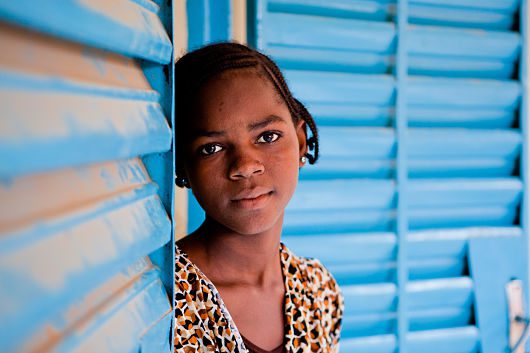
Guatemala has one of the highest rates of child marriages, with over 30 percent of girls getting married by age 18 and 7 percent of girls getting married by age 15. It is also one of the only countries in which the rate of childbirths to girls under the age of 15 rose from 1990 to 2011.
In Guatemala, it is legal for girls to marry at age 14 as long as they have parental consent. However, many girls younger than 14 are forced to marry, resulting in early childbirth. In the village of Almolonga, a 13 year old’s childbirth caused a national scandal because her wedding—which took place when she was only 12—had been officiated by the mayor of the village.
Marriage at such a young age results in many complications because the girls’ bodies are not ready for childbirth. As the Council on Foreign Relations states, one of the most common problems girls face is an obstetric fistula, which can lead to chronic incontinence. Maternal mortality is also extremely prevalent, and childbirth is the leading cause of death for girls between the ages of 15 to 19 in low to middle income countries. In addition, babies born to younger mothers are more likely to die at a young age because they tend to have higher risks of malnutrition and weaker immune systems.
Child marriage is also problematic because many girls are forced to rely on their spouses economically. Therefore, even if they are trapped in an abusive relationship, many girls are not able to leave their husbands. Also, many of those who enter into child marriages drop out of school once they are married, and therefore do not have the education to get a job, which would allow them to support themselves.
Child marriage has been prevalent for a long time, and in Guatemala it is rooted in indigenous cultures and a patriarchal idea that states that women are normally confined to housekeeping and childbirth. However, this idea is slowly changing. At Wings, a nonprofit that works for family planning and reporductive health in Guatemala, director Shilpa Kothari states that ‘at the local level, parents, teachers, and even young women are saying that 14 is a bit too young to become pregnant’.
There is also a societal movement for child marriages to be counted and no longer regarded as normal. Organizations like The Reproductive Health Observatory in Guatemala (OSAR) have helped to enforce that the government trains state employees to identify child mothers. In 2014, there were 5,119 documented cases of mothers under the age of 15.
This identification of child mothers has led to more criminal complaints being filed, since child mothers are rape victims in the eyes of the law. In 2013, 608 formal criminal complaints were filed, and in 2014, 921 were filed.
There is still a stigma surrounding rape, which has led to few of these criminal complaints resulting in convictions. Moreover, many girls are scared to testify because they rely on their husbands for economic dependence.
The Guatemalan congress is sitting on a bill that will change the legal marriage age to 16, but whether this bill will pass is debatable.
Guatemala is making strides regarding child marriage, but it still has a ways to go. Luckily, there is work being done through the UN that will help Guatemala reduce its rate of child marriage. In 2013, the HRC adopted its first resolution on child, early and forced marriage, recognizing them as human rights violations. This resolution was co-sponsored by over 100 countries, including Guatemala, and aims to help define the development agenda for after 2015, when the Millennium Development Goals expire.
There are steps being taken to help reduce child marriages—changing patriarchal ideas on the local level, helping to encourage the reporting of childbirths and enforcing that child, early and forced marriages are human rights violations—but there is still room for improvement. As Dr. Montenegro of OSAR states, even if the law changes regarding child marriages, this change in law has to be accompanied by public policies that will empower girls and help them have a plan for their lives.
There are many organizations one can donate to which work to empower girls and reduce child marriages. Some of the organizations that work directly with residents of Guatemala are the Population Council, which works to connect girls with mentors and support, and the Fundación Nueva Esperanza, which gives girls scholarships to attend school.
— Ashrita Rau
Sources: The New York Times, Council on Foreign Relations, Girls Not Brides, Girls Not Brides, MSN, UN Popluation Fund,
PBS
Photo: Girls Not Brides

The Impact of Malnutrition in Guinea-Bissau
According to the World Food Programme, almost 15,000 children living in Guinea-Bissau are plagued by acute malnutrition. As of 2013, a mere seven percent of the country’s population is food-secure. Rural communities suffer especially—as many as 93 percent of Guinea-Bissau’s rural population is living with food insecurity and the consequential threat of malnutrition.
So, what is malnutrition, and what impact does it actually have? According to the World Health Organization, malnutrition is “a deficiency of nutrition” caused by factors related to poor diet and disease. Malnutrition hinders physical development, leading to stunted growth and underweight children.
Malnutrition also negatively impacts brain anatomy, physiology and biochemistry, potentially leading to irreversible brain damage. Additionally, an analysis of child mortality data from 10 countries, including Guinea-Bissau, found that due to “the vicious cycle between malnutrition and infection,” children who suffer growth restriction due to malnutrition are more likely to become ill and have a higher rate of severe illness, leading in turn, to further developmental stunting.
The World Factbook, a publication by the U.S. Central Intelligence Agency, identifies Guinea-Bissau as having the fifth greatest death rate out of 225 countries. Life expectancy at birth, a mere 49.87 years, is also the third shortest, ranking above only South Africa and Chad.
With 18 percent of children less than five years of age underweight and the high risk of disease, Guinea-Bissau is certainly impacted by that “vicious cycle” of malnutrition and illness.
The same analysis that notes this cycle also observes the importance of the “context of poverty” that malnutrition and its ill effects occur within. This poverty, the authors assert, “leads to diminished access to health care, exposure to contaminated environments, poor child care practices, and food insecurity that ultimately affects patterns of intake and illness.”
Poverty rates in Guinea-Bissau have increased notably over the past few years. Now, 75 percent of the country’s population experiences poverty.
Several contributing factors, including socio-political fluctuations and the declining market value of cashews, the country’s primary cash crop, have caused the increased poverty and subsequent malnutrition in Guinea-Bissau. The country’s economy is predominately supported by agriculture with more than 80 percent of the labor force employed in farming. This portion of the population is also the most vulnerable when it comes to food-insecurity.
Experts estimate that in order to end world hunger, alleviating food-insecurity in places like Guinea-Bissau, $30 billion per year is needed over the course of a decade. While it seems like a staggering sum, when compared to U.S. military spending, $30 billion is a drop in the foreign policy bucket.
The U.S. Department of Defense base budget for 2015 is $495.6 billion, nearly 17 times the $30 billion needed to alleviate world hunger. However, the U.S. spends less than one percent of its foreign policy budget on international aid.
An increased contribution to the fight against global poverty and hunger need not be drastic. In fact, by fulfilling their 1970 promise to give 0.7 percent of gross national income as official international development aid, the U.S. and other wealthy member countries of The Organisation for Economic Co-operation and Development could end global poverty.
This foreign aid investment would help people struggling with food insecurity in places like Guinea-Bissau, preventing malnutrition and all its ill effects.
– Emma-Claire LaSaine
Sources: World Food Programme, MDGIF, The American Journal of Clinical Nutrition, CIA, Nutrition Reviews, WHO, Los Angeles Times, U.S. Department of Defense, OECD
Photo: World Food Progamme
Bangladesh Launches Immunization Campaign
The introduction of the Inactivated Polio Vaccine (IPV) and pneumococcal vaccine (PCV) has benefited over three million children in Bangladesh. These additional immunizations in Bangladesh are now given regularly to children in accordance with the country’s national immunization program.
In 1979, Bangladesh started the Expanded Program on Immunization (EPI) to reduce child deaths from vaccine preventable deaths. The first six vaccines administered against infectious diseases included tuberculosis, polio, diphtheria, whooping cough, tetanus and measles.
Currently, Bangladesh is administering vaccines against nine diseases to children under the age of 1. More than 85 percent of children are vaccinated, an achievement that helped Bangladesh to become one of the six countries in the world that achieved Millennium Development Goals (MDG) on child mortality before the 2015 deadline.
WHO, UNICEF, Gavi the Vaccine Alliance and the Global Polio Eradication Initiative partners support the addition of these novel vaccines to the country’s national immunization program. In 2013, the government of Bangladesh doubled its vaccine storage capacity to allow the storage of the PCV.
Seth Berkley, the CEO of Gavi the Vaccine Alliance, says “Pneumonia is one of the leading causes of child mortality in Bangladesh, accounting for 22 percent of deaths of children under the age of 5, so the introduction of pneumococcal vaccine will have a major positive impact on child survival”.
By adding the IPV into Bangladesh’s national immunization campaign, it is fulfilling the Polio Eradication & Endgame Strategic Plan 2013-2018.
To ensure that the IPV and the PCV are added to every child’s immunization card, over 45,000 community health workers play the key role to ensure that parents bring their children in for their immunization sessions.
In order for these new immunizations to become a success, the community health workers had to complete extensive training in order to administer the vaccines, and to also be knowledgeable to answer any of the parents’ questions.
Aside from the necessary training, health workers in Bangladesh faced other challenges in the course of administering the new vaccines. The equipment that keeps the vaccines cold and vital, the national cold chain, had to be modified in order to adjust to the varying temperatures during the monsoon season. In addition to the varying temperatures, rickshaws had to be used for transportation through the crowded cities in order to deliver the vaccines in time for immunization sessions.
There have been many obstacles for the vaccines to be administered to the three million children in Bangladesh. From extreme temperatures, extensive training and implementation, the PCV and IPV have had a difficult undertaking to make it to the immunization sessions.
However, these vaccines will lower the mortality rate for children under five dying from pneumonia. Pneumonia, a bacterial or viral infection, has been an illness prevented in many countries. With the immunization in Bangladesh, more children will build immunity against the illness and survive the infection if contracted.
– Kerri Szulak
Sources: Bdnews24, Gavi the Vaccine Alliance, Vaccine News Daily
Photo: UNICEF New Zealand
Can the Measles Vaccine Ward Off ‘Immune Amnesia’?
Scientists are speculating that the measles vaccine does more than prevent measles. A new study published in the journal “Science” found that children that were vaccinated did not just avoid the measles, they also eluded infectious illnesses such as pneumonia, influenza and tuberculosis.
Historically, each time the measles vaccine was introduced, childhood mortality dramatically went down by 30 to 50 percent in some countries and by 90 percent in severely destitute nations.
Today the vaccine is hailed as one of the most effective operations in public health in recent history.
The World Health Organization has asserted that the vaccine is linked to a hefty decrease in child mortality no matter what the infectious illness is. Following widespread vaccination, childhood deaths due to infectious disease fall by 50 percent.
Michael Mina is a post-doctorate at Princeton University and a medical student at Emory University. He and his team performed a recent study using computer models to predict the mortality rate for infectious diseases in the next few years.
The team looked at figures collected from the U.S, Denmark, England and Wales. Numbers dated back to the 1940s.
In every location, the presence of measles was linked by some degree to the rate of mortality. The magnitude of the affect was different for each country because, most likely, health care underwent changes during the 70-year stretch.
From the evidence, Mina and his colleagues concluded that being infected with measles leaves children susceptible to other infectious diseases for an average time span of 28.3 months, or about two or three years.
Measles is a severe immunosuppressor, increases a host’s likelihood of contracting other diseases. Most viruses have this effect, but measles takes it even further. It actually obliterates any immunity the host once had.
After going through a measles infection, “the immune system kind of comes back. The only problem is that it has forgotten what it once knew,” Mina explains.
For example, if a child gets sick with pneumonia, they build up antibodies which prevent the child from contracting the disease again. But if that child then catches the measles, their immune system loses that protection and they could contract pneumonia once more.
Persuasive evidence from the new study contributes to the belief that measles affects a person’s immunity and, therefore, their overall mortality. Thus, the measles vaccine could decrease mortality to a much larger degree than originally thought.
Still, scientists still have not been able to supply enough evidence as to why this phenomenon happens. They have only come up with “immune amnesia” as a theory. There is still more testing to be done.
Even so, no one can ignore the overwhelming evidence that eliminating measles lessens the risk of contracting other infectious diseases. It is just another incentive for people, especially children, to be vaccinated.
Reductions in mortality have been observed in the U.S., England and other parts of Europe and are still seen in developing countries each time the vaccine is instituted.
– Lillian Sickler
Sources: NPR, U.S. National Library of Medicine, Research Gate, Online Post, ARS Technical
Photo: Flickr
What it Means to Educate the World
Teach the world. Fix its problems. Seems like pretty simple logic.
However, advocacy for education around the world may seem like a broad scope, and many times the necessity of “spreading education” comes across so vague that it gets lost in the web of international aid “talk”. In order to understand the importance of education and creating more opportunities for education around the world, everyone should know some of the educational programs being created around the world. Here are a few just to start the long list!
Health Education: Rampant spread of disease is a significant concern in many developing nations around the globe. Many illnesses in poorer regions of the world are preventable and treatable, yet people in said communities continue to suffer. Health education is instilled in many countries, teaching many about general health and sexual health. HIV/AIDS in particular, remains a main focus for many international aid organizations, and by teaching safe sex practices and overall safer health practices, there will hopefully be an end to the spread of these deadly illnesses. To learn more about these kinds of organizations, go to www.planusa.org.
Economic Education: Instead of simply giving money to poor communities, it is important to also teach sustainable and smarter economic practices in order to assure more long-term effects from international aid efforts. Certain education advocacy groups go into poor communities in other countries, teaching small business owners and families more efficient strategies of economics and savings. This not only builds up said business, but also puts more money in the homes and to the families of the small communities, and moreover stimulates the overall economy. To learn more about these types of programs, go to www.trickleup.org.
Women’s Education: Educating and empowering women around the world is a huge objective in many international education programs. Many women in developing nations experience extreme oppression, and in many cases, abuse. By educating women, in particular skills and safer health practices, they are given more of ability to be independent, and are less likely to stay in circumstances in which they are abused. To see more about these types of programs go to www.learningpartnership.org.
Education covers a number of interests and fields, especially when dealing with international aid and relief organizations. By educating the world, we do more than teach people how to read and write. Education is matter of sustainable living, health, success and happiness.
– Alexandrea Jacinto
Sources: Learning Partnership, Plan USA, Trickle Up Organization
Photo: World Vision
How Guatemala is Trying to Decrease Child Marriage
Guatemala has one of the highest rates of child marriages, with over 30 percent of girls getting married by age 18 and 7 percent of girls getting married by age 15. It is also one of the only countries in which the rate of childbirths to girls under the age of 15 rose from 1990 to 2011.
In Guatemala, it is legal for girls to marry at age 14 as long as they have parental consent. However, many girls younger than 14 are forced to marry, resulting in early childbirth. In the village of Almolonga, a 13 year old’s childbirth caused a national scandal because her wedding—which took place when she was only 12—had been officiated by the mayor of the village.
Marriage at such a young age results in many complications because the girls’ bodies are not ready for childbirth. As the Council on Foreign Relations states, one of the most common problems girls face is an obstetric fistula, which can lead to chronic incontinence. Maternal mortality is also extremely prevalent, and childbirth is the leading cause of death for girls between the ages of 15 to 19 in low to middle income countries. In addition, babies born to younger mothers are more likely to die at a young age because they tend to have higher risks of malnutrition and weaker immune systems.
Child marriage is also problematic because many girls are forced to rely on their spouses economically. Therefore, even if they are trapped in an abusive relationship, many girls are not able to leave their husbands. Also, many of those who enter into child marriages drop out of school once they are married, and therefore do not have the education to get a job, which would allow them to support themselves.
Child marriage has been prevalent for a long time, and in Guatemala it is rooted in indigenous cultures and a patriarchal idea that states that women are normally confined to housekeeping and childbirth. However, this idea is slowly changing. At Wings, a nonprofit that works for family planning and reporductive health in Guatemala, director Shilpa Kothari states that ‘at the local level, parents, teachers, and even young women are saying that 14 is a bit too young to become pregnant’.
There is also a societal movement for child marriages to be counted and no longer regarded as normal. Organizations like The Reproductive Health Observatory in Guatemala (OSAR) have helped to enforce that the government trains state employees to identify child mothers. In 2014, there were 5,119 documented cases of mothers under the age of 15.
This identification of child mothers has led to more criminal complaints being filed, since child mothers are rape victims in the eyes of the law. In 2013, 608 formal criminal complaints were filed, and in 2014, 921 were filed.
There is still a stigma surrounding rape, which has led to few of these criminal complaints resulting in convictions. Moreover, many girls are scared to testify because they rely on their husbands for economic dependence.
The Guatemalan congress is sitting on a bill that will change the legal marriage age to 16, but whether this bill will pass is debatable.
Guatemala is making strides regarding child marriage, but it still has a ways to go. Luckily, there is work being done through the UN that will help Guatemala reduce its rate of child marriage. In 2013, the HRC adopted its first resolution on child, early and forced marriage, recognizing them as human rights violations. This resolution was co-sponsored by over 100 countries, including Guatemala, and aims to help define the development agenda for after 2015, when the Millennium Development Goals expire.
There are steps being taken to help reduce child marriages—changing patriarchal ideas on the local level, helping to encourage the reporting of childbirths and enforcing that child, early and forced marriages are human rights violations—but there is still room for improvement. As Dr. Montenegro of OSAR states, even if the law changes regarding child marriages, this change in law has to be accompanied by public policies that will empower girls and help them have a plan for their lives.
There are many organizations one can donate to which work to empower girls and reduce child marriages. Some of the organizations that work directly with residents of Guatemala are the Population Council, which works to connect girls with mentors and support, and the Fundación Nueva Esperanza, which gives girls scholarships to attend school.
— Ashrita Rau
Sources: The New York Times, Council on Foreign Relations, Girls Not Brides, Girls Not Brides, MSN, UN Popluation Fund,
PBS
Photo: Girls Not Brides
Hope for the Rainbow Nation?
It has been 21 years since the end of apartheid in South Africa. While the Rainbow Nation has made progress on many fronts, the education system is struggling.
While schools do not aim to disadvantage minorities as they did during apartheid, the quality of education some provide is still severely lacking. The glow of democracy has not spread to the education system, which ranks 140th out of 144 according to a report done by the World Economic Forum. The worst being math and science specifically, ranking dead last at 144th.
Schools are failing for a number of reasons. For one, basic infrastructure is a problem and many schools are without running water or fully equipped bathrooms. Some are built of mud or are otherwise not structurally strong, leading to safety concerns.
Teachers are often absent, leaving classrooms full students with no teachers to educate them. This has been found to be more prevalent in schools located in less social-economically privileged areas. Often, these schools are smaller and have access to fewer resources, disadvantaging learners even more.
In the final year of secondary school, learners must pass their matriculation exam. About 75 percent of students passed the matric exams in 2014, a decrease from the 2013 mark of 78.2 percent. However, to pass matric, students need only 40 percent in three of their classes, and 30 percent in their other four classes.
Most students pass with better marks, however, the standard is low and half of the 18 percent of “matrics” that make it to universities, will never graduate. Couple this with the fact that despite progress in racial equality, Indians and whites possess many more matric and tertiary education certificates than blacks, and you have an education system that is struggling.
What is causing the education system to fail? It is not a lack of funding. In the 2013/14 fiscal year, 232.5 billion Rand, or $21.8 billion, was spent on education. However, money and resources often do not reach schools, instead falling into the hands of corrupt officials or middlemen involved in the purchasing of items such as computers or textbooks.
Corruption is a big problem in South Africa, and within the education sector it is no different. A recent study found that 20 percent of corruption cases reported by the public were related to education, and included things like mismanagement of funds, theft of funds, and tender corruption. Pair this corruption with a general lack of resources, infrastructure and teachers absent from work, and it makes more sense why schools are struggling.
What is the outcome of a poor education system? South Africa’s Minister of Finance Nhlanhla Nene made the connection between high unemployment in the country and a lack of properly educated individuals. Unemployment hovers at 26.4 percent, but rises to 37.8 percent when those who have given up looking for work are taken into account. To combat this, jobs obviously must be created and if the education system is improved, more people will be able to find work and continue the Rainbow Nation’s progress forward as a country.
– Greg Baker
Sources: National Department of Basic Education, South African Government News Agency, Mail and Guardian, Mail and Guardian, Brookings, World Economic Forum,BBC
Photo: Africa Check
Malnutrition in Lesotho
Like many countries in Africa, Lesotho faces a multifaceted humanitarian crisis in which issues are intertwined and often exacerbated by each other’s presence. The Lesotho government estimates that around 725,000 people, or about a third of the population, are in need of some form of humanitarian aid. Lesotho has the third highest prevalence of HIV/AIDS with almost a full quarter of adults ages 15-49 infected with the virus.
Furthermore, the United Nations estimates that almost 9,000 children under the age of 5 are severely malnourished in Lesotho. In 2009, a study conducted by the World Food Program (WFP) estimated that 39 percent of children under 5 years old exhibited signs of stunted growth resulting from malnutrition. UN research shows that school attendance for young boys and girls has been decreasing in recent years as well. This is likely due to families reliance on children to assist with increasing agricultural responsibilities.
Unpredictable weather conditions such as floods and droughts have burdened the production and availability of food in addition to other necessary resources. These factors have also contributed to increases in soil erosion and infertile lands. Minimal access to secure, high yielding seeds has also been an obstacle. These fluctuations of climate, coupled with the constant demand for staples such as maize, oil and sugar have caused prices to increase. All of these factors have contributed to malnutrition in Lesotho.
In an effort to combat the drastic price increases, UNICEF, WFP and the Lesotho government are working to implement relief measures. Efforts to adapt to irregular climate conditions are also in place. The Food & Agriculture Organization of the UN has created the Emergency & Resilience Program along with the Lesotho government to implement long term procedures such as subsistence farming and agro-conservation tactics. So far, the program has aided almost 20,000 farmers in Lesotho.
In 2007, UNICEF helped create the Lesotho Child Grants Program that affords impoverished families 40 U.S. dollars each quarter to purchase basic necessities. The program helps over 10,000 families and is being expanded to provide assistance to over 15,000. In addition, the dollar amount allocated to each family will be increased by 94 U.S. dollars.
Puseletso Tsiu is a recipient of the child grant who has greatly benefited from the program’s assistance. Tsiu’s two daughters died of AIDS and she has assumed responsibility for their childrens’ care. As a result of the extra support, she has been able to buy pairs of shoes for her orphaned grandchildren to wear to school. A commonplace purchase in the first world, such as the purchase of shoes, is viewed as a crucial investment in countries like Lesotho.
The National School Feeding Policy, sponsored by the WFP, provides two meals per day for students who can meet attendance requirements. For many families, the program provides an added educational and economic incentive to send young children to school. Families like Tsiu’s rely heavily upon the meals provided in schools so they can save money by not feeding them at home. In total, this program provides meals for over 400,000 students in Lesotho.
In the case of Lesotho, it has been demonstrated that international unity between organizations and governments can make a positive difference. “Kopano ke matla” is an old saying in Lesotho that roughly translates to “unity is power.” When faced with such adverse conditions, the meaning and power of this phrase must not be underestimated.
– The Borgen Project
Sources: UNICEF, WFP, UNECOSOC, FAO
Photo: World Food Programme
Poison, Poverty, and Cocaine in Colombia
The International Agency for Research on Cancer, or IARC, a research arm of the World Health Organization, published a report on March 20, 2015 categorizing glyphosate as “probably carcinogenic to humans.” Glyphosate is the most widely used herbicide in the world by volume, so its new label has created turbulence across science and industry. While experts, governments and industry groups debate the study’s merits, poor farmers in Colombia may experience the most drastic fallout from the IARC report. Meanwhile, cocaine in Colombia receives a break from U.S. production curbing strategy.
Quickly following IARC’s declaration, the Colombian government suspended the aerial spraying of glyphosate. Since 1994, aerial spraying has been part of the U.S. strategy for curbing the production of cocaine in Colombia. In the last 20 years, 4.34 million acres have been sprayed, costing U.S. taxpayers roughly $2 billion.
Although defying U.S. interests, the U.S. Department of State is recognizing Colombia’s sovereignty to implement its decision. How this will affect anti-drug campaigns in the country remains to be seen.
Glyphosate Spraying and Cocaine in Colombia
Vanda Felbab-Brown, a global security specialist with the Brookings Institution, believes “Aerial spraying is politically controversial, costly and causes a tremendous amount of counterproductive side effects such as destroying legal crops, negative environmental effects as the chemical washes into streams, and alienating coca farmers from government authorities.”
A large cost has also been borne by farmers in regions where coca, the main ingredient in cocaine, is grown. From 2001 to 2012, the Colombian government processed 7,800 claims of crop damage as a result from aerial spraying. For the moment, the department handling these claims will have a break, and poor farmers in Colombia’s rural regions will experience less crop damage and a healthier environment.
Colombia’s decision to change tactics will open the door for alternative drug fighting policies and development strategies. These must fill the void that experts believe will be created by the termination of the spraying program. The incentives to grow coca are still strongly in place: the U.N. Office on Drugs and Crime figured that cocaine was fetching roughly $2,500 per kilo back in 2013.
Alternative drug policies exist and are effective. The Washington Office on Latin America, which promotes human rights, democracy and social and economic justice in Latin America and the Caribbean, has outlined factors that need to complement an anti-drug campaign. Among these factors, the existence of alternative livelihoods plays a central role. Without other options, eradication programs will push farmers deeper into poverty. Implementing alternative and sustainable income generating activities makes coca production less attractive to farmers and shields them from a business decision that is subject to the whims of global drug policy.
The moratorium on glyphosate spraying comes as a relief to those living in targeted areas and provides an opportunity for sustainable development in the region.
– John Wachter
Sources: Al Jazeera, Brookings Institution, International Agency for Research on Cancer, LA Times, Nature, NY Times 1, NY Times 2, US Embassy, Washington Office on Latin America, Washington Office on Latin America
Photo: MercoPress
FIFA, Qatar and the Kafala System
The recent scandal surrounding corruption at FIFA has made headlines around the world. But could it affect the controversial 2022 World Cup in Qatar?
That remained in question Friday as FIFA re-elected Sepp Blatter as its president. The election comes on the heels of a massive corruption investigation involving the top brass of soccer’s governing body. The U.S. Department of Justice indicted 14 of the organization’s executives on dozens of separate charges this week. They are accused of “brazen corruption” in their dealings with sports marketing companies which generate billions for the organization.
FIFA is also accused of dishonesty in its selection process for the 2018 and 2022 World Cups, awarded to Russia and Qatar, respectively. The Office of the Attorney General of Switzerland announced Wednesday that it would investigate “criminal mismanagement and money laundering” suspected to have taken place during the bidding process.
Though both selections raised eyebrows among soccer fans, the 2022 World Cup in Qatar has proven to be the most controversial. The Gulf state has been widely accused of human rights abuses in its preparation for the event.
Migrant laborers seeking work in Qatar submit to a labor scheme, known as the kafala system, through which host companies “sponsor” foreign laborers. Upon arrival, many workers find their documentation confiscated and their rights severely limited. They sometimes work twelve hour days, seven days a week.
According to the International Labor Organization, the scheme is tantamount to slavery. An investigation by The Guardian found Nepalese workers in Qatar were dying at a rate of one every two days in 2014. Documents produced by that report list worker deaths caused by crushing and electrocution.
Without documentation papers, workers are prevented from ever leaving. Employers also withhold pay to suppress dissent.
Migrant workers play an enormous role in the economy of Qatar. Almost 90 percent of the country’s population is foreign-born and 99 percent of the private sector is foreign. Though human rights organizations and governments have complained, little has been done to address these issues.
Much of the work being conducted in this manner is in preparation for the 2022 World Cup, with contractors using the cheap labor to build facilities for the event.
If the current FIFA crisis continues, it will almost certainly jeopardize Qatar’s hosting opportunity. Sponsors have already begun to re-evaluate their relations with the organization and it is likely many will drop out.
As for the 2018 World Cup in Moscow, Blatter received a stamp of approval from another controversial president: Vladimir Putin. On Thursday, Putin said the investigation was an attempt to thwart Blatter’s re-election. The Russian leader, who was a champion of the 2014 Sochi Olympics, called the investigation “a grave violation of principles of international organization.”
– Kevin McLaughlin
Sources: Department of Justice, The Guardian, Human Rights Watch, Swiss Attorney General
Photo: Zee News
What is the 152 account?
Foreign aid is one of the most controversial issues in the U.S., but many people who are against increasing foreign aid fail to realize that only less than 1 percent of the U.S. annual budget is devoted to foreign aid. Most of the people who want to cut foreign aid estimate that the U.S. spends up to 30 times more on foreign aid than it actually does.
The aid that the U.S. gives is divided into two subcategories — the 151 account and the 152 account. As the Center for Global Development states, while the 151 account deals with international development and humanitarian assistance, the 152 account is concerned with international security assistance. The U.S. Agency for International Development and the State Department are the two groups that provide the most money for international aid. In 2010, the 152 account — international security assistance — was given 10.38 billion dollars in aid.
This money for security assistance is utilized in several different ways, and the programs are administered by the Department of Defense and the State Department. One of the most widely known programs that uses this security assistance is International Military Education and Training (IMET). IMET uses the money in order to provide training to foreign troops using U.S. military doctrines, tactics and equipment when necessary. An example of IMET in action is the security assistance that the U.S. has provided to Lebanon. Since 1985, the U.S. has had more than 1,000 Lebanese military students come to the U.S. for training and education.
In 2007, the U.S. spent $10,581 million on the 152 account, $16,287 million on the 151 account and a total of $68,408 million on their international affairs budget. While this may seem like a lot of money, in the same year, the U.S. spent $625,850 million on its national defense budget.
The 152 account is important because it provides security assistance to groups that need tactical training and weapons. It helps to ensure that the three core security objectives of the U.S. – enhancing U.S. security, bolstering America’s economic prosperity and promoting democracy abroad — are carried out. The security assistance training programs, such as IMET, are supposed to improve the relations between the U.S. and other countries and promote self-sufficiency.
– Ashrita Rau
Sources: CGD, Oxfam America Princeton The White House The White House FAS FPC GPO Congressional Research Service
Photo: American Foreign Relations