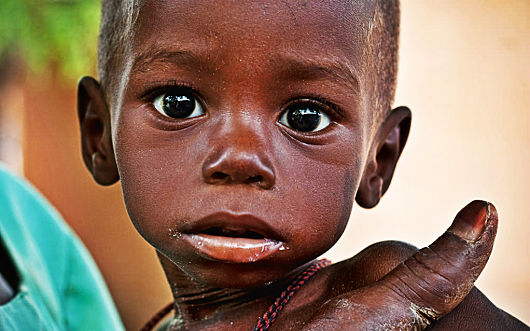
 When focusing on the fight against poverty, hunger and malnutrition are two things that are frequently brought up. People tend to have an awareness of the concepts along with their prevalence, yet many facts tend to be ignored in discussions relating to malnutrition. Discussed below are the leading facts about malnutrition and their implications.
Top 10 Facts About Malnutrition
1. Two Billion People Worldwide Suffer from Malnutrition
Although malnutrition is often discussed as a problem, it is generally discussed as a problem of the unlucky few. Yet, the reality shows just how widespread the problem truly is. Two billion people, or nearly a third of the global population, suffer from malnutrition.
2. Two-Thirds of Those Suffering from Malnutrition Live in Asia
Although Asia is not the continent with the highest rate of malnutrition, it is the continent with the largest number of malnourished citizens. There is some good news on the issue, however, as the percentage of the population suffering from malnutrition in South Asia has fallen in recent years.
3. Almost 14 Percent of the Population in Developing Countries is Malnourished
The fact that malnutrition primarily affects developing countries tends not to surprise people. However, it is still shocking how widespread the problem is in these countries. More than one in nine people in developing countries suffer from malnutrition.
4. Scaling Up Programs to Target Malnutrition Worldwide Would Cost Only 11.8 Billion Dollars Per Year, According to the World Bank.
For context, the United States spent 618.7 billion dollars on military expenditures in 2013. The need for action is great, and action on behalf of the United States has never been more possible in the fight against hunger.
5. One in Four of the World’s Children is Stunted.
Being “stunted” is defined as having one’s physical and mental growth and development stalled due to a lack of food. This problem mainly impacts developing countries where the number has the potential to rise to one in three.
6. One in Four People in Sub-Saharan Africa are Malnourished
Sub-Saharan Africa is the region with the greatest rate of malnutrition among its population. The global need to address malnutrition is a challenge, but with the unfair impact it has on regions such as sub-Saharan Africa, it is a challenge we must be willing to face.
7. Half of All Pregnant Women in Developing Countries are Anemic
Anemia, a possible result of malnutrition, causes 110,000 deaths each year during childbirth. Women as a whole also tend to suffer more from malnutrition due to often-sexist norms relating to the issue.
8. Underweight Children are 20 Times More Likely to Die Before the Age of Five
Malnutrition’s biggest victim, of course, is children. Along with the one in four children who are stunted by malnutrition, underweight children are victims of malnutrition. Underweight children, particularly those born to malnourished mothers, are 20 times more likely to die before the age of five.
9. One Third of Child Deaths Prior to the Age of Five are Caused by Malnutrition
As mentioned, malnutrition particularly harms children. Perhaps that harm to children is the most inexcusable aspect of malnutrition. One-third of child deaths prior to the age of five are caused by malnutrition, something that could be addressed through a deeper global focus on improving access to food worldwide.
10. It’s Getting Better, but There is Progress to be Made
So, here’s a little bit of good news: since 2009, the number of children receiving treatment for the acute malnutrition they suffer from has tripled. There is still progress to be made, however. Although the number of children receiving treatment has tripled, the number of children receiving treatment still remains as low as 15 percent.
Through understanding the facts that surround malnutrition, a shift can be made toward addressing the issue. The challenge is great and the global community’s ability and need to face that challenge is even more so. Only through a willingness to take action, can meaningful action be made.
– Andrew Michaels
Sources: USA Today, World Food Programme World Food Programme Action Against Hunger World Food Programme
Photo: Adfinitas

Poverty in Tianjin, China
Located in northern China, Tianjin is one of four cities controlled directly by the Chinese central government. Tianjin has a population exceeding 10 million and is one of the larger Chinese cities.
Tianjin is at the moment known to be one of the best places to be in China. The level of income is around $10,000, on par with Shanghai and Beijing. Tianjin was one of the fastest growing cities by GDP in 2013. With a growth rate of 12.5% in 2013, it was experiencing a growth spurt. Things are looking up in Tianjin. Or is there another side to the seemingly perfect picture?
Cities such as Tianjin and Beijing serve as examples of the high wealth inequality in the nation. Although Beijing and Tianjin are doing well, with numbers that show good signs ahead, the agricultural surroundings paint a very different picture.
Poverty in Tianjin does exists. The outskirts of Tianjin are filled with agricultural workers whose incomes and levels of poverty are high. Although the poverty cannot be compared with other regions of the world, there is still poverty relative to the rest of the country’s average income. This wealth gap is indicative of many of the Chinese government’s preoccupations in recent history.
Tianjin’s numbers may look nice on paper, but the surrounding poverty can be understood when looking at the housing market in Tianjin. Huge amounts of investment are being poured into Tianjin to form a new financial district that is supposed to look like Manhattan – only bigger and better. The problem begins with the lack of people. The newly built infrastructure and buildings are barely touched and are mostly unused. In fact, the lack of demand is so bad that the developers have begun selling new buildings at a loss simply to leave the market entirely.
The lack of demand in the real estate market in Tianjin is perhaps related to the poverty seen right outside the city limits. The high levels of wealth inequality and the growing poverty issues outside of Tianjin’s immediate area are beginning to drag down the seemingly picture perfect economic state of Tianjin.
Suddenly the incredible growth figures look less believable. Though Tianjin has a strategic location by the ocean and is given direct attention from the central government, the city cannot escape the simple economic truths that exist in reality. Once this house of card begins to fall, the situation of poverty in and around Tianjin will become much less easy to overlook.
— Martin Yim
Sources: Tianjin Municipal People’s Government, BBC China.org.cn The Economist Marketplace
Photo: Flickr
Children in Yemen at Risk for Epidemic
With the outbreak of conflict in Yemen, health centers have to shut down. Forces continue to attack hospitals and health care centers. There are medical shortages as the conflict hinders the delivery of medical supplies. As a result, children cannot receive the crucial vaccines and treatments they need to fight communicable diseases.
Vaccines save 2.5 million children worldwide from preventable diseases. Without basic vaccines, about 1.5 million children die. There are already cases of Measles reported in Yemen. Doctors are worried about reports of other diseases like Polio. If children in Yemen continue to not receive the vaccines, then these two diseases could continue to spread.
Parents are hesitant to take their children to health care centers to get the vaccines because the centers continue to be targets for attack, and because just getting there is dangerous. That leaves the health workers going into the field to vaccinate children. This can make it difficult to properly track how much of the child population has been vaccinated.
Another often overlooked aspect of vaccinating children is the protection of the vaccines themselves. Doctors have to make sure that vaccine centers maintain a supply of the vaccines needed. However, the conflict can make it difficult for WHO officials to deliver the medical supplies to the vaccine centers. Fuel shortages also cause problems, as there needs to be enough to ensure that the vaccines have the proper cold chain needed.
Issues like this can limit the number of children that can be reached and vaccinated. If supplies cannot be replenished or maintained, then it becomes difficult to keep children safe from diseases.
Contributing to the issue is food insecurity. Before the civil war, Yemen was already importing most of its food. Now, with conflict preventing food from being delivered, Yemen is struggling to feed its people. Without the nutrients to stay healthy and prevent malnutrition, the children’s immune systems are at a higher risk for contracting diseases.
Diseases could spread rapidly, as children in Yemen do not have access to enough food and clean water, people live in close proximity in refuge areas, and there is limited health access. The WHO workers try to combat the spread with consistent monitoring of medical supplies and going out and finding those who need the vaccines.
– Katherine Hewitt
Sources: Bill & Melinda Gates Foundation, UN News Centre, World Health Organization,
Photo: Twitter
What are Charitable Contributions?
We all know that giving to charity is both personally satisfying, in that it allows us to give to the causes we support, as well as financially satisfying, when we fill out our taxes and collect on deductions.
And that’s great, but what is a charitable contribution?
According to the IRS, “a charitable contribution is a donation or gift to, or for the use of, a qualified organization. It is voluntary and is made without getting, or expecting to get, anything of equal value.”
The IRS states that “qualified organizations include nonprofit groups that are religious, charitable, educational, scientific, or literary in purpose, or that work to prevent cruelty to children or animals.” Qualified organizations have 501(c)3 status. Whether or not an individual organization is qualified can be found using the IRS Exempt Organizations Select Check tool.
Charitable contributions are not tax deductible for certain organizations. For instance, donations to sports clubs and chambers of commerce are not deductible. Neither are donations to political candidates or labor unions.
Though many people think of charitable contributions as simply consisting of cash, contributions are far from limited to money. Items such as clothing, jewelry and cars are tax deductible to varying degrees when donated. It is important to note that not all noncash contributions are accepted as tax deductible. For instance, service costs cannot be deducted, and blood donated to a blood bank or blood drive cannot be donated for monetary value.
Volunteer work is not deductible. However, costs directly resulting from volunteer work are deductible. For instance, the cost of gasoline used while travelling to and from volunteer work can be deducted.
There is a variety of paperwork which must be filled out in the process of claiming a deduction from a charitable donation. This paperwork depends on the size and nature of the donation. For example, to receive a deduction on any donation of $250 or more, cash or noncash, a receipt is required. Any noncash donation worth $500 or more means filling out IRS form 8383.
The most important thing about charitable contributions, however, won’t be found in tax codes or deductions. It will be found in the satisfying reward of giving time, money, possessions and effort to fight for a cause that you believe in. That’s something to which no monetary value can be assigned.
– Andrew Michaels
Sources: TurboTax Blog, IRS, IRS,
Photo: Business 2 Community
Remember Ebola?
The buzz surrounding Ebola started to die down after an update declaring a ten-month low of a reported nine cases, and as transcontinental infection was scarce. Although newer and flashier news stories have taken over, and Ebola started to disappear from the public eye, Ebola may be making a harsh comeback in coming months. With the onset of the rainy season in West Africa, new challenges arise in controlling the Ebola outbreak.
Since the ten-month low, transmission intensity and geographical span have increased despite rigorous efforts to control the disease. The main challenges have been identifying sources and community engagement, where there is still widespread resistance to the efforts. Officials are not largely concerned with the rainy season bringing increased transmission rates and more reported cases, but are concerned with the complications in their efforts at combating the disease.
The rainy season in West Africa brings with it higher prevalence of diseases, such as Malaria, that induce similar symptoms to Ebola. As more people exhibit these symptoms, more people need to be treated as though they may have the Ebola virus, meaning that more people will need to be tested for it. The rain also creates concern over infrastructure and travel, which could hinder efforts in the fight against Ebola.
Many experts in the field had hoped for and urged efforts to get the Ebola outbreaks under control before the rainy season began, and it seemed feasible to do so. The recent increases in transmission come as a disappointment and as a source of well-founded worry. While the public may have shifted gears and moved on from Ebola, health-care workers are shifting gears to be even more vigilant and intense to find those last strains of transmission. The World Health Organization has faced new challenges in the fight against Ebola, and will prevail through the challenges that the rainy season brings.
Even more fear arises from the fact that after reports of low transmission, and as the countries largely affected by the outbreak started to regain normalcy, many international actors backed out of the area. With new causes for concern and a need for increased testing coming with the rainy season, the foreign aid and international health workers are needed again, and soon.
Ebola infections are still more concentrated and more under control than at the start of the outbreak in December 2013, and with the new rainy season perhaps the increased testing will finally bring the last of the transmission chains to light.
– Emma Dowd
Sources: Sierra Leone Times, CIDRAP, UN
Photo: Mirror
Ureport Continues to Gather Vital Information on Uganda’s Poor
Aid organizations, such as UNICEF and others, know the role technology has in poverty alleviation, and the mobile app, Ureport, is helping to link them to developing Ugandan communities. Ureport obtains data and statistics on Uganda to determine current needs and public opinion on aid issues. With the help of Ureport information, development groups have been working to respond more effectively to crises within developing countries by identifying specific regions that must be met with aid.
Using SMS notifications, Ureport asks its members to respond to poll questions so that UNICEF may be informed of communities with specific needs to be addressed. With almost 300,000 users, Ureport is able to send critical notifications to its aid partners on everyday situations of poverty and hunger. Its most recent poll question asked whether those who use wells, boreholes or community taps were able to access water on a given day. The results showed that just over half were able to access water while more than a third could not. The remainder of participants did not answer. Upon answering questions, users are also asked to name their respective communities, so that Ureport knows where to aid efforts must be targeted.
Ureport also poses questions about areas of conflict, starvation, disaster and which group communities expect to respond to these crises. From the data gathered, aid groups are not only able to recognize specific areas to assist, but they can also judge the general sentiment in Uganda towards topics such as expectations for aid.
One of Ureport’s successes involved its gathering of information on the 2013 spread of Banana Bacterial Wilt, or BBW, throughout Uganda. As a country that relies heavily on its banana crop, Uganda faced a major threat to the livelihoods of its people and farmers. BBW has the potential to cause complete crop loss for farmers, and in the past, certain farms have shown staggering crop failure of 90 percent. Ureport’s initial poll asked users whether they knew any farmers whose crops had been infected with BBW, then all users were sent quick facts on the state of the infection, and additional information on how to stop the spread of BBW was provided to those who requested it.
Ureport also receives information and breaks it down into easily understood visuals, such as a color-coded map featured on their website showing which areas of Uganda are threatened by various crises. On the map, the two largest issues are currently education, and health and nutrition. The site and the app work to promote awareness of the most severe situations throughout Uganda while also helping to ‘shorten’ the distance between us and poverty-stricken people who may sometimes live in more remote areas of the world.
Joining Ureport is about as easy as answering one of their survey questions. All users need to do is text “JOIN” to 8500 and they will then become a “U-reporter” for free. Not only are users helping to empower their community by being more vocal advocates for aid, but they are also providing valuable data on everyday situations in their region so that they may be more effectively addressed.
– Amy Russo
Sources: The World Bank, Ureport, The World Bank,
Photo: Uganda, East Africa
10 College Degrees for Nonprofit Jobs
Though for-profit businesses have taken a hit in years past, crippled by downsizing and high unemployment rates, the nonprofit sector continues to shine. As the third-largest workforce in the U.S., many aspiring college graduates are gravitating toward injustice-fighting and social change-fostering employment opportunities. For university students specifically wanting to join the international fight against poverty, consider these often neglected majors below.
While stemming away from STEM majors may cause for a few disgruntled parents or skeptical classmates, nonprofit jobs can offer recent graduates a satisfying career. From thespians turned lobbyers to history buffs turned fundraising directors, the possibilities are limitless.
– Lauren Stepp
Sources: NY Times, Urban Institute, Washington State University
Photo: Flickr
Tough as Iron: How an Iron Fish can Help Reduce Malnutrition
Three and a half billion people are affected worldwide, a disease that affects people of all levels of income and the cause of $70 billion lost in overall GDP: anemia.
Anemia is a disease that results from the lack of iron in the human body. It can cause weakness, shortness of breath, headaches and dizziness and can prevent growth in children; however, it can also be cured with a simple little fish. This Lucky Fish is being used in Cambodia and has cut the rates of anemia in half. After a trip to Cambodia, Dr. Christopher Charles saw first-hand how terribly anemia was affecting the lives of children and women in the region, inspiring the development of the Lucky Iron Fish, which has been introduced to several villages within it.
The fish has always been an auspicious symbol in Cambodian culture, and it looks like this fish might just save their lives. Appearing as a smiling fish, about 7.5 centimeters and weighing no more than 200 grams, all one has to do is boil it in a saucepan along with food, add a dash of lemon to increase iron absorption, and they are all set. These fish are chemically designed to release 75 percent of a person’s daily need for iron and last a family for up to 5 years.
After having distributed several iron fish to Cambodian communities, the Lucky Iron Fish Project has seen a 50 percent decrease in the rates of anemia in just 9 months. This is a vast improvement from previous attempts at curing anemia with iron supplement pills; these proved to be too much of a hassle for many of the villagers. This fish is simple, convenient and easy to use. One woman spoke to the BBC and stated that she was “happy, the blood test results show that [she has] the iron deficiency problem, so [she hopes she] will be cured and will be healthy soon. [She thinks] all the people in Sekeroung village will like the fish, because fish is [their] everyday food.” Many NGOs face a lot of push-back from the communities they seek to help, so this kind of reaction is very promising.
When people do not have to worry about meals and nutrients, and no longer feel weak and tired all the time, a lot more innovation can occur. By focusing on the root of the issue and providing stable diets to these communities, they are being primed to become hubs of success. A developing country can develop faster when all of its citizens are able to put their best foot forward and think clearly. A lot of change can come from one little fish, and with countless people affected with anemia worldwide purchasing these fish, and “schools of fish” for Cambodia, it looks like a big difference can be made. This one little fish can really help the world to “just keep swimming.”
– Sumita Tellakat
Sources: The Lucky Iron Fish, BC Corporation, Science Alert, BBC
Photo: The Lucky Iron Fish
10 Important Facts About Malnutrition
Top 10 Facts About Malnutrition
1. Two Billion People Worldwide Suffer from Malnutrition
Although malnutrition is often discussed as a problem, it is generally discussed as a problem of the unlucky few. Yet, the reality shows just how widespread the problem truly is. Two billion people, or nearly a third of the global population, suffer from malnutrition.
2. Two-Thirds of Those Suffering from Malnutrition Live in Asia
Although Asia is not the continent with the highest rate of malnutrition, it is the continent with the largest number of malnourished citizens. There is some good news on the issue, however, as the percentage of the population suffering from malnutrition in South Asia has fallen in recent years.
3. Almost 14 Percent of the Population in Developing Countries is Malnourished
The fact that malnutrition primarily affects developing countries tends not to surprise people. However, it is still shocking how widespread the problem is in these countries. More than one in nine people in developing countries suffer from malnutrition.
4. Scaling Up Programs to Target Malnutrition Worldwide Would Cost Only 11.8 Billion Dollars Per Year, According to the World Bank.
For context, the United States spent 618.7 billion dollars on military expenditures in 2013. The need for action is great, and action on behalf of the United States has never been more possible in the fight against hunger.
5. One in Four of the World’s Children is Stunted.
Being “stunted” is defined as having one’s physical and mental growth and development stalled due to a lack of food. This problem mainly impacts developing countries where the number has the potential to rise to one in three.
6. One in Four People in Sub-Saharan Africa are Malnourished
Sub-Saharan Africa is the region with the greatest rate of malnutrition among its population. The global need to address malnutrition is a challenge, but with the unfair impact it has on regions such as sub-Saharan Africa, it is a challenge we must be willing to face.
7. Half of All Pregnant Women in Developing Countries are Anemic
Anemia, a possible result of malnutrition, causes 110,000 deaths each year during childbirth. Women as a whole also tend to suffer more from malnutrition due to often-sexist norms relating to the issue.
8. Underweight Children are 20 Times More Likely to Die Before the Age of Five
Malnutrition’s biggest victim, of course, is children. Along with the one in four children who are stunted by malnutrition, underweight children are victims of malnutrition. Underweight children, particularly those born to malnourished mothers, are 20 times more likely to die before the age of five.
9. One Third of Child Deaths Prior to the Age of Five are Caused by Malnutrition
As mentioned, malnutrition particularly harms children. Perhaps that harm to children is the most inexcusable aspect of malnutrition. One-third of child deaths prior to the age of five are caused by malnutrition, something that could be addressed through a deeper global focus on improving access to food worldwide.
10. It’s Getting Better, but There is Progress to be Made
So, here’s a little bit of good news: since 2009, the number of children receiving treatment for the acute malnutrition they suffer from has tripled. There is still progress to be made, however. Although the number of children receiving treatment has tripled, the number of children receiving treatment still remains as low as 15 percent.
Through understanding the facts that surround malnutrition, a shift can be made toward addressing the issue. The challenge is great and the global community’s ability and need to face that challenge is even more so. Only through a willingness to take action, can meaningful action be made.
– Andrew Michaels
Sources: USA Today, World Food Programme World Food Programme Action Against Hunger World Food Programme
Photo: Adfinitas
FCC Proposal Seeks to Bridge the Digital Divide
At the time of the program’s conception, it was phones that were considered crucial to participation in the economy and society. In the modern day, however, it is the internet that is most useful in the rapid exchange of information. FCC Head Tom Wheeler recognizes that the internet serves as a vital gateway to economic opportunity and recently proposed a new dimension of the program—giving the subsidy recipients the choice of putting the money toward internet, phone service, or some combination of the two. Wheeler argues that the existing Lifeline program doesn’t provide enough, as broadband rates are too high; the current subsidy barely covers cell phone bills.
What would an update to the program cost? The proposal outlines that the expanded program will be covered by the universal service fee that consumers pay on the bills from landline telephone companies and wireless phone service providers. In 2014, at least 12 million households were served by Lifeline at the cost of $1.7 billion, paid for by surcharges on customer phone bills.
Although internet access seems pervasive in American society today, only 48% of American adults making under $30,000 have access to internet, in contrast to the 95% in the $150,000 and up income bracket. This means no access to educational programs, employment opportunities, or online social programs that could help pull these households above the poverty line. The reason isn’t that low-income consumers don’t see the benefits of the internet. They simply cannot afford the often astronomical broadband rates.
Providers like CenturyLink, Cox, and Comcast already have programs helping to grant internet access to low-income families, but these efforts have come under attack. Comcast, for example, offers an Internet Essential program at a monthly cost of $10. A limited number of customers are eligible for the program, however, and it has been criticized for very slow speeds of 5MB per second. Broadband, as defined by the FCC, should have download speeds of up to 25MB per second and higher.
Non-profit organizations hope that the proposed change will help bridge the so-called “digital divide” that contributes to the vast income gap. If America paves the way on this issue, perhaps other countries will follow suit in assisting their underprivileged populations.
Wheeler believes that if the subsidy helps to make even a marginal difference, internet providers will see the benefits in giving discounts to low-income consumers. The private sector will gain access to a whole new market.
In addition to the suggestion of an expanded subsidy, some point out that the government could alternately pay subsidies directly to broadband providers. This way, they could get a better deal than low-income families can get on their own.
The new proposal is scheduled to undergo voting on June 18, and a final vote is expected to take place by the end of the year.
– Katie Pickle
Sources: Wired, Tech Times
Photo: Trinity P3
Poverty in Abidjan, Côte d’Ivoire
After gaining its independence from France in 1960, Côte d’Ivoire quickly stood out as a paragon of good governance. With its economy boosted by cocoa and coffee exports, the country retained strong relations with the West (particularly the U.S.) and never flirted with socialism. Côte d’Ivoire’s capital, Abidjan, became the focal point of the country’s export-oriented economy and thus attracted migrants from around the country: its population tripled between 1965 and 1975. The city also attracted refugees who fled poverty and war in Côte d’Ivoire’s neighbors, with foreigners comprising about 20 percent of the Ivorian population in 1999. Abidjan’s residents made remarkably good livelihoods, with poverty rates in the city below 5 percent until the early 1990s.
This rosy scene began to deteriorate in 1986 when the economy entered a protracted recession. Economic conditions slid further in the 1990s as cocoa and coffee prices fell. By 2000, GNP per capita had fallen a third from its 1980 level. With the national economy in a tailspin, poverty in Abidjan and the nation spiked. According to MIT sources, the poor formed 20 percent of Abidjan’s population in 1995, up from under 5 percent two years prior. Abidjan’s poor suffered disproportionately in the late 1990s from cuts to foreign aid in response to government mismanagement. More recently, the poor have borne the brunt of the intermittent civil conflict that has engulfed the country since 1999. By the time national reconciliation efforts began bearing fruit in 2008, many Abidjan residents considered two daily meals a rare luxury, and school fees proved wholly unaffordable for many families.
As in many commercial hubs of developing nations, the poor of Abidjan live largely in slums. According to recent estimates, more than one-third of Abidjan’s population resides in slums, up from 13.8 percent in 1988. The slum population is just as cosmopolitan as the city as a whole, if not more so: as of 1994, only 40 percent of slum dwellers were born in Côte d’Ivoire – most slum dwellers were born in nearby West African states. But Abidjan’s slums offer none of the promise that these immigrants and domestic migrants alike sought. According to Ivorian government surveys, more than two-thirds of slum households reside in the slums for lack of means to live elsewhere.
Recent civil calm in Côte d’Ivoire should offer solace to the poor of Abidjan – at long last, their country is on the mend. But only time will tell if Côte d’Ivoire will ever regain its reputation as a beacon of prosperity in the world’s poorest region.
– Leo Zucker
Sources: Bureau National d’Etudes Techniques et de
Development, MIT IRIN News Global Edge-Michigan State University Abidjan US Embassy BBC BBC Skyscraper Cit
Photo: Needpix