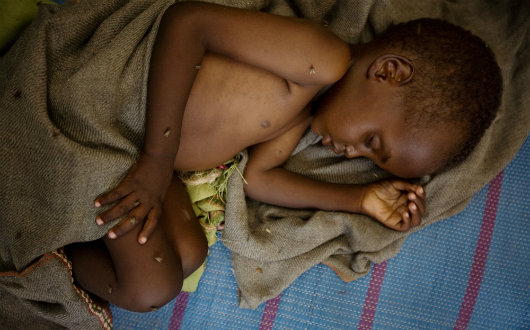
For the residents of Mogadishu, Somalia’s capital and largest city, it is not uncommon to see clusters of unaccompanied children gathering by coffee shops, theaters and restaurants. Often, they carry rags and polish to make quick money cleaning windshields and shining shoes.
These kids are not only just astray from parents, but have made makeshift homes on the inhospitable tarmac of Mogadishu’s dense urban grid. Sadly, the sight of these street children is just an accustomed part of life in the capital.
These children live their lives in tight competition, sometimes lining up in front of mosques 20 strong to scrub shoes for a mere $0.10 a piece at most. Yet, without any main provider, guardian or parent, it is all they can hope for.
In 2008, estimates placed the total amount number of street children at over 5,000. However, in 2011, Somalia experienced its worst famine in over 60 years, which decimated the livestock and the crops of numerous families. This left many parents without their livelihoods or a means of supporting for their children. Consequentially, more kids flocked to the streets in search of money.
Recent estimates have shown that in just three years, the number of street children in Somalia more than doubled; in 2011, 5,000 had expanded to an excess of 11,000.
This total is only predicted to increase.
Ironically, a Somali bill aimed at ending the recruitment of child soldiers is expected to exasperate the problem; often an unfortunate escape route for impoverished youth, child soldiering keeps children off the street.
While helping to eradicate child soldiering, this bill does nothing to provide former child soldiers with support or assistance that could help them assimilate back into their communities. Many inevitably will end up on the streets.
Escaping child soldiering is just one of many causes that lead children to take to the streets. Some street children simply have no other option but to live on the streets. They may have been abandoned by their family or indeed have no family.
Others may have a home to stay in but spend days and some nights in the streets. Often, this is due to overcrowding in the home or sexual and physical mistreatment. Others still may actually live on the streets with their entire family after losing a home to natural disaster, destitution or conflict.
These various children all share one common issue however; they struggle to obtain even the most basic and due rights. According to a UN report, “In reality, children in street situations are deprived of many of their rights – both before and during their time on the streets – and while on the street, they are more likely to be seen as victims or delinquents than as rights holders.”
Unlike other children their age, street children lack access to basic services such as education, healthcare and are more susceptible to prevalent social and health issues. They experience higher rates of STDs, HIV/AIDS, unwanted pregnancies, and violence, suicide and traffic accidents.
In 2011, UNICEF conducted a study on street children in Ukraine that produced shocking results. More than a fifth had reported using injected drugs and close to two thirds of girls had experience with prostitution. Only a measly 13 percent used condoms in their casual sexual encounters.
These issues require more government and NGO involvement and the implementation of child protection services. Various countries in disparate regions have all found solutions that provide street children with the rights deprived of them.
In Ethiopia, Somalia’s African neighbor, UNICEF has partnered with the country’s police academy in order to train 36,000 officers about children’s rights and protection. Other countries like Brazil, India and Canada have implemented small scale interventions that provide community based support to those on the streets.
Somalia itself has indicated its desire to expand resources for the street children that crowd its capital. Mohamed Abdullahi Hasan, the Somali minister of youth and sports, told Al Jazeera “We are trying to create centers to house these children. But we have no funds. On many occasions we have been promised funds, but we have not yet seen any.” Until Somalia recovers from its national turmoil, it will struggle to improve the lives of its youngest citizens.
– Andrew Logan
Sources: Al Jazeera, The Gaurdian, WHO, libdoc.who.int, United Nations
Photo: Flickr

Maternal Mortality in Zambia
Zambia is a landlocked country in southern Africa with a population of about 15 million. It borders Angola and the Democratic Republic of The Congo. One of the main health problems that Zambia faces is maternal mortality. However, in recent years the maternal mortality rate (MMR) in Zambia has declined.
In 1996, the MMR in Zambia was 649 per 100,000 live births. Although this number rose throughout the years, to a total of 729 per 100,000 births in 2002, by 2011, the MMR in Zambia had fallen to 591 per 100,000.
Hemorrhaging, or extensive bleeding, is one of the main causes of maternal mortality. Many women who give birth at home do not have the blood transfusions available to help them recover from the loss of blood, and some hospitals also do not have enough blood available to provide those transfusions. According to the United Nations Population Fund (NFPA), hemorrhaging accounts for 34 percent of maternal deaths.
The Population Reference Bureau reports that another main cause of maternal mortality in Zambia is obstructed labor, which is when the infant is not able to exit its mother due to its position or the size of its head. Obstructed labor can be solved by giving birth via C-section, but many people give birth at home and some hospital attendants are not able to perform the C-section needed for a safe delivery. 8 percent of the maternal deaths in Zambia are due to obstructed labor.
Infections due to unsanitary conditions during delivery also account for some of the maternal deaths which occur in Zambia. 13 percent of mothers die because of poor hygienic conditions during their delivery. Other causes of maternal mortality include complications from unsafe abortions and underlying causes such as malaria, anemia, HIV or cardiovascular disease, diseases that are aggravated during delivery.
Another problem is that many women are not able to go to a hospital and receive the help that they need. Only 47 percent of births in Zambia are attended by a skilled health worker. Urban women are more likely to have access to a hospital at the time of birthing. Women also choose to not go to a hospital because of traditional beliefs and customs, which promote home births and the use of traditional healing — such as the drinking of certain herbs that are supposed to help women deliver quickly. These herbs can cause vomiting and diarrhea and sometimes complicate the delivery.
Groups such as UNICEF and Saving Mothers; Giving Life (SMGL) are working to help lower the number of maternal deaths in Zambia. Saving Mothers; Giving Life is a group that works with the Zambian government and has a six-step plan they use to helping decrease the MMR. Firstly, they equip facilitates so that they are prepared to help women with complications receive care within two hours. They also work to increase the availability of drugs and equipment, train and mentor health professionals, promote better transportation to health facilities, improve data collection and help mobilize communities to increase demand for hospital births. Since 2011, they have been working in four districts in Zambia and have decreased the MMR in those districts by 35 percent.
UNICEF, according to their website, funds programs and interventions aimed at improving care for mothers and children. The government of the Republic of Zambia is also playing a large part in improving the MMR, as they have abolished user fees for maternal and child health services in order to grant larger access to such services.
All of these efforts have paid off, as shown by the dramatic success of Saving Mothers; Giving Life. However, in order to help continue to reduce MMR, programs such as those implemented by SMGL should be established throughout the entire country.
– Ashrita Rau
Sources: UNICEF, Saving Mothers, PRB, The CIA World Factbook
Photo: Flickr
Global Mental Health Spending
Inequities in public health spending and focus are often seen among income level, race, and different diseases. However, there are also huge discrepancies in the funding and attention of different aspects of health. Particularly, mental health is lacking. Globally, 1 in 10 people suffer from a mental illness, and yet only a mere one percent of the global health workforce works in mental health. This puts the average mental health worker allegedly responsible for 10,000 people(based on world statistics). We know that the distribution of mental health professionals is not equal around the world. For example, in the U.S., though our mental health workforce is lacking and treating mental illness continues to be a huge public health challenge for us, we still have better access and generally more advanced treatment than millions of people suffering around the world.
One of the reasons for such low accessibility is the overall lack of funding in this area. It is estimated that only $2 per capita per year is spent on mental health in low and middle-income countries. Even higher income countries are not spending nearly enough with an average rate of 42 beds per 100,000 population. With a lack of funding, few countries have any programs in place to spread awareness of care or even to accept new patients. Less than half of countries surveyed by the World Health Organization have at least two functioning mental health promotion and prevention initiatives. Of countries that do have programs in place, most are focused on combating stigmas and largely on suicide prevention. There is a huge gap in care for women with mental illness pertaining to maternity or violence.
Along with a lack of funding comes a lack of professionals entering the field. Since 2011, the number of nurses entering into mental health professions has increased, but only by a slight 35 percent. This number also does not showcase the distribution of the new professionals entering the field- most in higher income countries. Furthermore, the countries where the largest inequities are seen are often the places where people are most susceptible to mental illness. In middle and low-income countries, there are often higher incidences of violence or more disastrous effects of natural disasters, which prove to be traumatic for the people who experience and deal with the consequences of such events. Thus, mental illness can easily manifest and often go untreated.
The World Health Organization has put into effect the Comprehensive Mental Health Action Plan 2013-2020, which aims at improving leadership, providing comprehensive care services, implementing promotion and prevention strategies, and strengthening information systems, evidence, and research as each pertains to mental illness. Hopefully, as the plan gains traction, we will start to see real progress in bridging the gaps in mental health care around the world. While higher-income countries in general have the resources, it is a matter of stepping back and refocusing to make quality and sustainable investments for long term success so that developing nations follow suit. Also, once more developed nations start to improve their care, they will be able to implement similar cost-effective programs in developing countries.
– Emma Dowd
Sources: CBC , Economic Times, US News, WHO
Photo: Boston’s Children Hospital
Memory Banda: Champion for Girls in Malawi
Girls not Brides reports that “over 700 million women alive today were married as children” and that “1 in 3 girls in the developing world are said to be married before 18.” Malawi is the worst offender for child marriage as one in two girls in Malawi are married before 18, many of them married even well before the age of 15.
Such young marriages are a cultural custom, but it is at the expense of the girls involved. When girls become pubescent, they are sent to cleansing ceremonies where girls as young as nine are taught how to sexually please a man, even being forced to engage in sex with an older man to become cleansed from their “childhood dust.” Many girls often leave the ceremonies infected with HIV/AIDs, or even pregnant.
Since pregnancy and marriage are forced on girls at such a young age, most girls drop out of school and remain uneducated. If a girl becomes pregnant at the ceremony, it is normal for that girl to be forced into a marriage immediately. Divorce is also quite high; it is not uncommon for a 16 year-old to have several children and a divorce or two as well.
Such is the story of Memory Banda’s sister and many other girls in her country of Malawi, but not for Memory herself. She was determined not go to a cleansing ceremony, but, rather, to finish her education. She not only finished her education, but also went on to become a champion for girls’ rights in Malawi.
She was part of a writing workshop for girls, where the girls shared their experiences of the cultural practices they faced. The Girls Empowerment Network Malawi (GENET) compiled and published these accounts as “I Will Marry When I Want To!” Memory recently gave a TedTalk in May 2015, describing the culture she grew up in and the challenges that young girls face in Malawi, as described above.
Memory has also specifically lobbied her government for new laws regarding child marriage and has spoken at a UN event. Her platform, in conjunction with GENET, focuses on bringing awareness to the dire women’s rights’ issue in Malawi and has helped legislation change in Malawi.
In early 2015, an official law was made that raised the legal marrying age to 18. In a country where child marriage is a cultural norm and abuse against women often goes unreported in an effort for families to save their reputations, this ruling is a monumental achievement. Girls, and their education and well-being, are being given the recognition and respect that they deserve in the legal system.
There is a stipulation in the new law that children aged 15-18 may still marry with parental consent, and there is worry that illegal marriages will still take place. Also, now the police force must enforce the law, a fact that could meet resistance in areas. But legislation is starting to move the issue in the right direction; girls are being given a fighting chance to have a life of their own.
Memory Banda and the girls brave enough to stand with her are taking back their rights to choose marriage when they are ready. Those girls who have suffered through a child marriage, like Memory’s sister, are ready to give their own children a different fate. Ripples of change are moving through Malawi culture thanks to Memory Banda and those who stand for women’s rights.
– Megan Ivy
Sources: GENET, Girls not Brides, Genet Malawi, KBIA, TedTalk
Photo: Girls Learn International
New Eco-Friendly Methods Make Farming in Palestine Possible
For those who live in occupied territories, self-sufficiency is increasingly difficult and poverty is often rampant for the natives. Such is the case in Palestine, where, in addition to their land being confiscated, Palestinians suffer from overworked, polluted soil as well as little access to water.
As a result, agricultural workers in Gaza and the West Bank have developed an increased reliance on Israel. Jillian Kestler-D’Amours, a writer from Al Jazeera, reported that much-needed groundwater wells can only be dug with a permit from the Israeli Civil Administration. “These permits are rarely, if ever, given and as a result, the Israeli army demolishes new Palestinian cisterns almost immediately,” she said. “Confiscation of Palestinian water tanks has also been widely reported.”
There is also an increased reliance on Israel for work, and in order to work one must receive a work permit. That being said, most of the work being offered to Palestinians is for building walls and other barriers that further rob them of their land.
According to Kestler-D’Amours, “Israeli settlements in the Jordan Valley control more than 1.46 million dunams (1,460 square kilometers) of land, or about 90 percent of the total area. This land is entirely off-limits to Palestinians.”
However, there is a solution for farming in Palestine. Some call it a kind of silent rebellion. Permaculture is the act of working with nature in order to maintain sustainable growing methods. Basically, whatever crops that nature can sustain on its own are the kinds that workers can tend to and harvest in abundance.
Murad Al Kuffash is one of those workers. He went from working small jobs in the U.S. to escape the second intifada to returning to his homeland and sharing the knowledge that he has gained by taking care of his father’s land. “The evidence is in the farm where nothing is wasted. Weeds and organic waste are used to mulch beds and feed chickens, scrap wood and branches are used as apparatus to support plants and food waste and manure are collected to make compost.”
Many other farmers in Palestine have hastened to follow Murad’s lead and decrease their reliance on Israel by growing their own food. Though there’s still much to be done, this eco-friendly movement is one giant leap toward self-sustainability.
– Anna Brailow
Sources: Al Jazeera, Good News Network
Photo: Palestine Farm Project
The Street Children of Mogadishu
For the residents of Mogadishu, Somalia’s capital and largest city, it is not uncommon to see clusters of unaccompanied children gathering by coffee shops, theaters and restaurants. Often, they carry rags and polish to make quick money cleaning windshields and shining shoes.
These kids are not only just astray from parents, but have made makeshift homes on the inhospitable tarmac of Mogadishu’s dense urban grid. Sadly, the sight of these street children is just an accustomed part of life in the capital.
These children live their lives in tight competition, sometimes lining up in front of mosques 20 strong to scrub shoes for a mere $0.10 a piece at most. Yet, without any main provider, guardian or parent, it is all they can hope for.
In 2008, estimates placed the total amount number of street children at over 5,000. However, in 2011, Somalia experienced its worst famine in over 60 years, which decimated the livestock and the crops of numerous families. This left many parents without their livelihoods or a means of supporting for their children. Consequentially, more kids flocked to the streets in search of money.
Recent estimates have shown that in just three years, the number of street children in Somalia more than doubled; in 2011, 5,000 had expanded to an excess of 11,000.
This total is only predicted to increase.
Ironically, a Somali bill aimed at ending the recruitment of child soldiers is expected to exasperate the problem; often an unfortunate escape route for impoverished youth, child soldiering keeps children off the street.
While helping to eradicate child soldiering, this bill does nothing to provide former child soldiers with support or assistance that could help them assimilate back into their communities. Many inevitably will end up on the streets.
Escaping child soldiering is just one of many causes that lead children to take to the streets. Some street children simply have no other option but to live on the streets. They may have been abandoned by their family or indeed have no family.
Others may have a home to stay in but spend days and some nights in the streets. Often, this is due to overcrowding in the home or sexual and physical mistreatment. Others still may actually live on the streets with their entire family after losing a home to natural disaster, destitution or conflict.
These various children all share one common issue however; they struggle to obtain even the most basic and due rights. According to a UN report, “In reality, children in street situations are deprived of many of their rights – both before and during their time on the streets – and while on the street, they are more likely to be seen as victims or delinquents than as rights holders.”
Unlike other children their age, street children lack access to basic services such as education, healthcare and are more susceptible to prevalent social and health issues. They experience higher rates of STDs, HIV/AIDS, unwanted pregnancies, and violence, suicide and traffic accidents.
In 2011, UNICEF conducted a study on street children in Ukraine that produced shocking results. More than a fifth had reported using injected drugs and close to two thirds of girls had experience with prostitution. Only a measly 13 percent used condoms in their casual sexual encounters.
These issues require more government and NGO involvement and the implementation of child protection services. Various countries in disparate regions have all found solutions that provide street children with the rights deprived of them.
In Ethiopia, Somalia’s African neighbor, UNICEF has partnered with the country’s police academy in order to train 36,000 officers about children’s rights and protection. Other countries like Brazil, India and Canada have implemented small scale interventions that provide community based support to those on the streets.
Somalia itself has indicated its desire to expand resources for the street children that crowd its capital. Mohamed Abdullahi Hasan, the Somali minister of youth and sports, told Al Jazeera “We are trying to create centers to house these children. But we have no funds. On many occasions we have been promised funds, but we have not yet seen any.” Until Somalia recovers from its national turmoil, it will struggle to improve the lives of its youngest citizens.
– Andrew Logan
Sources: Al Jazeera, The Gaurdian, WHO, libdoc.who.int, United Nations
Photo: Flickr
Manchester City Player Yaya Touré Joins Fight Against Poverty
Yaya Touré, who plays midfielder for the UK club football team Manchester City, is used to scoring goals on the pitch. Now he is instead talking about scoring big goals for humanity by working to end extreme poverty.
Touré, who has partnered with the One Campaign, an international non-profit agency which works to fight extreme poverty and preventable diseases in Africa, recently stated in a self-written article regarding development efforts in Africa, “If we work together and play by the rules, humanity can score the great global goals of ending hunger and extreme poverty and building sustainable communities. “
He has also expressed his hopes that Africa can one day become, “The young, dynamic and driving continent it should be, no longer relegated to the subs bench – and help make a better world for us all,” and that he believes, “There has never been more to play for.”
Tourè, who is a citizen of the Ivory Coast and was raised in this sub-Saharan nation, recalls how he channeled all of his energy into education and sport as a young child. His knowledge and personal experiences within a developing region has provided him with a unique perspective about which methods of development will prove most effective within Africa.
He argues that for example, governments within Africa must give women who are smallholder farmers the ability to receive bank loans and property rights. This advancement would not only further promote gender equality, but would also help over 100 million people out of extreme poverty and hunger. Touré also believes that both boys and girls must have equal access to primary and secondary education facilities, which must provide opportunities to learn numeracy, literacy, and IT skills.
With 70% of African workers earning a living from agricultural practices, he argues that the governments of Africa must invest within the agriculture industry in order to both produce larger quantities of food resources and encourage sustainable practices. Touré, who also serves as a Goodwill Ambassador for the UN Environmental Protection Agency, has joined many other African celebrities in calling upon African leaders and the international community to invest more resources across the continent to smallholder farmers.
He explains in his article that a youth football team requires potential and resources; even if you have the best talent available, they will not develop without the necessary support, training, and resources. Touré compares this situation to the youth of Africa; there is a capacity to build a team with unlimited capacity. He wishes, “For all the young men and women of Africa to have a decent chance of meeting their potential in life. But, for them to be the engine of global progress, they themselves need fuel: for their stomachs, and for their minds.
Touré argues that the rapid growth of Africa’s population, which is estimated to reach two billion people by 2040, must be met with strong efforts by the international community to eradicate hunger and extreme poverty. He has expressed his faith in the potential of the youth of Africa, and believes that, “Unleashed and supported in the right way, these young people could act like rocket fuel to turbocharge African and global prosperity.
– James Thornton
Sources: The Guardian, Malawi Nyasa Times, Think Eat Save
Photo: Flickr
Optimizing the Value of Vaccines Worldwide
In developing nations across the globe, the challenges of distributing vaccines remain a huge roadblock in eradicating diseases that many other parts of the world have already eliminated. The lack of adequate medical centers, lack of access to clinics and lack of stock make vaccinations a tricky and almost impossible task to make universal. Amongst these challenges is the challenge of keeping the vaccines viable in often-harsh climates with a lack of adequate preservation technology available.
Vaccines, to maintain their viability and ensure proper vaccination, often need to be kept cold, a task that increases in difficulty with the combination of high temperatures and inadequate access to electricity. While scientists continue to work on creating cost-effective thermostable vaccines that would facilitate widespread distribution in areas where keeping the vials cold is a challenge, a study conducted by Devex reveals that there might be other options for the interim.
The study found that improving cold and supply chains is a more direct and cost-effective way to directly improve vaccine viability and thus more effective distribution, at least for right now. Devex has formulated a set of guidelines as follows:
1. Define the full range of thermostability of existing vaccines — By defining this range and making it easily accessible and viewable to people distributing the vaccines, they have clearer guidelines to focus on and can be more careful about making sure that the vaccines they administer have not been altered due to excessive change in temperature.
2. Set thermostability goals — This means that for newer vaccines being developed, a goal of heat stability or freeze protection can be incorporated into the development.
3. Focus on improving cold chain infrastructure and supply chain system design — This goal in particular is more of a short-term, direct impact step towards keeping system costs and coverage low and also towards setting a standard of thermostability for the future.
4. Keep monitoring for innovative technologies — For long-term progress in vaccine accessibility and effectiveness, this goal is immensely important. Technology is ever changing and new ideas should be frequently welcomed and tested to ensure that if there is a way to improve vaccine distribution, it is being done.
One of the advantages of these guidelines is that they are aimed at nearly every step of the process, from development to post-implementation monitoring. As companies and programs embrace these goals and incorporate them into their own plans of action, they are making progressive steps towards bridging public health inequities, particularly in vaccinations. While the World Health Organization has recently made tremendous strides in enacting governmental programs to ensure regular vaccination of children, even more progress can be made by targeting the distribution level of vaccination. The implementation of programs and continued technological innovation is a winning combination for achieving universal vaccination, but can also serve as a model for other public health initiatives.
– Emma Dowd
Sources: Devex, Infection Control Today
Photo: City of Hope
UNICEF’s 2015 Progress for Children Report Reflects on Successes and Challenges
At the Millennium Summit in September 2000, world leaders came together to adopt the UN Millennium Declaration, committing to working towards eliminating global poverty. The Millennium Development Goals are time-bound, specific targets for addressing extreme poverty in many forms, such as income, hunger, disease, lack of shelter, and exclusion. Eight general goals were set forth: eradicate extreme hunger and poverty, achieve universal primary education, promote gender equality and empower women, reduce child mortality, improve maternal health, combat HIV/AIDS, malaria, and other diseases, ensure environmental sustainability, and develop a global partnership for development.
Many of the targets were intended to help the world’s children. Leaders planned to reduce the under-five mortality rate by two-thirds, ensure that all children would be able to complete a full course of primary school, and eliminate gender disparity at all levels of education.
2015 is the deadline for the MDGs, and UNICEF takes a critical look at how life for children has changed since 1990 in their report “Progress for Children.” Today, the chances that a child will not only survive, but enjoy a higher quality of life, have increased significantly, but there is still plenty of work to be done.
Great strides have been made in certain areas. Overall, the number of people living in extreme poverty has decreased, from 1.9 billion to one billion. Children today enjoy better nutrition, with a 41 percent decrease in stunting rates. Furthermore, they are more likely to get a primary school education, with the number of out of school children reduced from 104 million to 58 million. Four regions have also achieved gender parity at primary school level. The mortality rate for children under five has also fallen by 53 percent. Worldwide, most children born today enjoy many advantages over children born in 1990.
Sadly, these achievements have not reached every child. UNICEF states that the most marginalized and vulnerable children are still struggling in many areas. Children from the poorest households still endure many hardships. They are twice as likely to die before age 5. When it comes to education, they are less likely to achieve minimum learning standards, and poor girls are particularly disadvantaged in this area. Adolescent girls are disproportionately effect by HIV, accounting for two-thirds of all new HIV infections among adolescents. The gap in child marriage for rich and poor girls has also increased. Clearly, the work does not stop with the end of the MDGs’ timeline.
The UN is currently working on a new set of goals to chart a course for future progress in fighting global poverty: the Sustainable Development Goals. While developing new targets, they must consider that the most disadvantaged children cannot be left behind again. These new goals must be set with the primary objective of helping the world’s poorest children see a better future.
– Jane Harkness
Sources: UN, UNICEF, WHO
Photo: Uwezo
Coldplay Stands Up for Girls Living in Poverty
Today, 62 million adolescent girls around the world are not receiving an education.
Together, Global Poverty Project and the band Coldplay would like to change this. As partners, the dynamic duo will encourage countries to vote in favor of global education, ideally announcing their support at the Global Citizen Festival in September, where Coldplay will perform.
If countries fund continued education, extreme poverty can be alleviated. An annual $39 billion will provide these girls with 12 years of free, sustainable education – the same amount it costs to fund eight days of global military spending. Continued education has the power to provide the impoverished with sustainable livings, better health and overall independence.
In the past several years, Coldplay has positively used their fame to shed light on the issue of global poverty. As a headliner at the 2015 Global Citizen Festival this September, the English band will bring attention to the Global Goals, a set of 17 initiatives that seek to end extreme poverty, inequality and climate change. The first goal is to end poverty, but the fourth goal is to ensure unbiased, quality education for all humans.
Due to gender inequality, girls are often refused an education. Not only is providing girls with an education a basic human right, but it will also help to break the cycle of extreme global poverty. Girls that go to school are more likely to postpone unwanted marriages and pregnancies, are less susceptible to HIV and AIDS and gain knowledge and skills that lead to a sustainable life with increased earning.
Coldplay is calling on world leaders to support global education to ensure that all humans are granted access to quality education, especially girls that are held back by outdated gender inequalities. Through social media, partnerships with honorable nonprofits and their earned fame, Coldplay chooses to stand up for the girls, understanding that education has the power to end global poverty.
– Sarah Sheppard
Sources: Global Citizen, Global Goals, UNICEF
Photo: Under the Gun Review
Could Plastic Be the Future for Roads?
The U.S. is blessed with an incredible system of roads, highways and streets that for the most part seamlessly connect people across the country. In other countries, this is not the case.
Roads form the basis for economic and social activities, not only in the developed world but also all over the globe. They enable people to access doctors, markets and schools. Usually they carry 60 to 90 percent of all freight and passenger transport. It is for this reason that they are so important in development work.
Even with their importance recognized, most roads in the developing world are under-resourced and poorly managed. Because of this, somewhere between 30 and 50 percent of roads in developing countries are in bad condition. This ends up costing countries a ton of money: two to five percent of their gross domestic products go toward fixing the roads as well as increased vehicle operating costs.
Poor road quality was identified as an issue all the way back in 1988, and following a study that year, many different efforts started to improve the situation. A new one has surfaced today, however: using recycled plastic to build pieces that can snap together to form roads.
A company in the Netherlands, KWS Infa, has developed their “PlasticRoad” material using things like plastic. There are a multitude of benefits to building roads in the developing world using this material as opposed to asphalt.
The original intention of KWS Infa to develop a plastic road was because they would not break down as easy as asphalt when laid on poor soil, which is a widespread phenomenon in the Netherlands. While bringing this capacity to developing countries, plastic roads last as much as three times longer than their paved counterparts. To go along with this longevity is an ability to withstand a wider range of temperatures – -40 to 176 degrees Fahrenheit.
The roads also benefit the environment. Instead of filling landfills and the sides of roads with plastic that does not make it into recycling, it can instead be used to make road pieces. There is also the added benefit of reduced emissions that are involved with paving roads.
Roads made of plastic can be put into place much quicker than paved roads as well. Simply snap in place the Lego-like sections of the road and viola. Paving can take weeks and weeks. Part of the road is damaged? Simply change out the “Lego piece” section for another one.
India is an ideal place for plastic roads because of the ready supply of the material in the streets, on trees and in fields. Estimates say that around 15,000 tons of plastic waste are created in the country every year. But according to Rajagopalan Vasudevan, it’s a “gift from the gods” because it provides such a huge wealth from which to build roads. So far, only 3,000 miles of road have been laid in 11 states around India.
There are a few concerns regarding plastic roads. While the building blocks are hollow, allowing for pipes and electricity wires to run through them, there is concern with how this will work when only one segment of the road needs to be replaced. There is also concern about how well cars will grip to plastic roads. Only time and more implementation can decide whether plastic road’s positives can outweigh the negatives.
– Gregory Baker
Sources: NBC, Bloomberg
Photo: VolkerWessels