New Eco-Friendly Methods Make Farming in Palestine Possible
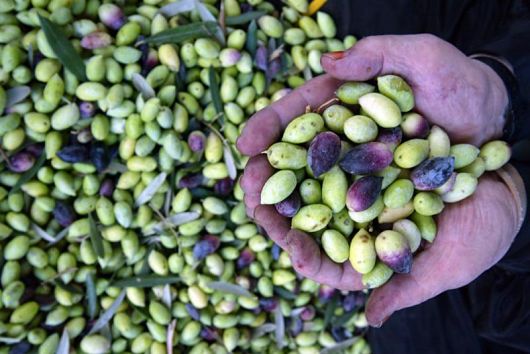
For those who live in occupied territories, self-sufficiency is increasingly difficult and poverty is often rampant for the natives. Such is the case in Palestine, where, in addition to their land being confiscated, Palestinians suffer from overworked, polluted soil as well as little access to water.
As a result, agricultural workers in Gaza and the West Bank have developed an increased reliance on Israel. Jillian Kestler-D’Amours, a writer from Al Jazeera, reported that much-needed groundwater wells can only be dug with a permit from the Israeli Civil Administration. “These permits are rarely, if ever, given and as a result, the Israeli army demolishes new Palestinian cisterns almost immediately,” she said. “Confiscation of Palestinian water tanks has also been widely reported.”
There is also an increased reliance on Israel for work, and in order to work one must receive a work permit. That being said, most of the work being offered to Palestinians is for building walls and other barriers that further rob them of their land.
According to Kestler-D’Amours, “Israeli settlements in the Jordan Valley control more than 1.46 million dunams (1,460 square kilometers) of land, or about 90 percent of the total area. This land is entirely off-limits to Palestinians.”
However, there is a solution for farming in Palestine. Some call it a kind of silent rebellion. Permaculture is the act of working with nature in order to maintain sustainable growing methods. Basically, whatever crops that nature can sustain on its own are the kinds that workers can tend to and harvest in abundance.
Murad Al Kuffash is one of those workers. He went from working small jobs in the U.S. to escape the second intifada to returning to his homeland and sharing the knowledge that he has gained by taking care of his father’s land. “The evidence is in the farm where nothing is wasted. Weeds and organic waste are used to mulch beds and feed chickens, scrap wood and branches are used as apparatus to support plants and food waste and manure are collected to make compost.”
Many other farmers in Palestine have hastened to follow Murad’s lead and decrease their reliance on Israel by growing their own food. Though there’s still much to be done, this eco-friendly movement is one giant leap toward self-sustainability.
– Anna Brailow
Sources: Al Jazeera, Good News Network
Photo: Palestine Farm Project
