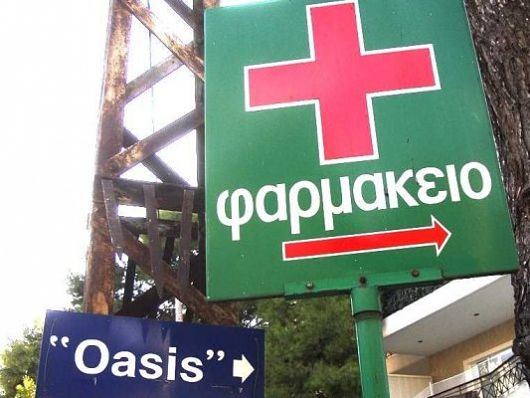
Eyes have centered on Athens in recent weeks as Greece has attempted to manage its overwhelming debt. This is the climax of a five year decay that has left Greece’s finances at a standstill and its healthcare system in critical condition. With banks limiting withdrawals to just 60 euros per day, it is hard to tell which has become scarcer, money or medicine.
Since 2010, Greece’s public healthcare system has decreased its spending on drugs by 32 percent and at the same time owes 1.2 billion dollars to international drug manufacturers. This reflects an overall declining trend; between the years of 2009 and 2012, government healthcare spending fell by 25 percent.
These reductions are visible throughout treatment centers in Greece. One of the largest hospitals in Athens, Gennimatas General Hospital, has faced shortages of antibiotics. It also lacks the budget to fix its damaged medical equipment which has resulted in week long waits for procedures such as CAT scans and MRIs.
Unfortunately, healthcare struggles such as these have become common to Greeks. Currently, 27 percent of people lack employment which has led to a significant loss of healthcare coverage. Many can no longer afford even government subsidized insurance while free health care eligibility has become much more stringent; 2.5 million people, essentially a quarter of all Greeks, lack health insurance.
Even though less people have coverage, the usage of Greece’s public healthcare system has spiked. As the crisis escalated in 2010, public inpatient and primary care services experienced six percent more usage. Just one year later, this figure had more than tripled to nearly a 22 percent increase in healthcare usage. With fewer funds but even more people to treat, the system is folding in on itself.
Years ago, before the recession triggered Greece’s current crisis, significant faults in Greece’s health care already existed and hinted at an eventual failure. During the first decade of the 21st century, its healthcare system experienced massive and untenable increases in expenditures.
According to a World Health Organization Report, from 2003 to 2009, “general government spending rose from 59.5 percent to 70.3 percent of total health spending.” Pharmaceutical spending also increased by 80 percent, from 293 euros per capita in 2003 to 528 euros per capita in 2010. In 2009, as Greece approached the end of the decade, it had accumulated a 50 billion euro healthcare deficit.
Inefficient management, ineffective distribution of medical resources and increasing government spending on hospital debts were the main culprits behind the healthcare bubble, and its inevitable bursting.
Today, average Greeks can feel the unpleasant consequences of years of mismanagement. Those who arrive at Greece’s underfunded hospitals for treatment can often expect underhanded tactics like informal doctoral payments, which are essentially bribes. In one instance, a women who given birth in a hospital was prohibited from receiving her baby until her payments were made.
While more prominent hospitals like Evangelisimos do not wield these dishonest methods, their conditions are still poor. Even as the largest hospital in Greece, Evangelisimos still lacks enough beds and recently has run at 10 to 20 percent beyond its capacity. A patient noted that her single room that was crammed with three beds yet only housed one other person. This was due to a ceiling collapse that had obstructed the third vacant bed. Without funds to repair the damage, the hospital was forced to continue using the room.
Problems are not just contained to hospitals and treatment centers; the decline in prosperity itself has led to health issues across the nation. Since the crisis, suicides have increased dramatically in Greece. Between the years of 2010 and 2012, they rose by 35 percent.
Nutrition and obesity have become another burgeoning health issues as families have struggled to afford healthy foods. Experts have noticed this increase in particular among Greece’s poor. Ironically, economic down turn has also caused many to eat more at home to save money, with the consumption of pizza and fast food having fallen by over 20 percent.
In order to revive the Greek healthcare system, the nation’s government, the ‘troika,’ consisting of the European Commission, the International Monetary Fund and the European Central Bank have planned a set of strategies.
For these groups seeking solutions, the name of the game is efficiency. They have planned to overhaul Greece’s healthcare administration, hospitals and districts in order to effectively distribute healthcare resources evenly throughout the country. In order to prevent unchecked spending like before they have advised greater financial oversight.
While the Troika faces the resistance of residual bad habits, they hope for Greece to emerge from its healthcare crisis with a well-planned and functional health care system. And it seems that it has that potential: among its European Union peers, Greece actually has the highest concentration of physicians. Now, the nation must work to develop a system through which both its doctors and patients can thrive.
– Andrew Logan
Sources: World Health Organization, The National Center for Biotechnology Information, CNN, The Washington Post, The Guardian
Photo: 99GetSmart

Safe Surgery: A New Focus for Global Health
In 2010, 16.9 million people in developing countries died from surgically treatable conditions. If 2015 is anything like 2010, the death toll this year will be higher than that of malaria, HIV/AIDS and tuberculosis combined.
According to a study done by The Lancet in 2012, about two-thirds of the world’s population do not have access to even basic surgery. Where the average amount of surgeons per 100,000 people in the United States is 35, the average in developing nations typically lies anywhere from 1.7 in Bangladesh, to 0.1 in Sierra Leone (before the Ebola outbreak). Even those countries that have access to the surgeons are often lacking in anesthetic and sanitation, which opens up an entirely new world of problems including infection and psychological trauma.
President of the World Bank Jim Young Kim and Dr. Paul Farmer, founder of Partners in Health, are calling surgery “the neglected stepchild in global health.”
Surgery’s subservient status is turning commonplace conditions into killers. Complications like obstructed labor, hernias, and cataracts—the cures to which are readily available in any surgeon’s toolkit—will take over 28 times more lives than cancer this year.
“People are dying, and living with disabilities that could be avoided if they had good surgical treatment,” said Andy Leather director of the King’s Centre for Global Health in the United Kingdom during an interview with the BBC.
While surgery may still be the “neglected stepchild” in a global health family that includes AIDS and Ebola, the problems facing surgical conditions in the developing world are much more straightforward than finding a vaccine for Ebola or a cure for AIDS. Researchers Halie Debas, Richard Gosselin, Colin McCord, and Amardeep Thind have outlined four “surgically significant interventions” which could reduce the preventable death toll overnight. They recommend focusing efforts on providing “competent initial surgical care to injury victims,” dealing with obstetrical complications (like obstructed labor), competent management of abdominal life-threatening conditions (like Peritonitis), and providing services for simple surgical conditions like cataracts and clubfoot.
In addition to these four areas of interest, the World Health Organization has compiled a “safe surgery checklist” to help reduce mortality caused by unsafe surgery. Complied in three parts, the checklist provides sets of instructions for the pre-anesthetic procedure, pre-incision procedure and proper sanitation. This checklist was developed by doctors from the WHO in collaboration with surgeons and anesthesiologists from Botswana, Kenya, Malawi, Namibia, Rwanda, Swaziland, Tanzania, Uganda, Zambia and Zimbabwe.
In general, the local experts agreed that the checklist addressed the poor organizational culture, lack of effective communication and negative personal attitudes that have acted as barriers to safe surgery in Africa, specifically. The checklist has been administered to 198 facilities in Africa and is looking to expand its dissemination in the coming months.
Health officials have warned that as disease prevention becomes more advanced, a new focus of global health initiatives must be dealing with these easily preventable deaths. There is no reason that clubfoot, which can be easily cured by surgery, should kill more than AIDS, an illness where a cure may be years in the making.
– Emma Betuel
Sources: WHO 1, BBC, The Lancet, WHO 2, The Irish Times, National Center for Biotechnology Information
Photo: Flickr
What Iceland Can Teach Us about Financial Recovery
During the financial crisis seven years ago, while many countries were struggling to stay afloat, Iceland was already at the bottom of the sea. A tiny country with a population of only 320,000, Iceland experienced near-total bank failure in the span of three days and a 95% decrease in stock. While monetary policies in the United States and Europe let large amounts of cash flow into the economy, Iceland let enormous amounts of dollars flow through. When the Icelandic krona crashed in 2008, the country’s three biggest banks had amassed wealth more than 10 times the country’s Gross Domestic Product (GDP). As a result of this “loose money” policy, 85% of the economy tanked. The lack of cash flow regulation in the economy led to its downfall and hindered the rebuilding process.
Iceland’s attempts at becoming an international banking powerhouse also factored into its demise. With very high interest rates, international investors could borrow dollars at 5%, exchange them for krona, and buy Icelandic stock at 9% interest. They would profit off the difference in interest rates. Without any governmental controls on the flow of money, all cash could have exited the country, further depressing the economy. However, with help from the International Monetary Fund, the Icelandic government began to impose strict capital controls, barring krona from leaving the country or residents from buying foreign currency or international stock. In the years immediately following the crash, the government raised taxes and provided debt relief to mortgage holders, but not to social services.
It also did something most developed countries have failed to do: jail bankers.
International hedge funds purchased claims for pennies at the height of the crash. Once financial recovery started, their assets grew, giving them a large share of power over the financial system. Due to continued cash control policy, this control affected the lives of Iceland’s residents as well. Residents were especially limited in the amount of foreign cash they could spend, which became a problem when traveling abroad or investing in international stock. “You have a feeling that there’s a system watching you and telling you what you can do with your money,” noted Gudmundur Kristjansson, a fisherman.
However, cash flow restriction and the devaluation that resulted posed some benefits for the economy as well. Exports became cheaper and imports more expensive, allowing residents to produce more goods rather than depend on foreign manufacturers. Devaluation caused wages to fall, so unemployment did not reach the soaring heights it did in Europe. Tourism increased as more people began to travel to Iceland for its cheap prices and its currency independence from less developed European countries.
However, the bars that once held Iceland in restricted success must soon be lifted. “We are enjoying the longest sustainable growth period in recent history,” commented Minister of Finance Bjarni Benediktsson, but cited lacking international investment and competing foreign companies as reasons for lifting the restrictions that helped foster the country’s success for so many years. “[Such controls] are not a sustainable situation for an economy,” said Prime Minister David Gunnlaugsson.
Today, unemployment in Iceland is at 4%, GDP is expected to grow by 4.1% in 2015, and tourism is a flourishing industry. Despite the uncertain future of the country’s economy, it is certainly faring better than other European countries that suffered under the crash. For Greece, whose citizens voted against a deal with creditors and potentially face a future of exiting the Eurozone and financial security, tight monetary restrictions would not be a likely solution. It has a population of 11 million to Iceland’s 320,000, and a GDP 16 times that of the tiny island. When Iceland was preventing its people from spending money, Greece was throwing it around in all directions. Yet Iceland serves as an example of how unorthodox financial practices—controlling the cash flow, granting influence to international hedge funds—can unfreeze a nation and help it rebuild. Restoring a country to financial security is a process of understanding its government, citizens and industries. For Greece and other struggling countries, it will be a struggle, but not a failure.
– Jenny Wheeler
Sources: IMF, New York Times
Photo: The Automatic Earth
Product Helps Women in India Who Don’t Have Access to Clean Toilets
A new product, launched by a Delhi startup last year, gives women the ability to urinate while standing up.
The PeeBuddy is a single-use funnel created from paper that is both coated and waterproof. The funnel is seen as one possible solution to India’s lack of clean toilets.
The country is one of the worst in terms of access to clean toilets. A study released by the World Bank in 2013 showed that over 600 million people defecate without the use of a toilet. This figure corresponds to over 53% of households.
Even if women can find a public toilet to use, it is often dirty. As a result, it is common for them to drink less water, which can lead to health issues.
A study published in the Journal of Nutrition demonstrated that dehydration was a primary factor in instigating headaches, loss of focus and fatigue.
By using the PeeBuddy and urinating while standing up, women in India are able to create a more hygienic atmosphere in an otherwise dirty bathroom. The startup’s website says the product is ideal for restaurants, nightclubs, public toilets and other popular destinations.
The idea for such a creation was born during a road trip consisting of four couples, according to Deep Bajaj, PeeBuddy’s founder.
During the trip from India’s capital territory to Jaipur, a city to the south in the Rajasthan state, Bajaj said the group made frequent stops to look for clean bathrooms, as only around one in five met the wives’ standards.
When one of the women on the trip commented how she wished she were in Europe so she could have access to a plastic device to use when encountering unsanitary toilets, Bajaj came up with the idea for the PeeBuddy.
The product is favored over others that have been produced because of the relatively cheap cost. A pack of 20 funnels costs 375 rupees (less than $6).
GoGirl, for example, is a reusable device made of silicone, but costs $9.99 each. Pee Pocket, also a disposable, coated-paper funnel, costs $24.99 for a 48-pack.
While some stores have been slow to put PeeBuddy on shelves, possibly because of the unusual product name, 20,000 packs had been sold through April of this year, due in large part to Amazon India.
The startup is also currently working with several corporations to help make the PeeBuddy more widely available.
– Matt Austin Wotus
Sources: PeeBuddy, The Huffington Post 1, The Huffington Post 2, The Huffington Post 3, YourStory
Photo: My Choices
The Western Diet Nutrition Transition
As worldwide poverty rates are reduced, it is expected that a decrease in malnutrition rates follow suit. However, new findings have shown that as people come out of poverty, a new type of malnutrition could take hold, with new and dangerous risks to their health.
The world of public health continues to change with populations and communities when new causes for concerns arise. Oftentimes, as countries become more developed, they become more urbanized. As people come out of poverty they often migrate to cities to find work. The most recent data estimates that by 2050, 70% of the global population will be living in cities. With such a high rate of urbanization, concerns for not only infrastructure, but also for health come up. The traditional health concerns for rapidly urbanized areas include issues of air pollution, overcrowding, trash, water use and infrastructural capacity. Recently, researchers are looking at a new health concern–the adoption of a western diet.
The western diet is characterized by major consumption of refined sugars and fats, animal products and overly processed food in conjunction with less consumption of plant-based foods. Basically, this means people consume more fats, sugars, salts, and meats, and less fruits and vegetables. This translates to more calories with less nutritional benefits. The United States has been coping with this problem for years now, as this type of diet leads to a plethora of health problems including obesity, diabetes and even cancer. We have seen in the United States how instances of “food desserts”—areas with little access to fresh, healthy foods, are related to lower income and urbanization rates and have been battling the outcomes of such. Now the problem has spread to become an even larger global health concern.
As developing countries become more urbanized, though poverty may be reduced, malnutrition and quality of life may remain stagnant, for other reasons. The programs in place that are aimed at alleviating these problems in poverty stricken areas are not targeting this new version malnutrition, which could lead to new dangerous trends. As large corporate fast food chains invest in markets abroad, populations coming out of poverty and into the city will likely be enticed by low prices and availability, similar to developed countries. Often times in developing countries people rely on subsidence farming which provides people with fresh fruits, vegetables, meats and grains. When these people no longer need to farm to survive but are still at fragile income levels, they are likely to fall victim to the cheaper, high caloric, low nutrition foods that will end up harming their health.
The good news is that these developing countries are experiencing economic growth, and individuals are coming out of poverty. Hopefully, as today’s world health leaders are much more aware of the very real risks that a western diet poses on one’s health, the threats to the health of these people and of these nations can be improved without the risk of falling back into a new kind of malnutrition.
– Emma Dowd
Sources: CNN, Huffington Post
Photo: CNN
The Missing Global Middle Class
Although one billion people have risen out of extreme poverty in the past 15 years, concerns still remain. Amid the success in this impressive reduction, there are new concerns over how those who have risen up out of extreme poverty are transitioning into a working middle class.
A new study from the Pew Research Center found that, despite slight growth in the population living on between $10-20 per day (middle income), the growth was largely concentrated in specific regions of the world. These hot spots of growth include China, Eastern Europe and South America. In areas where extreme poverty is extremely concentrated, such as in India, Southeast Asia, Africa and Central America, growth was minimal. Furthermore, there are still large inequalities in wealth distribution, as demonstrated in the areas that have the majority of middle and upper income populations—North America and Europe.
The study also notes that even in these specific areas of improved prosperity, the improvements in their standards of living and qualities of life did not improve as much as may have been expected. Another reason for small middle class growth, despite larger reductions in extreme poverty, is the volatility of climate change. Of the many factors that push people back into poverty, climate change is increasingly understood as the true threat, as changing weather brings its effects to light.
The lack of growth in the middle class has huge implications on individual countries and globally. The middle class was predicted to have grown, which would have increased national economic and political participation and boosted health outcomes.
Many experts associate the development of the middle class with a certain advantageous social structure that benefits the country as a whole. The middle class is generally able to focus less on strictly surviving, which enables them to make certain choices about the kind of lives they want to live, and to demand rights to make those choices, which leads to, all around, more developed nations.
Still, over 70% of the world’s population lives in poor to low-income levels, and progress still needs to be made. The disparities seen, despite progress, are calls to action. One of the biggest public health and developmental challenges we face today is that of inequality and inequity. Seeing such discrepancies on a global level is further proof that this is a problem that needs global attention.
The report brings attention to the fact that, although poverty reduction has been successful in some cases, on a more global and long-term level, changes need to be made. There need to be more effective strategies aimed at not only helping people come out of poverty, but also helping people stay out of poverty. We now know that the effects that we had hoped to see as a result of poverty reduction have many intermittent steps and barriers that also need to be addressed in order to see the kind of results that were predicted. The benefits of a growing middle class are achievable and progress in poverty reduction is the first step, but until the other barriers that new global middle class members face are also addressed, people, their nations, and the world will not see the maximum benefits.
– Emma Dowd
Sources: BBC, Pew Global
Photo: Deccan Chronicle
Zindagi Trust Works to Reform Education in Pakistan
As Malcolm X once said, “education is the passport to the future, for tomorrow belongs to those who prepare for it today.” Those words have resonated with countless people around the world. The NGO Zindagi Trust has taken on the task of reforming education in Pakistan, a country plagued by corruption and poverty.
According to the World Bank, in 2013 Pakistan had an enrollment rate of 92% when it came to students in primary schools. Unfortunately, that number drops to 38% when enrollment is in regards to secondary schools.
In a nation with a population of 185 million people, the United Nations Children’s Fund (UNICEF) estimates that there are currently 73.8 million Pakistani children under the age of 18. With 40% of the population lacking adequate schooling, educational reforms are more important than ever.
Zindagi Trust works by reforming public schools, educating working children and lobbying the government to improve education policies. They believe these three foci are the best way to improve children’s education.
Their focus was developed to combat what they assess as the primary failure of the educational system. Most Pakistani children (85%) currently attend public government-run schools. According to Zindagi Trust, these schools are plagued by low teacher attendance, deteriorating buildings, inadequate learning facilities, and a curriculum and teacher culture that lacks any sort of creativity.
Their philosophy is that reforming existing schools is the best business proposition for an education provider because the expensive infrastructure (land, building, fixtures, basic furniture) are already present. By creating a successful model for reform in government schools, they can have more impact than 100 private schools would and save a lot of money that can be used for other projects.
In 2007, they implemented their strategy by taking over a government-run school in Karachi called the SMB Fatima Jinnah Government’s Girls School. It comprised of eight schools on one campus with independent teachers and administrators who were not working together. They honed in on five factors to reform the institution.
Infrastructure Rehabilitation
This included laying down a new football pitch, paving the school grounds and updating the fences and securities measures, providing filtered drinking water taps, and even cleaning out stray animals such as dogs that lived in the classrooms.
Administration Changes
The lack of competent administrators and teachers led to a situation where regulations were not properly being followed and a culture of student neglect was thriving. Zindagi Trust merged all the administrators into one unit, creating rigorous protocols for teacher and student attendance and performance. They also banned outsiders from throwing parties on the then deteriorating football grounds.
Academic Innovation and Planning
Previously, teachers were unorganized and textbooks were outdated. Zindagi Trust implemented modern thought-provoking textbooks and hired academic coordinators for English, mathematics and science to plan syllabi with learning outcomes and timelines, design tests, monitor progress, and observe and train teachers.
Teacher Reforms
To combat the teachers’ culture of inconsistency, Zindagi Trust began monitoring teacher attendance and penalized staff for unreported absences, lateness and shirking duties. This helped to bring consistency to the classrooms and better learning outcomes for students.
Student Affairs
Creativity is one of the greatest strengths of education. Students were given access to facilities they previously had never seen. Learning modules were created to allow students to explore art and sports such as cricket and Taekwondo. The school provides modules for sexual health and abuse awareness. There is even a chess club on campus.
The Zindagi Trust school model has been a success. Students have been successfully completing coursework and the government is currently taking notice. In July of 2011, the Sindh Education Secretary issued a notification approving the School Consolidation Policy that aims to merge adjoining and nearby schools into one campus under one administration, based on the Fatimah Jinnah Girls School model.
Recently, at the Oslo summit on Education and Development, Pakistani Prime Minister Nawaz Sharif committed to the vision of the Oslo leadership and said he shared that vision in educating all Pakistani children. He met with Ms. Malala Yousafzai and spoke about their shared responsibility to provide universal education to their country.
The United States must continue to provide aid to organizations such as the Zindagi Trust as they rebuild the Pakistani education system. Pakistan is a strategic ally to the United States and an established trading partner in the textile industry. The country’s uneducated population is living on pennies which is preventing the nation from becoming larger consumers of American exports. Coupled with their geographical location in regards to Afghanistan, it is in the best interest of the United States to support Pakistanis in receiving education, as they hold the passport to the future relationship between the United States and Pakistan.
– Adnan Khalid
Sources: New Delhi TV, UNESCO, UNICEF, World Bank 1, World Bank 2, Zindagi Trust
Photo: Al-Mehran Public School High
NYU Student Fights Energy Poverty in India
The fate of the future now lies in the hands of Generation Y, and millennials must rise to the task of eradicating global poverty. One kid is doing just that, and all before graduating from college.
A 20-year-old economics major at New York University, Mansi Prakash is bringing clean energy to developing countries. After visiting her grandparents’ Indian village in 2010, Prakash became inspired by the energy crisis and went on to discover Brighter Today, a nonprofit that promotes the use of eco-friendly light bulbs as a tool to lessen poverty.
Prakash learned that most families did not use their light bulbs because they could not afford to pay the electricity bill. Immediately, a metaphorical light bulb turned on in her head—eliminate the energy-efficient 600-watt incandescent bulbs that work for just two months for 20 cents a bulb and replace them with 11-watt compact fluorescent lamp bulbs that work for 3 to 4 years and cost $2 per bulb. And so Prakash began her fight against energy poverty in India.
Although the original bulb appears more cost effective at just 20 cents, the switch ultimately decreases electricity bill payments by 80%.
In March 2014, Prakash presented her brilliant idea at the Clinton Global Initiative University Conference, where she was awarded a fellowship to begin her project in India and formed a partnership with Philips, a tech company focused on healthcare, lighting and electronics. Together, Philips and Prakash brought cost-effective and eco-friendly light to 5,300 residents of Behlana Village.
This year, after winning Glamour magazine’s 2015 Top 10 College Women contest, Prakash was awarded a $20,000 grand prize, which seriously advanced her fight against energy poverty.
Prakash is now focused on a project for the Philippines called Light for Life, developing a solar panel powered by daylight. Made possible by the money from Glamour, the solar panel will provide constant light and sustainable power to many homes for free.
An energy transformation saves a lot of money for many families, money that Prakash would like to see put towards food, health and education. Furthermore, efficient and long lasting light provides families with more time in the day for productivity, thus improving their overall quality of life, Prakash’s goal from the start.
– Sarah Sheppard
Sources: Take Part, Glamour, Brighter Today
Photo: The Christian Science Monitor
Immigration, Labor Markets and the Impoverished
Immigration policy and reform have been on the minds of many policymakers for years, not only in the United States, but also, particularly, in Western Europe. The issue is of increasing importance for a variety of reasons, both economic and social. The impact of immigration on populations and nations is significant, but hard to decipher. The impoverished around the world can see both benefits and disadvantages to the phenomenon of immigration across borders.
In the United States, millions of undocumented immigrants live the United States to find work and pursue a better life, often fleeing violence and instability. Europe has also experienced its fair share of immigration troubles, with 137,000 immigrants crossing the Mediterranean Sea in search of a better life in only 6 months last year. Hundreds of the same immigrants died attempting the journey. These massive quantities of immigrants crossing borders without documentation have posed problems for the countries receiving these people in a variety of ways. In addition, immigration through proper channels can often exacerbate problems posed by undocumented immigrants. First, many of these new residents will join the labor market, and second, the social and cultural differences can create tensions within the populace. So, what does immigration mean for the countries being left behind, and for their inhabitants?
One of the primary dilemmas when discussing immigration is the job market. What happens to the labor market when illegal or legal immigration occurs? The answer is: it’s complicated. The effects of immigration on a country’s labor market is highly dependent on the policies in place, the enforcement of such policies and the context.
Take, for example, a law in Alabama that would have given police more power to find undocumented immigrants and punish their hypothetical employers; immediately, much of the illegal labor fled the state. This was hailed as a victory by some people, but the law exposed fundamental flaws in the labor system. The jobs being done by immigrants were low-wage with questionable working conditions. They usually involved manual labor that Americans either simply did not want to do, or would not do due to the working conditions and pay—which were caused by a lack of proper regulation in these industries. Much of the agriculture and food industry remains this way, with the majority of the population turning a blind eye to the unfair practices taking place. In the case of Alabama, Americans barely attempted to take these jobs, despite unemployment in the region being very high. A study from the National Bureau of Economic Research showed that there was a 3.2% decrease in wages directly associated with large-scale immigration. A possible explanation is that immigrants are generally more likely to accept lower wages than native workers, which draws the price for labor downwards with the increased demand and lower price-setting.
In other cases, such as those involving legal immigration with visas, such as H-1B, immigrants end up in more direct competition with native workers for more highly-skilled jobs. The H-1B visas in the United States are very important, providing high levels of talent from across the globe—from both developed and developing nations. The problem is that, in many cases, companies prefer to hire H-1B visa holders because they are usually more willing to accept lower wages, similar to the problem with lower-skilled jobs.
Immigration can also be a cause of social unrest. It is not uncommon for immigrant populations to be framed as the root of a host of problems, ranging from economic ones, to social and moral ones. It has been done in the past, and is undergoing resurgence in Europe, as right-wing political movements shower blame and prejudice on the expanding Middle Eastern and North African populations in the continent. The cultural divide of language and customs can also instigate potential xenophobic behaviors against immigrant populations.
What does this all mean for the poor? Immigrants frequently work low-wage jobs, but these low wages in developed countries often go much further to families in developing nations. Remittances—money sent back to one’s native state—have been found to have a significant impact on the levels of poverty in developing nations. A study by the Center for Immigration Studies also found that in the 2000s, immigration to the United States did not cause increased poverty in the United States. These two studies taken together suggests that poverty can be alleviated with immigration, because immigration can be reduced abroad while not increasing poverty in the new home nation. In fact, there are even some who argue that borders should be open and immigration should not be restricted as a way to help significantly reduce poverty.
Immigration is a difficult issue with which to grapple on any level. It can invoke powerful emotions of fear, pain, anger or happiness from immigrants, or those who feel personally affected by its consequences. The economics of immigration are complicated, and the literature seems to be incomplete in its conclusions. However, it seems that immigration can help the poor by allowing some people abroad to lead better lives and support themselves, while also helping to support their families at home. Unfortunately, the poor can also fall victim to trafficking and bad working conditions. Globally, large-scale migrations of people can be expected to increase due to climate change, and it is important that more effort goes into understanding how to best handle influxes of immigrants.
– Martin Yim
Sources: New York Times 1, Bloomberg, New York Times 2, National Bureau of Economic Research, Social Science Research Council, UC Davis
Photo: Immigrant Document Solutions
OneDollarGlasses Makes Eyewear Available for All
Across the globe, about 150 million people need corrective lenses, but cannot afford them, impeding their ability to work, study and provide for their family. Yet OneDollarGlasses aims to change this.
OneDollarGlasses was started in 2009 by Martin Aufmuth when he saw a pair of glasses sold for US$1 in Germany and questioned why the First World had US$1 glasses but the Third World did not. With that in mind, Aufmuth created the first pair of OneDollarGlasses with bent spring steel wire frames and hardened polycarbonate lenses.
No tools are required to assemble the OneDollarGlasses before putting them on and, most importantly, they cost US$0.80 to make. Today, OneDollarGlasses works with seven developing countries and has greatly improved the lives of many.
Their first project was in Rwanda. Rwanda is densely populated and of the 11.4 million inhabitants, only 11 are ophthalmologists. There, Alfmuth teamed up with a German team of students called Enactus Munich to train local opticians and merchants.
Next, OneDollarGlasses went to Burkina Faso where they faced a low literacy rate and a language barrier. The Enactus students took the lead on training 10 micro-opticians who since then have sold over 1,600 pairs of glasses.
OneDollarGlasses then went to work in Nicaragua in Central America. In Nicaragua, more than 80 percent of the population lives on fewer than US$2 a day. In 2014, OneDollarGlasses sent trainers to San Carlos, and by spring, glasses were being sold.
One pair was given to a woman named María Sandoval on her 99th birthday by her family. With +6 diopters on both eyes, it was the first time she had seen the world in full detail.
In April 2014, Alfmuth presented OneDollarGlasses to the United Nations Conference on Trade and Development. He received praise at the end of his presentation and several countries described his foundation as “groundbreaking.” OneDollarGlasses has it all: low cost to produce, cheap to buy and a huge demand.
– Hannah Resnick
Sources: Empowering People, Enactus, Essilor, OneDollarGlasses, UNICEF, Venture Beat
Photo: Quora
Greek Healthcare Crisis
Eyes have centered on Athens in recent weeks as Greece has attempted to manage its overwhelming debt. This is the climax of a five year decay that has left Greece’s finances at a standstill and its healthcare system in critical condition. With banks limiting withdrawals to just 60 euros per day, it is hard to tell which has become scarcer, money or medicine.
Since 2010, Greece’s public healthcare system has decreased its spending on drugs by 32 percent and at the same time owes 1.2 billion dollars to international drug manufacturers. This reflects an overall declining trend; between the years of 2009 and 2012, government healthcare spending fell by 25 percent.
These reductions are visible throughout treatment centers in Greece. One of the largest hospitals in Athens, Gennimatas General Hospital, has faced shortages of antibiotics. It also lacks the budget to fix its damaged medical equipment which has resulted in week long waits for procedures such as CAT scans and MRIs.
Unfortunately, healthcare struggles such as these have become common to Greeks. Currently, 27 percent of people lack employment which has led to a significant loss of healthcare coverage. Many can no longer afford even government subsidized insurance while free health care eligibility has become much more stringent; 2.5 million people, essentially a quarter of all Greeks, lack health insurance.
Even though less people have coverage, the usage of Greece’s public healthcare system has spiked. As the crisis escalated in 2010, public inpatient and primary care services experienced six percent more usage. Just one year later, this figure had more than tripled to nearly a 22 percent increase in healthcare usage. With fewer funds but even more people to treat, the system is folding in on itself.
Years ago, before the recession triggered Greece’s current crisis, significant faults in Greece’s health care already existed and hinted at an eventual failure. During the first decade of the 21st century, its healthcare system experienced massive and untenable increases in expenditures.
According to a World Health Organization Report, from 2003 to 2009, “general government spending rose from 59.5 percent to 70.3 percent of total health spending.” Pharmaceutical spending also increased by 80 percent, from 293 euros per capita in 2003 to 528 euros per capita in 2010. In 2009, as Greece approached the end of the decade, it had accumulated a 50 billion euro healthcare deficit.
Inefficient management, ineffective distribution of medical resources and increasing government spending on hospital debts were the main culprits behind the healthcare bubble, and its inevitable bursting.
Today, average Greeks can feel the unpleasant consequences of years of mismanagement. Those who arrive at Greece’s underfunded hospitals for treatment can often expect underhanded tactics like informal doctoral payments, which are essentially bribes. In one instance, a women who given birth in a hospital was prohibited from receiving her baby until her payments were made.
While more prominent hospitals like Evangelisimos do not wield these dishonest methods, their conditions are still poor. Even as the largest hospital in Greece, Evangelisimos still lacks enough beds and recently has run at 10 to 20 percent beyond its capacity. A patient noted that her single room that was crammed with three beds yet only housed one other person. This was due to a ceiling collapse that had obstructed the third vacant bed. Without funds to repair the damage, the hospital was forced to continue using the room.
Problems are not just contained to hospitals and treatment centers; the decline in prosperity itself has led to health issues across the nation. Since the crisis, suicides have increased dramatically in Greece. Between the years of 2010 and 2012, they rose by 35 percent.
Nutrition and obesity have become another burgeoning health issues as families have struggled to afford healthy foods. Experts have noticed this increase in particular among Greece’s poor. Ironically, economic down turn has also caused many to eat more at home to save money, with the consumption of pizza and fast food having fallen by over 20 percent.
In order to revive the Greek healthcare system, the nation’s government, the ‘troika,’ consisting of the European Commission, the International Monetary Fund and the European Central Bank have planned a set of strategies.
For these groups seeking solutions, the name of the game is efficiency. They have planned to overhaul Greece’s healthcare administration, hospitals and districts in order to effectively distribute healthcare resources evenly throughout the country. In order to prevent unchecked spending like before they have advised greater financial oversight.
While the Troika faces the resistance of residual bad habits, they hope for Greece to emerge from its healthcare crisis with a well-planned and functional health care system. And it seems that it has that potential: among its European Union peers, Greece actually has the highest concentration of physicians. Now, the nation must work to develop a system through which both its doctors and patients can thrive.
– Andrew Logan
Sources: World Health Organization, The National Center for Biotechnology Information, CNN, The Washington Post, The Guardian
Photo: 99GetSmart