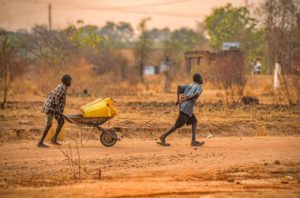
 Around the world, many developing and emerging countries are leading the fight against poverty. Among them, some are achieving remarkable success through innovative strategies.
China
China has recently made significant investments in rural infrastructure to connect remote populations to economic opportunities, with the ultimate goal of reducing poverty. Between 2006 and 2015, the country, with the support of the World Bank, rehabilitated approximately 1,299 roads. These projects have directly benefited more than 1.3 million people by improving their connectivity and access to essential services. These infrastructure improvements not only enhance access to these essential services but also facilitate economic growth by linking rural areas to larger markets, enabling local businesses to thrive.
Beyond road rehabilitation, China has implemented several other initiatives to enhance rural infrastructure and lead the fight against poverty. For instance, investments in irrigation and drainage facilities have directly improved agricultural production conditions. This is enabling farmers to adjust crop structures, develop large-scale breeding programs and engage in processing and non-agricultural industries, thereby reducing poverty.
Bangladesh
Bangladesh has made significant strides in education and workforce development, increasing literacy rates and creating new job opportunities. The country, still one of the neediest in the world, has been making notable progress through two key areas: education and workforce development. In terms of education, Bangladesh has seen significant improvements in its literacy rate. In 2021, the country’s literacy rate reached 76.36% (15 years old and above), reflecting a 1.45% increase from 2020. This improvement demonstrates the nation’s ongoing efforts to boost educational access and quality.
In addition to its focus on education, Bangladesh has prioritized job creation, with significant growth in the tourism sector. As the industry expands, it is driving the creation of jobs across various fields, “including hospitality, transportation, food services, handicrafts and retail.” This tourism growth is contributing to both economic development and job opportunities, particularly in rural and underserved areas.
Ethiopia
Ethiopia has been focusing on agricultural development, exemplified by the Agricultural Growth Program. This program has enabled more than 700,000 farmers to benefit from the initiative, leading to a 25% revenue increase. Farmers’ productivity has risen by approximately 10%, contributing to poverty reduction and economic stability in these remote communities.
Furthermore, the International Fund for Agricultural Development (IFAD) collaborates with the Ethiopian government to enhance the population’s living conditions, focusing on agricultural productivity, food security and rural development. IFAD supports smallholder farmers, pastoralists and agro-pastoralists with loans, helping them purchase the necessary equipment to enhance their productivity and escape the cycle of poverty.
Vietnam
Vietnam’s economic reforms and trade liberalization have created millions of jobs and boosted growth. The country was once among the most impoverished in the world. However, its government has achieved remarkable economic growth relatively quickly. Thanks to the Doi Moi campaign, which focused primarily on agricultural reforms, land was redistributed among small farmers, significantly boosting farm productivity and improving food security. This transformation helped lift millions out of poverty and laid the foundation for broader economic development.
However, the reforms extended beyond agriculture. The government implemented measures to reduce the budget deficit, stabilize the economy and attract foreign investment. A key objective was to integrate Vietnam into the global economy by promoting trade liberalization and joining international organizations such as the World Trade Organization (WTO). These efforts led to a surge in exports, the expansion of the manufacturing sector and the creation of millions of jobs, positioning Vietnam as one of the fastest-growing economies in the world.
Rwanda
Rwanda has made significant progress toward achieving universal health care, ensuring that even its most vulnerable citizens can access essential medical services. Since the 1994 genocide, the country has significantly improved health care access, a fact that was evident during the COVID-19 pandemic, when 82% of the population received at least one dose of the vaccine within two years.
Moreover, Rwanda has prioritized the expansion of health care infrastructure to improve accessibility. Since August 2021, the Ministry of Health has established 1,179 health posts nationwide, particularly in underserved communities.
In conclusion, these countries demonstrate that targeted investments in infrastructure, education, agriculture, health care and economic reform can drive significant progress in the fight against poverty. Their diverse strategies offer valuable lessons for other developing nations striving to build more inclusive and resilient economies.
– Eléonore Bonnaterre
Eléonore Bonnaterre is based in London and focuses on Good News for The Borgen Project.
Photo: Pexels

How China and Australia are Shaping Poverty Reduction in Nauru
However, in January 2024, Nauru severed its diplomatic ties with Taiwan, allowing China to seize more opportunities to support Nauru’s development. China’s expanded presence in Nauru has added complexity to regional geopolitics. However, despite possible tensions between Australia and China, this engagement has the potential to bring about meaningful change in Nauru.
Poverty in Nauru
Nauru has the worst human development indicators and the shortest life expectancy in the Pacific, with an average life expectancy at birth of 62 years. Furthermore, the under-5 mortality rate as of 2022 was 26.5 deaths per 1,000 births. The island also has the highest rate of food poverty in the region, and around one in four people lives below the poverty line. Nauru imports most of its food, as strip mining destroyed 80% of the island’s interior. These issues have drawn international attention, prompting varied responses from Nauru’s partners. Australia and China have taken very different approaches to poverty reduction in Nauru.
Australia’s Poverty Alleviation Strategy
Australia’s comprehensive development program to Nauru focuses on health, education, economic governance and natural disaster relief. Australia plans to allocate $50 million over the next decade toward the Raña Tsimorum (“Look After your Life”) Program, which will strengthen the health care system in Nauru by increasing efficiency and quality of services outlined in the National Health Strategy. Australia will contribute funding toward the training of healthcare professionals and the improvement of health infrastructure.
Likewise, Australia enacted the Nauruan Education Program. The initiative encourages school enrollment and attendance while supporting systems within Nauru’s Department of Education and Training.
Nauru’s economic development is covered by a $60 million program focused on financial management and economic diversification. Indeed, by promoting long-term budgetary self-reliance, contributing to the Intergenerational Trust Fund, Australia is helping Nauru build greater economic resilience in the face of future uncertainty.
China’s Role in Poverty Reduction in Nauru
China’s approach to poverty reduction in Nauru is based on China’s Global Development Initiative, which builds on the 2030 Agenda for Sustainable Development. The Global Development Initiative prioritizes poverty alleviation, food security, industrialization, development financing, the digital economy, connectivity and green development. China’s primary focus in Nauru is on large-scale infrastructure projects, consistent with its broader development approach seen in other countries where China has a presence.
In 2019, China Harbor Engineering Company began constructing a new port in Nauru’s largest harbor. This project expanded Nauru’s access to international markets and created job opportunities for locals to learn new skills, which enabled them to earn higher wages than in other local jobs.
China has also prioritized improvements in the energy sector. This has been achieved by constructing a new solar power plant, a battery energy storage system and an 11 kilovolt substation. More recently, China facilitated the transfer of ownership of a container vessel, which will enable the transport of goods from Australia directly to Nauru. Additionally, the ship will lower the cost of imported goods and reduce wait times, making life easier and more affordable for Nauruans.
China also sent medical experts to perform cataract surgeries in Nauru as part of its Brightness Action program, which seeks to deliver eye surgeries and surgical equipment to developing nations. Beyond deploying experts to meet local needs in Nauru, China offers Nauruan students the opportunity to study in China and receive various types of job training.
Poverty Reduction in Nauru
Australia and China both play a crucial role in poverty reduction in Nauru, despite taking different approaches. Australia’s focus on sustainable development, through health, education and economic initiatives, aims to create long-term resilience. Meanwhile, China’s large-scale infrastructure projects and targeted aid offer immediate improvements and opportunities. Together, Australia and China have a unique chance to meaningfully reduce poverty in Nauru by collaborating and aligning their development efforts with the island’s priorities and needs.
– Haley Parilla
Photo: Wikimedia Commons
Initiatives to Improve Education in Brazil
Indique, PROSA and Chegando Junto
Indique is a tool that allows parents, carers and other members of the Salvador community to voice their feedback and opinions about students’ education. This allows educators to see what initiatives are having a positive impact and what they could do to support students further.
Since 2022, Brazil has implemented PROSA in every primary school grade in Salvador. This test allows educators to see the extent of the majority of students’ knowledge and so helps indicate what areas are effectively being improved and what areas require more practice. It also tests the efficacy of government education programs. Due to the high number of students who take the exam, results are more generalisable and representative of students.
This initiative groups students who are two or more years behind their grade in terms of educational achievement together, according to the World Bank. This allows them to learn in an environment alongside learners who have a similar level of understanding, therefore allowing the teacher to focus more on helping them catch up. It also makes the learning environment more comfortable and less daunting for learners.
Technology
The Lemann Foundation has employed the help of technology to aid students in their learning. It supported the education ministry’s Programa Educação Conectada, a scheme that provided 6 million students with strong and secure internet connections. This would be vital as internet connections will allow pupils to complete homework, assignments and revision as well as access extra learning resources that can strengthen and deepen their understanding.
The Lemann Foundation has contributed to the provision of such resources by partnering with the Khan Academy to give approximately 600,000 students access to courses on maths, history, science and more, every month, helping improve education in Brazil. This allows students to go beyond the material they are learning at school, as well as enhancing their knowledge of the content in the curriculum.
Bolsa Familia and the Favela Foundation
This program creates incentives for families to send their children to school, providing approximately $35 to families living in poverty. It helps families send their children to school, and for health checkups, something that poverty prevents many children from accessing. It has benefited 50 million people in Brazil and is very beneficial for families living in poverty. The program has also inspired many other countries to develop their version of this, including countries like Indonesia, Mexico and South Africa.
The Favela Foundation funds educational and sports projects for children. For example, it has worked with the Alfazendo Ecorede organization to provide teacher training in the City of God favela in Rio de Janeiro. This training ensures that teachers know how to successfully support and teach students in favelas.
The Future
These programs and numerous others have grown and helped millions of people and inspired other countries. Statistics show that such initiatives are making a significant impact—the number of Brazilian graduates has tripled from 2000 to 2022. Hopefully, in the future, education in Brazil will continue to improve and prosper.
– Maryam Abdalla
Photo: Flickr
Unicorns and Startups: Declining Poverty in India
According to the most recent estimates from the World Bank, 12.92% of India’s citizens lived in extreme poverty (under $2.15 a day) in 2021. That number jumps to about 44% when poverty is defined as living on less than $3.15 per day. Yet at the same time, India’s startup ecosystem has skyrocketed, led by its “Unicorn” companies. A Unicorn company is a startup with a total valuation of more than $1 billion. India now has more than 100 Unicorn companies across the tech sector, ranging from EV startups to online financial services.
A Rising Tide
The startup ecosystem has undoubtedly created many positive benefits for Indian society. For instance, the emerging companies create new job opportunities for Indian citizens with varied skills and backgrounds. Estimates show that job growth in India will continue its upward momentum and expand at a rate of 9% in 2025. As new startups continue to pop up, new employees will be necessary to fill various roles. Increasing employment is a direct way to create new economic opportunities and stable environments for Indian citizens, as research suggests that job growth helps to reduce poverty.
The logic here is that a rise in the general wealth of the state could benefit all its citizens. Besides directly creating jobs, India’s rising wealth also means that funds could go into philanthropic opportunities. Public affairs expert Nicole Manetti notes the charitable impact of the Azim Premji Foundation. Once the chairman of the Indian tech startup Wipro, Premji now uses the money he made as a business leader to invest in educating India’s poor. Premji’s case demonstrates that the increased levels of wealth in India’s top classes can still benefit its poorest citizens.
Moreover, the new businesses increasingly create job and leadership opportunities for women in India, helping to close the gender gap in business. Female entrepreneurial activity is almost equal to that of males, at a rate of .73 to 1. While a clear funding gap for women-led businesses still exists, the gender divide has been closed in other ways. Thanks to government initiatives centered around the drive toward entrepreneurship, males and females in India now own bank accounts at equal rates.
Companies That Care
Leaving aside the net benefits generated by the new tech ecosystem as a whole, individual businesses alone can create products and systems that benefit India’s poor. For example, Indian fintech startup Refyne is helping India’s poorest citizens avoid the crippling debt cycle and predatory lending practices that often prevent poverty-stricken individuals from climbing the socioeconomic ladder. Refyne offers a cheaper line of credit than its competitors to workers living paycheck to paycheck. By giving workers a money advance they have already earned, the company provides a safer lending alternative to those struggling to make ends meet.
Karya, a startup that collects large-scale data to feed AI machines, is another business working to alleviate poverty in India. Karya pays competitive wages to its part-time workers, who help train the AI systems in their native dialects. Because AI is largely trained on widely spoken languages like English, there is a need for data on smaller, regional dialects.
Karya works with organizations to find people most in need of work, and gives its employees ownership of the data that they create. However, generating economic activity among poverty-stricken citizens is not Karya’s only benefit to Indian society. The hope is that the language data collected from workers in remote regions will make AI more accessible to those same workers, making it easier for those who speak rare dialects to get health and financial advice.
Do Unicorns Help the Poor?
For all the good these tech startups create, some question whether the businesses effectively alleviate poverty in India. Researcher John Hoffmire points to India’s high poverty rates and large wealth gap as evidence of an unequal distribution of the tech boom’s benefits. He highlights the problem of informal workers whose “low wages and minimal protections” result in “an unbalanced labor market.” Adding to this inequality and imbalance is the fact that a large portion of India’s population is still at risk of poverty, especially when using the $3.15 benchmark.
However, using the Gini Index, it is clear that India’s inequality has declined in recent years, moving from 35.9 in 2017 to 32.8 in 2021. This can be compared to the global average Gini Coefficient of 38.2.
Moreover, Bhalla and Bhasin note that India has nearly eliminated poverty below the severe $1.9 line. This leads them to suggest that India should set new standards for measuring poverty within its borders. This trend follows the other poverty-reducing improvements, such as decreased inequality and increased job growth, discussed in this article.
The Future of Poverty Rates in India
While it is not certain that declining poverty and inequality in India can be directly tied to its startup boom, it is clear that many of India’s new businesses are creating positive social and economic change. From increased job growth to a greater level of female entrepreneurship to projects specifically focusing on helping India’s poor, much of the tech ecosystem activity focuses on eliminating poverty in India. Although India’s continuously decreasing poverty rates may be due to a confluence of factors, the country continues to trend in the right direction. Led by its ambitious new startups in the tech sector, India’s economy continues to grow as its citizens move to a more sustainable economic outlook.
– Charles Citron
Photo: Flickr
Solomon Islands Renewable Energy Loan
The Solomon Islands’ Financial Situation
The Solomon Islands have a population of about 800,000 people, spread across 90 islands that span more than 600,000 square miles of ocean. About 75% of the population lives in rural areas, making it expensive and logistically difficult to deliver public services and infrastructure beyond the capital, Honiara. This limited infrastructure contributes to one of the highest electricity costs in the world. Power is unreliable and the country depends heavily on imported fuel, further inflating energy prices. These ongoing challenges have deterred local and foreign investment, limiting economic growth.
The labor market reflects this structural weakness. Only 10% of the workforce is employed in industry, while a significant majority works in agriculture. Most of this agricultural output is noncommercial and geared toward food security and subsistence livelihoods in rural communities. Although the official unemployment rate is low at 1.6%, underemployment and informal labor remain high due to the limited availability of formal job opportunities. These factors contribute to the Solomon Islands’ relatively high poverty rate of 25.1%.
The Saudi Fund for Development
Established in 1974, the Saudi Fund for Development (SFD) supports low- and middle-income countries through infrastructure and sustainable development loans. The SFD has financed more than 800 development projects in more than 100 countries and contributed $21 billion in global aid as of 2025. Its areas of support include clean energy, health, education and poverty reduction.
Solomon Islands Renewable Energy Loan
In 2025, the SFD signed a $10 million renewable energy loan agreement with the Solomon Islands, represented by Minister of Finance and Treasury Manasseh Sogavare and SFD CEO Sultan Al-Marshad. The initiative aims to build solar power plants and battery storage facilities capable of delivering 35.5 megawatts of clean energy. The project seeks to reduce the country’s dependence on imported fuel, expand rural energy access and stabilize electricity supply. These improvements are expected to lower costs, encourage local business activity and enhance digital access across islands. According to the World Bank, greater energy reliability may help attract investment and support long-term development in small island states.
Development Outcomes and Long-Term Goals
Reliable access to electricity could help stimulate economic growth, create jobs and strengthen local industries. In rural communities where employment is often limited to agriculture, expanded energy access may enable economic diversification and greater participation in the digital economy. According to the International Renewable Energy Agency, the Solomon Islands aims to achieve 100% electricity access and net-zero carbon emissions by 2050. The Saudi-backed renewable energy initiative supports these national goals by reducing costs, improving service reliability and promoting climate resilience.
Moving Forward
The Solomon Islands’ clean energy efforts highlight how strategic development financing can accelerate infrastructure growth and reduce poverty in island nations. With renewable energy technology becoming more affordable, similar projects in other low-income countries may unlock new opportunities for sustainable development.
– Amelia Dutch Player
Photo: Flickr
Fragility and the Rule of Law in Venezuela
The country also experienced one of the world’s highest inflation rates, rising consumer prices significantly. The consequences are not confined to its borders. From mass migration to regional instability, Venezuela’s collapse is a global poverty issue that cannot be ignored.
A Broken Justice System
Venezuela currently ranks last in the World Justice Project’s Rule of Law Index. According to the index, courts are politicized, the judiciary lacks independence and fundamental rights are routinely violated. Dissent is punished with arbitrary detention and torture and legal protections for the vulnerable have all but disappeared.
For those already living in poverty, this legal collapse is devastating. Without functioning institutions, workers can be exploited without recourse, communities lack public services and corruption goes unchecked. When the rule of law fails, poverty becomes entrenched.
A Regime That Fuels Poverty
The regime of President Nicolás Maduro has overseen the dismantling of democratic institutions and the collapse of the economy. Transparency International consistently ranks Venezuela among the most corrupt nations globally. Public resources are diverted to elites while health care, education and infrastructure are neglected.
Inflation reached 400% in 2023 and more than 80% of Venezuelans now live below the poverty line, according to the World Bank. The most impoverished households struggle to obtain food, medicine and clean water. This crisis is not just economic; it is political. The government’s refusal to allow reform or accountability sustains the systems that keep people poor. Aid efforts are often obstructed and humanitarian organizations face restrictions on their work.
The fallout from Venezuela’s collapse has sparked the second-largest migration crisis in the world after Syria. As of 2024, more than 7.7 million Venezuelans have left the country for safety and opportunity. Many have settled in neighboring countries like Colombia, Ecuador and Peru, where strained public systems struggle to accommodate them. This mass migration creates new poverty challenges in host communities, from overburdened schools to job market competition.
Migrants face their own vulnerabilities: exploitation, xenophobia and legal uncertainty. The crisis extends beyond borders, affecting the whole region and highlighting how fragile governance contributes to global poverty. Venezuela’s case reveals a broader truth: poverty thrives where the rule of law fails. Without functioning legal systems, enforcing labor rights, distributing aid effectively or combating corruption is impossible.
Final Remarks
Despite the repression, civil society organizations inside and outside Venezuela continue to document abuses, offer legal aid and support democratic movements. International watchdogs like Human Rights Watch and Amnesty International advocate for accountability. At the same time, diaspora-led groups aid migrants and lobby for policy change. These efforts are limited but vital. They keep the possibility of reform alive and help protect the rights of the most vulnerable.
– Charlie Baker
Photo: Flickr
5 Countries Leading the Fight Against Poverty – And Winning
China
China has recently made significant investments in rural infrastructure to connect remote populations to economic opportunities, with the ultimate goal of reducing poverty. Between 2006 and 2015, the country, with the support of the World Bank, rehabilitated approximately 1,299 roads. These projects have directly benefited more than 1.3 million people by improving their connectivity and access to essential services. These infrastructure improvements not only enhance access to these essential services but also facilitate economic growth by linking rural areas to larger markets, enabling local businesses to thrive.
Beyond road rehabilitation, China has implemented several other initiatives to enhance rural infrastructure and lead the fight against poverty. For instance, investments in irrigation and drainage facilities have directly improved agricultural production conditions. This is enabling farmers to adjust crop structures, develop large-scale breeding programs and engage in processing and non-agricultural industries, thereby reducing poverty.
Bangladesh
Bangladesh has made significant strides in education and workforce development, increasing literacy rates and creating new job opportunities. The country, still one of the neediest in the world, has been making notable progress through two key areas: education and workforce development. In terms of education, Bangladesh has seen significant improvements in its literacy rate. In 2021, the country’s literacy rate reached 76.36% (15 years old and above), reflecting a 1.45% increase from 2020. This improvement demonstrates the nation’s ongoing efforts to boost educational access and quality.
In addition to its focus on education, Bangladesh has prioritized job creation, with significant growth in the tourism sector. As the industry expands, it is driving the creation of jobs across various fields, “including hospitality, transportation, food services, handicrafts and retail.” This tourism growth is contributing to both economic development and job opportunities, particularly in rural and underserved areas.
Ethiopia
Ethiopia has been focusing on agricultural development, exemplified by the Agricultural Growth Program. This program has enabled more than 700,000 farmers to benefit from the initiative, leading to a 25% revenue increase. Farmers’ productivity has risen by approximately 10%, contributing to poverty reduction and economic stability in these remote communities.
Furthermore, the International Fund for Agricultural Development (IFAD) collaborates with the Ethiopian government to enhance the population’s living conditions, focusing on agricultural productivity, food security and rural development. IFAD supports smallholder farmers, pastoralists and agro-pastoralists with loans, helping them purchase the necessary equipment to enhance their productivity and escape the cycle of poverty.
Vietnam
Vietnam’s economic reforms and trade liberalization have created millions of jobs and boosted growth. The country was once among the most impoverished in the world. However, its government has achieved remarkable economic growth relatively quickly. Thanks to the Doi Moi campaign, which focused primarily on agricultural reforms, land was redistributed among small farmers, significantly boosting farm productivity and improving food security. This transformation helped lift millions out of poverty and laid the foundation for broader economic development.
However, the reforms extended beyond agriculture. The government implemented measures to reduce the budget deficit, stabilize the economy and attract foreign investment. A key objective was to integrate Vietnam into the global economy by promoting trade liberalization and joining international organizations such as the World Trade Organization (WTO). These efforts led to a surge in exports, the expansion of the manufacturing sector and the creation of millions of jobs, positioning Vietnam as one of the fastest-growing economies in the world.
Rwanda
Rwanda has made significant progress toward achieving universal health care, ensuring that even its most vulnerable citizens can access essential medical services. Since the 1994 genocide, the country has significantly improved health care access, a fact that was evident during the COVID-19 pandemic, when 82% of the population received at least one dose of the vaccine within two years.
Moreover, Rwanda has prioritized the expansion of health care infrastructure to improve accessibility. Since August 2021, the Ministry of Health has established 1,179 health posts nationwide, particularly in underserved communities.
In conclusion, these countries demonstrate that targeted investments in infrastructure, education, agriculture, health care and economic reform can drive significant progress in the fight against poverty. Their diverse strategies offer valuable lessons for other developing nations striving to build more inclusive and resilient economies.
– Eléonore Bonnaterre
Photo: Pexels
Securing IMF Loan to Reduce Poverty in Lebanon
Most Lebanese hospitals operate at less than 50% capacity due to limited resources. Similarly, 55% of families do not have health insurance and 52% cannot obtain essential medications. Additionally, 1.65 million people in Lebanon face severe food insecurity, which was exacerbated by the 33% decrease in agricultural output in 2020 and Lebanon’s conflict with Israel. With the election of a new president after a two-year impasse, the country’s current challenge is to secure funding for reconstruction, development and to reduce poverty in Lebanon.
IMF and Reforms
In early 2025, the International Monetary Fund (IMF) expressed willingness to provide financial support to Lebanon after the new government requested IMF loans. However, any potential loan program will not be offered until reforms occur. In 2022, the IMF created a loan package worth $3 billion for Lebanon contingent on economic reforms. However, Lebanon never received the funding because the government could not successfully implement the reforms. The challenge for Lebanon now is to successfully administer the required reforms so that the IMF will not refuse the much-needed funding again.
Lebanon has to implement a series of critical reforms to secure an IMF loan program by the end of spring. These include restructuring the financial sector, ensuring fiscal and debt sustainability, improving governance and transparency, reforming state-owned enterprises and enhancing the quality and availability of economic data.
Improving governance and transparency and reforming state-owned enterprises are among the most important reforms that Lebanon can make. The Lebanese state has increasingly ceded control to private actors, leading to a political economy shaped by privatization and minimal state intervention — trends that have significantly impacted the cement and public procurement sectors. These sectors lack oversight, regulation enforcement and national policy agendas, leading to corruption and opaque management of reconstruction funds. This creates delays, cement shortages, substandard work, low competition and exorbitant material prices.
Lessons for Lebanon
Saudi Arabia took on the challenge of improving regulations in its financial sector in 2023. The country strengthened the “legal and regulatory frameworks” for banks. It utilized the IMF’s resources to enhance its stress testing capabilities for banks. Saudi Arabia’s financial sector reforms can promote economic stability by decreasing the risk of banking financial crises — events that can severely increase poverty and income inequality.
Similarly, in 2022, Morocco undertook the challenge of reforming state-owned enterprises, improving the investment climate and fostering a more competitive business environment. The country established a new investment fund and introduced a modernized investment framework. Morocco can improve accountability, fiscal health, transparency and governance with these reforms. Furthermore, Morocco is working towards poverty reduction by prompting private sector growth, job-rich development and improving conditions for consumers and businesses.
Final Remarks
As Lebanon continues to struggle with a lack of accountability, transparency and limited competition, urgent action has to be taken by the newly formed government to implement reforms, for IMF loans are to be secured.
While Lebanon’s challenges are monumental, success stories such as Saudi Arabia’s financial sector reforms and Morocco’s efforts to strengthen competition offer valuable lessons.
These examples show that economic stability, growth and poverty reduction are within reach with the right reforms. Lebanon can secure the IMF loan needed to initiate reconstruction and reduce poverty by prioritizing these reforms and genuinely committing to the people.
– Haley Parilla
Photo: Pixabay
The SEI’s Women in Solar Power Program
Through hands-on education, mentorship and job placement assistance, this initiative empowers women to achieve financial independence while expanding access to clean energy in underserved communities. By breaking down barriers in a traditionally male-dominated field, the program proves that renewable energy can be a powerful tool for poverty reduction and gender equality.
Gender Gaps in Energy and Employment
Women hold 40% of full-time jobs in the solar workforce, while men hold the other 60%. In comparison, that is still higher than 21% of women in wind energy and 22% in oil and gas, highlighting women at a disparity in the solar energy industry.
Getting training, either before or on the job, is often harder. Access to social networks is essential in high-tech industries, yet women have historically been excluded from these networks. A lack of independence is a key reason many women remain in poverty.
In countries like India, Uruguay and Brazil, where solar industries are rapidly growing, providing women with job opportunities is the first step toward empowerment.
The Women in Solar Power Program
SEI is a nonprofit organization founded in 1991 to eliminate barriers to training for people interested in working in solar energy. It offers various resources, such as hands-on training with instructors, online courses to prepare for a new job or even custom programs in solar education. The organization has trained more than 100,000 solar professionals since its founding. Additionally, 10% of the global solar workforce has worked with the foundation in a capacity.
The SEI’s Women in Solar Power Program is designed to empower women by providing technical training in solar energy. Offering women real field-specific experience, it holds specialized workshops like the “Women’s Solar Electric Lab Week (Grid-Direct).” SEI also provides scholarships like the “SOLV Energy scholarship,” helping women access solar education.
Impact on Women’s Economic Empowerment
The program has connected more than 450 women worldwide in the last two years with solar energy training and resources, giving them usable long-term career skills. Similarly, SEI has granted 132 scholarships since 2022, which have broken barriers to entry into the solar workforce and helped women keep their jobs for a long time.
Not only do participants in the program gain tangible skills, but they gain the confidence to enter the workforce as equals to men. Women gain the ability to become role models in their community, gaining long-term financial stability through one of the world’s fastest-growing industries.
Broader Clean Energy Access
The Women in Solar Power Program demonstrates that investing in women’s technical training is a powerful way to fight poverty and expand access to clean energy. By equipping women with the tools to thrive in the renewable energy sector, the program empowers individuals and strengthens entire communities. As the world transitions to more sustainable solutions, ensuring women are part of the movement is essential – not just for gender equality but for building a more resilient and inclusive future.
– Divya Beeram
Photo: Flickr
Innovative Waste Management in Rwanda
Transforming Waste into Opportunity
In 2021, Rwanda, in its work alongside the Private Sector Federation, set up a fund for plastic waste management. This initiative has led to the collection of nearly 1,500 tons of plastic waste from around 24 drop-off points. If that waste was not collected, it would have ended up in the landfills. The programme has, furthermore, created some 1,300 green jobs, showing the potential for environmental initiatives to drive economic growth, as well as employment.
Rwanda’s commitment to addressing plastic pollution extends beyond its borders. In 2024, Rwanda and Peru submitted a proposal at the U.N. talks in Ottawa to reduce global plastic production by 40% by 2040. This ambitious target aims to protect human health and the environment by limiting the production of primary plastic polymers.
Gikondo Recycling Centre
The Gikondo wetland in Kigali, once with heavy pollution by plastic waste, is undergoing transformation into a recreational area like the Nyandungu Eco-tourism Park. The government has actively engaged youth in removing some plastic waste from the wetland. That action turns an environmental challenge into an opportunity for community involvement as well as job creation.
Additionally, the Nduba landfill in Kigali features pilot facilities for municipal waste valorisation, a Waste Sorting and Separation Facility and a Bio-Waste Treatment Facility. These facilities can handle about 100 tons of waste per day in addition to converting organic waste into valuable fertilisers, respectively. The project could reduce greenhouse gas emissions by an estimated 15,320 tCO₂ annually, and a further 74 new green jobs should be created.
The Youth-Led Eco-Entrepreneurship
Rwanda’s focus on youth empowerment is obvious in programs like the Youth Ecobrigade, implemented in partnership with UNDP and KOICA, together with other stakeholders. This initiative has provided training for 4,900 young people from rural communities. Furthermore, this initiative created 3,520 new jobs. Youth cooperatives that were formed under the program have managed to save nearly 11 million Rwandan francs, which promotes savings and entrepreneurship.
Launched in 2023, the Aguka program aims to support youth-led businesses further. This four-year initiative aims to impact around 6,600 youth-led businesses via the provision of thorough support. Such support includes access to finance, advanced business development training, mentorship, and market linkages. The program should create more than 100,000 jobs, greatly helping Rwanda’s socioeconomic change.
E-Waste Management in Rwanda
Recognizing the growing challenge of electronic waste, the country has partnered with Enviroserve Rwanda Green Park to establish a state-of-the-art e-waste dismantling and recycling facility. This facility has trained up to 70 young Rwandans in the repair, maintenance, and also recycling of electronic equipment. This training program furnished them with valuable skills for the job market.
Furthermore, the initiative has created green jobs for 413 people, with the number expected to rise as the facility and nationwide collection points become fully operational. This approach not only addresses environmental concerns but also provides sustainable employment opportunities for the youth.
A Blueprint for Sustainable Development
These revolutionary waste management initiatives in Rwanda exemplify how environmental sustainability and economic development can go hand in hand. Rwanda is setting a precedent for other nations to emulate by engaging youth as well as transforming waste into resources. This is in addition to encouraging a circular economy. These programs do address the pressing environmental challenges and also create meaningful employment opportunities, especially for young people, paving the way for a more sustainable and prosperous future.
– Zainab Saad Hassan
Photo: Flickr
5 Initiatives Fighting Poverty in Uzbekistan
1. Tailored Social Support: “Assistant to the Hokim”
The main strategy to tackle poverty in Uzbekistan is the “Assistant to the Hokim” initiative. Trained representatives are put in every neighborhood to identify and support families that are struggling. Launched in 2021, these assistants are empowered to assess needs, connect people with government services and propose customized solutions. The organization does not just hand out aid, it also finds the causes of poverty for each family and works to support them.
So far, the program has improved 35 million people’s income level. For families lacking work, assistants can arrange job interviews or training. The program also provides support to those who do not have housing by helping them secure land or subsidies. The program works locally so every community can receive help.
2. Giving Rural Families a Stake
Uzbekistan’s government has launched an initiative to distribute unused land that the state owns to low-income families for agricultural purposes. The initiative recognizes that land is one of the most valuable assets in rural economies. Since 2020, the government has allocated more than 260,000 hectares of land to 800,000 residents, providing them with opportunities to engage in farming and generate income. It is a long-term investment in rural prosperity that breaks the cycle of seasonal or subsistence living. Farmers can take out loans to improve their production or upgrade equipment.
3. Women at the Centre
There have been efforts to tackle gender inequality. Women have had limited access to education and jobs, especially in rural areas. The government has created microfinance programs and vocational training tailored specifically for women to help address these issues. As of early 2023, women managed more than 39,000 small enterprises and micro-firms. These women-led businesses have shown remarkable growth, with a net income increase of nearly 9.2 trillion soums (more than $757 million) compared to the previous year. These programs provide women with the resources to support the growth of their businesses and contribute to the goal of tackling poverty.
4. Investing in Digital Skills for the Next Generation
Youth unemployment is a significant issue when it comes to poverty in central Asia. Therefore, the Uzbekistan government implemented the “Digital Uzbekistan 2030” strategy to promote digital literacy. The strategy has resulted in the training of thousands of young people who have been part of programs that develop skills in coding, graphic design and e-commerce. The programs are set up in rural areas where there has been an increase in internet access. The strategy aims not just to educate, but also to connect a generation to the global digital economy, setting young people up in careers that are of high value to the economy and supporting families in poverty.
5. Tax Breaks for Companies Hiring the Marginalized
Uzbekistan introduced tax incentives in 2023 for companies that hire people from low-income or vulnerable backgrounds. The incentives include underrepresented groups such as those who have been unemployed for a long time and the disabled.
Under the scheme, businesses can deduct a portion of their payroll taxes for every eligible worker they employ. These are not just temporary placements; most incentives apply only after employees complete a minimum tenure, encouraging companies to retain and develop talent over time.
Looking Ahead
In 2024, household income saw significant growth, with real income per capita increasing by 10.7%, reaching an average of 2.1 million UZS per month. The initiatives that the Uzbek government has led have proven successful in tackling poverty in Uzbekistan and will continue to support families across the country.
– James Harwood
Photo: Pixabay