Understanding Poverty in South Sudan with Poverty Simulations
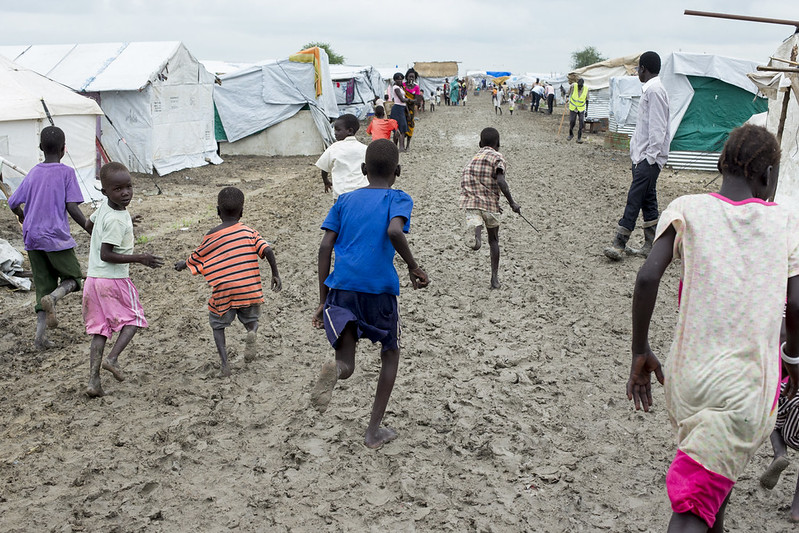 Poverty in South Sudan is among the worst in the world. More than 70% of the population is on or below the poverty line, and only around 30% of the population is literate. This intense poverty is a result of national fragility, prolonged conflict, economic collapse and the inability of the government to provide for its citizens. More than two-thirds of the South Sudanese people need to rely on humanitarian aid for their survival. And though the amount of aid sent to South Sudan is an inspiring metric, things will not change without stronger efforts. And efforts won’t be strengthened unless the people of the world band together in support of poverty eradication.
Poverty Simulations
Now, Poverty Simulations are taking effect all across the U.S. and are enlightening the general public to the candid realities of poverty. Poverty simulations are simulations that imitate what real people in poverty go through. They are garnering more and more support for poverty relief efforts across the globe by educating the public
Poverty simulations are the exact thing that is necessary to help increase support for South Sudan. Most people know about poverty, but few truly understand it. Understanding poverty in South Sudan more deeply is now possible with poverty simulations.
What it is Like to Live in South Sudan
South Sudan is the world’s newest country, having gained independence from Sudan in 2011, less than two decades ago. This youth comes with significant struggles for the population. First of all, the population of the nation is very young. More than 70% of the population is below 18 years old. The young, inexperienced government of the country has struggled since its birth to provide for its people and manage conflict. This has led to a nation overrun by food insecurity and division.
There are few large towns in South Sudan, and most people live in compact, makeshift houses in very small villages. In some regions, people do not even use money for transactions; instead, farming and harvesting are the main sources of sustenance. Sources of aid, like schools, churches and social services, are near nonexistent. Civil conflict is rampant as well. Daily violence often prevents people from going about their daily lives
This level of poverty can be difficult to comprehend, but there is now an accessible way to begin understanding what it’s like on a deeper level.
What are Poverty Simulations and How do They Work?
Poverty simulations are group activities mostly for schools, nonprofit workers, nurses or other individuals who may encounter poverty in their field of work. They aim to help people who live in developed countries, like the U.S., understand and sympathize with people who live in extreme poverty. The activities themselves are comparable to role-play games.
Jason Morrow, an internist and an ethics professor at the University of Texas Health Science Center in San Antonio, was responsible for running a poverty simulation for his medical students to help them empathize with patients who are living in poverty. According to Morrow, “The (poverty) simulation is an immersive experience where students play a role within a family.” “In the exercise, they have to survive and try to thrive with low income and limited resources.”
Individuals are put into groups or families, and each is assigned a particular role. The individual must perform that role as best they can. Resources are also set throughout the setting of the simulation, like social services, the grocery store, the church, and others, where the participants can go for help and amenities. However, the participants can not always receive exactly what they need to thrive. Often, they’re turned away from the help they need; this mirrors the reality that most people in poverty face.
Morrow claims that poverty simulations bestow participants with an understanding of poverty beyond just reading about it: “It’s one thing to read about how poverty strains cognition. It’s another thing to spend two hours running from one side of the room to the other so you can try to pay your utility bills, not get evicted, and make sure your child has some sort of supervision.”
These simulations are extremely valuable for understanding any kind of economic struggle, but this fictional poverty doesn’t even come close to some of the things that people in South Sudan go through. Many live a life without money altogether. They must grow their own food and trade for resources. However, that does not mean poverty simulations don’t help people sympathize with the struggle for wellness. On a fundamental level, all who live in poverty go through a similar mental strain of not knowing how they will make it to tomorrow.
Hope for the Future of South Sudan
With a better understanding of South Sudan’s immense hardships, it’s also important to understand that hope is still there. There are organizations working hard in and around South Sudan to bring relief to those suffering from extreme poverty. Here are a few examples:
Global Care has partnered with the Diocese of Wau to put more than 50 students through educational training to become teachers for the children of South Sudan. Global Care has also established several other schools in the region, which have helped hundreds of children receive an education who would not otherwise have received it.
The United Nations has an ongoing peacekeeping operation in South Sudan. It has established camps to protect civilians from conflict and stationed officials around the country to respond to violent incidents, according to CFR.
Hopeland has partnered with Medair to manufacture and distribute shelter kits in South Sudan to communities affected by severe flooding. Shelter kits are packages made from recycled materials that can be used to create makeshift shelters to shield from harsh weather conditions.
South Sudan has some of the worst poverty rates in the world, but if developed countries are consistently sympathizing more and more with poverty thanks to poverty simulations, then support for relief efforts in South Sudan will remain strong and grow even stronger.
– Lucas Cain
Lucas is based in Pittsburgh, PA, USA and focuses on Good News and Technology for The Borgen Project.
Photo: Flickr
