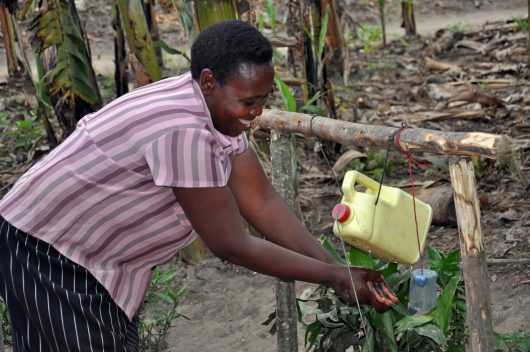
Every day the hotel industry tosses out minimally used bars and bottles of soap that end up wastefully filling landfills. In developing countries, however, soap is a luxury that is frequently inaccessible and unaffordable. With the help of the Sundara organization, recycled soap for developing countries has been made useful. By collecting thrown out soap and sanitizing it, redistribution is carried out to impoverished communities that suffer from illness due to lack of proper hygienic care.
For the “bottom billion” of the world who live under one dollar a day, funds are prioritized toward food and water with no money left over to buy sanitary goods. In Uganda, for example, the cost of soap falls between 20 and 50 cents, forcing people to forego this “most basic preventable healthcare”. It is because of poverty that people within these communities that cannot afford soap are made vulnerable to disease and sickness, often leading to death.
The living conditions for these individuals are typically a slum-like environment with inefficient trash collection and health care. Environments such as this create a breeding ground for diseases caused by a lack of proper hygienic care. The CDC reports that 1.8 million children die annually due to diarrhea and pneumonia, both of which can be prevented with regular hand washing. By providing recycled soap for developing countries, preventable diseases such as these can be reduced.
The Sundara organization has recognized the need for soap and a purpose for recycling it. Collectively they have created a program that collects thrown out hotel soap and refurbishes them so they are clean and safely reusable. In addition to providing necessary soap products, they work toward empowering individuals of impoverished communities to become hygiene ambassadors within their own community. By equipping these individuals with basic hygiene education, communities receive further health education and women, specifically, are given employment by collectively recycling soap and educating others.
As a result of recycling soap, death and disease are prevented, communities are empowered, waste is saved and employment opportunities are provided. Since Sundara’s implementation of recycling soap, 45,600 kg of wasted soap has been salvaged, 132,000 bars of soap have been made, 3,000 hygienic care lessons have been taught, 20,000 lives, 16,000 children and 61 schools have benefited.
Efforts have been focused within India, Uganda and Myanmar. In Mumbai, India, three women have received the proper training to recycle soap and 26 women have been implemented as hygiene ambassadors. Together, these women help repurpose and deliver soap to medical centers and vulnerable communities such as the Kalwa slums. Similarly, Uganda has been able to employ victims of domestic violence and Myanmar distributes recycled soap to orphanages, juvenile detention centers and communities affected by leprosy.
Soap is the fundamental necessity for maintaining proper hygiene, though many communities lack the accessibility to such products. By helping expand the message for the importance of recycled soap for developing countries, a healthy and hopeful future for vulnerable communities stricken with preventable diseases could be greatly supported.
– Amy Williams
Photo: Flickr

The BRAC Programme: Helping Alleviate Poverty in Bangladesh
“I don’t want to think about my life. It’s a very hard story.” This is the nation’s cry that representatives of the BRAC Programme hear countless times. Village communities in Bangladesh have withstood such extreme poverty conditions that the majority of the population are illiterate, cannot afford to eat, and many families have to separate from and relocate children in order to provide efficient child-rearing.
According to The Guardian, the BRAC Programme, otherwise known as the Bangladesh Rural Advancement Committee, seeks to equip impoverished individuals with accessibility to tangibles in the form of livestock so that they are able to financially sustain themselves within two years. Rather than providing a temporary fix, “poverty graduation,” as BRAC calls it, develops confident, self-sustaining people through financial education, literacy and learning to care for livestock. Children especially benefit from economic improvements as the likelihood of displacement has decreased and education opportunities have increased. In the village of Karli, every child now attends school, which is an increase from just 20 percent ten years ago.
BRAC also serves as a source of relief for recent disasters such as the fire that took place Dec. 4 in Korail, “the biggest slum” located in Dhaka, Bangladesh. Within the first hour of the fire, BRAC staffers were at ground zero helping facilitate first aid camps, provide food and water and connect victims with family members. The fire that rapidly spread destroyed 495 homes making 2,000 people homeless. According to the BRAC response team, it will cost 12.4 million Bangladesh taka (USD$156,000) to rebuild what was lost. Fortunately, thanks to the seven-day donation drive supporting the victims of Korail, BRAC has assisted in raising 8.8 million takas.
Continual success occurs in Bangladesh as a result of BRAC efforts; 90,000 families a year receive assistance and a total of more than “1.7 million households have been transformed.” Thirty-five-year-old Rezia Begum recalls she “was half-naked when BRAC arrived, I didn’t even have clothes.” That was almost 20 years ago; now she owns her own land and animals, all six of her children have received an education, and she participates in charitable acts rather than relying on contributions.
As one of the world’s leading organizations that targets poverty, the BRAC Programme seeks to empower impoverished people by tackling poverty “at the root, and plants trees of hope.” It is this newfound hope that can transform the narrative from heartache into joy in overcoming the conditions of poverty.
– Amy Williams
Photo: Flickr
Container Gardening in the Philippines
Container gardening is using recycled materials such as bottles or cartons to grow all manner of fruits, herbs and vegetables at home. In the Philippines, it is a critical survival tool for many families, enabling them to sustainably produce their own basil, squash, string beans, thyme, tomatoes and more.
Despite national poverty levels steadily decreasing since 2006, armed conflict and national disasters have kept food deficits regular. The 2015 Global Hunger Index rated hunger in the Philippines as “serious,” and the World Food Programme provides meals for 65,000 school children each year.
Newspapers like The Manila Times have published guides on container gardening and materials. In fact, this new trend of nutritional empowerment has spread to 21 million households, giving many families the ability to feed themselves regardless of income. In an interview with The Manila Times, John Marchese of Seminis Home Garden Seed said container gardeners today had access to a huge variety of effective seeds that could be matched to their climate, soil and other circumstances.
Container gardening allows growers like Jojo Rom to save space and still produce an abundance of food, while also passing on knowledge to those around him. This way, Rom encourages others to start their own gardens, avoid the cost of ever-inflating food prices and help the planet. Some families are selling their extra crops to food markets and neighbors to generate income, having been able to produce more seeds for others while still growing enough food for themselves.
Container gardening fights hunger at home and climate change for the world, all the while reconnecting people with nature and teaching valuable skills. The next generation of the Filipino working class may never experience hunger in the same way if these practices are passed on and used to the fullest extent by those needing a path out of hunger and toward prosperity.
– Aaron Walsh
Photo: Flickr
UN Women: Internship Program for Women in Afghanistan
Afghanistan’s population largely consists of people under 24 years of age, and about 400,000 people are entering the workforce every year. It is hard enough finding a job as a young graduate, but it’s even harder for the women in Afghanistan. The women in Afghanistan who try to get an education or become working members of the society still face a backlash from men.
Although 64 percent of Afghans believe women should be allowed to work, many men still feel that women should be forbidden from pursuing an education. Girls who attempt to get an education face great danger. Schools for girls have been burned down, teachers have been threatened and killed and girls have been injured walking to and from school. The women who actually complete their education often have forces working against them, preventing them from getting a job.
In December 2015, U.N. Women developed an internship program to help women who have graduated from college acquire skills and develop a work ethic to better prepare them for the working world in Afghanistan. As of now, 48 women have completed the U.N. Women’s internship program in Afghanistan. It is a six-month program, where two months is spent training the women in different professional skills, and four months is spent interning with an organization in the woman’s chosen field, where they receive a stipend from U.N. Women for the duration of their internship period.
As drastic and detrimental as things are for women in Afghanistan, the country is making progress for women and girls in education, political participation and in their economic role. The National Unity Government has committed to the empowerment of women and recognizes that equal opportunity for women is necessary for stabilizing Afghanistan and ensuring that the country develops in a sustainable way. There are more women in power than ever before in history – 27.7% of parliament consists of women, four ministries and the Afghanistan Independent Human Rights Commission are led by women, and three women serve as ambassadors. Also, Afghanistan has in place a National Action Plan for implementing a resolution for the peace and security of women. These strides for progress show that there have been efforts in promoting and upholding a peaceful society with equal opportunity for women.
The internship program has helped the women in the program with vital social and professional connections with different programs around the world, some of which have offered these women jobs after completing their internships. The U.N. Women internship opportunity is helping women in Afghanistan look more suitable and appealing to job recruiters, even more appealing than the many young men they are competing against for jobs.
Women in Afghanistan continue to be disproportionately affected by poverty, discrimination and exploitation. There is still a substantial amount of resistance and discrimination in the workforce, but Afghanistan is making progress. With help from U.N. Women, the working and educated women in Afghanistan can be the progressive rebels that serve as role models and leaders to all other women and girls. Although Afghanistan has established ambitious goals, these actions are necessary to ensure that progress is not reversed and to preserve the great gains the country has made.
– Kayla Mehl
Photo: Flickr
Worm Causing Disease Eliminated from Mali
Since the ’80s, Former President Jimmy Carter’s foundation has been fighting to eradicate dracunculus, known as Guinea worm disease. Back when the foundation started, there were about 3.5 million cases in 21 countries. Because of their dedication to the cause, in 2016, only 25 cases of dracunculus, known as Guinea worm disease, were reported in Africa. Even more so, the disease has become completely eradicated in Mali.
The worm causing disease is contracted through drinking water contaminated by a parasite called the Guinea worm. The long, threadlike worm grows inside the body to about three feet, only showing symptoms up to a year later when a burning sensation in the form of a blister forms, usually on the legs. The worm then slowly exits the body through the blister and can be pulled out a few centimeters each day. The full process can take up to several weeks.
Though the disease is rarely fatal, there is a possibility of infections or allergic reactions. Furthermore, pains and temporary disability can leave patients bedridden for up to a month.
There is no drug to treat Guinea worm disease and no vaccine to prevent infection; however, the disease is fairly easy to contain and eventually eradicate. People susceptible to the worm causing disease have been taught to refrain from drinking non-filtered water as a preventative measure to curbing the disease.
Guinea worm, which is classified as a neglected tropical disease, now only remains in Chad, Ethiopia and South Sudan. Mali reduced its cases from more than 16,000 in 1991 to zero cases last year.
The fight to completely eradicate the worm causing disease is close to its finish line with only 25 cases to go; hopefully, with the help of organizations such as the Carter Center, the world will see an end to the disease.
– Mayan Derhy
Photo: Flickr
Achieving Zero Hunger Will Require Investments
On Dec. 6, 2016, the United Nations Food and Agriculture Organization (FAO) released the first post-Millennium Development Goals (MDGs) report, 2016 Asia and the Pacific Regional Overview of Food Insecurity — Investing in a Zero Hunger Generation. According to the report, although the Asia-Pacific Region met the MDG target of halving the proportion of people suffering from hunger, “the overall rate of progress is less than desired, and there are several countries and sub-regions where the prevalence rates are still very high.”
Sustainable Development Goal (SDGs)
In September of 2015, world leaders adopted the Agenda for Sustainable Development, which features 17 new Sustainable Development Goals (SDGs). The second goal (SDG2) of the agenda reads, “End hunger, achieve food security and improved nutrition and promote sustainable agriculture.” The report warns that progress towards achieving zero hunger has slowed, and must increase in order to reach SDG2’s target by 2030. In addition, the report says fully eliminating the prevalence of undernourishment, as well as reducing other forms of malnutrition across the Asia-Pacific region will be a challenge.
5th Global Forum
The U.N. FAO report was featured at the 5th Global Forum of Leaders for Agricultural Science and Technology (GLAST-2016), a three-day event in December that took place in Hainan, China. The theme of the forum was “Eliminating poverty and hunger through Science and Technology,” and discussions focused on solutions to the challenges facing agricultural development. One of the attendees was FAO Assistant Director-General and Regional Representative for Asia and the Pacific, Kundhavi Kadiresan, who said, “Most countries in this region are spending too little on agricultural research…we will, collectively, need to put our money where our mouths are to ensure we can meet these twin challenges [SDG2].”
Achieving Zero Hunger
According to the report, although economic growth is part of achieving SDG2, it is not nearly enough. Agriculture and food sustainability face resource scarcity and a changing, often unpredictable, climate, and growth in the agricultural sector is much more important. Investing in ways to improve agricultural production in order to enhance food availability is essential. Therefore, these should be the focus of government programs and policies that are intended to increase food and nutrition security.
– Kristin Westad
Photo: Flickr
Sex Education in China
Sex education in China is almost nonexistent. Many schools in China don’t even have a sex education program. Instead, students are typically taught only the basic anatomical differences between males and females.
This lack of education is dangerous in light of the recent sexual revolution in China. According to China Daily, more than 70% of Chinese young people have sex before marriage. Similarly, China has a rate of 13 million abortions annually, according to a 2013 study. Most of the women receiving abortions are single women between the ages of 20 and 29.
“Many young people don’t use contraception at all and that is reflected in high abortion rates for youth,” says Joan Kaufman, a Distinguished Scientist at the Schneider Institutes for Health Policy at Brandeis University.
Research from Fudan University similarly concluded that “there is a large unmet need for reproductive health services for women prior to marriage in China.” For example, 68% of Chinese women were confused about the difference between oral contraceptives and the morning-after pill, according to the China World Contraception Day Organization.
This lack of education makes women vulnerable to abuse, unwanted pregnancy and STIs, particularly HIV. For example, sexual transmission now accounts for 91% of all HIV infections.
HIV is linked to poverty in that it prevents patients from being able to work and greatly increases the entire family’s medical expenditures. Public information and education on prevention – especially targeted to high-risk groups such as young people – will be instrumental in reducing the spread of this epidemic.
Unwanted pregnancies are also connected to poverty. According to Luis-Felipe López- Calva, the World Bank Lead Economist for Latin America and the Caribbean, “Poverty and lack of opportunity are directly associated with teenage pregnancy and early motherhood, which can become impediments to women wanting to take full advantage of development opportunities.”
Although sex education in China is still a new concept, the Chinese government is making an effort to increase AIDS awareness and promote sexual health. Similarly, Chinese Internet users have begun posting videos that teach crucial sex facts in one-minute clips.
Improving sex education in China will be instrumental in reducing poverty. Not only will it reduce HIV transmission and unwanted pregnancies, it will also ensure that young people, particularly women, have full access to economic and further educational opportunities.
– Liliana Rehorn
Photo: Flickr
US House of Reps Passes Digital GAP Act
The U.S. House of Representatives passed the Digital Global Access Policy Act or the Digital GAP Act (H.R. 600) on January 24, just a day after the bill was reintroduced by House Foreign Affairs Chairman Ed Royce (R-CA-39). The legislation is aimed at promoting internet access in developing countries to spur economic growth and job creation, reduce poverty and improve health while advancing U.S. interests.
In today’s technology-driven world, internet access is a major driver of economic and social improvement. However, 4.2 billion people remain offline — about 60 percent of the world’s population, most of whom are in developing countries. In these areas, internet access is hindered by inadequate infrastructure and a poor regulatory environment, stifling the potential for sustainable growth and development.
On the House floor prior to the vote, Chairman Royce noted that women and girls are disproportionately affected by this digital gap. He said that “bringing 500 million women online could contribute up to $18 billion in GDP growth across 144 countries. That is how you reduce poverty; that is how you advance U.S. interests.”
In addition to Rep. Royce, Representatives Cathy McMorris Rogers (R-WA-5), Grace Meng (D-NY-6) and Eliot Engel (D-NY-16) were also listed as original cosponsors of the bill.
The Borgen Project commends the House for making this legislation a priority in the new year and urges the Senate to move swiftly to get this bill to the President’s desk.
– Kim Thelwell
8 Facts About the Vietnam War and Vietnamese Refugees
Over the course of 30 years, the Vietnam War not only contributed towards the intensity of the Cold War but also directly resulted in mass displacement and escalating poverty as Vietnamese refugees fled the region. The humanitarian emergency that the debilitating conflict created also impacted neighboring nations like Laos and Cambodia.
In an effort to contain Communism in then Indo-China, the U.S. began to progressively involve itself in the growing hostility between the North and the South. The U.S. aspired to salvage Ngo Din Diem’s regime in the South despite his unpopularity among the working class and the priests so that it could control the excesses of Ho Chi Minh’s communist guerilla group, the Viet Cong.
After the Gulf of Tonkin Resolution was passed, the U.S. became fully embroiled in the war. Record amounts were spent on military support to Vietnam, including chemical weaponry such as weedkillers, napalm and Agent Orange. The guerilla warfare tactics, coupled with public outrage in the U.S. after atrocities during the My-Lai massacre brought an end to the war after the Fall of Saigon.
The Vietnam War is reminiscent of yet another situation we see today with the refugee crisis, brought about by persecution and human rights violations.
8 Facts of Vietnamese Refugees and the Vietnam War
In an effort to halt the spread of communism, there was a tremendous cost to human life. Only time will reveal the full extent of U.S. and U.N. humanitarian assistance in aiding Vietnamese refugees.
– Shivani Ekkanath
Photo: Flickr
How Global Internet Access Can Alleviate Poverty
In 2015, Mark Zuckerberg proposed that global internet access could be the answer to eradicating extreme poverty. From there he pledged to work with the U.N. in acquiring internet access for refugee camps and has continued to launch campaigns and work alongside organizations such as ONE in gaining further global support.
On November 19, Zuckerberg proposed policy recommendations at the Asia-Pacific Economic Cooperation Summit in Peru where he addressed numerous world leaders and politicians. The summit concluded with unanimous support in implementing “accessible, open, interoperable, reliable and secure” global internet access.
Statistics have shown the dire need for internet access in developing countries and have compared accessibility to those in wealthier countries of which 81% of the population have internet access compared to a mere 15 percent in poorer countries. As much as 75% of Africa is disconnected and as a result, the issue has devolved to sexism in which women and adolescent girls are being further discriminated against with internet access. In fact, women in developing countries are “a third less likely” to receive internet access than males and the difference continues to increase.
ONE has recognized the separation in internet access that has been deepened by sexism and has created the Connectivity Declaration,which will gather support for equal, global internet access. Thus far, 76% of ONE’s goal for backer support has been reached— that’s 75,839 names pledged out of 100,000.
By creating a way for global internet access, lives can be enriched and the effects of poverty lessened. At stake for individuals in poor countries with no internet access is a lack of education, limited health information and weakened job opportunities. In wealthy countries such as the U.S., the benefits that come alongside internet usage are taken for granted. In Africa, for example, a pregnant woman could benefit from having internet access in order to receive pregnancy advice and farmers could utilize the internet to predict weather forecasts in order to optimally maintain their crops and income.
Zuckerberg has been a long-standing advocate for widening internet access and has joined the U.N. initiative in eradicating poverty by 2030. The Facebook CEO supports the need for global internet access by claiming that the Internet gives “a voice to the voiceless and power to the powerless.”
– Amy Williams
Photo: Flickr
Recycled Soap for Developing Countries
Every day the hotel industry tosses out minimally used bars and bottles of soap that end up wastefully filling landfills. In developing countries, however, soap is a luxury that is frequently inaccessible and unaffordable. With the help of the Sundara organization, recycled soap for developing countries has been made useful. By collecting thrown out soap and sanitizing it, redistribution is carried out to impoverished communities that suffer from illness due to lack of proper hygienic care.
For the “bottom billion” of the world who live under one dollar a day, funds are prioritized toward food and water with no money left over to buy sanitary goods. In Uganda, for example, the cost of soap falls between 20 and 50 cents, forcing people to forego this “most basic preventable healthcare”. It is because of poverty that people within these communities that cannot afford soap are made vulnerable to disease and sickness, often leading to death.
The living conditions for these individuals are typically a slum-like environment with inefficient trash collection and health care. Environments such as this create a breeding ground for diseases caused by a lack of proper hygienic care. The CDC reports that 1.8 million children die annually due to diarrhea and pneumonia, both of which can be prevented with regular hand washing. By providing recycled soap for developing countries, preventable diseases such as these can be reduced.
The Sundara organization has recognized the need for soap and a purpose for recycling it. Collectively they have created a program that collects thrown out hotel soap and refurbishes them so they are clean and safely reusable. In addition to providing necessary soap products, they work toward empowering individuals of impoverished communities to become hygiene ambassadors within their own community. By equipping these individuals with basic hygiene education, communities receive further health education and women, specifically, are given employment by collectively recycling soap and educating others.
As a result of recycling soap, death and disease are prevented, communities are empowered, waste is saved and employment opportunities are provided. Since Sundara’s implementation of recycling soap, 45,600 kg of wasted soap has been salvaged, 132,000 bars of soap have been made, 3,000 hygienic care lessons have been taught, 20,000 lives, 16,000 children and 61 schools have benefited.
Efforts have been focused within India, Uganda and Myanmar. In Mumbai, India, three women have received the proper training to recycle soap and 26 women have been implemented as hygiene ambassadors. Together, these women help repurpose and deliver soap to medical centers and vulnerable communities such as the Kalwa slums. Similarly, Uganda has been able to employ victims of domestic violence and Myanmar distributes recycled soap to orphanages, juvenile detention centers and communities affected by leprosy.
Soap is the fundamental necessity for maintaining proper hygiene, though many communities lack the accessibility to such products. By helping expand the message for the importance of recycled soap for developing countries, a healthy and hopeful future for vulnerable communities stricken with preventable diseases could be greatly supported.
– Amy Williams
Photo: Flickr