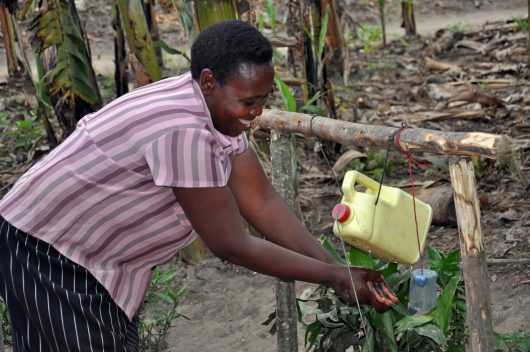
Every day the hotel industry tosses out minimally used bars and bottles of soap that end up wastefully filling landfills. In developing countries, however, soap is a luxury that is frequently inaccessible and unaffordable. With the help of the Sundara organization, recycled soap for developing countries has been made useful. By collecting thrown out soap and sanitizing it, redistribution is carried out to impoverished communities that suffer from illness due to lack of proper hygienic care.
For the “bottom billion” of the world who live under one dollar a day, funds are prioritized toward food and water with no money left over to buy sanitary goods. In Uganda, for example, the cost of soap falls between 20 and 50 cents, forcing people to forego this “most basic preventable healthcare”. It is because of poverty that people within these communities that cannot afford soap are made vulnerable to disease and sickness, often leading to death.
The living conditions for these individuals are typically a slum-like environment with inefficient trash collection and health care. Environments such as this create a breeding ground for diseases caused by a lack of proper hygienic care. The CDC reports that 1.8 million children die annually due to diarrhea and pneumonia, both of which can be prevented with regular hand washing. By providing recycled soap for developing countries, preventable diseases such as these can be reduced.
The Sundara organization has recognized the need for soap and a purpose for recycling it. Collectively they have created a program that collects thrown out hotel soap and refurbishes them so they are clean and safely reusable. In addition to providing necessary soap products, they work toward empowering individuals of impoverished communities to become hygiene ambassadors within their own community. By equipping these individuals with basic hygiene education, communities receive further health education and women, specifically, are given employment by collectively recycling soap and educating others.
As a result of recycling soap, death and disease are prevented, communities are empowered, waste is saved and employment opportunities are provided. Since Sundara’s implementation of recycling soap, 45,600 kg of wasted soap has been salvaged, 132,000 bars of soap have been made, 3,000 hygienic care lessons have been taught, 20,000 lives, 16,000 children and 61 schools have benefited.
Efforts have been focused within India, Uganda and Myanmar. In Mumbai, India, three women have received the proper training to recycle soap and 26 women have been implemented as hygiene ambassadors. Together, these women help repurpose and deliver soap to medical centers and vulnerable communities such as the Kalwa slums. Similarly, Uganda has been able to employ victims of domestic violence and Myanmar distributes recycled soap to orphanages, juvenile detention centers and communities affected by leprosy.
Soap is the fundamental necessity for maintaining proper hygiene, though many communities lack the accessibility to such products. By helping expand the message for the importance of recycled soap for developing countries, a healthy and hopeful future for vulnerable communities stricken with preventable diseases could be greatly supported.
– Amy Williams
Photo: Flickr

Recycled Soap for Developing Countries
Every day the hotel industry tosses out minimally used bars and bottles of soap that end up wastefully filling landfills. In developing countries, however, soap is a luxury that is frequently inaccessible and unaffordable. With the help of the Sundara organization, recycled soap for developing countries has been made useful. By collecting thrown out soap and sanitizing it, redistribution is carried out to impoverished communities that suffer from illness due to lack of proper hygienic care.
For the “bottom billion” of the world who live under one dollar a day, funds are prioritized toward food and water with no money left over to buy sanitary goods. In Uganda, for example, the cost of soap falls between 20 and 50 cents, forcing people to forego this “most basic preventable healthcare”. It is because of poverty that people within these communities that cannot afford soap are made vulnerable to disease and sickness, often leading to death.
The living conditions for these individuals are typically a slum-like environment with inefficient trash collection and health care. Environments such as this create a breeding ground for diseases caused by a lack of proper hygienic care. The CDC reports that 1.8 million children die annually due to diarrhea and pneumonia, both of which can be prevented with regular hand washing. By providing recycled soap for developing countries, preventable diseases such as these can be reduced.
The Sundara organization has recognized the need for soap and a purpose for recycling it. Collectively they have created a program that collects thrown out hotel soap and refurbishes them so they are clean and safely reusable. In addition to providing necessary soap products, they work toward empowering individuals of impoverished communities to become hygiene ambassadors within their own community. By equipping these individuals with basic hygiene education, communities receive further health education and women, specifically, are given employment by collectively recycling soap and educating others.
As a result of recycling soap, death and disease are prevented, communities are empowered, waste is saved and employment opportunities are provided. Since Sundara’s implementation of recycling soap, 45,600 kg of wasted soap has been salvaged, 132,000 bars of soap have been made, 3,000 hygienic care lessons have been taught, 20,000 lives, 16,000 children and 61 schools have benefited.
Efforts have been focused within India, Uganda and Myanmar. In Mumbai, India, three women have received the proper training to recycle soap and 26 women have been implemented as hygiene ambassadors. Together, these women help repurpose and deliver soap to medical centers and vulnerable communities such as the Kalwa slums. Similarly, Uganda has been able to employ victims of domestic violence and Myanmar distributes recycled soap to orphanages, juvenile detention centers and communities affected by leprosy.
Soap is the fundamental necessity for maintaining proper hygiene, though many communities lack the accessibility to such products. By helping expand the message for the importance of recycled soap for developing countries, a healthy and hopeful future for vulnerable communities stricken with preventable diseases could be greatly supported.
– Amy Williams
Photo: Flickr
Mobility for Disabled Persons in Developing Countries
Innovations like SafariSeat are about to revolutionize mobility for disabled persons in developing countries.
It is no secret that poverty and disability are correlated. According to the World Health Organization, about 15% of the world population—over a billion people—have a disability. Of this population, 80% live in developing countries, specifically in isolated rural areas where medical services are few and far between.
When it comes to physical disability, studies have shown that there is another correlation between access to wheelchair and GDP per capita. In developed countries, there are about 30 wheelchairs per 10,000 people. In developing countries, however, this figure decreases to only two or three wheelchairs per 10,000 people. But a severe difference between these cultures lies in the amount of walking done: in countries like the U.S., those aged 65 and older walk eight percent of daily trips. In Sub-Saharan Africa, walking comprises 50 percent of all daily trips. Mobility for disabled persons in developing countries is also the area where such access lies farthest beyond reach.
But Janna Deeble, creator of SafariSeat, could very well be the solution. SafariSeat is an off-road, hand-powered redesign of the wheelchair purposed to travel on all-terrain.
When growing up in Kenya, he had befriended Letu, a man immobilized by polio and thus trapped in the confines of his home. Ten years later, when Deeble had left Kenya and Letu, he suffered an accident that caused him to be wheelchair-bound for months. His tough experience surfaced memories of Letu’s lifelong hardship—and SafariSeat sparked in his mind.
SafariSeat uses an easy mechanism that “mimics car suspension ensuring all wheels remain on the ground at all times”. The wheelchair itself is intentionally low-cost, with the idea that local workshops can use even materials like bike parts to repair them. Deeble also called for the designs to be open-sourced, meaning that the blueprints are free to all people in all nations. This enables workshops to make SafariSeat for their residents, create “local, sustainable employment” and provide access to mobility for disabled persons in developing countries.
When finished, Deeble hopes to take this design to those in the remotest areas of East Africa and revolutionize the lives of all like Letu.
– Brenna Yowell
Photo: Flickr
What’s Next for Aleppo Residents?
As civil war rages on in Syria, residents of the country’s largest city have been forced to flee to surrounding areas. For former Aleppo residents, these evacuations present a new series of challenges and dangers.
Many of these evacuees have fled to the Syrian countryside, Lebanon, or the Turkish border town of Idlib. Lebanon hosts more than 1 million Syrian refugees, yet most evacuees from Aleppo have been transferred to Idlib, inundating the already war-weary area with traumatized and often severely injured evacuees.
Idlib, which is one of the few remaining rebel-held areas in the country, is likely to become the next target as the regime attempts to recapture the country. Rebel fighters from Aleppo are moving to Idlib along with civilians as the regime recaptures large swaths of the country.
For former Aleppo residents in Idlib, however, simply securing housing has been an immense challenge. Evacuees describe exorbitant rent prices and a cold reception from Idlib residents. For former Aleppo residents who lost most of their belongings in the siege and face unemployment, rent prices that can reach $187 a month are often far out of reach. Some evacuees describe conditions where several families are cramped into one house, and those who still cannot afford rent are forced to move to nearby border camps.
As Aleppo residents settle into Idlib and its surrounding camps, the extent of their trauma is becoming quickly evident. Surgeon Mounir Hakimi described children from Aleppo who face amputation or who have shrapnel lodged in their spines. Some have lost vision from the bombing and doctors in Idlib are seeing many patients with seriously infected wounds. In addition, many are suffering from hypothermia and malnutrition.
Even those who escaped Aleppo without serious injury face psychological trauma. In one case, a three-year-old boy was unable to speak due to the shock of the airstrikes. Idlib has seen serious bombing in the past few years, and as a result, its medical infrastructure is sadly reminiscent of Aleppo’s. Many aid workers who left with Aleppo residents intend to continue their work in Idlib. For groups like the Syrian Defence Force who rescued civilians in Aleppo, Idlib is simply a place to continue their work. One Defence Force member expressed the group’s commitment to the residents of Idlib, pointing out that the city had been bombed for the past five years and was unlikely to see a respite in the near future.
Many see Idlib as the next target for the regime now that Aleppo has been recaptured. Airstrikes have inundated Idlib in recent weeks, and dozens of deaths have been reported in the region. In addition, experts believe that as the regime recaptures more territory, the city will be forced to take in further waves of evacuees. This will further exacerbate the humanitarian crisis in Idlib, and for many former Aleppo residents, the town will provide a continuation of their suffering instead of a much-needed respite.
– Eva Kennedy
Photo: Flickr
Toy Inspires Low-Cost Lab Aid to Detect Malaria
Malaria is a life-threatening disease caused by parasites that are transmitted through the bite of an infected mosquito. In 2015 alone, there were 212 million cases of malaria and 429 thousand deaths. Suffice it to say that malaria is a global health problem.
Even worse is that Sub-Saharan Africa continues to carry a disproportionately high share of the global malaria burden. In 2015, the region was home to 90 percent of malaria cases and 92 percent of malaria deaths.
The good thing is that malaria is preventable and curable, given the proper tools to do so. A device called a centrifuge that spins a blood sample very quickly and separates different cells can detect malaria. Centrifuges, though, are expensive, bulky and require electricity – which makes it inefficient in regions such as Sub-Saharan Africa.
A low-cost lab aid to detect malaria is in dire demand, which is exactly what Manu Prakash, a professor of bioengineering at Stanford University, realized on a trip to Uganda. On his trip, Prakash says he found centrifuges used as doorstops because there was no electricity.
Back in California, Prakash experimented with spinning toys in his search for a model for a low-cost lab aid to detect malaria. Though toys are not the conventional approach to developing a lab aid, Prakesh argues that toys hide profound physical phenomena we take for granted.
After experimenting with several spinning toys, including a yo-yo, they stumbled upon the children’s toy known as the whirligig or buzzer. The toy is made of a disk that spins when the strings that go through it are pulled.
This new low-cost lab aid to detect malaria dubbed the paperfuse, can separate pure plasma from whole blood in less than 1.5 minutes, and isolate malaria parasites in 15 minutes. The paperfuse has an ultra-low-cost of fewer than 20 cents, weighs only two grams and is, therefore, field-portable. The paper fuse could be the tool that helps detect and end malaria in low-income countries in the near future.
– Mayan Derhy
Photo: Flickr
Top Diseases in Kazakhstan
Nestled between Russia, China and other regions of the former Soviet Union, lies the nation of Kazakhstan. As is the case in many other middle-income countries, ischemic heart disease and stroke are the leading causes of death. However, cirrhosis of the liver has overtaken chronic obstructive pulmonary disease (COPD) as one of the top diseases in Kazakhstan. Together, the top diseases in Kazakhstan claim the lives of approximately 85,000 individuals annually.
Ischemic Heart Disease
Often referred to as Coronary Artery Disease (CAD), Ischemic Heart Disease is a condition characterized by insufficient blood flow to the heart. CAD develops when plaque composed of cholesterol and other substances accumulates in blood vessels. As in much of the developed world, the increasing incidence of heart disease in Kazakhstan is correlated with increased body mass index (BMI). More than half the population is overweight. The most common symptom associated with ischemic heart disease is angina or chest pain. Eventually, CAD can lead to heart attacks, heart failure, or arrhythmia.
Cardiovascular Disease is associated with significant direct (e.g. medical) and indirect (e.g. lost productivity) costs. The good news is, there are simple but effective interventions that can reduce the burden of this disease. One study demonstrated a 460% return on investment for community-based initiatives that promoted better lifestyle choices, such as increased physical activity, smoking cessation and healthy eating.
Stroke
Like ischemic heart disease, stroke is a condition with numerous modifiable risk factors. Most strokes occur when there is insufficient blood flow to the brain. About 20% of strokes are hemorrhagic (due to bleeding). Strokes can result in serious neurological damage and is a leading cause of long-term disability. Community empowerment and education initiatives can help the incidences and severity of strokes. The lifestyle modifications that mitigate the effects of coronary artery disease are also effective in reducing the risk of stroke. In Kazakhstan, sodium intake is one of the most obvious targets for intervention. The average Kazakh consumes over 6,000 mg of sodium daily or three times the maximum recommended by WHO. In addition, limiting alcohol consumption to one drink for women and two for men per day can help lower stroke risk.
Cirrhosis
Reducing alcoholism in Kazakhstan has proven difficult as evidenced by the increasing prevalence of Cirrhosis. Cirrhosis, or end-stage liver disease, is most commonly caused by hepatitis B or C and alcoholism. According to WHO, the average Kazakh over 15 years of age consumes 10.3 liters of pure alcohol, more than in any other Central Asian country. Since the harmful use of alcohol is also tied to socioeconomic development, organized efforts should be targeted toward this problem. Over time, the incidence of liver Cirrhosis would decrease. There would also be the immediate benefit of reduced motor vehicle accidents, due to intoxication.
In many parts of the world, the leading causes of death have shifted from being acute and communicable to being chronic and noncommunicable. Through medical innovations and effective public policy, those former causes of morbidity and mortality have been dramatically reduced. Sustained passion for social change could also help overcome health problems that now plague the modern world.
– Rebecca Yu
Photo: Flickr
Industrial Parks in Ethiopia: Constructing Seventeen Objects
The African country Ethiopia, one of the world’s oldest civilizations, is also one of the world’s poorest countries. On top of that, the nation suffered its most sluggish period of growth in 2015 due to ongoing social unrest and a devastating drought. And so, to enable the nation to become a middle-income country by 2025, an ambitious plan has been set to construct 17 agro-industrial parks in Ethiopia.
The main challenges for Ethiopia are sustaining the economic growth it achieved and accelerating poverty reduction, which can best be done by creating more jobs and therefore expanding the work sector. The industrial parks in Ethiopia plan to do just that. The parks are a part of the second phase of the government’s Growth and Transformation Plan (GTP II), which will run from the 2015/16 year until 2019/20.
In the first year of GTP II, the government constructed two parks, both of which have created a much-needed influx of jobs. The first, Bole Lemi I Industrial Park, has created over 11,000 job opportunities and has exported products that have a value of 20 million USD. The other, Hawassa Industrial Park, also created jobs for over 60,000 citizens and is expected to export products valued at one billion USD per year. The government is expected to build an additional three parks in Mekele, Combolcha and Adama this fiscal year.
Industrial parks are known to have a great role in expanding a region’s manufacturing sector and tapping into their local talent. The idea to develop industrial parks in Ethiopia was modeled after those in Asia and Eastern Asian countries such as China, South Korea, Singapore, Malaysia and Vietnam.
The hope is for the parks to create an influx of jobs for the youth in Ethiopia as they did in other countries, which is an objective of utmost importance in GTP II. Luckily, among the total job opportunities created in the parks, 85% are covered by women and youth, and disabled citizens also have an opportunity to find work. By the time the parks are completed, Ethiopia’s working class will include the full range of the population.
These 17 agro-industrial parks in Ethiopia could be the first step to promoting investment, tapping into the country’s potential and laying the groundwork for a sustainable economy.
– Mayan Derhy
Photo: Flickr
French Aid to Ease Poverty in Martinique
Martinique is a small island in the Lesser Antilles of the Caribbean. This insular region of France has a population of 385,551. The official language is French, but the local Antillean Creole dialect is still widely spoken. Despite Martinique’s Human Development Index (HDI) of 0.946, which is the 24th highest HDI in the world according to the United Nations, the country has fallen victim to a series of economic and environmental misfortunes in recent years.
Partly to blame for the rise in poverty in Martinique is the global drop in fuel prices from 2008 to the present. Martinique’s petroleum drilling and refining infrastructures have been unable to keep up with the global market price. Martinique’s petroleum export value has suffered an unprecedented drop from 28% to minus 7% profitability between 2014 and 2015, putting a major burden on their economy.
Another problem facing Martinique and neighboring islands like Guadeloupe is the pollution of Chlordecone, an endocrine-disrupting pesticide that was used on banana farms in the Basse-Terre area of Guadeloupe which lies 105 miles north of Fort-de-France, Martinique’s capital city. “The chlordecone is trapped in the mud on the estuary and is released every time there’s a storm. It will go on for generations,” says Nicolas Diaz, a biologist working for Guadeloupe regional council.
France gave $33 million between 2008 and 2010 to access the scope of the pollution, and conduct research. Scientists of the report concluded that the pesticide has entered into many aspects of Martinique’s food and drinking supply, as well as the environment; introducing a lot of serious health problems onto the island, including a rise in prostate cancer. The poor are the ones that are affected most by chlordecone pollution. “About 80,000 people live in areas where the soil is contaminated and 13,000 absorb more chlordecone than the reference dose per day, simply by eating their own vegetables,” according to professor William Dab, head of the Science Committee for the Martinique and Guadeloupe Chlordecone Plan.
Fishermen have also taken a toll from the pollution as the local lobster and fish populations contain unsafe levels of the pesticide. In response, French overseas minister to Martinique, Victorin Lorel, a native of Guadeloupe, has been instrumental in advocating for a $2.66 million aid package to Martinique’s fishermen to ease the industry loss now and into the future. Lorel also has promised a new “ambitious plan” for fisheries in France’s lesser Antilles overseas departments.
The European Union, as a part of its goal to bring all EU members up to Europe 2020 targets for smart, sustainable, and inclusive growth has allocated €520,951,695 between 2014-2020 to Martinique. The aim is to rebuild infrastructure, increase renewable energy production, improve the skills of the impoverished population and generally raise the quality of life, by lowering poverty.
In addition to the incredible contributions from the EU and the French government, there has been a large effort in France to provide humanitarian aid to help with poverty in Martinique. There are numerous organizations that are involved in providing human services/sending volunteers to the satellite territory, as well as setting up food drives and clothing drives to try to lower risks of poverty in Martinique. It is encouraging to see different entities join together to provide this French outer department hope for their future.
– Joshua Ward
Photo: Flickr
Why Foreign Aid is Hurting Africa? It’s Not
Why is foreign aid hurting Africa? Is foreign aid hurting Africa? Relax it’s not. While there are certainly examples of aid done right and aid done wrong, the reality is when done correctly (which it usually is) aid is extremely effective.
Why do people say aid is hurting Africa? Let’s be honest, it bothers us to see human suffering and we feel guilty that we’re not doing something about it. In the end, we’re more than happy to buy into an excuse to do nothing. You’ll see this play out in every country. Talk to the “have’s” in any country and they’ll usually tell you why the “have not’s” can’t be helped. Regardless of whether you visit South Africa or India, as an outsider it’s usually quite disturbing hearing a person driving a Mercedes explain to you why the starving child living on the streets outside his mansion can’t be helped. In our never-ending pursuit to be at peace with ourselves, it’s far easier to maintain our lifestyle and buy into doing nothing is better than something.
Four of the ten fastest-growing economies are African countries that have received foreign aid.
Annual average GDP growth % (2014-2017)
(Business Insider)
Good News in the War on Poverty
In 2015 The United Nations completed The Millennium Development Goals which began in 1990. Over that period, remarkable results have been achieved.
(USAID)
Food Crisis in Venezuela: Starvation, Corruption and Exodus
As the food crisis in Venezuela continues to worsen, the country is suffering from issues ranging from starvation to corruption and mass migration to surrounding countries.
Venezuelans lack access to common goods ranging from food to medicine. The country has triple-digit inflation and the currency collapsed nearly 80 percent last year, leading to millions of citizens suffering from food insecurity. Food riots caused violence and even death in several Venezuelan cities last year, and Venezuelan President Nicolás Maduro has responded by attempting to control the increasingly black market distribution of food and goods within the country. The government hopes that by placing limits on how much individuals can buy at a time, it will be able to put an end to the black market operation of buying and reselling food for higher prices.
As children and families suffer from starvation in the country, many parents are attempting to give their children to families who will be able to provide food for them. Reuters reports that at a social services center in Carirubana more than a dozen parents seek help providing care for their children each day. This is a dramatic uptick from last year when the center averaged one parent per day.
A survey released by a children’s rights group reported that two-thirds of 1,099 households with children were not eating enough in the region of Caracas, Venezuela. The average wages in the country are the equivalent of $50 per month. This has created a desperate situation where parents fear that their children will be forced into prostitution or the drug trade in order to survive.
As the food crisis in Venezuela grows increasingly desperate, food trafficking has become one of the largest businesses in the country. The military controls the distribution of food, and documents and interviews reveal that corruption runs rampant at every level from generals to soldiers.
Tens of thousands of Venezuelans cross the borders into Brazil and Columbia each month, some to buy food and return home and others to find a permanent home in a country where food is more readily available. Along border towns, Venezuelans account for 60 percent of all hospital visits, and as more Venezuelan sex workers arrive, the rates of sexually transmitted diseases have skyrocketed in these regions.
As the food crisis in Venezuela continues, it is important that the international community condemns human rights violations and corruption in the country. It is important that global powers like the United States focus on helping partner countries in South America put pressure on the Venezuelan government to promote democracy and end corruption and food insecurity.
– Eva Kennedy
Photo: Flickr
Five Efforts to Fight Hunger in Spain
Shaken up by the global economic crisis and with one of the highest unemployment rates in Europe, Spain has many vulnerable people struggling with poverty and hunger. Fortunately, numerous efforts in the towns of Galdakao, El Prat and toward the nation as a whole have helped significantly in the fight against hunger in Spain.
Despite the recent financial struggles and the growing problem of hunger in Spain, the country has found various methods to improve conditions for health and nutrition for its citizens.
– Mikaela Frigillana
Photo: Flickr