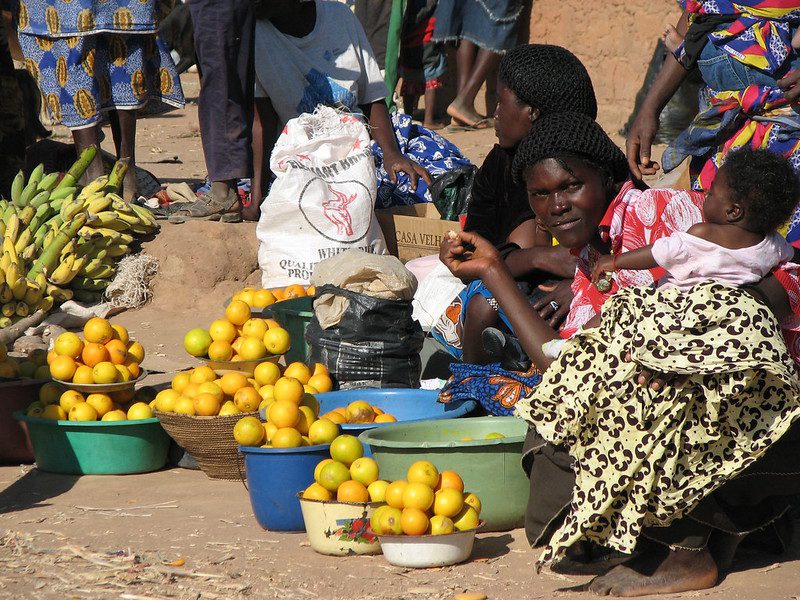
 Over the past decade, Angola has significantly enhanced its social protection system, transitioning from emergency aid to comprehensive safety nets. Situated in southwestern Africa, Angola has experienced significant economic growth, primarily driven by its oil sector, despite years of conflict. The country has strengthened its social protection framework to address disparities and effectively safeguard vulnerable citizens. Social protection Development in Angola has progressed from simple humanitarian assistance during periods of conflict to well-organised programmes specifically aimed at poverty reduction. This transformation demonstrates Angola’s developmental trajectory and its unwavering commitment to improving social systems.
Cartão Kikuia (Kikuia Card)
Launched in 2013, the program had 101,246 beneficiaries nationwide. This innovative program aims to address the social impacts of economic reforms, particularly regarding fuel subsidies, by combining cash transfers with subsidised access to essential goods. It’s all about making life a little easier. Beneficiaries are issued a prepaid card with KZ10,000 ($10.76) monthly, allowing them to purchase a select range of products at discounted rates from registered vendors. The primary goals of the program are to tackle income poverty and food insecurity while also fostering local market growth.
Initially tested in urban regions, the Cartão Kikuia program has progressively expanded into peri-urban and certain rural areas. Evaluations of the program have revealed beneficial effects on household consumption and dietary diversity. The program encompasses vulnerable groups, including widows with orphans, people with disabilities and ex-combatants.
Kwenda Program
The Kwenda Program stands as Angola’s first cash transfer social protection initiative, launched in May 2020 to address the needs of the most vulnerable households during the COVID-19 pandemic. Backed by $320 million from the World Bank and $100 million from the Angolan Government, this program is dedicated to supporting 1.6 million at-risk households. Designed with flexibility in mind, the Kwenda Program efficiently and safely reaches its beneficiaries, with most recipients receiving e-payments, granting most of them access to the financial system for the very first time in their lives.
Since its inception, the Kwenda program has made a significant impact, allocating $23 million by early 2022 and conducting 314,000 cash transfers, with 60% of beneficiaries being women. Enrolment has surged, exceeding half a million families registered by January 2022, and nearly half (247,000) have received at least one cash transfer. Thanks to the Social Protection Development in Angola, more than a million families are enrolled in the Kwenda programme, most of whom have received direct financial aid.
Maria Feliciana, a 92-year-old citizen from Catete in Icolo Bengo Province, a local vendor, shared her thoughts on the government program: “This initiative shows that the government remembers the poorest among us. It’s for everyone in need, even those in the villages. It treated us with respect and dignity.” She added, “Please bring the program back! Do not forget us older people in the villages. We have contributed to this country throughout our lives. This small help means everything to us. And please make it permanent—one year is not enough to change a lifetime of poverty.”
Valor Criança Social Cash Transfer Pilot
Valor Criança is a pilot program of social cash transfers, implemented by the Ministry of Social Action, Family and Women’s Promotion, with technical support from UNICEF, designed as a child-sensitive, unconditional social cash transfer program targeted at households with children aged zero to five years in selected municipalities prone to food insecurity. The program began implementation in 2019 as a pilot program, initially benefiting 20,000 children through monthly delivery of 3,000 AOA to 7,700 families in 257 municipalities in the provinces of Moxico, Bié and Uíge. It provided a monthly cash transfer of AOA 3,000 ($10 in the period) per child under 5, which was increased to AOA 5,000 in response to COVID-19, with the transfer amount directly paid to the child’s caregiver (predominantly women), limited to three eligible children per household.
The program served as an important foundation for Angola’s broader social protection system and has shown a significant impact in supporting vulnerable families with young children. The program also linked families to other services, including birth registration and early childhood development services, making it more than just a cash transfer program.
Institutional Framework and Governance
The Ministry of Social Action, Family and Promotion of Women oversees social protection policies in Angola. Recent reforms aim to improve coordination among ministries and government levels, contributing positively to social protection development in Angola.
The National Social Action Policy (PNAS) came after various initiatives, setting up a framework for future actions. One significant initiative that started in 2019 was the Strengthen and Scale Up Social Assistance to Vulnerable Population of Angola (APROSOC) project, which focused on enhancing social assistance for the vulnerable population and received funding from the European Union.
Angola has also made progress in strengthening its social registry system, which helps identify potential beneficiaries and reduce duplication across programs. The Cadastro Social Único (Unified Social Registry) is gradually spreading nationwide, though challenges remain in reaching remote populations.
Further Ahead
Angola is making progress in its Social Protection framework by improving data collection and policy development. An International Labor Organization (ILO) workshop held in Luanda, Angola, in June 2025 saw the Interministerial Group on Social Protection Statistics convene to prepare the second Social Protection Statistics Bulletin, with new members participating.
This initiative signifies a shift towards systematic monitoring and evaluation in social protection development in Angola’s governance. Technicians from 12 key institutions collaborated to analyse data from 2022-2024, aligning with Sustainable Development Goal 1.3.1 on social protection coverage. Furthermore, projects funded by Portugal’s Ministry of Labour and Social Security and the European Union back these efforts, highlighting Angola’s commitment to expanding social protection and fostering economic growth.
– Vanuza Antonio
Vanuza is based in London, UK and focuses on Good News and Global Health for The Borgen Project.
Photo: Flickr

What to Know About Hunger in Switzerland
Switzerland’s high standard of living, however, comes with a high cost of living. The average total household expenditure in Switzerland can be two-to-three times higher than some other European cities in countries with similar standards of living. Switzerland boasts some of the highest salaries in Europe, but basic health and accident insurance are mandatory, monthly rent is relatively high, and transportation and grocery costs are significant.
Hunger and Nutrition in Switzerland
The level of hunger in Switzerland is below the threshold for the country’s inclusion in the Global Hunger Index. But hunger and nutrition are two different things. In the 2022 Global Nutrition Report, Switzerland was reported as being “on course” to meet only one of the global nutrition targets (for which data was available)—women’s diabetes. It was “off course” for all MIYCN (maternal, infant and young child nutrition) targets, and “off course” with limited progress regarding diet-related noncommunicable disease targets. There was no progress or worsening regarding anemia in women of childbearing age and low birth weight.
A small 2021 study of older medical patients found a “significant association” between age and food insecurity, with food insecurity contributing to malnutrition in approximately 7% of the patients studied. The objective in identifying such pockets of food insecurity was to enable the development of interventions for at-risk populations.
Poverty, Hunger and Welfare in Switzerland
Even with a high standard of living, not everyone in Switzerland is well off. The rate of poverty is low, but not nonexistent; in 2023, the poverty rate was 8.1%. The poverty rate was higher for the employed in 2023 than it had been in the previous two years, but half what it was for the unemployed. In addition to the unemployed, single people and single-parent households with young children were particularly hard hit.
One reason hunger in Switzerland is rare is because Swiss welfare payments cover necessities such as food, clothing, housing, health insurance and other personal needs. Social benefits spending was $2.78 billion in 2022, falling for the fourth year in a row. The decrease resulted from fewer recipients, as well as lower expenditure per recipient. Almost 250,000 people received a financial benefit on at least one occasion in 2023, with urban regions seeing a higher rate of assistance. (Welfare is distributed at the cantonal level, with local benefits preceding financial social assistance.)
Global Hunger and Food Security: Switzerland’s Role
While hunger in Switzerland itself is not much of an issue, the country’s constitution includesa commitment to local and global sustainable food systems, important, especially because the country imports 50% of its food. Switzerland is involved in many related international efforts, contributing to food security globally.
These activities include:
A small country known for the care of its own, Switzerland plays a large role in the care of those beyond its own borders.
– Staff Reports
Photo: Flickr
Moldova’s Freedom: Iași-Ungheni-Chişinau Natural Gas Pipeline
Initial Steps to Reduce Dependence on Russian Gas
Geopolitical tensions between Russia and Ukraine, the latter being the territory through which Moldova obtained the gas provided by Russia, increased the urgency for alternative sources. The Iași-Ungheni-Chişinau natural gas pipeline, completed in 2020, offered a significant opportunity for energy diversification by enabling access to European gas sources. The capacity of 1.5 billion cubic meters per year, now expandable to 2.2 billion cubic meters, can supply up to 75% of Moldova’s average consumption and 60% of the average during the winter season.
The Ungheni-Chisinau pipeline segment construction began in 2019, covered by Romania’s Transgaz and co-financed by the EU’s ERDF, with a total cost of €150 million ($173,610,000). Although the previous segment had been operational since 2014 from Iași to Ungheni, it was only briefly used in 2015 due to limited demand, due to political disagreements, uncompetitive Romanian gas prices and technical constraints.
Energy Lifesaver: The 2022 Energy Situation
Traditionally dependent on Russian gas routed through Ukraine and the separatist-controlled region of Transnistria, Moldova’s energy was highly vulnerable to political pressure from Moscow. This vulnerability was exposed in 2022 when Gazprom, one of the main russian gas suppliers, unilaterally reduced its gas supplies. In response, Moldova activated the Iași-Ungheni-Chişinau natural gas pipeline, built with Romanian and EU support, to import gas from European markets. The gas measuring station at Ungheni, operated by Vestmoldtransgaz, is capable of handling up to 5 million cubic meters of gas per day, ensuring a reliable supply even during winter. Minister of Energy Victor Parlicov emphasized the pipeline’s role in preventing energy blackmail and announced plans for a new Ungheni-Balti pipeline to connect with Ukrainian storage, reinforcing Moldova’s integration into the regional vertical gas corridor and reducing its dependence on Russian energy.
The Iași-Ungheni-Chişinau Natural Gas Pipeline
After the success of the energy alternative, Minister Victor Parlicov emphasized that expanding the Iasi-Ungheni-Chisinau natural gas pipeline will significantly boost Moldova’s energy resilience and regional integration. Vestmoldtransgaz, the natural gas transmission system operator in the Republic of Moldova, works with proposing upgrades and potential new branches to Balti and Drochia. Strengthening collaboration with Romania, Ukraine and Poland will foster gas transit flexibility. Increased transit reduces pressure on Moldovan consumers and benefits the country. The “Chisinau Belt” project, set for completion by 2031, makes a key step in securing Moldova’s energy future.
Additionally, the EU and Moldova have launched a two-year, €250 million ($289,350,000) strategy to ensure Moldova’s energy independence and integration in the EU energy market, with €100 million ($115,740,000) allocated by mid-April 2025. The plan includes compensation for household electricity costs on the Right Bank and support for vulnerable consumers and institutions, enabling Moldova to disconnect the Right Bank from Russian gas and fully source energy from EU markets.
– Sara Arias Saiz
Photo: Flickr
Poverty Alleviation and Women’s SHGs in India
Background
Evidence suggests women organize to cater to two core objectives: to reduce domestic violence and to induce more inclusive delivery of public services such as health, financial and food security.
SHGs are small, federated groups of 10-20 women who organize themselves based on location, income or caste to form community-based financial systems. These groups meet at periodic intervals to deposit money into their group-held account and get steady access to loans in times of need. The entire process is facilitated by government and non-government (NGO) entities that help connect SHGs to bank accounts and formal credit. Many are federated into larger networks.
SHGs represent a shift from traditional banking models, decentralizing financial power and promoting community autonomy. Through the Bank Linkage Program, SHGs help empower the “unreached poor,” offering financial services to underserved populations.
Struggles of the Past
Before SHGs, households primarily relied on informal moneylenders (typically men) with higher interest rates and unfavorable terms, especially to the poor and marginalized. Formal banks were rarely accessible and often provided large, lump-sum loans, rather than what the individual needed.
As of 2014, 33.2% of rural household debt were from informal lenders, according to the Indian government. These lenders charged annual interest rates between 12% to 150%, compared to banks typically charging 6% to 20% on larger loans.
The SHG model reduced informal borrowing by 14.5%, significantly curbing predatory lending, the World Bank reports. It has generated a change in the borrowing habits of households, aiding poverty alleviation efforts, and changing the status of women as participant decision makers and beneficiaries.
State SHGs Programs in India
In high credit regions, with limited banking access, Jeevika in Bihar charges a 2% monthly interest on loans to its SHG members, according to the World Bank. Mission Shakti in Odisha charges 0% monthly interest on loans to women SHGS, on amounts up to ₹10 lakhs ($12,000 equivalent), conditioned on the timely repayment of loans.
U.S. firms like MicroVest and Unitus backed Grama Vidiyal’s microfinance push in South India, and have helped build a $3.75 million loan portfolio.
The nature of these low-interest microcredits extends beyond economics, functioning as vital social safety nets. Among SHG households, 10% of women borrowed for enterprise, while 22% borrowed for health care, exemplifying the importance of women’s SHGs in India during emergencies.
India’s growing women-led SHG model has accelerated an inclusive, bottom-up approach to poverty alleviation by empowering women to revolutionise micro-credit extension and improve their visibility and confidence in community leadership.
– Tanisha Bhattacharyya
Photo: Flickr
Expanding Gavi’s Donor Network
Gavi’s Existing Impact
Foreign Aid Budget Cuts
Gavi relies on donations from governments, foundations and private partners to fund its work delivering vaccines to the world’s most vulnerable children. However, former core donors France, the U.S. and the UK have all indicated that they plan to cut foreign aid spending in the coming years; hence, their pledges to Gavi remain uncertain.
The U.S. previously donated $300 million to Gavi annually but the country declared in March 2025 that it does not plan future spending, Reuters reports. On June 12, 2025, the U.S. House of Representatives passed President Donald Trump’s request to cut $9.4 billion from the U.S. foreign aid budget, $400 million of which formerly went to global health programs including Gavi. The bill is yet to be approved by the Senate, so until the decision deadline of July 18. It is unclear whether Gavi will receive its usual donation from the States.
U.K. Prime Minister Sir Kier Starmer has also announced that the U.K. government will cut foreign aid spending by £6 billion per year, redirecting the money to defense spending. The nation was previously mandated by law to spend 0.7% of GDP on aid, but the former Conservative government lowered this to 0.5% following the pandemic, and Starmer’s cuts lower it even further to only 0.3% of GDP. Therefore, it is probable that Gavi will not receive funding from the UK equal to the country’s previous investments.
Hopes for Brussels Global Summit 2025
From 2026-2030 (the Gavi 6.0 strategic period), Gavi plans to save at least 8 million lives through the vaccination of 500 million additional children. Global summit in Brussels on June 25, 2025 will bring together global leaders, partner organizations, vaccine manufacturers and private sector companies to secure at least $9 billion to fund Gavi 6.0.
Several countries have already announced their pledges:
Expanding Gavi’s Donor Network
These pledges are promising but in light of U.S. and U.K. cuts to aid, Gavi’s donor network needs to expand if it hopes to raise the $9 billion required for its ambitious new plan. To secure essential funding from Morocco, Gavi Chief Executive Officer Dr. Sania Nishtar recently met with officials in Rabat. During her visit, Nishtar toured a Marbio vaccine production site near Casablanca a biopharmaceutical initiative, Reuters reports.
Hopes for Moroccan funding are high as Nishtar noted that the facility stands a strong chance of receiving support from Gavi’s $1.2 billion African Vaccine Manufacturing Accelerator, which aims to enhance vaccine manufacturing capacity across the continent.
An Optimistic Outlook
In preparation for potential shortfalls in funding, Gavi has begun engaging more private sector partners, implementing cost-cutting measures, and exploring stronger partnerships with other global health organizations. Nevertheless, Nishtar anticipates that the contributions made at the June 25th summit will be sufficient to render these contingency plans unnecessary.
In light of Gavi’s critical work responding to the current global measles surge, cholera outbreaks in Sudan, South Sudan and Angola, and the growing spread of mpox in Sierra Leone, there is growing hope that the international community will recognize the indispensable value of Gavi’s efforts and respond with the generous support needed to sustain and extend its impact.
– Holly McArthur
Photo: Flickr
4 Organizations Helping to End Child Marriage in Ecuador
UN Women
Originally founded in 2010 as a part of the United Nations, U.N. Women has been helping with women’s rights all over the world. Its latest contribution to ending child marriage in Ecuador was in 2015 when it pressured multiple Latin and Central American countries to enforce 18 as the legal marriage. For Ecuador specifically, U.N. Women helped reform the law to have the legal age of marriage as 18.
Nada Foundation
Created by a human rights activist, Nada Al-Ahdal in 2015, the Nada Foundation works to fight and advocate against child marriage all over the world. While a lot of her most well-known work took place in the Middle East, Nada and her organization have advocated to help end child marriage in Ecuador, mainly by helping survivors of child marriage and giving girls better access to education in hopes of lowering the chances of getting married prematurely.
Parliamentarians for Global Action
The Parliamentarians for Global Action (PGA) is an organization that works to improve human rights on a global scale. This includes women’s rights and helping with the abolition of child marriage. PGA has a campaign where it talks to legislators to better address the issue of child marriage, including Ecuador. In 2022, they also worked in collaboration with Girls Not Brides to strategize with the National Group in the National Assembly of Ecuador.
Girls Not Brides
Originally founded in 2011, Girls Not Brides focuses its efforts on an international scale and often works with other organizations in different countries to help with their goal of eliminating child marriage. In Ecuador, it has two listed partners, Let Girls Rise and Sendas.
Child marriage directly hurts the family of the bride and the child herself, but helping to fight it gives these children better hope for the future.
– Jose Gabriel Lopez
Photo: Flickr
Gender Wage Gap in Nicaragua Ranks 6th Narrowest Globally
Through a variety of efforts, Nicaragua has decreased its gender wage gap by 80% since 2006. Decades-old initiatives such as the Nicaraguan Women’s Institute have set the stage for Nicaragua’s record levels of gender equality today, and more recent programs such as Better Work are doing on-the-ground work to fight for equal pay.
Nicaraguan Women’s Institute
The Nicaraguan government created the Nicaraguan Women’s Institute in 1987 as a body for spearheading gender equality policies. These policies influence areas of female inequality from domestic abuse to labor. The Women’s Institute targets Nicaraguan institutions, providing strategies that will sustainably enact gender equality over time.
While the institute implemented many of its programs some time ago, the foundation it laid has allowed Nicaragua to reach its impressively narrow gender wage gap today. Many of its programs have targeted a wide range of areas in a woman’s life beyond wages, including health and education. These strategies, such as the National Program of Gender Equity, may have helped women gain access to employment, decreasing the gender wage gap.
Better Work
Better Work is an initiative that increases factories’ compliance with labor standards from the International Labor Organization (ILO). This program is a joint initiative from the ILO and the International Finance Corporation (IFC).
Better Work examines a factory’s labor conditions and shares its findings with major companies. Since many of today’s companies prefer to work with ethical factories for reputational issues, noncompliance with ILO standards is penalized.
Gender equality is a core element of Better Work’s approach. Better Work uses training and advisory services to help factories adhere to ILO standards, with gender equality strategies fully integrated into these efforts. Complying with gender equality, such as wage equality, is therefore incorporated into complying with ILO labor standards.
Since its establishment in Nicaragua in 2010, Better Work has worked with 32 Nicaraguan factories, 20 brands, and more than 45,000 workers. The initiative specifically targets the gender wage gap by fighting for shorter hours and higher wages for women to match those made by men. Industry labor accounts for almost a fifth of employment in Nicaragua, meaning Better Work’s efforts can reach a significant portion of the population.
Gender Wage Gap in Nicaragua: Going Forward
The Nicaraguan Women’s Institute and Better Work can be expected to continue to make a positive impact on Nicaragua’s gender wage gap. Nicaragua still has a way to go until it reaches gender equality in the workforce, with a female employment rate of 54.9% and a male employment rate of 75.9% in 2024.
Yet, the Women’s Institute’s institutional change strategy and Better Work’s advisory and incentive-based approach have already helped Nicaragua to decrease its gender wage gap by 80% since 2006, showcasing their effectiveness.
– Madison Fetch
Photo: Flickr
Social Protection in Angola
Cartão Kikuia (Kikuia Card)
Launched in 2013, the program had 101,246 beneficiaries nationwide. This innovative program aims to address the social impacts of economic reforms, particularly regarding fuel subsidies, by combining cash transfers with subsidised access to essential goods. It’s all about making life a little easier. Beneficiaries are issued a prepaid card with KZ10,000 ($10.76) monthly, allowing them to purchase a select range of products at discounted rates from registered vendors. The primary goals of the program are to tackle income poverty and food insecurity while also fostering local market growth.
Initially tested in urban regions, the Cartão Kikuia program has progressively expanded into peri-urban and certain rural areas. Evaluations of the program have revealed beneficial effects on household consumption and dietary diversity. The program encompasses vulnerable groups, including widows with orphans, people with disabilities and ex-combatants.
Kwenda Program
The Kwenda Program stands as Angola’s first cash transfer social protection initiative, launched in May 2020 to address the needs of the most vulnerable households during the COVID-19 pandemic. Backed by $320 million from the World Bank and $100 million from the Angolan Government, this program is dedicated to supporting 1.6 million at-risk households. Designed with flexibility in mind, the Kwenda Program efficiently and safely reaches its beneficiaries, with most recipients receiving e-payments, granting most of them access to the financial system for the very first time in their lives.
Since its inception, the Kwenda program has made a significant impact, allocating $23 million by early 2022 and conducting 314,000 cash transfers, with 60% of beneficiaries being women. Enrolment has surged, exceeding half a million families registered by January 2022, and nearly half (247,000) have received at least one cash transfer. Thanks to the Social Protection Development in Angola, more than a million families are enrolled in the Kwenda programme, most of whom have received direct financial aid.
Maria Feliciana, a 92-year-old citizen from Catete in Icolo Bengo Province, a local vendor, shared her thoughts on the government program: “This initiative shows that the government remembers the poorest among us. It’s for everyone in need, even those in the villages. It treated us with respect and dignity.” She added, “Please bring the program back! Do not forget us older people in the villages. We have contributed to this country throughout our lives. This small help means everything to us. And please make it permanent—one year is not enough to change a lifetime of poverty.”
Valor Criança Social Cash Transfer Pilot
Valor Criança is a pilot program of social cash transfers, implemented by the Ministry of Social Action, Family and Women’s Promotion, with technical support from UNICEF, designed as a child-sensitive, unconditional social cash transfer program targeted at households with children aged zero to five years in selected municipalities prone to food insecurity. The program began implementation in 2019 as a pilot program, initially benefiting 20,000 children through monthly delivery of 3,000 AOA to 7,700 families in 257 municipalities in the provinces of Moxico, Bié and Uíge. It provided a monthly cash transfer of AOA 3,000 ($10 in the period) per child under 5, which was increased to AOA 5,000 in response to COVID-19, with the transfer amount directly paid to the child’s caregiver (predominantly women), limited to three eligible children per household.
The program served as an important foundation for Angola’s broader social protection system and has shown a significant impact in supporting vulnerable families with young children. The program also linked families to other services, including birth registration and early childhood development services, making it more than just a cash transfer program.
Institutional Framework and Governance
The Ministry of Social Action, Family and Promotion of Women oversees social protection policies in Angola. Recent reforms aim to improve coordination among ministries and government levels, contributing positively to social protection development in Angola.
The National Social Action Policy (PNAS) came after various initiatives, setting up a framework for future actions. One significant initiative that started in 2019 was the Strengthen and Scale Up Social Assistance to Vulnerable Population of Angola (APROSOC) project, which focused on enhancing social assistance for the vulnerable population and received funding from the European Union.
Angola has also made progress in strengthening its social registry system, which helps identify potential beneficiaries and reduce duplication across programs. The Cadastro Social Único (Unified Social Registry) is gradually spreading nationwide, though challenges remain in reaching remote populations.
Further Ahead
Angola is making progress in its Social Protection framework by improving data collection and policy development. An International Labor Organization (ILO) workshop held in Luanda, Angola, in June 2025 saw the Interministerial Group on Social Protection Statistics convene to prepare the second Social Protection Statistics Bulletin, with new members participating.
This initiative signifies a shift towards systematic monitoring and evaluation in social protection development in Angola’s governance. Technicians from 12 key institutions collaborated to analyse data from 2022-2024, aligning with Sustainable Development Goal 1.3.1 on social protection coverage. Furthermore, projects funded by Portugal’s Ministry of Labour and Social Security and the European Union back these efforts, highlighting Angola’s commitment to expanding social protection and fostering economic growth.
– Vanuza Antonio
Photo: Flickr
Earthquake Recovery Project: Rebuilding Morocco
Earthquake Recovery Project
In response, the Moroccan government introduced a five-year recovery project valued at approximately 120 billion dirhams (about $11.7 billion). The plan prioritizes rehousing, infrastructure upgrades and social and economic development. A central feature of the plan, the “supervised self-construction” model, allows affected residents to rebuild their homes using government financial support and architectural guidance. Reconstruction efforts focus on the most severely affected areas, including the provinces of Al Haouz, Chichaouoa, Taroudant, Marrakech, Ouarzazate and Azilal.
The project aims to reach 4.2 million people. Funding comes from the national budget, international aid and various public and private contributions. USAID committed $12.6 million to support Morocco’s earthquake recovery project. Eligible families receive up to 140,000 dirhams (approximately $13,600) to cover reconstruction and temporary housing needs.
Challenges Ahead
Despite the ambitious plan, progress remains slow. By 2024, only around 1,000 of the targeted 55,000 homes had been built. Labor shortages, rising material costs and difficult mountain terrain have created bottlenecks. Landslides left many roads blocked by debris and boulders, preventing emergency services and aid convoys from reaching those in need. The government also faced criticism for limiting foreign aid. Authorities initially accepted help only from a few countries—Spain, Qatar, Britain and the UAE—while declining offers from others, including France, Germany, Tunisia, Canada and the United States (U.S.) Many viewed this decision as a missed opportunity to accelerate the recovery process and widen the scope of assistance.
Community-Led Recovery
While national efforts struggled, grassroots initiatives stepped in to fill the gap. In Ait Bourd, a Moroccan architect introduced an insulated, earthquake-resistant home design capable of replacing about 50,000 destroyed homes. The Atlas Foundation partnered with local communities to support participatory planning and build capacity, ensuring that villagers guided the rebuilding process themselves. In Talat N’Yaaqoub, residents organized teams to clear rubble and distribute supplies. University students from Marrakech launched mobile clinics and provided psychological support for survivors. Caritas Morocco, with backing from the Caritas Confederation, worked to deliver clean water, food and hygiene essentials. These local initiatives did more than meet immediate needs—they also strengthened community resilience and laid a foundation for long-term recovery.
Looking Forward
These community-led initiatives address immediate needs and lay the groundwork for sustainable development and resilience against future disasters. As Morocco navigates the complex path to recovery, integrating grassroots efforts with national and international support may help accelerate reconstruction. Ongoing coordination, resource mobilization and attention to regional disparities could likely influence the pace and scope of long-term recovery. Monitoring progress and adapting strategies to on-the-ground realities remain important as rebuilding continues across affected provinces.
– Sebastian Llerena
Photo: Flickr
Wadhwani AI: Fighting Poverty in India
Reducing the Spread of Tuberculosis
India has the highest burden of tuberculosis (TB) cases globally:
The National Tuberculosis Elimination Programme (NTEP) is the Indian governmental initiative to reduce the spread of TB. The Transformative Research and Artificial Intelligence Capacity for Elimination of Tuberculosis (TRACE-TB) – Wadhwani AI’s umbrella term for several AI programs they are using to help combat TB – aims to improve upon diagnostic tools available and speed up treatment processes.
One of these goals is to improve upon the screening tools available to diagnose TB. These screening tools tend to be expensive, rely on specialist training and require a laboratory setup. Because of this, many TB patients go unrecorded because these screenings simply are not accessible or are under too much demand. Wadhwani AI’s solution is an AI-based diagnostic tool that analyses the sound of a patient’s cough and identifies probable cases of TB. This tool is available as an app, both for health care workers and for people looking to test at home.
Line Probe Assay
Another branch of TRACE-TB is improving the expediency of recording the results of Line Probe Assay (LPA) strips. LPA strips help diagnose cases of drug-resistant TB. Manual testing for this is done at one of only 64 labs across India, which are able to perform around 400,000 tests annually. Not only is this a highly insufficient rate of testing, but the manual process is subject to clerical issues. Due to this overburdened system, many cases will have significant delays in their treatment. Using AI to rapidly evaluate LPA strip results greatly improves upon this response time. This initiative uses a “human-in-the-loop” as part of the process, having someone double-check when the algorithm is uncertain about the interpretation of the results.
Helping Cotton Farmers Fight Pest Infestations
Across the globe, the primary crop for almost 100 million farmers is cotton. Ninety percent of these farmers are from smallholding farms in poorer countries. India is the world’s largest cotton producer (26% of the global output), and is a massive source of employment in the country. Not only are there 5.8 million cotton farmers in India, but a further 40 to 50 million work in the processing or trading of cotton.
Cotton is extremely vulnerable to pest infestations, and on average, Indian farmers lose around 30% of their crops annually. The acuteness of these losses are due to a combination of factors. Firstly, manually collecting data on infestations and then analysing it is very time-consuming, and often by the time that is done any counter-measures may no longer be effective. Secondly, there is a widespread lack of education amongst farmers about correct pesticide usage: using the wrong chemicals or spraying the incorrect amount can prove redundant to combating the infestation, and can be detrimental to the health of the farmers and the environment.
How It Works
Wadhwani AI’s initiative to help cotton farmers fight pest infestations is the CottonAce app. It is easily accessible, works offline and is available in nine languages.
Farmers install pheromone traps amongst their crops, which trap pests. They then upload images of the pests to the app and the AI algorithm identifies the pest and calculates how severe the infestation is. CottonAce generates instantaneous recommendations on which pesticide to use and how to best apply it. The app then shares the data with nearby farmers, creating an early-warning system for the area. CottonAce is a great example of a simple, easily scalable and highly accessible tool that can improve the security of the livelihoods of millions of people, and an easy-to-replicate example of using AI to fight poverty in India.
Assessing Students’ Literacy Skills
Vaachan Samiksha is an AI-based tool for assessing the oral literacy of students. India’s Annual Status of Education Report 2023 showed that more than half of grade five students struggled with reading texts designed for children aged three years below them. Typically, oral fluency is assessed by teachers individually, having students read a passage and then manually counting how often they mispronounce words. With millions of students to consider, this process is incredibly inefficient, fallible and provides very little information about the students’ needs. Wadhwani AI hopes to speed up this process and better gauge what individual students need via Vaachan Samiksha.
In partnership with the Gujarat government, 33,000 schools across the region are currently using the tool. Wadhwani AI developed an AI speech-to-text model that provides instantaneous transcription of the student during the literacy assessment and identifies the mispronounced terms. Multiple students are able to be assessed simultaneously, and the program can efficiently detect patterns in incorrect pronunciation and difficulties. This enables teachers to understand how and where each student is struggling with their oral-literacy, and helps to identify which students might need additional support. As of March 2025, the app has helped make more than 3.6 million assessments across Gujarat.
Closing Thoughts
Wadhwani AI’s work is a reminder that artificial intelligence isn’t only about high-tech labs or futuristic applications—it can be a powerful tool for solving real-world problems in low-resource settings. By designing practical, scalable solutions rooted in local needs, Wadhwani AI is helping shape a future where technology aids the critically underserved. As their programs continue to develop, they offer a compelling model for using AI to fight poverty in India and the potential for tackling global poverty with similar initiatives.
– Reuben Avis-Anciano
Photo: Flickr
5 Nations Eliminating GBV in Central Africa
DRC: The World Bank’s Gender-Based Protection
The DRC’s collaboration with the World Bank has created the Gender-Based Violence (GBV) Prevention and Response Project. The GBV Prevention and Response Project aims to increase government support for ending GBV and improve response times for GBV emergencies. The project offers survivor support centers, economic reintegration for women who have experienced abuse, and legal aid to women looking to get justice for any abuse or GBV. The project has served more than 79,000 women, reaching more than 8 million total. Undoubtedly, the DRC Gender-Based Violence Prevention and Response Project has increased access to justice and economic options for women living in poverty with no escape from gender-based violence.
CAF: Economic Independence through the Bêkou Trust Fund
In the CAF, the EU created the Bêkou Trust Fund for humanitarian development. The funds have been particularly helpful to women through its goals to restore security and the social contract between the government and the people. In CAF, less than 20% of girls attend secondary school and there are around 10,000 cases of yearly GBV on average. In the last 10 years, €11 million went to use in the gender theme of the fund. Through the Trust Fund, more than 68,000 women have received help with socio-economic integration, helping them live safely and independently.
Chad: Microfinancing for Empowerment via USAID
USAID’s Women’s Economic Empowerment Initiative in Chad is working towards empowering women to escape cycles of gender-based violence through economic empowerment. Under the World Bank’s Sahel Women’s Empowerment and Demographic Dividend, the initiative increases women’s access to health care, ability to enter the job market and lowers barriers to living independently. In Chad, 16.2% of all women face gender-based or sexual violence in their lives. Although the USAID program is new, it has the promise to reduce this rate and increase equality between men and women in Chad.
Cameroon: Education and Legal Advocacy via UN Trust Fund
The U.N. Trust Fund to End Violence Against Women, started by resolution 50/166 at the UNGA, has reached more than 7.7 million women globally. It aims to eliminate violence against women by increasing access to services like counseling and health care. Nearly 55% of women living in Cameroon experience gender-based violence every year. Still, the collection of programs under the U.N. Trust Fund aim to help more than 12,000 women escape systemic poverty and gender-based violence in Central Africa.
Rwanda: The World Bank’s Social Protection Transformation Project
In Rwanda, one significant initiative in combatting gender-based violence in Central Africa is the World Bank-funded Social Protection Transformation Project (SPTP), which integrates GBV prevention and response into its broader mission of economic empowerment.
This program provides financial assistance, vocational training, and social services to vulnerable populations, including survivors of GBV. Through this initiative, Rwanda has expanded safe spaces and counseling services, ensuring that survivors receive both economic and psychological support. The project also works closely with local NGOs and government agencies to enhance legal protections and improve access to justice for victims. By combining economic resilience with GBV prevention, this initiative reflects Rwanda’s commitment to breaking cycles of violence and fostering long-term recovery for survivors.
GBV in Central Africa: The Future
Reducing poverty is not only a strategy for economic development—it is a crucial step toward ending GBV in Africa. Aid aimed at reducing GBV in Central Africa is equipping women with the financial independence, legal protections, and social support needed to break free from cycles of abuse. These programs show that when the international community invests in women’s empowerment, it fosters safe, equitable societies. Continued support is essential to ensure lasting progress and to give more women the tools they need to build secure, self-sufficient futures.
– Divya Beeram
Photo: Flickr