 Hungary is going through a drastic transformation. The nation was deeply shaken by the 2008 financial crisis. In 2010, the nation responded by electing the Fidesz party into power. With the support of the Christian Democratic People’s Party, Fidesz built a conservative coalition with the ability to draft a new constitution. This constitution was enacted in 2011 and has given Fidesz significant power. Recently, Prime Minister Viktor Orban announced plans to transform Hungary into an illiberal democracy. Here are nine important facts about human rights in Hungary during this time of dramatic change.
Hungary continues to hold free elections. However, constitutional changes have unfairly benefited Fidesz. These changes include reducing the number of legislators, gerrymandering districts and allowing Hungarian-speaking residents in neighboring territories to vote. These “Hungarians abroad” overwhelmingly voted in favor of Fidesz.
The Hungarian Constitution protects freedom of speech and the press, but recent changes have undermined the freedom of the press. Media outlets are required to register with the government for licenses that can be revoked if the outlet violates content policy through actions like inciting hatred or violating human dignity. Recently, a close ally of Prime Minister Orban bought out and disbanded Hungary’s leading political newspaper after it reported on senior government officials mishandling funds.
Hungary’s constitution protects religious freedom, but the government has attempted to limit this freedom. In 2012, the Hungarian National Assembly passed the Church Act, forcing religious institutions to apply to the National Assembly for tax benefits guaranteed to accepted churches. This was ruled unconstitutional by the Constitutional Court, but the National Assembly tried and failed to pass a revised version in 2015.
This April, the Hungarian government furthered Orban’s crusade against liberalism by targeting academic freedom. The National Assembly passed a law intended to shut down Central European University, which was founded by American billionaire George Soros. Human rights organizations believe this was done to stifle criticism of Fidesz-backed reforms.
The Hungarian government has become increasingly hostile to human rights organizations and has put stringent registration requirements on nongovernmental organizations (NGOs). Several NGOs that were critical of the government faced unlawful police raids that went unpunished. Many are worried that these actions exemplify a growing disregard for human rights in Hungary.
In 2016, Hungary passed a constitutional amendment that allows the government to declare a state of emergency in the event of a terror threat. The grounds for a terror threat are broad and poorly defined. In a state of emergency, the government has the power to restrict movement, freeze assets, ban public gatherings and fight terrorism without oversight from the National Assembly or the judiciary. After 15 days, the National Assembly can vote to increase the powers of the state.
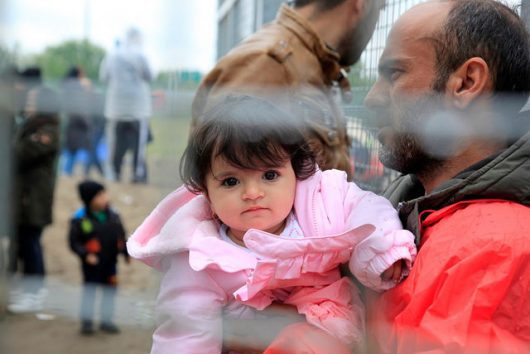
Hungary has taken on a strong anti-immigration stance that breaks with European policy. Some notably harsh measures include detaining asylum-seekers for months in shipping containers, scaling back resources for refugees granted asylum and allowing the military to restrict the civil liberties of refugees and use “coercive weapons.” Refugees that are detained and hunted down by the military are often subjected to brutality.
The Roma are Hungary’s largest ethnic minority and are widely discriminated against. Though the government has attempted to aid the Romani people, Roma remain disproportionately impoverished and are often segregated from Hungarian schools and placed in schools for the mentally disabled.
Discrimination is becoming an even greater concern with the rise of Jobbik, Hungary’s growing right-nationalist party. Jobbik made large gains in the 2011 and 2014 elections and has a history of anti-Roma, anti-semitic and ethnic nationalist rhetoric. Some of this rhetoric has been disturbingly adopted by Orban to advance his anti-migrant agenda. Though party leaders of Jobbik claim to have toned down their rhetoric, the party’s advancement could lead to a further decline in human rights in Hungary.
Though Hungary is continuing to follow an anti-democratic trend, the situation is not hopeless. For a long time, the E.U. has turned a blind eye to Hungary’s illiberal reforms. Increased pressure from the multistate organization could motivate Hungarian leaders to follow the E.U.’s standards for human rights. In addition, NGOs are essential to protecting human rights in Hungary. Though they have become the target of government scrutiny, they retain partial freedoms to work within Hungary and encourage positive reform.
– Carson Hughes
Photo: Flickr

Autism in Developing Countries
This disability has become increasingly common in children in the United States. CDC estimated that as of March 2013, about one in every 50 school children is diagnosed with autism.
However, outside of Western civilization, and into more under-developed countries, the number of people diagnosed with ASD is significantly lower.
Why is this? It is not necessarily because children in non-Western countries do not have ASD, but because the children are not being diagnosed with it. There are multiple reasons for this. Some of these include a lack of professional doctors, cultural skepticism and mere unawareness of the problem.
Lack of physicians is one of the main reasons why people are not being diagnosed with autism in developing countries. Harvard’s Global Health Review gives the example that “in South East Asia, there is one psychiatrist per 100,000 people, making mental health services or diagnoses extremely difficult to access.”
To combat this absence of doctors, the organization Autism Speaks funded a research study to help people in developing countries become aware of autism and teach them how to screen for this disorder within their community. The simple screening process involves a tool called Rapid Neurodevelopmental Assessment (RNDA). The screening device was tested in Dhaka, Bangladesh and showed tremendous potential. Autism Speaks points out that “while global infant mortality has decreased in recent decades, malnutrition and extreme poverty continues. This puts hundreds of millions of young children at risk for developmental disabilities.”
Another potential reason why autism in developing countries is so low is because of the culture’s views on developmental disabilities. Continuing with its example of South East Asia, the Global Health Review said, “In South Korea, the stigma of autism is so intense that many families of children with developmental delays will intentionally avoid diagnosis of ASD.”
Habits such as not looking someone in the eye or being brief in conversations could be signs of autism in children, but in some cultures it is seen as a cultural norm rather than a disability.
Whether parents are concerned they will be judged for having in autistic child or unwilling to admit that they do have one, ASD is not a matter that should be taken lightly. Although not a fatal disease, autism spectrum disorder is a serious condition that could affect even the simplest daily tasks.
With more resources and in-depth education, autism in developing countries can be addressed and families can become informed about how to treat ASD.
– Sydney Missigman
Photo: Flickr
Most Common Diseases in the Palestinian Territories
The most common diseases in the Palestinian territories are non-communicable; cancer and cardiovascular disease are especially common. Although there is not a lot of data on the matter, there is still enough to explain that these diseases are a serious problem. According to research, lung cancer is the cancer that is most responsible for male deaths in the Palestinian territories. Statistics also state that heart disease causes 26 percent of deaths there. While cardiovascular disease and cancer may be caused by people’s family histories and lifestyles, they remain an issue partially caused by the Israeli-Palestinian conflict.
The division between the West Bank and Gaza makes access to healthcare more difficult to acquire for the people of the Palestinian territories. To cross the border, individuals need approved permits that allow them to do so. To make the process even more difficult, Israeli security services sometimes ask the patients to attend an interview in order to be granted access. The slow procedure of obtaining a permit results in health conditions worsening as the people wait for the opportunity to receive treatment.
Although the Israeli-Palestinian conflict provides the people with some obstacles, there have also been some advancements made. In 2015, Israeli authorities declared that men over 55 years and women over 50 years in age do not need permits. This caused the permit approval rate for West Bank patients to rise about five percent from the previous year. With improvements like this being made, healthcare access will hopefully continue to become more available and common diseases in the Palestinian territories – like cardiovascular disease and cancer – will become less common.
– Raven Rentas
Photo: Google
Human Rights in Malawi
Unfortunately, toward the end of the presidency of Bingu wa Mutharika, who died while in office in 2012, the situation worsened. As stated in the U.S. State Department’s 2010 Country Report on Human Rights Practices, numerous cases of the state’s violation of human rights were reported, such as: the security forces killing innocent individuals; torture, sexual abuse and other inhumane treatment of prisoners; and arbitrary arrest or detention.
Fortunately, inauguration of the new president Joyce Banda in April 2012 brought about positive changes to the country. While her attempt to overturn the law banning homosexuality turned out unsuccessful in the end, she did manage to repeal a section of Malawi’s penal code which banned all publication not to be deemed in the public interest. Moreover, she announced that she would arrest the infamous Sudanese President Omar Al-Bashir – who was convicted of genocide – if he entered the Malawian territory. This helped her gain favor among international donors and improved Malawi’s international relations.
Although human rights in Malawi have improved, problems do still exist. For instance, since November 2014, people with albinism have faced an increased risk of being abducted or killed in murders associated with witchcraft. On March 9, 2017, four men attempted to drill through the house of Gilbert Daire, former president of the Association of the People with Albinism, while he was asleep. Highlighting the lack of protection and safety for people with albinism in Malawi, Amnesty International’s Regional Director for Southern Africa, Deprose Muchena, strongly suggested that the “Malawian authorities must end this cycle of impunity of perpetrators of these crimes.”
– Minh Joo Yi
Photo: Flickr
Andorra: Europe’s Tax Haven and Tourism Getaway
As these facts and figures in Andorra show, it is a peaceful, small country as a retirement haven, or for those looking for an out-of-the-way skiing vacation.
– Gloria Diaz
Photo: Pixabay
Nine Important Facts About Human Rights in Hungary
Hungary continues to hold free elections. However, constitutional changes have unfairly benefited Fidesz. These changes include reducing the number of legislators, gerrymandering districts and allowing Hungarian-speaking residents in neighboring territories to vote. These “Hungarians abroad” overwhelmingly voted in favor of Fidesz.
The Hungarian Constitution protects freedom of speech and the press, but recent changes have undermined the freedom of the press. Media outlets are required to register with the government for licenses that can be revoked if the outlet violates content policy through actions like inciting hatred or violating human dignity. Recently, a close ally of Prime Minister Orban bought out and disbanded Hungary’s leading political newspaper after it reported on senior government officials mishandling funds.
Hungary’s constitution protects religious freedom, but the government has attempted to limit this freedom. In 2012, the Hungarian National Assembly passed the Church Act, forcing religious institutions to apply to the National Assembly for tax benefits guaranteed to accepted churches. This was ruled unconstitutional by the Constitutional Court, but the National Assembly tried and failed to pass a revised version in 2015.
This April, the Hungarian government furthered Orban’s crusade against liberalism by targeting academic freedom. The National Assembly passed a law intended to shut down Central European University, which was founded by American billionaire George Soros. Human rights organizations believe this was done to stifle criticism of Fidesz-backed reforms.
The Hungarian government has become increasingly hostile to human rights organizations and has put stringent registration requirements on nongovernmental organizations (NGOs). Several NGOs that were critical of the government faced unlawful police raids that went unpunished. Many are worried that these actions exemplify a growing disregard for human rights in Hungary.
In 2016, Hungary passed a constitutional amendment that allows the government to declare a state of emergency in the event of a terror threat. The grounds for a terror threat are broad and poorly defined. In a state of emergency, the government has the power to restrict movement, freeze assets, ban public gatherings and fight terrorism without oversight from the National Assembly or the judiciary. After 15 days, the National Assembly can vote to increase the powers of the state.
Hungary has taken on a strong anti-immigration stance that breaks with European policy. Some notably harsh measures include detaining asylum-seekers for months in shipping containers, scaling back resources for refugees granted asylum and allowing the military to restrict the civil liberties of refugees and use “coercive weapons.” Refugees that are detained and hunted down by the military are often subjected to brutality.
The Roma are Hungary’s largest ethnic minority and are widely discriminated against. Though the government has attempted to aid the Romani people, Roma remain disproportionately impoverished and are often segregated from Hungarian schools and placed in schools for the mentally disabled.
Discrimination is becoming an even greater concern with the rise of Jobbik, Hungary’s growing right-nationalist party. Jobbik made large gains in the 2011 and 2014 elections and has a history of anti-Roma, anti-semitic and ethnic nationalist rhetoric. Some of this rhetoric has been disturbingly adopted by Orban to advance his anti-migrant agenda. Though party leaders of Jobbik claim to have toned down their rhetoric, the party’s advancement could lead to a further decline in human rights in Hungary.
Though Hungary is continuing to follow an anti-democratic trend, the situation is not hopeless. For a long time, the E.U. has turned a blind eye to Hungary’s illiberal reforms. Increased pressure from the multistate organization could motivate Hungarian leaders to follow the E.U.’s standards for human rights. In addition, NGOs are essential to protecting human rights in Hungary. Though they have become the target of government scrutiny, they retain partial freedoms to work within Hungary and encourage positive reform.
– Carson Hughes
Photo: Flickr
Common Diseases in Belgium
1. Cancer. This comes as no surprise, as cancer is one of the leading causes of death in most industrialized nations. Breast and prostate cancers are by far the most common types. In 2012, the World Health Organization reported over 14 million cases of breast cancer and over 13 million cases of prostate cancer in Belgium. Second in prevalence to these two types is bowel cancer, which affected roughly 5.5 million people in 2012. Lung cancer has also been a major issue, especially in 2009, when Belgium saw a rise in mortality rates for women with lung cancer. This rate has gone down since 2011, when smoking was banned in all public places in Belgium, but the disease is still incredibly prevalent. In 2012, Belgium reported an estimated 5 million cases of lung cancer. Perhaps because of this Belgium is a world leader in cancer research. In 2015, 513 different clinical trials in cancer treatment were underway, with 15 new cancer drugs approved for reimbursement the previous year. Since 1980 – thanks to these trials – the average life expectancy for cancer patients has gone up three years, and the many researchers in Belgium hope to continue this trend.
2. Heart disease. Another one of the most common diseases in Belgium, it was ranked as the number one cause of both death overall and premature death between 2005 and 2015. Thankfully, that mortality rate has dropped roughly 5.3 percent in that time. It is still, however, the leader in mortality by far; The Institute for Health Metrics and Evaluation (IHME) estimated about 105 million years of total lives lost in 2015 due to heart disease. In Europe as a whole, however, the number of lives lost due to heart disease has decreased in recent years thanks to the introduction of increased screening, new surgical procedures, new drugs and lifestyle changes – such as quitting smoking – to the population.
3. Mental illness. This is a tricky category to define, and yet it clearly needs to be addressed. In 2015, the IHME estimated that nearly 67 million years were lost due to self harm, which is significantly higher than the European average. Suicide remains one of the top causes of premature death in the country. In response to this, the World Health Organization devised a Mental Health Action Plan for 2013-2020, which states that mental health services in Belgium will switch from institutional psychiatric care to an inclusive care system with a focus on community. This is part of a sweeping mental healthcare reform which has already shown to be effective in improving health and social outcomes for patients.
Many of the most common diseases in Belgium are complex, lifestyle-based illnesses with no one simple solution. However, through a combination of research, lifestyle changes and health reform, Belgium hopes to continue to improve the quality and length of life for its residents.
– Audrey Palzkill
Photo: Flickr
Five Organizations Helping Women in Developing Countries
Founded by the international human rights icon Malala Yousafzai, the Malala Fund is one of the most famous organizations helping girls and women get an education in developing countries. The Malala Fund works directly with girls in local communities to advocate for their education. Donations to the fund are used to invest in schools and supplies, as well as place activists and educators in the girls’ communities. The organization primarily helps girls in Pakistan, Afghanistan, India, Nigeria and countries housing Syrian refugees such as Lebanon and Jordan.
Taboos and traditions surrounding menstruation pose a significant health threat to women and girls in many developing countries. Just last month, a Nepali teenager died while observing her culture’s tradition of separating menstruating women from their families in “menstrual huts.” PERIOD is a nonprofit working to break the taboo around periods through advocacy and education. It also distributes period products to women in need.
Female genital cutting is a devastating practice that many women undergo in developing regions such as West Africa. The Orchid Project is one of many organizations working to end this human rights violation. This organization raises awareness of this damaging tradition and advocates for more resources for its victims. They also partner with grassroots organizations to educate local communities about the misconceptions and dangers surrounding FGC in order to end this dangerous practice.
Prajwala, which means “eternal flame,” is an Indian organization founded by social activist Dr. Sunitha Krishnan. The nonprofit rescues victims of sex trafficking. Prajwala works to keep these women out of prostitution by providing them with education, mental health care and job training.
Conflict disproportionately occurs in developing regions, and women are often the overlooked victims of this violence. Women for Women is a nonprofit that provides women in conflict zones with an empowerment program. The program equips women with business skills, job skills and networking opportunities. Women for Women also provides women in conflict zones with resources such as microfinancing and access to local healthcare sources.
Women in developing countries have their own special needs beyond challenges such as hunger and health problems. These are just a few of the many organizations helping women in the developing world.
– Bret Serbin
Photo: Flickr
Using Technology to Collect Poverty Data
In the past, enumerators, or data collectors, would travel house to house and conduct paper surveys in order to acquire information on those living in poverty. These answers would then be manually transferred onto a computer.
Now, enumerators are using tablets that send survey answers to a centralized system. The tablets also have a GPS system that tracks the enumerators’ processes and makes sure they are in the right area. The tablets also allows for enumerators to record video interviews. This provides a visual context for the living conditions in certain impoverished areas.
Mobile phones are another great resource for data collecting. The World Bank’s Listening to Africa initiative uses cellphones to send out surveys as well as to monitor crises. The initiative plans to pass out phones and solar chargers to all respondents who don’t already own them. Mobile surveys provide a cheap way to gather frequent data from a large amount of people. Crises such as famines and natural disasters can be reported and monitored in real time as well by calling those in affected areas.
New information gathering technology is also being developed to make data collecting easier. Satellite imagery is being used to measure how many people live in poverty in certain areas and assess living conditions of these populations. Likewise, Smart Survey Boxes are being installed in households to automatically monitor power outages and energy quality in areas like Tajikistan.
With extensive data that’s up to date, the causes of and solutions to poverty can be better understood. Using technology to collect poverty data may be the solution to providing better aid to the world’s poor.
– Hannah Kaiser
Photo: Flickr
Eliminating Hepatitis C in Ukraine
Seventy to 80 percent of those with an acute Hepatitis C infection do not show symptoms, which can prove dangerous when trying to prevent the spread of Hepatitis C. The annual mortality rate from Hepatitis C in Ukraine has increased by 141.7 percent since 1990 (an average 6.2 percent per year).
Hepatitis C treatment can be prohibitively expensive for the world’s poor. In 2015, the lowest cost for the 12-week treatment course of Sofosbuvir, an antiviral used to treat Hepatitis C, was $900, a price not suitable for low-income Ukrainians suffering from the infection.
In 2013, the Ukrainian government approved the first National Targeted Program of HCV Prevention, Diagnosis and Treatment. The state budget only funds the treatment component of the program, and this funding accounts for a mere 20 percent of the existing need.
U.S. organizations are doing their part as well. The United States Agency for International Development (USAID) launched the EQUIP project to fight HIV and AIDS, but EQUIP and USAID recently partnered with the Ukrainian government to fight Hepatitis C in Ukraine. EQUIP provides a simplified system with two stages of testing and treatment for 4,000 patients with Hepatitis C. In the first stage, 800 people with serious cases of double and triple pathology – a combination of HIV, Hepatitis C and Tuberculosis — will be treated; in the second, 3,200 individuals will receive treatment. Patients will be given a fixed dose of Ledipasvir and Sofosbuvir.
EQUIP is aimed at developing new treatment protocols and calculating its cost for Ukrainian patients. As well as giving doctors the experience they need with the medication to effectively treat patients and consult with the Ukrainian Government to create programs to increase access to those who need treatment. EQUIP is determined to eliminate viral Hepatitis by 2030.
With a combination of national and international efforts, we can end the spread of Hepatitis C in Ukraine.
– Tiffany Santos
Photo: Google
Maternal and Child Health in Mali
Maternal and child health in Mali remains among the poorest in sub-Saharan Africa for many reasons. Limited access and adoption of family planning, early childbearing (the mean age of first birth is 18.8 years), and short birth intervals are among the major reasons. Other important factors are female genital cutting, infrequent use of skilled birth attendants and lack of emergency obstetrical and neonatal care, which is often uncomfortable for women when used.
Despite these statistics, many important changes are taking place to improve maternal and child health in Mali. Lowering fertility is essential for poverty reduction, improving food security and developing human capital and the economy. Having fewer children creates less housework and healthier children, and mothers are able to contribute and benefit economically.
Women are often revered in Malian culture; however, legal status, health and economic opportunities favor males. Only two out of 10 women make decisions regarding their own health. Domestic violence is largely considered acceptable by society. Mamadou Ben Diabete is a Malian griot who is trying to change some of these problems.
Griots are Malian storytellers, poets and musicians, carrying on a tradition dating back to the 13th century. They hold large influence in many parts of Malian society. Diabete felt that influencing improvements to women’s health was part of his calling. He attended training workshops on RAPIDWoman, an interactive software modeling system that teaches users how investing in reproductive health, girls’ education and maternal health programs can increase quality of life. Diabete and a colleague then presented the model to nearly 70 people from the government of Mali, NGOs, women’s associations and local media and held followup discussions. These organizations remain dedicated to prioritizing the health and happiness of women throughout Mali.
USAID’s Maternal and Child Survival Program (MCSP) includes Mali in one of their 25 countries of focus in the improvement of maternal and child health. MCSP recognizes critical health system constraints such as geographical access, availability of human resources and financial affordability. The organization then finds interventions that are most important, such as handwashing with soap and having a skilled attendant at delivery, an intervention that saw the greatest gains.
Other specific measures that can be taken to improve maternal and child health in Mali are outlined by UNICEF and include preventive malaria treatment for pregnant women, strengthening medical evacuation programs, promoting prenatal HIV testing and providing pediatric treatment. With the help of nonprofits and international aid programs, we can improve maternal and child health in Mali.
– Phoebe Cohen
Photo: Flickr