Education in Cambodia: Addresses Inequalities
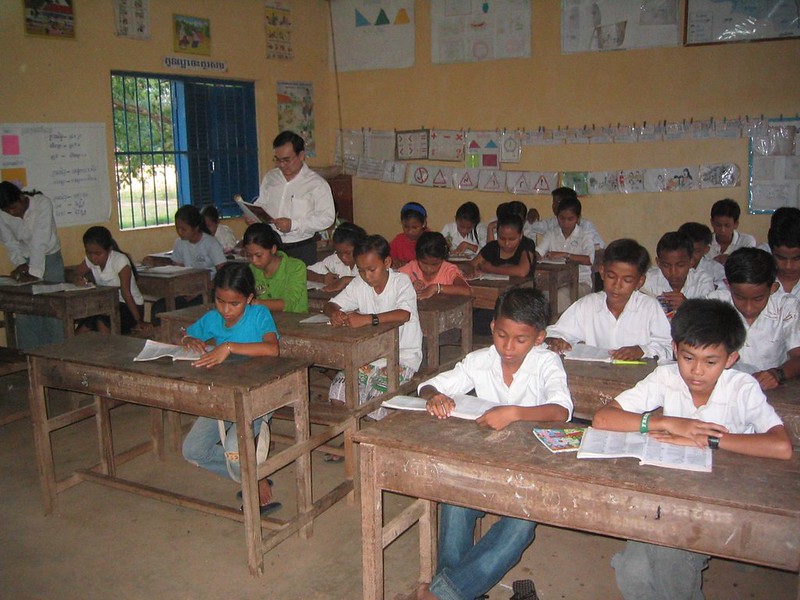 Cambodia’s education system has undergone significant changes over the years. Education in Cambodia initially centered around Buddhist teachings, taught to boys by local monks. In the mid-1860s, a second system emerged, introducing subjects like math, science and history, taught by trained teachers. However, during the mid to late 1970s, the education system collapsed. While Cambodia’s education system has since recovered and continues to improve, challenges persist. Vulnerable populations face significant barriers to accessing and attending school, perpetuating cycles of poverty. Deep-rooted cultural beliefs and attitudes regarding education for marginalized groups worsen these challenges.
Types of Inequality in Education
- Gender Inequality. Chbab Srey and Chbab Proh, ancient Cambodian texts, outline gender roles and emphasize subservience for women. Chbab Proh positions men as breadwinners and decision-makers, while Chbab Srey dictates that women maintain the household, speak softly and obey their husbands. These traditional ideologies remain deeply ingrained in Cambodian culture. As a result, many families remove girls from school to prioritize household duties. This limited access to education significantly impacts their opportunities, perpetuating poverty for women and their families.
- Child Inequality. Children in Cambodia face numerous forms of exploitation, preventing them from receiving education. Forced labor, human trafficking and other abuses disrupt their ability to attend school. According to the Bureau of International Labor Affairs (ILAB), Cambodia leads in child labor violations, with many children used as debt payments or forced into labor. High rates of institutionalization further exacerbate these issues, as children placed in residential care become more vulnerable to abuse and neglect. The lack of education for children under these conditions deepens inequality.
- Inequality for Persons with Disabilities. A joint assessment by the Cambodia Development Resource Institute and UNESCO found that 24% of Cambodia’s population lives with a disability. UNICEF reports that children with disabilities face three times the risk of missing school compared to those without disabilities. Cultural stigma against disabilities isolates individuals and prevents their participation in social and educational activities. This exclusion increases the likelihood of poverty among people with disabilities, further entrenching inequality.
Educational Programs Tackling Inequality
Cambodia has initiated several programs to address inequality through education:
- Inclusive Education Action Plan (2024–2028). This plan, a partnership between UNICEF and Cambodia’s Ministry of Education, Youth and Sport (MoEYS), aims to improve access to education for students with disabilities. It identifies necessary technologies and services while addressing societal stigma.
- Education Strategic Plan (ESP) 2024–2028. A collaboration between the Royal Government of Cambodia, the NGO Education Partnership and MoEYS, this initiative focuses on ensuring high-quality, inclusive education for all students.
- National Social Protection Policy Framework (2016–2025). Jointly developed by UNICEF and the Ministry of Social Affairs, this framework addresses violence against children and promotes child well-being. It also seeks to reduce reliance on residential care facilities and improve child protection services.
- USAID Collaboration. USAID has worked with MoEYS to improve child protection services and prevent family separation. By promoting alternative care and strengthening child welfare systems, this collaboration ensures that children remain with their families whenever possible.
- U.N.-CEDAW Initiative. The United Nations Committee on the Elimination of Discrimination Against Women (CEDAW) urged Cambodia to remove Chbab Srey from schools. Although the text remains part of literature and social studies courses, this reform reduces the reinforcement of outdated gender norms.
Moving Forward
Cambodia’s efforts to address inequality through education reflect a commitment to improving the lives of its citizens. With women representing more than 51% of the population, adolescents and children making up 35% and 20% of the population living on just over $2 a day, addressing these disparities remains critical. Programs like the Inclusive Education Action Plan and the Education Strategic Plan demonstrate Cambodia’s determination to tackle inequality. Collaborative efforts between the Cambodian government, NGOs and international organizations continue to drive progress. By investing in education and addressing systemic inequalities, Cambodia builds a stronger foundation for future generations.
– Kelly Chalupnik
Kelly is based in Kirkland, WA, USA and focuses on Global Health and Politics for The Borgen Project.
Photo: Flickr
