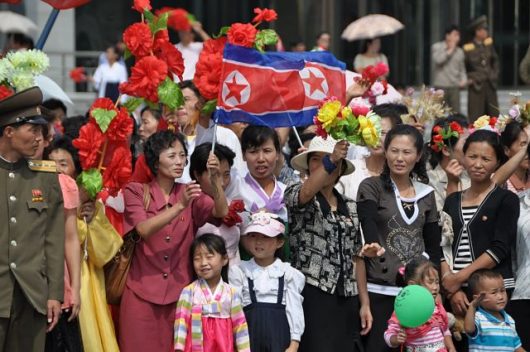
In the 2018 North Korea-United States Summit, where the U.S. President Trump met with the Democratic People’s Republic of Korea (DPRK) leader, Kim Jong-un, the focus was mainly on human rights in North Korea. North Korea has long been condemned by the U.N. as a perpetrator of human rights violations.
Facts About Human Rights in North Korea
1. 2.6 million modern-day slaves exist in North Korea.
Today, one in 10 North Korean citizens are held in political prison camps known as “kwanliso”. In the camps, prisoners are starved and beaten up while being forced into hard labor by the government officials. Additionally, many modern-day slaves are victims of human trafficking, child exploitation and debt bondage.
2. Political freedom is virtually non-existent.
Political opposition is not allowed under the totalitarian system in North Korea. The state controls all internet access, television and news organizations, allowing only pro-government content. Freedom of assembly and petition are also prohibited.
3. Class status is determined by loyalty.
Individuals are classified under “songbun”, which divides people into groups of “loyal”, “wavering” or “hostile” classes depending on how devoted they are to the government. This classification often determines people’s employment, housing and access to education. It can also threaten their lives.
4. Arbitrary arrests and torture in custody often occur.
The governmental security forces often subject accused political criminals to arbitrary arrest, long-term detention and other tortures including starvation during interrogation. Those accused of major political crimes are often sent to prison camps without trial; emblematic of the lack of human rights in North Korea. In most cases, families are unaware of what happens to their family member. In fact, earlier relatives of political criminals could also be sent to the camps, though this is less common now.
5. Forced abortion occurs as a form of ethnic cleansing.
The majority of refugees going from North Korea to China are women. They often become victims of rape. Over 5,000 North Koreans are repatriated to North Korea by China every year and once they return to North Korea, pregnant women suspected of carrying “foreign sperm” are forced to have abortions in prison. If not, the suspected half-Chinese children are killed.
6. Religious communities, especially Christians, are persecuted.
According to Christian watchdog organizations, all traces of the formally large Christian community in the pre-regime North Korea have been wiped out. Suspected Christians are tortured and killed as the state suppresses any religion that poses a threat to the government.
7. North Korea abducts foreign nationals.
Japan continues to demand the return of 17 citizens kidnapped by North Korea in the 1970s and 1980s. North Korea has admitted to these kidnappings and further accused of abducting over 3,800 South Koreans. Allegedly, these individuals have been kidnapped so that the North Korean government can learn more about the other cultures as part of their espionage efforts.
8. Despite signing several human rights treaties, these abuses continue.
Following increased concern over human rights in North Korea, North Korea has signed treaties that protect women, children and the disabled’s political and economic rights. Despite this commitment to cooperate with the U.N. and other international bodies, the government continues to refuse to work with the South Korean and U.N. human rights organizations.
9. China recently began enforcing more sanctions on North Korea.
China holds perhaps the greatest leverage over North Korea as one of its major trading partners. Historically, China has not demanded changes to the human rights in North Korea because of China’s own issues with human rights violations. But due to nuclear power concerns, in May 2017, China’s sanctions on North Korea‘s government has increased.
10. Despite little improvement, awareness about these crimes continues to grow.
Though the situation still looks bleak, the information known about North Korea has greatly increased since the 1990s when refugee stories first emerged. Since North Korea has been forced to cooperate somewhat with other global powers, there are efforts to reach people in North Korea via social media so they can learn more about their situation and rights.
Human rights in North Korea might not be improving, but global attention to the situation creates awareness of the threat to life that exists in the country. Going forward, international pressure can eventually ensure that basic human rights are given to the people of North Korea.
– Grace Gay
Photo: Google

Monaco Tackling HIV Prevention and Awareness
The number of newly infected individuals with HIV has halved since the mid-1990s. This is in large part due to the significant increase in care and treatment for HIV. The UNAIDS Program Coordinating Board called on UNAIDS for its support for new initiatives in country and new targets for combatting HIV.
These efforts branched out globally to arrive at the 90-90-90 targets. By 2020, this goal aims to have: 90 percent of all people living with HIV be aware of their HIV status; 90 percent of all people diagnosed with HIV receiving sustained antiretroviral therapy; and 90 percent of all people receiving therapy to have viral suppression.
To date, over 250 countries have joined the 90-90-90 plan in an attempt to properly care for those individuals with HIV, as well as improve treatments already in place. The movement is a part of the Paris Declaration which is implemented to outline a practical, action-oriented way of improving the quality of aid.
As of July 2018, Monaco became a part of the initiative to enhance the lives of those with HIV and treatments by 2020. By becoming part of the fast-track initiative, Monaco also became the first city-state to commit to the assurance of rapid decrease in HIV infections.
Monaco tackling HIV as a priority is not necessarily new news. Monaco has actually advocated for HIV treatment previously in its endeavors. Monaco’s Princess Stephanie created the Fight AIDS Monaco nonprofit organization which works to improve HIV treatment, promote prevention, and reinforce the Test in The City campaign. However, by focusing on the 90-90-90 plan, Monaco tackling HIV is vastly improving on fast-tracking treatment and prevention.
Monaco tackling HIV by joining the 90-90-90 program is also monumental because it is a developed, progressive city. Cities play a crucial role in innovation and research and can therefore better treat those infected with HIV or those who are at risk of infection. Such cities also have the capacity to branch out their methods to the less developed areas that need the treatments but do not have the resources available to access them.
The ultimate goal of the 90-90-90 plan is to end the AIDS epidemic by 2030. Part of Monaco’s signing of the Paris Declaration was to create a “Monaco without AIDS”. The eradication of AIDS will ultimately spark broader global health and development endeavors that will improve the quality of life for all countries including the underdeveloped. Its work will also inspire global solidarity and partnerships which will be beneficial to many countries when it comes to aid.
In the fourth quarter of Monaco’s campaigns for better HIV prevention and treatment is a communication-focused campaign based around the U = U; undetectable = untransmittable. Communication is a very important part of fast-tracking and spreading proper information about HIV, as well as ensuring proper prevention and treatment.
Monaco was already progressive in its efforts for better HIV care but the 90-90-90 movement has put those efforts on the fast track. With the help of more than 250 countries that signed the Paris Declaration and agreed to the 90-90-90 plan, the possibility of AIDS eradication is near.
– Samantha Harward
Photo: Flickr
International Hurricane Relief and How You Can Help
Hurricane season: a three-month span between the months of June and November when people from Panama to Maine brace for destructive and often deadly wind and rain. These large storms, often the size of small countries, can bring winds from 74 mph at their weakest to well over 100 mph at their strongest, dumping large quantities of rain as they move across land and sea. The warm waters of the mid-Atlantic and Caribbean help feed these spinning storms, which can lumber along at 30 to 70 mph. Due to their immense size, the amount of precipitation often causes flooding in areas along a hurricane’s path. Combine this with high winds, and areas often hit by powerful hurricanes regularly need international hurricane relief.
Hurricanes begin their life in the mid-Atlantic, either off the coast of Western Africa or over the middle of the ocean. From there they move in swinging arcs and paths that are difficult to predict for the coast of Central America, the Caribbean islands, the Southern United States and the Eastern Seaboard. Since these storms hit so many countries and often leave devastation in their wake, state-sponsored organizations, NGOs and privately-funded charities offer international hurricane relief. Many of these charities also operate in the South Pacific and the Indian Ocean. Following are examples of organizations that provide international hurricane relief.
USAID
The United States Agency for International Development is the main arm of the United States effort to aid its neighbors and other nations around the world. USAID provides both long-term aid programs and disaster relief programs, and International Hurricane aid provided by USAID reflects this. Programs already operating in nations in the hurricane danger zone are provided with funding and technical assistance to help people when disaster strikes. Being prepared beforehand can help to save many lives. USAID also utilizes their Disaster Assistance Response Teams, or DART’s. During the 2017 hurricane season, DART teams provided aid and organization to 11 locations in six different countries. Through USAID, the United States provided nearly $23 million in aid. Everything from chainsaws to desalination units was flown in on 55 air missions which delivered 155 metric tons of supplies. Approximately 83,000 people were helped by this DART mission.
The International Red Cross and Red Crescent
While many hurricanes strike impoverished or underprepared countries, they also strike the United States. When they hit the United States, the large storms do not discriminate. Wealthy and poorer areas alike are usually struck, and it is only after the hurricane that money matters. This was evidenced during Hurricane Katrina.
The American Red Cross society not only prepares and responds to the worst in the United States; they also provide international hurricane relief to other countries hit by the severe storms. The American Red Cross emphasizes preparedness. A main focus of the organization is to pre-position supplies so they can be easily accessed during and after a storm.
On the American Red Cross’ website, useful advice for preparing for a natural disaster such as a hurricane can be found. This simple advice includes making sure that you have a store of freshwater, learning your evacuation routes if evacuation is an option and keeping an emergency kit stocked. Advice on what a person or a family should do before, during and after a hurricane can also be found.
Habitat For Humanity
Habitat for Humanity works in the United States and around the world, focusing on three main activities: neighborhood revitalization, homebuilding and disaster relief. International hurricane relief is part of their expansive disaster relief program. One division of this program is called Habitat Hammers, which works to rebuild houses after natural disasters. Habitat Hammers missions were launched from Texas to Puerto Rico after the 2017 hurricane season. Over the next five years, Habitat for Humanity will help families affected by the hurricanes which hit Puerto Rico in 2017. According to the government, more than 780,000 houses were destroyed or rendered uninhabitable by the hurricanes. Habitat Hammers will work to build and rebuild houses with families in Puerto Rico.
How You Can Help
Records indicate that hurricanes, typhoons and cyclones are becoming stronger and more frequent as ocean temperatures rise. Devastating storms year after year will increase, and agencies and charities around the world will need help. This can be provided through donations to organizations like the American Red Cross, or by traveling to disaster areas as a volunteer or aid worker. It is a large planet, but in the end, we are all neighbors.
– Nicholas Anthony DeMarco
Photo: Flickr
U.S. Benefits from Foreign Aid to Tonga
By looking at Tonga and the United States on a map, it would seem the two countries share very little in common. However, despite their apparent differences, the U.S. and Tonga share a deep relationship and align closely with a number of important global issues.
U.S. and Tonga Relations
Evidence of this relationship is shown through U.S. foreign aid to Tonga, aid which directly and indirectly comes back to benefit the U.S. This aid takes various forms, including grants from the U.S. Office of Foreign Disaster Assistance to help Tonga recover from natural disasters and grants from USAID to support climate proofing the vulnerable island country.
Tonga also receives Foreign Military Financing, providing the opportunity for Tongan officers to come to the U.S. for training and education, fostering a close relationship between U.S. and Tongan armed forces. The U.S. also provides $21 million per year to Pacific island countries, including Tonga, in accordance to the Tuna Fisheries Treaty, which gives U.S. fishing vessels access to Pacific island fisheries.
Economy
In purely economic terms, the benefit is relatively minimal. Although the U.S. is one of Tonga’s primary trade partners and runs a trade surplus with the island country, the surplus is only about $11 million annually. However, the trade surplus and role of the U.S. as a primary trading partner with Tonga does indicate that U.S. foreign aid to Tonga has played a part in establishing closer economic ties between the two countries.
Stability
The biggest way the U.S. benefits from foreign aid to Tonga is stability, both in the Pacific region and the world. When foreign aid is injected into a country to help it recover from a disaster, or to help it become more self-sufficient, everybody wins. In such a case, foreign aid has a stabilizing effect, preventing large migrations, saving lives and helping to prevent future disasters. The result, besides the obvious humanitarian benefit and lives saved, is the stabilization of a volatile region and the fostering of a close ongoing relationship looking towards the future between the recipient and the donor of aid. In this case, the U.S. benefits greatly from a stable and closely aligned Tonga for various reasons. On one hand, friendly relations with Tonga and the U.S. allows for mutually beneficial cooperation between both countries, such as access to Tongan tuna fisheries by U.S. fishing vessels.
Friendly Relations
Friendly relations between the U.S. and Tonga, as facilitated by U.S. foreign aid to Tonga, also benefit the U.S. by giving it a close ally in the Pacific, a highly important geopolitical area. The importance of Tonga as a U.S. ally was recently reinforced during the RIMPAC military exercises in the Pacific. Among 26 nations to join the exercise, Tonga was the only country from the Pacific islands to participate. The inclusion of Tonga in such an important exercise indicates its importance to the U.S., while also demonstrating how U.S. foreign aid has brought the two nations together.
The most important takeaway from analyzing the relationship between the U.S. and Tonga is that foreign aid from the U.S. has been mutually beneficial. Because of U.S. support, Tonga has been able to recover faster from natural disasters and is working with the U.S. in preventing such disasters in the future. In return, the U.S. has gained a valuable ally in the Pacific.
– Taylor Pace
Photo: Flickr
How to End Hunger
Between 2015 and 2016, world hunger rose by 20 million people, according to most recent estimates released in a 2016 U.N. report. This issue affects 815 million people worldwide. The single biggest cause of hunger is poverty, but there are also other heavily contributed factors. Since the turn of the century, food production has outpaced population growth, and the world now produces enough food to feed 1.5x the global population. The question of how to end hunger stretches beyond simply farming more effectively. To end hunger, we have to address the issue as more than a supply-demand deficiency.
Poverty
Only 11 percent of world hunger comes from developed countries; by far, the regions most afflicted by hunger are middle- and lower-income. In 2016, 22.7 percent of Sub-Saharan Africans were reported as malnourished. For those living on less than $2 per day, food can be too expensive to maintain a healthy diet. Economic hardship is further expounded by a lack of education and inadequate access to basic needs such as food, potable water and shelter. In this context, poverty and hunger have a cyclical nature. To reduce poverty, you have to reduce hunger and to reduce hunger, you have to reduce poverty. Take a look here to see how the Borgen Project plans to end poverty.
Armed Conflicts and Political Instability
Poverty is not the only factor in global hunger. Armed conflicts and political instability play a major role in keeping food out of hungry mouths. In recent years, conflicts have been rising, which may correspond to the increase of worldwide malnourished people.
War has also increasingly occurred in regions already vulnerable to disease and malnourishment, such as sub-Saharan and Eastern Africa. For example, South Sudan has been the site of a civil war since 2013. In 2017, the fighting played a major role in South Sudan undergoing the first declared famine in six years. Six million people (one in three residents of South Sudan) have been declared severely food insecure.
Violence takes away human capital, removing productive people from countries that need this capital the most. War destroys infrastructure, disrupts children’s schooling and creates more refugees. Peace is no easy task, but it’s a necessary one to achieve food security for all.
Steps Toward Ending World Hunger
The search for how to end hunger continues, despite the recent setbacks. Humanitarian organizations, such as Cooperative for Assistance and Relief Everywhere (CARE) have worked hard to fight hunger and alleviate the problems associated with it. CARE works in 94 countries and impacts 80 million people worldwide.
Other organizations have developed more atypical answers of how to end hunger. Freedom From Hunger, a charitable organization dedicated to ending world hunger through economic empowerment, has instituted savings and micro-financing programs to people at risk of food insecurity. The goal of these programs is to help people plan for the future and pull themselves out of poverty through education, financial services and monetary savings.
The road to ending hunger will be long and hard. There will be more setbacks, but at the end of the day, it’s up to the world to pave a better future.
– Peter Buffo
Photo: Flickr
Credit Access in Kyrgystan: Success and Potential Danger
Kyrgyzstan, though still scarred by a violent government coup d’etat in 2010, has seen robust economic growth thanks to international investment in its agribusiness and energy production industries. National GDP has grown at an average of 4 percent annually since 2015. However, the landlocked Central Asian country still struggles with a pronounced lack of domestic consumption expenditure. Improving low levels of credit access in Kyrgyzstan can boost consumer spending and confidence, which is paramount to ensuring a viable financial future for its citizens.
The Economic Importance of Credit
Credit is integral to the maintenance and growth of a market economy. Individuals and private organizations borrow money to buy goods and services in the market, which raises production and stimulates the consumer economy. Once credit debt and loans are paid back, the cycle continues again and again. It logically follows that if more consumers have access to a reliable credit system that provides loans, the economy expands and poverty is reduced.
This reasoning backs the approach that international multilateral organizations such as the World Bank and the U.N. employ in their efforts to combat poverty. In Kyrgyzstan, agriculture is by far the largest sector of the economy, employing about 40 percent of the working population and comprising nearly 20 percent of the country’s GDP. The Food and Agriculture Organization of the United Nations apprised the industry in 2006 and found that approximately 900,000 households contributed half of the agricultural output on 5 percent of Kyrgyzstan’s arable land. In addition, roughly 250,000 private farms employed half of the agricultural labor population while also contributing 40 percent of total output.
Different Types of Credit Access
Although households and private farms are the two largest employers and producers of agricultural output, they cannot rely on the same systems of finance due to their fundamentally different roles in the economy. The categories of credit access in Kyrgyzstan differentiate based on the debtor. As household farms are usually individually operated, micro-financing institutions (MFIs) and non-governmental organizations more aptly serve their personal needs; these small-scale family farms generally have neither the land nor the assets to pay off the sizeable loans. On the other hand, commercial banking suits the privatized farm industry, which can afford to invest in equipment and expansion while employing up to several hundred laborers.
Recognizing this dichotomy, the World Bank’s International Finance Corporation (IFC) invested in multiple projects across different financial sectors. Its Investment Climate Advisory Services Project, initiated in 2009, works to remove barriers to entry in the market that would otherwise dissuade private businesses from expanding. From 2009 to 2012, the IFC also invested $26 million into Kompanion Financial Group, FINCA Kyrgyzstan and UniCredit Kyrgyzstan, all of which provide microfinance services to individuals and small businesses.
Potential Dangers of Expanding Credit
With the relaxation of government regulation and growth in spending, however, comes the danger of a potentially cataclysmic credit bubble. Eurasianet reported in 2012 that only 100 of the near 450 MFI’s in Kyrgyzstan actively engaged with clients; the barriers to starting an MFI are virtually nonexistent. Interested investors need slightly more than $2,000 USD to found their own MFI, and most have no education or background in finance. This lack of barriers, coupled with borrowers that often do not understand the loaning process, can result in overspending of nonexistent money and consequent high debt, which harms those who borrowed money to escape poverty in the first place.
The failure to properly rear a financial market and the motive of profit before anything else promoted in local populations spells disaster for both loaners and borrowers. Financial education of the local population and proper regulatory oversight is crucial for efforts to expand credit access in Kyrgyzstan to succeed. The implementation of finance in an industry as important to Kyrgyzstan as agribusiness bears the grave possibility of worsening the predicaments of those it was designed to help. However, if managed correctly, it also holds a much greater potential to lift Kyrgyzstan’s citizens out of poverty.
– Alex Qi
Photo: Flickr
Girls’ Education in Burundi
At then end of June this year, the Ministry of Education in Burundi decided to ban pregnant girls and teenage fathers from attending school. Girls have always been treated unfairly in comparison to boys when it comes to education, and this new ban is just another example. Although the ban feigns equality by giving teenage fathers the boot: the solution is faulty.
Teenage Pregnancy in Burundi
To begin with, all children deserve the right to education and should not be denied it on the premise of pregnancy. Secondly, there is no access to a reliable method to establish a teenage boy’s paternity. The ban is inherently biased against girls because they cannot hide their pregnancy. Since teenage pregnancy is an issue, girls’ education in Burundi will be affected by this restriction because fewer girls will be able to attend school.
The impact of this new law has the potential to be irreparably damaging, as 11 percent of girls between the ages of 15 and 19 in Burundi are sexually active. Additionally, 40 percent of victims of sexual or physical violence in Burundi are teenage girls. There is simply no way for the Ministry of Education to police sexual violence in order for it to entirely stop affecting girls of school-age. The ban does nothing but punish girls for a situation they have no control over.
Other countries such as Morocco and Sudan have also taken measures in an attempt to prevent premarital sex. The laws they have in place allow young girls to face criminal charges for adultery and extramarital sex. They can also be expelled from school. Officials have stated the laws are necessary to punish girls for “moral failures.”
Poverty and Girls’ Education in Burundi
Burundi is one of the poorest nations in the world, with 65 percent of its population living below the poverty line. Living in a low-income region already is detrimental to girls’ education in Burundi. Girls’ families often cannot afford school supplies and the quality of education is not good either.
The last thing girls need are more roadblocks to getting their education. The new ban on attending school while pregnant perpetuates stigmas and isolate young girls socially. These girls are often already financially disadvantaged and ostracizing them from the school system puts them in a much less supported and dangerous place.
Some countries have policies that allow girls to re-enter school after being expelled. However, it is common for these systems to have many deterrents for girls to actually re-enter. Medical exams and an extended maternity leave are just a few examples.
After a young girl has been ostracized and humiliated, it is unlikely she will want to return to pick up from where she left off. The re-entry programs make the system seem a little more humane. But when thought about realistically, they probably will not provide girls with more opportunity.
Girls’ education in Burundi has a long way to go after the passing of this law. Surpassing financial obstacles in an impoverished country to get an education is hard enough on its own. Girls should not have to live in the fear of losing their shot at getting an education because of a situation that they are not responsible for.
– Amelia Merchant
Photo: Flickr
Cryptocurrency Provides Access to Energy
Access to energy is necessary for daily life in most countries in the world. Electricity allows for economic development and innovation as well as securing basic human rights such as health and security. However, there are more than 1 billion people living without access to energy.
Solar Power and Cryptocurrency
One negative effect of not having secure and affordable access to energy is the expenditure that goes into coal. This leads to impoverished people being forced to buy expensive coal which further leads to environmental and health problems.
As a response to the scarcity of energy, the International Energy Agency confirmed that decentralized energy systems such as solar power would be the lowest cost option for electrification across sub-Saharan Africa due to its geographical location as well as the accessibility and practicality of the solar panels. With solar power, impoverished communities could use the electricity from solar panels to improve education, healthcare and socioeconomic developments.
Crytoeconomy Fueling Solar Energy Initiatives
This is where The Sun Exchange, a solar micro-leasing marketplace, and Powerhive, a rural mini-grid solutions provider, are partnering up to use crypto-economy to create a fully decentralized, blockchain-based global economic system that could distribute the full potential of solar power to impoverished people.
Sun Exchange states its purpose as buying solar cells and leasing them to schools and businesses in areas with a lot of sunlight. Fortunately, this lines up perfectly with the sub-Saharan region of Africa. Powerhive states that its purpose is to develop off-grid utility solutions to create a future where everyone has access to energy.
“Together, we are working towards a world where no one is forced to cook with unsafe kerosene or wood-burning stoves, no child has to worry about how they will study after dark, and lack of energy access ceases to propel cycles of poverty,” said Abraham Cambridge, Founder and CEO of Sun Exchange. “Our partnership with Powerhive underscores the SUNEX token sale opportunity to support a crypto project geared directly towards reducing global inequality and climate impact.”
For example, the new joint initiative plans to fund up to 150 new Powerhive rural mini-grid projects which will provide access to energy for 175,000 people in Kenya.
“At the heart of our projects are the communities we serve,” said Christopher Hornor, Founder and CEO of Powerhive. “By providing the power platform first and then layering in productive use programmes, we create a virtuous cycle of economic and personal empowerment that provides steady profits for both our customers and our investors. Our partnership with Sun Exchange will now give almost anyone the opportunity to invest in innovative low-carbon development projects in Africa and beyond.”
This partnership allows for the international community members to help improve lives across the world and make a small profit. This is possible because through Sun Exchange, individuals across the globe are able to purchase and own remotely-located solar projects set up by Powerhive.
The buyer would now earn a return for the power generated by his or her solar asset while the energy would undeniably improve the life of whoever received that energy in rural Africa. Also, because the payments are done through cryptocurrency such as Bitcoin, there are no complications that result from international transactions.
Hornor sums up this partnership as a positive step towards the future for renewable energy and universal access to energy. “The crypto-economy is the best tool we have to fight poverty, hands down. Our customers are hard-working people who have been excluded from the global economy. Now, we are able to bring them onto a platform of modern, clean power and to offer support for new businesses and opportunities for personal and intellectual enrichment.”
– Jenny S. Park
Photo: Flickr
Top 10 Facts About Human Rights in North Korea
In the 2018 North Korea-United States Summit, where the U.S. President Trump met with the Democratic People’s Republic of Korea (DPRK) leader, Kim Jong-un, the focus was mainly on human rights in North Korea. North Korea has long been condemned by the U.N. as a perpetrator of human rights violations.
Facts About Human Rights in North Korea
1. 2.6 million modern-day slaves exist in North Korea.
Today, one in 10 North Korean citizens are held in political prison camps known as “kwanliso”. In the camps, prisoners are starved and beaten up while being forced into hard labor by the government officials. Additionally, many modern-day slaves are victims of human trafficking, child exploitation and debt bondage.
2. Political freedom is virtually non-existent.
Political opposition is not allowed under the totalitarian system in North Korea. The state controls all internet access, television and news organizations, allowing only pro-government content. Freedom of assembly and petition are also prohibited.
3. Class status is determined by loyalty.
Individuals are classified under “songbun”, which divides people into groups of “loyal”, “wavering” or “hostile” classes depending on how devoted they are to the government. This classification often determines people’s employment, housing and access to education. It can also threaten their lives.
4. Arbitrary arrests and torture in custody often occur.
The governmental security forces often subject accused political criminals to arbitrary arrest, long-term detention and other tortures including starvation during interrogation. Those accused of major political crimes are often sent to prison camps without trial; emblematic of the lack of human rights in North Korea. In most cases, families are unaware of what happens to their family member. In fact, earlier relatives of political criminals could also be sent to the camps, though this is less common now.
5. Forced abortion occurs as a form of ethnic cleansing.
The majority of refugees going from North Korea to China are women. They often become victims of rape. Over 5,000 North Koreans are repatriated to North Korea by China every year and once they return to North Korea, pregnant women suspected of carrying “foreign sperm” are forced to have abortions in prison. If not, the suspected half-Chinese children are killed.
6. Religious communities, especially Christians, are persecuted.
According to Christian watchdog organizations, all traces of the formally large Christian community in the pre-regime North Korea have been wiped out. Suspected Christians are tortured and killed as the state suppresses any religion that poses a threat to the government.
7. North Korea abducts foreign nationals.
Japan continues to demand the return of 17 citizens kidnapped by North Korea in the 1970s and 1980s. North Korea has admitted to these kidnappings and further accused of abducting over 3,800 South Koreans. Allegedly, these individuals have been kidnapped so that the North Korean government can learn more about the other cultures as part of their espionage efforts.
8. Despite signing several human rights treaties, these abuses continue.
Following increased concern over human rights in North Korea, North Korea has signed treaties that protect women, children and the disabled’s political and economic rights. Despite this commitment to cooperate with the U.N. and other international bodies, the government continues to refuse to work with the South Korean and U.N. human rights organizations.
9. China recently began enforcing more sanctions on North Korea.
China holds perhaps the greatest leverage over North Korea as one of its major trading partners. Historically, China has not demanded changes to the human rights in North Korea because of China’s own issues with human rights violations. But due to nuclear power concerns, in May 2017, China’s sanctions on North Korea‘s government has increased.
10. Despite little improvement, awareness about these crimes continues to grow.
Though the situation still looks bleak, the information known about North Korea has greatly increased since the 1990s when refugee stories first emerged. Since North Korea has been forced to cooperate somewhat with other global powers, there are efforts to reach people in North Korea via social media so they can learn more about their situation and rights.
Human rights in North Korea might not be improving, but global attention to the situation creates awareness of the threat to life that exists in the country. Going forward, international pressure can eventually ensure that basic human rights are given to the people of North Korea.
– Grace Gay
Photo: Google
10 Facts About Human Rights in Saudi Arabia
The Thomas Reuters Foundation surveyed 550 experts on women’s issues, ranking the worst countries for women’s rights. Out of 195 countries, Saudi Arabia ranked as the fifth most dangerous country for women in terms of the risks they face in cultural and religious practices, and second worst in terms of economic access and workplace discrimination. To get a better understanding of the hardships of Saudi Arabia, this article examines 10 facts about human rights in Saudi Arabia.
Saudi Arabia is the largest country in the Middle East and the home of Islam. While Saudi Arabia is known for its plentiful oil reserves, the country is also one of the most dangerous places to live in or travel to. Saudi Arabia is slowly improving in regards to women’s and children’s rights, but still has a lot of progress to make.
Facts about Human Rights in Saudi Arabia
These facts about human rights in Saudi Arabia show the challenges and improvements regarding human rights in the country. Women are gaining more independence and children are being allowed to live their childhoods freely. While there is a lot of progress to make, Saudi Arabia is taking steps towards becoming a more equal and free country.
– Kristen Uedoi
Photo: Flickr
Girls’ Education in the Marshall Islands Warrants Optimism