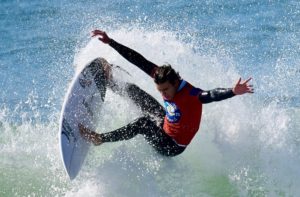
 Surfing is gaining momentum along the coastline of Ivory Coast, not just as a sport but as a tool to fight poverty, build life skills and promote gender equality. Local pioneers like Nadi Saddy and Souleyman Sidibe lead the charge with their organization, Surf Côte d’Ivoire, using surfing to open new doors for youth empowerment and community development.
Surfing in Ivory Coast as a Driver for SDG 1 and SDG 8
On the Ivorian coastline, surfing is a growing force against poverty and unemployment. Côte d’Ivoire’s poverty rate decreased from 46.3% in 2015 to 39.4% in 2020, but unemployment and regional disparities persist. Surfing, led by young pioneers like Nadi Saddy and Souleyman Sidibe, is creating new jobs and economic potential in coastal communities.
“There are many opportunities around surfing,” Nadi said. “Surf camps, guided beach tours, board rentals, surf classes — all these can create jobs.” Souleyman Sidibe, a national champion and co-founder of Surf Côte d’Ivoire, now earns a living teaching surfing.
In 2024, he opened Souley Surf School in Assinie Terminal to offer lessons and mentorship to local youth. “Surfing can’t end poverty overnight,” he said. “But it can help. It gives young people a purpose and can generate income for communities.”
Building Life Skills and Encouraging Education
Surfing provides more than economic benefits. It fosters confidence, discipline and resilience, vital for personal development and success in school and work. “To surf, you have to respect nature. You learn humility,” Sidibe said. “These are values we want to share with our students.” Saddy adds, “It helps kids build confidence and face their fears. That strength carries into other parts of life — work, school, adulthood.”
Surfing programs also include mentorship and environmental education, encouraging youth to stay engaged in their communities and pursue lifelong learning.
Promoting Gender Equality and Inclusion
According to the United Nations Educational, Scientific and Cultural Organization (UNESCO), only 55.5% of girls in Côte d’Ivoire complete lower secondary education, compared to 60.2% of boys. This reveals a 4.7% point gender gap in completion rates at this level.
However, surfing is breaking this gender barrier. While some families remain hesitant, demanding that girls stay home, progress is visible. Sidibe’s surf school has welcomed a dozen girls aged 8 to 14, with hopes to train the country’s first female surf instructors.
Overcoming Challenges and the Path Forward
Despite growing interest, surfing remains a niche sport with challenges such as limited access to equipment and lingering fears of the ocean. “In Côte d’Ivoire, many people are afraid of the ocean,” Saddy explained. “It can be powerful and dangerous. Many people don’t know how to swim, so the ocean is seen as something to fear, not to enjoy.”
Support from local authorities and the international community is essential. “We need support from local authorities to see surfing as a real economic asset — just like Senegal has done,” Saddy said.
From Childhood Dreams to a National Movement
Saddy and Sidibe’s love for surfing in Ivory Coast started when they were young. “When I was a kid, I used to spend weekends in Assinie,” Saddy said. “I would watch the waves and the few surfers there. I dreamed of having my own board one day.” “My older brothers surfed,” Sidibe said. “They were my role models. I wanted to be like them.”
Today, their shared vision is a growing community inspiring youth to dream bigger and believe in themselves. “Whether you’re a surf coach, a teacher, a photographer — come join us,” Saddy stated. “Help us show the youth of Côte d’Ivoire that they don’t have to be afraid of big waves — or big dreams.”
– Alexandra Diallo-Scholler
Alexandra is based in Los Angeles, CA, USA and focuses on Good News for The Borgen Project
Photo: Flickr

Youth Empowerment Through Surfing in Ivory Coast
Surfing in Ivory Coast as a Driver for SDG 1 and SDG 8
On the Ivorian coastline, surfing is a growing force against poverty and unemployment. Côte d’Ivoire’s poverty rate decreased from 46.3% in 2015 to 39.4% in 2020, but unemployment and regional disparities persist. Surfing, led by young pioneers like Nadi Saddy and Souleyman Sidibe, is creating new jobs and economic potential in coastal communities.
“There are many opportunities around surfing,” Nadi said. “Surf camps, guided beach tours, board rentals, surf classes — all these can create jobs.” Souleyman Sidibe, a national champion and co-founder of Surf Côte d’Ivoire, now earns a living teaching surfing.
In 2024, he opened Souley Surf School in Assinie Terminal to offer lessons and mentorship to local youth. “Surfing can’t end poverty overnight,” he said. “But it can help. It gives young people a purpose and can generate income for communities.”
Building Life Skills and Encouraging Education
Surfing provides more than economic benefits. It fosters confidence, discipline and resilience, vital for personal development and success in school and work. “To surf, you have to respect nature. You learn humility,” Sidibe said. “These are values we want to share with our students.” Saddy adds, “It helps kids build confidence and face their fears. That strength carries into other parts of life — work, school, adulthood.”
Surfing programs also include mentorship and environmental education, encouraging youth to stay engaged in their communities and pursue lifelong learning.
Promoting Gender Equality and Inclusion
According to the United Nations Educational, Scientific and Cultural Organization (UNESCO), only 55.5% of girls in Côte d’Ivoire complete lower secondary education, compared to 60.2% of boys. This reveals a 4.7% point gender gap in completion rates at this level.
However, surfing is breaking this gender barrier. While some families remain hesitant, demanding that girls stay home, progress is visible. Sidibe’s surf school has welcomed a dozen girls aged 8 to 14, with hopes to train the country’s first female surf instructors.
Overcoming Challenges and the Path Forward
Despite growing interest, surfing remains a niche sport with challenges such as limited access to equipment and lingering fears of the ocean. “In Côte d’Ivoire, many people are afraid of the ocean,” Saddy explained. “It can be powerful and dangerous. Many people don’t know how to swim, so the ocean is seen as something to fear, not to enjoy.”
Support from local authorities and the international community is essential. “We need support from local authorities to see surfing as a real economic asset — just like Senegal has done,” Saddy said.
From Childhood Dreams to a National Movement
Saddy and Sidibe’s love for surfing in Ivory Coast started when they were young. “When I was a kid, I used to spend weekends in Assinie,” Saddy said. “I would watch the waves and the few surfers there. I dreamed of having my own board one day.” “My older brothers surfed,” Sidibe said. “They were my role models. I wanted to be like them.”
Today, their shared vision is a growing community inspiring youth to dream bigger and believe in themselves. “Whether you’re a surf coach, a teacher, a photographer — come join us,” Saddy stated. “Help us show the youth of Côte d’Ivoire that they don’t have to be afraid of big waves — or big dreams.”
– Alexandra Diallo-Scholler
Photo: Flickr
Expanding Access to Maternal Health Care in Tanzania
Distance to facilities, shortages of midwives and nurses and inconsistent supplies continue to limit quality care for many women. National strategies highlight the need to strengthen the workforce and ensure integrated services from antenatal through postnatal care. Assessments indicate that Tanzania has not yet achieved the health worker density necessary to meet population needs, which impacts the availability and quality of care in remote districts.
World Bank Support
Through a results-based approach, the World Bank has supported primary health care programs in Tanzania with a strong focus on maternal, newborn and child health. A 2022 financing package under the Tanzania Maternal and Child Health Investment Program is helping improve the quality of essential services and scale up delivery, while 2023 documents outline support for expanding the Safer Births Bundle of Care (SBBC) from antenatal to postnatal services. These efforts aim to improve performance at the facility and local government levels and to strengthen supervision and data use.
Integrating Care Where Women Live
USAID’s Boresha Afya program supported the Government of Tanzania to provide integrated reproductive, maternal, newborn and child health services together with family planning, malaria, TB, HIV and nutrition. A midterm evaluation describes implementation across three zones and documents support to more than 1,800 health facilities in the Lake and Western zones, along with community outreach and system strengthening. Implementing partners include Deloitte, Jhpiego, EGPAF, and others working with regional and district teams to improve the quality and continuity of care.
More Facilities, Better Data, Safer Births
National health information shows rising institutional deliveries and better reporting from facilities, which supports targeted supervision and supply chains. Reported institutional deliveries increased substantially from 2016 to 2020, and by 2022, more facilities were consistently reporting on key maternal and newborn indicators. Expanding midwife training and respectful maternity care, together with improved logistics, is critical to sustaining these gains.
The Future
Investing in skilled birth attendance, timely referrals and postnatal care saves lives. Evidence links higher rates of facility delivery and skilled attendance to lower maternal and newborn mortality, and Tanzania’s recent progress reflects this pattern. Continued investment in primary care, workforce capacity, and integrated services can accelerate the decline in maternal deaths and close rural gaps.
World Bank and USAID-supported programs, in conjunction with national strategies such as One Plan III, are expanding access to quality prenatal and delivery care. Strengthening rural facilities, staffing them with trained midwives, and ensuring respectful, integrated services can transform outcomes for mothers and newborns in underserved regions. Indeed, with steady financing and local ownership, Tanzania can continue to reduce maternal deaths and deliver healthier starts for families.
– Joseph Hasty
Photo: Flickr
Disability and Poverty in Samoa: Faaolo Utumapu-Utailesolo
The Link Between Disability and Poverty in Samoa
People with disabilities make up a major part of Samoa’s poorest, meaning they are often unable to access necessities like health care, education and jobs. In 2018, the Samoa Disability Monograph estimated that 2% of the population who lived in poverty were living with disabilities. This was expected to have grown to 3% in 2021, meaning that 3% of the population desperately require medical assistance and education, and just are not receiving it.
What Did Utumapu-Utailesolo Do?
In 2001, Utumapu-Utailesolo founded Samoa’s Nuanua O Le Alofa (NOLA), a disability rights movement described as “an organisation set up by people with disabilities to advocate for their rights and equal opportunities as well” on the NOLA Facebook page. The umbrella organization includes Samoa’s Blind Persons Association, the Deaf Association of Samoa, as well as the Persons with Physical Disabilities Association of Samoa and, since its creation, has garnered more than 1,500 members.
NOLA works heavily with the Australian government, pushing it to acknowledge the severe obstacles that poverty poses to people living in poverty with disabilities in Samoa, especially after the COVID-19 pandemic. Some of its aims are:
Her work, along with others, has allowed people living with disabilities in poverty in Samoa to live a fulfilling life. Thanks to NOLA, the island of Manono is making strong progress in ending violence toward women and girls and improving accessibility, such as in its inclusive education policy teaching braille and sign language. Its close-knit community is working hard to make Samoa a safe place for all, especially those in poverty living with a disability.
Looking Ahead
Faaolo Utumapu-Utailesolo has faced many hardships growing up being blind and in poverty, but has not let her disability stop her. She is successfully working toward helping other disabled people in her position to lead a fulfilling life.
– Daisy McDonald
Photo: Alex Perez on Unsplash
Addressing Child Marriage in Guatemala
Thankfully, Guatemala banned child marriage in 2017. This legislation and the continued work of both global and local organizations have already helped protect many vulnerable girls. However, despite the recent ban, Girls not Brides found that, as of 2022, 30% of young girls in Guatemala are still victims of child marriage. There are multiple and complex reasons for the continuation of such a damaging practice.
Key Factors Behind the Persistence of Child Marriage in Guatemala
Efforts to Eradicate Child Marriage in Guatemala
Although there are still many issues that need to be addressed when tackling child marriage in Guatemala, the country is heading in the right direction. UN Women, UNFPA and UNICEF are working to reduce the number of young Guatemalan brides. They are implementing a Regional Program in the Latin American and Caribbean region. These organizations are currently focusing on Colombia, Mexico, Guatemala, El Salvador and the Dominican Republic. They aim to raise awareness of child marriage and its harmful effects on young people, while also empowering young girls and providing opportunities for them to build a better future for themselves.
There is also the Women’s Justice Initiative (WJI), a Guatemalan-based organization founded in 2011, that is dedicated to combating gender inequality and ending violence against women and girls, especially in rural communities. They run multiple programs to help Guatemalan women and girls. These include:
Looking Ahead
The WJI has had an astounding impact in helping to reduce child marriage in Guatemala. While larger organizations, such as the U.N., can influence the country (and region) as a whole, smaller ones like WJI work face-to-face in remote and often overlooked communities. By addressing child marriage in these hidden, hard-to-track areas, they gradually dismantle the problem at its roots. For many Maya women in rural areas, this organization is the only way for them to seek support.
With varied and determined organizations at the forefront of tackling women’s and girls’ issues in Guatemala, child marriage is slowly but steadily declining. It is the work of individuals that can and will bring an end to child marriage in Guatemala.
Until Guatemala completely eradicates child marriage, the fight continues. WJI makes a meaningful difference in the lives of vulnerable women and girls.
– Lysia Wright
Photo: Wikimedia Commons
Women’s Economic Empowerment in Iran
Local NGOs Lead the Way
Founded in Tehran in 2013, Atena supports more than 200 families annually. The organization offers training in entrepreneurship, legal rights and mental health counselling to marginalized women, including survivors of domestic violence and women with disabilities. The Bahá’í Institute for Higher Education (BIHE) began in 1987 when Bahá’í students were legally barred from Iranian universities.
As of 2025, it offers undergraduate and graduate programs through home-based classes and online platforms, providing educational opportunities to Bahá’í women otherwise excluded from public institutions. BIHE has earned international recognition for offering training in business, health care and IT to marginalized students across the country.
Economic Skills and Legal Empowerment
Atena provides small grants to women launching microenterprises and holds workshops on inheritance, alimony and child support rights. These legal literacy efforts empower women to claim their entitlements under Iranian law. BIHE graduates like Zahra, who studied graphic design, have been able to build home-based businesses, support their families and expand professional opportunities despite systemic barriers.
In Gilan Province, disability activist and artist Mitra Farazandeh leads programs that help women with disabilities earn a living by selling handmade art. She promotes visibility and economic empowerment through crafts and storytelling.
Overcoming Legal and Political Barriers
Bahá’í students face ongoing arrests and academic exclusion, with Iranian authorities repeatedly raiding BIHE homes, seizing materials and jailing educators. Despite this, BIHE has trained thousands of women over the past three decades, some of whom have earned graduate degrees abroad. Atena operates under close legal scrutiny, coordinating with local social welfare agencies to maintain its license and ensure continued support to vulnerable women.
Atena reports that more than 68% of its graduates increase household income by at least 30% within one year of program completion. BIHE has educated more than 1,000 Bahá’í women since its founding, creating pathways to meaningful work despite systemic exclusion. Farazandeh’s work in disability-led crafts has enabled women to earn income and raise visibility for marginalized artists.
A Path Toward Resilience
By combining vocational training, legal rights education and community support, grassroots organizations like Atena, BIHE and local disability advocates show that women’s economic empowerment in Iran is not only possible but already underway. With greater international support, these models can potentially scale and help even more women build a path out of poverty.
– Meral Ciplak
Photo: Pixabay
How Tourism Alleviates Poverty in Croatia
According to the Croatian National Bank, tourism generated about €13.19 billion in revenue in just the first nine months of 2024. Croatia’s Minister of Tourism Tonči Glavina said, “Particularly gratifying is the notable growth during the pre-season and post-season, confirming Croatia as a year-round destination.”
Tourism’s Role in the Economy
This increase in tourism in Croatia has made the industry an increasingly significant part of the Croatian economy. Overall, tourism represents about 26% of Croatia’s GDP, which is more than any other country in the European Union (EU). This coincides with a high number of jobs that tourism generates. Croatia’s Central Bureau of Statistics (CBS) estimated the industry, when it’s analyzed as a whole, has created around 150,000 jobs.
In 2024, the accommodation and food preparation and serving industry created about 115,000 jobs. The jobs created by tourism are important in Croatia, as poverty is a major issue in the country. In 2023, the CBS nearly 21% of the population is at risk of poverty. Additionally, women in Croatia face a poverty risk rate 10% higher than men.
Benefits for Small Businesses and Infrastructure
Small businesses in Croatia have also benefited from visitors. According to research, small businesses, whether they be sport, food preparation or boating-related, make up about 90% of Croatia’s tourism industry. As tourism in Croatia continues to grow in the country, small businesses prove to be both resource-efficient and innovative. Furthermore, research has found that there is a correlation between small businesses and the reduction of seasonal success in the tourism industry; this is significant since one of the biggest challenges with tourism anywhere is the fact that it can attract many visitors at one time of the year and few at other times.
Additionally, tourism in Croatia has led to new infrastructure in order to accommodate the increased number of guests. These include investments in renewable energy, such as wind and solar and in transportation, such as airports and roads. For example, under the National Recovery and Resilience Plan, around €106 million was awarded in grants to multiple cities. The aim of the grants is to improve health and wellness facilities and clean energy. Since 2020, Croatia has invested around €200 million in improvements to marinas, airports and roads. In 2021, the Pelješac Bridge connected the city of Komarna with Brijesta after years of construction and €526 billion in investment, facilitating travel for both citizens and tourists.
Looking Ahead
Tourism in Croatia is fueling job creation, empowering small businesses and prompting infrastructure improvements that benefit citizens and visitors alike. As the industry continues to expand, tourism offers Croatia a pathway to reduce poverty, strengthen its economy and build long-term resilience, ensuring that growth is shared across communities.
– Seth Pintar
Photo: Flickr
Jars of Clay and Blood:Water Aid To Africa
In 2002, Haseltine took a 10-day trip to South Africa, Malawi and Zimbabwe, where he witnessed the devastation caused by the water crisis as well as the AIDS epidemic. That experience led him to start the company Blood:Water, which has now been around for more than 20 years and has raised $45 million to address the water crisis and the HIV/AIDS epidemic in more than 12 African countries, supporting more than 1 million people in their fight for clean water and good health.
Blood:Water’s Local Aid Policy
One of the things that sets Blood:Water apart is that while most nongovernmental organizations (NGOs) and charitable organizations only allow 14% of funding from international donors to go to local organizations in Africa, the organization prioritizes working locally. Over the last 20 years, it has funded 33 partner organizations. As Jake Smith, executive director of Blood:Water, explains, “At Blood:Water, we’ve learned over time that the best way to create lasting change in communities, whether here at home or across the world, is to begin with the people closest to the issues themselves.”
Another factor that has made Blood:Water a successful and reputable organization is its model for action. To remain faithful to the communities it serves, the organization maintains an eight-year funding commitment. It seeks out, vets and partners with organizations in East and Southern Africa, providing long-term organizational strengthening and flexible financial support. In particular, Blood:Water applies a specific Institutional Developmental Framework (IDF) to ensure grants are directed where they can best support the health and growth of both the organizations and the people they serve.
The Progress So Far
Since its inception in 2004, Blood:Water has witnessed major advances in technology surrounding both clean water and the AIDS epidemic in Africa. “Unprecedented investment in the HIV/AIDS sector has transformed the nature of the disease from a death sentence to a chronically manageable illness. Water has grown into a robust sector, integrating hygiene and sanitation and is now one of many available interventions that impact the quality and length of life for a person living with HIV/AIDS.”
While much of what Blood:Water set out to accomplish has been achieved, the organization remains committed to the growth of Southern and Eastern Africa through strategic partnerships. Along with the United Nations Programme on HIV/AIDS (UNAIDS), Blood:Water is aiming to reduce new HIV infections by 90% by 2030.
Looking Ahead
Jars of Clay and Dan Haseltine began a journey at the turn of the century not just as musicians sharing their dreams and concerns with listeners, but by putting action to their concern for the world’s most vulnerable people. After more than 20 years, they are still going strong with their organization Blood:Water, which has provided nearly 1 million people with access to safe water, trained more than 1 million people in hygiene and sanitation practices and supported at least 700,000 people with HIV treatment or prevention services.
– Gregory Walker
Photo: Flickr
Wear the Change: Thrifting to End Child Poverty
Fashion can be more than self-expression; it can serve as a tool for social responsibility. Across continents, organizations are using donated clothes to fund programs that support children who lack essentials. These programs range from providing meals and school supplies to building shelters, health care and financing initiatives. When you choose to thrift, you’re saving money and investing in a better future for someone else.
From Closet to Community
Donating or purchasing clothing from thrift stores impacts people beyond your local community. In many underdeveloped countries, donated or unused clothes from thrift companies like Goodwill and America’s Thrift Stores are shipped overseas. These items are sold in local markets, offering affordable clothing options and supporting small businesses and entrepreneurs. Furthermore, this creates a cycle of economic empowerment that benefits entire communities.
Revenue from donated goods often supports medical centers and clinics as well. For example, America’s Thrift Stores partners with charities to support pediatric care and hospital services in countries with limited access to health care. Thrifting to end child poverty is a goal that can be reached by supporting the right organizations, those that frequently fund housing, disaster relief and educational programs.
These efforts help provide temporary shelters, housing assistance and resources for children affected by natural disasters or economic hardship.
Challenges and Opportunities
The secondhand clothing trade is not without its challenges. Indeed, some underdeveloped countries have raised concerns about the quality of imported clothes and their cultural impact. In East Africa, leaders have even considered banning imports due to fears that local textile industries could be undermined.
However, many organizations have listened and are working to address these concerns. Improvements in sanitation, sorting and distribution are helping ensure that donated clothes meet local needs and standards. Partnering with these communities fosters better communication and collaboration, ensuring that secondhand goods are supported and not replaced by local industries. Additionally, many thrift-based charities invest in education, helping children thrive long after wearing clothes.
Why It Matters
At the heart of this movement is a simple truth: every child deserves a chance. Whether it’s a warm coat, a roof over their head or a book in their hand, these essentials should be within reach. Thrifting is helping bridge a gap that recycles hope, not just clothes.
Thrifting to end child poverty is a movement that can be supported simply by shopping at the right store, helping children in underdeveloped countries get the support they deserve.
– Marissa Schoth
Photo: Flickr
Returning to School: Ukrainian Children in Poverty
Ukrainian Children in Poverty
There are 3.7 million Ukrainians internally displaced within the country, with 1.4 million refugee children. Furthermore, reports show that more than 600,000 children remain out of school and as of 2024, the poverty rate in Ukraine has risen to 37%, according to the World Bank. This absence of schools for children in Ukraine puts further pressure on lower-income homes, which may struggle to homeschool their children.
Those in poverty may also lack the means for their children to access school remotely due to a lack of resources. Rebuilding schools will help families in poverty and provide a comforting and warm place for children to learn life-long skills.
In 2023, poverty levels among Ukrainian children were at 65% due to the ongoing war. With this number only likely to increase with the ongoing war, it is more vital now than ever to get children in Ukraine back into schools.
Repairing Schools in Ukraine
The European Union (EU) is funding the “School Repairs in Ukraine” project, which has become possible through the Directorate-General for the European Civil Protection and Humanitarian Aid Operations (DG ECHO). This scheme has been in action by the United Nations Office for Project Services (UNOPS) and will see around 2,000 children across communities in Kyiv and Chernihiv return to schools that offer in-person learning with safe and comfortable conditions.
So far, 44 educational facilities have been restored in Kyiv, Kharkiv and Chernihiv, with plans to renovate more than 70 additional schools by the end of 2025. EU head Marianna Franco emphasized the importance of in-person learning, noting its vital role in a child’s development. She stated, “Restoring access to educational facilities in Ukraine remains one of the key priorities of the EU’s support to Ukraine.”
The LEARN Program
The Lifting Education Access and Resilience in Times of Need (LEARN) is a $415 million education program. It will improve school safety conditions, provide free transport, implement education reforms for grades 1-12, purchase textbooks, train teachers and strengthen education management.
LEARN equips Ukrainian schools with the tools needed to maintain high teaching standards and create safe spaces for children amid the ongoing war. By the end of 2025, the program aims to reach one million teachers, school staff and students.
The money for this scheme comes from $235 million from the International Bank for Reconstruction and Development (IBRD), $150 million from the International Development Association (IDA) and $30 million from the Ukraine Relief, Recovery, Reconstruction and Reform Trust Fund.
By improving education, it will help Ukraine on the long path to social and economic recovery, as the students and children of today are the people of the future rebuilding Ukraine to success.
Ukraine Reforms
The LEARN program is a part of the efforts by the Ukrainian government in its reform called “The New Ukrainian school” (NUS). This reform started in 2018 to modernize education and aim to meet EU standards. It emphasizes a curriculum with modernized education management and 21st-century skills.
The reform focuses on teaching methods and adapting to new approaches to provide children with better skills that match the standards of Europe. This reform is set to continue until 2029. From the 2023-2024 academic year alone, the scheme benefitted more than 2.2 million pupils from the updated curriculum and improved teaching practices.
From the start of the reform to 2024, the Ukrainian government has spent more than $150 million on the scheme’s implementation.
Moving Forward
The rebuilding of schools in Ukraine is a positive step toward ensuring Ukrainian children in poverty receive the support and education they need during wartime. War is unpredictable and it is in these moments that children require the most protection and care. Restoring schools provides education, stability and security for developing children. However, much more remains to be done, as many children still lack access to a safe learning environment.
– Alice Haston
Photo: Flickr
Solidarity Christmas Campaign for the Children of São Paulo
The Restoration Association
The Restoration Association is a Christian nonprofit, founded in 1989. It serves marginalized adolescents and children living in social vulnerability in the communities of São Paulo. The nonprofit’s “main reach or the focus of [the] ministry is to reach kids of the favelas, which is the Portuguese word for slums in São Paulo, Brazil,” said Isabella Hutchison, a volunteer with the Restoration association, during an interview with The Borgen Project.
The Solidarity Christmas Campaign
The “Solidarity Christmas” campaign began in 2011. It aims to sponsor children in social vulnerability through thoughtful gifts and meals to make a difference during the holiday season. The association works in five communities across São Paulo: Iguatemi, Promorar (Jd. Rio Claro), Vila Júlia (Sapopemba), Vila Rosa and Tolstoi.
Last year, the campaign’s 14th edition hosted two Christmas parties featuring music, games, a play about Christmas and a feast for more than 300 children. Funds raised went toward the celebrations and the gifts for the children, including shoes, a toy and clothes.
This year, the association aims to raise R$30,000 (about $5,457) by October to organize a Children’s Day celebration and Christmas event for approximately 380 children between the ages of 3 and 12. The celebrations brighten the children’s Christmas and allow them to connect with children from other Favelas (slums) who are in similar social circumstances.
The association operates several community projects throughout the year, including sports classes, music workshops, home visits, educational programs and even spaces to support women in the community dealing with drug abuse or domestic violence.
Community Activities for Kids
The group holds “agitas,” or community activities, that promote citizenship and social support twice a week. At the end of these activities, the kids are given little goodie bags, usually filled with a snack, to incentivize them to return.
The programs and activities provide structure and relief for families through educational or recreational activities.
“The sad reality is that most of these kids don’t have adequate food at home,” Hutchison said. “They may not have eaten all day, so this provides some nutrients for them.”
“All the parents want their kids to go to camp,” Hutchison said. “It takes some stress off their hands for the week and the unfortunate reality of it is a lot of these kids don’t eat three meals a day, so they think, OK, well, if nothing else, my kids are gonna eat three meals a day and have enough to eat for this weekend.”
Holiday Events To Inspire Hope
Funds raised this year will go toward the Children’s Day and Christmas events. Indeed, the organization aims to celebrate the holidays and offer hope and support to children growing up in difficult circumstances so they may have a brighter future than the one they were born into.
– Sahana Shastry
Photo: Wikimedia Commons