The Free Burma Rangers Deliver Aid on their Own Terms
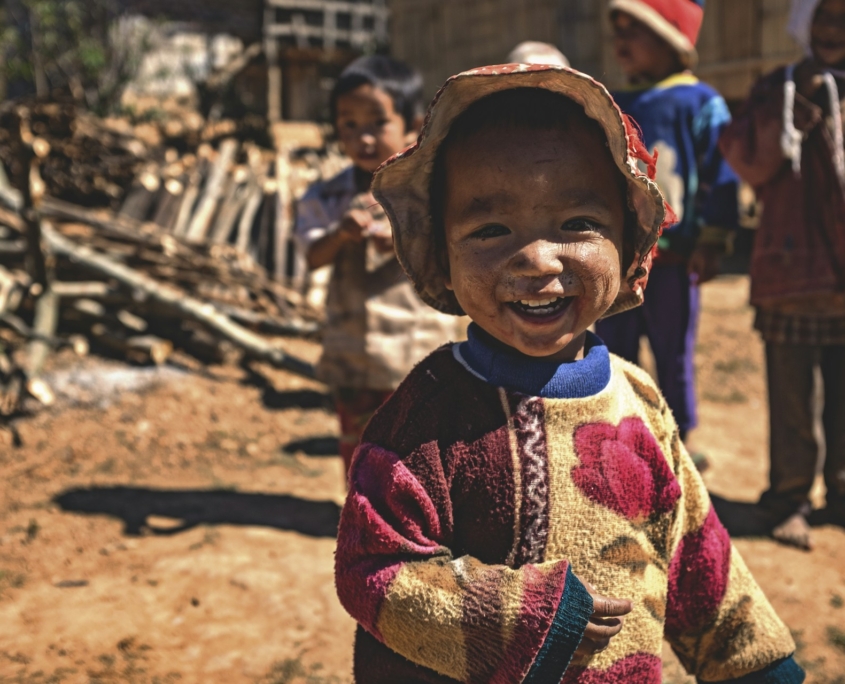 For nearly three decades, the Free Burma Rangers have gone where few would ever dare to go, working in some of the world’s most dangerous conflict zones to provide humanitarian and spiritual aid to hundreds of thousands of people caught in the midst of active conflict. “We exist in the humanitarian gap that always exists in war, from the very front line, where bullets are smacking next to your head, back to the major relief organizations,” said founder and leader David Eubank, in an interview with The Borgen Project.
Humble Beginnings
Eubank, who grew up as the son of missionaries in Thailand and later attended Texas A&M, was commissioned as a United States (U.S.) Army officer after graduating and spending a decade serving in the Infantry, Ranger Battalion and Special Forces. After leaving the military in 1992, he enrolled in Fuller Theological Seminary to further his spiritual training. It was during his time there that leaders from the Karen people of Burma (also known as Myanmar) reached out to Eubank through his father, calling on him to assist in relief efforts amidst their – and many other groups’ – decades-long conflict with the junta.
Building the Mission
Marrying his wife, Karen Eubank, in 1993 – the couple, without skipping a beat, set forth on a mission to Burma, which Eubank later called their “honeymoon” in the 2020 documentary film, Free Burma Rangers. “When we first started, I just went to the fighting with three backpacks [of medical supplies] and Ilya – a Karen medic – goes up and says, ‘Can I help you?’” recalled Eubank, discussing his first mission in Burma. He also emphasized his early commitment to respecting local autonomy, “we started helping people who wanted to be helped, [but] we never went anywhere we weren’t invited.”
The experiences of these early missions laid the groundwork for the formal creation of the Free Burma Rangers in 1997, founded by Eubank after graduating from seminary two years earlier. The group’s approach took shape in these formative years, focusing its missions on close collaboration with local communities, moving quickly and quietly in active combat zones and delivering both physical and spiritual aid where it was most needed.
This approach also emphasized the documentation of abuses and human rights violations to ensure preservation of the evidence of these crimes. Footage recorded by the group has, for decades, made international headlines and served as a reliable source on a conflict which few others have had the ability to consistently report on.
Frontline Relief in Burma
At the heart of the Rangers’ mission is frontline relief. The organization trains and equips small, mobile teams drawn from Burma’s many ethnic groups, providing them with the skills and supplies needed to carry out relief missions in some of the harshest conditions in the world. This decentralized strategy allows the group to respond to the specific needs of each community. In many cases, Ranger volunteers receive training and then go on to serve their own communities, forming locally-rooted teams with the capacity to strengthen resilience and respond to crises from within.
While the group’s work has centered on Burma’s ever-shifting conflict, its reach currently extends into some of the world’s other brutal war zones. “We have 150 committed teams in Burma from 18 different ethnic groups and we have a team in Syria and Iraq,” said Eubank. “We have a partnership in Afghanistan and Tajikistan, working from the Tajik side. And we have a rotation into Ukraine and the Nuba Mountains of Sudan.”
Ranger teams consist of a team leader, medic, child support counselor and a photographer and videographer. “They can combine their roles, but that’s the main structure,” Eubank explained. While some Rangers who operate in Burma carry arms, Eubank clarified that this was only done in self-defense and that the group itself never supplies weapons to their volunteers.
Documenting Human Rights Abuses
Documenting human rights abuses and reporting on week-to-week developments are central to the Rangers’ mission of keeping the world informed, Eubank noting that in the organization’s efforts, “getting the news out is of very high importance, second only to helping people.” Its website also provides a “Weekly Dispatch” on the group’s activities, as well as regular situation reports, which offer updates on the conflict zones within which they operate.
Capacity Training
Before any of the Ranger teams see the front lines, they pass through a rigorous “capacity training” to ensure that they are prepared for their missions, often returning home to help their own communities in deployments that can last up to three months. “The ethnic groups choose their own team members, send them to us and we train them and send them back to the ethnic groups – our job is to train, equip, inspire and support these teams,” said Eubank, describing the Rangers’ training and operational approach.
Speaking on the scope of the training, he added, “We start with spiritual and relational questions and training and then we go to the physical, frontline first aid, dental work, reporting, reconnaissance and we practice dangerous things, swimming in rivers, rappelling, climbing, clearing landmines.” This training also includes security instruction, preparing volunteers to operate in active combat situations.
The Jungle School of Medicine
The Jungle School of Medicine of Kawthoolei, started in 2011, trains dozens of medics each year. These medics are then assigned to their area-specific Ranger teams and some have even helped to staff the Karen Department of Health and Welfare.
Once training is complete, teams receive enough supplies to treat 2,000 Internally Displaced Persons (IDPs). They are also outfitted with any other gear that they require for their efforts, such as hiking and camera equipment, as well as educational materials for children. Outlining the order of loyalty within the group, Eubank explained, “If you come and join the Rangers and let’s say you’re Karen. First of all, you’re a child of God. Second of all, your Karen. Third of all, you are your loyalty [to a community]. Fourth and last, you’re a Free Burma Ranger.”
He stressed that the organization was not a political force, but rather a resource to train people to serve their own communities. While acknowledging that not everyone in Burma welcomed the Rangers, he recalled a fellow Ranger noting, “You can go almost anywhere and people trust that you’re (A) sincere, (B) loving, (C) loyal in your support of them, (D) competent, (E) brave and that you’re on their side, no matter where you come from.”
Away from the Front
Though the Rangers are most renowned for their frontline relief efforts, their aid to embattled communities extends far beyond the front line. Karen Eubank, who has accompanied her husband in conflict areas since their marriage in 1993, started the Good Life Club program in 1999. The program trains counselors who accompany each Ranger team and provide a wide range of services to assist both children and educators in embattled communities. They provide children with clothes and school supplies, conduct “education assessments” and work to generally foster emotional and spiritual resilience within the communities they serve.
The Rangers have also developed an aviation wing, known as Free Burma Rangers Aviation. Members of the Rangers began to undergo parachute training in 2012 and in 2016, the Rangers received a donated Cessna 172 from the Kingdom Air Corps, where a young Karen Ranger had undergone flight training. In 2018, their first operation used the donated aircraft to fly a three-day-old boy from the Thai border to a hospital deeper inside Thailand for life-saving surgery.
Looking Ahead
For nearly 30 years, the Free Burma Rangers have shown that even in the world’s most dangerous places, communities can find hope through courage, service and solidarity. By training local volunteers, documenting abuses and delivering aid directly to those in need, the Rangers have created a model of resilience that continues to inspire. As their work expands across Burma and beyond, the Free Burma Rangers demonstrate how grassroots action can save lives and strengthen communities in the face of overwhelming hardship.
– Alex Degterev
Alex is based in Boston, MA, USA and focuses on Good News and Global Health for The Borgen Project.
Photo: Unsplash
