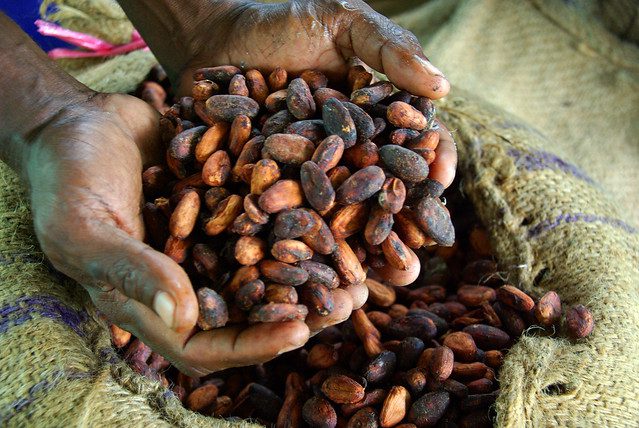
Imagine being in the local supermarket, perhaps in the coffee aisle. There is an abundance of options, from decaf to french vanilla and everything in between. Some of the choices have a special seal marked “Fairtrade.” But what does that mean? Here are the facts to know about Fair Trade.
What is Fair Trade?
One fact to know about Fair Trade is the difference between Fair Trade and Fairtrade. Fair Trade is a set of social, economic and environmental standards for companies and the farmers and workers who grow the food millions enjoy each day. Fairtrade, on the other hand, is a trademarked labeling initiative that certifies a product has met the agreed Fair Trade criteria.
For farmers and workers, standards include the protection of workers’ rights and the environment. For companies, they include the payment of the Fairtrade Minimum Price and an additional Fairtrade Premium. This premium can be used to invest in business or community projects of the community’s choice.
How does Fair Trade combat poverty?
The Fair Trade argument is that the poor are being paid less than fair prices for their products in the free market trading system. The Fairtrade foundation states that its goal is to “empower marginalized producers to become economically stable and self-sufficient and to promote sustainable development, gender equality, and environmental protection.”
Offering decent prices for products can help support jobs and improve living conditions for producers, their families and the local businesses they buy from. It can also divert young men from involvement in militias. The intention is that this will ultimately decrease conflict levels in impoverished nations.
While not all poor states are volatile, data indicates that violent conflict contributes to poverty in a number of ways. It can cause damage to infrastructure, break up communities and contribute to increased unemployment and forced displacement of peoples.
Additionally, free trade boosts economic sectors, thereby creating more jobs and a source of stable increased wages. As developed countries move their operations into developing countries, new opportunities open for local workers. An increase in the general standard of living reduces hunger and increases food production. Overall, a higher income makes education more accessible, increases literacy, increases life expectancy and reduces infant mortality rates.
Fair Trade focuses on the exchange between individuals and companies. Fair Trade supply chains utilize direct partnerships that take into account the needs of individual communities. Often times, cross border supply chains strengthen ties between two or more nations. By bringing people together in mutually beneficial trade pacts and policies, Free Trade can contribute to a sense of peace in war-torn areas. Through cultural exchange, there is a rare absence of marginalization in this type of commerce.
What are the disadvantages to know about Fair Trade practices?
Although the Fair Trade movement has good intentions, it also has a few disadvantages.
Fairtrade targets farmers and producers who are financially secure enough to pay certification, inspection and marketing fees, which are necessary to ensure compliance with government regulations. Thus, the poorest farmers who would benefit most from Fairtrade certification are often excluded.
Fairtrade minimum prices and wages ensure fair payment of farmers. However, farmers for non-certified products are left at a considerable disadvantage. When prices fall in the world market, it is the non-Fairtrade certified farmers who suffer. That being said, prices in stores are not monitored by the Fairtrade Foundation. Thus, the producers receive only a small piece of the revenue from retail mark-ups.
Conversely, research conducted by various groups such as CODER, the Natural Resource Institute and Brazilian based BSD Consulting has shown positive impacts of Fair Trade practices around the globe. In Colombia for instance, a 2014 study by CODER assessed the impact of Fairtrade for banana farmers in small producer organizations and workers on plantations. The study concluded that Fairtrade, with the support of other organizations, contributed to a revival of the banana sector in Colombia and increased respect for human and labor rights. Other studies have demonstrated the effectiveness of Fairtrade on worker empowerment in Ecuadorian flower plantations and the benefits of Fairtrade orange juice for Brazilian smallholder farmers.
Here are the facts to know about Fair Trade that can help consumers make informed decisions in their daily lives. Many everyday food items like coffee, chocolate, fruit and nuts offer Fairtrade certified options in local grocery stores. Change is already happening in the Congo where Fairtrade certified gourmet coffee is sourced from war-torn regions. Companies such as Tropical Wholefoods have begun to sell Fairtrade certified dried apricots from northern Pakistan. Just an extra minute in the grocery aisle and a few extra cents to choose Fairtrade can make a big difference.
-GiGi Hogan
Photo: Flickr

The Hidden Disability: Visual Impairment in Refugees
Last year, there were an estimated 70 million forcibly displaced individuals in the world. NGOs and governments stepped up by providing funding for food, water, sanitation, education, and healthcare, but visual impairment in refugees is rarely ever prioritized.
Vision Impairment is a Major Life Obstacle
Eye care is something often overlooked when organizations are administering urgent medical treatment to refugees–in most cases, eye injuries are not considered life-threatening. While an eye injury may not be fatal, it can greatly reduce the quality of life. This was the case for 10-year-old, Hala Shaheen, who suffered retinal detachment before the outbreak of the Syrian War and was undergoing treatment to fix the issue. She required specialist care and regular check-ups.
However, when chaos and violence broke out in Syria, Hala and her family were forced to flee to the Rukban refugee camp between Syria and Jordan, where no eye care specialist could be found. Now Hala is blind in one eye and her vision in the other eye is continuing to deteriorate. When asked about her condition, she told reporters, “I don’t want to continue living with this level of pain and suffering.”
Refugees like Hala do not have the resources to prevent or tackle blindness, Hala could have retained her vision. Blindness prevents her from experiencing life fully. Since braille is not readily taught, getting an education is difficult. Hala’s condition forces her to be dependent on her family. When blindness presents itself in adult refugees, it stops them from being productive workers and the extra burden is placed on their family’s shoulders. Thankfully, some NGOs have identified this problem and are on their way to creating better conditions to fight visual impairment in refugees.
Bringing Clarity to the Visually Impaired
NGOs and charities are assembling coalitions all over the world to find solutions for visual impairment in refugees. The main mission is to provide diagnostic services and visual assistance to those who need it.
The International Agency for the Prevention of Blindness (IAPB) is working in Cox Bazar, a Rohingya refugee camp of over 900,000 people, has created an eye care plan to fight visual impairment in refugees. They plan to provide over 150,000 eyeglasses each year and deploy 30 optometrists and 30 ophthalmologists to conduct Rapid Assessment of Avoidable Blindness (RAAB) exams. These exams are vital in the prevention of blindness and vision loss, which can be the result of neglected chronic eye disease. In Cox Bazar, there is an estimated 30,000 at risk for diabetic eye disease and 70,000 at risk for glaucoma. If left untreated, it could result in a massive amount of vision loss.
There are numerous other coalitions like the IAPB. VisionSpring works with EYElliance in Ghana and Liberia to provide glasses to children and launch country-level initiatives to identify visual problems in refugees. SightGeist is an annual conference of companies and organizations from various sectors who come together and use their resources to provide visual assistance and preventative care to those affected by visual impairment. NGOs like Light for the World work together with Warby Parker, an eyewear company, and Aravind Eye Care System, a chain of hospitals in India, to come up with solutions to problems that are too large to tackle alone.
Gender and Visual Impairment
Another aspect of visual impairment in refugees is gender. Women and girls are disproportionately impacted by visual impairment, accounting for two-thirds of those with severe vision loss. This can be due to the impact of traditional female roles, like having to collect water and wash clothes. These duties put them at risk of being bitten by blackflies which transmit parasites that destroy vision. In developing countries, women are typically not in charge of finances, so they have less control over the budget and cannot pay for healthcare. Women are also often too busy taking care of the home and may not even know where to go to access eye care.
Visual impairment in refugees, particularly females, deepens their plight; those who are visually impaired are more likely to suffer sexual violence and shamed by their families. Programs like CATCH in Uganda and Lady Health Worker in Pakistan are reaching out to these women. CATCH conducts exams to detect visual impairment early and provide preventative care to women. The Lady Health Worker program empowers female workers to provide healthcare and eye care to women and children in their own communities. Simply bringing attention to eye care and reducing the stigma of visual impairment can vastly improve lives.
Visual health underpins many of the Sustainable Development Goals put forth by the U.N. It is up to these organizations now to spread the word and see to it that visual impairment in refugees and developing countries become a greater priority for donors.
– Julian Mok
Photo: Flickr
What You Need to Know about Fair Trade
Imagine being in the local supermarket, perhaps in the coffee aisle. There is an abundance of options, from decaf to french vanilla and everything in between. Some of the choices have a special seal marked “Fairtrade.” But what does that mean? Here are the facts to know about Fair Trade.
What is Fair Trade?
One fact to know about Fair Trade is the difference between Fair Trade and Fairtrade. Fair Trade is a set of social, economic and environmental standards for companies and the farmers and workers who grow the food millions enjoy each day. Fairtrade, on the other hand, is a trademarked labeling initiative that certifies a product has met the agreed Fair Trade criteria.
For farmers and workers, standards include the protection of workers’ rights and the environment. For companies, they include the payment of the Fairtrade Minimum Price and an additional Fairtrade Premium. This premium can be used to invest in business or community projects of the community’s choice.
How does Fair Trade combat poverty?
The Fair Trade argument is that the poor are being paid less than fair prices for their products in the free market trading system. The Fairtrade foundation states that its goal is to “empower marginalized producers to become economically stable and self-sufficient and to promote sustainable development, gender equality, and environmental protection.”
Offering decent prices for products can help support jobs and improve living conditions for producers, their families and the local businesses they buy from. It can also divert young men from involvement in militias. The intention is that this will ultimately decrease conflict levels in impoverished nations.
While not all poor states are volatile, data indicates that violent conflict contributes to poverty in a number of ways. It can cause damage to infrastructure, break up communities and contribute to increased unemployment and forced displacement of peoples.
Additionally, free trade boosts economic sectors, thereby creating more jobs and a source of stable increased wages. As developed countries move their operations into developing countries, new opportunities open for local workers. An increase in the general standard of living reduces hunger and increases food production. Overall, a higher income makes education more accessible, increases literacy, increases life expectancy and reduces infant mortality rates.
Fair Trade focuses on the exchange between individuals and companies. Fair Trade supply chains utilize direct partnerships that take into account the needs of individual communities. Often times, cross border supply chains strengthen ties between two or more nations. By bringing people together in mutually beneficial trade pacts and policies, Free Trade can contribute to a sense of peace in war-torn areas. Through cultural exchange, there is a rare absence of marginalization in this type of commerce.
What are the disadvantages to know about Fair Trade practices?
Although the Fair Trade movement has good intentions, it also has a few disadvantages.
Fairtrade targets farmers and producers who are financially secure enough to pay certification, inspection and marketing fees, which are necessary to ensure compliance with government regulations. Thus, the poorest farmers who would benefit most from Fairtrade certification are often excluded.
Fairtrade minimum prices and wages ensure fair payment of farmers. However, farmers for non-certified products are left at a considerable disadvantage. When prices fall in the world market, it is the non-Fairtrade certified farmers who suffer. That being said, prices in stores are not monitored by the Fairtrade Foundation. Thus, the producers receive only a small piece of the revenue from retail mark-ups.
Conversely, research conducted by various groups such as CODER, the Natural Resource Institute and Brazilian based BSD Consulting has shown positive impacts of Fair Trade practices around the globe. In Colombia for instance, a 2014 study by CODER assessed the impact of Fairtrade for banana farmers in small producer organizations and workers on plantations. The study concluded that Fairtrade, with the support of other organizations, contributed to a revival of the banana sector in Colombia and increased respect for human and labor rights. Other studies have demonstrated the effectiveness of Fairtrade on worker empowerment in Ecuadorian flower plantations and the benefits of Fairtrade orange juice for Brazilian smallholder farmers.
Here are the facts to know about Fair Trade that can help consumers make informed decisions in their daily lives. Many everyday food items like coffee, chocolate, fruit and nuts offer Fairtrade certified options in local grocery stores. Change is already happening in the Congo where Fairtrade certified gourmet coffee is sourced from war-torn regions. Companies such as Tropical Wholefoods have begun to sell Fairtrade certified dried apricots from northern Pakistan. Just an extra minute in the grocery aisle and a few extra cents to choose Fairtrade can make a big difference.
-GiGi Hogan
Photo: Flickr
5 Facts about Malnutrition in the Philippines
Background on Malnutrition
A person impacted by malnutrition is not getting enough nutrients, either due to a lack of food or a poor diet. In children, this can lead to stunted growth. Furthermore, it can lead to serious health issues for people of all ages. These health issues can be chronic, and make it hard for individuals to have sustained employment. Additionally, these issues can leave children orphaned at a young age, perpetuating the cycle of poverty.
Malnutrition in the Philippines
Ending Malnutrition Can Offer a Brighter Future
Ultimately, ensuring that children have adequate nutrients in their diets can do a lot to ensure that malnutrition in the Philippines becomes a thing of the past. When rates of malnutrition decrease, people will be healthier, happier and more productive. And finally, far less will live in poverty.
– Gillian Buckley
Photo: Flickr
An Exploration of Senator Kamala Harris’ Foreign Policy
With such a broad field of candidates in the Democratic Primary, twenty in all, it is difficult to identify and to process the political positions of the various candidates. Senator Kamala Harris (D-CA) has spoken on her positions on many topics including a $15 minimum wage and tax-cuts to the middle class. One issue that has not yet been discussed at length is Senator Kamala Harris’ foreign policy platform. Like many of the candidates vying for the Democratic nomination, Harris does not have any direct foreign policy experience. As a former district attorney of San Francisco and later the attorney general of California, Harris holds strong experience and policy stances in regards to domestic policy. Harris currently holds opinions on the following issues: U.S. and Israel Relations, the Trans-Pacific Partnership, direct U.S. involvement abroad, and North Korea.
U.S. and Israel Relations
Harris is a long-time supporter of strong relations between the U.S. and Israel, a topic that has become contentious within the Democratic Party. In 2017, Harris cosponsored a Senate resolution that challenged an earlier resolution from the U.N. Security Council which called for an end to the expansion of Israeli settlements into the West Bank region. This particular Senate resolution stated that it felt that the U.N. resolution condemned the state of Israel as a whole and not just the actions of Prime Minister Netanyahu’s government. In the past, Harris has stated that she believes in a two-state solution to the Israel-Palestine conflict and that she supports U.S. backed discussion between the two states. It is too early to tell, but Kamala Harris’s foreign policy platform will likely include a continuation of her support for a two-state solution with an emphasis on a continued relationship between the U.S. and Israel.
The Trans-Pacific Partnership
Senator Harris, along with senators from both parties, opposed the Trans-Pacific Partnership (TPP). The TPP was introduced at the end of Obama’s presidency in 2016 and was promptly withdrawn by President Trump in Jan. 2017. The deal would have connected the U.S. in a formal trade agreement with Canada, Mexico, Peru, Chile, Japan, Vietnam, Brunei, Malaysia, Singapore, Australia, and New Zealand. The agreement had the potential to increase U.S. trade and investment abroad. Harris’ own reasons for voting against the TPP include her belief that the agreement was not as apparent as it should have been to garner the full support and trust of the U.S. and that she found its intended changes to invalidate “California’s landmark climate change and environmental laws.” It is currently unclear if Harris intends to advocate for a re-entry of the U.S. into the TPP under revised conditions.
Direct Involvement Abroad: Syria and Yemen
In February of 2019, Harris voted against a Senate resolution proposed by Senate Majority Leader Mitch McConnell that admonished President Trump’s removal of U.S. troops from Syria. Senator Harris did not publically explain her vote but may have been motivated by a desire to remove U.S. troops from Syria or a reluctance to be associated with a military presence that had not been authorized by Congress. Harris has also been vocal in her disapproval of U.S. support of a Saudi-led intervention in Yemen stating that she “believes we must reassert our constitutional authority to authorize war and conduct oversight.”
North Korea
Senator Harris has not made any direct statements regarding her planned approach to the rising tensions between the U.S. and North Korea but has declared that she disapproves of President Trump’s current approach to the situation. Along with eighteen other senators, Harris signed a letter to President Trump in 2018 stating that he did not have the legal authority to declare a strike on North Korea. From such a statement alongside her other positions in regard to U.S. foreign involvement in conflict abroad, Senator Harris’ foreign policy platform will likely include an emphasis on the power of Congress.
Though it is still early in the Democratic primary and many of the candidates have not yet discussed their foreign policy platforms, the above descriptions of the history of Senator Harris’ foreign policy positions will certainly guide the debates to follow.
– Anne Pietrow
Photo: Flickr
How Better Internet Access in Africa is Empowering Its People
Africa stands as a vast and untapped continent that holds high promise for harnessing the power of the Internet. As better Internet access in Africa increases, more people are using the tools of the Internet to empower themselves. They are additionally using it to fuel innovation to find solutions to many of their problems. A term that has started gaining emphasis concerning the Internet in Africa is The Internet of Things. It presents a harmony between hardware and software systems toward the goal of automating many different aspects of society. According to McKinsey & Company, the Internet of Things “has a total potential economic impact of $3.9 trillion” in Africa, meaning that Africans who properly tap into that potential can wield its power to empower themselves.
An important aspect of the Internet of Things is how simple it is for common African citizens to create apps that can provide amazing solutions that address specific and local problems. With a basic education in technological skills, anyone can bring electricity to a village or proper air conditioning to houses in their neighborhood.
Investing in Better Internet Access in Africa
Many global internet companies are attempting to accelerate the expansion of the Internet in Africa by heavily investing in the continent. One example is that “with Internet.org, Facebook wants to provide millions of people…in Africa, with access to the Internet.” This access would be provided for free. Africans can harness this Internet for startups and other entrepreneurial pursuits. These pursuits can boost African nations’ ability to be competitive in the global economy.
In the Congo, Tujiung is “a computer resource center for women coping with violence.” This is essential for the recovery of many women who are victims of the violence that has become rampant due to the political instability in the country. Tujiung provides women with access to information, education and support services through the Internet. This line of communication can help women effectively cope with violence. Additionally, it empowers them to move past being a victim and strive for a normal life.
Making Africa Computer-Literate
With overall low computer literacy in Africa, women are striving to fill in open jobs. For example, a volunteer group called Help to Help attempts to improve gender equality by having boot camps that teach young Tanzanian women how to code and develop their tech skills. Those girls are empowered by their newly developed skills to get into tech careers that propel them to the forefront of innovation in Africa.
The Internet, with its amazing capabilities, provides promise for the biggest continent in the world, Africa. The Internet is rapidly growing in Africa. Better Internet access in Africa results in rapidly increasing empowerment for African citizens. Women are pushing to gain technological literacy. Their skills give them the ability to gain more equality in the workplace and society at large.
-Anish Kelkar
Photo: Flickr
3 Organizations Focused on Impact Investing for Refugees
For example, “gender lens investing” encourages investment in companies that are led by women. Additionally, it promotes investment in companies that create products or services seeking to improve women’s’ lives and wellbeing.
However, an unprecedented rise in the number of refugees and displaced people globally is creating the need for a new type of impact investment, specifically addressing their needs. According to the United Nations Refugee Agency, a record 70.8 million people around the world are either internally displaced, have become refugees, or are seeking asylum due to natural disasters or violent civil conflicts. Here are 3 organizations that are leading the charge in the new field of impact investing in refugees.
3 Leading Organizations Focused on Impact Investing in Refugees
The Refugee Investment Network (RIN) is one of the leading organizations in the emerging field of impact investing in refugees. At the Social Capital Markets (SOCAP) conference in San Diego in October of 2018, RIN was launched. RIN serves as an information hub connecting investors to projects that benefit refugees. To help investors address this group of individuals, RIN has created the Refugee Lens, which guides investors on how to most effectively seek out and invest in organizations benefitting refugees. One of RIN’s goals is to challenge the misconception that refugees are an economic burden. Instead, RIN promotes the idea that impact investing in refugees can stimulate economic growth, and presents evidence of this in a report, titled “Paradigm Shift.” The report points out that entrepreneurs comprise 13 percent of the refugee population in the U.S. This means that refugees have a higher percentage of entrepreneurs than both the non-immigrant refugee population and the native-born population in the U.S.
Epimonia is a fashion company that promotes awareness of refugee issues in the U.S. The company was founded by Mohamed Malim, a Somali-American entrepreneur and former refugee who fled Somalia’s civil war. Initially, he had relocated to Kenya, but then again to the U.S. Among other products, Epimonia sells bracelets made from life vests that were once worn by refugees, known as “embracelets.” The Greek island of Lesbos provides these life vests since they have a high population of refugees. Additionally, Epimonia works with the nonprofit organization Refugees4Refugees to acquire these life vests, which then become embracelets. Refugee workers in the Netherlands make the bracelets, which then sell throughout the U.S. Malim has sold almost 1,500 embraclets, and has visited 20 college campuses to spread awareness of refugee issues. Epimonia invests 50 percent of its profits into initiatives that benefit refugee communities in the U.S. The organization has given $1,500 to the Dream Refugee Mentorship Program. They provide current and former refugees with professional mentorship and scholarship aid. Additionally, it provides them with a network of connections to help them succeed in the workforce after college.
In 2017, the microfinance company Kiva launched the Kiva Refugee Investment Fund (KRIF) to help extend financial services to refugees and provide loans to those looking to start businesses. Unlike other nonprofits that operate on the basis of donations, KRIF utilizes crowdfunding to channel money into loans. These are then given to refugees, which are later paid back. This means that individuals who contribute to loans not only get to aid in refugee entrepreneurs launching their businesses but also get to share in the successes that those businesses create. KRIF challenges the idea that refugees are too risky to invest in, and has supporting data. According to its website, KRIF currently has a rate of repayment on its loans of 95.5, percent. Additionally, they have effectively crowdfunded $12.5 million in loans to 15,873 refugee borrowers. In total, KRIF aims to reach 200,000 borrowers.
Multiple organizations are beginning the way for investment in refugees. Impact investing in refugees has proven to be far less risky than naysayers have claimed. In fact, it is incredibly effective at both generating a financial return to investors and uplifting refugee communities around the world.
– Andrew Bryant
Photo: Flickr
8 Ways the African Continental Free Trade Area Agreement Will Impact Intra-African Trade
Eight Ways the African Continental Free Trade Area Agreement Will Impact Africa
These changes will not occur overnight. But in a couple of years, through intra-African trade, Africa can expect to see an overall improvement in its economy and a significant dip in extreme global poverty thanks to the African Continental Free Trade Area Agreement.
– Paola Nuñez
Photo: Flickr
Addressing the Water Crisis in India
Background
Usually, June is the start of monsoon season in Chennai. Precipitation levels are only half of what they should be. June 20 was the first major rainfall of the year, 29 millimeters. This was more than the total documented rainfall since December. Furthermore, Chennai’s basic infrastructure system is unable to efficiently store water during rainstorms to save for periods of drought. The rivers fill quickly and often flood. Meanwhile, 91 percent of the water flows into the ocean where it is no longer drinkable. Chennai is the first major city to experience a water crisis in India this severe.
The four largest reservoirs around Chennai have run dry. They are not expected to fill until November. The government is currently shipping water directly into Chennai, where thousands of residents wait in line for their share. Once residents receive their water, they must carry over a dozen pots back home for their families. People have resorted to violence, fighting over water or hijacking water trucks, to survive.
How Did This Happen?
There are two sources of water in the world: surface water and groundwater. Around 700 million Indians rely on groundwater as their main source of drinking water. But groundwater is only supposed to be a buffer resource in case of drought. Additionally, monsoon season’s unpredictability over the last few years has prevented groundwater from replenishing. For instance, between 2002 and 2012, groundwater depletion rates in Chennai were 8 percent faster than recharge.
Protesters blame the government for the water crisis in India because of the lack of regulation to protect groundwater has left reservoirs dry. India uses more groundwater than any other country, using about 25 percent of all groundwater extracted in the world. Unlike surface water, the Indian government does not regulate groundwater. The Easement Act of 1882 gives landowners the right to collect water under their land despite it being a shared resource. In other words, the lack of regulation gave way to the tragedy of the commons. Individuals acted independently to advance their own interests without worrying about the consequences of over-exploitation and depletion for the community.
Future Effects
Chennai’s geological systems are susceptible to quick depletion because of its shallow crystalline aquifers with little storage room for water. Additionally, crystalline rock has low permeability, which drastically decreased recharge rates during rainfall. These conditions caused almost immediate depletion. However, water insecurity will continue to worsen across other parts of India with different geological structures as more groundwater is over-exploited.
If they continue to exploit groundwater at this rate, 40 percent of the population will not have access to drinking water by 2030. Furthermore, 21 cities will run out of groundwater by 2020. Lastly, by the year 2050, 6 percent of GDP will be lost.
Potential Solutions
Replenishing groundwater is essential to ending the water crisis in India. However, as monsoon season brings unreliable rainfall, communities must search for other ways to refill aquifers. One idea is to desalinate seawater. About 25 percent of India’s population, including residents of Chennai, live along the water. Currently, desalinated water makes up 40 percent of Chennai’s supply. However, this is not enough to end the water crisis. Desalination requires too high of costs and energy consumption for a fuel-poor country. The Desalination Journal conducted a study in 2014. The study found that solar energy can desalinate water. However, desalination cannot produce water at a sustainable monetary cost.
The government must find other solutions to the severe water crisis in India. Leaving the rights of groundwater to landowners will continue to lead to further depletion. It will take a large government commitment to reverse the effects of the water crisis in India and provide its residents with sufficient access to clean water.
– Haley Myers
Photo: Flickr
New Approach in The Netherlands to Combat Child Poverty
Despite recent attempts to reduce the number of poor children, such as renewed attention to poverty reduction in Dutch development policies, the number of children growing up in long term poverty has gone up 7 percent to 125,000 as of February 2019.
While the Netherlands is known as one of the wealthiest counties in the world, wealth is still not distributed evenly. Many children suffer the consequences of their family’s poverty and have less access to education and health services.
What’s Being Done Now
The Social and Economic Council said that authorities should appoint one official to try to quantify the problem and to improve the often-complicated forms which need to be filled in to apply for help.
Currently, a small poverty analysis and policy desk has been created within the Ministry with the main task of integrating attention to poverty reduction into all the activities of Dutch aid. Furthermore, in the field of aid implementation, there is an effort to make Dutch aid more demand-driven to reach the poorest areas of the country.
How It’s Affecting Immigration
The struggle to stay above the poverty line has revealed that the amount of people holding two jobs has also increased within the Netherlands to nearly half a million people. Young people are most likely to combine two jobs. Of those 15 to 25-year old’s who work at least 12 hours a week, more than 12 percent have two jobs. This raises concerns for anyone trying to find a job and creates hostility towards immigrants.
Even the most pro-Europe Dutch political parties had 53 percent of its voters considering it unwise to allow free movement of workers. Minister for Social Affairs and Employment Lodewijk Ascher has already expressed his concerns that cheap labor could flood the Netherlands and said that former British Prime Minister David Cameron’s calls for limits on EU migration were “potentially interesting.”
The Future
The first steps of improvement have already been made by acknowledging the need for change. The Dutch policies on fighting childhood poverty need to be revised according to the SER. In 2014, a total of 378 thousand kids in the Netherlands grew up in poverty, with a remarkable 219,000 of these kids living in a home where at least one parent has a paying job. According to SER chairman Mariette Hamer, these numbers prove a new approach is needed.
Mariette Hamer also pointed out that these families are earning too little and in addition, they usually deal with paying off debt. The SER’s advice includes appointing a poverty manager in each municipality. This manager can help improve the cooperation between the different institutes and simplify procedures. The manager must also help low-income households find their way to services that can help. This new approach in the Netherlands could greatly help those in need.
Why Does It matter?
Wealthier countries, like the Netherlands, provide research to help poorer countries make good decisions. While their poverty levels are not nearly as bad as other areas of the world, there is still room for improvement. The policy has to be based on evidence. Academics, development organizations and research is needed to provide evidence for what works and what doesn’t.
Poverty reduction is a moral issue, but it is also a matter of smart policy. More prosperous societies are more stable societies. By working out a new approach in the Netherlands, it could help other children living in poverty all over the world.
– Grace Arnold
Photo: Flickr
5 Ways Anyone Can Help Fight Global Poverty
Poverty is an issue that does not always have a single, clear-cut solution. This leads to a myriad of action plans across the world that seek to address the root causes of poverty. The average person usually experiences these measures through the filters of government officials and media, which makes poverty reduction seem inaccessible to the everyday citizen. However, anyone can help alleviate poverty, not just politicians or public figures. Here are four ways to help fight global poverty.
Use Passions and Education
Poverty is a daunting topic and one cannot learn all its facets in one sitting. The easiest way to begin expanding one’s knowledge about poverty is to start somewhere familiar. Consider any relevant interests or hobbies. For example, sports lovers could type “sports and poverty” into a favorite search engine and learn about issues that impact their interests. Starting off with a topic that is familiar makes it easier to digest new information and keep one’s interest before diving into more specific topics as the individual gains more knowledge.
Finding poverty-related information relevant to one’s interests by discovering articles, videos and social media pages is a great way to educate oneself. Knowledge is a powerful tool to help fight global poverty.
Support Ethical Brands
Fashion lovers will find that the fashion industry is a significant contributor to poverty around the world. In particular, companies produce fast fashion in hazardous sweatshops. Companies make articles so that they wear out within a few wears and harmful chemicals, such as lead, often contaminates them.
Fast fashion companies like Zara and H&M design clothing so that it is outdated within one week thanks to the rise of micro-seasons. Rather than releasing designs corresponding to the traditional seasons, these companies put out 52 clothing collections each year. Some companies get new clothing shipments in their stores twice a week, while others list upwards of 400 items on their websites per week.
Companies can produce this clothing quickly and cheaply due to the usage of low-quality materials and not paying workers a living wage. Estimates determine that informal workers, often women and children, sew 20 to 60 percent of fast fashion garments in their own homes. Globally, 40 million people are garment workers, and 85 percent of those are women. Children usually add details like sequins and beading, which machines can apply easily, in order to cut equipment costs.
To stop supporting fast fashion brands and help fight global poverty, there are a few steps everyone can take. Websites and apps like Ecoture and Good On You provide ratings of brands’ ethics and practices, while also providing a one-stop-shop for ethical brands. Ethical brands like Organic Basics, Kowtow, People Tree and HARA are just a few of the highly ranked clothing companies out there. Thrifting is also a great way to stop creating a demand for fast fashion while not breaking the bank.
Support the Sustainable Development Goals
The Sustainable Development Goals are a set of 17 goals set forth by the United Nations in 2015. They aim to support economic growth and to resolve global issues such as poverty, hunger, lack of access to water and inequality by 2030. These goals are for countries and governments, but individuals can support progress toward the Sustainable Development Goals as well.
In June 2019, Forbes indicated that millennials, unlike older generations, have distinct consumption habits and preferences that are conducive to achieving various Sustainable Development Goals. Millennials are more likely to be conscious of ethical brands, are more ethnically diverse and are financially, socially and health-conscious. Others often think of them as more educated and technology-based than previous generations as well. Other generations can advance Sustainable Development Goals by adopting similar habits, like becoming more financially conscious through impact investing which allows individuals to put their money into socially responsible investments (SRIs).
Get Involved
Individuals can maximize their efforts by involving themselves with a larger group. A great way to help fight poverty is by finding a cause or nonprofit to support. Many organizations help fight global poverty even if that is not their main goal. Organizations dedicated to women’s empowerment, providing access to clean water, child welfare or improving access to education are all causes that decrease poverty rates. Pick a favorite organization and donate some time or money to them on a regular basis. Great resources to start with are The Borgen Project, Days for Girls and Equality Now.
Mobilize
Another way to help fight global poverty is to multiply efforts by contacting local leaders and encouraging others to do the same. People know this as mobilizing and it is a great way to create change. Congressional leaders and their staff receive letters, emails and calls from constituents every week and the more they see a particular issue or piece of legislation come up, the more likely they are to support it. The Borgen Project details more ways to get involved and connect with Congressional leaders.
These five points are a great way for anyone to help fight global poverty and encourage others to join the cause. Together everyone can make the difference that eliminates poverty for good.
– Shania Kennedy
Photo: Pixabay