5 Facts about Malnutrition in the Philippines
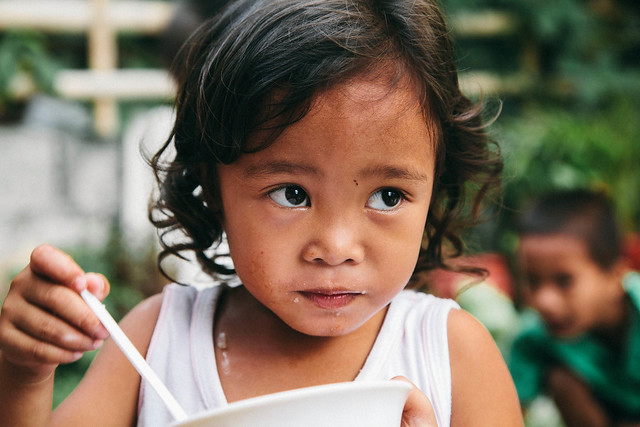 The Republic of the Philippines is a nation comprised of several islands in southeast Asia. The Philippines gained independence after centuries of colonial rule from the Spanish and the U.S. in 1946. However, it is still struggling to overcome the effects long-term colonial rule had on its people. Despite many government campaigns to alleviate this issue, poverty is still rampant on these islands. While just over 20 percent of the overall population of the Philippines is impoverished, there are many areas of the country in which roughly 75 percent of the public live in poverty. While there are many factors that serve to further cycles of poverty, one of the biggest barriers this population faces is malnutrition in the Philippines.
Background on Malnutrition
A person impacted by malnutrition is not getting enough nutrients, either due to a lack of food or a poor diet. In children, this can lead to stunted growth. Furthermore, it can lead to serious health issues for people of all ages. These health issues can be chronic, and make it hard for individuals to have sustained employment. Additionally, these issues can leave children orphaned at a young age, perpetuating the cycle of poverty.
Malnutrition in the Philippines
- Half the population suffers from malnutrition-related conditions – In the Philippines, about 50 percent of the population suffers from anemia caused by iron deficiency. Large percentages of people suffer from other malnutrition-related ailments. Such ailments lead to fatigue and decreased immune function.
- Stunted growth is common – One in three children in the Philippines has had their growth stunted by malnutrition. If this stunting occurs after two years of age, there is a chance it can be irreversible and even fatal.
- Lack of education causes malnutrition symptoms to go unnoticed – Signs of malnutrition are often missed in the Philippines due to a lack of education the public receives on nutrition. A child with a large stomach may not be perceived as having a nutritional deficiency. However, a distended stomach is often an indicator that something is amiss.
- Malnutrition is bad for the economy – People who experience stunting due to malnutrition tend to have far lower incomes than those who did not. This is also the case for families who have lost a child due to malnutrition. Overall, malnutrition takes away approximately $328 billion dollars, or 3 percent, of the Philippines’ GDP per year.
- Children’s Hour is helping families – A nonprofit organization called Children’s Hour has set up across the country. The organization focuses on ending malnutrition in the Philippines. They do this by providing meals for families, as well as teaching them about healthy practices in eating and preparing food. When they began these programs, 90 to 95 percent of participants were undernourished. Now, 75 percent of the children are at a healthy weight. While this organization has made massive strides, it is a nonprofit with limited funding. For this program to expand, it would need a lot more funding.
Ending Malnutrition Can Offer a Brighter Future
Ultimately, ensuring that children have adequate nutrients in their diets can do a lot to ensure that malnutrition in the Philippines becomes a thing of the past. When rates of malnutrition decrease, people will be healthier, happier and more productive. And finally, far less will live in poverty.
– Gillian Buckley
Photo: Flickr
