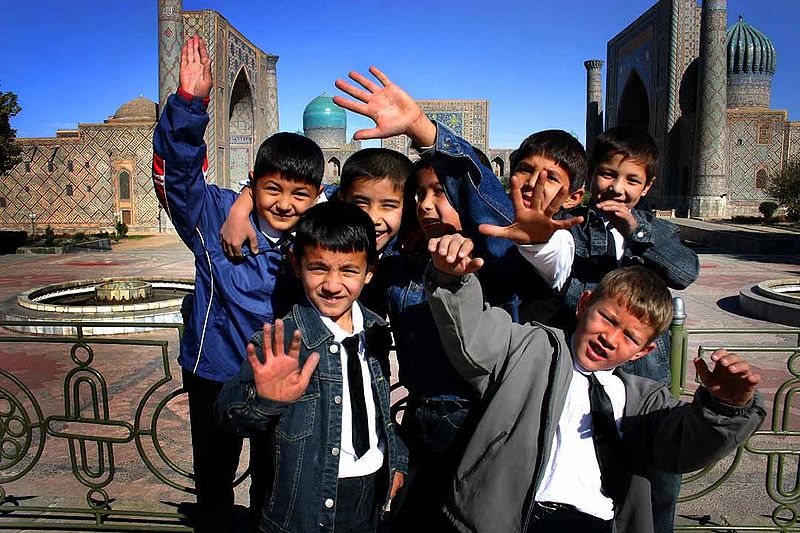
 After gaining independence from the Soviet Union in the 1990s, Uzbekistan gradually lifted itself off the ground, despite malnutrition problems, a lack of government transparency and high unemployment rates. Since then, advancements have been made to improve opportunities for education in rural Uzbekistan.
Education in Rural Uzbekistan
Children living in rural areas are at a geographic disadvantage compared to those who live in cities. Issues affecting children living in impoverished, rural areas include a lack of access to basic education and healthcare services.
Approximately 46 percent of children living in urban areas are enrolled in school, but in rural areas, this number drops to 23 percent. The population of children aged 0-3 living in rural Kashkadarya, for example, grew by 12 percent from 2013 to 2016, yet rates of enrollment have not kept up with a growing rural population.
Making a Difference
Ameliorating the effects of child labor and the lack of access to primary education coupled with the establishment of protections over children’s rights have set the foundation upon which Uzbekistan has begun to build its nation. Programs such as the Rural Basic Education Project have been allocating funding to improve learning conditions in the rural areas of Tashkent, Surkhandarya and Kashkadarya. The goal is to increase opportunities for higher education for children living in rural Uzbekistan.
Child Labor Issues
A major, longstanding issue Uzbekistan faces is the state-controlled labor system that supports massive amounts of cotton exports. This hinders education in rural Uzbekistan from making lasting and important impacts on children.
Government-mandated labor quotas that previously included children forced out of school are becoming lenient and age-restricted. As a result, there has been a substantial decrease in the number of children working in fields. This has led to an increase in funding and the number of schools, increasing education access for rural children. In rural areas, more children are continuing their education, rather than being forced into state-mandated labor. As a result, more adults, specifically women, have greater job opportunities than they otherwise would.
Increased educational opportunities lead to greater attention to human rights laws and how they impact children living in poverty. The availability of a more open education system has also improved gender equality.
For the first time, 56,000 children are enrolled in partial-day preschool programs because of the Improving Pre-Primary and General Secondary Education Project administered by the Ministry of Public Education of Uzbekistan and regulated by the World Bank. Developing the education system, specifically in rural areas, has led to greater economic success and improved livelihoods.
The Future for Uzbekistan
Uzbekistan still faces pressing issues, including forced labor and violations of human rights. However, by investing in its children, the country has become characterized by progress and improved quality of life. The children living in poverty are the future of Uzbekistan. Through a focus on providing education for children in rural Uzbekistan, the nation is helping them grow and flourish.
– Jessica Ball
Photo: Wikimedia Commons

Addressing Homelessness in South Korea
It is easy to dismiss homelessness in South Korea, as the nation ranks as one of the top 20 economies in the world. High-tech society can overshadow the unfortunate reality that many of the homeless face in South Korea. In 2017, the South Korean government estimated that there were more than 11,000 homeless people in South Korea. This is not a surprise to many South Korean. When walking in Seoul for an extended amount of time, it is common to come across the homeless.
Factors that Contribute to Homelessness
Government Efforts to Reduce Homelessness
The South Korean government is making positive steps toward reducing homelessness in South Korea. In Seoul, the homelessness problem is still easy to spot; however, the homeless population is in a steady decline. A 2017 assessment by the Seoul government found that there had been a 30 percent decrease in the homeless population in Seoul since 2010.
South Korea’s commitment to supporting the homeless is also very public. With the election of President Moon Jae In, the Ministry of Welfare announced an expansion to assisting the homeless. The South Korean government pledged to increase the supply of housing for the homeless, creating jobs and providing job training programs for the homeless.
Currently, the city of Seoul is running an outreach program. Simin Chatdongi or “People Visiting Their Neighbors” is a program that encourages citizens to alert the authorities about their neighbors who might be on the verge of becoming homeless. Citizens who want to participate can sign up for the outreach program online or visiting a program booth at a residents’ assembly or neighborhood festival. As of Dec. 2019, the program gathered 8,563 reports.
Homelessness in South Korea is caused by many factors, including the housing index, financial bankruptcy and alcoholism. However, the South Korean government’s commitment to helping its less-fortunate populace leaves a silver lining to this otherwise bleak reality. Many in South Korea look forward to the positive changes that are to come for the homeless.
– YongJin Yi
Photo: Flickr
10 facts about Sanitation in The Bahamas
The Bahamas is still recovering from the aftermath of Hurricane Dorian, which greatly injured two of the countries’ islands in late 2019. However, the residents are facing a bigger challenge involving access to clean water and toilets, which is putting them at great risk of a major public health emergency. Here are 10 facts about sanitation in The Bahamas.
10 Facts About Sanitation in The Bahamas
While Dorian impacted sanitation in The Bahamas in late 2019, the challenges for clean, accessible water continues to affect Bahamians today. With continued investment in tourism and the involvement of relief organizations, The Bahamas should hopefully recover soon.
– Merlina San Nicolás
Photo: Pixabay
Bolivia’s Poverty Reduction and Economic Growth
Bolivia is a South American country that continues to reduce its high poverty rate. Poverty lowered substantially from 66 percent in 2000 to 35 percent in 2018. The government of Bolivia took direct action to develop its economy, reduce its poverty and income inequality and increase foreign investment. The Latin American country still has a high poverty rate, yet its progress in the past 20 years shows promise that Bolivia’s poverty reduction and economic development will continue.
Government’s Direct Involvement in Poverty Reduction
The Bolivian government approved the National Economic and Social Development Plan 2016-2020 to bring about change in its country. Former President Evo Morales fought for income equality and higher wages as Bolivia’s president, and the country is still fighting for his goals. The country intends to help its people live a prosperous life without worrying about the effects of poverty, such as hunger and an inability to afford health care. The main objectives of the plan include eliminating extreme poverty, granting basic services to the entire population and diversifying its economy. The plan set forth a continuation of Bolivia’s poverty reduction progress since 2000 while also lowering income inequality.
Poverty Reduction Through Economic Growth
Economic growth is another factor that helped with Bolivia’s poverty reduction efforts. Bolivia’s GDP growth hovered around 4 percent since the early 2000s. From 2000 to 2012, Bolivia increased its exports that consisted mainly of minerals and hydrocarbons. Although hydrocarbons grew controversial in Bolivia, hydrocarbons and minerals accounted for 81 percent of all exports in 2014. In 2000, its exports accounted for only 18 percent of GDP, yet exports grew to 47 percent in 2012. Bolivia’s decision to focus on exports helped grow its economy, add jobs and reduce income inequality. In time, Bolivia may transition to cleaner sources of energy for its future.
Economic growth led to wage increases for many Bolivians, which expressed the idea of poverty reduction through economic growth. Bolivia’s GDP grew by a massive 80 percent from 2000 to 2014, and there were various positive side effects of this growth. Salaries increased after the government took direct involvement in income inequality. The real minimum wage increased by 122 percent in the years 2000-2015. The average labor income also increased by 36 percent during 2000-2013.
Bolivia’s Progress in Income Inequality and Economic Development
– Lucas Schmidt
Photo: Flickr
5 New Technologies in Latin America
5 New Technologies in Latin America
These five new technologies in Latin America are but a few examples of the region’s ongoing tech boom. Latin America’s rapidly growing middle class offers entrepreneurs a consumer base for their products. Digital transformation is well underway. Internet penetration rests at 57 percent, but 70 percent of citizens subscribe to mobile plans. On average, Latin Americans log on to the internet for longer lengths of time than anyone else in the world. The next Silicon Valley may well rest south of the border.
– Dan Zamarelli
Photo: Newsroom
10 Facts About Sanitation in Yemen
Yemen is currently going through a severe civil war. The Yemeni government’s failed political transition has led to multiple uprising since 2015. As the conflict enters its fifth year in 2020, the effects are becoming clearer. At the end of 2018, over 6,800 civilians had been killed. An additional 10,768 people were wounded and the conflict also had a significant impact on Yemen’s infrastructure. Sanitation is one aspect of Yemen’s infrastructure that has been affected the most by the ongoing conflict. Here are 10 facts about sanitation in Yemen.
10 Facts About Sanitation in Yemen
These 10 facts about sanitation in Yemen highlight continuing problems as well as several efforts to address them. Water was already a scarce resource in Yemen even before the current conflict started in 2015. As the Yemeni civil war enters its fifth year, the effects of the deteriorating sanitation in Yemen are more than clear. However, efforts by groups such as UNICEF and the World Bank are working to fund, build and restore many sanitation facilities in Yemen. With the recent indirect peace talk between the combatants, many hope that conditions in Yemen will improve in the future.
– YongJin Yi
Photo: Flickr
Improving Education in Rural Uzbekistan
Education in Rural Uzbekistan
Children living in rural areas are at a geographic disadvantage compared to those who live in cities. Issues affecting children living in impoverished, rural areas include a lack of access to basic education and healthcare services.
Approximately 46 percent of children living in urban areas are enrolled in school, but in rural areas, this number drops to 23 percent. The population of children aged 0-3 living in rural Kashkadarya, for example, grew by 12 percent from 2013 to 2016, yet rates of enrollment have not kept up with a growing rural population.
Making a Difference
Ameliorating the effects of child labor and the lack of access to primary education coupled with the establishment of protections over children’s rights have set the foundation upon which Uzbekistan has begun to build its nation. Programs such as the Rural Basic Education Project have been allocating funding to improve learning conditions in the rural areas of Tashkent, Surkhandarya and Kashkadarya. The goal is to increase opportunities for higher education for children living in rural Uzbekistan.
Child Labor Issues
A major, longstanding issue Uzbekistan faces is the state-controlled labor system that supports massive amounts of cotton exports. This hinders education in rural Uzbekistan from making lasting and important impacts on children.
Government-mandated labor quotas that previously included children forced out of school are becoming lenient and age-restricted. As a result, there has been a substantial decrease in the number of children working in fields. This has led to an increase in funding and the number of schools, increasing education access for rural children. In rural areas, more children are continuing their education, rather than being forced into state-mandated labor. As a result, more adults, specifically women, have greater job opportunities than they otherwise would.
Increased educational opportunities lead to greater attention to human rights laws and how they impact children living in poverty. The availability of a more open education system has also improved gender equality.
For the first time, 56,000 children are enrolled in partial-day preschool programs because of the Improving Pre-Primary and General Secondary Education Project administered by the Ministry of Public Education of Uzbekistan and regulated by the World Bank. Developing the education system, specifically in rural areas, has led to greater economic success and improved livelihoods.
The Future for Uzbekistan
Uzbekistan still faces pressing issues, including forced labor and violations of human rights. However, by investing in its children, the country has become characterized by progress and improved quality of life. The children living in poverty are the future of Uzbekistan. Through a focus on providing education for children in rural Uzbekistan, the nation is helping them grow and flourish.
– Jessica Ball
Photo: Wikimedia Commons
10 Facts About Sanitation in Sudan
Sudan is the third-largest country in Africa and boasts a rich history that traces back to antiquity. Decades of unrest and civil war have crippled the economy and seriously stunted the development of domestic infrastructure, including basic sanitation. In recent years, the Sudanese government, along with the international community, has taken steps towards addressing these challenges. Here are 10 facts about sanitation in Sudan.
10 Facts About Sanitation in Sudan
While these 10 facts about sanitation in Sudan show the country’s challenges regarding open defecation, handwashing and water treatment, it is clearly making efforts to improve. With continued efforts from Sudan’s government, the international community and NGOs, the country should eventually be able to grant basic sanitation to all.
– Tiernán Gordon
Photo: USAID
10 Facts about Life Expectancy in Brunei Darussalam
Brunei Darussalam is a small, Southeast Asian country nestled in the Indonesian Archipelago. Currently, the average life expectancy is about 76 years, which is roughly four years higher than the U.N.’s estimated global average of about 72.6 years. While certain factors like an individual’s personal habits and existing health conditions can factor into life expectancy, socioeconomic status drives this number on a larger level. With this in mind, here are 10 facts about life expectancy in Brunei Darussalam.
10 Facts About Life Expectancy in Brunei Darussalam
The overall life expectancy in Brunei Darussalam, as well as components that contribute to a higher life expectancy, are doing well within the standards of the developed world. These 10 facts about life expectancy in Brunei Darussalam provide more information on several issues in the country.
– Catherine Lin
Photo: Wikimedia Commons
10 Facts About Human Trafficking in Brazil
Brazil is the largest country in South America and a key player in the international sphere. Despite its power and influence, there are still human rights issues prevalent in Brazil’s population. Human trafficking affects a significant portion of the 211 million people living in the country. Here are 10 facts about human trafficking in Brazil.
10 Facts About Human Trafficking in Brazil
Although these 10 facts about human trafficking in Brazil present startling statistics, there remains a beacon of hope surrounding the topic. Brazil’s government is taking steps towards advancing the legal protection of human rights in the country, such as ratifying the United Nations Palermo Protocol. International human trafficking is an issue that requires support from various sectors, especially from governments and their agencies. Through international support and awareness, facts about human trafficking in Brazil may replace with more positive statistics. Overall, the work of NGOs, foreign aid and the Brazilian government continues to generate progress in the fight against human trafficking.
– Ariana Davarpanah
Photo: Flickr
Effective Altruism to Fight Poverty
From an idea and philosophy, Effective Altruism has evolved and transformed into a very broad and cohesive social movement over the years. Though heavily featured in the nonprofit sector, Effective Altruism focuses on scientific projects, policy-making and organizations with the ethos of finding effective ways to do ‘the most good’ and ‘do good better,’ both individually and collectively. Effective Altruism prioritizes a variety of different causes, impartiality and cost-effectiveness, along with assessing potential funding impacts and counterfactual reasoning.
Effective Altruism Singapore
The Borgen Project had an opportunity to get in touch with the Effective Altruism chapter in Singapore, an up and coming organization with a focus on ‘effective giving.’ As an organization, the chapter is able to sustain and appeal to people because of Singapore’s friendly and burgeoning nonprofit environment as well as its relatively wealthier population, and more stable incomes and economy.
With a heavy focus on research and careful analysis, the Effective Altruism Chapter in Singapore, in particular, is able to work on the best cases and understand specific communities in need. Like many of its companion chapters around the world, it also focuses on more neglected issues in global poverty reduction initiatives such as global health and development and factory-farmed animals as well as other problems and existential risks like natural disasters and climate change. Stunting, in particular, is a grave and predominant focus for Effective Altruism Singapore, with a heavy concentration on child and maternal health care malnutrition owing to the fact that nearly 25.8 percent of children in southeast Asia are stunted. Effective Altruism’s evidence-based research patterns and analysis shows that around 30 percent of children in communities across Indonesia and the Philippines experience adverse impacts of stunting.
The GiveWell Framework
Moreover, the chapter employs the more empirical and analytical GiveWell framework in its work to evaluate potentially high-impact giving opportunities in SouthEast Asia. GiveWell, one of the pioneering organizations behind the Effective Altruism movement, focuses on scouting reliable charities that can improve lives the most per dollar so that there is effective and impactful usage of philanthropic funds. The objective is chiefly to deduce how useful it is to give an amount equivalent to a dollar and evaluate how it could potentially impact a specific target community.
In accordance with Effective Altruism’s GiveWell framework, giving opportunities are largely dependent on an in-depth analysis involving thousands of hours of research which it then uses to find top-rated charities backed by evidence, thorough analysis and vetting to ensure transparency and accountability. GiveWell also tries to understand the root causes of issues such as stunting and malnutrition. Organizations such as the Malaria Foundation and Malaria Consortium remain some of GiveWell’s most important recommendations in the health care aspect of its many global poverty alleviation priorities.
The GiveWell Framework’s Role at Effective Altruism Singapore
Consequently, many of Effective Altruism Singapore’s pilot projects and initiatives employ the GiveWell framework as it is helpful while analyzing and understanding some of the high-impact giving opportunities in Southeast Asia, especially in key priority realms like the provision of WASH (Water, Hygiene and Sanitation) services as well as childhood malnutrition. In the year 2018, the chapter focused on looking for organizations and charities that delivered more evidence-based interventions that targeted preventable and cost-effective health issues and impacted some of the poorest populations and communities in Southeast Asia.
To conclude, the workings and functioning of Effective Altruism Singapore help paint a broad picture of the Effective Altruism philosophy and movement as a whole due to its rather abstract nature. It remains groundbreaking and innovative because it offers a more objective as well as a critical approach to addressing and combatting poverty in the long run especially because it aims to use more research and evidence focused methods.
As a whole, it remains an essential and significant reflection into the applications of the ideology and the potential impacts it can have on the way one perceives global poverty-related issues across various communities around the world.
– Shivani Ekkanath
Photo: Wikipedia Commons