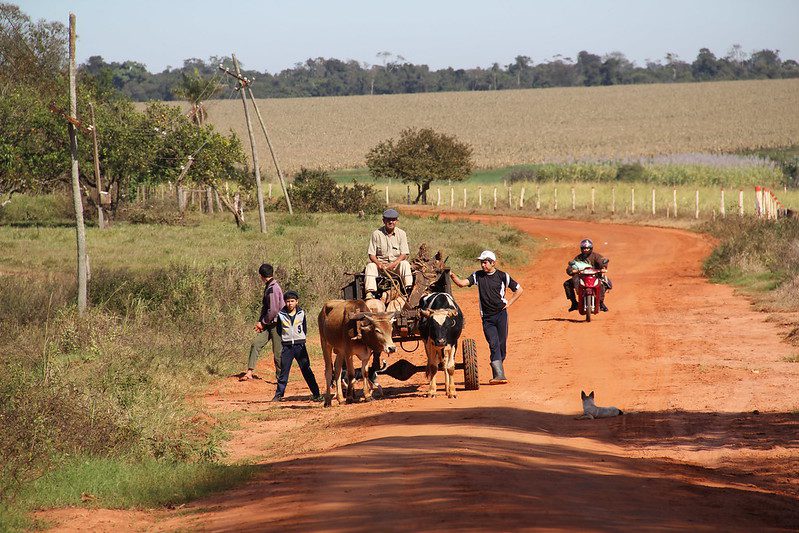
Healthcare in Paraguay has improved tremendously over the past decades. The life expectancy of both males and females has increased by about 10 years since 1990. In the same period of time, the mortality rate of children under 5 years old decreased from 34.6 deaths to 14 deaths per 1,000 live births. Still, many communities remain underserved and face the repercussions of limited access to healthcare.
The Rural-Urban Divide
The improvements in Paraguay’s healthcare system have occurred mostly in urban areas. This makes sense considering that more than 60% of Paraguay’s population lives in the urban perimeters of Asunción and Ciudad del Este. In fact, about 70% of healthcare workers operate within the Greater Asunción area.
In contrast, rural populations do not receive the same access to healthcare. While the more rural regions located to the West of Asunción represent 61% of the national territory, only about 31% of the national paved road network reaches these regions. As a result, transportation from isolated rural communities to urban areas with better access to healthcare is not an easy feat.
The Family Health Units and Coverage
In 2008, the Ministry of Public Health and Social Welfare created family health teams to carry out healthcare in a coordinated, comprehensive and continuous manner. Each team is organized in Family Health Units (USF in the Spanish acronym) and serves the populations to which they are assigned. These teams must provide consultation, home care and ongoing medical evaluation to their communities.
While USFs have successfully improved the health of urban populations, they have largely left behind those who live outside of urban centers. For example, only about 50% of the Alto Paraguay residents have USF coverage.
The following reasons help explain this disparity in USF coverage between city and country areas:
- Rural areas generally have low population density and exist between small towns. Therefore, providing USF coverage to many rural communities can be inefficient and challenging.
- Many healthcare workers who are originally from rural areas often decide to either move to urban areas or leave Paraguay completely due to the poor working conditions and precarious employment contracts.
- There are few incentives for healthcare workers to practice in rural areas.
As a result, rural areas, where poverty rates are the highest, are also most susceptible to experiencing USF shortages.
The maternal mortality rates (MMRs) by region reflects the disparity in USF coverage. In 2015, the rural areas of Boquerón, Amambay and Canindeyú recorded MMRs of 347, 190 and 167 per 100,000 live births, respectively. This data stands in stark contrast to the average MMR of the entire nation which is 132 per 100,000 live births. Clearly a significant imbalance in healthcare access exists between geographic locations in Paraguay.
Addressing MMR in Rural Communities
Several initiatives emerged to address this problem, although some deemed some of them unsuccessful. The Maternal Health and Child Development Project, which operated from 1996 to 2004, aimed to improve the health of mothers and their children in underserved areas. As the World Bank notes, the outcomes of this project were unsatisfactory.
A joint project between the Pan American Health Organization (PAHO) and the World Health Organization (WHO) is currently in effect with the goal of strengthening the care of mothers and children and improving responses to obstetric emergencies. PAHO and the WHO implemented this project in 19 municipalities across Bolivia, Argentina and Paraguay, reaching approximately 400,000 people. It is too early to discern the impact of this project as it only emerged in 2017. Nevertheless, since it only serves a few municipalities in Paraguay, many rural, underserved Paraguayan communities have not received the assistance necessary to improve their MMR.
The COVID-19 Pandemic
In spite of the challenges Paraguay faces in terms of its healthcare system, the country has kept COVID-19 under control in rural and urban communities alike. As of July 19, 2020, there have been confirmations of 3,721 cases and 31 deaths in a country with over 7 million people. One can attribute this successful containment of the virus to the government’s quick and effective response. The first COVID-19 case in Paraguay received confirmation on March 7, 2020, and the country went into full lockdown on March 20, 2020. While the country is not in the clear yet, Paraguay is among the most healthy South American countries with regards to COVID-19.
Bringing Healthcare to Rural Areas
The situation for rural regions, however, is not hopeless. Since urban areas observed significant successes in healthcare through the implementation of the USFs, one could reasonably apply similar tactics to rural areas. Having said that, the biggest hurdle in bringing healthcare access to rural areas will be providing incentives for healthcare workers to settle in areas with low population density.
Luckily, in 2010 the Ministry of Public Health and Social Welfare launched a rural internship program that incentivizes doctors to work in rural areas. As a result, the concentration of healthcare workers in rural areas should increase as more doctors graduate from medical school.
Nevertheless, the Ministry must continue to pay special attention to rural areas, especially those where impoverished and indigenous people reside. The healthcare system has historically underserved these communities while urban, wealthier communities continue to experience improvements in healthcare. In order to provide healthcare for all residents of Paraguay in an equitable manner, the government must ensure that all Paraguayans can receive the same basic healthcare regardless of geographic location.
There are certain challenges that should receive special attention as Paraguay continues to improve its healthcare system for residents. Many regions still struggle with maternal mortality, especially in rural areas. In addition, viruses that mosquitoes transmit, such as Zika, chikungunya and dengue, cause intermittent regional epidemics. Lastly, about 18,000 people in Paraguay live with HIV or AIDS. However, given the government’s swift and effective response to COVID-19 as well as the success of USFs across the country, these challenges certainly are not insurmountable. If USFs expand significantly into underserved areas, Paraguay should be better able to effectively handle these health challenges.
– Alanna Jaffee
Photo: Flickr

Reducing Hunger in Sri Lanka
Sri Lanka has experienced notable progress in several developmental areas. The country has achieved improvements to primary education, a reduction in childbirth rate and decreasing poverty levels. However, food insecurity remains a consistent problem. Hunger in Sri Lanka is a major obstacle to the nation’s socio-economic development. According to the 2019 Global Hunger Index, Sri Lanka scores 17.1, ranking 66 among 117 qualifying countries.
The Numbers
According to a UN report, more than 800 million people worldwide were estimated to be chronically undernourished as of 2017. Over 90 million children under five are underweight. Sri Lanka ranked poorly on the Global Hunger Index (GHI) and global food security index, two major indicators of food security in any country. A Food and Agriculture Organization report from 2014 to 2016 found an average calorie deficit in Sri Lanka of 192 kcal per capita per day. In South Asia, only Afghanistan (36.6%) and Pakistan (30.5%) had higher rates of food inadequacy.
A study by the Asian Human Rights Commission (AHRC) revealed that more than 13% of minors in Sri Lanka were malnourished between the period of 2006-2010. The survey found that 23% of children between six and 59 months of age were stunted, 18% wasted and 29% underweight.
AHRC also found that remote and underdeveloped areas suffer more from hunger than larger cities. Although Sri Lanka has moderate percentages of food accessibility (54.5%), availability (52.8%), quality and safety (49.5 %), it is still struggling to achieve the United Nation’s goal for zero hunger by 2030.
Causes of Persistent Hunger
A food-insecure family lacks access to an optimum quantity of affordable and nutritious food. The immediate and obvious impact of food insecurity can be observed in physical health. Children struggle to concentrate in school and adults find it hard to perform well in their job. The household hunger scale (HHS) measures food insecurity in Sri Lanka on the basis of three factors: lacking access to food, sleeping hungry because of not having enough to eat and household members spending the whole day and night without eating anything.
There are several drivers behind hunger in Sri Lanka. Stagnant growth in crops in recent years has created a shortage of essential food. As the population continues to grow, this problem worsens. Furthermore, 35% of crops end up being wasted, never reaching hungry people. Rising food prices are also a concern in Sri Lanka. Changes in import duties and non-tariff barriers have caused increases in food prices as well.
Unemployment is also a major factor behind food insecurity and hunger in Sri Lanka. Many families have one or more members unemployed. One report shows that around 30% of the households depend on casual wage labor for their livelihood and food security. Around 90% percent of households in the city of Jaffna and 75% in the Vavuniya District were unemployed around 2012.
Initiatives to Address Hunger
Agriculture is one of the key ways to combat hunger and malnutrition. Different policies are intended to help fulfill Sri Lanka’s food requirement, including the National Climate Change Policy and the National Adaptation Plan for Climate Change Impact. A climate-smart agriculture system is working on increasing climate-resilient crops, rainwater harvesting, crop diversification and use of technology.
Under the National Nutrition Policy, every Sri Lankan citizen has the right to access adequate and appropriate food — irrespective of geographical location or socio-economic status. In addition to these efforts, global agencies like the World Food Program are working to combat hunger in Sri Lanka. UNICEF is also working to improve child and maternal nutrition.
Additional Ways to Combat Hunger
Socially vulnerable groups — like the elderly or female-headed families — are more prone to food insecurity. Sri Lanka’s government and other organizations should supply food vouchers to these vulnerable groups.
Because livestock production in Sri Lanka offers vast opportunity, the government should also encourage training and veterinary services to promote livestock production. In addition to this, privatizing the fish industry could help generate employment.
Moving forward, the government and other humanitarian organizations need to make reducing hunger in Sri Lanka a priority. Policies like the ones listed above are crucial for reaching the U.N.’s goal of zero hunger.
– Anuja Kumari
Photo: Flickr
Combating Tuberculosis in Sierra Leone
Sierra Leone, a country in West Africa, has been recovering from a civil war since 2002. While the country is still healing from the war, as well as combating disease, Sierra Leone’s life expectancy sits at about 52 years. This is 20 to 30 years younger than many wealthier nations. The prevalence of tuberculosis (TB) and other health crises threaten the nation’s strained healthcare system. In 2016, Sierra Leone struggled with the Ebola outbreak. Now in 2020, they fight TB while grappling with the COVID-19 pandemic.
Tuberculosis in Sierra Leone
Sierra Leone is among the 30 countries most impacted by TB, with 14,114 cases reported as of 2016 and many more potentially uncounted. There are around 170 centers in Sierra Leone that offer treatment for TB.
Bacteria cause TB, which most often affects the lungs. Occasionally, TB can also affect joints, bones and the central nervous system. The disease spreads through the air. The World Health Organization (WHO) reported that, “When people with lung TB cough, sneeze or spit, they propel the TB germs into the air.” People can also get TB by drinking unpasteurized milk contaminated by bovine TB.
Combating Tuberculosis
The National TB Programme at the Ministry of Health and Sanitation launched TB-fighting programs in Sierra Leone, backed by WHO, USAID and the CDC. As of 2018, 13,396 people successfully underwent preventative therapy for TB.
In 2015, following the Ebola epidemic, the CDC established an in-country center that partnered with the Ministry of Health and Sanitation. Through this partnership, they improved treatment and diagnosis services for HIV and TB, as well as making them more accessible to the population. This partnership has been the source of several high-tech facilities intended for testing for HIV/TB, drug-resistant TB and HIV/TB coinfection.
Other Obstacles
Poverty, war and epidemics like the 2015 Ebola outbreak — all things Sierra Leone still endures — can further ravage already fragile health programs in impoverished countries.
HIV, another disease Sierra Leone fights, is not only another pressure for a struggling healthcare system but a fast track for people to develop active TB. People with HIV are at a greater risk for contracting TB since HIV attacks an individual’s immune system. This is especially true if the patient is not being treated for HIV via antiretroviral therapy, which suppresses the virus. Children living with both HIV and TB face the added obstacle of a difficult diagnosis process because it is harder to identify the bacteria in child samples. TB is also the leading cause of death in people who are living with HIV.
Another strain on the system comes from the poverty, which Sierra Leone is fighting to end. National economic struggles and the low wages of healthcare staff contribute to the rising prices for TB treatment, even for those within the national subsidized program.
Efforts of CISMAT-SL
Accessibility of treatment and testing are major obstacles for those in Sierra Leone suffering from TB. As of 2009, only 5% of people living with HIV tested for TB, with less than 1% receiving Isoniazid preventive therapy.
The Civil Movement Against Tuberculosis in Sierra Leone (CISMAT-SL) is a collection of civil society organizations, both community and faith-based, to help those fighting TB. CISMAT-SL advocates for TB prevention, early diagnosis and treatment and the classification of TB as a human rights issue. The movement is working to shift the priority of healthcare onto the health of the population, rather than the economics of it. CISMAT-SL strongly advocates for the early start of antiretroviral therapy, Isoniazid preventive therapy (sterilization of lesions to prevent active TB from developing), TB case finding and infection control. The movement work to make these efforts more widespread.
Testing and treatment for TB exist, developing further with the rise of drug-resistant TB and TB/HIV coinfection. In impoverished countries, already existing treatments and testing are harder to access due to fragile infrastructures and less supported healthcare systems. In Sierra Leone, and other impoverished nations dealing with TB, the first step to improving the health and welfare of the population starts with making testing and treatment measures accessible. This is the battle CISMAT-SL and other humanitarian organizations are waging to help stave off tuberculosis in Sierra Leone.
– Catherine Lin
Photo: Flickr
Women’s SHGs Combating COVID-19 in India
Women’s self-help groups have empowered women across rural villages in India to become self-reliant by building their skills and providing access to financial assistance, enabling them to increase their income. However, due to the COVID-19 crisis, there is a predicament of bleak income opportunities due to a lack of transport and marketing facilities to sell their produce and non-availability of credit. It has forced millions of migrants to move back to their villages from big cities due to the lack of income opportunities. With the movement of people to rural areas, there is a need to ensure proper health care, spread awareness about COVID-19 and maintain a supply of essential commodities for the people. Women’s self-help groups (SHGs) in rural areas are combating COVID-19 in India.
SHGs are informal groups of people that come together to address problems by mutually supporting and helping each other. They have been able to uplift and empower individuals by facilitating health care, education, rehabilitation, credit and campaigning. In India, there are 67 million women members of six million SHGs. The SHGs fall under the National Rural Livelihood Mission, a policy that the World Bank has aided. Here are five ways women’s self-help groups are combating COVID-19 in India.
5 Ways Women’s Self-Help Groups Are Combating COVID-19 in India
Women’s self-help groups have taken up various responsibilities such as spreading awareness about COVID-19, preparing sanitizers and stitching facemasks, running community kitchens as well as delivering essential food supplies. At the time of the COVID-19 crisis, women in the rural areas of India have participated meaningfully to ameliorate the predicament.
– Anandita Bardia
Photo: Flickr
The Importance of Microfinance in Bolivia
With microlending and financial services that empower business owners and promote development becoming more readily available, Bolivia is considered to be a microfinance success story. Microfinance allows vulnerable populations to access capital and financial services that would ordinarily be out of reach. Most commercial banks, unwilling to work with very low-income markets, alienate those living in extreme poverty. As a result, the World Bank reports that 73% of people living below the global poverty line are unbanked. However, in many developing countries, microlending systems allow entrepreneurs to take out small business loans in safer manner. Because the economy relies on a great deal of informal labor, access to microfinance in Bolivia has been crucial for its economic improvement. Today, almost 20 government-regulated microfinance providers service the country’s small business owners and entrepreneurs, serving 12.2% of the population and 16.4% of the labor force.
How do Microloans Work?
Since the 1980s, microloans have been used to empower borrowers in developing companies and give them the needed infrastructure to earn a sustainable income. They range from about $100 to $25,000, accrue interest like conventional loans and are capped at fair interest rates that do not put borrowers at risk of sinking deeper into debt, unlike the same services of many commercial lenders and private ‘loan sharks’. According to the World Bank, more than 500 million people currently benefit from microfinance initiatives.
Banco Sol and Microfinance in Bolivia
With the lowest GDP per capita and the second-lowest Human Development Index in South America, Bolivia faces clear economic challenges. However, pioneering infrastructure has allowed many economically disadvantaged Bolivians to borrow the capital necessary to advance their own businesses. In fact, Bolivia boasts one of the world’s lowest microfinance interest rates, at 13.5%.
Banco Sol is the largest microfinance company in Bolivia, and the world’s first commercial bank entirely dedicated to providing microfinance services; it also has one of the lowest delinquency rates in the world, marking the success of both the company and borrowers. Kurt Koenigsfest, Banco Sol’s CEO, markets the bank’s services as tools of social mobility and poverty management, saying “this is one way that has been proven to provide jobs and investment in the hands of those who, before its creation, had no access to financial services.”
Human Benefits
Bolivia is home to the world’s largest informal economy, with roughly two-thirds of Bolivians employed by the informal sector. Many of these business owners sell goods like clothing, food and cosmetics in simple market stalls or shops. With an economy structured in this way, Bolivia has unsurprisingly benefited from financial infrastructure that services self-employed entrepreneurs who need capital to initiate growth in their business. The country’s physical remoteness and low population density, however, make it especially difficult for the rural poor to access both the national market and necessary financial resources. Banco Sol utilizes mobile branches, or trucks with banking facilities, to overcome this obstacle, so that even the most rural villages can gain access to banking.
A Path Forward
Exclusion from financial services can be a hurdle for those experiencing extreme poverty. Lenders like Banco Sol have given many small business owners the means to grow their capital while still maintaining ethical lending practices. Following the introduction of microfinance in Bolivia, the country has welcomed a new class of empowered, rising entrepreneurs that have secured higher positions in the nation’s marketplace.
– Stefanie Grodman
Photo: Unsplash
Telemedicine Plays a Bigger Role in Healthcare in Ghana
EPI, A nonprofit organization based in Ghana, operates in remote locations where electricity is almost nonexistent, and medical centers are extremely scarce. By building playgrounds that generate electricity, EPI prioritizes children’s entertainment as much as their health and education.
The Borgen Project had the opportunity to speak with Ben Markham, the founder of EPI, about healthcare in Ghana. According to Markham, when a student falls extremely ill at school, a teacher will accompany the student to the nearest trained nurse, if one exists. The student and teacher will often travel by foot out of town, and if the medical emergency is severe, the teacher will leave the student at the facility and walk back to the community to inform the child’s parents.
Fortunately, healthcare in Ghana is transitioning to include more technology and communication channels. With substantial telehealth investment injected into rural Ghanaian towns, these communities stand a chance to receive basic health supplies and on-demand medical attention through telehealth methods.
Telemedicine is More Accessible Than In-Person Visits
In response to COVID-19, Ghana’s Ministry of Health proposed to open 94 new hospitals across the country between 2020 to 2021. In a statement addressed to the nation, Ghanaian president Akufo-Addo said that the pandemic exposed “the deficiencies of the healthcare system,” casting blame towards under-investment. So how will the addition of more hospitals benefit areas outside of the country’s municipalities?
Lack of basic healthcare in Ghana stands as a serious issue in the non-urban areas of the country. Nearly half (49 percent) of Ghanaians live in rural communities, and many communities lack a central facility and have a shortage of medical professionals. The Ghana Health Service (GHS) has partnered with various entities to solve this problem on the ground.
For example, Community-Based Health Planning and Services (CHPS) trains volunteers to provide health services in rural communities. Additionally, GHS has partnered with Novatoris Foundation to develop teleconsultant centers. These centers allow community nurses, who usually lack equipment and staff, to speak with urban nurses over the phone when medical urgencies arise, such as childbirth.
Within the last ten years, healthcare in Ghana has seen emerging interest and attention directed toward telehealth. When the first teleconsultant centers opened in 2011, 60 percent of calls were maternity-related, mainly due to the fact that the majority of maternal mortality occurred in rural areas. In effect, telemedicine became an avenue of investment to bridge spatial and temporal gaps for remote Ghanaians.
Vodafone Proves to be a Major Player in Ghanaian Health
Among technologies and assets helping Ghanaians stay informed about their health, the cellular company Vodafone stands out.
The company has partnered with Ghana’s healthcare industry through its philanthropic arm, Vodafone Ghana Foundation. In 2019, the foundation cleared the medical debts of 180 Ghanaian patients who had been discharged yet detained due to outstanding hospital bills. Upon settlement, all 180 former patients were released from detention. In 2018, the company partnered with the central government to monitor epidemics, specifically targeting the Ebola virus, by aggregating heat maps from customers’ GPS movements. They are doing the same with coronavirus today.
In the spring of 2020, as the novel coronavirus moved into Ghana, Vodafone stepped in to dispel misinformation. The Vodafone Healthline Medical Centers, call centers equipped with medical experts, expanded services to include representatives who communicate in a variety of local languages including Ga, Twi, Fante, Ewe and Hausa.
Managing Expectations
Markham and his staffers know of telemedicine services, but they remain skeptical. Cellular signal breaks up where cell towers are not present, and towers can often be 32 kilometers outside of a remote community. In addition, many Ghanaians turn their cell phones off to save battery, since many of them are still powered with AA batteries rather than chargers. Cell phone credits are also considered precious, leading to many people turning their devices off to save unused credits. All these factors could inhibit the ability of telemedicine to improve healthcare in Ghana.
However, Markham feels optimistic about the role that technology can play in providing health services to rural-based Ghanaians. He believes grassroots efforts, such as the Community-Based Health Planning and Services, should continue to expand at the same rate as telehealth and tech-based health initiatives.
– Victoria Colbert
Photo: Empower Playgrounds, Inc.
Fighting Corruption Worldwide
What is Corruption?
Before addressing the logistics of foreign poverty, it is necessary to define what that word “corruption” means in this context. The Corruption Perception Index (CPI) will be the standard definition of what corruption is, as it has been a common definition since 1995. The CPI ranks countries in terms of how much they embody “the abuse of entrusted power for private gain.”
Where to Find It
Even with the guidelines provided by the CPI, there is still room for interpretation, and as such there are many different survey results from individual sources (two, for example, come from the World Population Report and U.S. News and World Report). However, that is not to say there are not general trends throughout each of the results. Several lists that were used as sources cited at least half of the top 10 most corrupt countries as coming from South America, Africa or the Middle East.
The ways in which corruption has reared its head have mostly been economical. For instance, bribery is so prevalent in Afghanistan that 38% of the population sees it as normal. Somalia has a similar perception and prevalence of corruption. Ever since the Siad Barre regime was overthrown in 1991, there has been no strong government in control of the entire country. Instead, pirates, militias and clans fight over individual territories, preventing any chance of united progress without foreign intervention.
How Does This Relate to Poverty?
Anyone can understand in a broad sense how corruption is related to poverty, since one would assume that any country riddled with poverty would have to be the result of a misuse of power. For any changes to occur, however, people need to understand clearly what exactly is going on. In 2010, a sample of 97 developing countries was examined by the University of Putra Malaysia in a study that attempted to find the casual relationship between corruption and poverty.
In short, the study’s original data and other literature it cited concluded that “countries with high income inequality have high levels of corruption… After countries attain a specific level of income equality, corruption exponentially decreases.” This is no surprise considering how authorities in Sudan, Afghanistan and other nations have bribed and hoarded billions of dollars that should have helped citizens out of poverty.
Solutions
The study found three main ways to create a culture change in the corruption of developing nations.
These ideas may seem like common sense, but in a country that is not taking action, they need to be restated, just as they have been for America’s own domestic issues. All it takes to begin the fight against global corruption is simple civil engagement, such as an email to a senator.
– Bryce Thompson
Photo: Flickr
5 Facts about Healthcare in Algeria
Algeria is located on the Northern coast of Africa and is home to 42.2 million people. The nation adopted a universal single-payer healthcare system in 1984, which allows anyone to access healthcare at no cost to themselves. The nation’s economy is largely reliant on oil prices and sales, but these have proven to be volatile in the past several decades. Due to this economic instability, 23% of the population lives below the poverty line, even though the nation has some of the largest oil and gas reserves in the world. What is even more startling is the 29% youth unemployment rate. Given that such a large segment of the population falls below the poverty line and cannot find work, many Algerians are reliant on their publicly funded healthcare system to provide for them in times of need. Here are five facts about healthcare in Algeria in light of the country’s economic hardship.
5 Facts About Healthcare in Algeria
Healthcare in Algeria has struggled for years, and the COVID-19 pandemic exposed many of its weaknesses. However, the pandemic has also allowed communities to respond to such weaknesses in full force. While Algerians are working to protect one another through e-commerce and social distancing, the international community is banding together to support the nation as well.
– Allison Moss
Photo: Flickr
The Regional Disparities of Healthcare in Paraguay
Healthcare in Paraguay has improved tremendously over the past decades. The life expectancy of both males and females has increased by about 10 years since 1990. In the same period of time, the mortality rate of children under 5 years old decreased from 34.6 deaths to 14 deaths per 1,000 live births. Still, many communities remain underserved and face the repercussions of limited access to healthcare.
The Rural-Urban Divide
The improvements in Paraguay’s healthcare system have occurred mostly in urban areas. This makes sense considering that more than 60% of Paraguay’s population lives in the urban perimeters of Asunción and Ciudad del Este. In fact, about 70% of healthcare workers operate within the Greater Asunción area.
In contrast, rural populations do not receive the same access to healthcare. While the more rural regions located to the West of Asunción represent 61% of the national territory, only about 31% of the national paved road network reaches these regions. As a result, transportation from isolated rural communities to urban areas with better access to healthcare is not an easy feat.
The Family Health Units and Coverage
In 2008, the Ministry of Public Health and Social Welfare created family health teams to carry out healthcare in a coordinated, comprehensive and continuous manner. Each team is organized in Family Health Units (USF in the Spanish acronym) and serves the populations to which they are assigned. These teams must provide consultation, home care and ongoing medical evaluation to their communities.
While USFs have successfully improved the health of urban populations, they have largely left behind those who live outside of urban centers. For example, only about 50% of the Alto Paraguay residents have USF coverage.
The following reasons help explain this disparity in USF coverage between city and country areas:
As a result, rural areas, where poverty rates are the highest, are also most susceptible to experiencing USF shortages.
The maternal mortality rates (MMRs) by region reflects the disparity in USF coverage. In 2015, the rural areas of Boquerón, Amambay and Canindeyú recorded MMRs of 347, 190 and 167 per 100,000 live births, respectively. This data stands in stark contrast to the average MMR of the entire nation which is 132 per 100,000 live births. Clearly a significant imbalance in healthcare access exists between geographic locations in Paraguay.
Addressing MMR in Rural Communities
Several initiatives emerged to address this problem, although some deemed some of them unsuccessful. The Maternal Health and Child Development Project, which operated from 1996 to 2004, aimed to improve the health of mothers and their children in underserved areas. As the World Bank notes, the outcomes of this project were unsatisfactory.
A joint project between the Pan American Health Organization (PAHO) and the World Health Organization (WHO) is currently in effect with the goal of strengthening the care of mothers and children and improving responses to obstetric emergencies. PAHO and the WHO implemented this project in 19 municipalities across Bolivia, Argentina and Paraguay, reaching approximately 400,000 people. It is too early to discern the impact of this project as it only emerged in 2017. Nevertheless, since it only serves a few municipalities in Paraguay, many rural, underserved Paraguayan communities have not received the assistance necessary to improve their MMR.
The COVID-19 Pandemic
In spite of the challenges Paraguay faces in terms of its healthcare system, the country has kept COVID-19 under control in rural and urban communities alike. As of July 19, 2020, there have been confirmations of 3,721 cases and 31 deaths in a country with over 7 million people. One can attribute this successful containment of the virus to the government’s quick and effective response. The first COVID-19 case in Paraguay received confirmation on March 7, 2020, and the country went into full lockdown on March 20, 2020. While the country is not in the clear yet, Paraguay is among the most healthy South American countries with regards to COVID-19.
Bringing Healthcare to Rural Areas
The situation for rural regions, however, is not hopeless. Since urban areas observed significant successes in healthcare through the implementation of the USFs, one could reasonably apply similar tactics to rural areas. Having said that, the biggest hurdle in bringing healthcare access to rural areas will be providing incentives for healthcare workers to settle in areas with low population density.
Luckily, in 2010 the Ministry of Public Health and Social Welfare launched a rural internship program that incentivizes doctors to work in rural areas. As a result, the concentration of healthcare workers in rural areas should increase as more doctors graduate from medical school.
Nevertheless, the Ministry must continue to pay special attention to rural areas, especially those where impoverished and indigenous people reside. The healthcare system has historically underserved these communities while urban, wealthier communities continue to experience improvements in healthcare. In order to provide healthcare for all residents of Paraguay in an equitable manner, the government must ensure that all Paraguayans can receive the same basic healthcare regardless of geographic location.
There are certain challenges that should receive special attention as Paraguay continues to improve its healthcare system for residents. Many regions still struggle with maternal mortality, especially in rural areas. In addition, viruses that mosquitoes transmit, such as Zika, chikungunya and dengue, cause intermittent regional epidemics. Lastly, about 18,000 people in Paraguay live with HIV or AIDS. However, given the government’s swift and effective response to COVID-19 as well as the success of USFs across the country, these challenges certainly are not insurmountable. If USFs expand significantly into underserved areas, Paraguay should be better able to effectively handle these health challenges.
– Alanna Jaffee
Photo: Flickr
3 Organizations Providing Humanitarian Aid in Yemen
Today, Yemen is experiencing the largest humanitarian crisis in the world. The violent conflict is between the Yemeni government, which has backing from Saudi Arabia and the United Arab Emirates (UAE), and the Houthi rebels. This conflict has killed thousands of Yemenis, including women and children, since 2014. The war has torn Yemen apart, with more than 20 million Yemenis facing food insecurity and 10 million at risk of famine. Additionally, there is the general disappearance of public services, a shattered economy, abusive security forces and broken institutions. Humanitarian aid in Yemen is crucial, with 80% of Yemenis in need, necessitating a staggering international effort to save the country.
3 Organizations Providing Humanitarian Aid in Yemen
– Connor Bradbury
Photo: Flickr
Hunger in the Marshall Islands
The Marshall Islands is an island country in the Pacific Ocean near the equator. The nation is part of the island group Micronesia. Meanwhile, Wake Island lies to the north with Kiribati and Nauru to the south and the Federated States of Micronesia to the west. The Marshall Islands’ fragile ecosystem and densely populated areas present unique challenges for the country. These environmental and social factors have led to food insecurity and hunger in the Marshall Islands.
At the moment, there are limited statistics regarding hunger and food insecurity in the Marshall Islands. However, estimates determine that 21.5% of women and 20.8% of men living on the Marshall Islands have diabetes. Though this is not necessarily a direct relation, studies show that high rates of diabetes may correlate with food insecurity.
The Reasons for Hunger in the Marshall Islands
Multinational Efforts to Address Hunger in the Marshall Islands
The Marshall Islands, in collaboration with other nations, has taken action towards establishing food security and eradicating hunger. One such initiative is the Readiness for El Nino project (RENI), a measure that the European Union funded and the Pacific Community (SPC) implemented. This project is a response to the severe 2016 El Niño drought. Dr. Colin Tukuitonga, Director-General of the SPC, stated that the project’s goal is to “enhance the resilience of the Marshallese communities in preparation for future droughts, and serve as a model for mitigation efforts across the region.”
The implementation of the RENI project started in June 2017 and will proceed through October 2020. During the implementation phase, project leaders consult local communities including women and other marginalized groups. The consultations determine each community’s exposure and sensitivity to environmental challenges, as well as their ability to adapt.
In addition to preparing communities for drought, the RENI project also teaches home gardening and provides training in food preservation methods. All of these strategies seek to establish food security and decrease reliance on imported foods. This project will directly benefit 1,059 people and indirectly benefit 1,605 people.
So far, the RENI project has returned preliminary reports from the Ailuk Atoll, a northern atoll of the Marshall Islands. The consultation phase of the project has concluded and the RENI project has drafted a disaster management plan with the community.
Pacific Island Countries Addressing Hunger Together
Other island countries, like Taiwan, have also partnered with the Marshall Islands to increase food security. Taiwan’s International Cooperation and Development Fund established a hydroponics demonstration farm to help introduce innovative farming techniques to the Marshall Islands. This farm opened in January 2020.
Hydroponics farming is a method of growing plants using nutrient solutions in water solvent instead of soil. It is helpful in countries that lack fertile soil like the Marshall Islands. This farming technique will help diversify local fruit and vegetable production.
Like the RENI project, Taiwan’s hydroponic project has an educational component that will share vital knowledge about crop management and nutrition. In the next five years, this project hopes to increase vegetable and fruit production by around 100 kilograms per month.
Over time, with cooperation between the Marshall Islands and other nations, the country may be able to eradicate hunger.
– Antoinette Fang
Photo: Flickr