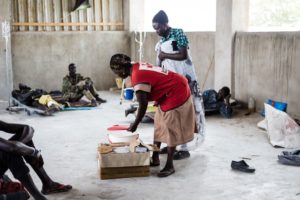
Located in northeastern Africa, Sudan has long been a diverse region of interaction between continental Africa and the Mediterranean. The country is home to hundreds of sub-Saharan African ethnic groups, and political and security challenges in recent decades have impacted it. In addition to displacement, the scattered population has recently suffered several outbreaks of cholera, dengue fever, Rift Valley fever (RVF), chikungunya and malaria.
Healthcare in Sudan faces both unique geographical and financial barriers to access. Improvements in health indicators are difficult to measure since they vary by region. Additionally, efforts to improve healthcare access have met with challenges. These include ineffective implementation of policies and poor coordination between the health and education sectors.
Financial Barriers
Postcolonial Sudan had free access to healthcare until the 1990s when the government gradually withdrew healthcare service provision. To retain healthcare access, Sudanese people often relied on borrowing money from relatives, working more and reducing expenditure on other vital living expenses. Many resorted to buying partial recommended treatments, resulting in further health complications.
Despite reducing support for healthcare, the Sudanese government also invested in higher medical education around the same time. It opened 30 new medical schools and made Sudan the country with the highest number of medical schools in Africa. This investment was an important step in the sustainable progress of healthcare in Sudan. It ensured a steady increase of healthcare professionals for the growing population of 42 million. Consequently, the physician-to-patient ratio improved from 0.1 per 1,000 people in 1996 to 0.41 per 1,000 people in 2015.
In 1997, in an effort to compensate for reduced government spending on health, the Ministry of Health introduced social health insurance (SHI). By 2017, SHI covered most of the population in Khartoum state and a few others. Despite internal efforts, healthcare in Sudan receives little international support. Compared with 50% of healthcare expenditure in Rwanda, only 5.4% of Sudan’s healthcare expenditure comes from external aid. The Sudanese government spends a comparable amount on healthcare to other sub-Saharan countries. However, the cost of healthcare for Sudanese citizens remains high, and many are uninsured.
Current Challenges
Sudan is struggling to retain healthcare workers, many of whom leave the country for better living and working conditions. To reduce physician migration, the Sudanese government has offered various incentives to specialists, such as generous salaries, leading positions, housing, transport and free education for offspring. However, the government cannot afford to sustain these efforts in the long-term or extend these benefits to all physicians.
Michelle Bachelet, a U.N. High Commissioner for Human Rights, argued that sanctions that the U.S. imposed have barred Sudan from receiving international funding for healthcare and COVID-19 relief. Sudan is on the U.S. State Sponsors of Terrorism list, which makes it ineligible to access any of the International Monetary Fund-World Bank’s $50 billion Trust Fund. This fund is currently assisting vulnerable countries to fight COVID-19. Sudan’s health minister Akram Ali Altom has also confirmed that the healthcare system is in urgent need of funding.
Geographical Barriers
As in many African countries, the main challenges to healthcare in Sudan are in rural areas. There, conflict, lack of transport and uneven distribution of resources reduce the availability of healthcare workers. An estimated 70% of the total healthcare providers are in the capital city Khartoum, serving just 20% of the population.
One way that some Sudanese states have addressed the problem has been through the use of telemedicine. Telemedicine has the potential to break down geographical barriers and increase access to high quality, specialist care to patients. A two-year pilot program in Gezira introduced electronic health records into the area for the first time. More than 165,000 new patients were able to register for consultations.
Sudan has many challenges to overcome before telemedicine can become a national success. Consultants located in the Khartoum center were not responsive. Additionally, issues involving software licensing and equipment maintenance have hindered smooth operations. As Salah Mandil, who led the first telemedicine project in Khartoum, noted, poor collaboration between scattered telemedicine projects has hindered efficiency and growth. For instance, projects such as the Surveillance project (FMOH) and the eHealth project have begun independently in various areas. However, they do not communicate or coordinate efforts.
Despite challenges to stability and safety, Sudan has made steps toward improving healthcare access in the past decade. To ensure equal and sustainable healthcare in Sudan, it must address the remaining challenges through better cooperation, management and funding from the government and international aid organizations.
– Beti Sharew
Photo: Flickr

Everything You Need To Know About Homelessness In Norway
How Norway Defines “Homelessness”
The Norwegian government has defined homelessness as an individual or family that is unable to independently maintain a safe, consistent and appropriate housing arrangement. Norway has one of the smallest homeless populations in the world, with only 0.07% of the total population being homeless as of 2016. This proportion is less than half of that found in the United States where 0.17% of the population is homeless.
Causes
While only 0.07% of the Norwegian population is homeless, certain groups are at greater risk than others. Four key causes of homelessness in Norway include insecure housing markets, economic hardship, addiction and mental illness. According to the Office of the United Nations High Commissioner for Human Rights, 54% of homeless people are reportedly drug dependent, 38% suffer from mental illness and 23% are under the age of 25. Additionally, migration poses a challenge to homelessness in Norway, with 20% of the homeless population being immigrants.
Government Initiatives to Fight Homelessness
Norway’s success in regards to having a low homeless population is not random or coincidental. Instead, it is thanks to targeted, effective and long-term policy initiatives. One of the first major policies announced to combat homelessness in Norway was Project Homeless. Project Homeless was launched from 2001 to 2004 and led a collaborative effort among multiple government departments to develop effective methods for combatting homelessness. After Project Homelessness ended, the Strategy Against Homelessness was announced in 2005 and ran until 2007. This strategy built upon the success of Project Homelessness and aimed to:
Most recently, the Norwegian government launched a strategy in 2014 that in many ways furthers the work of the Strategy Against Homelessness. This new strategy specifically targets families with children and young people up to the age of 25. This is a long-term strategy that will last through 2020 and aims to:
The 2014 strategy plans to achieve these goals by providing assistance to individuals shifting from temporary to permanent housing, assistance in obtaining a suitable home within an insecure housing market, preventing evictions and social innovation.
Repeated reassessment of needs and continued support has been key to Norway’s success in reducing poverty through effective policy. These methods are not unique to Norway, they can be seen across the globe in countries with similarly low homeless populations. Thus, it is reasonable to conclude that the insights gained from Norway can be used to inform policies and initiatives against homelessness in countries that are currently struggling.
– Lily Jones
Photo: Pixabay
USAID Saves Thousands of Babies
There is a low-cost, easily manufactured and easily distributed life-saving solution that the World Health Organization (WHO) recognized in 1998 as a suitable antiseptic for cord care. Commonly found in mouth wash and hand sanitizers, chlorhexidine is an antiseptic gel that USAID helped produce for nations with the greatest need since 2002. Nepal was the first nation to adopt chlorhexidine on a large scale. USAID’s efforts, as well as cooperation with the Government of Nepal and its private sector, are responsible for lowering the infant mortality rate significantly. USAID saves thousands of babies around the world.
Chlorhexidine “Navi” Care Program
USAID’s Chlorhexidine “Navi” Care Program, implemented by John Snow Inc. (JSI), provides technical assistance to the Government of Nepal to scale up the use of chlorhexidine through resources and education. The six-year, $3.9 million program had two phases. The first phase occurred from October 2011 to September 2014 in 49 out of 75 of Nepal’s districts. Phase two started in October 2014 and brought chlorhexidine to all districts. The program found funding as a part of USAID’s “Saving Lives at Birth: A Grand Challenge for Development.”
The Nepali government strongly advocated for this scale-up. The administration incorporated single-use chlorhexidine tubes into its maternal and child health packages. In addition, it also trained health care workers for use of the antiseptic. Nurses began to use chlorhexidine at birthing centers across the country. They apply the antiseptic to the umbilical stump immediately after the cut. Its use in Nepal decreased newborn infections by 68% and decreased newborn deaths by 24%. Chlorhexidine for cord care thus became an integral part of maternal and infant health programs. Through the implementation of its new programs like this, USAID saves thousands of babies.
According to the Bill & Melinda Gates Foundation, Dalberg Global Development Advisors and the Boston Consulting Group, it usually takes more than a decade for global health innovations to develop in low and middle-income nations. In Nepal, it took around five years.
The success of USAID’s Navi Care Program is attributed to its partnering with the Government of Nepal and various organizations. USAID’s partners include MoHP, Save the Children, Plan International, Health For Life (USAID), UNICEF, One Heart Worldwide and PSI. Future initiatives should replicate USAID’s coordinated effort due to this program’s monumental success.
Nepal’s Success Serves as a Model for Others
Other nations have taken notice of Nepal’s health improvements and how USAID saves thousands of babies. Many nations sent their leaders and officials to speak with those who worked on the program to expand the use of chlorhexidine in their own countries. Following Nepal as a model, these nations have planned trials with the antiseptic gel. All program-related materials are public, supporting the global trend. As a result, Nigeria, Bangladesh, Pakistan and the Democratic Republic of Congo have begun the process of scaling up chlorhexidine to reduce newborn death rates. In particular, Nigeria has made substantial progress.
USAID’s efforts to lower infant mortality rates yielded fruitful results from a single and simple solution. As a result, it inspired efficient innovation elsewhere. This program was a tremendous global success, as USAID saves thousands of babies and makes the world a healthier place. USAID’s programs will hopefully continue to work with the governments and organizations in low- and middle-income nations to achieve the optimal adoption of healthcare initiatives.
– Mia McKnight
Photo: Wikimedia Commons
Ethics of Human Hair Trade
The growing market for wigs and hair extensions is projected to reach $10 billion in revenue by 2023. Many consumers covet real human hair, as opposed to cheaper synthetic alternatives, because of its natural appearance and resilience to styling. However, harvesting and selling products of the human body make the hair trade rather unique. Many consumers are justifiably curious about how manufacturers source their products. The human hair industry has less regulation, and the ethics of human hair trade can be complex. Although the voluntary sale of hair can be lucrative to many impoverished women, ethical issues often arise when products of the human body are treated as capital.
Where the Hair Comes From
Most commercial hair comes from Russia, Ukraine, China, Peru, and India, with China being the largest hair exporter. Most American hair extension companies source their products from Indian Temples, capitalizing on a ritual head shaving ceremony called Tonsure. Hair manufacturers collect the hair of millions of devotees from temple floors.
Turning Hair Into a Micro-Economy
Hair can be one of the most lucrative commodities that women in extreme poverty have access to. When individuals in developing countries sell their hair, fair compensation can dwarf their monthly earnings. This participation in the global marketplace increases the sellers’ spending power, feeds local economies and allows struggling populations to provide for their families.
Consent versus Exploitation
Paying struggling women for such a personal commodity can easily cross the line into exploitation. The ethics of human hair trade become more questionable when sellers are desperate, and participate as a last resort. Venezuela’s economic crisis has seen an influx of women in need selling bundles of hair to help provide for their families. Rapid hyperinflation has made salaries nearly useless, forcing many Venezuelans to look for supplemental income in the hair trade. Vulnerable and impoverished women are not always able to barter with brokers and receive reimbursement at market prices. In Cambodia, 39-year-old Sreyvy regrets chopping her waist-length locks for just $15. The traders left her remaining hair uneven and patchy.
“I feel regret for cutting my hair off. I don’t feel made up,” said Sreyvy.
Hair Theft
As with other in-demand sources of capital, human hair can be vulnerable to theft and forcible hair cutting. During these attacks, thieves ambush long-haired women, clipping off victims’ ponytailed hair at gun or knifepoint. The thieves are then able to sell stolen hair to manufacturers for quick money. Hair theft has become a chronic offense during Venezuela’s economic decline. A Venezuelan gang called The Piranhas ambushes victims in shopping malls and populated city streets, forcibly cutting and selling ponytails.
Dreadlocks can take many years to grow, and sew-in ready locks are in demand. The market for dreadlocks has instigated a string of hair thefts in South Africa. Johannesburg gangs have become known for their ‘cut and runs’. By selling shoulder-length dreadlocks, hair thieves can earn between $23 and $58, while longer locks can be sold for as much as $230.
Ethical Alternatives
Although the ethics of human hair trade can be tricky to navigate as a consumer, brands like Great Lengths are sourced by consenting and fairly reimbursed individuals. Human hair is a luxury item, and ethically sourced wigs and extensions will inevitably be expensive.
Inexpensive and natural-looking, synthetic hair is also an option. However, the non-recyclable plastic fibers pose an additional set of environmental concerns. Some companies have found innovative ways to improve the sustainability of their synthetic hair. Raw Society Hair has begun using fibers from banana trees to create coarse, braidable hair. The hair is biodegradable, and a natural byproduct of the banana crop, which could increase farmers’ earnings.
The ethics of human hair trade can be complex. While some impoverished women may use it as a source of income, others are exploited for their long locks. A company called Great Lengths works to make sure that any hair the company sells is bought from people who consent and are paid fairly. Other organizations use synthetic hair as an alternative. Either way, hair trade is not simple. However, when organizations source their hair ethically it can be used as a resource for people in poverty to gain income.
– Stefanie Grodman
Photo: Flickr
How a Website Has Helped Refugees During the Pandemic
Although these efforts were a step in the right direction, they are not enough to assist every displaced refugee in the world. Groups like the United Nations (UN) and World Health Organization (WHO) are certainly championing refugees’ needs. However, it does not take a global superpower to make a positive impact on refugee communities; one website has helped refugees during the pandemic through access to information.
Impact of COVID-19 Pandemic on Refugees
COVID-19 has impacted refugees and other forcibly displaced people in three major ways:
While these three obstacles are preventing many refugees from securing safety, they can be solved with one essential tool—information. Reliable information regarding health, income and protection can help many refugees.
Signpost as Virtual Back-up
Signpost is a non-governmental organization (NGO) and a virtual project that utilizes digital platforms to spread critical information throughout vulnerable communities. The organization has made a large impression since its founding in 2015. It has positively impacted almost two million people. Signpost has effectively helped and communicated with people across eight different countries, which demands fluency in several languages. Accurately conveying information regarding public health services and other needs to refugees using their native tongue has saved thousands of lives.
Everywhere, refugees are struggling to find trustworthy information about COVID-19. In response, Signpost has been reaching out and providing valuable, potentially life-saving, information to refugees. In particular, Signpost has supported the most vulnerable communities in countries like Greece, Italy, El Salvador and Honduras.
Everyone has been affected by the pandemic, but asylum-seekers and refugee communities are especially disadvantaged since they are displaced from their home country. Signpost, a website, has helped refugees by providing access to important information about dealing with COVID-19. Although Signpost is just one example, technology-based organizations are mobilizing to provide some type of digital support for refugees. Whether help comes via the Internet or in-person, any outstretched hand toward refugees anywhere is a glimmering sign of hope for a better future.
– Maxwell Karibian
Photo: Flickr
5 Challenges to Mental Health in Africa
Africa still has a long way to go in terms of mental health awareness and care. Mental health is highly stigmatized and there are not enough mental health facilities or resources for the people. In Africa, the average number of psychiatrists is 0.05/100,000 population, while in Europe it is 9/100,000 population. Here are five challenges to mental health in Africa.
5 Challenges to Mental Health in Africa
Despite all the issues, progress is steadily being made. In Burundi, lay community counselors started screening people and encouraging dialogue about mental health. They emphasized educating parents about better ways to discipline children without causing trauma. Additionally, cognitive behavioral therapy has been helping people in Sub-Saharan Africa to deal with depression. Crisis assistance hotlines were also put in place to help those struggling with suicidal thoughts and other urgent crises. All these intervention alternatives highly depend on the community counselors to integrate the strategies with their respective cultures in order to provide relevant solutions.
Many African nations are trying to invest more in mental health and encourage people to seek professional help. Moving forward, countries must continue to support mental health research and intervention measures, prioritizing both the mental and physical health of Africans.
– Renova Uwingabire
Photo: Flickr
Improvements in Healthcare in Syria
The Syrian Arab Republic (more commonly known as Syria) is a Middle Eastern country fraught with danger and grief. It has claimed the news headlines for the past decade. Its violent civil war has led to a shattered government with little to no control over its infrastructure and a diminished ability to provide services to its 17.5 million citizens. Proper healthcare in Syria, especially care focused on women and children, has been a service that suffered. UNICEF is a leading organization that is spearheading efforts in Syria to improve healthcare for women and children. These efforts have led to significant improvements in the health and well-being of both women and their children as years have passed.
Improvement in Numbers and Data
One of the easiest ways to identify the improvements in healthcare in Syria lies within the raw data. The life expectancy of Syrian citizens is one major indicator of healthcare improvements. In addition, life expectancy at birth is steadily increasing in Syria. It reached 71.8 years in 2018 after several years of declining numbers after 2006. This indicates a slow but steady return to its peak in 2005 when life expectancy was 74.43 years of age. This new incline could be due to a variety of factors. However, healthcare is definitely an important piece of the puzzle in improving life expectancy in a nation’s population.
Both infant deaths and neonatal deaths are steeply declining in Syria. Infant deaths have nearly halved since 2000, with numbers of deaths falling from 10,099 to 5,994 in 2018. Moreover, neonatal deaths have lowered from a peak of 8,804 in 1982 to an all-time low of 3,740 in 2018. These two statistics indicate that even at the earliest stages of life when people are the most vulnerable, healthcare in the Syrian Arab Republic is positively progressing in protecting the fitness of its citizens.
Improvements in Female and Child Care
The data and efforts to date have significantly impacted Syria’s healthcare system. However, it is important to note that all of this progress is occurring despite a lack of assistance from large funding sources. Therefore, it is imperative that Syria receives enough support via other means to ensure that this progress can continue without experiencing delay or derailment. This is a nation in trouble. However, with aid and care from people and organizations like UNICEF, healthcare in Syria could finally know relief.
Illicit Trade in Kenya: 5 Things to Know
5 Things to Know About Illicit Trade in Kenya
Kenya’s situation may appear difficult, particularly with the added stress of COVID-19, but its government and hardworking people have taken important steps to end illicit trade and its detrimental effects on the Kenyan economy.
– Will Sikich
Photo: Needpix
Cyclone Harold’s Effect on Homelessness in Vanuatu
Cyclone Harold tore through Vanuatu in early April 2020 and brought torrential rain, flash flooding and destructive wind up to 145 miles per hour. The storm devastated Espiritu Santo and Pentecost Island, bringing about significant impacts to the rest of the country’s northern and central islands. The cyclone wiped out trees and crops, flooded cities and towns, knocked out power, disrupted communications and destroyed countless homes and businesses. World Vision Vanuatu stated that 160,000 people, which is more than half of the country’s population, became homeless. In some villages, including one on Pentecost Islands, the cyclone destroyed all the homes.
General Relief Efforts
Addressing homelessness in Vanuatu after Cyclone Harold has been challenging due to COVID-19. While the country is one of the few places in the world without any cases, a single outbreak could put the island’s population and healthcare system in jeopardy. Therefore, the country halted international travel, forbade foreign relief workers from on-the-ground efforts and required the decontamination of all aid equipment. As a result, many communities did not see immediate relief.
The Santo Sunset Environment Network and Edenhope Foundation established a coconut weaving program to help rebuild after Cyclone Harold. The program employs people from the island of Tanna in the southern part of Vanuatu. The Tanna weavers held workshops with residents of the affected communities and taught them how to build with coconut fronds, rope and bamboo. Although islanders typically use Natangura palms to construct homes, Harold destroyed most of them, so residents had to adapt. While builders constructed most of the new buildings for communal purposes, they are looking to build private homes and cyclone-resistant buildings as well.
Down Under Rally, an Australian boating tour agency, started Project Nakamal, another local effort to address homelessness in Vanuatu. Down Under Rally also operates in New Caledonia and Vanuatu. Its priority is to rebuild the Nakamal structure, a building that locals use for ceremonial and community purposes. These buildings are at the heart of each community and serve as an important facet of Vanuatu society. The boating tour agency teamed up with Port of Call Yacht Services to provide materials for rebuilding. The organization has now exceeded its original fundraising goal of $10,000 Australian dollars, about $6,948 in USD.
Larger organizations like World Vision Vanuatu set a goal to reach 3,000 households in Sanma Province, which includes the islands of Espiritu Santo and Malo. These organizations collaborated with World Vision’s Asia Pacific regional office and Vanuatu Women’s Centre to raise money for shelter, water purification and hygiene kits to support people with disabilities.
Through the help of U.N. Women, the Vanuatu Women’s Centre was able to make mobile counseling visits to various areas that the storm affected and help homeless women as well as their families. The organization reports that many women were concerned about their children and avoiding domestic violence. While various women called in need of food, water and shelter, others reached out to alleviate violence and sexual abuse.
Future of Relief
Despite the fact that Vanuatu’s carbon footprint is small, it is at the forefront of dealing with challenging weather. According to a study from Griffith University, the University of Queensland and the University of the Sunshine Coast, stronger and more frequent tropical cyclones threaten the island chain due. Rising sea levels also threaten the country, which would only exacerbate homelessness in Vanuatu. The study found that community-centered initiatives were most successful in addressing these issues. These local programs were scientific but complemented traditional beliefs.
It is important to expand and further implement the Sendai Framework for Disaster Risk Reduction. The document received signatures at the U.N. General Assembly in 2015 and set specific goals for disaster mitigation through 2030. The agreement seeks to reduce global disaster mortality, the number of people who disasters affect, economic losses and infrastructure damage. It seeks to increase warning system availability, international cooperation to developing countries and the number of countries that have both national and local mitigation strategies.
– Bryan Boggiano
Photo: Flickr
Improving Access to Healthcare in Sudan
Located in northeastern Africa, Sudan has long been a diverse region of interaction between continental Africa and the Mediterranean. The country is home to hundreds of sub-Saharan African ethnic groups, and political and security challenges in recent decades have impacted it. In addition to displacement, the scattered population has recently suffered several outbreaks of cholera, dengue fever, Rift Valley fever (RVF), chikungunya and malaria.
Healthcare in Sudan faces both unique geographical and financial barriers to access. Improvements in health indicators are difficult to measure since they vary by region. Additionally, efforts to improve healthcare access have met with challenges. These include ineffective implementation of policies and poor coordination between the health and education sectors.
Financial Barriers
Postcolonial Sudan had free access to healthcare until the 1990s when the government gradually withdrew healthcare service provision. To retain healthcare access, Sudanese people often relied on borrowing money from relatives, working more and reducing expenditure on other vital living expenses. Many resorted to buying partial recommended treatments, resulting in further health complications.
Despite reducing support for healthcare, the Sudanese government also invested in higher medical education around the same time. It opened 30 new medical schools and made Sudan the country with the highest number of medical schools in Africa. This investment was an important step in the sustainable progress of healthcare in Sudan. It ensured a steady increase of healthcare professionals for the growing population of 42 million. Consequently, the physician-to-patient ratio improved from 0.1 per 1,000 people in 1996 to 0.41 per 1,000 people in 2015.
In 1997, in an effort to compensate for reduced government spending on health, the Ministry of Health introduced social health insurance (SHI). By 2017, SHI covered most of the population in Khartoum state and a few others. Despite internal efforts, healthcare in Sudan receives little international support. Compared with 50% of healthcare expenditure in Rwanda, only 5.4% of Sudan’s healthcare expenditure comes from external aid. The Sudanese government spends a comparable amount on healthcare to other sub-Saharan countries. However, the cost of healthcare for Sudanese citizens remains high, and many are uninsured.
Current Challenges
Sudan is struggling to retain healthcare workers, many of whom leave the country for better living and working conditions. To reduce physician migration, the Sudanese government has offered various incentives to specialists, such as generous salaries, leading positions, housing, transport and free education for offspring. However, the government cannot afford to sustain these efforts in the long-term or extend these benefits to all physicians.
Michelle Bachelet, a U.N. High Commissioner for Human Rights, argued that sanctions that the U.S. imposed have barred Sudan from receiving international funding for healthcare and COVID-19 relief. Sudan is on the U.S. State Sponsors of Terrorism list, which makes it ineligible to access any of the International Monetary Fund-World Bank’s $50 billion Trust Fund. This fund is currently assisting vulnerable countries to fight COVID-19. Sudan’s health minister Akram Ali Altom has also confirmed that the healthcare system is in urgent need of funding.
Geographical Barriers
As in many African countries, the main challenges to healthcare in Sudan are in rural areas. There, conflict, lack of transport and uneven distribution of resources reduce the availability of healthcare workers. An estimated 70% of the total healthcare providers are in the capital city Khartoum, serving just 20% of the population.
One way that some Sudanese states have addressed the problem has been through the use of telemedicine. Telemedicine has the potential to break down geographical barriers and increase access to high quality, specialist care to patients. A two-year pilot program in Gezira introduced electronic health records into the area for the first time. More than 165,000 new patients were able to register for consultations.
Sudan has many challenges to overcome before telemedicine can become a national success. Consultants located in the Khartoum center were not responsive. Additionally, issues involving software licensing and equipment maintenance have hindered smooth operations. As Salah Mandil, who led the first telemedicine project in Khartoum, noted, poor collaboration between scattered telemedicine projects has hindered efficiency and growth. For instance, projects such as the Surveillance project (FMOH) and the eHealth project have begun independently in various areas. However, they do not communicate or coordinate efforts.
Despite challenges to stability and safety, Sudan has made steps toward improving healthcare access in the past decade. To ensure equal and sustainable healthcare in Sudan, it must address the remaining challenges through better cooperation, management and funding from the government and international aid organizations.
– Beti Sharew
Photo: Flickr
Diabetes in South Africa: 5 Essential Facts
5 Facts About Diabetes in South Africa
– Danielle Kuzel
Photo: Flickr