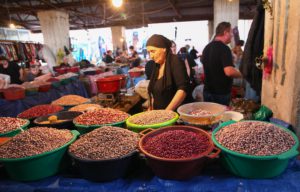
 Located in the Caucasus Mountains of Eastern Europe, Georgia is a transcontinental country in Asia and Europe, where 15.6% of the population lives below the poverty line. While the people of Georgia receive enough food, some suffer from stunted growth and undernourishment due to the quality of their diet, leading to hidden hunger in Georgia.
Background
Hidden hunger in Georgia results from a lack of essential vitamins and minerals in its accessible food. It occurs when people do not consume enough protein, iron and vitamin A consistently, which can cause tangible issues. For example, half a million Georgians are malnourished and infant mortality is twice the EU average. Additionally, a significant number of children under 5 years old are anemic.
Most of the foods that Georgians eat are high in starch and have little nutritional value. The two most popular dishes in rural Georgia are fried potatoes and lobio, which are made of boiled beans. Overreliance on these types of foods has made cardiovascular disease the most common chronic disease in the country. Currently, it accounts for 69% of Georgia’s mortality.
The leading cause of the dietary insufficiencies in Georgia is a lack of access to meat and meat-based products. Unfortunately, these products are relatively expensive in local markets. The average household income is just $6 per day (⅓ of the population earns only $2.5 per day), so meat consumption is impractical for most people.
Furthermore, the gross domestic product of Georgia was just $16.21 billion in 2018, with a per capita GDP of $4,723. For comparison, the 2018 GDP per capita for the European Union was $35,616.
Although the country’s GDP is growing overall, economic downturns, such as the 2008 Russo-Georgian War, the 2015 stagnation, the 2020 pandemic and the Russia-Ukraine war, have reduced the value of the Georgian Lari. These shifts can create vulnerable conditions for Georgia’s population and reduce food security.
The Impact of COVID-19 and the Russia-Ukraine War
Amid the global pandemic, widespread lockdowns and food shortages significantly impacted local markets in Georgia. While the country has subsistence farmers, most of the population relies on purchasing food from street markets or bazaars. The combination of lockdowns and supply chain disruptions posed a severe risk of food insecurity for the population. However, the government took prompt action to mitigate this risk by implementing the following measures
- Provision of subsidies to local farmers
- Government procurement of food from private companies to prevent shortages.
- Subsidizing the import of food items such as pasta, oil, wheat, milk powder, and sugar.
Georgia relies on neighboring countries Russia and Ukraine for its wheat, sunflower oil, milk and dairy products. The disruption of the supply chain has reduced imports and increased food prices in the country, leading to an inflation rate of “17.9% in 2022”.
Solutions
Fortunately, governmental and nonprofit organizations worldwide are taking steps to improve dietary standards and combat hunger in Georgia. Action Against Hunger has had a Food Security Program in the country since 1994, established shortly after the dissolution of the USSR and the collapse of collective farming in the region. It helped 5,937 people in 2018.
BRIDGE is a Georgia-based NGO that publishes comprehensive studies detailing Georgians’ dietary habits. It also publishes policy recommendations, ranging from developing the Georgian diet monitoring systems to embedding nutrition into the Ministry of Education’s agenda.
The Georgian Agricultural and Rural Development Alliance (GAARD), of which BRIDGE is a member, registered a “Food Security Bill” in Parliament in 2017. This bill aims to reduce Georgia’s reliance on imported food and improve the country’s nutrition self-sustainably.
Hidden hunger manifests in various symptoms and diseases in Georgia, including obesity and cardiovascular issues. Cardiovascular disease represents 69% of Georgia’s mortality, and rising food prices could worsen this situation. While Georgia grapples with hidden hunger, organizations such as Action Against Hunger, BRIDGE and GAARD are actively working to enhance food quality in the country and make a positive impact.
– Christopher Bresnahan
Photo: Flickr
Updated: October 9, 2024

5 Things to Know About Hunger in Pakistan
Five Things to Know About Hunger in Pakistan
What is Being Done
In Pakistan, there are several community-driven efforts to fight hunger and, more specifically, stunting. These groups have been able to provide nutrient supplements to more than 700,000 Pakistanis experiencing undernutrition or malnutrition.
In 2020, the Food for Peace (FFP) program, a division of USAID, has provided $2 million to UNICEF for nutrition services for children under the age of five who experience severe acute malnutrition in Pakistan. This number is much less than in previous years. In 2019, FFP provided $18 million to UNICEF and in 2018, the figure was more than $21 million.
In 2018, the Pakistani government pledged to achieve self-sufficiency in food and set a goal of eliminating hunger in the country by 2030. To achieve this goal, the government has put an emphasis on crop diversification, water management and “climate-smart” farming to reduce the catastrophic impacts of natural disasters on food security.
Pakistan is a country that has experienced political and economic turmoil for decades. These conditions coupled with the impacts of natural disasters have made undernutrition and malnutrition a huge concern in the country. While over the past several years the country has implemented initiatives to improve the food situation, the challenges surrounding food security remain and hunger in Pakistan remain a major issue.
– Jessie Cohen
Photo: Pixaby
5 Facts About Homelessness in Turkey
Similarly to the rest of the developed world, there are several factors that contribute to homelessness in Turkey. These factors include price inflation, unemployment, limited housing, unsafe home-life, mental illness, addiction, migration and undocumented citizen status. While many statistics remain unknown, here are five facts about homelessness in Turkey that are staggering.
5 Facts about Homelessness in Turkey
Compelled by the startling facts of homelessness in Turkey, one organization has channeled its faith into compassion to break through the social stigma surrounding the homeless and help. Since 2017, The Good Deeds Association has helped the homeless with their personal needs by donating clothes, providing showers, making laundry available and even giving haircuts. They believe their efforts will not only make a difference in their quality of health but also help them in pursuits to better their life, such as successfully finding a job. They hope to inspire people through their actions to get involved and do their part for their community as well.
– Samantha Decker
Photo: Flickr
Building Better Education: The LEGO Foundation
In many countries, even a basic education is coveted but the people cannot access it for several reasons. This is reflected in the amount of foreign aid that funds education projects. Only 3 percent of global foreign aid provides education access to those who cannot afford it themselves. Currently, millions of people lack access to basic education, 62 million of whom have been displaced by conflict. To address this, some NGOs are stepping up. The LEGO Foundation is one NGO that is providing access to play-based learning and combating poverty.
Learning Through Play
The LEGO Foundation provides access to education in a unique way: through play. Play-based education encompasses a spectrum of activities, from free play to games. Research backs this method, as young children are often full of imagination and curiosity. For children living in poverty, play-based learning can be an escape from the stressors that otherwise dominate their lives. The LEGO Foundation found five criteria of play, that if present, would optimize learning. Play is optimal if it:
Other necessities for successful play-based education are a responsive caregiver and a safe environment. With these prerequisites in place, play can reinforce content-based learning, as critical thinking and curiosity are applied to concrete problems. Thus, play-based education can also fight poverty by providing children with solid foundational qualities like autonomy, communication and negotiation skills.
Aiding Refugees
Since many refugees are children and displacement can last, on average, for 10 years, providing access to play-based learning is crucial for children’s’ development. Refugees themselves often have few resources with which to provide basic things like nutrition and shelter, let alone education. The LEGO Foundation steps in to provide access to play-based learning.
On several occasions, the LEGO Foundation has provided grants to organizations aiding refugees. In 2018, LEGO gifted $100 million to the Sesame Workshop to ensure that children of people displaced by conflicts in Syria and Rohingya would be able to access play-based learning. During the first six months of this project, Sesame reached 50,000 children and more than 30,000 mothers. The LEGO Foundation did the same for displaced children in Uganda and Ethiopia in 2019. This initiative, PlayMatters, aims to improve education for 800,000 kids by assisting 10,000 school teachers and 170,000 primary caregivers.
UNICEF Partnership
The LEGO Foundation partnered with UNICEF in 2015, with positive results. In South Africa, the partnership assisted over 1 million children and 150,000 teachers. Working with the LEGO Foundation and UNICEF, South Africa’s Ministry of Basic Education hosted the first-ever African Conference on Play in 2019. Stakeholders from across the world met to discuss play-based learning and its benefits. In response to the COVID-19 pandemic, the LEGO Foundation increased funding to UNICEF by $2 million and supplied LEGO PLAY Boxes to hard-hit families in Italy and Spain. LEGO also gave $15 million to Education Cannot Wait, which has used its COVID-19 relief funds to assist children in 26 countries.
With partnerships like these, the LEGO Foundation is committed to providing learning opportunities to children around the globe. This certainly reflects LEGO’s history, as the Danish origin of LEGO, “leg godt,” means “play well.” Because of the company’s efforts, millions of children across the world are doing just that and learning from it.
– Jonathan Helton
Photo: Flickr
6 Facts About Healthcare in Iraq
6 Facts About Healthcare in Iraq
Iraq’s healthcare system was once one of the most advanced in the region. Due to a mid-20th century oil boom, Iraq enjoyed a period of relative stability and increased development. By the 1970s, the Iraqi healthcare system was one of the most strongest and centralized institutions in the region. Many hospitals and primary care clinics offered free services to Iraqi citizens while medical professionals of the country trained at elite institutions abroad. However, the Iran-Iraq War, which consumed the region for the majority of the 1980s, prompted a steady decline in availability and quality of healthcare in Iraq. Due to mounting military casualties, damage to infrastructure and increasing debt, civilian access to quality medical care began to decrease.
Healthcare personnel have been in increasingly high demand in Iraq. In recent decades, violence caused by invasions and terrorism has taken a great toll on the number of practicing medical professionals in the country. Due to the political chaos after the fall of Saddam Hussein, an estimated 15,000 Iraqi doctors left the country for richer and more stable countries. The Iraqi government now offers returning doctors easy access to employment and higher salaries. In spite of this, returners are few and far between. Hope for the Iraqi healthcare system primarily lies in the younger generation of student doctors. However, student doctors primarily seek training abroad rather than permanent employment.
Many of the hospitals in Iraq are understaffed and in various states of disrepair. In the 1990s, a 90% budget cut led to the rapid degradation of equipment, buildings and the training of medical professionals. While no further budget cuts followed, the decades of war that followed did little to help. Many of the buildings were further looted. By the mid-2000s, around 33% of primary care clinics and 12% of hospitals were severely damaged. Around half of the primary care facilities in the country are currently not staffed by doctors. The majority of these buildings have no access to running water, worn-out machines and shortages of medicine along with other basic medical supplies. The doctors present are often overspecialized and in need of more thorough training.
Rebuilding portions of the Iraqi healthcare system has proven to be a daunting prospect. Many factors played into the decrease in Iraqi healthcare quality. However, the 2003 U.S.-led invasion arguably had the greatest impact on current reconstruction efforts. The widespread looting, destruction of facilities and flight of numerous medical professionals negatively impacted healthcare in Iraq on a great scale. By comparison, the autonomous Kurdistan region, which has been relatively stable from 2003, has had far fewer issues in the development of medical facilities. In Iraqi Kurdistan, there was a 4.3 primary care center per 100,000 population increase from the 2012 national average of 7.4. By comparison, the rest of the country averaged around a 1.4 primary care center increase. Rebuilding the healthcare system should be a significant priority of the Iraqi government due to the lack of foreign investment.
Iraq’s healthcare system has failed to control the COVID-19 outbreak due to a variety of factors. Iraq’s healthcare infrastructure has been in a difficult situation for the last several decades. To make matters worse, the COVID-19 outbreak has pressed it to its limit. There has been premature opening and easing of lockdown restrictions. As a result, cases of COVID-19 have skyrocketed in the country over recent weeks while top Iraqi medical professionals have urgently advised the opposite course of action. With 94,693 cases as of July 21, the situation in the country grows increasingly dire by the day.
The nongovernmental organization Doctors Without Borders is concentrating efforts on improving the quality of healthcare in Iraq. The group has promoted initiatives with around 1,500 staff as of 2018. Support has shifted to the establishment of field hospitals providing medical support for conflict-related injuries. Additionally, the aforementioned hospitals provide support for younger children, assisting with up to 1,000 deliveries a month. Future initiatives include the provision of tuberculosis medication and programs aiding with mental healthcare.
Conclusively, there are many challenges lying ahead for Iraqis in the domain of medical care. Reconstruction efforts are far from nonexistent. However, decades of conflict and instability have introduced new factors potentially interrupting the progress of rebuilding.
– Samuel Levine
Photo: Wikimedia Commons
Hidden Hunger in Georgia
Background
Hidden hunger in Georgia results from a lack of essential vitamins and minerals in its accessible food. It occurs when people do not consume enough protein, iron and vitamin A consistently, which can cause tangible issues. For example, half a million Georgians are malnourished and infant mortality is twice the EU average. Additionally, a significant number of children under 5 years old are anemic.
Most of the foods that Georgians eat are high in starch and have little nutritional value. The two most popular dishes in rural Georgia are fried potatoes and lobio, which are made of boiled beans. Overreliance on these types of foods has made cardiovascular disease the most common chronic disease in the country. Currently, it accounts for 69% of Georgia’s mortality.
The leading cause of the dietary insufficiencies in Georgia is a lack of access to meat and meat-based products. Unfortunately, these products are relatively expensive in local markets. The average household income is just $6 per day (⅓ of the population earns only $2.5 per day), so meat consumption is impractical for most people.
Furthermore, the gross domestic product of Georgia was just $16.21 billion in 2018, with a per capita GDP of $4,723. For comparison, the 2018 GDP per capita for the European Union was $35,616.
Although the country’s GDP is growing overall, economic downturns, such as the 2008 Russo-Georgian War, the 2015 stagnation, the 2020 pandemic and the Russia-Ukraine war, have reduced the value of the Georgian Lari. These shifts can create vulnerable conditions for Georgia’s population and reduce food security.
The Impact of COVID-19 and the Russia-Ukraine War
Amid the global pandemic, widespread lockdowns and food shortages significantly impacted local markets in Georgia. While the country has subsistence farmers, most of the population relies on purchasing food from street markets or bazaars. The combination of lockdowns and supply chain disruptions posed a severe risk of food insecurity for the population. However, the government took prompt action to mitigate this risk by implementing the following measures
Georgia relies on neighboring countries Russia and Ukraine for its wheat, sunflower oil, milk and dairy products. The disruption of the supply chain has reduced imports and increased food prices in the country, leading to an inflation rate of “17.9% in 2022”.
Solutions
Fortunately, governmental and nonprofit organizations worldwide are taking steps to improve dietary standards and combat hunger in Georgia. Action Against Hunger has had a Food Security Program in the country since 1994, established shortly after the dissolution of the USSR and the collapse of collective farming in the region. It helped 5,937 people in 2018.
BRIDGE is a Georgia-based NGO that publishes comprehensive studies detailing Georgians’ dietary habits. It also publishes policy recommendations, ranging from developing the Georgian diet monitoring systems to embedding nutrition into the Ministry of Education’s agenda.
The Georgian Agricultural and Rural Development Alliance (GAARD), of which BRIDGE is a member, registered a “Food Security Bill” in Parliament in 2017. This bill aims to reduce Georgia’s reliance on imported food and improve the country’s nutrition self-sustainably.
Hidden hunger manifests in various symptoms and diseases in Georgia, including obesity and cardiovascular issues. Cardiovascular disease represents 69% of Georgia’s mortality, and rising food prices could worsen this situation. While Georgia grapples with hidden hunger, organizations such as Action Against Hunger, BRIDGE and GAARD are actively working to enhance food quality in the country and make a positive impact.
– Christopher Bresnahan
Photo: Flickr
Updated: October 9, 2024
Bringing IoT into Agriculture in Developing Countries
IoT and Its Importance in Agriculture
IoT stands for “the Internet of things;” a general idea that refers to the global infrastructure that makes up a society defined by the collection and dissemination of information. With over 6 billion devices online (and growing exponentially) as of 2019, IoT will drive innovation in the 21st century through developments in mass communication and data analysis. Applying these developments to agriculture is important because global food production will have to rise by 70 percent in order to meet the expected demand in 2050. Developing countries will have the most mouths to feed, but also the most potential to grow their yields accordingly.
How IoT Works in Agriculture
IoT in agriculture depends on innovative sensor technology employed with the goal of streamlining food production. These sensors can provide data on anything from crop health to vehicle maintenance. Typically, sensors are deployed on specific targets according to the farmer’s needs. People can access the data in the sensors wirelessly. Farmers then interpret the data and make manual adjustments as necessary. Depending on the chosen metric and sophistication of the sensor technology, farmers can automate and alter certain processes through companion mobile applications. In a traditional system, a farmer should be able to determine the overall health of their animals, crops, water, and soil through their mobile phone.
Benefits of IoT
IoT allows farmers to keep, track and optimize the countless data points and processes required for efficient agriculture production. Real-time and accurate data allow farmers to optimize inputs and adapt to extenuating circumstances. As a result, production costs decrease and yields increase. Applications and communicative technologies connect and educate communities about useful farming practices. In impoverished areas lacking education and connection, easy-to-follow modules and guidelines are especially helpful to farmers dealing with challenges posed by terrain and situation. The global farming market is expected to grow by 12 percent between 2017-2021, largely due to investment in IoT-related agriculture practices.
Roadblocks of the Digital Divide
Data technology, while cost-effective in the long term, has high upfront costs of capital acquirement and building up digital infrastructure. Obtaining accurate data in real-time depends on reliable connectivity – something lacking in many developing countries. In these areas, people can build an effective digital infrastructure only through outside investment and maintenance. Operating sensors and mobile technology also require a degree of digital literacy. While specific applications are increasingly easier to operate, farmers in developing countries are often disadvantaged by a lack of access to digital tools in education. Even if digital infrastructure and education programs can be successfully implemented, the digital economy opens up other issues of privacy and cybersecurity. Data can be destructive in the wrong hands, so accountability institutions must accompany infrastructure investment.
Bridging the Divide
The potential of IoT in agriculture has sparked the attention of outside organizations, ranging from international institutions to underfunded startups. The World Bank funds many IoT programs and hosts webinars focused on understanding the applications of IoT in agriculture. Mimosa Technology has instituted a hardware lease program to smallholder farmers in Vietnam with the goal of transitioning these farmers to IoT technology. Eruvaka, an Indian startup, uses IoT technology to solve pond management problems for impoverished farmers. Countries have also realized the potential of IoT applications in agriculture. While many developed programs are already transitioning pilot programs to mass production, countries such as Ghana, Kenya, and Nigeria have made meaningful investments in IoT as well. In fact, developing countries are expected to make up around 40 percent of IoT’s market value by the end of the year.
Technological applications of IoT
As technology improves, IoT applications in farming are expected to move well beyond sensors and mobile apps. AI and machine-learning technologies will make the automation of tasks significantly easier. Combined with advances in robotics, automated precision planting could become commercially feasible. Advances in drone technology will allow for the real-time mapping of crops in order to gauge land condition and yield potential. Monitoring this technology will also incentivize sustainable farming practices, such as soil preservation and tracking of vulnerable animal populations. Specialized communication tech will make the collection and dissemination of information easier than ever before, connecting previously isolated communities all over the world.
The meeting of agriculture and information technology can be a game-changer when attached to sufficient funding and well-intentioned policy. IoT agricultural technology can break the cycle of subsistence agriculture that prevents developing countries from growing economically. Breaking this cycle will contribute to ending global poverty while growing and furthering the global food market.
– Matthew Compan
Photo: Flickr
How Kyrgyzstan Youth are Fighting Poverty
Youth Promoting SDGs
Between 2019 and 2020, the U.N. began an initiative allowing Kyrgyzstan youth to step up and spread awareness amongst their generation about implementing the 17 Sustainable Development Goals (SDGs). The SDGs include things like “no poverty” and “zero hunger.” Through this program, 34 Kyrgyzstan youth have partnered with U.N. campaigns to advance the SDGs and show others what steps can be taken to achieve them. Each SDG is assigned to two youth representatives. Participants are passionate about the chosen SDG, as it often relates to the representative’s area of study in school or experiences growing up.
As Aibek Asanov, a youth representative for Clean Water and Sanitation (SDG 6) said, “I believe that youth can change the future. This is why I became the SDG Delegate.”
Youth Against Human Trafficking
Kyrgyzstan youth have also taken a stand against human trafficking. Through Kyrgyzstan’s 2017-2020 State Program against Trafficking in Persons, 80 youth ambassadors have represented 30 youth groups across Kyrgyzstan. These youth ambassadors work with local government and media groups, and gather for a yearly conference to discuss the goals and developments of the program. The program focuses on eliminating child marriage and forced marriage. It also provides access to resources for victims of human trafficking. In 2018, the program had positively influenced more than 600,000 people and utilized the work of 5,000 youth activists.
Youth Spearhead IT Campaign to Fight Domestic Violence
In 2020, the UNDP partnered with youth coders and designers to develop IT solutions that fight domestic violence against women and children. These solutions are especially needed for those trapped in quarantine due to the COVID-19 pandemic. In cooperation with the Spotlight Initiative, UNDP organized a two-day hackathon that addressed solutions in 4 areas:
Within two days, over 50 developers came up with 18 IT solutions to aid people in these four areas. Of these projects, the three winners created very different but useful solutions. One addressed recognizing domestic violence and connecting people to the necessary resources. Another focused on victims’ access to online psychologists. The third winner used fairy tales to track children’s mental health.
Youth Partnership with Local Governance
Since 2017, UNICEF has encouraged Kyrgyzstan youth to take initiative in advancing their own wellbeing by partnering with local governments. So far, the Youth and Child Friendly Local Governance (YCHFLG) program has reached 24 rural and 18 urban precincts to place importance on services for young people and ensure that local governments prioritize the needs of Kyrgyzstan youth. The program encourages the involvement of youth in decision-making and politics. Youth can share their insight and preferences, which are then taken into account by local governments when plans are put into place.
In just a few years, Kyrgyzstan youth have taken initiative. They have impacted poverty reduction by addressing the SDGs, raising awareness about human trafficking, using creativity and innovation to end domestic violence and becoming involved in the political process. Passionate, poverty-aware youth will continue to be instrumental to future progress in Kyrgyzstan.
– Anita Durairaj
Photo: Wikimedia
6 Facts About Healthcare in Kenya
Kenya is a coastal country located in East Africa. The nation is developing significantly in terms of economy and healthcare provision. However, since there is a high prevalence of natural disasters and poverty, there are recognizable problems when it comes to healthcare in Kenya. For instance, there are 8.3 nurses and 1.5 doctors per 10,000 people. These numbers fall drastically short of the WHO recommendation of 25 nurses and 36 doctors per 10,000 people. Here are six of the major issues related to healthcare in Kenya and how the country is addressing them.
6 Facts About Healthcare in Kenya
Kenya is determined to address the most challenging problems related to healthcare in the country. There is an emphasis on research and investing in resources to help more people to access better and more affordable healthcare services. Healthcare in Kenya is expected to see improvement in the coming years.
– Renova Uwingabire
Photo: Flickr
Gojek: Bridging the gap between SMEs and Big Tech in Indonesia
Technology has the ability to empower those in a community to achieve better, faster, and more efficient results. Gojek is an Indonesian start-up that began with a vision to use technology to improve the lives of motorcycle taxi drivers. The company has now flourished into an online ecosystem that connects Small to Medium Enterprises (SMEs) in Indonesia to millions of customers and Big Tech clients. This effort is further improving the lives of millions in the region.
Who is Gojek?
Gojek is Indonesia’s first unicorn company and Super App that provides a multitude of services to thousands of users across Southeast Asia, such as ride-hailing, food delivery, beauty services, entertainment booking and online payments. The company believes there is always a way to solve everyday problems and create a positive social impact using advancements in technology. As SMEs make up most of the businesses in Indonesia, Gojek helps SMEs in Indonesia by creating a digital platform that connects consumers and businessmen efficiently and seamlessly. Overall, the company managed to raise billions of dollars in financing from Google, Tencent, JD.com, Mitsubishi and VISA. More recently, Facebook and Paypal also invested in Gojek’s financial technology division, thereby officially joining Gojek’s list of high profile investors that share the mission of increasing digital economic growth in Southeast Asia.
Connecting SMEs with Big Tech in Indonesia
Indonesia is Southeast Asia’s largest and fastest-growing digital economy. Therefore, Gojek plays an important role in facilitating the growth of the digital economy by acting as a medium of communication between Big Tech companies who want to invest in the region and Indonesia’s SMEs. This results in more sustainable business opportunities.
Gojek helps SMEs in Indonesia by increasing financial inclusion through the digital payments platform on GoPay that is supported by Whatsapp. Digital payments are safer and more reliable for both customers and businesses, yet the majority of SMEs in Indonesia still operate on a cash-basis. SMEs operate this way because they lack access to financial services such as setting up a bank account. This reliance on cash payments only has limited the financial ability and customer reach of SMEs in Indonesia.
However, since its launch in 2015, through its app, Gojek has helped more than a hundred thousands of Indonesian merchants tap into an international market of more than 170 million people across Southeast Asia. In particular, Gojek’s GoPay functionality allows Indonesians who do not have bank accounts to participate in the digital economy by transferring money through Whatsapp, a social media app owned by Facebook that is used by a majority of the Indonesian population.
Gojek’s role during COVID-19
In light of the impact of COVID-19, which rendered consumers unable to physically visit stores, Gojek successfully converted 100,000 traditional businesses onto Gojek’s online platform, saving them from going out of business. By providing SMEs with complete digital solutions and tools, business owners no longer solely rely on in-store sales. Now, they are able to migrate their business online and take advantage of Gojek’s established online platform in light of the pandemic.
In other words, Gojek helps SMEs in Indonesia by promoting digital literacy and skills that will allow them to adapt their business model and increase their chances of reaching more customers, thereby building the long term resiliency of SMEs. Not only does the company play a crucial role in ensuring the delivery of essential food and goods are carried out, but Gojek has also played an active role in helping the Indonesian society by providing relief programs and soft loans for its drivers. For instance, Gojek’s senior management initiated a pay cut to allocate more than $7 million for its drivers and employees that are struggling due to the decrease in demand for Gojek’s services. As a whole, Gojek has helped the Indonesian government manage the COVID-19 pandemic by contributing to the backbone of the Indonesian economy.
It is clear that Gojek’s mission to solve the friction in everyday life is beginning to have a positive impact. It can be seen through the financial aid and support that the organization provides to the SMEs in Indonesia. By connecting Big Tech companies and SMEs, Gojek helps SMEs in Indonesia by giving them a louder voice and increased competitiveness in the regional and international marketplace of the digital economy.
– Mariyah Lia
Photo: Flickr
Homelessness in Mali
Mali is a large, central country in the Sahel region of Western Africa. As of 2017, 42.7% of the population lived below the poverty line. In the first half of 2020 alone, humanitarian assistance became a necessity for more than 4.3 million people in Mali. Persistence of violence, food insecurity, drought and high poverty levels have not only deteriorated the quality of life for many Malians throughout the last decade, but have also actively aggravated the level of homelessness in Mali. According to the United Nations Development Program, approximately 80% of the population of Mali does not have access to adequate housing.
Violence and Instability
Violence and instability play a large role in worsening homelessness in Mali. The nation experienced a rise in homelessness in correlation with the violence of the 2012 crisis. At this time, multiple Islamic groups rose up in rebellion against the government. Despite the negotiation of a peace agreement in 2015, rampant violence and conflict continue today between unidentified armed groups throughout the country. The initial outbreak of violence left as many as 230,000 people displaced from their homes; eight years later, this violence continues to internally displace massive amounts of people. As of March 2020, 124,000 Malians were homeless. According to the Internal Displacement Monitoring Centre, the total number of displaced persons in Mali due to violence and conflict is 208,000 as of December 2019.
Child Homelessness
The census on homeless children reported that Mali’s capital, Bamako, has nearly 4,400 homeless children. However, unofficial estimates put that number closer to 6,000. On top of that, around 200,000 children nationally exist in “difficult living circumstances.” Many of these homeless children are considered “street children,” commonly sent out to beg and retrieve money for gangs to which they belong or for adults exploiting them. These children tend to either come from large families or be orphans, and both live in public urban spaces.
Natural Disasters
Homelessness in Mali is also aggravated by natural disasters, particularly flooding. The Internal Displacement Monitoring Centre found that 6,300 total people became displaced due to natural disasters in 2019, the large majority of which was flooding. Floods displaced as many as 19,000 Malians in 2018, and more recently, 4,600 in August of 2019 alone. The floods of August 2019 destroyed as many as 845 homes.
Looking Forward
While homelessness in Mali remains a complex issue, some organizations are coming together to start combating homelessness however possible. Domestically-based NGO Association Malidéni was founded in 2009 with the intention of helping street children out of homelessness. The organization now also provides aid to homeless adults, individuals suffering from substance abuse, prisoners and victims of sexual exploitation with community-building soccer programs. With efforts such as these, the elimination of homelessness in Mali seems achievable.
– Alexandra Black
Photo: Flickr