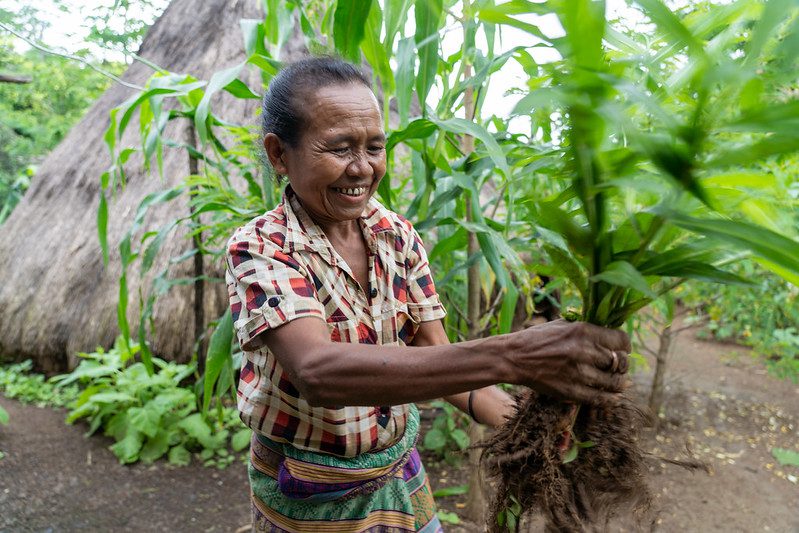
Timor-Leste, also known as East Timor, is one of the least-known countries in the world. Situated between Papua and Indonesian West Timor, Timor-Leste’s economy depends largely on the production of hydrocarbon from offshore natural gas. Most people living there do agricultural work harvesting corn, rice, coconuts, coffee and sweet potatoes. To produce additional income, locals create textiles and baskets, carved ivory, pottery and handicrafts. Politically, Timor-Leste has had a turbulent past. Independence from Indonesia came at a cost in 1999, with hundreds killed by militants. The territory became a sovereign state in May 2002 and since then the government has grappled with the issue of poverty.
Facts about Poverty in Timor-Leste:
1. Investments in Human Capital
Timor-Leste’s population is 1.3 million, of which about 42% are living in poverty, down from 50% in 2007. Standards of living have improved in the past decade, with the Human Capital Index, or investments in human capital, reaching 0.43 in 2017. However, the country still needs to increase earnings and train a more skilled workforce.
2. Health Care for Women and Children
For every 1,000 babies born in 2018, 46 will die within five years. Yet child mortality has decreased by 41% since 2013. Timor-Leste has also made strides in its maternal mortality rate, which has been reduced from 694 per 100,000 live births in 2000, to 142 in 2017.
It is important to note that the country has one of the youngest populations on earth. In 2015, 42% of the populace was made up of children ages 0 to 14. This has created a high dependency ratio of 82% for young people in the working-age population. Timor-Leste’s government has been making an effort to expand education and to help it is citizens be healthier. More progress is needed in terms of providing food to fight malnutrition and in maintaining the health of its children.
3. Big Strides in Education
The government has made significant efforts to educate children and the country is investing in building schools. From 2003 to 2015, the secondary school enrollment ratio went from 46.4% to 76.8%. Still, Timor-Leste needs to invest even more resources in its younger generation.
4. Access to Food
From 2016 to 2018, the prevalence of undernourishment was 24.9% and the rate of malnutrition in children under five was 9.9%. In response, the government has established feeding programs in schools and health centers.
5. Sustainable Infrastructure
In 2019, the World Bank created a Country Partnership Framework which will support Timor-Leste in using its natural resources for sustainable infrastructure. Its initiatives include investing in human capital and promoting gender equality; investing in the digital and transportation sectors; encouraging economic growth led by the private sector and promoting tourism and agribusiness. While these efforts are helping with poverty in Timor-Leste, the COVID-19 pandemic has brought gains in this area to a standstill.
The Pandemic has Slowed Progress
The COVID-19 pandemic has created new challenges for Timor-Leste. According to the Global Health Observatory, there are only 59 hospital beds per 120,000 people. Complicating matters, only 5% of the country’s budget is dedicated to the health sector. Petroleum prices have dropped, and given its dependency on oil and trade, Timor-Leste’s per capita GDP could fall as low as negative 3.7% in 2020, and 4% in 2021. In addition, while the country has received medical support from UNICEF and other organizations, it will not receive as much help now, as countries are dealing with their own pandemic situations.
As of June 9, 2020, Timor-Leste’s government planned to give each home $15 in electricity credits and $100 per month. However, more needs to be done, since social and health services are limited, and over 40% of the populace is below the poverty line. It is the government’s hope that when the pandemic recedes, they will be able to pick up where they left off in the fight against poverty in Timor-Leste.
– Sarah Betuel
Photo: Flickr

USAID Helps India Combat COVID-19
India remains one of the top recipients of U.S. foreign assistance, much of it being economic. Through the U.S. Agency for International Development (USAID), one of the leading global aid agencies, the U.S. committed $2.9 million to strengthen India’s fight against the COVID-19 pandemic. USAID created a health system strengthening project implemented by Jhpiego, a global nonprofit health organization affiliated with Johns Hopkins University. The project intends to develop risk communication materials concerning COVID-19 and its potential spread to communities in 12 Indian states. Funding during the pandemic from USAID helps India provide care and treatment for those affected, safety equipment for healthcare workers and support for local communities so that they can contain and slow the spread of the virus.
USAID Helps India by Providing Supplies
USAID shipped 100 new compact and deployable ventilators to India to treat patients across the country. The units have a value of almost $1.2 million. USAID is also providing support packages that include equipment for the ventilators and additional medical supplies, technical assistance and service plans to respond to India’s urgent needs. USAID is working with organizations within India such as the Indian Red Cross Society to ensure that the ventilators are transported safely and securely to health care facilities around the country.
Partnerships for Affordable Healthcare Access and Longevity (PAHAL)
In coordination with the Government of India, USAID is giving funds to the Partnerships for Affordable Healthcare Access and Longevity (PAHAL). PAHAL is an innovative project by USAID and IPE Global that serves to promote health financing models and provide support for improving access to quality and affordable healthcare solutions for urban poor communities in India. PAHAL reduced healthcare costs and reached more than 10 million urban poor in India. The project’s sustainable development goals have helped to mitigate the negative health and socioeconomic effects of the coronavirus pandemic. PAHAL also improved economic growth in targeted areas and reduced income and gender inequalities faced by many cities’ poorest communities.
With the PAHAL project, USAID supports the National Health Authority’s establishment of a financing facility that can utilize and transfer private sector resources to health facilities across India that are enrolled in the country’s health insurance, positively impacting around 500 million poor and vulnerable people. PAHAL’s widespread, positive impact is one of the primary ways USAID helps India combat COVID-19.
The Partnership of the US and India
The U.S. has been the world’s biggest bilateral assistance provider in public health. Over the last two decades, the U.S. government provided more than $2.8 billion in total health assistance. USAID’s additional funding to India during the coronavirus pandemic is a testament to the two nations’ enduring partnership and commitment to global health. This new grant will support the World Health Organization’s various initiatives in India. By giving quality tools to local communities, USAID helped slow the spread and severity of COVID-19. USAID’s action stems not only from the relationship between the U.S. and India but also the realization that “an infectious-disease threat anywhere can become a threat everywhere.”
– Mia McKnight
Photo: Pexels
Mud Stoves to Help Fight Deforestation in Uganda
With only 10% of the rural population of Uganda having access to electricity, it is no surprise that the rest of the population is forced to rely on other sources for food and energy. Unfortunately, this means that many people cut down trees leading to one of the highest global deforestation rates. Each year, nearly 3% of Uganda’s forests are cut down for fuel, agriculture and to make room for an increasing population. At the current rate of deforestation in Uganda, the country is likely to lose all of its forests in the next 25 years.
The repercussions of these actions are clear to see. Besides the landscape almost being completely devoid of trees, the dry season has become longer and filled with more droughts. The loose soil has caused heavy rainfall to turn into deadly floods, while crops are producing less and less yield. The wood from cut trees is mostly used to fuel stoves for cooking. But this has caused a separate issue where the smoke collects inside homes and causes respiratory issues for family members who stay at home and cook.
How Mud Stoves Can Help Reduce Deforestation
Badru Kyewalyanga, a local man frustrated by the minimal action from the government on the matter, developed a solution to this issue: mud stoves. The stoves are made of mud, water and straw, and require little time to be constructed. Balls of mud are thrown into the ground to remove air bubbles and prevent cracks. The mud is then molded around the trunk of a banana-like plant called the matooke tree. The stove is cut and arranged to form a combustion chamber, a chimney and several ventilation shafts. After two weeks, the mud hardens and can be removed from the tree and is ready for use.
The stoves are incredibly efficient as they require only half the amount of wood for fuel compared to a traditional stove and oven. In addition, the placement of the chimney when attached to a wall of the house means that the wood smoke can escape without being trapped inside. Kyewalyanga, along with local and international volunteers has worked together to build over 100 stoves helping villagers to breathe cleaner air, while also reducing the rate of deforestation in Uganda.
Use of Mud Stoves in South Sudan
The stoves have now begun to spread their usefulness to other groups of people in Africa as well. Refugees from South Sudan are often forced to venture into the forests for firewood or charcoal to prepare meals, which is risky due to the prevalent violence in the region. Unfortunately, they are left with little choice if they are to survive. However, they were introduced to a newer and more efficient method of cooking by the Adventist Development and Relief Agency (ADRA).
ADRA’s mission was to provide necessary supplies to the refugees escaping South Sudan. One of the items provided to the refugees was the mud stove developed in Uganda. Because the stove emits a smaller amount of smoke than a conventional stove and minimizes the number of trees to be cut down to collect fuel, they became incredibly popular. Members of ADRA were able to give demonstrations and trained women and children on its usage. These projects have shown that mud stoves are a useful and efficient way to provide a cheap way to cook food as well as fight deforestation in Uganda and other parts of Africa.
– Aditya Daita
Photo: Pixabay
5 Facts About Poverty in Timor-Leste
Timor-Leste, also known as East Timor, is one of the least-known countries in the world. Situated between Papua and Indonesian West Timor, Timor-Leste’s economy depends largely on the production of hydrocarbon from offshore natural gas. Most people living there do agricultural work harvesting corn, rice, coconuts, coffee and sweet potatoes. To produce additional income, locals create textiles and baskets, carved ivory, pottery and handicrafts. Politically, Timor-Leste has had a turbulent past. Independence from Indonesia came at a cost in 1999, with hundreds killed by militants. The territory became a sovereign state in May 2002 and since then the government has grappled with the issue of poverty.
Facts about Poverty in Timor-Leste:
1. Investments in Human Capital
Timor-Leste’s population is 1.3 million, of which about 42% are living in poverty, down from 50% in 2007. Standards of living have improved in the past decade, with the Human Capital Index, or investments in human capital, reaching 0.43 in 2017. However, the country still needs to increase earnings and train a more skilled workforce.
2. Health Care for Women and Children
For every 1,000 babies born in 2018, 46 will die within five years. Yet child mortality has decreased by 41% since 2013. Timor-Leste has also made strides in its maternal mortality rate, which has been reduced from 694 per 100,000 live births in 2000, to 142 in 2017.
It is important to note that the country has one of the youngest populations on earth. In 2015, 42% of the populace was made up of children ages 0 to 14. This has created a high dependency ratio of 82% for young people in the working-age population. Timor-Leste’s government has been making an effort to expand education and to help it is citizens be healthier. More progress is needed in terms of providing food to fight malnutrition and in maintaining the health of its children.
3. Big Strides in Education
The government has made significant efforts to educate children and the country is investing in building schools. From 2003 to 2015, the secondary school enrollment ratio went from 46.4% to 76.8%. Still, Timor-Leste needs to invest even more resources in its younger generation.
4. Access to Food
From 2016 to 2018, the prevalence of undernourishment was 24.9% and the rate of malnutrition in children under five was 9.9%. In response, the government has established feeding programs in schools and health centers.
5. Sustainable Infrastructure
In 2019, the World Bank created a Country Partnership Framework which will support Timor-Leste in using its natural resources for sustainable infrastructure. Its initiatives include investing in human capital and promoting gender equality; investing in the digital and transportation sectors; encouraging economic growth led by the private sector and promoting tourism and agribusiness. While these efforts are helping with poverty in Timor-Leste, the COVID-19 pandemic has brought gains in this area to a standstill.
The Pandemic has Slowed Progress
The COVID-19 pandemic has created new challenges for Timor-Leste. According to the Global Health Observatory, there are only 59 hospital beds per 120,000 people. Complicating matters, only 5% of the country’s budget is dedicated to the health sector. Petroleum prices have dropped, and given its dependency on oil and trade, Timor-Leste’s per capita GDP could fall as low as negative 3.7% in 2020, and 4% in 2021. In addition, while the country has received medical support from UNICEF and other organizations, it will not receive as much help now, as countries are dealing with their own pandemic situations.
As of June 9, 2020, Timor-Leste’s government planned to give each home $15 in electricity credits and $100 per month. However, more needs to be done, since social and health services are limited, and over 40% of the populace is below the poverty line. It is the government’s hope that when the pandemic recedes, they will be able to pick up where they left off in the fight against poverty in Timor-Leste.
– Sarah Betuel
Photo: Flickr
Realizing UNSCR 1325: Men as Partners to Female Peacekeepers
Major social change starts with a shift in mentality, support from the top, persistence and structure. That is why male allies are key to the full realization of the United Nations Security Council Resolution 1325. Without support and encouragement from male leaders, which are often lacking, women will be harder pressed to participate in important political decisions. Women cannot make this change on their own, and neither can men– thus, the solution lies in working together, with men as partners.
United Nations Security Council Resolution 1325
UNSCR 1325 is a landmark resolution that was adopted by a unanimous vote on October 31, 2000. The resolution stresses the importance of female peacekeepers in the prevention and resolution of conflicts, the humanitarian response in war zones or impoverished areas, peace negotiations, and post-conflict civil reconstruction. This resolution brings to light the urgency of providing women a seat at the political table and calls on everyone to protect women and girls from gender-based violence.
The Positive Effects of Female Leadership
Women’s leadership is essential in ensuring long-lasting peace and conflict resolution. In fact, studies show that the probability of a peace agreement lasting 15 years goes up by 35% when women participate in its creation. Additionally, there are more agreement provisions for political reform and gender provisions in peace agreements signed by women. Typical peace agreements often do not address gender equality: in fact, of the 1,789 agreements made between 1990 and 2018, only 353 included provisions that address women, girls, or gender whatsoever. Thus, women’s involvement in these agreements could be crucial in addressing more social and gender inequalities.
Female Peacekeepers
Women are vital in peacekeeping. They are necessary in every role, from monitoring human rights to political reconciliation to operational analysis. Women are often first responders during or after conflict and are fundamental in helping to repair devastated economies. Why, then, are they still not totally equal when it comes to political roles in maintaining peace and security? How can this problem be resolved?
The Importance of Men as Partners
One important strategy is to mobilize men. Men acting as partners to women in issues of peace, conflict, reconciliation, and post-conflict reconstruction is essential to closing this gender gap, as men currently have more seats at the political table. Our Secure Future, a nonprofit dedicated to this strategy, is taking the necessary steps to build this partnership in an effort to fully realize the potential of UNSCR 1325. Their project, Mobilizing Men as Partners for Women, Peace and Security, began in 2018 in the U.N. Commission on the Status of Women. It engages global figures who agree that men must be a part of the solution in the full realization of the 1325 agenda. The project has drafted a Charter and call to action to encourage the full implementation of UNSCR 1325, along with the US Women, Peace and Security Act of 2017. This partnership of men and women will help ensure that women are equally engaged as leaders, planners, and peacekeepers in post-conflict societies.
There is still much work to be done, but the increasing trend of male support for UNSCR 1325 is certainly a step in the right direction. Tackling big issues like gender-based violence and post-conflict reconstruction are not easy feats. They require strong leaders and peacekeepers. They also require both male and female perspectives for optimal success, so conflict-ridden societies cannot prosper until the political playing field is as equal as possible.
– Rochelle Gluzman
Photo: Flickr
6 Facts About the Senate Committee on Foreign Relations
The Senate Committee on Foreign Relations oversees all foreign policy legislation and foreign aid programs in the United States Senate. It is one of the essential parts of the government in terms of shaping foreign policy. The influence of the Senate Committee on Foreign Relations played an instrumental role in such historical legislation as the Marshall Plan in 1948, which provided economic aid to Western Europe in the aftermath of World War II. Its corresponding committee in the House of Representatives is the Committee on Foreign Affairs. The Committee on Foreign Relations currently has 22 members, including chairman Jim Risch, a Republican Senator for Idaho. Here are six facts about this key U.S. Senate committee.
6 Facts About the Influence of the Senate Committee on Foreign Relations
Many factors and institutions shape the foreign policy of the United States. Throughout the U.S.’s history, the Senate Committee on Foreign Relations has affected how the country has interacted with the rest of the world. The ideology of its members can significantly impact the issues the Senate Committee and subcommittees focus on, where specific funding goes and what legislation is introduced into Congress. The influence of the Senate Committee on Foreign Relations affects the U.S. and many international agencies, proving its significant importance in the fight to reduce global poverty.
– Gabriel Guerin
Photo: Pixabay
The Growth of African Coffee
Global demand for coffee consistently grows every year, and most coffee comes from regions close to the equator. Africa’s suitable climate and geography produces a unique bean that many people crave. However, only one of the top five coffee-producing countries is African, indicating great potential for the growth of African coffee.
Growth Potential
Although other countries produce more coffee beans than African countries, industry leaders such as Brazil, Vietnam and Colombia do not strictly control the marketplace because not all coffee is equal. Unlike other products such as steel or oil, coffee is a product that differs by region, elevation, soil and climate. Because consumers demand a diversity of beans, new countries that are suitable to grow coffee face fewer entry barriers and establish a niche in the coffee market.
Ethiopia takes the lead in coffee production among African countries and still has an additional 5.4 million hectares of suitable farmland available for future growth. Experts expect that the country will produce a record amount in 2020 and increase its exports to 4 million 60-kilogram bags. The profits from the growth of African coffee directly benefits the people because the production is more democratized than the production of other resources. Coffee is a renewable source of wealth that most Africans have access to, unlike resources like oil or diamonds that require expensive infrastructure to extract and sell.
Localized Production
Unlike other cash crops, families often grow coffee on small localized farms. Many African coffee farmers own small plots and sell their beans at larger markets that they then export around the world. The ability of individual farmers to grow their own crops empowers the individual to grow and prosper. Instead of large fields that hire workers at low wages, localized coffee farms provide opportunity and self-sufficient careers for the people of Africa.
To combat poverty, it is crucial that individuals have the ability to grow their own wealth and establish generational wealth in families when the farm passes down from parents to children. People that work on large farms for hourly wages are unable to grow their wealth for future generations as well as someone that owns their source of income. When people own coffee trees, they can invest their earning and expand their farm and subsequent wealth. Then, the children of parents with coffee farms can further grow the farm their parents invested in and live a more prosperous life than their parents. The localized production of African coffee beans creates generational wealth and improves the standard of living for future African children.
Investing in the Future
The growth of African coffee will provide generational wealth for the future and continue to prosper as the global demand for coffee increases. Consumers enjoy unique African coffee beans and will continue to import coffee as African countries such as Ethiopia ramp up production to meet the growing demand. The profit directly benefits the farmers who sell their beans at markets for export around the world. Family-owned farms provide a source of income that people can invest and use to expand existing coffee farms. There are millions of acres yet to be farmed, and many impoverished people that will benefit from the growth of African coffee.
– Noah Kleinert
Photo: Flickr
7 Facts About Healthcare in the Maldives
People know the Maldives internationally for its beautiful beaches and remote atolls. This south Asian nation has a unique healthcare system with a design specific for an island. Here are seven facts about healthcare in the Maldives.
7 Facts About Healthcare in the Maldives
Healthcare in the Maldives is rapidly improving, with the country having an above-average life expectancy and basic health services on all inhabited islands. However, some areas of the nation struggle to receive essential medical supplies and medicine can be expensive. Overall, these seven facts about healthcare in the Maldives show that the country is making progress a priority and heading towards promising results.
– Kayleigh Crabb
Photo: Pixabay
UPS Supports International Aid Through Supply Chain Innovation
United Parcel Service (UPS) is the world’s largest package delivery company and a global leader in supply chain innovation. The company’s extensive worldwide network makes it a critical link in everyday commerce while providing the necessary infrastructure and expertise to continue operations during crises. Since its establishment, UPS has leveraged its sub-sectors, global partnerships and supply chain intelligence to provide relief for communities across the world in times of need.
The UPS Foundation, the philanthropic arm of UPS, leads the company’s response efforts. The organization donated over $6 million this year to United Nations agencies, humanitarian relief partners, non-profit and international non-governmental organizations.
UPS History of Crisis Prevention
In 2014, an outbreak of the Ebola Virus spread across West Africa, killing 11,325 people. As the second-largest outbreak in history, it highlighted the importance of assembling an efficient system for distributing medical equipment. Later that year, the UPS Foundation joined with Henry Schein, Johnson & Johnson, The World Trade Organization, World Food Program and World Economic Forum to start the Pandemic Supply Chain Network, with the goal of increasing supply chain efficiency. The partnership is a collaboration between public and private sectors that tracks global demand for medical supplies in order to coordinate the allocation and distribution of equipment during large scale public health emergencies.
In 2016, the UPS Foundation partnered with Gavi, the Vaccine Alliance, the Rwandan Ministry of Health and Zipline, a drone delivery service providing access to vital medical supplies, to establish the Rwanda Drone Delivery Network. The network is the world’s first drone delivery service whose mission is to provide medicine, vaccines and supplies to remote regions in Rwanda and Ghana. Making basic treatment more accessible is a crucial step toward achieving the UN Sustainable Development Goal of universal healthcare coverage, particularly in isolated and underdeveloped areas.
Previously, UPS also joined with the Partnership for Influenza Vaccine Introduction to provide tools and educational resources to healthcare workers about influenza vaccine administration. The organization works with low-income countries to build yearly influenza vaccination programs. These programs provide a strong existing infrastructure for vaccine distribution that can hold up during a pandemic. Through a $50,000 grant, The UPS Foundation funded the vaccination of more than 17,000 individuals in Armenia, Mongolia and Kyrgyzstan, as well as 130,000 health workers in Vietnam.
COVID-19 Response
Since the start of the COVID-19 pandemic, UPS has taken an active role in supporting international recovery efforts. Through various grants and funding, The UPS Foundation has contributed a total of nearly $21 million toward humanitarian causes in 2020. The company hopes to increase the involvement of private-sector companies in relief efforts through partnerships. These partnerships would provide medical equipment, treatment, food and other basic necessities to vulnerable regions.
UPS joined Project Airbridge, a partnership between the Federal Emergency Management Agency (FEMA) and private-sector companies in numerous countries, to expedite the delivery of medical supplies to remote or vulnerable areas. With the help of its existing global supply chain, UPS is operating additional flights between several countries in Asia, Europe and the U.S. to aid in the distribution of personal protective equipment such as masks and gloves, surgical materials, thermometers and test kits.
UPS is also currently working with three COVID-19 vaccine developers and preparing to facilitate an eventual distribution and rollout. Its subsidiaries Polar Speed and Marken are using their storage facilities, designed to handle fragile and temperature-sensitive materials, to assist with holding and logistics.
During the COVID-19 pandemic, innovation and adaptation are critical skills in developing solutions. UPS has been a leader in supply chain logistics and is now using its expertise to provide global relief. The company’s ability to modify its operations to meet the world’s needs has been tested in the past and continues to show as UPS creates innovative solutions to humanitarian issues, both alone and through partnerships.
– Sylvie Antal
Photo: Flickr
Hunger in Albania: 3 Organizations Making a Difference
Hunger and starvation are a harsh reality for the Albanian people. The country, for many years, has had a significant portion of the population who are unable to feed themselves and their families. According to the Global Hunger Index, Albania is ranked 28th out of 117 countries struggling with hunger. The Global Hunger Index also gives Albania an overall score of seven. While a score of seven is not incredibly low, according to the Global Hunger Index, it could still be improved. In order to address the impacts of hunger in the country, multiple Albanian organizations are providing support to help their people. Here are three organizations working to positively impact hunger in Albania.
3 Organizations Making a Difference
Hunger in Albania continues to be a major concern. The country is ranked 28th out of 117 countries struggling with hunger. As a result, a large portion of the population is still in need of help and further support. However, these three Albanian organizations have been resourceful in fighting to make sure that their people remain fed and provided for.
– Jacob E. Lee
Photo: Flickr
Lotus Face Masks in Cambodia: A Sustainable Solution to High Mask Demand
Is There a Way to Combat PPE Pollution?
Cambodia is not exempt from the negative impacts that pollution can have on marine environments. The Food and Agriculture Organization of the United Nations (FAO) identifies Cambodia as being highly dependent on its aquatic resources for both food security and the livelihoods of the Cambodian people. In 2013, Cambodia averaged 700,000 tons of fishing and aquaculture production. At a conference on maritime issues in Cambodia in 2015, hosted by the National University of Management in Phnom Penh, speakers highlighted the risk pollution poses to the economic livelihoods of those who depend on the marine economy. The FAO has also spoken about the degradation of the marine habitat in the country due to pollution. Photographer Niamh Peren described one scene of coastal pollution in Sihanouk, Cambodia as “mountains and mountains of plastic.”
Pollution in the marine environment is a global problem. Due to the nature of the ocean’s currents, marine plastic pollution does not respect national boundaries and one country’s actions will not be enough to address the problem alone. However, Awen Delaval, an eco-friendly fashion designer, is implementing an innovative solution to tackling plastic pollution, while simultaneously diversifying the economy in Cambodia and alleviating poverty rates in the country.
Turning Unwanted Lotus Stems into Organic Fabric
Delaval’s lotus face masks are made utilizing ancestral techniques of producing lotus fiber from lotus stems, which are commonly regarded as waste within the country. The entire process of creating sustainable lotus face masks is entirely eco-friendly, as well as biodegradable. The fabric produced using lotus fibers is remarkably efficient at filtration and, according to Delaval, is a superior fabric due to its light texture and breathability. The eco-textile company Samatoa, which Delaval manages, produces lotus masks that meet the standards of both the United States’ CDC and France’s Association Francaise de Normalization, making them an effective alternative to plastic single-use face masks.
Samatoa also values the tenets of fair trade and has made a positive impact on the livelihoods of poor Cambodians in the Battambang province. The company has provided employment that empowered thirty Cambodia women to be financially independent and provide for their families. According to Samatoa, the wages earned by company workers are twice what they would receive from other textile work in the country. Additionally, the company ensures that workers have access to a number of benefits, including trade union rights, paid leave and health insurance.
Impact of Lotus Face Masks
Delaval’s innovative solution to plastic pollution produced from single-use face masks gained international attention. The company he manages, Samatoa, is striving to increase production and capacity to improve the lives of an additional 500 women. Samatoa also provides educational opportunities to lotus farmers on sustainable farming practices, further improving the lives of the Cambodian people. Deval’s lotus face masks provide a sustainable solution to the problem of PPE waste while simultaneously providing economic development to rural communities in Cambodia.
– Leah Bordlee
Photo: Pixabay