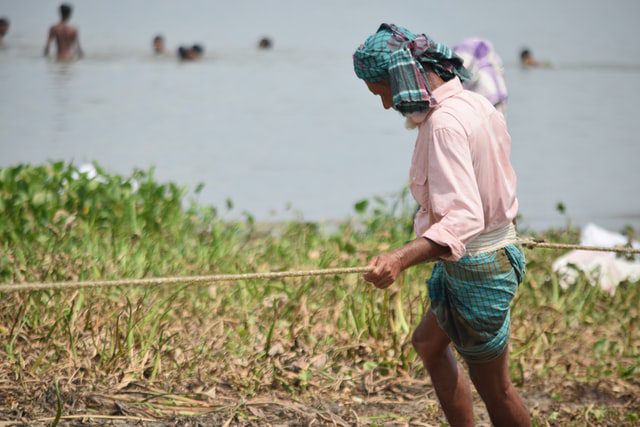
Modern slavery tightly weaves into the fabric of agricultural labor and fast fashion factories all over the world. Globally, three out of every 1,000 people enter involuntary servitude. A disproportionate amount of these workers are women and children who experience multiple counts of abuse and workplace violations ranging from sexual harassment to wage extortion and rape. Many of these workers also do not receive the right or ability to form unions and ensure that their rights obtain protection: but some organizations are working to change this. The Coalition of Immokalee Workers emerged in 1993 in Immokalee, Florida by farmworkers who implemented community-based organizations to prevent agricultural workers from experiencing gender-based violence and human trafficking by their superiors. Their national consumer network, which started in 2000, boosts this organization, and it operates many programs, including the Fair Food Program and the Worker-Driven Social Responsibility Network, which has particularly aided Bangladesh factory workers.
The Fair Food Program
The Fair Food Program is a result of The Coalition of Immokalee Workers partnering with farmworkers, farmers, food distribution companies and supply chains to ensure that the rights of agricultural workers who grow the food that companies sell are protected and guaranteed sustainable living wages and humane working conditions. Founded in 2001, the Fair Food Program is a consumer-driven grassroots effort: farmworkers boycott companies that obtain their products from suppliers perpetuating inhumane agricultural working conditions until they agree to abide by the Fair Food Act, which has companies such as Walmart, Whole Foods, Chipotle, Burger King, McDonalds, Trader Joe’s and several other food and retail companies have signed.
Worker-Driven Social Responsibility Network
The Worker-Driven Social Responsibility Network formed as a response to the Corporate Social Responsibility Program (CSR). CSR emerged to monitor the effectiveness of ethical business practices, the protection of workers and oversight. However, the majority of corporations still view human rights violations and poor working conditions that their suppliers enforce as a public relations issue, rather than a violation of rights and safety. Thus, the Corporate Social Responsibility Program has failed to implement as it should, creating the need for an alternative program.
The Worker-Driven Social Responsibility Network has been implemented in locations housing unethical labor practices, including agricultural fields in Florida and sweatshops in Bangladesh. Their mission statement states that protections for human rights must be “worker-driven, enforcement-focused, and based on legally binding commitments that assign responsibility for improving working conditions to the global corporations at the top of [the] supply chains.” The most important policies that distinguish this program from the Corporate Social Responsibility Program are that the workers must be the driving force in voicing concerns and effecting change, not the companies or corporate leaders. Participating brands and companies must sign legally-binding agreements with worker organizations and agree to provide appropriate compensation to agricultural workers, and stop doing business with companies that do not adhere to ethical standards of labor.
Bangladesh Factory Workers
Bangladesh is the second-largest clothing manufacturer after China. Textile factory workers in Bangladesh have benefited a great deal from the Worker-Driven Social Responsibility program by signing the Accord on Fire and Building Safety, a legally binding agreement between IndustriALL Global Union, UNI Global Union and several Bangladeshi textile unions. The catalyst for this change was the collapse of the Rana Plaza garment factory in Dhaka, which killed over 1,100 Bangladesh factory workers. The factory produced clothing for retail companies like Walmart, JCPenney, the Children’s Place and many other brands.
Over 190 brands and retailers have signed the Bangladesh Accord including Primark, Adidas, Arcadia Group, Deltex, Hugo Boss, Killtec Sport and H&M. The agreement requires safety training programs, protection of the right to refuse to work in unsafe conditions, independent safety inspections, promoting Freedom of Association (FoA) and getting workers to utilize the Safety and Health Complaints mechanism.
Protecting Workers in the Face of COVID-19
COVID-19 has also been a serious hazard and roadblock for factory workers in Bangladesh. NPR reported in April 2020, that the pandemic has caused 1 million factory workers to lose their jobs, while a quarter of Bangladeshi citizens are already living below the poverty line.
Reuters reported in June 2020 that the Bangladesh Garment Manufacturers and Exporters Association has recently opened a laboratory for garment workers to be tested for COVID-19 after the re-opening of factories, and is also being forced by the Accord to adhere by social distancing regulations while operating.
These regulations to protect the human rights of workers across the world are steps in the right direction. Through further implementation, the corporate supply chain could become a much more ethical place.
– Isabel Corp
Photo: Unsplash

Tuberculosis in Timor-Leste: An Overview
Tuberculosis, also known as TB, is a bacterial disease that affects one’s lungs. The disease can cause symptoms such as coughing fits, sneezing, as well as troubled breathing; however, some people do not exhibit symptoms. Tuberculosis is an air-borne disease that can be exchanged through interacting with individuals who have tuberculosis, typically by either coughing or speaking.
There are also two different types of tuberculosis: latent TB infection and TB disease. Latent tuberculosis occurs when an individual has the bacteria that causes tuberculosis in their lungs but shows no active symptoms of tuberculosis; therefore, there is no spread of the bacteria. Tuberculosis disease refers to when an individual has the bacteria in their lungs and is showing symptoms due to the growth of the bacteria. The disease is typically treated through a mixture of different antibacterial medications, taken for six months to a year.
Though tuberculosis may not sound dangerous, there are some dangers for those who do not receive proper medical treatment. While TB does directly affect the lungs, the bacteria can also affect other organs such as the brain and kidneys, which can cause more concerning health issues like renal failure. Renal failure causes the kidneys to malfunction, so waste is not properly removed from the body. If not treated, tuberculosis can cause the lungs to be filled with fluid and blood and can ultimately result in death.
Which Countries are Most at Risk?
Timor-Leste, located in Southeast Asia, is one of the countries most affected by tuberculosis. Unfortunately, many people are not diagnosed, causing the disease to go on untreated. Timor-Leste has limited medical resources and supplies. As of 2017, the WHO estimates that for every 100,000 people in Timor-Leste, only 498 people are notified that they have tuberculosis, and 106 are killed annually.
83% of the treatment for tuberculosis in Timor-Leste comes with an enormous fee. Due to this, many are reluctant to be treated or even tested for tuberculosis in Timor-Leste. It is also estimated that in 2017, 46% of individuals living with tuberculosis in Timor-Leste have gone undiagnosed. Therefore, there is a dire need for education about tuberculosis in Timor-Leste. Many do not understand the disease or the medical treatment they are receiving and end up not completing the whole treatment.
What is Being Done to Help Timor-Leste?
According to the World Health Organization (WHO), certain programs have been created across Southeast Asia to teach tuberculosis prevention. Overall, there are thirteen districts, each of which focused on a different campaign. Originally, the program was started to address the missing cases in Timor-Leste. The WHO has also implemented more test screenings and treatment. It hopes to execute the “TB Free Core Package” in which there will be more TB prevention, detection, treatment, and protection. This package would be focused on helping low-income families who cannot afford the hefty price tag that comes with TB treatment. As the WHO programs have reached thousands of individuals, there is hope to decrease the number of TB cases and better educate the Timor-Leste public on tuberculosis prevention.
The International Organization of Migration and UN Migration Agency are working with Timor-Leste’s health ministry to help fund more test screenings. Supporting the National Tuberculosis Program will allow screenings to become more available to the public; as of 2018, more than 6,000 individuals have had a screen test. Programs such as this pave the way for more partake in reducing the cases of tuberculosis in Timor-Leste.
– Olivia Eaker
Photo: Flickr
Healthcare in the Republic of Congo: Steps Forward
The Republic of Congo, also known as Congo-Brazzaville, is a central African country with about 5.2 million residents. Since most of the country is covered in tropical forests, more than half of the population lives in two large southern cities, Brazzaville and Pointe-Noire. It’s one of Africa’s top 10 oil producers and has extensive untapped mineral resources. Despite this, The Republic of Congo faces high rates of extreme poverty due to economic crises from oil price drops as well as ongoing conflicts since the 1990s. The economic declines have diminished state funds and the conflicts arising from political unrest led to the government no longer prioritizing healthcare in the Republic of Congo.
This has created an inadequate healthcare system characterized by a lack of resources, lack of healthcare professionals, insufficient access to and inability to deliver health services. The Republic of Congo is currently facing high rates of TB, HIV, malaria and maternal mortality.
Steps Forward
Fortunately, despite these earlier challenges, the government began reprioritizing healthcare in the Republic of Congo with the help of various aid organizations. This revamped investment started in 2009 with a partnership with the United Nations Population Fund (UNFPA) to reduce maternal mortality.
UNFPA worked closely with UNICEF, WHO and the World Bank to help the Republic of Congo government outline a maternal mortality reduction program. This program was boosted by the 6 million dollars that UNFPA made available to the country. In cities, free cesarean sections were made available as well as more family planning resources. This resulted in a 45% decline in maternal mortality from 2005-2012.
This decline was extremely promising; however, there is still much that needs to be done in Congo because its maternal mortality rates are still in line with other less-developed countries. The government acknowledged this and once again partnered with UNFPA in 2019 to further invest in a maternal mortality reduction program.
UNFPA Collaboration
This new program is focused on boosting healthcare infrastructure, facilities and services by utilizing innovative technologies. It is particularly focused on providing women in rural communities the best care possible. Some of the aspects of the program include providing solar power systems to ensure health facilities can function consistently as well as equipping midwives and doctors with portable ultrasounds and other monitoring devices to help handle high-risk pregnancies. Backpack kits filled with childbirth equipment are given to community health workers along with mobile phones to receive technical support if necessary.
While maternal mortality is a targeted intervention, the Republic of Congo has also done extensive work focusing on the healthcare system as a whole. This began in 2012 with the implementation of performance-based financing (PBF) with the help of Cordaid, an international development organization. PBF is a system in which healthcare providers are funded based on their performance and ability to meet specific objectives. It is utilized as a way to help introduce specific ways of purchasing that help health systems move towards universal health coverage.
PBF greatly improved healthcare in the Republic of Congo because it helps incentivize health workers to provide more and better care, such as assisting more births or providing more vaccinations. This, in turn, makes patients feel better and safer because their doctors are working hard, which increases the likelihood of people going in for consultations. More patients mean that rates for services will go down. Overall, with PBF, healthcare workers and facilities function better, and patients are happier and healthier.
While today, healthcare in The Republic of Congo is still facing challenges, it is vital to recognize how the government is investing and prioritizing the lives of its citizens. Creating change for the better is possible, and one must not forget to celebrate the victories.
– Paige Wallace
Photo: UNFPA
CloudFishing to Combat Poverty in Morocco
Morocco is a water-scarce country. The effects of rapid desertification, poor water management and high susceptibility to droughts greatly impact it. Water resources in the country have fallen by about 71% since 1980. In rural communities it is common for families to rely on one water source, meaning water scarcity can have profoundly negative impacts on Moroccan families and their livelihoods. Drought, in particular, occurs on average once every three years and can have devastating effects on the livelihoods of Moroccans. Doughts negatively impact about 51.5% of the Moroccan population. With drought on the rise, sustainable water management is integral to the development of the economy. As a result, an organization called Dar Si Hmad is stepping in to use CloudFishing to combat poverty and water scarcity in Morocco.
Water Scarcity and Poverty
The citizen’s organization ‘Social Watch’ identifies the poor management of scarce water resources as a serious aggravator of rural poverty in Morocco. The effects of water scarcity particularly burden farmers and women in Morocco. Forty percent of working Moroccans have employment in the agricultural sector and 70% of farmers struggle due to the impact of frequent droughts. Women in rural communities in Morocco spend on average 3.5 hours a day seeking and carrying water, restricting their time in pursuit of other activities.
CloudFishing to Solve the Water Crisis
Dar Si Hmad, a female-led non-governmental organization (NGO), is taking an innovative approach to solving the crisis of water scarcity and alleviating poverty in Morocco. The NGO’s vision is to “enable sustainable livelihoods and create opportunities for low-resource communities to learn and prosper.” It is pursuing this vision, in part, by using ‘CloudFishing’ to combat poverty in Morocco. CloudFishing is an approach to solving the water crisis by utilizing the abundant resource of fog. In Morocco, fog gathers from the ocean and the mountainous landscape captures it for about 140 days out of the year. Dar Si Hmad uses fine mesh to ‘fish’ for droplets of water within the fog which, once it accumulates, drops into a basin and is then filtered through a process of solar-powered UV, sand and cartridge filters.
The water collected by Dar Si Hmad is piped to 140 households providing approximately 500 people in southwest Morocco with access to sustainable clean water. Dar Si Hmad has developed into the largest functioning fog collection project in the world and is directly contributing to poverty alleviation in the country. The project receives partial funding from USAID in Rabat, Morocco. Sustained foreign aid from the U.S. is integral to the organization’s continued success. CloudFishing has a positive impact on women in the community who now have more time to devote to pursuing economic activities to help them rise out of poverty. Sustainable access to water also allows poor farmers to have more stable livelihoods and escape the cycle of poverty in Morocco.
Looking Forward
While clean water is a human right recognized by a number of international organizations and countries, in water-scarce Morocco it has become a luxury. Dar Si Hmad is continuing its work throughout the COVID-19 pandemic and is preparing to build two new CloudFishers to provide water to 12 additional rural villages in Morocco. Dar Si Hmad plays an integral role in providing solutions like CloudFishing to combat poverty and water scarcity in Morocco.
– Leah Bordlee
Photo: Flickr
Book Aid International Contributes to Education in Africa during COVID-19
The COVID-19 pandemic has dramatically changed lives around the world, affecting economies, living situations and posing the lingering question: what happens next? One of the major aspects of life affected by the pandemic in all communities is education. According to UNESCO, COVID-19 has directly affected the education of 1.06 billion children worldwide as of July 2020. With school closures and cases continuing to surge, the nature of teaching has been forced to shift considerably. In Africa, different countries are determining how to proceed with precautions to keep students, educators and their families safe while still facilitating education. The Ministry of Education in Senegal, for example, is providing educational aid in the form of online learning and resources. For those who may not have internet access, however, this makes receiving education challenging. Book Aid International, an organization providing books to children across 26 African countries, is seeking to correct this challenge by administering online educational tools as well as resources that do not require an internet connection.
Book Aid International
Book Aid International’s central mission is to provide books to children in poverty. The organization accomplishes this goal by organizing talented staff members and garnering donations for its cause. In 2019, Book Aid International was able to provide 1.2 million books to children across 26 countries. Distributing books to those in poverty allows for educational growth and increased opportunities for the future. Not only does this organization positively impact education, but also the healthcare industry. Through partnerships in 2018 with Elsevier and Elsevier USA, over 154,000 medical textbooks were donated to hospitals and schools to aid students pursuing healthcare careers.
COVID-19 and Book Aid International
During the COVID-19 pandemic, Book Aid International is developing an improved vision for the rest of 2020. The organization is continuing with book distributions in areas where it has established partnerships, but is also working toward providing e-resources to various communities. COVID-19 has forced many schools around the world to shut down completely. Some can provide online learning but in rural countries, online access may not be available to every student. However, in areas that Book Aid International has given aid, teachers can provide students with books donated by the organization, helping to close the gap between those with internet access and those without. With these resources, children can learn to read while schools are closed.
Adapting to a new routine can be difficult, especially for educators who want to aid their pupils. Having a book to read at home can inspire and help children exercise their minds and prepare for returning to school as the global situation continues to develop. While COVID-19 has presented several disruptions to this pursuit, efforts like that of Book Aid International can provide students with the resources they need to succeed at home.
– Brooke Young
Photo: Flickr
Protection for Bangladesh Factory Workers
Modern slavery tightly weaves into the fabric of agricultural labor and fast fashion factories all over the world. Globally, three out of every 1,000 people enter involuntary servitude. A disproportionate amount of these workers are women and children who experience multiple counts of abuse and workplace violations ranging from sexual harassment to wage extortion and rape. Many of these workers also do not receive the right or ability to form unions and ensure that their rights obtain protection: but some organizations are working to change this. The Coalition of Immokalee Workers emerged in 1993 in Immokalee, Florida by farmworkers who implemented community-based organizations to prevent agricultural workers from experiencing gender-based violence and human trafficking by their superiors. Their national consumer network, which started in 2000, boosts this organization, and it operates many programs, including the Fair Food Program and the Worker-Driven Social Responsibility Network, which has particularly aided Bangladesh factory workers.
The Fair Food Program
The Fair Food Program is a result of The Coalition of Immokalee Workers partnering with farmworkers, farmers, food distribution companies and supply chains to ensure that the rights of agricultural workers who grow the food that companies sell are protected and guaranteed sustainable living wages and humane working conditions. Founded in 2001, the Fair Food Program is a consumer-driven grassroots effort: farmworkers boycott companies that obtain their products from suppliers perpetuating inhumane agricultural working conditions until they agree to abide by the Fair Food Act, which has companies such as Walmart, Whole Foods, Chipotle, Burger King, McDonalds, Trader Joe’s and several other food and retail companies have signed.
Worker-Driven Social Responsibility Network
The Worker-Driven Social Responsibility Network formed as a response to the Corporate Social Responsibility Program (CSR). CSR emerged to monitor the effectiveness of ethical business practices, the protection of workers and oversight. However, the majority of corporations still view human rights violations and poor working conditions that their suppliers enforce as a public relations issue, rather than a violation of rights and safety. Thus, the Corporate Social Responsibility Program has failed to implement as it should, creating the need for an alternative program.
The Worker-Driven Social Responsibility Network has been implemented in locations housing unethical labor practices, including agricultural fields in Florida and sweatshops in Bangladesh. Their mission statement states that protections for human rights must be “worker-driven, enforcement-focused, and based on legally binding commitments that assign responsibility for improving working conditions to the global corporations at the top of [the] supply chains.” The most important policies that distinguish this program from the Corporate Social Responsibility Program are that the workers must be the driving force in voicing concerns and effecting change, not the companies or corporate leaders. Participating brands and companies must sign legally-binding agreements with worker organizations and agree to provide appropriate compensation to agricultural workers, and stop doing business with companies that do not adhere to ethical standards of labor.
Bangladesh Factory Workers
Bangladesh is the second-largest clothing manufacturer after China. Textile factory workers in Bangladesh have benefited a great deal from the Worker-Driven Social Responsibility program by signing the Accord on Fire and Building Safety, a legally binding agreement between IndustriALL Global Union, UNI Global Union and several Bangladeshi textile unions. The catalyst for this change was the collapse of the Rana Plaza garment factory in Dhaka, which killed over 1,100 Bangladesh factory workers. The factory produced clothing for retail companies like Walmart, JCPenney, the Children’s Place and many other brands.
Over 190 brands and retailers have signed the Bangladesh Accord including Primark, Adidas, Arcadia Group, Deltex, Hugo Boss, Killtec Sport and H&M. The agreement requires safety training programs, protection of the right to refuse to work in unsafe conditions, independent safety inspections, promoting Freedom of Association (FoA) and getting workers to utilize the Safety and Health Complaints mechanism.
Protecting Workers in the Face of COVID-19
COVID-19 has also been a serious hazard and roadblock for factory workers in Bangladesh. NPR reported in April 2020, that the pandemic has caused 1 million factory workers to lose their jobs, while a quarter of Bangladeshi citizens are already living below the poverty line.
Reuters reported in June 2020 that the Bangladesh Garment Manufacturers and Exporters Association has recently opened a laboratory for garment workers to be tested for COVID-19 after the re-opening of factories, and is also being forced by the Accord to adhere by social distancing regulations while operating.
These regulations to protect the human rights of workers across the world are steps in the right direction. Through further implementation, the corporate supply chain could become a much more ethical place.
– Isabel Corp
Photo: Unsplash
Ukraine and the Pandemic: The Impact on Child Poverty
COVID-19 has severely impacted Ukraine, and poverty rates will likely increase dramatically. The Cabinet of Ministers of Ukraine released an official prediction on the absolute poverty implications of the pandemic. The analysis indicates that the impacts on child poverty in Ukraine will be the most severe.
Ukraine is Europe’s second-largest and one of the poorest countries in Europe. The country has more than 46,000 confirmed cases of COVID-19 as of July 2020. The country has lifted many restrictions as it enters its adaptive quarantine stage, though social distancing and mask-wearing requirements remain in place.
Ominous Predictions
According to the World Bank, the negative economic impact of the pandemic will show through several courses. These include a decrease in disposable incomes and consumption, lower remittances caused by decreased economic activity throughout the EU and lower commodity prices that impact Ukrainian exports.
United Nations Children’s Fund (UNICEF) is particularly concerned that the economic collapse will have the most adverse impacts on vulnerable groups such as single parents, multiple-children households, households with children younger than three years and people over the age of 65. UNICEF also predicts that the absolute poverty rate in Ukraine will rise from 27% to 44%, and the child poverty rate will rise from 33% to 51%.
UNICEF has two predictions for Ukrainian poverty changes as a result of COVID. Under the less severe prediction, 6.3 million more people will be living in poverty. Of those, 1.4 million will be children. The more severe prediction shows that nine million more people will be living in poverty, 1.8 million of them children. To put this in perspective, in 2019 50% of the population was financially unprotected. That will likely increase as poverty levels go up.
Government Action
To mitigate these stark numbers, the Ukrainian government has taken action on the impacts of the COVID-19 crisis. These actions include one-time payments for low-income pensioners and child disability payment beneficiaries. UNICEF advocates for targeted as well as categorial approaches.
Social Policy Programme
A solution to combat the inevitable increase in child poverty in Ukraine due to this crisis is UNICEF’s Social Policy Programme. Through advocacy and technical support to the government of Ukraine, this program promotes equity for children and improved social welfare. It covers four main foci.
Poverty Reduction and Macro Policies for Children: This focuses on improving the ways to measure child poverty and its multidimensional aspects. It also works to place issues of child poverty in a leading position of the National Poverty Reduction Strategy. Finally, it promotes child-centered family policies.
Social Protection with a Focus on Integrated Modalities: This effort attempts to improve cash transfer performance to reduce poverty for vulnerable children and/or displaced children and their families. In addition to cash transfers, the focus is also on local social service provision.
Public Finance for Children: For maximum impact of public expenditure on children, UNICEF works with line ministries and the Ministry of Finance to use results-based budgeting.
Local Governance and Accountability with focus on Child-Friendly Cities: UNICEF Ukraine works with local partners to implement the global initiative, Child and Youth Friendly Municipality to strengthen social inclusion and promote child participation. It incentivizes local governments to focus on supporting children. Over 160 Ukraine municipalities joined the initiative in 2018.
While the full impacts of the COVID-19 crisis are still unknown, and with the devastating impact it has on poverty, continuing to combat child poverty in Ukraine is vital. Social welfare programs like UNICEF’s Social Policy Programme are essential to mitigate the effects of poverty, strengthen child care and enhance access to basic services. Investing in children will have a substantial impact on the future, and it is a necessary measure to combat poverty in Ukraine and around the world.
– Rochelle Gluzma
Photo: Flickr
New World Bank Vietnam Director Fighting Poverty
On July 1, Carolyn Tuck became the new World Bank Vietnam Director. The former director was Ousmane Dione from 2016 to 2020. Tuck’s past can be linked to her early days working at the World Bank organization, where she worked in Vietnam as the Senior Poverty Specialist. Tuck was also “Senior Social Development Specialist and Lead Social Development Specialist in Eastern Europe and Central Asia Region”, according to World Bank.org.
Tuck’s Leadership
Conditions in Vietnam have steadily improved under Tuck’s leadership. As of 2019, Vietnam was no longer considered a low-income poverty-stricken country after the extreme poverty rate declined from 50% to 2%. Per-capita income has risen at an exceptional rate, spiking from $100 in 1980 to $2,300 in 2017, according to the UN.
This exponential growth is fostered by investment in human capital. Education rose to 12% of the GDP while increasing health insurance, living conditions, and increased access to land all improved conditions for Vietnamese citizens. The investment has paid off since Vietnam is making strides in international education testing along with health care spending, which was 7% GDP.
Tuck plans to exceed these numbers by making Vietnam a high-income country by 2045. The per capita income would have to be $12,535, which means it would have to rise by $10,000.
The World Bank’s Collaboration
The World Bank is helping this become a reality for Vietnam and Tuck by providing “$24.86 billion in grants, credits, and loans.” The World Bank also continues to invest in human capital by committing $516.67 million for Vietnam’s transportation, urban development, higher education, and climate change reduction.
There are still some problems the new World Bank Vietnam Director has to tackle before Vietnam can be declared as a high-income nation. Although investments in education have become a priority in the years past, higher-level education still needs to increase. This links back to income levels because families need money in order to send their children to higher learning institutions. The lack of higher income is caused by low agricultural income due to sub-optimal crop choice and fewer yields from the same crop type on the same type of land. The amount of land being used as capital has dropped significantly too by 10% in 2014.
Looking Forward
The way to improve this is by increasing crops that are profitable and strengthen land usage. The investment needs to continue throughout education and social growth. Education can grow by giving equal opportunity to all, especially in an impoverished country such as Vietnam.
Programs like “Save the Children” and “Child Survival Project,” have a single mission: to help children’s environment and education grow exponentially. They also provide health education and care to children in need through school health programs, according to their website. They’ve protected 27,495 children from harm, supported 60,574 children in times of crisis, and have given over eight million children a healthy start in life, according to their website.
For agriculture, The Asia Foundation helps develop Vietnam’s environment by having community-based environmental management, increased capacity of environmental agencies and NGOs, public consultation and advocacy on environmental laws and policies, youth education, and disaster risk management, according to their website. The Asia Foundation has supported laws and policies like the “Tourism and Law on Environment Protection” in 2005 and the “Law on Environmental Protection Tax” in 2010. The “Law on Environmental Protection Tax” was used to redirect public funds toward environmental issues. A case study was done by “Willenbockel of the Institute of Development Studies” projects that CO2 emissions will drop by 2.3-7.5%, depending on the tax rate. The Asia Foundation is supporting the Ministry of Education to help integrate environmental studies into school activities at 10 primary schools in Hanoi, said to reach 6,000 students, according to their website.
With these steps laid out, Carolyn Tuck as the new World Bank Director can lead Vietnam to new economic grounds never seen before and hit high-income statues by 2045.
– Grant Ritchey
Photo: Flickr
Recognizing The Role of Hunger in Politics and War
The Borgen Project has published this article and podcast episode, “Recognizing the Role of Hunger in Politics and War,” with permission from The World Food Program (WFP) USA. “Hacking Hunger” is the organization’s podcast that features stories of people around the world who are struggling with hunger and thought-provoking conversations with humanitarians who are working to solve it.
Two years ago, the UN Security Council unanimously adopted Resolution 2417. The resolution made clear that conflict-induced hunger is a peace and security issue.
But two years later, too little has changed. Around the world millions of people are still trapped in the man-made cycle of conflict, displacement, and hunger. Starvation has been defined as ‘the cheapest weapon of mass destruction available to armies’ — cheap and easy to kick off.
It’s important to reflect on the significance of the resolution and discuss the impact that novel coronavirus pandemic might have on peace and security globally. One place where the link between conflict and hunger is painfully obvious is South Sudan.
Since December 2013, a civil war has been tearing the country apart, causing widespread destruction, death and displacement. Around 1.47 million people are internally displaced and another 2.2 million are refugees in neighboring countries. A collapsing economy, reduced crop production and dependence on imports seriously undermine people’s ability to secure sufficient nutritious food all year round, putting millions of lives at risk.
Matthew Hollingworth is the United Nations World Food Programme’s country director in South Sudan. He has worked to relieve hunger in several countries at war. On this episode of Hacking Hunger, asked about his perspective on Resolution 2417, and what he has witnessed from the field.
Interested in learning more? Visit World Food Programme Insight, where Simona Beltrami asks three experts to discuss the significance of UN Security Council resolution 2417 and cast a look at hunger, peace and security in the post-COVID world.
Click the link below to listen to Matthew Hollingworth talk about Resolution 2417 and his experiences working to relieve hunger in war-torn areas.
World Food Program USA · Episode 48: The Role of Hunger in Politics and War with Matthew Hollingworth
Photo: Flickr
8 Facts About Healthcare in Suriname
The Republic of Suriname is an upper-middle-income country located on the northeastern coast of South America. Around 90% of the country’s population lives in urban or rural coastal areas. Healthcare in Suriname is accessible for both the public and private sectors. Here are eight facts about healthcare in Suriname.
8 Facts About Healthcare in Suriname
Persistent voids in access to healthcare in Suriname are related to drawbacks in funding. The healthcare system has seen an expansion in the past decade, but there are still plenty of health challenges to confront and improve.
– Anuja Kumari
Photo: Flickr
5 Examples of Police Brutality Internationally
5 Examples of Police Brutality Internationally
The examination of police brutality internationally by groups like the U.N., Human Rights Watch or Amnesty International is crucial in maintaining awareness of the pervasiveness of this problem. Perhaps the organizations which prosecute guilty police officers worldwide will emerge victorious in their efforts. Police need to meet the same standards as the populations they serve.
– Elise Ghitman
Photo: Flickr