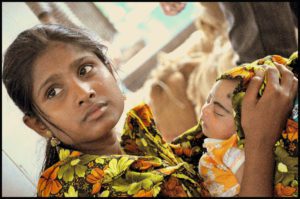
 Twelve million girls a year—or 23 girls every minute—are married before their 18th birthday. The most common factors that contribute to child marriage are poverty, lack of education and gender norms. Around the world, 21% of young women were married as minors. The prevalence of child marriage is even higher in sub-Saharan Africa, at 37% of young women. Various art forms, including photography and music, have been used to advocate for the eradication of this harmful practice. Photography fights child marriage by raising awareness for this pressing issue and empowering women to take action.
Costs of Child Marriage
When young women and girls are forced to marry, they are less likely to attend school. They are separated from their family and friends, and they are also more likely to experience life-threatening complications during pregnancy and childbirth, suffer domestic violence and contract HIV/AIDS. Furthermore, child marriage traps these girls in a cycle of poverty, in which they and their children are less able to access opportunities for education and economic empowerment.
Photography Fights Child Marriage and Empowers Girls
Too Young to Wed, a nonprofit founded in 2012 by photojournalist Stephanie Sinclair, uses photography to raise awareness of the prevalence of child marriage. This organization creates media campaigns focusing on child marriage and uses compelling photojournalism to show that the practice is a violation of human rights. The photographs have been seen by billions, and one media campaign that focused on child marriage in Nepal reached more than 9.7 million people. The photographs, alongside firsthand accounts from girls at risk of or impacted by child marriage, “inspire the global advocacy and policy-making communicates to act,” according to Sinclair.
In addition to organizing photo workshops, this organization provides leadership scholarships, vocational training and other support. The Leadership Scholarship program is especially crucial because education is vital to preventing child marriages. In the last eight years, Too Young to Wed has directly helped 600 girls, and much more indirectly, in its fight against child marriage. Sinclair told Global Citizen, “[Girls] can do all kinds of things that they can bring back to their community and then also bring them out of a level of poverty where the most extreme forms of child marriage are definitely happening.” When young women are educated, their children are more likely to be educated as well, which helps take the family out of the cycle of poverty. Overall, Too Young to Wed uses visual evidence and storytelling to highlight the harmful impacts of child marriage, empower girls and inspire change.
Tehani Photo Workshop
Since 2016, Too Young to Wed has provided a week-long photography workshop that also functions as an immersive art therapy retreat called the Tehani Photo Workshop. Partnered with the Samburu Girls Foundation, Too Young to Wed held the first workshop in Kenya, where about 1 in 4 girls are married before the age of 18. During this workshop, 10 girls who had escaped their marriages learned how to shoot portraits, and they were able to form friendships and reclaim their narratives. To conclude the workshop, the girls presented their photographs and told their stories to more than 100 members of their community. According to Sinclair, the workshops aim to “help [the girls] better realize their self-worth and the value of their voice.”
Music as a Tool in the Fight Against Child Marriage
In Benin, where more than 25% of girls are married before they are 18 years old, artists collaborated in 2017 to release a song and music video that highlighted this issue. UNICEF’s Goodwill Ambassadors Angélique Kidjo and Zeynab Abib, along with seven other artists, composed the song as part of the national Zero Tolerance Campaign against child marriage. The song is titled “Say No to Child Marriage” and includes multiple languages so its message resonates with people within Benin and in neighboring countries. “Child marriage is a negation of children’s right to grow up free,” said Kidjo. “Every child has the right to a childhood.”
In 2019, the United Nations Children’s Fund worked with music producer Moon Boots and vocalist Black Gatsby to produce a music video to speak out against child marriage in Niger, where 76% of girls are married before the age of 18. Also, according to UNICEF, Niger has the world’s highest rate of child marriage. The song, titled “Power,” promotes education as a positive alternative that can empower girls and reduce poverty in their communities. According to a Félicité Tchibindat, a UNICEF representative in Niger, it also fights against the practice of child marriage by raising awareness that “ending child marriage is possible,” even though it is a long-held social norm.
Conclusion
Although the rates of child marriage are gradually declining worldwide, it is estimated that 120 million more girls under the age of 18 will be married by 2030 if current trends continue. The coronavirus pandemic has also put up to 13 million more girls at risk of child marriage because of rising poverty rates, school closures and hindered access to reproductive health services and resources.
Twenty-five million child marriages have been prevented in the last ten years, and UNICEF attributes the decline of the practice in part to “strong public messaging around the illegality of child marriage and the harm it causes.” While photography fights child marriage, further far-reaching and powerful art initiatives, along with the work of national governments and international organizations, can continue to raise awareness, empower girls and reduce the prevalence of this practice around the world.
– Rachel Powell
Photo: Flickr

8 Facts About Health in Guinea-Bissau
A former Portuguese colony with almost 2 million inhabitants, Guinea-Bissau is a small country located on the Atlantic coast in West Africa. The nation achieved its independence in 1973 but remains one of the most impoverished countries in the world, ranking 178th on the Human Development Index. Health in Guinea-Bissau is a complex issue as more than two-thirds of the country’s population lives in poverty. Today, Guinea-Bissau struggles with providing quality health services to its citizens. With the country spending an average of just $91 per person per year on healthcare, international aid could provide the country with an opportunity to modernize and expand its healthcare system. Here are eight notable facts about health in Guinea-Bissau.
8 Facts About Health in Guinea-Bissau
To improve health in Guinea-Bissau, the nation needs international aid and assistance in building and organizing its struggling healthcare system. Once back on its feet, Guinea-Bissau can work to improve even more areas of life.
– Jeff Keare
Photo: Flickr
Innovations in Poverty Eradication in Germany
Historically, Germany has not been without its economic or financial hardships. Since the 1990s, nearly a quarter (or 15%) of Germany’s population has had the classification of being poor. What is Germany doing in the modern age to combat a significant and stagnant impoverished population? Additionally, why have Germany’s poverty rates not reflected the country’s staggering economic growth? Finally, how is Germany’s poverty-reduction legislation impacting refugee families? This article will illuminate the radical legislation and innovations about poverty eradication in Germany including what the country has implemented to reduce inequality, domestically and globally, in the 21st century.
The BMZ Behind It All
Poverty eradication in Germany began with the BMZ (a German-language acronym for the English-translated “Federal Ministry of Economic Cooperation and Development”). The BMZ is solely responsible for all affairs regarding poverty relief and economic development in Germany and abroad. In recent history, the BMZ has committed itself to addressing the underlying factors, circumstances and mechanisms that create poverty in the first place. In the early 1990s, the BMZ published international and domestic development goals which, to this day, influences the nation’s fight against poverty. Strong social welfare, personal incentive for work and widespread access to education reduced the national proportion of people experiencing poverty to as low as 7% in 2007.
At the time, radical steps like systemic reformations and direct focus on franchising majority impoverished groups of people were novel and began Germany’s repertoire as a powerful benefactor to its poorest constituents. With recent international crises (like the Syrian Civil War) and the advent of automation, however, Germany’s poverty line has all but slowly grown. However, a recent 6.1 billion euro ($7.2 billion USD) expansion of Germany’s social welfare program, Hartz IV (dedicated to long-term unemployment) spells relief for many displaced and at-risk peoples in Germany.
Young Families, New Challenges
Starting a family is, unquestionably, one of the most difficult and unique things a couple (or individual) can undertake. Additionally, it is no short order to both raise a young family while providing for it – and, sometimes, it is nearly impossible to maintain a “work-life balance,” which typically ends in financial hardship. Poor families are at risk to begin with; a new child may well be the tipping point into impoverishment, and the cycle only proliferates when families raise children in poverty. Enter one of Germany’s most radical pieces of legislation, the Parental Allowance and Parental Leave Act, created exclusively to alleviate the financial stresses that new families often face. New parents may receive up to 60% of their income for up to 3 years, addressing underlying systemic cycles of poverty, especially with already at-risk, younger individuals, rather than focusing on short-term manifestations of it.
Providing low-risk, low-stress economic stability for growing families almost ensures that the cycle breaks as well. As of 2014, only 9.5% of children in Germany lived in poverty, compared to the nation’s average of 14%. The Parental Allowance and Leave act has proven to be an extremely successful player in poverty relief in Germany.
International Commitments
Germany has not only invested in domestic poverty relief, it is also interested in working toward poverty relief internationally. Chancellor Angela Merkel has committed to doubling the nation’s UNDP core funding to combat the economic hardship that COVID-19 has brought on internationally. Germany has been the largest single contributor to the UNDP’s core resources since 2017 and has solidified that position by donating nearly $124 million to the core fund this year alone. What that means is increased spending power for the UNDP during the COVID-19 pandemic, which the UNDP predicts will cause the first reversal of human global development since the early 1990s. Germany’s increased budget for the UNDP will go to essential poverty relief efforts in 130 countries that the pandemic has greatly affected, providing assistance for hundreds of millions across the globe.
COVID-19 Relief in Germany
At the start of the COVID-19 pandemic, Germany experienced its impact economically, socially and culturally much like the rest of the world. In Germany, the unemployment rate from March to April 2020 increased by 0.8%. Poverty rates have remained consistent as well, with surprising research showing that poorer workers are at no greater risk of succumbing to the novel coronavirus. What differentiates Germany’s COVID experience is its radical response and mobilization against the extreme economic fallout COVID spelled.
The German government has committed an unprecedented $868 billion relief package for its most vulnerable populations, small businesses and manufacturers. In addition, Germany has expanded wage subsidies for furloughed individuals and executed a tax slash of 3%. In this exceptionally trying time, Germany has revolutionized the way the world thinks about social security, and it stands that German citizens will feel the impact of this emergency poverty relief in Germany for decades to come.
Germany has been a litmus test as a standard for social welfare since the dawn of the modern age. Poverty eradication in Germany is a multifaceted, extensive and progressive approach to the seemingly Sisyphean task of battling poverty at home and abroad. Strong COVID-19 relief plans, the groundbreaking Parental Leave Act, a dedicated ministry of economic affairs and a commitment to international well-being makes for innovative anti-poverty measures that are paving the way for the world.
– Henry Comes-Pritchett
Photo: Getty Images
War and Displacement in Yemen and Somalia
In 2019, an estimation concluded that 29 million Americans would spend a total of nearly $500 million to dress up their pets on Halloween. Half a billion dollars is equivalent to 25% of the money needed to fund the U.N.’s June through December 2020 Humanitarian Response Plan assisting Yemen. War and displacement in Yemen and Somalia have caused a lack of funds and resources in these countries. However, some organizations are attempting to provide aid.
The History of Yemen and Somalia
Yemen’s poverty rate increased from 47% of the population living in poverty in 2014 to 75% at the end of 2019. The war in Yemen is contributing to poverty, and if it continues, Yemen could become the poorest country in the world by 2022. Yemen has been in a civil war since 2014 when Houthi rebels took over the capital. The conflict took off when a Saudi-led military coalition fought back against the rebels to defend the government of Abd-Rabbu Mansour Hadi. The combat has been going on ever since and has plunged Yemen deeper and deeper into poverty.
The nearby country of Somalia has been struggling as well. General Siad Barre led a military coup and took over the government in 1969. In 1988, northern tribes rebelled against the dictator, and then in 1991, tribes from the north and south fought and brought down Barre. From 1991 on, a civil war has ravaged Somalia, with different factions fighting throughout the country.
The Displacement of Somalis
As the Somalian civil war has been charging on, Yemen, despite its instability, has been a place of refuge for around 200,000 fleeing Somalis. The action and displacement in Yemen and Somalia have caused many hardships for these countries’ citizens. The incoming Somalis, as well as the Yemenis, are facing dire conditions due to circumstances in Yemen. For example, Yemen imports most of its food, but since the beginning of the war, the cost of wheat flour has increased by 120%. The high poverty rate, combined with rising food prices, is leading to malnourishment affecting 3.2 million children and women.
Along with war and displacement in Yemen and Somalia increasing the risk of famine, Yemen is struggling with health care facilities. The war caused damage to more than half of Yemen’s health care facilities; as a result, these facilities were unable to provide sterile water and sanitation to 20.5 million people. Poor sanitation leads to many disease outbreaks, and this threat compounds the already-present risk of COVID-19. This situation is not only dangerous for Yemenis but also affects Somalian refugees residing in the country.
Aid for Yemenis and Somalis
Mercy Corps has been helping people in Yemen by providing them with food vouchers, repairing their water systems and educating them about health. In 2019, Mercy Corps assisted 1.2 million people, and the organization is now working to limit the effects of COVID-19.
Besides Mercy Corps, the UNHCR, the U.N. Refugee Agency, is also helping to mitigate the effects of displacement in Yemen and Somalia. The UNHCR began its Assisted Spontaneous Return (ASR) program in 2017. The ASR program assists Somalis on their return home from Yemen. By 2019, the ASR program had organized 37 trips, and more than 4,800 refugees had returned from Yemen to Somalia.
Fashion designer Gabriela Hearst has also decided to pitch in to help Yemen. From December 2 to 9, 2019, she donated all of her proceeds to Save the Children. Save the Children is a nonprofit organization that works towards relief on the ground in Yemen. To make the initiative more successful, she decided to “make her eclectic handbags” available at her online store. Typically, she only sells this handbag collection by request giving it a high value.
There is more the world can do to combat the war and displacement in Yemen and Somalia; however, Mercy Corps, the UNHCR and individuals such as Gabriela Hearst are making significant strides toward improvement.
– Hailee Shores
Photo: Flickr
Photography Fights Child Marriage
Costs of Child Marriage
When young women and girls are forced to marry, they are less likely to attend school. They are separated from their family and friends, and they are also more likely to experience life-threatening complications during pregnancy and childbirth, suffer domestic violence and contract HIV/AIDS. Furthermore, child marriage traps these girls in a cycle of poverty, in which they and their children are less able to access opportunities for education and economic empowerment.
Photography Fights Child Marriage and Empowers Girls
Too Young to Wed, a nonprofit founded in 2012 by photojournalist Stephanie Sinclair, uses photography to raise awareness of the prevalence of child marriage. This organization creates media campaigns focusing on child marriage and uses compelling photojournalism to show that the practice is a violation of human rights. The photographs have been seen by billions, and one media campaign that focused on child marriage in Nepal reached more than 9.7 million people. The photographs, alongside firsthand accounts from girls at risk of or impacted by child marriage, “inspire the global advocacy and policy-making communicates to act,” according to Sinclair.
In addition to organizing photo workshops, this organization provides leadership scholarships, vocational training and other support. The Leadership Scholarship program is especially crucial because education is vital to preventing child marriages. In the last eight years, Too Young to Wed has directly helped 600 girls, and much more indirectly, in its fight against child marriage. Sinclair told Global Citizen, “[Girls] can do all kinds of things that they can bring back to their community and then also bring them out of a level of poverty where the most extreme forms of child marriage are definitely happening.” When young women are educated, their children are more likely to be educated as well, which helps take the family out of the cycle of poverty. Overall, Too Young to Wed uses visual evidence and storytelling to highlight the harmful impacts of child marriage, empower girls and inspire change.
Tehani Photo Workshop
Since 2016, Too Young to Wed has provided a week-long photography workshop that also functions as an immersive art therapy retreat called the Tehani Photo Workshop. Partnered with the Samburu Girls Foundation, Too Young to Wed held the first workshop in Kenya, where about 1 in 4 girls are married before the age of 18. During this workshop, 10 girls who had escaped their marriages learned how to shoot portraits, and they were able to form friendships and reclaim their narratives. To conclude the workshop, the girls presented their photographs and told their stories to more than 100 members of their community. According to Sinclair, the workshops aim to “help [the girls] better realize their self-worth and the value of their voice.”
Music as a Tool in the Fight Against Child Marriage
In Benin, where more than 25% of girls are married before they are 18 years old, artists collaborated in 2017 to release a song and music video that highlighted this issue. UNICEF’s Goodwill Ambassadors Angélique Kidjo and Zeynab Abib, along with seven other artists, composed the song as part of the national Zero Tolerance Campaign against child marriage. The song is titled “Say No to Child Marriage” and includes multiple languages so its message resonates with people within Benin and in neighboring countries. “Child marriage is a negation of children’s right to grow up free,” said Kidjo. “Every child has the right to a childhood.”
In 2019, the United Nations Children’s Fund worked with music producer Moon Boots and vocalist Black Gatsby to produce a music video to speak out against child marriage in Niger, where 76% of girls are married before the age of 18. Also, according to UNICEF, Niger has the world’s highest rate of child marriage. The song, titled “Power,” promotes education as a positive alternative that can empower girls and reduce poverty in their communities. According to a Félicité Tchibindat, a UNICEF representative in Niger, it also fights against the practice of child marriage by raising awareness that “ending child marriage is possible,” even though it is a long-held social norm.
Conclusion
Although the rates of child marriage are gradually declining worldwide, it is estimated that 120 million more girls under the age of 18 will be married by 2030 if current trends continue. The coronavirus pandemic has also put up to 13 million more girls at risk of child marriage because of rising poverty rates, school closures and hindered access to reproductive health services and resources.
Twenty-five million child marriages have been prevented in the last ten years, and UNICEF attributes the decline of the practice in part to “strong public messaging around the illegality of child marriage and the harm it causes.” While photography fights child marriage, further far-reaching and powerful art initiatives, along with the work of national governments and international organizations, can continue to raise awareness, empower girls and reduce the prevalence of this practice around the world.
– Rachel Powell
Photo: Flickr
Japanese Children in Poverty
Children’s Cafeterias
Japanese kids can get free or reduced-cost warm meals at children’s cafeterias. The cafeterias have become increasingly popular as childhood poverty continues to drastically increase in the country. While there were originally around 21 operating cafeterias in 2013, over 300 opened in the following four years.
Unfortunately, due to the COVID-19 outbreak, many of these cafeterias have been temporarily closed, leaving many children hungry. As both COVID-19 and child poverty have continued to worsen, even the Japanese Imperial Couple has been briefed on the issue, serving as a testament to its significance in modern Japanese culture. The Imperial Couple was told around 40% of programs that support providing meals to these children have been adjourned due to the COVID-19 outbreak.
Traditional Family Structure Hinders Single Mothers
Many of these children’s parents are single mothers. In general, Japan is unsupportive of single mothers and offers very little additional support to this demographic. Japan’s traditional family structure usually designates a father, or man of the house, as the breadwinner. Meanwhile, mothers stay at home to care for the children. As divorce rates have risen in recent years, many mothers are forced to return to a workforce that has changed a great deal since they had been in it. Others, never having been part of the Japanese workplace, have struggled further.
Traditional Japanese societal norms typically encourage single-income houses. For instance, the Japanese tax system favors single-income houses. Many Japanese businesses will provide bonuses to men whose wives stay at home. On top of that, a significant wage gap exists, with Japanese women earning roughly 30% less than men. There is also the practice of lifetime employment, by which many Japanese men are pulled straight out of college or university and brought into a company where they are expected to work until retirement. These factors hinder the opportunities available to single mothers and limit the progress that can be made in addressing child poverty.
A Slow Response from National and Local Government
Japan’s government has made slow strides towards helping its children in poverty. In 2019, the government amended a 2013 law focused on child poverty. The amendment was made to encourage local governments, not just the national government, to develop safety nets for children living in low-income situations. Local governments have a deeper an understanding of their citizens’ needs, so they can develop more targeted solutions in tackling poverty.
The deck is stacked against Japanese children in poverty. Many have struggling mothers who are busy trying to earn a living wage in a society where women are expected to stay home. Government support for Japanese children in poverty has been lackluster. Charity cafeterias are some of the only places these kids can get stable meals. The COVID-19 crisis seems to only be aggravating the desperate situation. In such a wealthy country, children in poverty face deeply entrenched struggles and their government is barely helping them.
– Tara Suter
Photo: Pixabay
Andorra Struggles With COVID-19 Response
A Unique Agreement With the European Union
As evidenced by the recent Brexit controversy, E.U. membership comes with positive and negative aspects. Entry challenges proved a significant hurdle for Andorra; therefore, it initially did not join the union. Only after the 2008 recession did Andorra arrange a special agreement with the European Union, like other European micro-states.
Due to tourism, the country’s main economic draw, and Andorra’s location on a map, some economic realities have been unavoidable. After 2008, Andorra began using the Euro and entered trade agreements slashing tariffs. However, unlike the rest of Europe, Andorra continued to restrict individual taxes. This branded the small country as a hot spot for tax evasion. This caveat kept Andorra afloat but alienated the country from the rest of Europe. Due to international pressure in 2011, the country began moving towards international tax standards.
Even though it lacks full European Union membership, Andorra still retains membership in the United Nations, the Council of Europe and the Organization for Security and Cooperation in Europe.
Does Andorra qualify for European Union aid?
Full European Union member countries qualify for aid programs. The European Union, like most international institutions, provided large amounts of COVID-19 aid–37 billion Euros in the initial program to be exact. Individual countries qualify for an additional 100 billion from the E.U. for employment assistance.
However, Andorra’s partial membership benefits to the European Union are limited to:
COVID-19 in Andorra
As Andorra’s place in the European Union is unclear, so is its ability to receive COVID-19 aid. It appears that Andorra cannot and has not accessed any European Union COVID-19 aid. As neighboring Spain and France have done, Andorra implemented specific travel limitations. Uniquely, its rules included odd and even-numbered homes taking turns with short exercise periods.
Poverty in Andorra
The tough situation created by COVID-19 shutdowns and the ambiguous nature of Andorra’s relationship with the European Union have left the country exposed to further poverty. Unlike countries with widespread extreme poverty, Andorra’s poverty is specific to immigrant labor unemployment during tourism lulls and the housing crisis. Both of which, when paired with COVID-19, have the potential to drastically increase Andorra’s 4% poverty rate.
As of now, Andorra continues to encounter additional struggles with their COVID-19 response. As the post-2008 trend of strengthening relationships between Andorra and the E.U. continues, more poverty prevention aid will hopefully find its way to this small, land-locked country.
– Rory Davis
Photo: Flickr
The Accomplishment of Polio Eradication in Africa
On August 25, 2020, the World Health Organization officially declared the African continent free of wild poliovirus after reports of zero cases since August 2016. This achievement comes after decades of ambitious initiatives that distributed vaccinations to the African population in an effort to stop polio’s spread. In what many are describing as a “momentous milestone,” the news of polio eradication in Africa provides hope that other preventable diseases will one day be eliminated too.
What is Polio?
Polio, the disease that the poliovirus causes, is a highly contagious and potentially deadly illness commonly spread through feces. While one in four people infected merely experience a flu-like illness or are asymptomatic, polio presents serious symptoms to vulnerable populations, especially children.
Severe symptoms that people associate with polio include paresthesia, meningitis and paralysis. Paralysis, the most dangerous and most well-known, occurs in roughly one out of every 200 cases. The muscle and nerve damage that these side effects cause can permanently disable or even kill an infected person if vital organs, like the lungs, become paralyzed. Even after recovering, many younger patients suffer post-polio syndrome (PSP) which may cause muscle pain, weakness or paralysis in adulthood.
In the early ’90s, an estimated 75,000 African children became paralyzed each year due to polio. Due to Africa’s poor healthcare system and sanitation infrastructure, preventing the disease’s spread proved difficult. There is currently no known cure or treatment for polio, making it especially dangerous for children in poor regions suffering other medical issues like malnutrition. However, through multinational and multi-organizational efforts, polio rates began to decline as immunization rates rose.
How Did Africa Eradicate Polio?
The fight toward polio eradication in Africa began with the creation of the Global Polio Eradication Initiative (GPEI) in 1988, followed by Nelson Mandela’s Kick Polio Out of Africa campaign in 1996. These efforts aimed to combine resources from governments, U.N. bodies and organizations like the Bill and Melinda Gates Foundation to sponsor massive surveillance and immunization campaigns throughout the continent.
The combined efforts of these groups brought nearly 9 billion polio vaccines to Africa, according to the World Health Organization. Braving wilderness and war zones including territory held by the terrorist group Boko Haram, 2 million volunteers from organizations like Doctors Without Borders, UNICEF and Gavi immunized even the most isolated African villages.
The report of the most recent wild polio case was in August 2016 in northeastern Nigeria, within Boko Haram territory. However, the Nigerian government and outside supporters were able to quell the outbreak’s spread; since then, zero wild polio cases have occurred in Africa. This years-long feat allowed the World Health Organization to declare polio in Africa eradicated in 2020, a major feat for the continent’s residents and healthcare systems.
What Now?
Estimates determine that international efforts to defeat wild poliovirus in Africa have averted 1.8 million cases and 180,000 deaths. However, these figures only apply to the wild poliovirus—they fail to account for vaccine-derived polio.
There are two main types of polio vaccinations: oral and injected. Because the oral polio vaccination is much cheaper, it is most commonly used for widespread polio immunization campaigns in developing countries. However, this vaccine relies on a weakened version of the poliovirus to immunize rather than the inactive virus utilized by the injected vaccine. This disparity has led to occasional outbreaks of vaccine-derived polio in some African nations.
Currently, GPEI and its associated NGOs in Africa are working to curb any vaccine-derived polio outbreaks while frequently updating vaccinations for vulnerable children. There are only two remaining countries, Afghanistan and Pakistan, that have reported cases of wild polio in the past 12 months. However, by following Africa’s lead and adopting immunization initiatives, there is hope that wild polio can subside permanently in all countries.
– Aidan Sun
Photo: Flickr
Entomophagy: Reduce Poverty by Eating Bugs?
Health Benefit
For years, insects have been viewed as a delicacy around the world. People eat boiled larvae with a nutty flavor and snack on crunchy beetles like popcorn. But bugs are also beneficial for their nutritional content: cooked grasshoppers, for example, can have up to three times the amount of protein and one-third the amount of fat compared to a hamburger. In low-income areas, insects are easily accessible from nature. People living in poverty could benefit significantly from this availability by either consuming them to prevent undernutrition or selling them at local markets to generate income.
Environmental Benefit
According to the UC Riverside Center for Invasive Species Research, insects are up to 20 times more efficient in converting food into edible tissue than cattle. Additionally, insects require far fewer resources and development to cultivate than other animals, which enables faster production (though this varies depending on the type of insect). Consuming insects offers a way to reduce crop-disrupting bugs without toxic or expensive insecticides. There is also little waste compared to cattle or other western proteins, which have to be processed and are only 40-50% edible. In contrast, people usually eat the entire insect.
Carbon emissions are lower in comparison to livestock. According to the Nutrition Bulletin from the Journal of the British Nutrition Foundation, the CO2 equivalent for beef is 2,058g/kg of mass gain, while insects have a CO2 equivalent of 68g/kg of mass gain. Many individual insect species leave an even smaller footprint.
Economic Benefit
The insect industry is diverse and can contribute to many markets. Silkworms are often used for fabrics and food, for instance, and weaver ants deter pests. The Chinese company HaoCheng Mealworm Inc. sells mealworms as flour, candy, condiments and instant noodles for human consumption. Also, this venture processes the worms into pet food for dogs, cats, birds and goldfish. Entomophagy provides economic contributions anywhere from street food businesses to commercialized companies.
Insect farming provides many employment opportunities for those living in rural areas of developing countries. Sericulture—the production and processing of silkworms—demands 11 workdays per kilogram of raw silk, a higher employment rate than any other industry. The majority of insect farming and gathering is performed on a relatively small scale through family-owned businesses, often in rural areas where employment and income are desperately needed.
Trading these insect-produced goods is essential for developing countries as well. Zimbabwe deals with countries including South Africa, Botswana, the Democratic Republic of the Congo and Zambia. Many countries in Africa, Asia and South America export insects for food. Even Europe and the United States have begun importing these products despite the relative lack of consumption in Western countries.
Thailand has a particularly prominent market for insect consumption, with imports estimated at $10/kilogram. For comparison, beef is $3.03/kilogram, and glutinous rice is $0.82/kilogram. Additionally, Thailand’s imports of these products total $1.14 million per year.
Regulations and Compliance of the Emerging Insect Market
National and international organizations play a crucial role in regulating the insect market. The Dutch Insect Farmers Association has been vital in lobbying to promote legislation and policies designed to improve quality standards, compliance and legal trading of these products.
While most of the Western paradigm does not consider insects to be a tasty snack or gourmet meal, continuing to research and develop this emerging market could prove essential in fully utilizing entomophagy to reduce poverty in rural areas.
– Sydney Bazilian
Photo: Wikipedia
5 Facts About Nigerian Email Scams
The 419 email scams, also known as Nigerian email scams, are a familiar frustration to anyone with an email address. The scams lure a victim by offering to share an investment opportunity or fortune they need the recipient’s help to obtain. They either ask for the recipient’s bank information or a small advance payment for travel or other expenses. Americans lost approximately $703,000 to these scams in 2018. While people carry these scams out from across the world, more than one-fifth of them originate in Nigeria. Here are five facts about Nigerian email scams and why they are so common today.
5 Facts About Nigerian Email Scams
It is important to understand that Nigerian email scams are just one consequence of many larger issues. Today, the email scam is the butt of many jokes, causing others to forget or ignore Nigeria’s struggles with poverty and corruption altogether. Despite this, many some are making efforts to reduce poverty and invest in a brighter future for Nigeria, meaning one day these scams may no longer exist.
– Caroline Warrick-Schkolnik
Photo: Pexels
Renewable Energy in Colombia
Wind Energy
Wind energy opportunities are extremely abundant in Colombia. Many experts have come to the conclusion that wind energy could sustain Colombia’s current total consumption. One area of Colombia, called La Guajira, is known for its extremely high wind speeds. This region on its own has the potential to provide an estimated capacity of 21GW. Colombia’s first wind farm is actually located in this area. It is possible that more could be installed to increase the potential of wind energy.
Biomass
Biomass is another potential source of renewable energy in Columbia. Due to the large agricultural sector within the nation, there are large amounts of agricultural waste that could be used to generate energy. For example, coffee is the largest agricultural export in Colombia, providing one-fourth of agricultural jobs within Colombia. Bananas and rice are important agricultural products as well; overall, about 2 million metric tons of bananas and 1.8 million of rice are produced annually. These staple crops create large amounts of agricultural waste, which gives Columbia the potential to create biomass projects that could convert that waste into energy.
The Negatives of Reliance on Hydropower
Renewable energy in Colombia is clearly abundant. Yet, the country is extremely reliant on mostly hydropower. Part of the reason for this preference is due to a 1990s privatization act in Colombia, which led to about 50% of the hydropower production converting to private ownership. However, the use of alternate renewable energy might prove essential to the future of Colombia’s energy.
According to Energy Transition, Colombia’s reliance on hydropower could have negative outcomes. Just like other forms of energy, hydropower can have an invasive effect on the environment: dams that are used to generate hydropower can detrimentally impact various ecosystems, and even cause floods – such as the Hidroituango hydropower plant, which majorly flooded in 2018 and severely impacted the surrounding environment.
About 27% of people in Colombia live in poverty, and that number grows to 36% for those living in more rural locations. Additionally, impoverished and developing nations are often more negatively impacted by natural disasters than other nations. These statistics place impoverished Colombians at a great disadvantage if hydropower triggers any other large-scale environmental event; thus, diversification of energy resources is necessary.
While hydropower has done some good, renewable energy in Colombia still has the potential to be expanded. It can protect important ecosystems and prevent those living in poverty from natural disasters that can be prevented. Renewable energy in Colombia can accomplish this all while paving the way for increased reliance on clean energy.
– Jacob E. Lee
Photo: Unsplash