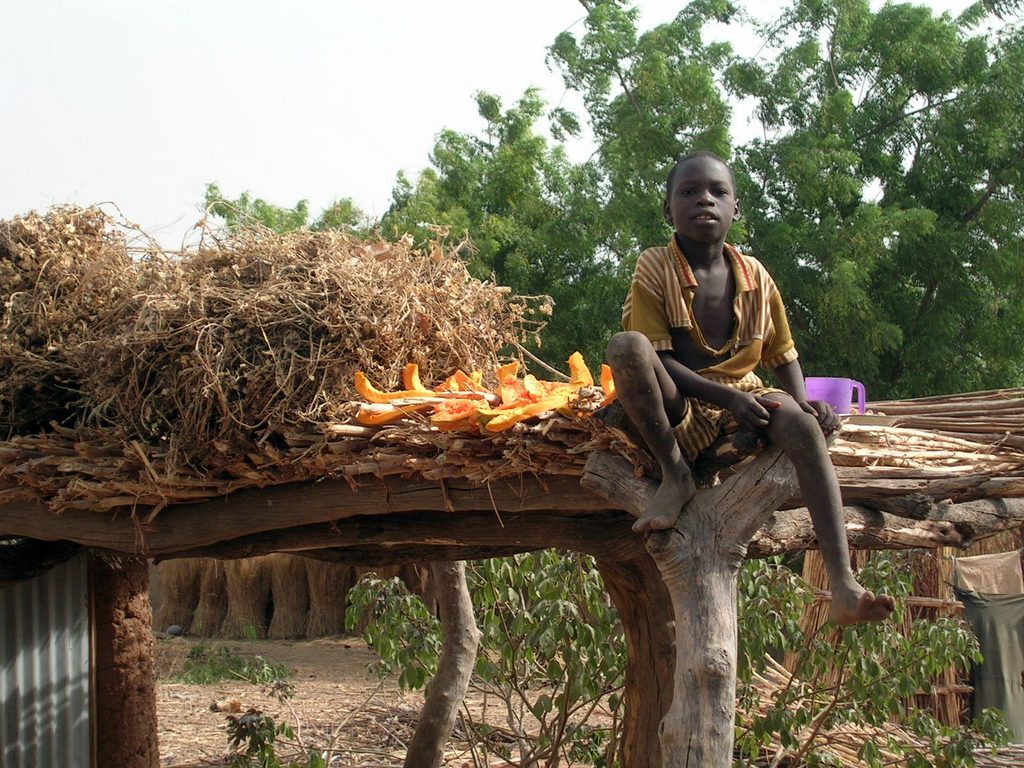
 Flooding in Cameroon is common during the rainy season, greatly impacting the northern regions. In recent years, flooding has worsened in the north and harmed access to livelihoods which has impacted those in poverty. While these natural disasters are not entirely preventable, organizations are working with Cameroon’s government to lessen their effects.
History of Flooding in Cameroon
In 2015, flooding in Cameroon displaced thousands of people. The country’s capital city, Yaoundé, as well as the large population city of Douala, are vulnerable to flooding. By August of 2015, the flooding disaster had impacted 40,000 people in those cities.
The capital itself has experienced 130 floods in the past, between the years of 1980 and 2014. All of those floods caused economic damage as well as the loss of life. Flooding in cities can also lead to disease outbreaks because bugs and bacteria can live in the still floodwater.
In 2019, flooding impacted Cameroon’s Far North region. The floods greatly impacted livelihoods because about 70% of people in the area are farmers. When the Logone River overflowed, it impacted the agriculture that occurs on the floodplain next to it. ACAPS, an organization that helps disaster responders through research, reported that the flooding affected rice production, pasturing and fishing.
The Far North is also the poorest region in Cameroon. About 75% of the population experiences greater risk during floods because poorer households often live in homes made from materials such as straw roofing. These materials are not durable long-term and are, therefore, negatively impacted by floodwater. This is not the first time the Logone river and the northern region have flooded. In 2012, a flood in the area damaged 30,000 households.
The Path to Recovery
Since 2014, The World Bank has been working on the Flood Emergency Project in Cameroon. This project came into being after flooding on the Logone in northern Cameroon. The project lowers risk from annual flooding for over 100,000 people. As a result of the project, disaster risk management and livelihoods in the region have improved.
After the 2015 floods, the government worked to decrease the number of floods that affect cities, particularly the capital. The government built a “drainage canal network” which cost about $102 million, according to the UN Office for Disaster Risk Reduction (UNDRR). The project aims to build a waste treatment and disposal plant as well as four more drainage canals.
“The first phase of the project helped to scale down the number of floods from 15 to three annually. But much still remains to be done in order that peripheries which are still vulnerable to floods are completely freed from related risks,” said Serge Mbarga Enama, an engineer at Yaoundé City Council, to UNDRR.
The government also looked at high flood-risk areas, demolished homes there and evicted people living in informal communities in those places. The danger with evicting people from these areas is that they lack the land titles needed to receive compensation for the demolition that would help pay for housing in low-risk flood areas. As a result, some end up returning to high flood-risk areas. Others are at risk of becoming homeless in big cities like the capital.
Aside from looking more closely at those living in high-risk areas, the government adopted the Sendai Framework for Disaster Risk Reduction. It is a global agreement that would last 15 years. The goal of the framework is to raise awareness about disasters in order to reduce the effects of flooding in Cameroon.
What is Currently Happening
Since the 2019 floods, the Cameroon Red Cross Society has been responding to disasters. The organization was able to reach affected areas soon after the floods, only taking a few days. The Cameroon Red Cross provided first aid and support services, as well as kits filled with essential household items for those in need.
The Cameroon government is still involved with the 15-year Sendai Framework for Disaster Risk Reduction and working to improve disaster awareness. The UNDRR reported that the program focuses on four key aspects:
-
To understand the risk level for disaster
-
To strengthen the governance of disaster risk in order to improve the management
-
To invest in disaster preparedness for effective response
-
To “Build Back Better” to recover, rehabilitate and reconstruct
Cameroon will continue working on the program until 2030.
Flooding in Cameroon has a major impact on the northern region, as well as big cities such as the capital. While floods still impact the livelihoods of people in high-risk areas, especially impacting poorer populations, the Cameroonian government and international organizations have instituted programs to reduce the impacts of flooding.
– Melody Kazel
Photo: Flickr

5 Facts About Hunger in Poland
5 Facts About Hunger in Poland
While Poland has made great efforts to keep the percentage of individuals living in hunger down, there is more to be done. This is especially true for children living in poor, rural areas. Through help from organizations bringing food to malnourished and hungry children, hopefully Poland’s hunger rate that has stayed stagnant for so long can now begin to decrease even more.
– Olivia Eaker
Photo: Flickr
UNDP’s Innovations in Poverty Eradication in Palestine
Palestine, located in Western Asia/the Middle East, consists of Gaza and the West Bank. While facing years of conflict with Israel, Palestine battles increasing poverty and unemployment rates as well as a lack of resources. Below are some programs that UNDP has put into place to help promote poverty eradication in Palestine.
The Context
Palestine has cities with some of the highest population densities and population growth rates while suffering from both limited financial resources and space for efficient growth. Despite the prominence of urban cities with flourishing economies, like Ramallah, Rawabi and Gaza City, Palestine is also centered in a fragile, conflict-afflicted area and this placement has contributed to the increase in poverty. The conflict has weakened government power, caused damage to infrastructure, broken social networks due to forced displacement of families and increased youth unemployment. All of these factors lend themselves to poverty.
The poverty rate in Palestine is 25% and unemployment reached about 29% across the board. For youth ages 15–24, however, unemployment reached 42% in both Gaza and the West Bank, placing Palestine as the country with the eighth-highest youth unemployment rate. This is mostly due to the rapid population growth, the deteriorating economy and the lack of Palestinian students with degrees or vocational training. In addition to these high rates of unemployment, more than 1 million children in Palestine require some form of humanitarian assistance. These conditions have influenced the United Nations to request organizations such as the United Nations Development Programme (UNDP) to implement programs centered around innovative ways to reduce and potentially eradicate poverty in Palestine through economic empowerment.
UNDP’s Successful Initiatives
Among these programs is the Deprived Families Economic Empowerment Programme (DEEP). Emerging in 2006, DEEP aims to create interventions that target families who have enough community connections to flourish, through small businesses. This program has helped more than 23,756 households and is working on developing new strategic approaches for economic empowerment such as “community mobilization” and targeting youth employment and group projects. DEEP generated 9,560 family businesses and 23,000 paid and long-term jobs. This newly generated income supports 215,000 people, many of whom are children. Most importantly, this program helped 79% of these families close the poverty gap by more than 50%.
Another successful approach to reducing poverty in Palestine is through the Integrated Agricultural and Rural Development Programme which emerged in 2014. This initiative promotes agricultural production for consumption and seeks to reform the existing infrastructure. The program combats the lack of resources and high unemployment rate by constructing agricultural roads, water storage units, planting trees and installing electricity. All of these activities generate employment and supply the locals with fresh foods such as olives and other fruit. This program also aims to make at least 4,000 hectares of agricultural land suitable for production and support farmers with cultivating and utilizing an additional 7,000 hectares.
The Three-pillar Strategy Against COVID-19
In recent months, the UNDP of Palestine has also implemented programs to combat the ongoing COVID-19 pandemic. Due to the restricted access to resources, the pre-existing high levels of unemployment and poverty and the decades of political aggression and occupation — the COVID-19 pandemic has taken a harder toll. However, the UNDP is coordinating with the Ministry of Health to bring forth a proper response to the crisis. This response is framed by a three-pillar strategy that includes increasing healthcare staff, disinfecting facilities, supporting livelihoods, promoting businesses and aiding in government responses that fight misinformation and foster discussion through media outlets. All of these efforts aid in ensuring economic empowerment while responding to the crisis.
A Hopeful Outlook
The poverty and unemployment rates in Palestine remain high as political tensions rise. However, the programs that UNDP has actively put into effect contribute to the progression of the economy and the eradication of poverty in Palestine. Through UNDP’s tremendous efforts alongside the humanitarian assistance that various organizations like UNICEF and UNRWA provide, Palestine should be able to decrease its poverty and unemployment rates and restore its economy.
– Nada Abuasi
Photo: Flickr
5 Inventions Saving Infant Lives All Over the World
5 Inventions Saving Infant Lives
These five designs are just a few of the inventions saving infant lives all around the world. Most inventions are aimed at larger developing countries to help decrease mortality rates. Sub-Saharan Africa still has one of the highest infant mortality rates in the world with more than 50 deaths per 1,000 births while India has close to 30 deaths per 1,000 births. Inventions such as the five listed above have the potential to save thousands of lives and improve the mortality rate for many less developed countries whose mothers and infants have suffered for far too long.
– Hena Pejdah
Photo: Pixabay
Peru’s National Coffee Action Plan Improves Lives
Poverty in Peru
From 2002 to 2013, Peru was one of the most rapidly developing countries in Latin America with an average annual GDP growth of 6.1%. The number of individuals living below their national poverty line also decreased during this time, with a report of only 2.6% of the population living on less than $1.90 per day in 2018.
Though significant strides have been made, human development indicators remain low in rural regions. In 2001, 50% of the rural population lived in extreme poverty, but that number plummeted to 10% in 2015. Child malnutrition and mortality rates are 100% higher in rural regions and educational performance is lower than in urban areas. Lastly, the median income in urban regions was 40% greater than that of rural regions in 2015.
Peruvian Coffee Sector
The Peruvian coffee sector creates 885,000 jobs in isolated areas that might otherwise be vulnerable to extreme poverty. According to the Green Commodities Programme, it is estimated that there are 2 million Peruvians involved in the coffee production chain. In addition, 40% of agricultural land is utilized for coffee crops. Additionally, coffee profits account for 25% of Peru’s agricultural income and created $711 million of the export revenue in 2018.
However, this sector poses certain challenges, particularly for small-scale farmers who manage one to five hectares, (two to ten football fields) and comprise 85% of total farmers. Financially, farmers often face difficulties establishing credit and responding to market price fluctuations. They also struggle to afford the requisite fungicides, pesticides and fertilizers that prevent crop destruction. Replacing diseased or aged plants, a strategy to maintain efficiency, costs approximately USD $3,000 per hectare and results in most farmers prolonging the process 10 to 20 years. Environmentally, coffee crops are subject to insects, plant diseases, changing weather conditions and effects of climate change.
Additionally, lack of technical assistance concerning knowledge for best practices results in lower productivity per hectare. This decreased production rate, along with financial and environmental uncertainties, leads to expansion into new regions. It drives deforestation and environmental degradation.
The National Coffee Action Plan 2018-2030
The National Coffee Action Plan incorporates a variety of stakeholders from the public and private sectors in order to combat inefficient practices, deforestation and small-scale farmer poverty. Beginning with the analysis of stakeholder operations and a production baseline in 2016, the dialogue was then established with the National Coffee Platform between 50 organizations. This spans the production chain in order to establish a cohesive vision. Workshops were held throughout the nation and technical groups then assessed the sector’s pressing problems. Lastly, a plan was proposed and legalized in the fall of 2018.
The plan aims to increase crop productivity from 15 quintals to 25 quintals per hectare. It will also categorize 70% of coffee exports as certified quality coffee. Both of these points are marks of sustainability and consistency. Furthermore, marketing development will occur across national and international markets to increase profitability. The plan also aspires to increase producer access to necessary financial services.
By 2030, the National Coffee Action Plan strives to increase competitiveness and sustainability in the following ways:
Peru’s National Coffee Action Plan recognizes the environmental, economic and social importance of developing the coffee sector and reducing poverty among smallholder farmers. Other initiatives across the global coffee sector that include brands such as Starbucks and illycaffé have promoted similar practices to advance the lives of the 25 million coffee producers worldwide. Though the nation struggles with rural poverty and deforestation, the National Coffee Action Plan displays bold steps towards envisioning a more sustainable coffee sector for both the producers and the environment.
– Suzi Quigg
Photo: Flickr
5 Facts About Poverty and Homelessness in Samoa
A leading cause of homelessness in Samoa is its vulnerability to natural disasters and deadly cyclones. These natural disasters wipe out many families’ homes, businesses and churches, consequently leaving them homeless. The rural communities face the bulk of the homelessness problem due to a lack of access to clean water, land to grow crops and job opportunities. Around 18.8% of Samoa’s population lives below the national poverty line and most of that group lives in rural communities where there is a lack of jobs. Instead, the villagers rely heavily on their land for survival.
5 Facts About Homelessness in Samoa
An NGO Making a Difference
Although Samoa faces adversities such as poverty which leads to homelessness — no reliable statistics show exactly how many people are homeless in Samoa. Luckily, many people tend to have continuous access to the sea for fish and land to grow crops, which is how they can make an income. With the intent of creating a more secure economy and land for the people of Samoa, the nongovernmental organization Civil Society Support Program (CSSP) is currently working to reduce homelessness. The program emerged because of the recognition that through effective and sustainable Civil Society programs, the quality of life for the people of Samoa can improve. The program’s goal is to provide support within Civil Society groups that will improve their communities and provide more promising economic opportunities.
– Montana Moore
Photo: Unsplash
Giraffe: One of the Innovations in Poverty Eradication in South Africa
Solving Unemployment in South Africa
Around 40% of South Africans are unemployed, and the youth unemployment rate is even higher at nearly 50%. The government has made efforts to dismantle poverty and inequality since the end of apartheid in 1994 by building over two million new houses, improving access to clean water and distributing social grants to millions of people in poverty. The economy grew by roughly 3.5% yearly from 1998 to 2008, producing millions of new jobs. The financial crisis of 2008 halted some of this progress, but all efforts for improvement will neutralize if half of the country’s young people grow up outside of the job market.
With the long-term effects of youth unemployment in mind, Shivdasani and Anwarsha set out to curb the trend. In 2015, they introduced Giraffe to South Africa’s smallest province Gauteng, home of the country’s largest city Johannesburg. A year later, with 100,000 job-seekers signed up, they brought Giraffe to the greater metro areas of Cape Town and Durban. Today, over 1 million people have joined the platform as well as thousands of businesses, both small and large, looking for the right match.
The App That is Not Just for Smartphones
As one of the innovations in poverty eradication in South Africa, Giraffe’s success is a direct result of its ease of use and technological innovation. Anyone with a cellphone that has an internet browser, not necessarily a smartphone, can use the service. Job-seekers must first visit Giraffe’s website from whatever device they have available, and then fill out a form that takes about eight or nine minutes. The company then creates a CV for the user and uploads it to their database. Employers have a short sign-up process as well.
From there, Giraffe’s algorithm does all of the work, matching the right candidates to the right jobs. The algorithm will even set up the interview at an agreed-upon time. Most recruitment agencies require an agent to contact both parties and review qualifications by hand. Giraffe works faster and keeps costs extremely low for businesses by employing technology instead, charging up to 30 times less than other recruitment agencies. The platform is free for job-seekers.
The Future of Giraffe and UNICEF’s Innovation Fund
In July 2020, Giraffe became a recipient of funding from UNICEF’s Innovation Fund, along with 10 other start-ups around the world that are focused on eradicating inequality of opportunity for young people. In recognition of the importance of education and skill-level on employability, Giraffe intends to use the money to build a job-seeker content portal, drawing from Giraffe’s labor market data and highlighting the most in-demand skills. The new feature will help educate and upskill young people to improve their career prospects and will hold Giraffe to a higher standard as one of the newest innovations in poverty eradication in South Africa.
In addition to the funding, Giraffe now has access to UNICEF’s team of innovators and networks, and plans are in place to make both the matching algorithm and content portal open source for other global organizations to use.
– McKenna Black
Photo: Flickr
Innovations in Poverty Eradication in Spain
While Spain is officially classified as a high-income country, it is not exempt from unceasingly high rates of poverty. Philip Alston, a U.N. expert, recently commented that poverty rates in Spain are “appallingly high” and among the highest in all of Europe. However, efforts to achieve eventual poverty eradication in Spain are underway.
Context
In 2018, over 26% of people in Spain were at high risk of poverty or social exclusion. Moreover, poverty particularly affected children (minors under the age of 18) — with nearly 33% of them either currently living in poverty, or at-risk. A contributing factor in the lingering poverty within these communities is the perpetuation of social immobility among citizens. According to Forbes, Spanish citizens born into families of wealth earn 40% more than people who are born into low-income households. The opportunities these people have to rise out of poverty on their own are nearly non-existent.
The Spanish government and nonprofit organizations are becoming increasingly aware of the issue of high poverty rates within the country. The government, along with other organizations are employing strategic innovations and other strategies every day to address poverty eradication in Spain.
Government Innovations & Strategies
In March 2019, the National Strategy to Prevent and Combat Poverty and Social Exclusion passed as a new poverty-reduction movement. With its effective timeline lasting through 2023, the strategy includes four key components: (1) the reduction of current poverty, (2) raising social investment in education and employment, (3) increased social protections for at-risk citizens and (4) improving the effectiveness of public policies surrounding poverty eradication in Spain. This movement serves as an important step for the country’s government because it creates a space to address poverty eradication in Spain on a federal level — catering to the nation’s poorest and most vulnerable.
Spain has recently made vast improvements to its minimum income scheme. With the goal of bringing 1.6 million people out of poverty, the new plan will ensure that families have an income between $514 and $1,130 per month, depending on their eligibility. The social program will take into account the number of children per household, single-parent households, annual income and finally, assets. In the words of Deputy Prime Minister Pablo Iglesias, this poverty reduction strategy has birthed “a new social right in Spain” and looks to dissolve deeply ingrained social inequalities among its people.
Nonprofit Initiatives
The Spanish government is not the only body taking action to alleviate poverty. Organizations such as SOS Children’s Villages are actively working on lifting communities out of poverty. While the organization recognizes that Spain is actively working to address national poverty at large, it believes there is more to do in supporting individual families. Spain has the third highest childhood poverty rate in all of Europe and SOS Children’s Villages primarily targets these vulnerable and at-risk children through their many day centers and homeless villages. In hopes of creating more safe and secure Spanish households, it also focuses on psychological counseling for families and works to aid unemployed citizens in finding work. With ongoing humanitarian work in eight locations within mainland Spain and the Canary Islands, SOS Children’s Villages is an example of an organization that is actively working towards poverty eradication in Spain.
Implications
On both the public (federal) and private levels, Spain is developing new innovations and strategies to address its crippling poverty rates. The government’s plans to improve social programs and safety nets while ensuring income guarantees will potentially affect millions of people in struggling Spanish communities. Supplemented with the aid of nonprofit organizations such as SOS Children’s Villages, the goals of these programs hold promises of a better, more secure future for millions of people.
– Karli Stone
Photo: Flickr
Congresswoman Ilhan Omar’s YouthBuild International Act
Around the world, over 200 million youth live in extreme poverty, earning less than $2 a day. On February 12, 2020, Congresswoman Ilhan Omar, Representative for Minnesota’s 5th congressional district, introduced her sponsorship for the YouthBuild International Act. The Act aims to amend and improve upon the Foreign Assistance Act of 1961. In doing so, it strives to program educational opportunities and employment training for underprivileged youth in developing countries.
The bill adds a new point to Section 105 of the indispensable Foreign Assistance Act of 1961. Following the original Act, the bill adds: “Program to provide disadvantaged youth in developing countries with opportunities to receive education and employment skills.” Following this broad point, the text describes five distinct goals for the bill: economic self-sufficiency, community engagement, leadership development, affordable housing and improvement of facilities.
Goals of the Bill
To begin, the bill states its goal to make higher education and employment skill-training more accessible to underprivileged youth. By providing these opportunities, the bill aims to equip youth with economic self-sufficiency. Secondly, the bill promises to provide poverty-ridden youth with opportunities for “meaningful work and service to their communities.” Thereafter, the bill promises to enhance the development of marketable leadership skills for youth in low-income communities.
Next, the bill proposes the establishment of affordable and permanent housing initiatives for homeless and low-income families. The final section of the bill promises to improve the energy efficiency and overall quality of community facilities. This is meant to benefit nonprofit and public facilities that protect homeless and low-income families. Youth participants in the program will contribute directly to these efforts.
Domestic Success
The potential for the YouthBuild International Act is demonstrated by the successes of the United States YouthBuild program. That program provides educational, employment and leadership opportunities to thousands of young Americans who lack education and employment. As of 2019, 70% of YouthBuild participants earned a certificate or a degree, 62% improved their literacy or mathematical skills and 54% gained earned education or employment.
Next Steps
The positive results of the United States YouthBuild program prove how successful the YouthBuild International Act could be. However, the odds are not in this bill’s favor. Although Congresswoman Omar introduced it nearly six months ago, the bill has neither gained any cosponsors nor moved past the House Foreign Affairs Committee. The Act remains stagnant despite its immense potential for change. According to Skopos Labs, the bill only has a 3% chance of being enacted into law.
Although domestic poverty legislation is more pressing than ever, these issues must not put foreign aid on the back-burner. It is vital to bring awareness to under-supported aid legislation, especially when it can lead to economic self-sufficiency. Passing the YouthBuild International Act could significantly uplift millions of vulnerable communities and break the cycle of poverty for future generations. This will not happen unless more Americans contact their senators and representatives about the YouthBuild International Act and other under-prioritized aid legislation.
– Stella Grimaldi
Photo: Flickr
Why Congress Undervalues Foreign Aid
If there is one certainty about the process of lawmaking, it is that enacting a bill into law requires persistence. Thousands of bills never pass the House of Representatives, much less receive the Senate or Presidential approval. This is especially true when it comes to the way Congress undervalues foreign aid. Govtrack.org allows anyone to view who cosponsors pending bills and track the bill’s progress through Congress. Even more telling, however, is the website’s indication of the probability that any given bill will be enacted into law.
Nonprofit organizations like The Borgen Project mobilize thousands of Americans to contact their elected officials in support of foreign aid and international relief. Nevertheless, bills regarding foreign assistance commonly have prognoses under 5%. Compared to the prognoses for bills regarding homeland security and domestic business protections, these numbers highlight the lack of urgency for foreign aid at the federal level. In the fiscal year for 2019, foreign assistance comprised less than 1% of the federal budget. Given the growing severity of humanitarian crises amidst the pandemic, why does Congress continue to undervalue foreign aid?
A Bipartisan Call For Support
A common misconception exists that Republicans are the main cause of undervalued foreign aid. Democrat-identifying voters at large typically prioritize foreign aid more than Republicans. However, Congress members in both political parties lend their support and cosponsorship to undervalued foreign aid bills. Over time, Republican and Democratic administrations alike have installed effective foreign aid initiatives. Recently, Congress members from both parties rejected President Trump’s proposal to cut to the International Affairs Budget by one-third.
While bipartisan protection of the existing aid budget is optimistic, senators and representatives are slow to demonstrate support for pending legislation. For example, the Global Fragility Act has gained a modest 20 cosponsors since its introduction in April 2019. Its prognosis, like many similar acts, stands at 3%. In contrast, an act entitled H.R. 1252: To designate the facility of the United States Postal Service located at 6531 Van Nuys Boulevard in Van Nuys, California, as the “Marilyn Monroe Post Office” garnered 50 cosponsors and received enactment within a year. When new bills and initiatives lack attention and cosponsorship, it is difficult for foreign aid to create widespread benefits. This is especially true in an unprecedented time of crisis. Oftentimes, seemingly non-urgent and low-impact acts gain more congressional momentum than urgent and potentially life-changing foreign assistance. This observation indicates a disparity in support of domestic and foreign interests.
Domestic Benefits As An Obstacle
Generally, undervalued foreign aid lacks impetus because of the framework that Congress created around foreign aid as early as World War II. From World War II to the Cold War era, support for foreign aid depended on how much that bill could bring domestic benefits back to the United States. This precedent informs how Congress evaluates foreign aid to this day. Senators and representatives often select foreign aid based on the likelihood of it bringing economic benefits to their particular geographic region.
While it is natural for elected officials to consider the American economy, an empirical question exists as to whether foreign aid realistically compromises American interests. In short, it does not. Foreign aid, specifically when USAID drives it, brings billions of dollars to the American economy each year. This has been the case since the late 20th century.
Combating Domestic Fear
Another notable reason for why Congress undervalues foreign aid is the fear of benefiting autocratic governments. This contributed to the lack of foreign aid during the Cold War, and this fear surged once again in the early 21st century in response to the 9/11 terrorist attacks. Foreign aid bills that grant basic resources to civilians rather than governments lack support from Congress based on these anxieties. However, to generalize about developing countries based on preconceived fears or stereotypes only blocks progress, both domestically and abroad. Congress is more than capable of making informed decisions about foreign aid without compromising the security of their constituents, who call in support of pending aid legislation more often with each international crisis and tragedy.
– Stella Grimaldi
Photo: Flickr
How Flooding Impacts Poverty in Cameroon
History of Flooding in Cameroon
In 2015, flooding in Cameroon displaced thousands of people. The country’s capital city, Yaoundé, as well as the large population city of Douala, are vulnerable to flooding. By August of 2015, the flooding disaster had impacted 40,000 people in those cities.
The capital itself has experienced 130 floods in the past, between the years of 1980 and 2014. All of those floods caused economic damage as well as the loss of life. Flooding in cities can also lead to disease outbreaks because bugs and bacteria can live in the still floodwater.
In 2019, flooding impacted Cameroon’s Far North region. The floods greatly impacted livelihoods because about 70% of people in the area are farmers. When the Logone River overflowed, it impacted the agriculture that occurs on the floodplain next to it. ACAPS, an organization that helps disaster responders through research, reported that the flooding affected rice production, pasturing and fishing.
The Far North is also the poorest region in Cameroon. About 75% of the population experiences greater risk during floods because poorer households often live in homes made from materials such as straw roofing. These materials are not durable long-term and are, therefore, negatively impacted by floodwater. This is not the first time the Logone river and the northern region have flooded. In 2012, a flood in the area damaged 30,000 households.
The Path to Recovery
Since 2014, The World Bank has been working on the Flood Emergency Project in Cameroon. This project came into being after flooding on the Logone in northern Cameroon. The project lowers risk from annual flooding for over 100,000 people. As a result of the project, disaster risk management and livelihoods in the region have improved.
After the 2015 floods, the government worked to decrease the number of floods that affect cities, particularly the capital. The government built a “drainage canal network” which cost about $102 million, according to the UN Office for Disaster Risk Reduction (UNDRR). The project aims to build a waste treatment and disposal plant as well as four more drainage canals.
“The first phase of the project helped to scale down the number of floods from 15 to three annually. But much still remains to be done in order that peripheries which are still vulnerable to floods are completely freed from related risks,” said Serge Mbarga Enama, an engineer at Yaoundé City Council, to UNDRR.
The government also looked at high flood-risk areas, demolished homes there and evicted people living in informal communities in those places. The danger with evicting people from these areas is that they lack the land titles needed to receive compensation for the demolition that would help pay for housing in low-risk flood areas. As a result, some end up returning to high flood-risk areas. Others are at risk of becoming homeless in big cities like the capital.
Aside from looking more closely at those living in high-risk areas, the government adopted the Sendai Framework for Disaster Risk Reduction. It is a global agreement that would last 15 years. The goal of the framework is to raise awareness about disasters in order to reduce the effects of flooding in Cameroon.
What is Currently Happening
Since the 2019 floods, the Cameroon Red Cross Society has been responding to disasters. The organization was able to reach affected areas soon after the floods, only taking a few days. The Cameroon Red Cross provided first aid and support services, as well as kits filled with essential household items for those in need.
The Cameroon government is still involved with the 15-year Sendai Framework for Disaster Risk Reduction and working to improve disaster awareness. The UNDRR reported that the program focuses on four key aspects:
To understand the risk level for disaster
To strengthen the governance of disaster risk in order to improve the management
To invest in disaster preparedness for effective response
To “Build Back Better” to recover, rehabilitate and reconstruct
Cameroon will continue working on the program until 2030.
Flooding in Cameroon has a major impact on the northern region, as well as big cities such as the capital. While floods still impact the livelihoods of people in high-risk areas, especially impacting poorer populations, the Cameroonian government and international organizations have instituted programs to reduce the impacts of flooding.
– Melody Kazel
Photo: Flickr