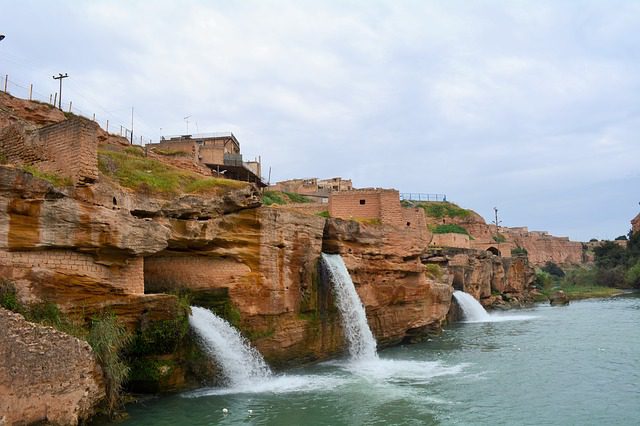
The Islamic Republic of Iran (Iran) has had conflicts with the U.S. since the Islamic revolution in 1979 and the people of Iran have suffered in many ways since then. Hardships as a result of both international sanctions and domestic government actions have affected Iranians. The Shah of Iran sparked the current water crisis by nationalizing the country’s water resources, before the revolution. However, the new Islamic Republic ignored the warnings of Iranian environmental experts and accelerated dam and well building. This, in turn, effectively caused the disappearance of about 85% of groundwater sources. Today, Iranians are at the precipice of a water crisis that government mismanagement, a population boom and climate change all brought on. Without a drastic change in government policies, some posit that around 70% (i.e., about 56 million Iranians) may have to flee to more developed countries if the water crisis in Iran is not adequately addressed within the next 20–30 years.
The Nationalization of Water
Before its nationalization, water in Iran was a sustainable resource, with 34 million Iranians relying on millennia-old, natural underground canals for their drinking water. This preserved aquifers in the country, maintaining renewable water resources at 135 billion cubic meters. However, now with a widespread population of more than 80 million and government-supported infrastructure contributing to rapid water consumption — renewable resources are less than 80 billion cubic meters. This problem has contributed to conflicts in the region, with water shortages and poor-quality, drinking water as driving forces behind large-scale, violent protests. Here, many poor, frustrated Iranians are the first to see the effects of the water crisis.
The Iranian government has accelerated the depletion of water resources in the hopes of expanding agricultural and infrastructure projects in pursuit of self-sufficiency. The agriculture sector claims more than 90% of the country’s water supply, leaving only a small percentage for Iranian citizens. The regime awarded huge, dam-building contracts to companies connected to those in power and encouraged farmers to grow crops (no matter their level of water consumption). Government-supported dams blocked large rivers throughout the nation and prevented aquifers from replenishing. This, in turn, forced farmers and other individuals to drill deeper wells into the depleting groundwater resources. As a result, the number of wells in existence since the revolution has multiplied by more than 13 times. Around half of the wells are illegal and produce far beyond what is sustainable, according to the deputy agriculture minister. The situation has created a negative feedback loop of government-mandated, harmful infrastructure projects and unsustainable water consumption — producing the current water crisis in Iran.
Environmental Challenges
Environmental issues have exacerbated the water crisis in Iran. Drought has struck the region as a whole, but especially Iran, with 2017 being its driest year in nearly seven decades. Declining rainfall, higher temperatures, desertification and extreme weather all place added pressure on Iran’s water supply. Further, the intense burning of fossil fuels has contributed to an overall decline in biodiversity and increased water pollution — putting what little remaining water at risk.
Taking Action
A proposed solution includes increasing the use of water desalination, especially in the Capsian sea. This proposal is extremely expensive and could also cause undue harm to already low sea levels and territorial disputes. Within Iran, there are examples of individuals who have bravely stood up against the regime and advocated for more sustainable policies. Saeed Pourali writes in the Tehran Times that the current band-aid solutions in Iran will not be nearly enough. Pourali claims that the regime must listen to experts and environmentalists. Further, Pourali claims that Iranian individuals must also take it upon themselves to lower their water usage. Victoria Jamali, an assistant professor at the University of Tehran, founded Iran’s leading environmental organization — the Women’s Society Against Environmental Pollution. Since the early 2000s, Jamali has worked to bring comprehensive legal reform to Iran, to protect water and other natural resources. Taking after U.S.-styled environmental law, Jamali now teaches young Iranian activists and environmentalists to stand up for this important cause, despite the Iranian regime’s reluctance to create and enforce environmental legislation.
The Need for Reform
Corrupt management of resources and a close-minded approach to economic development has led to the severe depletion of Iran’s water supply over the past four decades. Although, it is a popular belief that the Shah started Iran down this path himself, even before 1979. Today, the water crisis in Iran is especially poignant. A massive population boom and civil unrest against the corrupt regime brings this issue to both the national and international stages. The consumption rate has proven itself to be extremely unsustainable, which is why individuals like Saeed Pourali and Victoria Jamali have been so active in trying to bring about real change. The ultimate goal is to protect Iran’s environment and natural resources. Reform will be expensive for Iran, especially under strict, international sanctions. However, reform is necessary to combat the water crisis in Iran and protect those impoverished Iranians who will suffer the most.
– Connor Bradbury
Photo: Pixabay

COVID-19 and Immigration Reform in Brazil
Immigrants in Brazil: A Particularly Vulnerable Population
As the virus continues to spread in Brazil, immigrants constitute one of the most at-risk groups. In their policy brief covering COVID-19 as it relates to migrants, the U.N. mentions three interlocking crises that contribute to the particularly precarious position of migrants:
Immigrants in Brazil are particularly vulnerable due to the worsening health crisis within the country. As of July 24, 2020, Brazil was the second hardest-hit country in the world in terms of COVID-19 with a staggering 2.3 million confirmed cases and more than 85,000 deaths. Another factor that leaves immigrants to Brazil in a precarious position is the age demographic of the immigrant population. In contrast to other countries experiencing high numbers of coronavirus cases, Brazil’s immigrant population has a greater proportion of elderly people. In general, 9.3% of Brazil’s population are 65-years-old or older. 21.4% of the country’s immigrant population is in the same age range. The demographics of the immigrant population, combined with the country’s public health crisis, exacerbate immigrant vulnerabilities throughout Brazil.
COVID-19 and Immigration
Like many countries, Brazil has enacted ordinances to restrict movement across borders to contain COVID-19. There are exemptions in place for immigrants related to Brazilian citizens, those with authorization to reside in Brazil for a fixed or indefinite term and those who hold a National Migration Registry Card. However, in March the government paused the issuance of National Migration Registry Cards as well as the processing of asylum applications for the duration of the public health crisis.
The Brazilian federal government made monthly relief checks available to unemployed people and workers in the informal sector. However, banks have unlawfully requested immigrants to provide supporting documents such as proof of residence to collect them. Additionally, many immigrants without legal status do not have bank accounts where the checks could be deposited. As a result, many immigrants in Brazil exist in a limbo-like state without access to federal aid and without the freedom to leave the country to safer, more financially viable situations.
The Movement Towards Regularization
Several countries granted migrants temporary residence status and access to healthcare for the duration of the pandemic. These protections would likely disappear after the public health emergency ends. However, civil society groups and activists in Brazil claim that this is not enough. They feel their country must move beyond temporary fixes for an ongoing problem. Instead, many are pushing for a bill that would grant regularization to all immigrants in Brazil, effectively bringing full immigration reform to Brazil.
This bill would give all immigrants, regardless of their immigration status, residency for up to two years. It would also provide the possibility of renewal for an indefinite amount of time. Federal agencies have stopped processing most immigration requests as a result of COVID-19. The regularization bill would immediately grant residency to those whose immigration cases are pending or on hold. This bill is particularly important to immigrants struggling amidst the pandemic. The residency would enable broader access to healthcare and social benefits, such as the monthly relief checks from the federal government.
Activism Moving Forward
Activists for the regularization bill face an administration that has demonstrated disregard for migrants’ rights, especially during the pandemic. In spite of this, Brazil has proven that it can implement more progressive immigration policies. Responding to the humanitarian crisis in Venezuela, Brazil leads the way in protecting thousands of displaced people by granting them refugee status.
The COVID-19 pandemic moved activists to push for this same level of care to be given to immigrants already within the country. Should the regularization bill pass, current immigrants would benefit from improved access to public resources. The bill would also set the scene for the ongoing support of future immigrant populations and immigration reform in Brazil.
– Alanna Jaffee
Photo: USAID
The Water Crisis in Iran
The Islamic Republic of Iran (Iran) has had conflicts with the U.S. since the Islamic revolution in 1979 and the people of Iran have suffered in many ways since then. Hardships as a result of both international sanctions and domestic government actions have affected Iranians. The Shah of Iran sparked the current water crisis by nationalizing the country’s water resources, before the revolution. However, the new Islamic Republic ignored the warnings of Iranian environmental experts and accelerated dam and well building. This, in turn, effectively caused the disappearance of about 85% of groundwater sources. Today, Iranians are at the precipice of a water crisis that government mismanagement, a population boom and climate change all brought on. Without a drastic change in government policies, some posit that around 70% (i.e., about 56 million Iranians) may have to flee to more developed countries if the water crisis in Iran is not adequately addressed within the next 20–30 years.
The Nationalization of Water
Before its nationalization, water in Iran was a sustainable resource, with 34 million Iranians relying on millennia-old, natural underground canals for their drinking water. This preserved aquifers in the country, maintaining renewable water resources at 135 billion cubic meters. However, now with a widespread population of more than 80 million and government-supported infrastructure contributing to rapid water consumption — renewable resources are less than 80 billion cubic meters. This problem has contributed to conflicts in the region, with water shortages and poor-quality, drinking water as driving forces behind large-scale, violent protests. Here, many poor, frustrated Iranians are the first to see the effects of the water crisis.
The Iranian government has accelerated the depletion of water resources in the hopes of expanding agricultural and infrastructure projects in pursuit of self-sufficiency. The agriculture sector claims more than 90% of the country’s water supply, leaving only a small percentage for Iranian citizens. The regime awarded huge, dam-building contracts to companies connected to those in power and encouraged farmers to grow crops (no matter their level of water consumption). Government-supported dams blocked large rivers throughout the nation and prevented aquifers from replenishing. This, in turn, forced farmers and other individuals to drill deeper wells into the depleting groundwater resources. As a result, the number of wells in existence since the revolution has multiplied by more than 13 times. Around half of the wells are illegal and produce far beyond what is sustainable, according to the deputy agriculture minister. The situation has created a negative feedback loop of government-mandated, harmful infrastructure projects and unsustainable water consumption — producing the current water crisis in Iran.
Environmental Challenges
Environmental issues have exacerbated the water crisis in Iran. Drought has struck the region as a whole, but especially Iran, with 2017 being its driest year in nearly seven decades. Declining rainfall, higher temperatures, desertification and extreme weather all place added pressure on Iran’s water supply. Further, the intense burning of fossil fuels has contributed to an overall decline in biodiversity and increased water pollution — putting what little remaining water at risk.
Taking Action
A proposed solution includes increasing the use of water desalination, especially in the Capsian sea. This proposal is extremely expensive and could also cause undue harm to already low sea levels and territorial disputes. Within Iran, there are examples of individuals who have bravely stood up against the regime and advocated for more sustainable policies. Saeed Pourali writes in the Tehran Times that the current band-aid solutions in Iran will not be nearly enough. Pourali claims that the regime must listen to experts and environmentalists. Further, Pourali claims that Iranian individuals must also take it upon themselves to lower their water usage. Victoria Jamali, an assistant professor at the University of Tehran, founded Iran’s leading environmental organization — the Women’s Society Against Environmental Pollution. Since the early 2000s, Jamali has worked to bring comprehensive legal reform to Iran, to protect water and other natural resources. Taking after U.S.-styled environmental law, Jamali now teaches young Iranian activists and environmentalists to stand up for this important cause, despite the Iranian regime’s reluctance to create and enforce environmental legislation.
The Need for Reform
Corrupt management of resources and a close-minded approach to economic development has led to the severe depletion of Iran’s water supply over the past four decades. Although, it is a popular belief that the Shah started Iran down this path himself, even before 1979. Today, the water crisis in Iran is especially poignant. A massive population boom and civil unrest against the corrupt regime brings this issue to both the national and international stages. The consumption rate has proven itself to be extremely unsustainable, which is why individuals like Saeed Pourali and Victoria Jamali have been so active in trying to bring about real change. The ultimate goal is to protect Iran’s environment and natural resources. Reform will be expensive for Iran, especially under strict, international sanctions. However, reform is necessary to combat the water crisis in Iran and protect those impoverished Iranians who will suffer the most.
– Connor Bradbury
Photo: Pixabay
The Current Ebola Outbreak Funding Gap
Amid efforts to suppress the coronavirus effects, the Democratic Republic of the Congo (DRC) is now facing its 11th outbreak of Ebola since the discovery of the disease in 1976. The current outbreak officially began on June 1, 2020 — causing 24 deaths and garnering the attention of government officials and international agencies, such as the World Health Organization. The start of this outbreak coincides with the end of the 10th outbreak, which finished just 25 days earlier. Further complicating the latest outbreak is the fact that it comes when much of the international world is focusing on protecting themselves against the spread of the new coronavirus. As a result, there is an Ebola outbreak funding gap for what is required to sufficiently protect citizens of the DRC from the further spread of Ebola.
The Gap
The WHO reports that the $1.75 million raised so far will not last long enough to end the current outbreak. The organization estimates that the money will only last a few more weeks and that the unique location of the outbreak (in a more forested part of the country) is too costly to regularly send health officials.
This lack of funding could be a step backward for the country’s progress in limiting the disease. An outbreak in 2018 killed only 33 people, but from 2014 to 2016, 11,000 people died as a result of the disease. The main difference between the two time periods was the level of preparation and emergency funds to rely on, both of which are now decreasing due to the estimated gap.
The funding gap could have a direct impact on the current outbreak and may become a significant factor in the potential for new outbreaks. E.g., the recurrence of outbreaks is due to the virus’s presence in animals across the country. Therefore, there will most likely be another outbreak for which the WHO needs to be prepared.
Help from the United States?
The United States has donated more than $600 million to prevent the spread and minimize the devastation of previous outbreaks of the disease, in the DRC. This money has gone to building and managing health facilities, tracking the spread of the disease and evolving several safety measures for the country’s citizens. Those funds also went toward developing the two effective vaccines for Ebola and for transferring the dosages to citizens in need. Only a fraction of this money could make up for the lack of funding that the western part of the DRC needs today. Still, with most efforts and donations going toward coronavirus relief — very little attention has been placed on the current outbreak. This lack of attention contributes to the existing Ebola outbreak funding gap.
Looming Threats and Remaining Vigilant
A great challenge with this disease is that it could spread rapidly in the absence of a vaccine. Health officials typically vaccinate using a ring method — meaning they treat people that are near the center of the disease. Without the funds needed to disseminate the vaccine, the country’s infection rates could go up dramatically.
Officials are aware of this potential future, as the WHO Director-General, Dr. Tedros Adhanom Ghebreyesus states, “This is a reminder that COVID-19 is not the only health threat people face. Although much of the world’s attention is on the pandemic, the WHO is continuing to monitor and respond to many other health emergencies.” Some are urging other countries and organizations to take on this mindset. Aid from the United States could prove a significant help in preventing loss of life in the DRC by closing the Ebola outbreak funding gap.
– Aiden Farr
Photo: Pixabay
Innovating Global Healthcare With Medtronic
Access to adequate healthcare remains a challenge for people around the globe living in poverty. Continuously increasing healthcare costs exacerbate this issue and the final result is that more people in need are suffering as a consequence. The term “catastrophic health spending” refers to a person who spends more than 10% of their income on “out-of-pocket,” healthcare expenses. According to a report from the World Health Organization, 926.6 million people dealt with catastrophic health spending of at least 10% of their income in 2015. Furthermore, 208.7 million people endured health costs that were more than 25% of their income. These figures may indicate a need for innovating global healthcare, going forward.
Medtronic Improving Global Health Conditions
As part of the United Nations Sustainable Development Goals, the third goal focuses on improving health conditions. Specifically, section 3.8 aims to reduce cost barriers to life-saving treatments and medicine. Medtronic understands the value of this mission and is one company leading the way for innovations in global healthcare. As part of the company’s commitment to “alleviate pain, restore health, and extend life,” Medtronic continues to combine technology and patient-centered care to improve access to health services and resources for vulnerable populations, worldwide.
Medtronic invests heavily in finding solutions for noncommunicable diseases (NCD), i.e. diseases that cannot spread from one individual to another. Often these are chronic conditions, such as cardiovascular disease, diabetes and even hearing loss. In 2012, 68% of global deaths were caused by an NCD and while organizations are fighting to lower that number — approximately half of the global population are unable to access critical care.
3 Ways to Combat NCDs
An important part of Medtronic’s innovations in global healthcare stems from the idea of evolving medical practices. In the company’s efforts to combat NCDs, it concentrates on three areas: (1) capacity building, (2) community engagement and (3) sustaining programs. The capacity building portion of Medtronic’s commitment ensures that healthcare workers are well-equipped to understand their roles and responsibilities in the healthcare system. Moreover, it advocates for up-to-date training and professional feedback for workers. Medtronic’s community engagement aspect connects various organizations to broaden resources for populations in need of services. In this way, Medtronic scales back some of the barriers to care that many people face. Lastly, by gearing toward sustainable programming, Medtronic dedicates time to working with governments and policymakers to cultivate lasting change within the healthcare system itself.
Breaking Down Barriers with Programs & Patents
Medtronic has served more than 75 million people in more than 150 countries, since its start. It also has licenses to 47,800 patents — embracing the potential of new technologies to break down certain barriers. Patents for Humanity is a program of the United States Patent and Trademark Office and celebrates companies that use inventions to address humanitarian issues. In 2018, the program recognized Medtronic for its progress in innovating global healthcare. The patent in question was for a “portable, low-water kidney dialysis machine” that can be used for those who normally would not have access to traditional dialysis treatments.
Medtronic has also launched programs that integrate its technologies, combined with compassionate business models. Empower Health is one such program — utilizing a mobile tablet, an automated blood pressure machine, a glucometer and a new software application. The program allows healthcare workers to remotely monitor diabetic patients located in Ghana and Kenya. Through the software, clinicians can keep current on their patients’ status and can even send messages and write prescriptions.
While many challenges still face vulnerable populations all over the world, Medtronic is fostering new and exciting developments in the realm of global health.
– Melanie McCrackin
Photo: Flickr
Last Mile Health Rebuilds Healthcare in Liberia
Founded by Liberian civil war survivors and American healthcare workers in 2007, Last Mile Health is a nonprofit organization dedicated to rebuilding healthcare in Liberia by creating a stronger, more resilient public health infrastructure within both urban and remote regions of the country. To date, Last Mile Health is responsible for a plethora of noteworthy improvements in healthcare and health outcomes in Liberia.
Healthcare in the Past
Between 1986 and 2003, 80% of healthcare clinics across Liberia closed their doors as a result of looting, destruction and the exodus of healthcare workers. Only 168 physicians remained in Liberia, predominantly in the capital city of Monrovia. Medical training systems stood on the verge of collapse. Today, nearly 1.2 million people throughout Liberia live more than an hour’s walk from the nearest healthcare facility.
Lack of access to quality healthcare in Liberia has resulted in poor health outcomes for Liberians. Alongside suffering from one of the world’s worst maternal and under-5 mortality rates, malaria, diarrhea, HIV/AIDS and other preventable and treatable illnesses are amongst the leading causes of death and disease in Liberia. A mere 39% of children under two in Liberia have received their recommended vaccinations.
Bringing Care to Patients
Last Mile Health builds community-based primary health systems within Liberia to bring healthcare to the poorest and hardest-to-reach regions. In 2012, Last Mile Health piloted a community health worker program in the Konobo District of Liberia that resulted in an unprecedented 100% coverage of the district by healthcare personnel. This pilot program has since been replicated, extending primary healthcare in Liberia to 1.2 million people.
Training Healthcare Workers
In 2017, Last Mile Health launched the Community Health Academy to strengthen the clinical skills of community health workers in Liberia. The Community Health Academy provides training to health care leaders to help them build resilient and effective public health infrastructure. As of 2019, more than 16,000 healthcare personnel from around the world have enrolled in the academy’s courses.
Improving Health Outcomes
In 2010, Last Mile Health launched Liberia’s first rural, public HIV/AIDS treatment program. The program exists in over 19 of Liberia’s public clinics.
By increasing access to and quality of healthcare in Liberia, Last Mile Health has increased the number of children receiving malaria, pneumonia and diarrhea treatment by over 40%, resulting in a significant reduction in under-5 mortality rates and improvement in child health outcomes. Maternal health outcomes have improved as more women can access skilled birth attendants and facilities for delivery and maternal care.
Increasing Average Life Expectancy
The average life expectancy for Liberians continues to increase each year as healthcare in Liberia rebuilds and recovers. By linking community healthcare workers with nurses, doctors and midwives at community clinics and equipping workers with the knowledge and skills that they need, Last Mile Health continues to fulfill its mission of bringing life-saving care to people in even the most remote areas of the country.
Last Mile Health promises a future in which no patient is out of reach from quality healthcare in Liberia. In the years to come, the nonprofit organization intends to expand its reach within Liberia and across Africa.
– Alana Castle
Photo: Flickr
Moroccan Counter-terrorism Policy Targets Poverty
The Importance of Combating Poverty for Counter-terrorism
Although poverty is not the direct cause of terrorist or violent activities, economic conditions play a significant role in fueling recruitment for extremist groups. Domestic economic conditions let Moroccans go abroad for jobs and allow the spread of radical ideology.
Moreover, a major factor that can cause Moroccans to participate in a terrorist group or activities is an economic recession. The average income for ISIL soldiers is much higher than that of Moroccans. Every attacker in the Casablanca bombing was from a poor region in the city. Therefore, combatting poverty for counterterrorism is particularly important for the Moroccan government. The government launched a program called the National Human Development Initiative (INDH). Although the purpose of the program is not solely for fighting against radicalization, the program still sought to prevent vulnerable poor people from being tempted to join extreme groups for economic reasons.
The National Human Development Initiative: The $6 Billion Idea
King Mohammed VI of Morocco launched the INDH in 2005 with an initial $1.2 billion budget to reduce the economic gap and increase social and economic inclusion. In the first 10 years, the program has invested about $6 billion and benefited more than 7 million people, including young people and women, through several projects.
Housing Program
The INDH launched its housing program to help people in need have access to housing. The people in need could buy apartments at an affordable price with low-interest loans. To eliminate slums, the government also launched the program, 2004 – 2010 Cities without Slums. Initially, the government sought to eradicate all slums by providing basic necessities, such as electricity and water lines. However, it changed course to improve the situation of slums rather than eradicate them completely. In providing basic needs, the government tried to stop migration from slums to urban areas. These migrations often contribute to the radicalization of people in cities.
Reducing Youth Unemployment
In Morocco, 27% of young people are unemployed. The Moroccan government focuses on three areas to address this: “identification and centralization of methods, tools and services,” “guidance, training and placement of unemployed youth” and “soft skills development for students and unemployed youth.” USAID has made efforts to increase the employment rate among young people. In three major cities, it created six places where young people can learn useful skills to get jobs. More than 200,000 people have used its education services.
Conclusion
Despite criticism and issues regarding decision-making and accountability, the Moroccan government’s efforts to combat poverty for counter-terrorism have been largely praised. Through reviewing these issues, the Moroccan government could improve its counter-terrorism policy as well as strategies to fight against poverty. Their counter-terrorism policy shows the importance of combatting poverty to enhance national security.
– Sayaka Ojima
Photo: Pixabay
5 Facts About Child Poverty in Japan
Many know Japan for its technological expertise, deep cultural roots and strong economic vitality. Despite this, Japan has a side that the globe does not always see: child poverty. The impoverished children of Japan lack proper access to proper nutrition, medical aid and educational resources. They are also unlikely to obtain well-paying jobs when they grow up. As a result, the cycle of poverty continues. Here are five important facts about child poverty in Japan.
5 Facts About Child Poverty in Japan
Not knowing that there is an issue does not mean that the issue does not exist. Nonprofits and local companies are not the only ones who need to care about the children, but the government needs to care as well. Japan is doing what it can to make up for lost time and to prevent more people from losing their childhoods. Moving forward, a continued focus on child poverty in Japan is necessary.
– Nicolette Schneiderman
Photo: Flickr
4 Organizations Fighting COVID-19 in Nigeria
Nigeria is located on the western coast of the African continent. Home to more than 200 million people, Nigeria is the most populous country in Africa. The nation is no stranger to diseases: a dense population, frequent travelers and the Ebola outbreak have impacted thousands. Although the government successfully contained the Ebola outbreak, similar action was not taken to deal with COVID-19. As COVID-19 surges, several global humanitarian organizations are working with Nigeria’s government to combat the virus. Here are four organizations fighting COVID-19 in Nigeria.
The World Health Organization
The World Health Organization (WHO) has been actively involved in projects promoting health and safety in Africa for years. During the 2014 Ebola outbreak, the WHO helped contain the virus in Nigeria. Recently, the organization has shifted its focus to COVID-19. In early June, the WHO recognized a lack of COVID-19 testing in many of the country’s rural communities. In response, the organization planned to educate health officials and community members on the pandemic’s severity.
The WHO has since been working with the Nigeria Centre for Disease Control (NCDC) to conduct country-wide testing and sample collection. The two organizations are now locating and mapping at-risk communities to better coordinate treatments and procedures.
World Food Programme
World Food Programme (WFP) is a food-assistance branch of the United Nations. The WFP has been especially active in recent months, combatting the food insecurity accompanying economic hardships caused by COVID-19. The program has also established and deployed food assistance task forces to reach the country’s remote communities.
Throughout the pandemic, WFP has assisted more than 715,000 of its targeted 890,000 beneficiaries. The organization continues to offer life-saving food assistance to Nigerians while providing valuable education about sanitation and safety measures.
WaterAid
WaterAid is a nonprofit humanitarian aid organization focused on providing clean water and promoting hygiene and sanitation across the globe. Amidst COVID-19, WaterAid has been collaborating with Nigeria’s Federal Ministry of Water Resources to incorporate clean water resources and hygienic behaviors into communities across the country.
The organization is placing an emphasis on implementing routine hand-washing practices using clean water. WaterAid is also working to educate Nigerians about the importance of staying hygienic and sanitized to minimize the risk of contracting the virus.
The World Bank
The World Bank is an international financial institution that provides countries with loans and financial services. Its current work involves collaborating with the Nigerian government to monitor and analyze the impact of COVID-19 on the country’s socioeconomic health. The World Bank is also working to determine the amount of financial aid the country requires to adequately address the pandemic. The organization has initiated a household survey called the Nigeria COVID-19 National Longitudinal Phone Survey to assist in this endeavor.
In early March, the World Bank prepared initial financial packages of up to $12 billion to assist more than 60 countries heavily affected by COVID-19. Such financial packages have helped countries like Nigeria strengthen their healthcare systems and reduce the damage to the economy. The $12 billion funding includes contributions from various facilities within the World Bank, including International Bank for Reconstruction and Development (IBRD), International Development Association (IDA) and the International Finance Corporation (IFC).
When Nigeria’s first cases of COVID-19 emerged, international humanitarian and financial organizations quickly prioritized containment. While COVID-19 in Nigeria continues surging, organizations like the World Health Organization, World Food Programme, WaterAid and the World Bank Group have stepped in to support the country. As these organizations work to promote hygiene and offer treatment, the risk of contracting COVID-19 in Nigeria continues to decrease and ultimately brings hope to the nation.
– Omer Syed
Photo: Flickr
Lepra: Fighting Leprosy in India
In addition to widespread poverty and striking inequality, India has the highest number of leprosy cases in the world, with more than 120,000 cases in 2019. Although the disease is curable, leprosy has been neglected by the Indian government since it was considered to be eliminated in 2005. The government reallocated resources that once maintained health services, trained professionals and prioritized curing leprosy. The resurgence of the disease was met with a limited government response. Today, the government does not detect approximately 50% of new leprosy cases. As a result, leprosy in India remains a significant health crisis.
The Disease of Poverty
Despite the country’s soaring GDP, India is home to one of the highest populations of the world’s poor, with more than 300 million people living in poverty. 70% of the country’s population lives in rural areas and does not reap the benefits of India’s urban wealth. Leprosy, a “disease of poverty,” disproportionately affects India’s rural poor. Lepra has since emerged to combat the detrimental effects leprosy has on those diagnosed with the disease. The organization aims to prevent, treat and reduce stigma around leprosy in the communities it serves.
3 Ways Leprosy Affects India’s Rural Poor:
Lepra: The Good News
Lepra was founded in Hyderabad, India in 1989 as a partner of Lepra UK. The organization began by supporting the implementation of the Indian government’s National Leprosy Eradication Programme. Lepra has since expanded dramatically, now working in 156 districts in 9 states. Lepra caters its leprosy response to the different districts it serves. However, its core programs focus on detecting new cases, disability prevention and care, empowerment and inclusion. The organization prioritizes vulnerable, poor populations such as women, children and those living in slums.
Since its founding, Lepra has treated more than 565,000 affected individuals, provided disability care for more than 95,000 people, and produced specialized protective footwear for more than 250,000 people. Lepra organizes multiple projects in each of the 9 states it serves. It also offers services to combat lymphatic filariasis, tuberculosis, HIV/AIDS and eye issues.
In Delhi, Lepra’s West Delhi Referral Centre conducts screenings and surveys in schools and regularly follows up with the families of infected children until they are cured. The project also informs people affected by leprosy of their rights and engages in community outreach to reduce prejudice against those affected by the disease.
Moving Forward
Since rural poor populations are most affected by leprosy, it is essential that the Indian government invest in health facilities, train professionals to address the disease in poor regions and reform the laws discriminating against people with leprosy. Lepra’s programs and projects pave the way for leprosy to be eliminated in India and for those affected by leprosy to gain societal acceptance.
– Melina Stavropoulos
Photo: Unsplash
Project Esperanza: Responding to Poverty in Haiti
Many know Haiti for its need for foreign aid. Not only do its citizens suffer at the hands of their own government, but natural disasters caused more than half of Haiti’s population to fall into poverty, as of 2012. Project Esperanza, an NGO based in the Dominican Republic, is working to help immigrants escaping poverty in Haiti build new lives for themselves and their families.
Causes of Poverty in Haiti
Haiti is classified as a Republic. It has executive, legislative and judicial branches. Citizens vote for their president and prime minister (who each serve a five-year term). Though the nation is in dire need of aid for its citizens, the International Monetary Fund (IMF) was on the fence about giving aid to the government in 2019. After the IMF struck a deal with Haiti to give the country $229 million, there was a significant governmental change when they switched prime ministers. This untimely decision, halting the exchange of the funds, had a negative outcome, as Haitian citizens needed that aid.
The government’s lack of cooperation accentuates poverty in Haiti, but one of the main causes of poverty in Haiti recently is the economic downturn in 2019. Haiti closed its borders completely for almost half of 2019 because of fuel shortages. Venezuelan gas providers cut Haiti off due to unpaid debts and a fuel crisis also in Venezuela. With essential services like hospitals unable to operate, the need for foreign aid increased. Without access to proper health care, poverty in Haiti increased.
Project Esperanza Aids Haitian Immigrants
A common way of escaping poverty is immigration. Many Haitians find refuge in Puerto Plata in the Dominican Republic. Immigrants make the difficult decision to leave their entire lives behind and start fresh. Approximately 800,000 Haitian immigrants have settled in the Dominican Republic.
Fortunately, there are people willing to help these immigrants build a better life for themselves and their families. Project Esperanza is an NGO that helps give Haitian immigrants the tools that they need in order to survive outside of their country of origin. The organization recognizes that Haiti is a well-known crisis zone in constant need of humanitarian aid, with one of its main concerns being poverty among its citizens. Therefore, it works to ensure that Haitian immigrants receive the support they need to rise out of poverty once they reach the Dominican Republic.
One of Project Esperanza’s initiatives has employed Haitian artists in a free trade art shop so that they can make a living in their new home. The organization also runs a boys’ home for immigrant youth without familial support and sponsors schools across the country. Project Esperanza’s primary focus is providing educational and social opportunities for immigrants, adapting to their needs.
Moving Forward
Rising poverty in Haiti has caused an increase in Haitian immigrants. Moving forward, it is essential that the Haitian government and international humanitarian organizations address the causes of poverty and provide much-needed aid. The work that organizations like Project Esperanza are doing is also essential, helping immigrants build successful and prosperous lives.
– Moriah Thomas
Photo: Pixabay