• Link to X
  • Link to Facebook
  • Link to Instagram
  • Link to TikTok
  • Link to Youtube
  • About
    • About Us
      • President
      • Board of Directors
      • Board of Advisors
      • Financials
      • Our Methodology
      • Success Tracker
      • Contact
  • Act Now
    • 30 Ways to Help
      • Contact Your Leader
      • Volunteer
      • Courses & Certificates
      • Be a Donor
    • Internships
      • In-Office Internships
      • Remote Internships
    • Legislation
      • Politics 101
  • The Blog
  • The Podcast
  • Magazine
  • Donate
  • Click to open the search input field Click to open the search input field Search
  • Menu Menu

Tag Archive for: Unemployment

Posts

Economy, Global Poverty

Inequality: Causes of Poverty in Liechtenstein

Immigrant In-Equality: Causes of Poverty in Liechtenstein

The Principality of Liechtenstein is a country located in Europe that is landlocked between Switzerland and Austria. It is a relatively wealthy country, containing one of the highest measures of GDP per capita in the world, a low inflation rate and the benefits of a monetary and economic union with Switzerland. It therefore has one of the highest standards of living across the globe, although it comes with the trade-off of an extremely high cost of living.

Much of the country’s wealth can be attributed to its status as a tax haven, though it has taken steps in recent years to regulate and rid itself of this image and to reposition itself as a legitimate financial center. Despite the country’s economic successes, there is still poverty to be found here.

The causes of poverty in Liechtenstein become evident when analyzing the immigration policies put in place by the country’s government. In 2013, many media outlets in Europe began to report that the growing immigrant population was composed of many low-income families. This is mainly due to the increased share of the population that are immigrants, with the incomes earned by these immigrants being lower than those of the native population. This has caused the overall income growth of Liechtenstein to be subjected to downward pressure in recent years.

The unemployment rate of immigrants in Liechtenstein is approximately twice as large as it is for national citizens that have lived in Liechtenstein for their entire lives. In terms of how this applies in practice, one in two unemployed persons living in Liechtenstein is an immigrant. Despite these concerns, compared to other European countries, Liechtenstein remains in a prosperous position and the unemployment rate in general is at a very low level. As of 2012, the average unemployment rate faced by the country was 2.4 percent, with the unemployment for national citizens being 1.7 percent, compared to immigrants, who had an unemployment rate of 3.5 percent.

This is the result of a restrictive immigration policy based on bilateral agreements and clear economic considerations, combined with the insatiable job demand of Liechtenstein’s economy. One of the essential guidelines for immigrants is that there is a requirement for the person immigrating to have the ability to support one’s own cost of living when applying for residence. This means that the onset of poverty usually occurs sometime after having immigrated, with the main reasons for poverty ultimately being unemployment, illnesses, death of an employed family member and excessive indebtedness.

A relevant quote by economist John Kenneth Galbraith rings true with poverty in Liechtenstein, in which he writes, “people are poverty-stricken when their income, even if adequate for survival, falls markedly behind that of the community.” This is one of the main causes of poverty in Liechtenstein and it illustrates an area that can be improved upon, leading to a greater equality of wealth between national citizens and immigrants and less poverty overall.

– Drew Fox

Photo: Flickr

October 11, 2017
https://borgenproject.org/wp-content/uploads/borgen-project-logo.svg 0 0 Kim Thelwell https://borgenproject.org/wp-content/uploads/borgen-project-logo.svg Kim Thelwell2017-10-11 01:30:082024-05-29 22:27:32Inequality: Causes of Poverty in Liechtenstein
Global Poverty

Four Potential Solutions to the Youth Unemployment Crisis

Youth Unemployment CrisisYouth unemployment is an increasing worldwide crisis. As of 2016, the International Labor Organization (ILO) reported that 71 million 15 to 24-year-olds around the world are unemployed, many of whom are facing long-term unemployment. To put this number into perspective, youth unemployment is “close to an historic peak” of 13 percent.

The youth unemployment crisis impacts low-income countries the most because even employed citizens are at risk of poverty. In 2016 the ILO estimated that about 156 million employed youths in these countries lived in poverty. This makes up a substantial 38 percent of youths in developing nations.

For the sake of the world’s economy as well as these youths, here are four potential solutions to the youth unemployment crisis:

  1. One of the main causes of the youth unemployment crisis is the lack of quality education worldwide. It was reported in 2016 that about 40 percent of employers find it difficult to recruit people with needed skills. This is because about 250 million children worldwide do not acquire basic reading, writing and math skills. Therefore, nearly one in five youths do not gain the most basic skills needed for employment. By ensuring quality education globally, students will be able to acquire skills needed for gaining employment.
  2. A significant number of youths cannot acquire the education needed for employment because of crisis and conflict. An estimated 75 million children between the ages of three and 18 currently live in countries that are in conflict. These children are twice as likely as their counterparts to have no access to quality education. Thus, to resolve the youth unemployment crisis by allowing youth to get jobs, crisis and conflict in war-torn countries must first be dramatically reduced.
  3. To resolve the youth unemployment crisis, the focus must also shift toward gender equality in education. Gender distribution in the international labor force is woefully disproportionate. According to the ILO, 53.9 percent of young men compared to 37.3 percent of young women are employed. This is due in part to cultural beliefs regarding working women, but also has to do with a lack of women’s education. Globally, 61 million young women are not enrolled in primary or lower-secondary school, giving them little opportunity to gain skills for employment. This includes literacy, as “two-thirds of the world’s illiterates are women.” Therefore, addressing gender inequality in education is a necessary step towards reducing youth unemployment.
  4. Aside from reforming education, tackling youth unemployment will also take commitment to funding research, educational programs and employment programs. In order to finance these programs, funding for education needs to increase to $3 trillion by 2030. As the current investment in education stands at $1.2 trillion, reaching this goal requires large-scale cooperation. This means that companies, governments, non-government organizations and schools must form partnerships to invest in research and solutions to youth unemployment.

Resolving the youth unemployment crisis is critical for not only the well-being of youths worldwide, but also for the global economy. Mass youth unemployment slows progress and thereby it is essential to take steps toward ending it.

– Haley Hurtt
Photo: Flickr

September 12, 2017
https://borgenproject.org/wp-content/uploads/borgen-project-logo.svg 0 0 Borgen Project https://borgenproject.org/wp-content/uploads/borgen-project-logo.svg Borgen Project2017-09-12 01:30:502020-07-09 06:44:17Four Potential Solutions to the Youth Unemployment Crisis
Global Poverty

France’s Poverty Rate is Low, But Unemployment Remains High

France’s Poverty RateIn the near-decade since the global financial crisis, France, Europe’s third largest economy, has taken longer to recover than other major economies. Specifically, the French economy posted a growth rate just below 1.1 percent in 2015, lower than the growth in Germany (1.7 percent) and the U.K. (2.2 percent), the two largest economies in Europe. Despite the crisis and stagnant economic growth, France’s poverty rate has remained relatively low compared to other EU nations.

The National Institute of Statistics and Economic Studies (INSEE) officially reported France’s poverty rate from 2014 at 14.1 percent, equating to more than nine million people. INSEE estimated that the 2015 rate would grow to 14.3 percent, and plans to release the official statistics in September. This rate is better than the EU average of 17.2 percent, as well as many individual European economies, but still covers a large portion of the French population.

When determining the economic status of France, the poverty rate should not be the only number consulted. Unemployment remains high in France. In the most recently reported month, June 2017, unemployment in France stood at 9.6 percent. This is higher than the average in the EU and is more than twice the rates in Germany (3.8) and the U.S. (4.4) from the same month. Nearly three million people who are looking for a job in France cannot find one. Additionally, there is the concern of the next generation of French workers since the unemployment rate for workers between the ages of 15 and 24 is 24 percent.

However, it is difficult to determine whether there is a link between lowering the unemployment rate and lowering France’s poverty rate. France calculates its poverty rate in a relative manner, using an income of 60 percent or less than the average median income in the country as the poverty line. Gaining employment in France increases an individual’s income, but also shifts the poverty line as the median income changes. However, the high unemployment rate does have major implications on the future of the French economy.

Addressing poverty, the high unemployment rate and economic growth are major challenges faced by recently inaugurated president Emmanuel Macron. President Macron endorsed a number of proposals to address these issues during his campaign. The proposals include training programs for more than one million young people, making working hours more flexible and offering incentives to businesses hiring from poor neighborhoods. Implementation of and results from these proposals may not be seen for some time, but each works to address the poverty rate, unemployment rate and economic growth in France.

– Erik Beck

Photo: Google

August 30, 2017
https://borgenproject.org/wp-content/uploads/borgen-project-logo.svg 0 0 Borgen Project https://borgenproject.org/wp-content/uploads/borgen-project-logo.svg Borgen Project2017-08-30 07:30:462020-06-25 10:04:14France’s Poverty Rate is Low, But Unemployment Remains High
Global Poverty

The Business of Impact Sourcing, or Socially Responsible Outsourcing

The Business of Impact SourcingOn June 12, 2017, SAP Ariba, a software and information technology company, and Samasource, a nonprofit organization working to fight poverty, announced their partnership. Both organizations hope to fight poverty through collaboration and an innovation known as impact sourcing.

Samasource, founded in 2008, works to fight poverty by using the model also referred to as socially responsible outsourcing. Impact sourcing primarily helps the disadvantaged rather than as a means of saving capital. The model provides impoverished individuals with access to work and training.

Samasource does this by partnering with other organizations interested in increasing the social impact of their companies. Using a business model called “microwork,” Samasource breaks down a company’s large scale data projects into smaller pieces. Then, they outsource the smaller projects to people in need of work in the United States and throughout the world. These new workers are trained in computer (and other necessary) skills.

Samasource helped lift more than 36,000 people out of poverty through this revolutionary model.

But impact sourcing is not limited to Samasoucre. Digital Divide Data is a social enterprise that seeks to deliver high-quality digital content to its customers. The company relies on impact sourcing to assist disadvantaged youth from low-income families secure jobs. Digital Divide Data helped lead numerous individuals out of poverty by doing this since 2001.

ImpactHub is an online platform that seeks to connect businesses with service providers that will match them with “high potential but disadvantaged women and youth.”

Currently, about 1.8 billion people around the world cannot find work and do not have access to higher education. Africa will soon hold one of the largest workforces on the planet, but will not have enough readily available jobs to supply their needs. Impact sourcing is a viable solution to this problem. Today, more than 500,000 people are working because of impact sourcing.

Impact sourcing is a growing business model. Similar to microfinancing, it continues to garner attention and support in the business community.

– Rebeca Ilisoi

Photo: Flickr

July 1, 2017
https://borgenproject.org/wp-content/uploads/borgen-project-logo.svg 0 0 Borgen Project https://borgenproject.org/wp-content/uploads/borgen-project-logo.svg Borgen Project2017-07-01 01:30:352024-12-13 17:58:11The Business of Impact Sourcing, or Socially Responsible Outsourcing
Global Poverty, Hunger

Modern Balkans: Hunger in Macedonia is Moving Out


Macedonia is a relatively small country north of Greece with a population of just over two million people. Since gaining its independence from Yugoslavia in 1991, Macedonia has striven to improve its economic and democratic stability. As international aid and Macedonia’s own efforts to end food insecurity are at an all-time high, hunger in Macedonia has decreased drastically.

In accordance with the last set of Millennium Development Goals set by the United Nations, only between 1.3 percent and 2.1 percent of children under the age of five are malnourished. A new set of goals strives to eradicate hunger completely by 2030.

Although this percentage seems small, Macedonia’s history and present state of political unrest have made it difficult to resolve issues of hunger entirely. According to a study completed this year, one-third of the country’s population remains in poverty. This rate is even higher for families with children, an issue explainable by the country’s unemployment rate, which is the highest in Europe. To tackle the looming issue of unemployment and its effect on hunger in Macedonia, the Ministry of Education and Science has worked to improve children’s access to and the quality of education.

The United States Agency for International Development (USAID) has taken a firm stand behind this cause and worked during the past decade to institute programs that enrich student literacy and numerical competency, help disabled students and provide more opportunities for minority individuals. Furthermore, the Macedonian government is pushing its students to study abroad and also welcoming individuals from other countries to attend its universities.

Statistics at the end of 2016 indicate a strong response to this push for better education to eliminate unemployment and poverty in Macedonia. The country’s unemployment rate was reported to be 23.1 percent, compared to its high, in 2005, of 37.27 percent.

Programs put in place have already increased work readiness and lowered unemployment, which will cut off the cycle that has continued sustaining levels of hunger in Macedonia.

– Emily Trosclair

Photo: Flickr

June 10, 2017
https://borgenproject.org/wp-content/uploads/borgen-project-logo.svg 0 0 Borgen Project https://borgenproject.org/wp-content/uploads/borgen-project-logo.svg Borgen Project2017-06-10 07:30:192024-05-28 00:02:04Modern Balkans: Hunger in Macedonia is Moving Out
Global Poverty, Politics

Four Facts about Poverty in Macedonia

Poverty in Macedonia
The small landlocked European country of Macedonia, located north of Greece, has only been officially declared an independent nation since 1991 after winning independence from Yugoslavia. During this short time, the population of Macedonia has struggled with the spread of poverty and remains among the ten poorest countries in Europe. Here are four facts about poverty in Macedonia:

  1. Nearly one-third of Macedonian citizens are poor. A calculated 30.4 percent of people in Macedonia live below the poverty line. Macedonia’s national population is just over two million people, which means a shocking 600,000 individuals are currently living below the poverty line. This is more than double the rate of poverty in the U.S., which measured at 13.5 percent in 2015.
  2. Political and ethnic tensions are contributing factors to the widespread poverty. Suspected government corruption in elections and ongoing prejudice between the Albanian and Macedonian populations prevent the stability necessary for economic improvement. As one Western diplomat claimed while choosing to remain anonymous, “When people have no money, they try to find someone to blame. In Macedonia’s case, ethnic groups blame each other for their misfortunes.”
  3. Unemployment is a major cause of poverty in Macedonia. The rate of unemployment in Macedonia was 23.4 percent in 2016, rendering one in four people unable to find work. The shift from a Yugoslavian command economy, in which the central government mandated many aspects of the market such as prices, incomes and investments, to the modern democratic economy, subject to volatile influences such as supply and demand, has left many citizens without job opportunities.
  4. Children may suffer the effects of poverty in Macedonia more than the adults. Even as progress is made to reduce the national poverty level, families with young children have far higher rates of poverty compared to the national average. According to a comprehensive study by UNICEF, the rates of poverty in Macedonia among households with children increased from 49.3 percent in 2002 to 66.6 percent in 2007. This is especially true among small-scale farmers in rural areas, who comprise 40 percent of the poor in Macedonia.

Future efforts to improve the economic standing of Macedonia will depend largely on expanding the job market and improving local infrastructure. Foreign investors may be able to solve both problems, especially from the United Kingdom and from Germany, as Macedonia continues to stabilize its new governmental structure and appeal to other European countries for support.

– Dan Krajewski

Photo: Flickr

March 12, 2017
https://borgenproject.org/wp-content/uploads/borgen-project-logo.svg 0 0 Borgen Project https://borgenproject.org/wp-content/uploads/borgen-project-logo.svg Borgen Project2017-03-12 01:30:462020-05-15 13:09:38Four Facts about Poverty in Macedonia
Global Poverty

Poverty in Guinea Persists

Guinea Persists
More than half of Guinea’s population lives below the poverty line despite the country’s great mineral wealth. Guinea ranks 178th out of 187 countries on the Human Development Index. Poverty in Guinea is an immense problem, as 40% of children below the age of five are chronically malnourished.

Foreign investments have unfortunately been dropping due to political, social and governmental crises, including emerging tensions with refugee populations coming from Sierra Leone, Liberia and Côte d’Ivoire.

There are around 25 foreign international mining companies that currently run operations in Guinea, as well as four domestic mining companies. Guinea has the largest export of bauxite in the world — the primary source of aluminum — as well as possessing vast iron ore, gold and diamond reserves, but, unfortunately, this generation of wealth is lost on the population, as the country gains little compensation for its mineral riches.

Guinea has also been faced with an Ebola crisis during the global outbreak between 2014-2015. It is clear that it had a profound effect on various social aspects of Guinean life. Unemployment doubled in urban areas, and many families withdrew their children from school.

Today, Guinea’s Gross Domestic Product (GDP) has rebounded by 5.2% from the shock of the Ebola crisis, but, unfortunately, the growing economy has been unable to reduce poverty in Guinea, as it persists in rural areas where 67% of the population resides.

The current government of Guinea headed by President Condé, the country’s first democratically elected leader, received help from the World Bank. Jointly, they started the Micro, Small, and Medium Enterprises (MSME) Development Project. The project aims to cut poverty in Guinea by investing in transport and energy, as well as cutting back red tape on job and business creation. By increasing public transit connectivity, President Condé hopes to allow rural workers to go to work in the city. As of now, these workers are landlocked and dependent on subsistence farming for a living.

Guinea has a bright future ahead if it is able to keep its current foreign investment status. With the help of foreign investors, it will be able to continue to develop its MSME Development Project.

– Josh Ward

Photo: Flickr

February 21, 2017
https://borgenproject.org/wp-content/uploads/borgen-project-logo.svg 0 0 Borgen Project https://borgenproject.org/wp-content/uploads/borgen-project-logo.svg Borgen Project2017-02-21 01:30:232024-12-13 17:56:38Poverty in Guinea Persists
Global Poverty

Spanish Sketches: An Overview of Poverty in Spain

Poverty in SpainAs other European countries experience a resurgence in economic growth and subsequently lower unemployment rates after the 2009 Eurozone crisis, poverty in Spain and the unemployment rate are on the rise.
Both the unemployment and poverty rates in Spain currently stand at approximately 21%, with the majority of the impoverished and unemployed concentrated in southern Spain. Regions of northern Spain, especially the Basque Country, have much lower poverty rates due to being a hub for major aeronautic and energy industries.

The stark divide between Spain’s wealthier northern provinces and poorer southern regions has exacerbated the inequality in the distribution of resources and wealth, creating unstable conditions despite Spain’s improving economy.

Poverty in Spain impacts children below the age of 16 more than any other age group, including the elderly. In 2013, one in three Spanish children lived in poverty or were at risk of social exclusion. The average percentage of children living in poverty in the European Union (EU) is 27.6% while Spain tops the EU average at 32.6%, according to the Guardian.

Spain’s high child poverty rate is best explained by budget cuts to child spending in response to Spain’s Great Recession that began in 2008 and persisted until 2015. The Spanish government cut child spending by 15% in 2010, which negatively impacted the quality of education and access to educational resources in Spain. Subsequently, Spain’s school dropout rate reached 24% in 2015, the highest in the EU.

To uplift underprivileged children from poverty in Spain, members of the Spanish Alliance for Investing in Children (SAI­­C) strive to improve the quality of Spain’s educational system in addition to providing health and child development services in resource-poor communities.

Save the Children Spain, a member of the SAIC, believes that the risk of child poverty is strongly linked to a child’s level of education and that of their parents. In a recent report, Save the Children Spain proposes that public policy should reflect the needs of Spain’s children including increased access to education, health services, sports, cultural activities and everything that contributes to interpersonal development.

Poverty in Spain Facts

Increasing the quality of and access to education also has the potential to gradually reduce Spain’s dismal unemployment rate. However, a manifesto drafted by 100 economists suggests immediate policy reforms that could temper Spain’s volatile labor market–the root of Spain’s rising unemployment rate.

Historically, Spanish workers have had rigid, open-ended labor contracts, particularly during the dictatorship of Francisco Franco. Under Franco, workers who were laid off received compensation amounting to 60 days of pay for each year they worked. Currently, Spanish employers must offer 33 days of severance pay for every year worked for their permanent employees.

In 1984, the use of temporary contracts became a popular way for companies to avoid the responsibility of expensive worker’s compensation. Temporary contracts typically last a maximum of two years and offer low salaries, little protection and low layoff pay (about eight days of pay per year worked). In 2015, 92% of the 15.4 million labor contracts signed in Spain were temporary and one in four contracts were for seven days or less, according to Fortune Magazine.

Under the skewed structure of Spain’s economy, there is too much leeway for companies to exploit temporary workers. Thus, the Manifesto of the 100 Economists aims to protect working Spaniards from high job turnover rates by eliminating the duality of the labor market and having all workers under one contract.

The proposed contract would adjust Spain’s layoff pay to incentivize employers to invest in permanent employees while ensuring that workers receive proper compensation. The authors of the manifesto also suggest that training centered on gaining marketable skills be provided for the long-term unemployed so that they can re-enter the labor market with confidence in their skills and in their protection under new labor laws.

While permanent reforms to address the causes and effects of poverty in Spain remain pending, members of the SAIC and labor reform activists continue to lay the foundation for a more stable Spain.

– Daniela N. Sarabia
Photo: Flickr

August 23, 2016
https://borgenproject.org/wp-content/uploads/borgen-project-logo.svg 0 0 Borgen Project https://borgenproject.org/wp-content/uploads/borgen-project-logo.svg Borgen Project2016-08-23 01:30:252024-05-27 09:34:23Spanish Sketches: An Overview of Poverty in Spain
Global Poverty

Poverty in Bolivia

poverty in bolivia
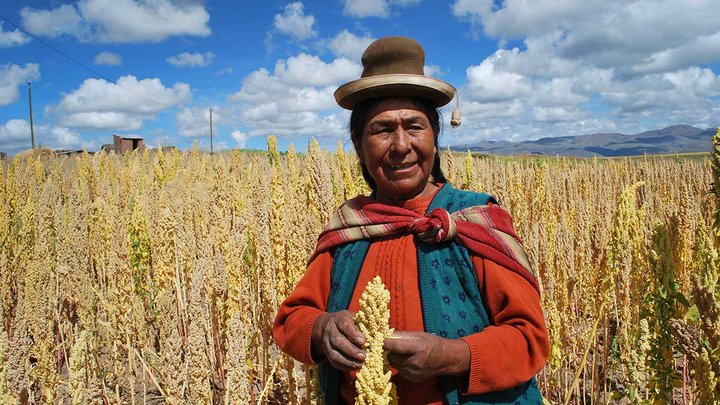
According to UNICEF, poverty in Bolivia is among the worst in South America. Economic growth and opportunities to make a living are most commonly found in urban areas because the more citizens in a setting, the more consumers there are. This makes it difficult however for indigenous farmers, inhabitants of more remote areas with fewer people, to market their products and provide for their families.

For the vast majority of citizens in Bolivia, this proves to be a major issue: 60% of Bolivians live below the poverty line. In rural areas, the numbers are even more dramatic. Three out of every four people living in these areas suffer from poverty. Because of this, Bolivia the poorest country in South America.

One reason for the extreme poverty lies in the geography of Bolivia. Undeveloped roads and infrastructure make up a vast portion of the country, with a majority of the land inhabited by indigenous citizens. This makes it difficult for farmers living in these areas to market their products and travel to sell them, which in turn impacts their families and the communities they live in.

For the farmers of Bolivia, the recent visit by the World Bank’s President to the country represented a unique opportunity. The fact that Jim Yong Kim recognized the need for economic growth and food security was important to the rural citizens of the poorest South American country. A World Bank agreement with the Government of Bolivia plans to promote the Andean marketable products that the indigenous people have to offer. This will get the people of Bolivia involved in national markets, boosting job growth and the economy.

Bolivians are finally being given opportunities to make a living through improved  economic stability and job growth.

– William Norris

Sources: Rural Poverty Portal, The World Bank
Photo: Bioversity International

August 6, 2016
https://borgenproject.org/wp-content/uploads/borgen-project-logo.svg 0 0 Borgen Project https://borgenproject.org/wp-content/uploads/borgen-project-logo.svg Borgen Project2016-08-06 04:25:162024-12-13 17:49:37Poverty in Bolivia
Economy

Namibian First Lady Launches ‘One Economy’ Foundation

Namibia_Economy
The First Lady of Namibia, Monica Geingos, established the One Economy Foundation in May of this year. The organization’s slogan, “one Namibia, one Economy,” describes its plans to bridge the gap between formal and informal entrepreneurship in the African nation.

Namibia’s economy has been improving recently, with Bloomberg calling it the top emerging economy in Africa in 2012. However, informal entrepreneurship (unregulated, untaxed commerce operating without contracts or laws) continues to inhibit the country’s growth potential.

According to the Namibian Statistics Agency, the country’s unemployment rate stood at 27.4 percent in 2012. Many of the unemployed opt to work informally, due to significant barriers to entry in Namibia’s formal economy. However, informal work offers little in terms of long-term growth at the individual and national level. This is the problem the One Economy foundation wishes to address.

The One Economy Foundation will focus on entrepreneurship, early childhood development and health. The most crucial components are professional economic coaching and collateral-free lending. These strategies will help young Namibians—particularly those without preexisting connections to the nation’s high-powered financial sector—get a foot in the door.

According to Geingos, “One Economy is about providing fair opportunity. It’s about providing people with talent with opportunity.” She went on to explain that the need for the One Economy Foundation exists at both ends of Namibian commerce, as many enterprising Namibian bankers need the means to tap into the population of informal workers.

Prior to her involvement in the state, Geingos was one of the key figures in Namibia’s growing economy, possessing major holdings in Namibian mining, banking and media corporations. Her most recent endeavors, as a member of the Economic Advisory Council and First Lady, have been part of a larger effort in Namibia’s war on poverty.

The First Lady’s husband, President Hage Giengob, has also made poverty his focus in recent years. Despite a report in the Journal of Economic Structures stating that Namibia has “one of the most unequal income distributions on the African continent,” the President and First Lady remain hopeful that the nation’s wealth can be redistributed to address the nation’s poor.

Late last year, the president declared an “all-out war on poverty,” after receiving an impressive 87 percent of votes in the Namibian general election.

One Economy has already raised over N$4.5 million for implementation later this year.

– John English

Photo: Flickr

July 14, 2016
https://borgenproject.org/wp-content/uploads/borgen-project-logo.svg 0 0 Borgen Project https://borgenproject.org/wp-content/uploads/borgen-project-logo.svg Borgen Project2016-07-14 01:30:322020-06-10 18:30:22Namibian First Lady Launches ‘One Economy’ Foundation
Page 7 of 10«‹56789›»

Get Smarter

  • Global Poverty 101
  • Global Poverty… The Good News
  • Global Poverty & U.S. Jobs
  • Global Poverty and National Security
  • Innovative Solutions to Poverty
  • Global Poverty & Aid FAQ’s
Search Search

Take Action

  • Contact Your Leader
  • Donate
  • 30 Ways to Help
  • Volunteer Ops
  • Internships
  • Courses & Certificates
  • The Podcast
Borgen Project

“The Borgen Project is an incredible nonprofit organization that is addressing poverty and hunger and working towards ending them.”

-The Huffington Post

Inside The Borgen Project

  • Contact
  • About
  • Financials
  • President
  • Board of Directors
  • Board of Advisors

Get Smarter

  • Global Poverty 101
  • Global Poverty… The Good News
  • Global Poverty & U.S. Jobs
  • Global Poverty and National Security
  • Innovative Solutions to Poverty
  • Global Poverty & Aid FAQ’s

Ways to Help

  • Contact Your Leader
  • Donate
  • 30 Ways to Help
  • Volunteer Ops
  • Internships
  • Courses & Certificates
  • The Podcast
Scroll to top Scroll to top Scroll to top