• Link to X
  • Link to Facebook
  • Link to Instagram
  • Link to TikTok
  • Link to Youtube
  • About
    • About Us
      • President
      • Board of Directors
      • Board of Advisors
      • Financials
      • Our Methodology
      • Success Tracker
      • Contact
  • Act Now
    • 30 Ways to Help
      • Contact Your Leader
      • Volunteer
      • Courses & Certificates
      • Be a Donor
    • Internships
      • In-Office Internships
      • Remote Internships
    • Legislation
      • Politics 101
  • The Blog
  • The Podcast
  • Magazine
  • Donate
  • Click to open the search input field Click to open the search input field Search
  • Menu Menu

Tag Archive for: Unemployment

Posts

Development, Global Poverty

Skills Training to Increase Development in Pakistan

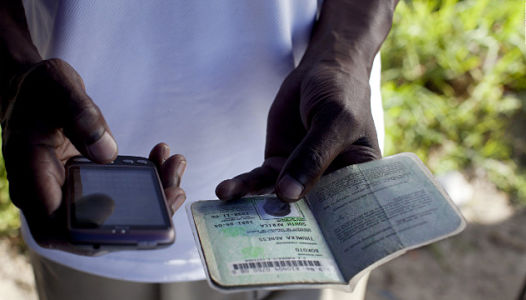
Development in Pakistan
Pakistani President Mamnoon Hussain and Governor Iqbal Zafar Jhagra announced at the National Skills Show that the Government of Pakistan would push a new emphasis on skills training for their youth. Through this initiative, they hope to boost future development in Pakistan.

Governor Jhagra asked industrialists to start training youth in vocational and technical skills, establishing institutes that will offer these programs. He noted that reducing unemployment and poverty rates greatly helps youth to succeed.

The National Skills Show, organized by the National Vocational and Technical Training Commission (NAVTCC), takes place in the U.K. annually. It features five sectors: engineering and technology, media and creative, IT and enterprise, hospitality and lifestyle as well as construction and infrastructure. The best and the brightest students of the U.K. come together to compete and demonstrate their skills in one of these sectors.

Governor Jhagra stressed that Pakistan has an agricultural economy, highlighting the importance of focusing on skills training within the industry. In addition, technical education is extremely important for keeping the unemployment rates low.

As of 2015, Pakistan holds an unemployment rate of 5.9 percent, a slight decrease from six percent the previous year. But in 2013, the World Bank noted that 29.5 percent of the nearly 190 million people living in Pakistan resided below the poverty line.

Executive Director of NAVTTC, Zulfiqar Ahmad Cheema, noted that 50,000 youth in Pakistan will take part in skills training in multiple trades. The courses that they engage in will be free of charge, and they will receive a stipend as trainees.

Governor Jhagra is determined to fully utilize the capabilities of the talented Pakistani youth population. He stated, “Our human capital is our biggest asset.” Currently, young citizens make up 60 percent of the population.

Ambassadors from Germany, the Netherlands and the European Union joined the show and congratulated the winners. They agreed with Pakistani officials in recognizing how skills training can boost the economy and decrease poverty.

This effort will provide a large majority of the Pakistani youth with employable skills, granting them financial independence, reducing the poverty rate throughout the country and helping meet the needs of local and international job markets—ultimately, improving development in Pakistan.

– Kimber Kraus

Photo: Flickr

June 23, 2016
https://borgenproject.org/wp-content/uploads/borgen-project-logo.svg 0 0 Borgen Project https://borgenproject.org/wp-content/uploads/borgen-project-logo.svg Borgen Project2016-06-23 01:30:592024-06-05 01:28:27Skills Training to Increase Development in Pakistan
Global Poverty

Electricity Prices In Somalia Leaving Many in the Dark


Relative to global standards, Somalia’s electricity prices are very expensive.
Somalia, an East African country with a population of nearly 10 million, has some of the most expensive electricity in the world. According to an article by Al Jazeera, a kilowatt of electricity in Mogadishu, the Somali capital, can cost up to $1 per hour, which is five times more expensive than in Kenya, and 10 times more expensive than in the U.S.

In 1991, Somalia’s energy sector was destroyed.

Following the collapse of the central government, residents were forced to depend on diesel generators for individual households in the early 1990s. Many were left with absolutely no electricity.

Now, the seven electricity companies that exist are all privately owned. Most of them don’t have licenses and operate without paying taxes. “[The private companies] give you electricity when they want and stop it when they want,” said an ice-making factory owner, Abshir Maalin Abdi, in an interview with Al Jazeera.

The individual companies also blatantly deny the customers’ accusations that they are being overcharged. But, the control of the cost is out of the hands of the poor, while the benefits are mostly in the hands of warlords and militias.

A high rate of unemployment

Electricity is a luxury because most of the country’s working population is jobless. According to the U.N., more than half of the country’s population (those between the ages of 15 and 64), is unemployed; the unemployment rate for youth is 67 percent.

In addition, 40 percent of Somalia’s population also lives below the poverty line. Many simply cannot afford electricity, and it is hard for businesses to make money and develop without affordable electricity prices.

What are the solutions?

The government of Somalia has developed a ten-year energy plan to improve the electricity sector, which will cost a total of US$ 803 million. It will involve the construction of new power plants and transmission lines that will boost electricity access in towns and homes, costing an average of US$ 0.50 per unit, according to a report by Geeska Afrika.

Some of the money will go towards funding training programs and will also provide alternative cooking solutions from charcoal use. The ultimate goal is to increase Somalia’s power capacity, and diversity the energy alternatives including solar and wind energy. This has the potential to lead to significant economic growth.

The government must also prioritize and improve the basic economic structure and poor social services, which fuel high unemployment rates of the younger generation.

In an interview with Al Jazeera, Abdihakim Egeh Guled, deputy minister of energy and water resources, describes implementing a law to alleviate this problem. “The only thing we can do… is to bring about a legislation that will monitor these companies that provide electricity,” he said. Currently, the country has no laws regulating the electricity industry. Encouraging a drop in electricity prices could radically improve the lives of many.

– Michelle Simon

Photo: Flickr

May 22, 2016
https://borgenproject.org/wp-content/uploads/borgen-project-logo.svg 0 0 Borgen Project https://borgenproject.org/wp-content/uploads/borgen-project-logo.svg Borgen Project2016-05-22 01:30:242024-12-13 18:06:00Electricity Prices In Somalia Leaving Many in the Dark
Global Poverty

4 Reasons Why Nordic Countries Have Low Poverty Rates

Nordic Countries Poverty Rates
The Organization for Economic Cooperation and Development (OECD) defines the poverty rate as the ratio of the number of people in a given age group whose income drops below the poverty line, which is taken as half the median household income of the total population. Nordic countries have some of the lowest poverty rates in the world due to a number of factors.


Top Reasons for Low Poverty Rates in Nordic Countries


  1. Low Unemployment Rates. In Sweden, the unemployment rate has averaged 5.87 percent between 1980 and 2015. In November 2015, Sweden’s unemployment rate declined to 6.2 percent from 6.7 percent in October, the lowest reading since August 2008, according to Trading Economics. Notably, the number of unemployed fell by 55,000 compared to the previous year.
  2. The standard of poverty changes over time as countries become richer. As poverty researcher Peter Townsend notes, “Individuals, families and groups can be said to be in poverty when they lack the resources to obtain the type of diet, participate in the activities and have the living conditions and the amenities which are customary, or at least widely encouraged or approved in the societies to which they belong.”
  3. Transparency. Nordic countries, such as Sweden pride themselves on their honesty and transparency of their governments. In Sweden, everyone has access to all official records. Sweden’s trust for public institutions was at 55 percent compared to Russia’s 25 percent, according to The Economist.
  4. Individual autonomy. Nordic countries have let go of the old social-democratic consensus and presented new ideas from across the political spectrum. They continue to invest in human capital and protect people from the disruptions that are part of the capitalist system, according to The Economist.

According to the OECD, the 2012 poverty rates for Sweden, Denmark, Norway and Finland stood at 9 percent, 5.4 percent, 8.1 percent and 6.5 percent respectively. At the other end of the spectrum, Mexico had the highest poverty rate at 18.9 percent.

The “Nordic Model” presents a starting point for other countries to develop methods to attack poverty as they work towards sustainable development.

– Jordan Connell

Sources: The Economist, The Organization for Economic Cooperation, Trading Economics, Vox
Photo: Vox

January 22, 2016
https://borgenproject.org/wp-content/uploads/borgen-project-logo.svg 0 0 Borgen Project https://borgenproject.org/wp-content/uploads/borgen-project-logo.svg Borgen Project2016-01-22 01:30:372024-12-13 18:05:344 Reasons Why Nordic Countries Have Low Poverty Rates
Global Poverty

OneDollarGlasses: Solution for Global Visual Impairment

Global_Visual_Impairment
Martin Aufmuth has created an innovative solution to global visual impairment. In 2012, he founded OneDollarGlasses, an association that manufactures spectacles for just $1. First piloted in Uganda, OneDollarGlasses has since expanded to Rwanda, Malawi, Ethiopia, Benin, Brazil, Burkina Faso and Bolivia.

According to the World Health Organization, 153 million people worldwide have impaired vision. Ninety percent of those with impaired vision live in developing countries where trained optometrists are few and glasses, too expensive. Left uncorrected, impaired vision can become a major impediment to people’s performances in work and education.

Through OneDollarGlasses, opticians are able to travel to remote areas of developing regions where the consequences of vision impairment are most greatly felt.

Opticians are equipped with all that they need in just a 30 x 30 x 30 centimeters box (11 x 11 x 11 inches). The box contains 25 durable, polycarbonate lenses of varying strengths and a “bending machine” that shapes steel frames on-site.

After conducting an eye test, opticians can match a person with a pair of lenses that are manually inserted into the frames. The ease of this process facilitates the future replacement of lenses should a person’s vision change.

The low-maintenance bending machine lies at “the core” of OneDollarGlasses, says Aufmuth on his website. No electricity is necessary, and a single pair of glasses can be manufactured onsite in 10-30 minutes.

Opticians themselves are required to attend an intensive 14-day training on how to use the equipment. Afterward, they are free to run their businesses independently.

For Aufmuth’s work, OneDollarGlasses was the 2013 recipient of the Siemens Foundation’s award for “simple technology that empowers people” as well as the 2015 Tech Award in San Jose, California.

The Centre for Vision in the Developing World states that eyesight “will be one of the world’s top 10 health issues in terms of productivity and opportunities” by 2030. OneDollarGlasses is helping the developing world to see a brighter future.

– Jocelyn Lim

Sources: The Centre for Vision in the Developing World, Martin Aufmuth, The Guardian, The Independent, The New Scientist, World Health Organization 1, World Health Organization 2
Picture: Flickr

January 3, 2016
https://borgenproject.org/wp-content/uploads/borgen-project-logo.svg 0 0 Borgen Project https://borgenproject.org/wp-content/uploads/borgen-project-logo.svg Borgen Project2016-01-03 01:30:192024-05-27 09:28:36OneDollarGlasses: Solution for Global Visual Impairment
Developing Countries, Development, Global Poverty

Innovative Policies that Spur Growth and Reduce Poverty

reduce_poverty
A handful of standard policies have been used throughout the world over many decades to attempt to decrease poverty. However, poverty is still a massive problem worldwide. It is also known that healthy economic growth is vital to reducing poverty. What are some new, innovative policies that can be used more widely in conjunction with existing policies to maximize poverty reduction and spur economic growth?

One of the most well-known innovative systems of reducing poverty has been the microcredit or microfinance system that has been perpetuated throughout areas with high densities of impoverished people. Bill Gates has said that he believes that providing more access to mobile banking (an extension of the ideas behind microfinance), will have huge impacts on the way the poor deal with money and will help reduce poverty.

Many innovative new policies are aimed at specific demographics in order to fully leverage the investment in a way that affects the poor best. For example, many of the poor live in rural areas and are involved in agriculture.

Due to the large role of agriculture in many impoverished people’s lives, one organization named Katalyst gives out small packets of high-quality seeds to farmers in Bangladesh. The result? Incomes for these farmers increased on the whole by over 300 million dollars.

The United Nations Development Programme (UNDP) has begun to fund proven methods of development. Two programs, one from Colombia and one from Haiti are being funded by the UNDP. Both programs focused on job training and development for people in vulnerable areas of the respective countries.

A third program was aimed at helping the government of Laos address the infrastructure concerns and problems in local areas, which eventually helped over 300,000 people to get better goods and services as well as local infrastructure.

Another idea which is incredibly simple is now being more widely accepted as a method that would prove valuable. Give poor people money. Giving unrestricted cash transfers to the poor has not been a popular policy in the past because many fear that the money would be wasted on nonessential goods or illegal activities.

However, a study based on a model like this was done in Uganda and resulted in a 38 percent increase in wages by the end of the study in the group that was given the unrestricted cash transfers. In addition, hours worked and business assets both increased significantly. The myth that the money would simply be wasted via this simplistic approach seems to be being dispelled.

Most of these ideas are not based on some new understanding of poverty. The existing rationale behind each one is held in commonly held knowledge about the different attributes of poverty and those in poverty.

The innovations are creative ways of tackling the most basic traits of the impoverished, unemployment (specific job training centers), lack of money (unrestricted cash transfers), and giving high quality seed packets (agriculture as a means of income).

By addressing these known factors in new ways, these policies have proven to be of use in the instances they were used, and should be more widely spread across the globe to help increase the rate of poverty reduction.

– Martin Yim

Sources: OCED Insights, United Nations, Social Science Research Network
Photo: CNN

September 5, 2015
https://borgenproject.org/wp-content/uploads/borgen-project-logo.svg 0 0 Borgen Project https://borgenproject.org/wp-content/uploads/borgen-project-logo.svg Borgen Project2015-09-05 07:24:092024-05-27 09:26:17Innovative Policies that Spur Growth and Reduce Poverty
Development, Global Poverty

The Labor Market in Developing Countries – A Case Study

The Labor Market in Developing Countries – A Case Study
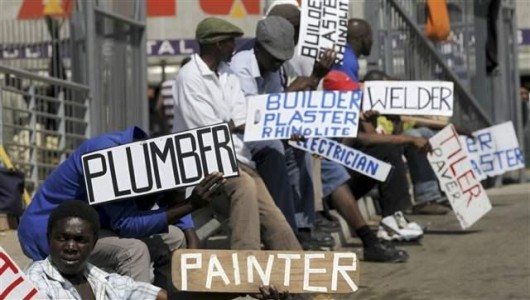
Any poverty reduction strategy must include measures that ensure people are employed. Spending on public goods and focusing on rendering basic life-sustaining services such as healthcare and sufficient nutrition are absolutely essential. Beyond the basics, however, long-term development strategies must target employment to drive economic growth and contribute to a prosperous environment.

South Africa represents an interesting case study of the labor market in the developing world. It has the potential for a large amount of growth, yet is plagued by persistent unemployment. It is neither among the poorest developing nations, nor has it experienced robust growth. Across the spectrum of development, it is somewhere in the middle, and therefore the challenges it faces are broadly representative of much of the developing world’s challenges.

A 2015 World Bank report on the state of the labor market in developing countries provides an enlightening description of South Africa’s predicament. The report describes a “youth bulge,” where a young population saturates the labor market, dampening wage growth. The antidote to this economic affliction is investment in skills development and policy reforms which enhance market entry and private sector expansion.

South Africa, after the end of apartheid in 1994, managed to reduce absolute poverty via a social grant system. However, the grant system simply doesn’t measure up to the average salaries of even low-skill labor. Unemployment and inequality are still quite high in the country, so innovative economic solutions are necessary to create the kind of long-term growth which will help those remaining at the bottom of the economic ladder.

In South Africa, and sub-Saharan Africa in general, as many as 11 million young people will join the labor force every year, and will continue to do so for at least the next decade. With sufficient opportunities, this increase in labor supply could translate to a lot of economic growth. However, unemployment is rampant in South Africa, and long-term strategies for growth and poverty reduction must focus on harnessing the burgeoning young workforce to be effective.

One way of doing so is by investing in worker education and training. Presently, the availability of skilled labor is quite low. Unemployment remains high even among a growing college-educated workforce. A combination of private-sector worker training and public-sector skills development and educational subsidies could drive the expansion of a diverse, skilled workforce. This would encourage multinational firms to hire locally, as well as promote home-grown business growth.

Some private firms already recognize the need for greater investment in a skilled workforce. The Rockefeller Foundation’s Digital Jobs Africa initiative aims to create tech-based employment opportunities for African labor markets. The MasterCard Foundation also has an education and skills training program for disadvantaged African youth.

One South African company that provides a sustainable growth model that suits South Africa’s labor market conditions is Sibanye Gold. Sibanye Gold is a mining company which provides significant worker training and educational resources to its employees. The company also engages in profit sharing. The mining industry is naturally supportive of a localized labor force, for much of their workers come from areas surrounding mines. Unfortunately, socially sustainable companies like Sibanye are hamstrung by a hostile policy environment that does not support them, or worse, buries them in bureaucracy. Sibanye CEO Neal Froneman said, “[Industries such as mining] should be nurtured by the government. But it is not. It is despised.”

Clearly, private interventions alone will never create the kind of opportunities for which a growing, skilled labor force can take advantage. Real change needs to happen at a governmental level, specifically by creating public policies that diversify economic opportunity and create the kind of conditions where companies like Sibanye Gold can thrive. Doing so will harness the economic energies of a massive young workforce, providing a pathway to grow out of poverty.

– Derek Marion

Sources: World Bank, Devex, The Conversation, Daily Maverick
Photo: Brookings

August 15, 2015
https://borgenproject.org/wp-content/uploads/borgen-project-logo.svg 0 0 Borgen Project https://borgenproject.org/wp-content/uploads/borgen-project-logo.svg Borgen Project2015-08-15 01:30:362024-12-13 17:51:52The Labor Market in Developing Countries – A Case Study
Economy, Global Poverty

What Iceland Can Teach Us about Financial Recovery

iceland_financial_crisis
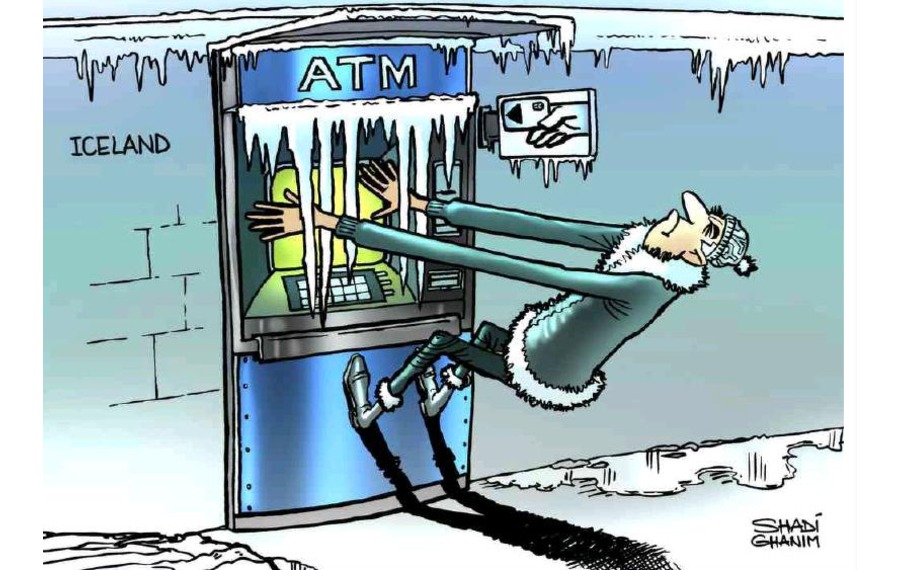
During the financial crisis seven years ago, while many countries were struggling to stay afloat, Iceland was already at the bottom of the sea. A tiny country with a population of only 320,000, Iceland experienced near-total bank failure in the span of three days and a 95% decrease in stock. While monetary policies in the United States and Europe let large amounts of cash flow into the economy, Iceland let enormous amounts of dollars flow through. When the Icelandic krona crashed in 2008, the country’s three biggest banks had amassed wealth more than 10 times the country’s Gross Domestic Product (GDP). As a result of this “loose money” policy, 85% of the economy tanked. The lack of cash flow regulation in the economy led to its downfall and hindered the rebuilding process.

Iceland’s attempts at becoming an international banking powerhouse also factored into its demise. With very high interest rates, international investors could borrow dollars at 5%, exchange them for krona, and buy Icelandic stock at 9% interest. They would profit off the difference in interest rates. Without any governmental controls on the flow of money, all cash could have exited the country, further depressing the economy. However, with help from the International Monetary Fund, the Icelandic government began to impose strict capital controls, barring krona from leaving the country or residents from buying foreign currency or international stock. In the years immediately following the crash, the government raised taxes and provided debt relief to mortgage holders, but not to social services.

It also did something most developed countries have failed to do: jail bankers.

International hedge funds purchased claims for pennies at the height of the crash. Once financial recovery started, their assets grew, giving them a large share of power over the financial system. Due to continued cash control policy, this control affected the lives of Iceland’s residents as well. Residents were especially limited in the amount of foreign cash they could spend, which became a problem when traveling abroad or investing in international stock. “You have a feeling that there’s a system watching you and telling you what you can do with your money,” noted Gudmundur Kristjansson, a fisherman.

However, cash flow restriction and the devaluation that resulted posed some benefits for the economy as well. Exports became cheaper and imports more expensive, allowing residents to produce more goods rather than depend on foreign manufacturers. Devaluation caused wages to fall, so unemployment did not reach the soaring heights it did in Europe. Tourism increased as more people began to travel to Iceland for its cheap prices and its currency independence from less developed European countries.

However, the bars that once held Iceland in restricted success must soon be lifted. “We are enjoying the longest sustainable growth period in recent history,” commented Minister of Finance Bjarni Benediktsson, but cited lacking international investment and competing foreign companies as reasons for lifting the restrictions that helped foster the country’s success for so many years. “[Such controls] are not a sustainable situation for an economy,” said Prime Minister David Gunnlaugsson.

Today, unemployment in Iceland is at 4%, GDP is expected to grow by 4.1% in 2015, and tourism is a flourishing industry. Despite the uncertain future of the country’s economy, it is certainly faring better than other European countries that suffered under the crash. For Greece, whose citizens voted against a deal with creditors and potentially face a future of exiting the Eurozone and financial security, tight monetary restrictions would not be a likely solution. It has a population of 11 million to Iceland’s 320,000, and a GDP 16 times that of the tiny island. When Iceland was preventing its people from spending money, Greece was throwing it around in all directions. Yet Iceland serves as an example of how unorthodox financial practices—controlling the cash flow, granting influence to international hedge funds—can unfreeze a nation and help it rebuild. Restoring a country to financial security is a process of understanding its government, citizens and industries. For Greece and other struggling countries, it will be a struggle, but not a failure.

– Jenny Wheeler

Sources: IMF, New York Times
Photo: The Automatic Earth

July 25, 2015
https://borgenproject.org/wp-content/uploads/borgen-project-logo.svg 0 0 Borgen Project https://borgenproject.org/wp-content/uploads/borgen-project-logo.svg Borgen Project2015-07-25 09:16:072024-12-13 17:51:50What Iceland Can Teach Us about Financial Recovery
Global Poverty

What’s Driving People to Terrorist Groups?

Driving-People-Toward-Terrorist-Groups
Instability, lack of resources and political corruption are driving everyday people into the “security” of terrorist groups. Most people have a specific understanding of a certain classification of terrorists. These are people in the third world or corrupt countries clinging to radical ideas and concepts of violence and revolution. These individuals are often unable to participate politically in their countries and therefore turn to drastic means in order to have their opinions voiced, which eventually leads to violence.

However, many people are unaware of the influx of people in western countries that are continuing to join such organizations. These include affluent European and American men and women, seeking acceptance in radical terrorist organizations around the world.

In recent years, there has been a particular increase in European women joining terrorist organizations that are established in the Middle East, such as ISIS. What could possibly motivate someone from the western world to join such groups?

In the last year, there have been a number of instances in which Americans were found to be supporting ISIS, both financially and otherwise. While this in itself is frightening, the biggest concern here is that of national security, especially in the United States. What is it that draws people into the group?

What people want is a sense of identity and purpose. As is the case with terrorist recruits in developing nations, individuals in the United States and other Western nations join groups like ISIS as a means for significance and a political voice.

Issues of unemployment and economic insecurity contribute to these motives. As people feel the brunt of economic tensions, they blame the government and often feel helpless when it comes to making a difference politically. Thus, joining a radical group, whose name is seen throughout various modes of information and social media, seems to be a surefire way to be heard.

It is the struggle and disparity that draws people to radical means for change. As examples of Americans and Europeans showing interest in terrorist groups such as ISIS have shown, radicalization can happen under any type of government or societal structure, and in any country. To protect national and international security, and to prevent individuals from radicalizing and seeking a voice elsewhere, it seems that people need a voice that is going to be heard in their home country.

– Alexandrea Jacinto

Sources: CNN, BBC
Photo: The Dark Room

June 21, 2015
https://borgenproject.org/wp-content/uploads/borgen-project-logo.svg 0 0 Borgen Project https://borgenproject.org/wp-content/uploads/borgen-project-logo.svg Borgen Project2015-06-21 01:37:092020-07-15 08:21:42What’s Driving People to Terrorist Groups?
Education

Hope for the Rainbow Nation?

south_africa
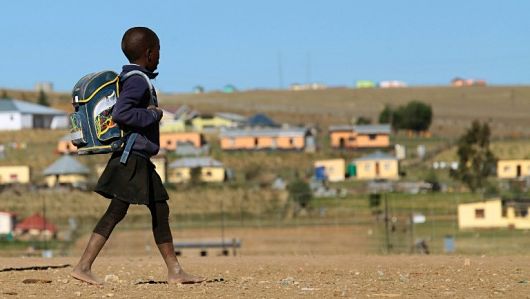
It has been 21 years since the end of apartheid in South Africa. While the Rainbow Nation has made progress on many fronts, the education system is struggling.

While schools do not aim to disadvantage minorities as they did during apartheid, the quality of education some provide is still severely lacking. The glow of democracy has not spread to the education system, which ranks 140th out of 144 according to a report done by the World Economic Forum. The worst being math and science specifically, ranking dead last at 144th.

Schools are failing for a number of reasons. For one, basic infrastructure is a problem and many schools are without running water or fully equipped bathrooms. Some are built of mud or are otherwise not structurally strong, leading to safety concerns.

Teachers are often absent, leaving classrooms full students with no teachers to educate them. This has been found to be more prevalent in schools located in less social-economically privileged areas. Often, these schools are smaller and have access to fewer resources, disadvantaging learners even more.

In the final year of secondary school, learners must pass their matriculation exam. About 75 percent of students passed the matric exams in 2014, a decrease from the 2013 mark of 78.2 percent. However, to pass matric, students need only 40 percent in three of their classes, and 30 percent in their other four classes.

Most students pass with better marks, however, the standard is low and half of the 18 percent of “matrics” that make it to universities, will never graduate. Couple this with the fact that despite progress in racial equality, Indians and whites possess many more matric and tertiary education certificates than blacks, and you have an education system that is struggling.

What is causing the education system to fail? It is not a lack of funding. In the 2013/14 fiscal year, 232.5 billion Rand, or $21.8 billion, was spent on education. However, money and resources often do not reach schools, instead falling into the hands of corrupt officials or middlemen involved in the purchasing of items such as computers or textbooks.

Corruption is a big problem in South Africa, and within the education sector it is no different. A recent study found that 20 percent of corruption cases reported by the public were related to education, and included things like mismanagement of funds, theft of funds, and tender corruption. Pair this corruption with a general lack of resources, infrastructure and teachers absent from work, and it makes more sense why schools are struggling.

What is the outcome of a poor education system? South Africa’s Minister of Finance Nhlanhla Nene made the connection between high unemployment in the country and a lack of properly educated individuals. Unemployment hovers at 26.4 percent, but rises to 37.8 percent when those who have given up looking for work are taken into account. To combat this, jobs obviously must be created and if the education system is improved, more people will be able to find work and continue the Rainbow Nation’s progress forward as a country.

– Greg Baker

Sources: National Department of Basic Education, South African Government News Agency, Mail and Guardian, Mail and Guardian, Brookings, World Economic Forum,BBC
Photo: Africa Check

June 16, 2015
https://borgenproject.org/wp-content/uploads/borgen-project-logo.svg 0 0 Borgen Project https://borgenproject.org/wp-content/uploads/borgen-project-logo.svg Borgen Project2015-06-16 14:16:582020-07-15 23:18:36Hope for the Rainbow Nation?
Global Poverty

Poverty in Nagoya, Japan

poverty_in_nagoya_japan
Japan has held the title of the one of world’s largest economies for over 40 years and although seemingly prosperous, an “invisible” problem has emerged. CNN reports “an astonishing one in six [people in Japan], or more than 21 million people in a country of 128 million” are living below the poverty line. The majority of these people are single women, the unemployed, the elderly and children. This staggering change in perspective for one of the more prosperous nations can be realized in the nation’s lack for a proper public assistance and public welfare program.

The current social welfare system that is in place by the Japanese Diet focuses not on the economic and social stress of the poor but instead on dispersing pensions and health care to the “middle class.” This system carries over from the previous economic height of Japan, or “Bubble Period,” from approximately 1960-1990 when lifetime employment was commonplace and the majority of Japanese were “middle class.” This boom in economic sustainability thus became norm and has not realized the changing times where Japan is starting to accumulate debt and seek alternatives within the workplace.

An article from The Tokyo Foundation, which focuses on developing policy for a better Japan, states that, after the prolonged period, the illusion that all Japanese people belong to the middle class was created. They go on to state that this is characterized by the myth that Japanese-style employment is based on mass hiring of new graduates, lifetime employment, seniority-based promotion and copious benefits. Coupled with “traditional” gender roles the Japanese people became entrenched in the belief that this system worked and thus did not need to be changed. However, with the collapse of the economy at the end of the 1990s and a global economy change, “businesses actively sought to replace regular with non-regular employees in an effort to affect a recovery in their performance by reducing personnel costs to generate higher profits, or in other words, a ‘jobless recovery.’”

Nagoya is one of Japan’s major cities with a population of more than 2 million people – statistically speaking that means around 378,000 individuals are living in poverty within the city. The unfortunate result of the current system has lead to a sharp increase in the number of people living outside the protection of the businesses, companies and family welfare that accompanied it. The majority of these people have become a class of working, poverty-stricken people living in squalor.

Although there is a lack of traditional “slum” neighborhoods that you might see in more Westernized countries, these “working-poor” citizens of Nagoya, much like every other major Japanese city, live in areas with cheap hostels that have one room for all functions of living, except for hygiene. One bathing/hygiene area is usually shared with all residents of a hostel, numbering 20 or more.

Those few living in the hostels are the lucky ones however as there are still those who cannot afford even basic shelter and are documented living in tents and shacks. Although this number was documented to be only 758 individuals in 2000, it has only grown with those undocumented as the “working poor.”

Even though the “hidden” poverty problem can be found throughout Japan, in few places does the disparity between the rich and poor show more than in Nagoya. The traditional and persistent attitude of the public is to view the homeless to be idle, antipathetic to living with others, and “dirty and dangerous.” They are often harassed and sometimes killed by citizen groups, particularly youngsters. Such public stigma has also prompted many local authorities to forcibly evict homeless people from public space.

There was a case in 1993 in Nagoya in which a member of the working poor, Mr. K. Hayashi, filed a case against the Nagoya City Hall. Due to the prolonged recession he became homeless, and he could not find a job because of his age and medical issues. So he applied for the public assistance measures for livelihood and housing. However the city approved the medical assistance only. The city’s decision was in line with the ministerial policy that practically denied the entitlement of the homeless to the welfare measures just because they had no residence.

Interpretations on legislation coupled with negative opinion on the situation has led to an institutional irony that prevent people, like Mr. K. Hayashi, from escaping poverty. It unfortunately has become rather a customary practice of local authorities not to extend such measures unless an established residence is proved, and hostels do not count as they are temporary housing.

Although the overall issue of poverty has been addressed – on April 2, 2015, current Prime Minister Shinzo Abe revealed plans to set up a fund to help alleviate child poverty – this issue is only recently gaining traction within the Japanese government and has not yet had any significant change.

– Alysha Biemolt

Sources: Travel CNN, Daily Times Tokyo Foundation The State of the Urban Poor in Japan City of Nagoya
Photo: Flickr

June 15, 2015
https://borgenproject.org/wp-content/uploads/borgen-project-logo.svg 0 0 Borgen Project https://borgenproject.org/wp-content/uploads/borgen-project-logo.svg Borgen Project2015-06-15 08:51:582024-05-27 09:24:11Poverty in Nagoya, Japan
Page 8 of 10«‹678910›»

Get Smarter

  • Global Poverty 101
  • Global Poverty… The Good News
  • Global Poverty & U.S. Jobs
  • Global Poverty and National Security
  • Innovative Solutions to Poverty
  • Global Poverty & Aid FAQ’s
Search Search

Take Action

  • Contact Your Leader
  • Donate
  • 30 Ways to Help
  • Volunteer Ops
  • Internships
  • Courses & Certificates
  • The Podcast
Borgen Project

“The Borgen Project is an incredible nonprofit organization that is addressing poverty and hunger and working towards ending them.”

-The Huffington Post

Inside The Borgen Project

  • Contact
  • About
  • Financials
  • President
  • Board of Directors
  • Board of Advisors

Get Smarter

  • Global Poverty 101
  • Global Poverty… The Good News
  • Global Poverty & U.S. Jobs
  • Global Poverty and National Security
  • Innovative Solutions to Poverty
  • Global Poverty & Aid FAQ’s

Ways to Help

  • Contact Your Leader
  • Donate
  • 30 Ways to Help
  • Volunteer Ops
  • Internships
  • Courses & Certificates
  • The Podcast
Scroll to top Scroll to top Scroll to top