• Link to X
  • Link to Facebook
  • Link to Instagram
  • Link to TikTok
  • Link to Youtube
  • About
    • About Us
      • President
      • Board of Directors
      • Board of Advisors
      • Financials
      • Our Methodology
      • Success Tracker
      • Contact
  • Act Now
    • 30 Ways to Help
      • Contact Your Leader
      • Volunteer
      • Courses & Certificates
      • Be a Donor
    • Internships
      • In-Office Internships
      • Remote Internships
    • Legislation
      • Politics 101
  • The Blog
  • The Podcast
  • Magazine
  • Donate
  • Click to open the search input field Click to open the search input field Search
  • Menu Menu

Tag Archive for: Unemployment

Posts

Economy, Global Poverty

Economy Strong, Poverty in Israel

Poverty_in_Israel
Over the last several years, Israel has enjoyed economic growth and low unemployment. Unfortunately, that is not all good news. A report recently released by Israel’s National Insurance Institute and the Central Bureau of Statistics indicate that over 1.7 million people, or 23.5 percent of the population, live below the poverty line. Of the 1.7 million people living in poverty, 817,000 of them are children and 180,000 of them are elderly. In addition, one in five households is living at or below the poverty line.

In recent years, Israel has been seen as up and coming in the high-tech sector, drawing international attention. Even though Israel is seeing significant progress, The Organization for Economic Cooperation and Development (OECD) released a statement saying, “Israel’s output growth remains relatively strong, unemployment is at historically low levels…However, average living standards remain well below those of top-ranking OECD countries, the rate of relative poverty is the highest in the OECD area.” The report also adds that the poverty problem is affecting some groups more than others, “Among Arabs and in the rapidly growing ultra-Orthodox Jewish community poverty is over one in two, mainly due to low employment rates among Arab women and ultra-Orthodox men”

The OECD indicated that Israel surpassed some of the average measures of other OCED members; it ranked far below average in similar social themed categories. These categories included housing, education and skills, social connections, work life balance, environment quality, personal security, and civic engagement. Fixing some of these social problems could help alleviate poverty in Israel. Action that should be taken should target groups that are endemic with poverty and other related problems such as Arabs and the ultra-Orthodox Jewish community.

The OECD did offer several options for different solutions that could help alleviate poverty in Israel. One major suggestion was to improve education, especially in areas with severe levels of poverty. Another suggestion was to begin the process of pension and welfare reform to ensure that it is capable of coping with an aging population. Finally, the OECD favored sales tax increases over income tax increases so the tax does not become more of a burden on already cash-strapped families.

– Colleen Eckvahl

Sources: Your Middle East, JTA
Photo: Ivarfjeld

January 15, 2014
https://borgenproject.org/wp-content/uploads/borgen-project-logo.svg 0 0 Borgen Project https://borgenproject.org/wp-content/uploads/borgen-project-logo.svg Borgen Project2014-01-15 08:45:012017-12-04 12:33:44Economy Strong, Poverty in Israel
Economy, Global Poverty

Global Unemployment

Global Unemployement
Many countries measure their unemployment rate differently. However, unemployed people are individuals who are actively seeking for job but could not obtain jobs. Reason for unemployment varies from economy downturn, and changes of particular industry to lack of required skills.

In third world countries, global unemployment is cause by overpopulation and lack of education. Unemployment rate is one of the biggest indicators of the economy, but it is also one of the biggest indicators of poverty. Countries with high unemployment rate normally have high level of poverty.

An example of the relationship between poverty and unemployment rate is Greece. In 2008, Greece unemployment rate was 7.7%, but after the economics crisis, the unemployment rate rose to 23.8% in 2012. The same situation is spotted in Spain. Spain’s unemployment rate in 2012 is 24.9%. Even though these numbers are high, but African countries are at alarming levels. Some high unemployment rates in Africa are: Kenya (40%), Congo (49.1%), and Djibouti (59.5%).

In the United States, the unemployment rate is only 7.7% in 2013, but it results in slow economic recovery and more people each day is living under poverty level. With only half of the population employed, these countries do not have enough income to distribute among all their citizens.

Half of the people are unable to support themselves with adequate shelters, food, and medical supply. In developed countries such as the United States, the government offers welfare for unemployed citizens to maintain the standard of living. However, in developing countries, welfare programs do not exist or are very limited. Unemployed individuals are struggling every for their basic needs.

When the world economy is recording due to the emerging market, many people are still suffering from the impact of the economic crisis.

– Phong Pham

Sources: Huffingtion Post, International Labour Organization, Trading Economics, Global Finance

December 21, 2013
https://borgenproject.org/wp-content/uploads/borgen-project-logo.svg 0 0 Borgen Project https://borgenproject.org/wp-content/uploads/borgen-project-logo.svg Borgen Project2013-12-21 13:28:272024-12-13 17:49:51Global Unemployment
Development

Zonal Champions: Reinventing Word of Mouth Advertising in South Africa

zonal_champions
Despite advances in advertising in recent years, word of mouth is still considered by many marketing experts to be the best form of advertisement. As businesses look to increase their presence in South Africa, word of mouth publicity could be the key to appealing to otherwise unreachable demographics.

Zonal champions, as they are called by marketing agency Creative Counsel, are human advertisements. They are members of local communities who are employed to represent a brand and promote appropriate products during their everyday conversations. The potential consumers are able to freely question zonal champions about the products, allowing for all curiosities to be satisfied before a purchase is made.

Nontando Vena, a zonal champion for South African mobile phone company Vodacom, says she doesn’t have conventional work hours. Instead, she promotes the brand “24/7, 365,” and members of her community occasionally refer to her as “Miss Vodacom.”

The merits of zonal champions are numerous for both the customers and the providers. For businesses, zonal champions are able to reach rural parts of Africa that traditional advertisements are unable to. Upwards of 550 million people are without electricity in Africa, which represents a massive untapped market for businesses to sell products. A zonal champion only needs two to four days to be properly trained, and they can continuously reach rural customers on a daily basis.

South African consumers are more welcoming of zonal champions than they would be of commercials and billboards. Consumers are more trusting of a friend or family member than they are of an advertisement, and this is especially true in South Africa. Zonal champions are able to give a familiar face to otherwise detached companies, which let consumers feel more comfortable with new brand names.

Economically, zonal champions are also beneficial to the many rural consumers who are forced to be judicious with their income. While the income of South Africans has risen by upwards of 170% in the past decade, the average annual income is still about $6,258. As a result, South African consumers are extremely hesitant to invest in products they are unfamiliar with. By answering questions and recommending products, zonal champions are able to engage local citizens and let them know if the product being offered will meet their needs.

In addition to the benefits for businesses and consumers, the zonal champions themselves are able to benefit from this unique form of employment. Unemployment in South Africa remains very high, with up to 24% of citizens without work. Many of these people have no access to education, and therefore are considered “unemployable.” There are no prerequisites to become a zonal champion, and the work itself primarily involves being present in a community. This allows a new opportunity for these “unemployable” citizens to find work and curb the harsh unemployment rate in the process.

Africa’s economy is among the fastest growing in the world now, and international businesses are starting to take notice. President Obama’s recent trip to Africa highlights the continent’s growing relevance in the global economy, and zonal champions will surely play a large role in growing markets in these once impoverished parts of the country. With the numerous advancements in technology and advertising in recent years, zonal champions prove that old fashioned conversation is still as relevant as ever.

– Timothy Monbleau
Sources: Linkedin, How We Made It In Africa, CNN, Creative Counsel, BBC, Google Currency Conversion, World Bank, Vodacom
Photo: Riger Jabber


August 23, 2013
https://borgenproject.org/wp-content/uploads/borgen-project-logo.svg 0 0 Borgen Project https://borgenproject.org/wp-content/uploads/borgen-project-logo.svg Borgen Project2013-08-23 21:28:392024-05-25 00:18:34Zonal Champions: Reinventing Word of Mouth Advertising in South Africa
Children, Global Poverty, Poverty Reduction

Poverty in Kosovo

Kosovo_poverty
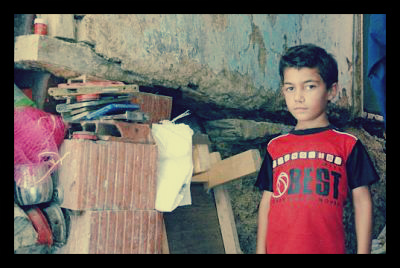
Since the end of the war in 1999, the Republic of Kosovo has experienced consistent economic growth. Now a lower-middle-income country, it is one of only four countries in Europe that recorded positive growth rates during the economic crisis between 2008-2012, averaging about 4.5% each year. Despite its rapid growth, Kosovo continues to struggle with high rates of poverty and unemployment.

Joblessness is estimated to be at about 40% and remains a central economic-policy challenge. Youth and women are disproportionately affected by the difficult labor market conditions, creating an environment that undermines the country’s social fabric. Kosovo is one of the poorest countries in Europe with a per-capita gross domestic product (GDP) of about €2,700 and about one-third of the population living below the poverty line and approximately one-eighth living in extreme poverty.

Recent studies by UNICEF Kosovo showed that children are at higher risk of living in poverty in Kosovo compared to the general population. The greatest risk of poverty is for children who live in households with three or more children, children between 0 and 14 years of age, children of unemployed parents, children in households receiving social assistance, and children with low levels of education. Whereas, the risk of poverty is much lower for children in a household with at least one employed parent.

The European Union is mainstreaming an effort to fight child poverty by  recognizing the multi-dimensional nature of the issue. Child poverty and exclusion have high social and individual costs. Children in poverty are at high risks of low educational attainment, poor health, and an inability to find work later in life. Investing in children, therefore, is important not only for the well being of current children living in poverty, but also for the health, productivity, and engagement of future adult citizens.

Kosovo declared independence in 2008, however only 98 of a total 193 UN member states have recognized Kosovo’s independence. The lack of agreement remains a central obstacle to achieving the country’s goals for political integration and socio-economic development.

To help reverse joblessness and build a long-term economic growth plan, the World Bank, along with ten other donors, recently awarded Kosove 61 million Euros, mostly in the form of grant money. The Sustainable Employment Development Policy Program (SEDPP) funds were disbursed from the end of 2011 to the middle of 2012. The funds have supported reforms and improved transparency throughout many sectors in the country.

– Ali Warlich

Sources: World Bank, UNICEF, World Bank
Photo: SOS Children’s Villages

August 6, 2013
https://borgenproject.org/wp-content/uploads/borgen-project-logo.svg 0 0 Borgen Project https://borgenproject.org/wp-content/uploads/borgen-project-logo.svg Borgen Project2013-08-06 04:56:512024-05-25 00:14:33Poverty in Kosovo
Global Poverty, USAID

900 Million: Just Past Poverty

International-Monetary-Fund-report
While 1.2 billion people live in poverty, subsisting on less than $1.25 a day, a recent study published by the International Monetary Fund states that 900 million people are at risk of falling into poverty if another economic crisis occurs.

A significant recession such as the Great Recession that hit the global economy in 2008 could increase the number of people living in poverty by as much as 75 percent.  This would add three times the size of the U.S. population to the world’s poor, greatly increasing the strain on humanitarian and foreign aid organizations.

The IMF report does praise the work that has been done to alleviate global poverty and bolster the world economy, but it cautions against reductions in foreign aid.

While USAID creates new markets and trade partners for the United States, roughly 40 percent of the world’s population remains unemployed. The recent recession exacerbated income inequalities, making it more difficult for the employed to support their families on their existing income.

A subsequent recession could occur if the eurozone, already destabilized by the Cyprus bailout, is further disrupted, so the U.S. government would have to maintain or increase USAID in order to support expansions to its programs.

The number of people currently living in poverty already makes up about 17% of the world’s population, and 900 million more would raise this number to 30 percent.

– Katie Bandera

Sources: IMF, The Guardian, The Huffington Post
Photo: Worldwide Center

July 23, 2013
https://borgenproject.org/wp-content/uploads/borgen-project-logo.svg 0 0 Borgen Project https://borgenproject.org/wp-content/uploads/borgen-project-logo.svg Borgen Project2013-07-23 04:00:452024-06-04 02:43:55900 Million: Just Past Poverty
Education

How Private Academies in India Help Reduce Poverty

How Private Academies in India Help Reduce Poverty
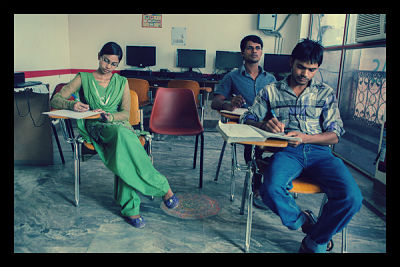
Being one of the world’s most populated countries, India’s young workforce (age 25 and younger) is roughly double the population of the entire United States. While hundreds of millions of workers can be seen as an incredible resource, it also presents a pressing dilemma. India currently faces a huge problem of unemployment, which becomes more imminent as the young adult population rises.

In the next nine years, India must train 500 million people. To solve this issue, the Indian government has made practical job training a priority. Training centers such as Gras Learning Academy are becoming more popular as the demand for specific skills increases. Since the education offered at institutions such as Gras is so specific, it has a higher job placement rate. Due to this trend, Gras and other private academies are growing in number all over India.

However, Gras not only offers classes in specialized skills such as cellphone repair and computer networking. Academies like Gras offer classes in basic life skills for students from impoverished areas who may not have had the time or ability to attend secondary school. These basic life skills include the importance of punctuality, speaking professionally with managers, and presenting yourself in a well-kept manner.

In many cases, the needs of struggling economies are overshadowed by prescriptive solutions that are often based in theory. However, private academies in India have addressed poverty very practically by understanding the setbacks of the students, the demands of the workforce, and building a bridge from one to the other.

– Pete Grapentien

Source : The New York Times, The Wall Street Journal

July 15, 2013
https://borgenproject.org/wp-content/uploads/borgen-project-logo.svg 0 0 Borgen Project https://borgenproject.org/wp-content/uploads/borgen-project-logo.svg Borgen Project2013-07-15 06:40:382020-06-26 14:33:29How Private Academies in India Help Reduce Poverty
Global Poverty

Italy’s Economy is Taking a Beating

Immigration. Poverty. Men eating. Free meal from Caritas

With the global recession lasting over two years now, many countries have been highly affected by the current state of the global economy. One of the countries that has been hit the hardest is Italy. Many people do not think of Italy as a poor country by any means. However, the number of people that live in seriously deprived families in Italy has soared up to 8.6 million.

The unemployment rate in Italy for the younger generation has recently hit 40 percent. Italians’ purchasing power fell by 4.8 percent in this last year.

To put the drastic rate at which the poverty level in Italy is increasing into perspective, here are a few figures: The percentage of families that could not afford to eat a protein based meal such as meat every two days, rose to 16.6 percent in 2012. The year before, this percentage was only at 12.4 percent. In 2010 this percentage was at 6.7 percent. In two years, the percentage of families that could not eat a nutritious meal for a period longer than two days rose by 9.9 percent.

While all of this may seem grim, there is still hope for Italy. Prime Minister Enrico Letta stated that he believes Italy can stage an economic recovery without increasing its huge public debt. After meeting with his advisors, he concluded Italy’s economy may get slightly worse before there is improvement, but in the next few years improvements are expected in Italy’s fiscal state.

– Matthew Jackoski

Sources: Huffington Post, Reuters
Photo: Didier Ruef

June 5, 2013
https://borgenproject.org/wp-content/uploads/borgen-project-logo.svg 0 0 Borgen Project https://borgenproject.org/wp-content/uploads/borgen-project-logo.svg Borgen Project2013-06-05 05:30:102020-06-27 02:54:07Italy’s Economy is Taking a Beating
Page 10 of 10«‹8910

Get Smarter

  • Global Poverty 101
  • Global Poverty… The Good News
  • Global Poverty & U.S. Jobs
  • Global Poverty and National Security
  • Innovative Solutions to Poverty
  • Global Poverty & Aid FAQ’s
Search Search

Take Action

  • Contact Your Leader
  • Donate
  • 30 Ways to Help
  • Volunteer Ops
  • Internships
  • Courses & Certificates
  • The Podcast
Borgen Project

“The Borgen Project is an incredible nonprofit organization that is addressing poverty and hunger and working towards ending them.”

-The Huffington Post

Inside The Borgen Project

  • Contact
  • About
  • Financials
  • President
  • Board of Directors
  • Board of Advisors

Get Smarter

  • Global Poverty 101
  • Global Poverty… The Good News
  • Global Poverty & U.S. Jobs
  • Global Poverty and National Security
  • Innovative Solutions to Poverty
  • Global Poverty & Aid FAQ’s

Ways to Help

  • Contact Your Leader
  • Donate
  • 30 Ways to Help
  • Volunteer Ops
  • Internships
  • Courses & Certificates
  • The Podcast
Scroll to top Scroll to top Scroll to top