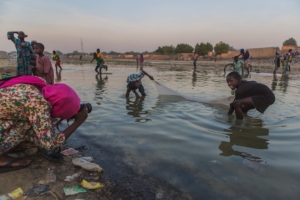
Rural communities in Nigeria face the steepest hurdles to access clean, safe drinking water and basic sanitation. Many households still rely on unprotected wells, streams or vendors, while schools and clinics struggle without reliable WASH services. UNICEF estimates that millions remain without basic drinking water and that open defecation persists on a large scale, with the burden falling hardest on rural families.
Nigeria’s Water Sanitation and Hygiene National Outcome Routine Mapping (WASHNORM)2021 assessment shows wide rural and wealth-based gaps in access, underscoring the need to invest where services lag the most.
Health and School Attendance
Unsafe water and poor sanitation drive diarrheal disease, cholera outbreaks and undernutrition, which in turn keep children out of class. Schools without toilets or handwashing stations see higher absenteeism and girls are more likely to miss lessons during menstruation when facilities are inadequate.
UNICEF reporting links improved school WASH to better attendance and fewer disease outbreaks, while globalWASH-in-Schools data show that safe water, private toilets and soap at school are tied to learning and dignity, particularly for girls.
WaterAid Nigeria: Community WASH in Action
WaterAid Nigeria partners with state governments and communities to install and maintain water points, expand sanitation and promote everyday hygiene behaviors. Its 2023–2028 country strategy prioritizes systems strengthening so local authorities can finance, operate and sustain services beyond a single project cycle.
WaterAid is also part of technical groups that support behavior change, supply chains and accountability, helping rural districts build reliable access and keep services working.
Clean Nigeria: Use the Toilet
The federal government’sClean Nigeria campaign aims to end open defecation by 2025 and move households toward safely managed sanitation. The campaign mobilizes states, local governments and households through community-led approaches, public awareness and certification of open defecation-free areas.
UNICEF supports the effort with technical assistance and outreach and recent updates highlight the urgency of accelerating progress so that gains are sustained across rural districts.
National Action Plan: A Path to 2030
Nigeria’sNational Action Plan for the Revitalization of the WASH Sector sets a three-phase roadmap that includes an 18-month emergency plan, a five-year recovery program and a long-term strategy through 2030.
The plan outlines a renewed federal-state partnership, more precise service targets and stronger financing so rural communities can gain and sustain access. Civil society groups summarize how the plan links with the national sanitation campaign, aligning policy and implementation at the state and local levels.
Building Pathways Out of Poverty
Expanding rural access to clean, safe water and sanitation reduces disease, protects household income and keeps children in school in Nigeria. It also creates jobs in construction, operations and local supply chains. Indeed, the World Bank’s SURWASH program projects service gains in water and sanitation and upgrades in schools and health facilities, complementing Clean Nigeria and NGO partnerships.
Continued investment in these approaches could help Nigeria scale reliable services and unlock health and education gains that drive long-term poverty reduction.
– Joseph Hasty
Joseph is based in Winter Park, FL, USA and focuses on Technology and Global Health for The Borgen Project.
https://borgenproject.org/wp-content/uploads/borgen-project-logo.svg00Hemant Guptahttps://borgenproject.org/wp-content/uploads/borgen-project-logo.svgHemant Gupta2025-09-15 03:00:442025-09-15 02:13:18Clean Water Access in Nigeria: How Communities Solve the Crisis
Thehealth care system in Mexico is notably flawed. Only 77% of Mexico’s 131 million citizens have access to health care coverage and nearly half of the health spending in the country comes out of the pockets of citizens, not the government. Mexico only allocates 5.7% of its GDP to health care-related costs, far below the average of 9.2% from the other 38 countries that make up the Organization for Economic Co-operation and Development (OECD). This leaves the system underfunded and underresourced, particularly in rural locations.
Telemedicine, the remote diagnosis and treatment of patients, is helping fill in the gaps of Mexico’s health care system by making medical advice more accessible to poor and rural communities throughout the country.
Bringing Health Care to Rural Mexican Communities
Founded in 2014, 19Labs aims to make health care more accessible worldwide to people in rural communities. Its GALE platform is a “smart first-aid kit” that is affordable and accessible and it brings the full clinic experience to those unable to go to one in person. The organization has helped people in Guyana, the United States and Lebanon and now it’s expanding its reach in Mexico.
Earlier this year, 19Labs launched a new branch of its telemedicine program in Yucatán, Mexico, to bring health care services to the underserved rural communities in the area. 19Labs GALE eClinics have connected people who had previously faced distance barriers to services such as medical consultations, diagnostic tools and specialist advice and treatments. Using tools such as Zoom and EchoNous, people can now access effective health care treatment from the comfort of their own communities and without the burden of extensive travel.
In less than a year, the impact and benefits of the GALE eClinics have already been seen. In Comunidad Col, a child who was previously diagnosed with a heart murmur was assessed by the GALE eClinic and appropriately diagnosed with and treated for allergic rhinitis. A 6-month-old child in Noh Bec received an accurate diagnosis and treatment from a chronic dermatitis specialist, significantly improving the child’s condition and quality of life.
Maria Magdalena Chan Uluac, Director of the Noh Bec community clinic, credited the GALE eClinics for helping the lives of those in the Yucatán area: “We are at least three hours from Mérida, where the specialists are, so GALE has been a major financial and logistical relief for our patients. This has encouraged seeking medical treatment sooner instead of waiting until symptoms become critical.”
Telemedicine for Mexicans Abroad
MiSalud is a startup that connects Mexicans working abroad to health care. MiSalud’s mission is to provide services such as basic health care, preventative care, nutrition coaching, chronic condition management and mental health support via video, phone or SMS chat. The company also does not charge its users a co-pay and has extended hours for its virtual clinic.
MiSalud primarily works with agricultural, construction, hospitality and manufacturing companies where employees struggle to access health care because of language barriers or a lack of time to make it to a clinic or hospital. Employees of these companies receive MiSalud’s resources as an employer-sponsored benefit regardless of their insurance or full-time or part-time status. The coverage also extends to up to three family members.
Taylor Farms, a major global purveyor of packaged salads and cut vegetables, is one company that partners with MiSalud. Amy Taylor, the leader of Taylor Farms’ wellness initiative, reported that about 5,600 of the company’s 6,400 employees have signed up for MiSalud’s services. More than 2,000 of these employees have utilized the resource at least once.
MiSalud says that 40% of its users have said they would have ignored their health concerns or waited until they could travel back to Mexico to see a doctor without the platform. The company also reports that its users have seen a 56% improvement in depression scores and a one-level drop in diabetes, cholesterol and blood pressure risk. In addition, users experienced a 24% improvement in chronic condition management and an average weight loss of 16 pounds.
More Ways to Access Telemedicine in Mexico
MedicallHome is another company working to make health care in Mexico more affordable and accessible. It provides 24/7 telephone access to licensed doctors, costing just $2 to $5 a month. Beyond medical care, the company also offers life insurance and vision and dental coverage.
Medicall is staffed by more than 60 practitioners, nutritionists and psychologists, each with at least two years of clinical experience and required to practice outside the call center to maintain their skills. The center handles about 500,000 calls annually, resolving 62% of cases over the phone and referring the rest for in-person treatment. Customers also have access to a provider network that includes primary care and specialist clinics, laboratories, pharmacies and hospitals.
Conclusion
Telemedicine is a growing field in Mexico and with widespread smartphone adoption by Mexican citizens and improving internet access, it is expected to become more popular. As of 2024, 68% of Mexicans reported preferring video and telephone consultations due to convenience, reduced travel costs and fewer wait times than in-person clinics. Since only half of the population has consistent medical care, the growth of free and accessible telemedicine in Mexico is significant and a welcome change to the health care system.
– Hannah Fruehstorfer
Hannah is based in Pittsburgh, PA, USA and focuses on Good News and Global Health for The Borgen Project.
https://borgenproject.org/wp-content/uploads/borgen-project-logo.svg00Hemant Guptahttps://borgenproject.org/wp-content/uploads/borgen-project-logo.svgHemant Gupta2025-09-13 07:30:312025-09-12 15:11:44Telemedicine in Mexico Broadens Health Care
Pol Pot ruled Cambodia from 1975 to 1979. During this period, he was known for brutally purging dissidents and attempting to transition Cambodia into an agrarian society. As a result, Cambodia has not experienced the same levels of urbanization as other nations. Currently, more than 70% of the populationresides in rural communities.
Cambodia has experienced significant economic growth since the Khmer Rouge era. From 2007 to 2014,Cambodia’s poverty rate dropped from 47.8% to 13.7%. Although the COVID-19 pandemic caused an uptick in poverty, not all gains have been lost. Despite significant progress in Cambodia, rural communities still struggle. Of the five million people currently living in poverty, an estimated 90% live in rural areas.
Issues With Food Spoilage
Food scarcity remains a major driver of poverty, with about 16% of Cambodian households unable to afford adequate nutrition. Rural communities, which depend heavily on fishing and agriculture, face challenges from geographic isolation.
The problem is not a lack of arable land or resources, but insufficient infrastructure for storage and transportation. Solar-powered cold storage offers the most viable solution to preserving food quality in rural Cambodia.
Solar-Powered Cold Storage and Its Champions
Solar-powered cold storage offers an off-grid, sustainable solution for maintaining the freshness of perishables. This helps farmers and fishermen increase their profits and lowers food costs through reduced spoilage. Private and charitable organizations are leading initiatives, demonstrating solar-powered cold storage’s ethical and commercial viability.
EGE Energy Solution is a tech startup focused on transitioning Cambodia’s agrarian economy from fossil fuels and hydropower to solar solutions. The company is currently developing a solar-powered cold storage system and seeking investment. EGE believes that while solar energy requires a significant upfront investment, it is the right solution because it is reliable and has low long-term expenses.
Similarly, the United Nations Development Programme (UNDP) partnered with Korea’s Ministry of Agriculture, Food and Rural Affairs to bring solar-based technology, including solar-powered cold storage, to Cambodia and Myanmar. Their goal is toadvance solar-powered technologyamong 7,000 farms in Cambodia.
At the nexus of market and charitable solutions is the Aggrinovation Fund in ASEAN (AIF). Recently, AIF partnered with the Kasekor Akphiwat Thmei Agricultural Cooperative (KATAC), which proposed adding solar-powered cold storage units in their province. The goal was to reduce dependence on crop harvesters and protect against low yields.
Final Remarks
While not as groundbreaking as crop rotation or seed drill, solar-powered cold storage is an innovative technology for rural farmers. By cutting spoilage, boosting farmer income and making nutritious food more accessible, it addresses both poverty and food insecurity at their roots. With continued investment and collaboration, this sustainable solution can help transform Cambodia’s rural economy for the long term.
– Patrick Feeney
Patrick is based in Los Angeles, CA, USA and focuses on Business and Technology for The Borgen Project.
https://borgenproject.org/wp-content/uploads/borgen-project-logo.svg00Hemant Guptahttps://borgenproject.org/wp-content/uploads/borgen-project-logo.svgHemant Gupta2025-08-31 01:30:292025-08-30 10:58:57Improving Food Security with Solar Cold Storage in Cambodia
The Sophia Akash Foundation (SAF), in partnership with nonprofit organization PRADAN, is addressing the challenges faced by vulnerable women farmers in Bihar, India. Founded in 2010, SAF aims to combat poverty in underserved and rural communities through collaboration and social impact.
In March 2023, the foundation joined forces with PRADAN to empower women in Bihar with knowledge, tools and resources. The partnership focused on improving traditional farming methods through more sustainable, climate-resilient practices.
Agriculture in Bihar
Bihar, known for its fertile land and rich natural resources, relies heavily on agriculture, whichemploys about 76% of the state’s population. However, many farmers still rely on ineffective traditional farming practices that use harmful chemical fertilizers and pesticides to sustain their livelihoods.
The growing impact of climate instability, including unpredictable rainfall, droughts and extreme temperatures, has made it even harder for farming communities to earn a stable income and support their families.
Why Women Farmers Matter
This joint initiative focuses on women in rural areas, who often lack access to the necessary tools, agricultural training, support and financial resources. According to SAF founder Shailendra Patel, initial research showed that empowering women empowers communities.
“If you enable the female members of these households, there is empirical evidence that because of maternal instincts, they are going to use that transfer of knowledge, tools and resources to improve the circumstances of their family and children,” Patel said. “They are likely to do that with greater consideration than the male household members.”
Training for Sustainable Farming
The initiative addresses ineffective farming practices in several ways. It trains women farmers in sustainable techniques such as climate-resilient greenhouses and drip irrigation. These methods protect crops during erratic weather conditions. They also increase both harvest size and crop quality.
The hands-on training covers land preparation, seed selection, bio-fertilizer preparation, water conservation, crop diversification and greenhouse management. These skills create a strong foundation for more resilient and productive farming methods.
“Through the transfer of knowledge and sharing of tools, means and resources with these communities will help them to progress on their journey out of poverty,” Patel said.
Success Story
This shift from traditional practices to sustainable farming in Bihar has already shown positive results, including healthier soils, improved harvest and reduced vulnerability to extreme weather conditions. Among the program’searly success stories is Sheetal, a local participant who began cultivating saplings through the Climate-Resilient Farming Program.
With training and support, she established a small nursery business that supplies saplings to other farmers in her village. This has diversified her income sources and positioned her as an entrepreneur, while uplifting her village community.
Along with empowering women in leadership roles in their villages, this program has contributed to greater food security, reduced input costs and more stable incomes through sustainable farming in Bihar.
“Empowering women benefits the families, communities and households,” Patel stated. “We need to find ways to lift the women to some form of equitable status in their families, give them agency in their families and knowledge with which they can make decisions.”
– Sahana Shastry
Sahana is based in Newtown Square, PA, USA and focuses on Good News for The Borgen Project.
https://borgenproject.org/wp-content/uploads/borgen-project-logo.svg00Hemant Guptahttps://borgenproject.org/wp-content/uploads/borgen-project-logo.svgHemant Gupta2025-08-21 07:30:122025-08-20 16:28:19Sustainable Farming in Bihar: Bridging the Poverty Gap
Ecuador is among the many nations that recognize how important bolstering land ownership is in reducing poverty. For those working in agriculture, secure land ownership encourages greater investment in their homes, farms, and businesses, leading to increased returns. A lack of title for lands also often means that families cannot access formal credit or defend their land legally. In developing countries, the lack of titles reinforces the cycle of rural poverty.
Ecuador has adopted the National System for Information and Management of Rural Lands and Technological Infrastructure (SigTierras), a program that increases the land titles in Ecuador.
The Problem: Land Insecurity in Ecuador
More than 60% of plots in Ecuador were informally held as of the early 2000s. This was particularly common in Indigenous and smallholder farming communities and with female landholders. This considerably harms families as they routinely face the risk of eviction and land disputes, as they have no legal protection. They can also not use their land as collateral, which prevents access to credit or farm loans. Their informal ownership and the risks that entail also discourage long-term investment and sustainable land practices.
Land insecurityoften works predominantly against women and worsens gender inequality. This usually means that women have less decision-making power in the household, worsening the nutrition and general welfare of the household, as women tend to make decisions beneficial to the household. The lack of robust land titles in Ecuador ultimately reinforces poverty.
The Solution: Ecuador’s SigTierras Program
Ecuador launchedSigTierras, a rural land-titling and cadastral mapping program in 2010 to address the issue of land insecurity. It received financial support ($90 million) from the Inter-American Development Bank (IDB). The program maps rural plots and digitizes land records. This helps resolve boundary disputes and issues legal titles, increasing the number of land titles in Ecuador.
The program focuses on the underserved rural areas with a high rate of informal landholding. It targets smallholder farmers, Indigenous communities, and impoverished rural families in these areas.
The Impact
Since its inception, SigTierras has helped formalize thousands of rural land parcels across Ecuador. By the end of its implementation period, the program had successfully issued 39,267 legal land titles, improving tenure security for many rural households. This process has contributed to increased agricultural income, better access to credit, expanded government services, and higher levels of farm investment.
The program also had a notable impact on women’s empowerment. Through joint land titling, SigTierras enhanced women’s legal standing and bargaining power within households and rural communities. This has led to better household food security and nutrition outcomes.
Conclusion
The success of increasing the number of land titles in Ecuador through SigTierras shows that land rights are essential to reducing poverty long-term and can transform lives, especially for women and rural families. It also provides a replicable and scalable model for other countries with high informal land use. The program indicates that with targeted public policy and international support, systemic poverty issues like land insecurity can be solved.
– Seun Adekunle
Seun is based in Scotch Plains, NJ, USA and focuses on Politics for The Borgen Project.
https://borgenproject.org/wp-content/uploads/borgen-project-logo.svg00Hemant Guptahttps://borgenproject.org/wp-content/uploads/borgen-project-logo.svgHemant Gupta2025-08-17 03:00:052025-08-16 03:49:08How Land Titles in Ecuador Help Rural Families Escape Poverty
Peru, famous to many for the memorable sites of Machu Picchu, is currently fighting a battle against preventable illness. Hepatitis A, typhoid and malaria are just a number of the diseases common among the citizens of Peru. Beyond that, nearly 12% of the population faces major nutrition-related deficiencies. One of the most widespread is anemia, affecting 40% of children. Some health conditions, however, are even more severe.
Prenatal and maternal care are almost nonexistent and pregnancy complications disproportionately affect indigenous women and those living in rural communities. Despite the severe nature of the health complications, all of them are worse because of the lack of knowledge surrounding the issue and little to no access to medical facilities.
However, a group of pre-med students from Duke University and Boston College partnered with Sacred Valley to create a sustainable but realistic solution for these rural communities. They are training women in these communities to be health advocates by informing them about nutrition, pregnancy protocols and when to seek serious help. These individuals are paving a new path to health care in rural Peru.
The Layers of Translation in Peru
One junior, Catherine May, at Boston College had an especially vital position in this operation. The majority of rural communities in Peru speak the Quechua language. Her role is to translate from English to Spanish so local translators can translate from Spanish to Quechuan. The first level of medical access must be language in these rural communities and fluency in English is a rarity.
May, used her extensive background in Spanish to translate medical advice from doctors in Sacred Valley effectively. In turn, this information is bringing health care to rural Peru by training women to look after the well-being of their community in whatever capacity they can. However basic it may seem, being able to translate medical advice from English to Spanish is necessary in bringing health care to rural Peru.
Training Local Women as Health Advocates
One of the main aspects of this program, which is based in Peru, was training women to look after their surrounding community in a medical capacity. While it was not equivalent to medical training, May said, “training them to provide some sort of security to the towns was making a measurable and impactful change.”
The doctors provide these communities with nutritional information, such as the ideal diet to remove many deficiencies and preventable illnesses. They were also provided with ample information regarding maternal and fetal care. From distributing prenatal vitamins to educational materials on childbirth, they received a well-rounded education on basic first aid care and information.
Addressing Anemia in Children
Due to widespread poverty in rural Peru, most diets rely heavily on potatoes. Vegetables, fruits and meats are considered luxuries and are consumed only occasionally. This lack of dietary diversity has led to widespread anemia.
One of the projects May and her fellow students worked on was diagnosing and treating this anemia in children. They visited several schools and used finger-prick technology to measure hemoglobin levels. Since low hemoglobin causes anemia, the results provided insight into both the presence and severity of anemia cases.
Broader Impact Moving Forward
By training women in these rural communities to stand as health advocates, they’re working toward a more realistic solution. Increasing the accessibility of hospitals and medical facilities would take decades and millions of dollars. However, this form of medical treatment is attainable, affordable and has the potential to make a significant change. The fact of the matter is, these efforts would not have been possible without these students dedicating their summers to advocating, working and translating for the underserved in rural Peru. Peru is finally making progress in medical care, thanks in part to these university students.
Bringing health care to rural Peru means taking a step forward in the world’s journey to poverty reduction. Fewer medical issues mean an ability to focus on resolving other underlying issues, such as a lack of infrastructure and social structure. For now, though, these students and NGOs are taking significant steps to bring realistic and sustainable information-based care to marginalized and rural communities. These programs are vitally important for medical progress and their amplification can potentially transform rural medical care internationally.
– Caroline May
Caroline is based in Denver, CO, USA and focuses on Good News and Technology for The Borgen Project.
https://borgenproject.org/wp-content/uploads/borgen-project-logo.svg00Hemant Guptahttps://borgenproject.org/wp-content/uploads/borgen-project-logo.svgHemant Gupta2025-08-17 01:30:212025-08-16 03:32:05Health Care in Rural Peru: Students Bridging the Gaps
For nearly 35 years, buildOn has worked globally to develop programs and build schools, using education as a tool to help end global poverty. Its efforts fuel a broader movement that provides developing countries with the resources to educate their populations properly.
An Overview of buildOn’s Impact
Since 1991, buildOn has been using education to help end global poverty. The organizationhas constructed more than 2,500 schools throughout its history, impacting more than 346,000 lives.
With the support of global donors, buildOn forms strong partnerships to expand its impact across multiple countries. In 2023, the organization set a new record for the number of schools built worldwide. It extended its literacy programs’ reach in new and existing schools.
Education as a Tool To End Global Poverty
buildOn partners with donors to fight global poverty by building schools in underserved rural communities. Its mission targets regions where access to education remains limited, focusing on countries with the greatest economic need.
These countries face some of the highest poverty rates globally, with large segments of the population lacking access to quality education. Through its programs, buildOn works to close this gap and create pathways to opportunity for future generations.
Bridging the Education Gap for All Ages
buildOn’s education programs aim to eliminate discrimination in access to education by partnering with rural communities to educate people of all ages, from children to adults and seniors. In Burkina Faso, buildOn’s schools face significant challenges. Many rural areas lack basic infrastructure, forcing students to walk long distances to attend properly built schools in neighboring villages.
To break the cycle of poverty and lack of access to good education, buildOn aims to construct as many fully equipped schools as possible, ensuring each village has proper classrooms in underserved regions. When education becomes accessible to everyone, the chances of lifting communities out of poverty increase significantly. Many children who might otherwise drop out due to distance or poor facilities can now attend school and receive the education they deserve.
buildOn also supports adult learners through re-education programs that equip working adults with essential literacy and numeracy skills to improve their job prospects. In many rural communities, women comprise most adult participants, reflecting buildOn’s focus on empowering women. These programs boost economic opportunities and promote gender equality by giving women a stronger voice in their households and communities.
Final Remarks
Overall, buildOn’s programs aim to end global poverty by eliminating barriers to education through large-scale school development in rural areas. By partnering directly with local communities, buildOn ensures that each school is sustainably built and locally supported. These efforts provide children and adults with lifelong learning opportunities and help communities gain the tools needed to break generational cycles of poverty.
– Angelina Tas
Angelina is based in Cleveland, OH, USA and focuses on Good News and Technology for The Borgen Project.
https://borgenproject.org/wp-content/uploads/borgen-project-logo.svg00Hemant Guptahttps://borgenproject.org/wp-content/uploads/borgen-project-logo.svgHemant Gupta2025-08-05 01:30:402025-08-04 14:42:23buildOn: Education To Help End Global Poverty
Hong Kong is located on the east bank of the Pearl River on the south coast of China. It is known for its dazzling city life, colorful traditions and financial centers. What might be less apparent, however, is the divide between the rich and the needy. In the first four months of 2024, the most impoverished earned 81.9 times less than the richest. Following the COVID-19 pandemic, poverty rates have risen significantly. Currently, 1.39 million people live in poverty in Hong Kong, most of whom are older adults.
These three charities operating in Hong Kong provide aid to the most vulnerable communities and aim to mobilize local society to offer them care and support.
Kadoorie Farm and Botanic Garden
Sir Horace and Lord Lawrence, two brothers, founded Kadoorie Farm and Botanic Garden (KFBG) in 1956. The idea sprouted after a surge of Chinese immigrants arrived in Hong Kong following the civil war at the end of 1946. Since many of these immigrants were farmers, the Kadoorie brothers provided them with training, guidance on how to plough their land and interest-free loans.
Its programs empower rural communities in Hong Kong and beyond to build income sources, improve food security and gain skills that promote long-term self-sufficiency and environmental resilience.
Hong Kong Family Link Mental Health Advocacy Association Limited
This organization was established in 2003 by Dr. Lee Cheng and Dr. Zhao Yulong to raise awareness about mental health in Hong Kong. In a society where stigma around mental illness remains widespread, the Hong Kong Family Link Mental Health Advocacy Association Limited works to combat discrimination and uphold the rights of people with mental health conditions.
The organization not only works to improve the lives of individuals with mental health conditions by providing access to education, employment and housing, but also offers medical care and vocational training to support their recovery from treatable illnesses.
In addition, it trains family members to actively participate in the care and recovery of their loved ones, empowering them to become part of the healing process. To further dismantle the stigma surrounding mental illness, the organization engages the broader community, partnering with volunteers, journalists, medical professionals and other organizations to raise awareness and foster collaboration.
Helping Hand
Helping Hand was founded after Bob Saunders, a former fishmonger, came across 120 elderly individuals who had been evicted from “caged homes” and abandoned on the streets with only their meager belongings. In response, he established Helping Hand in 1978 to support underprivileged older adults in Hong Kong, with a mission to ensure they live with dignity after years of hard work.
Since then, the organization has expanded its services across several locations, including Tai Wo Ping, Shun Lee Tsuen and Lai King. Helping Hand provides 1,000 beds across its care homes and serves more than 40,000 older adults in need each year. Its services include housing, rehabilitation, a holiday center, physical activities and training programs designed to enhance the well-being of elderly residents.
In 1984, the organization launched its signature Cookie Campaign. This highly successful fundraising initiative continues to support Helping Hand’s mission of caring for Hong Kong’s aging population.
Conclusion
Despite the efforts of these three charities operating in Hong Kong, there is much more to do to bridge the wealth gap, eliminate societal stigma and provide every HongKonger with a decent and dignified life. Funding, volunteer work and community mobilization are the key moving forward.
– Yasmine Belabed
Yasmine is based in Algeria and focuses on Technology and Global Health for The Borgen Project.
https://borgenproject.org/wp-content/uploads/borgen-project-logo.svg00Hemant Guptahttps://borgenproject.org/wp-content/uploads/borgen-project-logo.svgHemant Gupta2025-08-03 01:30:372025-08-02 11:05:583 Charities Operating in Hong Kong
Nigeria, Africa’s largest economy and most populous nation faces a deep-rooted energy crisis. More than 85 million Nigerians, nearly 43% of the population, lack access to grid electricity. Rural areas are the worst affected, often relying on kerosene, charcoal and expensive diesel generators. This not only harms health and the environment but also perpetuates poverty and economic stagnation. As the global shift toward cleaner energy accelerates, Nigeria has started implementing innovative off-grid solutions to bring light to its darkest corners.
The Untapped Potential of Renewable Energy in Nigeria
Nigeria possesses vast renewable energy potential, particularly in solar energy. The country receives anaverage of 5.5 kWh/m²/day of solar irradiation, making it one of the most promising locations for solar energy development on the continent. However, until recently, this potential was largely untapped due to weak infrastructure, limited investment and policy gaps. In response, the Nigerian government and development partners are now leveraging this resource to establish decentralized solar systems, solar home kits and hybrid mini-grids as the backbone of rural electrification.
Overcoming Structural Barriers
Despite progress, Nigeria’s rural electrification efforts face persistent challenges. Many remote areas lack basic infrastructure like roads and telecommunications, complicating the delivery and maintenance of energy solutions. Financing remains a hurdle for both consumers and project developers.
Additionally, Nigeria’s regulatory landscape can be slow and fragmented, delaying project approvals. Weak grid infrastructure in urban areas also poses a barrier to expanding hybrid models that integrate renewables with the national grid. For Nigeria to meet its electrification goals, it has to streamline permitting processes and provide greater access to green finance.
The Power of Public-Private Collaboration
The success of Nigeria’s renewable energy drive lies in the strength of its public-private partnerships. Companies like Rubitec Solar, PowerGen Renewable Energy and Husk Power Systems collaborate with communities to install and operate mini-grids using a pay-as-you-go (PAYG) model. This approach lowers entry costs for rural users while ensuring systems are financially sustainable.
These companies also provide training to local technicians, fostering job creation and community ownership. Donor agencies such as USAID and the U.K.’s Department for International Development (DFID) help de-risk these projects through grants and technical support. PowerGen Renewable Energy, for instance, has been instrumental in expanding access to electricity in rural Nigeria. In partnership with international investors, PowerGen launched a distributed renewable energy platform aimed at deploying 120 MW ofrenewable power solutions, including battery energy storage, across Africa.
The initial focus is on Nigeria, Sierra Leone and the Democratic Republic of the Congo, with plans to expand further across the region. This initiative is supported by the African Development Bank’s Sustainable Energy Fund for Africa (SEFA), the Private Infrastructure Development Group (PIDG), the Danish Investment Fund for Developing Countries (IFU) and the European Development Finance Institutions (EDFI) Management Company. The platform is expected to serve nearly 70,000 households, enhancing electricity access and stimulating local economies.
Aligning With Nigeria’s Climate Commitments
In addition to its profound social and economic benefits, renewable energy stands as a cornerstone of Nigeria’s climate resilience and low-carbon development strategy. As a signatory to the Paris Agreement, Nigeria reaffirmed its climate commitment by submitting an updated Nationally Determined Contribution (NDC) to the United Nations Framework Convention on Climate Change (UNFCCC) in July 2021. This revised NDC commits the country to a 20% reduction in greenhouse gas (GHG) emissions by 2030, relative to business-as-usual projections and up to a 47% reduction with adequate international financial and technical support.
This ambitious climate pledge places renewable energy at the center of national mitigation strategies. Renewable energy technologies, particularly solar, wind and small hydro, produce virtually zero GHG emissions during operation. Their widespread adoption not only displaces high-emission diesel and petrol generators, which are commonly used for backup and off-grid electricity in Nigeria but also contributes to reducing localized air pollution and related public health risks. The expansion of solar infrastructure is particularly critical. It reduces reliance on fossil fuels, enhances national energy security and shields the economy from the volatility of international oil markets, a significant concern for a country that remains heavily dependent on oil revenues.
To enable this transition, Nigeria has adopted several supportive policies and institutional reforms, including Nigeria’s 2022 Energy Transition Plan (ETP), the first in Africa. ETP sets out a clear roadmap to achieve net-zero emissions by 2060. It outlines targets such as achieving 30% renewable energy in the electricity mix by 2030. These commitments are bolstered by partnerships with international organizations such as the United Nations Development Programme (UNDP) through its Climate Promise initiative, the World Bank and the African Development Bank. Such partnerships are mobilizing investment and technical expertise to scale renewable energy solutions, improve regulatory environments and drive innovation in climate-smart technologies.
A Brighter Path Forward
Access to reliable electricity is not just about powering light bulbs; it’s about unlocking human potential. Electrified communities experience improved health care, enhanced gender equality and increased school retention. Farmers utilize solar-powered irrigation and cold storage to reduce post-harvest losses and boost income. Women can cook safely with electric stoves, reducing hours spent collecting firewood. Microenterprises, from phone charging stations to poultry farms, flourish with a constant power supply.
The Nigerian government’s National Energy Compact aims to accelerate electricity access from 4% to 9% per annum and increase the share of renewable energy in the generation mix from 22% to 50% by 2030. This ambitious plan underscores the critical role of energy access in achieving broader development objectives. Furthermore, the Sustainable Energy for All (SEforALL) initiative’s Rapid Assessment and Gap Analysis highlights the need for coordinated efforts to address energy access disparities in Nigeria.
By investing in decentralized renewable energy solutions, Nigeria could make significant strides toward universal energy access and sustainable development.
– Kenneth Ebhomeye Oko-Oboh
Kenneth is based in Toronto, Ontario, Canada and focuses on Technology and Solutions for The Borgen Project.
https://borgenproject.org/wp-content/uploads/borgen-project-logo.svg00Hemant Guptahttps://borgenproject.org/wp-content/uploads/borgen-project-logo.svgHemant Gupta2025-07-17 03:00:052025-07-17 01:09:27Rural Communities and Renewable Energy in Nigeria
Tanzania is a country with stunning landscapes and a rich cultural heritage. It has become an example of how community-driven development can successfully tackle poverty. Recent statistics show that approximately 26.4% of the population lives below the national poverty line. Rural communities are at risk because they have limited access to essential services like clean water and education. Some significant changes occurring on the ground involvecommunity-led development in Tanzania, devising creative solutions to transform lives through local initiatives, improving life in rural areas and establishing sustainable methods to escape poverty.
VSLAs: Driving Internal Financial Growth
In rural Tanzania, formal banking services are restricted, leaving numerous communities distant from conventional financial institutions.Village Savings and Loan Associations (VSLAs) have effectively addressed this void, transforming economic inclusion, especially for women. The VSLA model is a simple yet highly effective approach. In this system, groups of 15 to 40 local community members, predominantly women, meet regularly to save small amounts of money, after which the total savings and any profits from loans are shared among the members.
The impact extends beyond individual success stories. VSLAs promote shared ownership, transparency, effective governance, inclusiveness and organized savings and lending. Members can lend money to other farmers. Borrowers must repay the loan within a set timeframe and contribute interest to the group’s savings. At the end of each cycle, members receive back their savings and a share of the interest earned on the loans.
In the latest savings round,112 VSLA groups saved 80 million Tanzanian Shillings ($32,000) in just nine months. Members use these savings to invest in their futures, start businesses, repair homes, cover medical costs and pay for education. More importantly, the model builds financial literacy, entrepreneurial skills and social capital that sustain poverty reduction beyond any single loan or project.
Participatory Forest Management
Since 2001, the Nou Joint Forest Management Project (JFM) has been a conservation effort in Tanzania’s Manyara Region. Its goal is to safeguard the 320 sq km Nou Forest, which sustains 28 permanent rivers and impacts the livelihoods of more than 200,000 individuals. This initiative tackles forest degradation caused by shifting agriculture, population increases, illegal logging and unmanaged grazing. The approach utilizes Participatory Forest Management (PFM), fostering collaboration between government bodies and local communities to protect forest resources.
Tanzania’s Forests cover approximately 38.8 million hectares, supporting biodiversity while providing critical resources to rural communities. Historically, these forests faced degradation through unsustainable harvesting and agricultural expansion. PFM, an innovative, community-led development in Tanzania, transfers management rights and responsibilities to local communities.
The World Land Trust’s 2021 appeal to save Tanzania’s coastal forest is a notable conservation achievement. Within five weeks, the campaign garnered $541,760 from international donors, exceeding its initial goal of $487,584. Immediate action was needed to protect the coastal forests of Lindi District in southern Tanzania, which face urgent threats from expanding roadways and commercial cashew and sesame plantations.
The appeal’s success has enabled Tanzania Forest Conservation Group (TFCG) to launch immediate conservation action in partnership with local communities. The funding supports comprehensive protection efforts, including enhanced reserve patrolling, wildlife monitoring programs and vital research initiatives. Most importantly, the additional money raised allows TFCG to expand its conservation impact further, providing these fragile coastal ecosystems with the robust protection they need.
The Path Forward
The UNESCO-Alwaleed Philanthropies project embodies an innovative approach to community-led development in Tanzania. It recognizes that culture and the arts can be powerful tools for education and economic empowerment. The core concept involves integrating cultural heritage and artistic practices into Technical and Vocational Education and Training (TVET).
This approach ensures that students do not merely acquire skills; they gain abilities rooted in their cultural identity, which can aid in preserving traditional practices while fostering modern livelihoods. From 38 applications, UNESCO carefully selected projects demonstrating the most substantial potential to blend cultural preservation with practical skill development. Each selected initiative receives up to $10,000 as funding and as seed money to prove that culture-based vocational education can create sustainable business and employment opportunities.
This project is part of a broader effort to promote the economic and social value of cultural heritage and institutions in Tanzania. The initiatives foster collaboration on both local and national levels, aiming to empower youth, women and underprivileged groups while ensuring that Tanzania’s vibrant culture remains influential and thrives in today’s world.
– Vanuza Antonio
Vanuza is based in London, UK and focuses on Good News and Global Health for The Borgen Project.
https://borgenproject.org/wp-content/uploads/borgen-project-logo.svg00Hemant Guptahttps://borgenproject.org/wp-content/uploads/borgen-project-logo.svgHemant Gupta2025-06-02 01:30:412025-06-02 00:25:46Community-Led Development in Tanzania: Transforming Lives