Community-Led Development in Tanzania: Transforming Lives
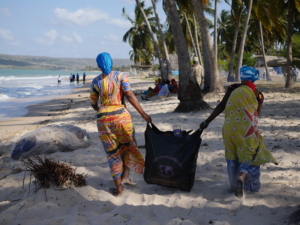 Tanzania is a country with stunning landscapes and a rich cultural heritage. It has become an example of how community-driven development can successfully tackle poverty. Recent statistics show that approximately 26.4% of the population lives below the national poverty line. Rural communities are at risk because they have limited access to essential services like clean water and education. Some significant changes occurring on the ground involve community-led development in Tanzania, devising creative solutions to transform lives through local initiatives, improving life in rural areas and establishing sustainable methods to escape poverty.
VSLAs: Driving Internal Financial Growth
In rural Tanzania, formal banking services are restricted, leaving numerous communities distant from conventional financial institutions. Village Savings and Loan Associations (VSLAs) have effectively addressed this void, transforming economic inclusion, especially for women. The VSLA model is a simple yet highly effective approach. In this system, groups of 15 to 40 local community members, predominantly women, meet regularly to save small amounts of money, after which the total savings and any profits from loans are shared among the members.
The impact extends beyond individual success stories. VSLAs promote shared ownership, transparency, effective governance, inclusiveness and organized savings and lending. Members can lend money to other farmers. Borrowers must repay the loan within a set timeframe and contribute interest to the group’s savings. At the end of each cycle, members receive back their savings and a share of the interest earned on the loans.
In the latest savings round, 112 VSLA groups saved 80 million Tanzanian Shillings ($32,000) in just nine months. Members use these savings to invest in their futures, start businesses, repair homes, cover medical costs and pay for education. More importantly, the model builds financial literacy, entrepreneurial skills and social capital that sustain poverty reduction beyond any single loan or project.
Participatory Forest Management
Since 2001, the Nou Joint Forest Management Project (JFM) has been a conservation effort in Tanzania’s Manyara Region. Its goal is to safeguard the 320 sq km Nou Forest, which sustains 28 permanent rivers and impacts the livelihoods of more than 200,000 individuals. This initiative tackles forest degradation caused by shifting agriculture, population increases, illegal logging and unmanaged grazing. The approach utilizes Participatory Forest Management (PFM), fostering collaboration between government bodies and local communities to protect forest resources.
Tanzania’s Forests cover approximately 38.8 million hectares, supporting biodiversity while providing critical resources to rural communities. Historically, these forests faced degradation through unsustainable harvesting and agricultural expansion. PFM, an innovative, community-led development in Tanzania, transfers management rights and responsibilities to local communities.
The World Land Trust’s 2021 appeal to save Tanzania’s coastal forest is a notable conservation achievement. Within five weeks, the campaign garnered $541,760 from international donors, exceeding its initial goal of $487,584. Immediate action was needed to protect the coastal forests of Lindi District in southern Tanzania, which face urgent threats from expanding roadways and commercial cashew and sesame plantations.
The appeal’s success has enabled Tanzania Forest Conservation Group (TFCG) to launch immediate conservation action in partnership with local communities. The funding supports comprehensive protection efforts, including enhanced reserve patrolling, wildlife monitoring programs and vital research initiatives. Most importantly, the additional money raised allows TFCG to expand its conservation impact further, providing these fragile coastal ecosystems with the robust protection they need.
The Path Forward
The UNESCO-Alwaleed Philanthropies project embodies an innovative approach to community-led development in Tanzania. It recognizes that culture and the arts can be powerful tools for education and economic empowerment. The core concept involves integrating cultural heritage and artistic practices into Technical and Vocational Education and Training (TVET).
This approach ensures that students do not merely acquire skills; they gain abilities rooted in their cultural identity, which can aid in preserving traditional practices while fostering modern livelihoods. From 38 applications, UNESCO carefully selected projects demonstrating the most substantial potential to blend cultural preservation with practical skill development. Each selected initiative receives up to $10,000 as funding and as seed money to prove that culture-based vocational education can create sustainable business and employment opportunities.
This project is part of a broader effort to promote the economic and social value of cultural heritage and institutions in Tanzania. The initiatives foster collaboration on both local and national levels, aiming to empower youth, women and underprivileged groups while ensuring that Tanzania’s vibrant culture remains influential and thrives in today’s world.
– Vanuza Antonio
Vanuza is based in London, UK and focuses on Good News and Global Health for The Borgen Project.
Photo: Flickr
