• Link to X
  • Link to Facebook
  • Link to Instagram
  • Link to TikTok
  • Link to Youtube
  • About
    • About Us
      • President
      • Board of Directors
      • Board of Advisors
      • Financials
      • Our Methodology
      • Success Tracker
      • Contact
  • Act Now
    • 30 Ways to Help
      • Email Congress
      • Call Congress
      • Volunteer
      • Courses & Certificates
      • Be a Donor
    • Internships
      • In-Office Internships
      • Remote Internships
    • Legislation
      • Politics 101
  • The Blog
  • The Podcast
  • Magazine
  • Donate
  • Click to open the search input field Click to open the search input field Search
  • Menu Menu

Tag Archive for: Poverty In Mexico

Posts

Developing Countries, Global Poverty, Health

LIF: UK-Mexico Relations and Medical Innovation

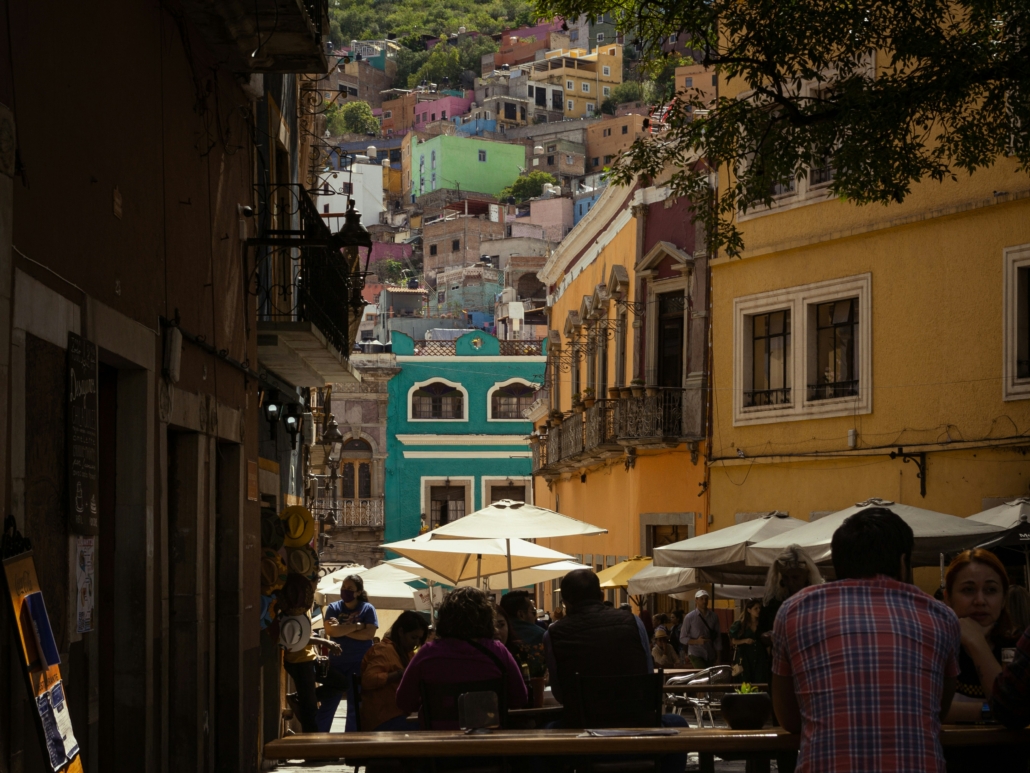
LIFMexico’s economy is on the rise after a 3.2% growth in 2023 and boasts the second-largest economy in Latin America. The shock of COVID-19 failed to stunt the country’s ongoing efforts to reduce poverty since rates continued to fall from 43.9% in 2020 to 36.3% in 2022. Although Mexico is exceeding in development, clear income divides remain between rural and urban areas, which is evident in its health care system. The Leaders in Innovation Fellowships (LIF), a U.K. program, worked with Mexican innovators to help provide solutions to health care disparities.

What Is the LIF program?

The Royal Academy of Engineering (RAEng) began the LIF program more than 10 years ago to promote global entrepreneurship through the use of technological innovation. Alongside Mexico, the program has partners in 16 countries, including Brazil, Vietnam, and Romania. The LIF was launched thanks to funding from the Newton Fund, which is part of the U.K.’s official development assistance and fosters international science and innovation partnerships.

Health Care in Mexico

The Mexican health care system operates on a combination of public, private, and employer-funded schemes. Prior to the introduction of Seguro Popular in 2004, a government program that ensured universal access to health care, three-quarters of the population could not access health care through the Ministry of Health. However, high poverty rates in rural areas of Mexico often leave these populations without adequate access to health care. Services are typically concentrated in the country’s largest cities.

In fact, 88% of dentists in Mexico are located in urban centers. Despite multiple reforms, health care infrastructure in rural municipalities remains insufficient, forcing locals to rely on out-of-pocket expenses. These areas also represent two-thirds of Mexico’s extremely poor. The removal of Seguro Popular in 2020 further increased out-of-pocket health care costs, which indicates the need for further health care security and reform to aid the most inadequate.

The LIF Program in Mexico

In February 2024, LIF joined efforts with technological innovators in Mexico to help the Xicotepec, one of the municipalities that make up the Puebla state. The program funded the use of these medical inventions and services in the communities of Xicotepec. The team operating there organized a Community Health Services (CHS) Week, where 265 people received medical care.

The program covered a variety of training and medical care. Indeed, 90 mothers attended breast cancer screenings, 40 doctors were trained in wound healing, and more than 200 people were trained in disease prevention. The program was well received by its beneficiaries: “The service was very good and necessary. The truth is that we don’t go to the doctor often because we can’t afford it.”

Final Note

Positive partnerships like the LIF program enable medical innovation and treatment to reach the communities that need it most. They can help resolve the negative effects of recent changes in Mexico’s health care system. The capacity of the RAEng to reach remote communities like Xicotepec shows how far-reaching international collaboration is.

– Sofia Brooke

Sofia is based in Oxfordshire, UK and focuses on Global Health for The Borgen Project.

Photo: Pexels

October 7, 2024
https://borgenproject.org/wp-content/uploads/borgen-project-logo.svg 0 0 Hemant Gupta https://borgenproject.org/wp-content/uploads/borgen-project-logo.svg Hemant Gupta2024-10-07 01:30:352024-10-07 00:51:26LIF: UK-Mexico Relations and Medical Innovation
Developing Countries, Global Poverty, Politics

New President Prepares to Combat Poverty in Mexico

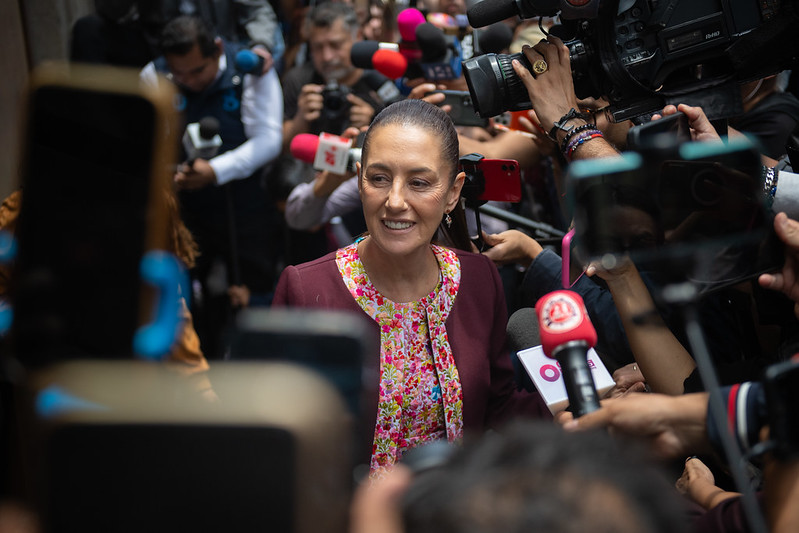
Combat Poverty in MexicoOn Sunday, June 2, 2024, Claudia Shinebaum was elected Mexico’s new president. This marks a historical moment as she is the first female president of Mexico. The former mayor of Mexico City was the chosen successor of Andres Manuel Lopez Obrador (AMLO). During AMLO’s term as president, he is credited with lifting more than 5 million Mexican citizens out of poverty. Promises of expanding social services and education reform and her work as Mexico City’s mayor leave many in the poverty-stricken nation hopeful that she will help to further combat poverty in Mexico.

Pending Pension Promises

Many of the initial items Shinebaum plans to address are continuations of projects AMLO has laid out. One of the biggest overhauls is the changes to Mexico’s pension program that started in 2020. A whole sweet of changes have been proposed and are in the process of implementation to make a pension available to more people and expand just how much goes into the fund.

The American Bar Association lays out the points of change, such as a decrease in the number of weekly contributions needed from 1,250 to 1,000 and an increase in the employers’ contribution by 8% with an increase in the government contribution. Additionally, these changes were laid out as gradual changes to be implemented by 2031; thus, it is expected that Shinebaum will oversee a majority of these rollouts during her term.

Investing in Education

Education reform has been an enduring issue in Mexico, with multiple proposed solutions with varying levels of efficacy. ALMO began his term by scraping his predecessors’ reforms, making way for his programs. He opened publicly funded universities to make higher education accessible to low-income students. Furthermore, this came alongside cuts to funding for higher education stemming from the policies of his predecessor.

He also lowered standardized testing requirements in an attempt to increase graduation rates. Reactions to these reforms have been mixed. Indeed, critics say that a strong focus on higher education has meant less focus on primary and secondary education. The Benito Juarez Welfare Scholarship seeks to provide aid to the families of students 15 and younger. The International Monetary Fund credits it as an important step toward addressing the plight of the 43.5% of Mexican citizens living in poverty. With this, citizens can expect Mexico’s new president to continue and expand on these social services throughout her term.

Final Note

According to the United States Agency for International Development (USAID), the U.S. has contributed $495 million to developmental projects in Mexico. However, this is just 0.03% of its gross domestic product (GDP). Given the close cultural, economic and geographic ties between the two nations, the U.S. may see it in its advantage to do more to help combat poverty in Mexico.

– Thane Zerbe

Thane is based in Wichita, KS, USA and focuses on Good News and Politics for The Borgen Project.

Photo: Unsplash
September 21, 2024
https://borgenproject.org/wp-content/uploads/borgen-project-logo.svg 0 0 Hemant Gupta https://borgenproject.org/wp-content/uploads/borgen-project-logo.svg Hemant Gupta2024-09-21 03:00:332024-09-21 01:36:31New President Prepares to Combat Poverty in Mexico
Aid, Global Poverty, Nonprofit Organizations and NGOs

Good Neighbors Tackles Global Poverty

Good Neighbors Tackles Global Poverty Good Neighbors, a global nonprofit organization established in South Korea in 1991, works to enhance the lives of marginalized and vulnerable children. It operates in more than 200 communities across 50 countries, including North Korea, Taiwan, Australia, Ghana and Chile.
Good Neighbors Korea

Good Neighbors actively supports the well-being of young adults. The organization provides 31,550 girls with feminine products, educational materials about the menstrual cycle and personal development. Additionally, it offers mentoring and therapy sessions to teach young adults how to express their emotions healthily. Between 2017 and 2023, Good Neighbors helped a total of 77,774 girls, supplying them with essential food and appliances.

In Busan, Good Neighbors has partnered with the City of Busan and other nonprofit organizations to offer a “self-reliance kit”. These kits assist young adults as they transition out of orphanage programs. These kits include bedding, cooking sets, heaters and more to facilitate a smoother move to independence. The project also provides career mentoring, driver’s license assistance and financial aid for post-secondary education. Overall, Good Neighbors has significantly improved the nutrition, education, housing and self-reliance of young adults.

Gugah Nurani Indonesia

In 2023, Gugah Nurani Indonesia (Good Neighbors Indonesia) and the Manggarai Barat Community Development Project (CDP) collaborated with the Golo Pua Village Government to enhance agricultural productivity and product availability through horticultural farming. The project implemented a drip irrigation system to increase water efficiency and boost chili production. This advancement has led to higher-quality crops, enabling farmers to earn more income. Additionally, it has provided consumers with greater access to agricultural products. Overall, this initiative fosters environmental sustainability and improves the socio-economic well-being of the village community.

From March 20 to 22, 2024, Gugah Nurani Indonesia and the Manggarai Barat Community Development Project (CDP) hosted a training session on seed breeding and pest management for Farmer Groups and Women Farmer Groups in Golo Pua Village. This training aimed to enhance seed quality and educate participants about effective pest management, improving productivity and environmental sustainability. With Gugah Nurani Indonesia’s support, the village is poised to withstand pest attacks and advance toward more productive and sustainable agriculture.

Philippines

Typhoon Rolly in 2020 severely limited water supplies from natural resources and disrupted water supply chains, primarily because residents relied on untreated water from deep wells and hand pumps. The challenging terrain requires residents to climb mountains and cross rivers just to fetch a gallon of water and adverse conditions further restrict access to these sources.

Good Neighbors International Philippines launched the “Securing Access to Flourish Empowerment for Water” (SAFE) Project. This initiative led to the construction of a water tank and reservoir, ensuring water delivery to every household and public school in the area. Additionally, the Barangay Water and Sanitation Association (BAWASA) was established, involving health care workers and community leaders from nine villages. As a result, the SAFE Project has benefited a total of 4,475 community members, significantly improving their daily lives, safety, health and overall well-being by securing access to one of life’s most important necessities: clean water.

Good Neighbors México

Xocoapa is struggling with poverty, economic adversity and a lack of health services, challenges that intensified following Hurricane Otis. In 2024, Good Neighbors Mexico responded by delivering food pantries stocked with basic foods, personal hygiene products and cleaning supplies to families in the community of Xocoapa, located in the municipality of Tlaocoapa, Guerrero. By supporting rural communities, Good Neighbors plays a crucial role in combating poverty and enhancing quality of life through sustainable development in the region.

Bangladesh

Since 2018, Good Neighbors Bangladesh has been implementing the ‘Building Resilience to Achieve Zero Hunger (BRAZH)’ project, funded by the U.N. World Food Program, in the Kurigra district. The project focuses on three main activities: Forecast Actions, Seasonal Livelihood Programming and Climate Risk Insurance. It has enhanced the capabilities of Seasonal Livelihood Programming beneficiaries by providing Entrepreneurship Development Training and practical training in various Income Generation Activities at the field level. A key goal of the training is to boost women’s participation in income-generating activities, fostering self-dependence and economic stability. So far, 2,852 people have participated, with increasing numbers receiving training. Through these ongoing efforts, Good Neighbors aims to reduce hunger and promote lasting self-reliance.

Looking Ahead

Good Neighbors’ initiatives across various countries demonstrate a commitment to improving the lives of vulnerable communities. From enhancing agricultural productivity in Indonesia to securing clean water access in the Philippines and addressing food insecurity in Mexico and Bangladesh, the organization continues to make significant strides. These ongoing efforts highlight the importance of sustainable development and empowerment in fostering resilience and self-reliance among affected populations.

– Sein Kim

Sein is based in Bellevue, WA, USA and focuses on Good News and Technology for The Borgen Project.

Photo: Flickr

July 14, 2024
https://borgenproject.org/wp-content/uploads/borgen-project-logo.svg 0 0 Precious Sheidu https://borgenproject.org/wp-content/uploads/borgen-project-logo.svg Precious Sheidu2024-07-14 07:30:362024-07-14 00:45:58Good Neighbors Tackles Global Poverty
Developing Countries, Education, Global Poverty

Hotel Con Corazón Has Heart for Latin America

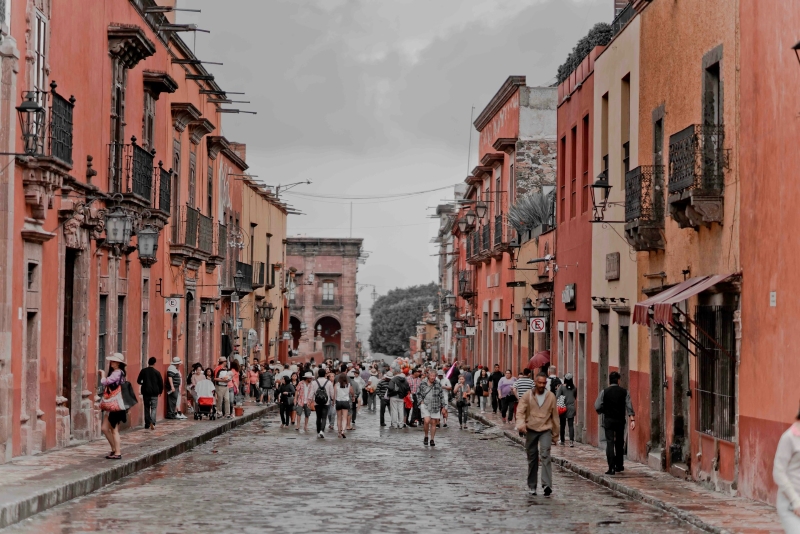
Hotel Con CorazónHotel con Corazón opened its doors in 2008 after founders Onno Oostveen and Marcel Zuidhof agreed they wanted to impact the world. The pair decided to start their journey in Nicaragua, one of the poorest countries in Latin America.
Hotel Con Corazón’s Heartfelt Journey to Nicaragua

Oostveen and Zuidhof traveled to Nicaragua during a holiday in 2006. While there, they noted the lively potential for tourism and the lack of funding for education. By 2008, the pair had moved to Nicaragua and decided to support the local community by opening Hotel con Corazón. The pair now employs a fantastic team that supports the hotel and even employs teachers for schools.

Empowering Youths in Nicaragua, One Stay at a Time

Hotel con Corazón mission is to provide accessible education for children in need within Latin America. The World Bank has reported that 70% of 10-year-olds in Nicaragua cannot read or understand basic texts. The lack of education for children may result in a lack of earnings in the future. More than 60% of children in Nicaragua are living in educational poverty. Hotel con Corazón aims to give back the chance of a bright future for the youths of Nicaragua. It hopes that youths can stop the cycle of poverty for themselves and their families by doing this.

Since its first hotel opened to the public in Granada, Nicaragua, the hotel company has assisted 250 children annually through primary and higher levels of education. In 2024, the hotel group will have supported an estimated 4,000 children in completing their education. Hotel con Corazón invests 100% of its profits into local education. The hotel is aesthetically designed and boasts a swimming pool and a bar where guests can buy drinks and food. It also has two patios where visitors can relax and enjoy breakfast or lunch. Additionally, it provides free Wi-Fi and entertainment for guests.

Guest profits provide the hotel with funding to support extracurricular activities for youth and parental workshops. In addition to helping youth through education, Hotel con Corazón offers development and income opportunities to several Nicaraguans each year. It further supports the local economy by buying produce from the community and running a commercial business. The hotel group can support 22 employees in its Nicaraguan hotel, where it also offers development programs so that employees have access to further education for themselves or their children. The hotel has made several positive impacts on Nicaragua, supporting the country through poverty in as many ways as it can.

Outreach to Oaxaca

In 2018, the hotel group decided to expand its social impact. Therefore, it opened the first Hotel con Corazón in one of the poorest cities in Mexico. According to the World Bank, 26% of Mexican children are not enrolled in pre-primary education and only 57% of 10-year-olds can read. Oaxaca is rated the second lowest city in Mexico for its education levels. Hotel con Corazón’s Oaxaca branch continues a similar vision as it does in Nicaragua.

The company invests all profits from guest stays and purchases made in bars and its hotel shop into education at all levels in Oaxaca. The hotel supports the Oaxaca Learning Center, which runs a motivational program for 60-70 youths and funds educational costs for those who most need it. Hotel con Corazón is also partnered with Mundo de Talentos, a nonprofit organization that provides children with free occupational guidance. Mundo de Talentos originated in Chiapas, Mexico. In 2023, Hotel con Corazón funded the nonprofit to expand its reach to Oaxaca. This funding enabled the nonprofit to begin its annual program in Oaxaca with 40 students enrolled.

Additionally, Hotel con Corazón has created a learning space within Oaxaca, where young people can learn trading skills that they can use in hospitality work. It offers apprenticeships to unemployed youths who are also not in education and aims to help them find work they can enjoy. For the youths already in education, Hotel con Corazón offers apprenticeships where young people have the potential to train in its Oaxacan hotel.

The Final Resort

Hotel con Corazón has made impressive impacts in changing the lives of youths through education and supporting the countries it operates in through poverty. The hotel group’s latest mission is spreading love in Latin America. It plans to open 10 more hotels in the next 10 years. The aim is to regenerate its educational and motivational schemes for the poorest parts of Latin America that need the most help. It has already begun building three branches in Costa Rica and Mexico. By 2025, its newest branch will open for guests in Monteverde, Costa Rica.

– Raquel Smith

Raquel is based in London, UK and focuses on Business and Good News for The Borgen Project.

Photo: Hotel Con Corazón

May 25, 2024
https://borgenproject.org/wp-content/uploads/borgen-project-logo.svg 0 0 Hemant Gupta https://borgenproject.org/wp-content/uploads/borgen-project-logo.svg Hemant Gupta2024-05-25 07:30:542025-02-18 02:15:26Hotel Con Corazón Has Heart for Latin America
Activism, Development, Education, NGOs, War and Violence

Combating the Drug Cartel Recruitment of Mexican Youth

Drug cartel recruitmentIn Mexico, drug trafficking endangers civilians of all ages through increasing crime and violence. Rampant cartel activity particularly impacts children. For example, due to increased cartel-related violence, schools are no longer safe spaces for young students to receive an education. In a 2012 national survey, 38.8% of the population chose school as one of the public spaces where they feel unsafe. Children are additionally at risk of drug cartel recruitment. This is because cartels seek unlikely suspects and easily dispensable members. If prosecuted, minors also are not charged as adults.
Targeting Impoverished Children

According to the Network for Children’s Rights in Mexico, organized crime groups recruited about 350,000 young people around the country, with around 400,000 finding themselves vulnerable to drug cartel recruitment. Cartels especially target impoverished children who live in tumultuous households, swaying them to join with the promise of economic gain and even a “sense of belonging.”

Reinserta is a non-profit organization in Mexico working to protect children from this growing issue. Founded in 2013, Reinserta offers education, job training and placement and mental health support for children facing crime and violence in Mexico in general. The organization supports youth in proximity to organized crime and drug cartel recruitment with research and reintegration efforts.

Research

Since its founding, the organization has conducted six research studies and reports on violence impacting adolescents in general. It has also conducted surveys to see the impacts of drug cartel recruitment of youth more specifically. The investigation explores the prevalence and gravity of cartels recruiting young members.

It has also hosted 89 interviews with minors in juvenile detention centers and found that 67 were part of cartel activity before their arrest. All the organization’s research and data from the organization is calling attention to a problem that continues to target children who are as young as 10. Reinserta recognizes that progress begins with a comprehensive knowledge and understanding of the issue at hand.

Reintegration

For youth who have already been involved in organized crime, Reinserta offers models of reintegration and rehabilitation. It works across 14 detention centers for youth, offering education and job training and placement services. Through its work, the organization saw that eight out of 10 participating youth continued studying or found a job after Reinserta’s programs. Some of the most common jobs the young people have found are in “gastronomy, styling, barbering, sewing, serigraphy, paramedics, radio and muralism.” In total, the non-profit has impacted over 1,300 adolescents who have been in prison, with a non-recurrent rate of more than 90%, according to its website.

As drug cartel recruitment in Mexico has increased in the past years, the work of Reinserta is becoming more critical than ever. Through its important research and reintegration initiatives, Reinserta operates as one of the Mexican non-profits making the most change for adolescents affected by violence today.

– Estelle Lee
Photo: Unsplash

April 13, 2024
https://borgenproject.org/wp-content/uploads/borgen-project-logo.svg 0 0 Naida Jahic https://borgenproject.org/wp-content/uploads/borgen-project-logo.svg Naida Jahic2024-04-13 01:30:002024-05-30 22:32:55Combating the Drug Cartel Recruitment of Mexican Youth
Economy, Global Poverty

Exploring Social Solidarity Economy

Social Solidarity EconomyFor more than 25 years, the global economy has grown significantly. However, it has also faced challenges such as environmental degradation and wealth inequality. The top 10% of the world’s population holds more than half of global incomes, while the bottom half earns only 8%. As a result, there is a growing recognition of the need for alternative economic models prioritizing sustainability and fair resource distribution.

One such alternative is the social solidarity economy (SSE), which focuses on cooperation, democratic decision-making and community welfare over profit maximization. SSE is a comprehensive approach that addresses not only economic concerns but also social and environmental issues, recognizing the interconnectedness of these factors.

These initiatives blend economic and social aspects rooted in sociocultural foundations and a rationale that intertwines productivity, participation, efficiency and welfare. SSE extends beyond economic realms to serve societal needs like health care, education and environmental protection, providing a holistic solution. Achieving these goals necessitates substantial efforts, particularly strong member commitment to democratic principles and cooperative work.

Social Solidarity Economy in Action

A compelling case study of SSE in action is found within the indigenous community of Nuevo San Juan Parangaricutiro, a village in Mexico. Through collaboration with governmental entities and a commitment to inclusive governance, this community has transformed a small sawmill operation into a diverse ecosystem of cooperative enterprises. By reinvesting profits into new projects to create job opportunities, Nuevo San Juan Parangaricutiro has seen significant growth, boasting more than a thousand jobs annually, with 800 permanent positions through its 11 community enterprises, including sawmills, furniture factories and tourism ventures.

The community’s organizational structure notably reflects its commitment to SSE principles, democratic decision-making and community engagement. At its core is the General Assembly of Community Members, which serves as the highest authority for decision-making, with approximately 1,254 individuals participating. Additionally, the Board of Directors, comprising the ejidal commissioner and the supervisory council, oversees governance matters. The Community Council serves as a platform for sharing experiences and knowledge, drawing from the extensive participation of members with decades-long involvement. Each company within the community operates under its own management, contributing to the collective prosperity of Nuevo San Juan Parangaricutiro.

Globalizing Localized Solutions

The International Network for the Promotion of the Social Solidarity Economy (RIPESS) facilitates the dissemination of SSE principles globally. RIPESS fosters collaboration among SSE practitioners worldwide through organizing meetings and knowledge-sharing platforms. By connecting local initiatives like Nuevo San Juan Parangaricutiro with regional, national and international entities, RIPESS enables the exchange of ideas and best practices, driving innovation and collective action towards more inclusive and sustainable economic systems.

Looking Ahead

RIPESS has achieved significant international success and recognition by collaborating with different branches of the United Nations, such as the United Nations Conference on Trade and Development (UNCTAD), the United Nations Economic and Social Council (ECOSOC) and the U.N. Inter-agency Task Force on Social Solidarity Economy (UNTFSSE).

However, the real challenge lies in expanding localized SSE models and incorporating them into conventional economic frameworks. Through fostering partnerships between governments, civil society organizations and the private sector, SSE presents a promising path towards a more equitable and environmentally sustainable future. In this future, prosperity is measured by the well-being of people and the planet, not just economic indicators.

– Spencer Springob
Photo: Flickr

March 24, 2024
https://borgenproject.org/wp-content/uploads/borgen-project-logo.svg 0 0 Hemant Gupta https://borgenproject.org/wp-content/uploads/borgen-project-logo.svg Hemant Gupta2024-03-24 01:30:042024-06-11 00:12:44Exploring Social Solidarity Economy
Children, Global Poverty

Prospera: Mexico’s Successful Conditional Cash Transfer Program

Prospera: Mexico's Successful Conditional Cash Transfer Program Prospera, which was formerly known as Oportunidades and Progresa, was the world’s first national conditional cash transfer program, originally launched in Mexico in 1997. The program, which ran between 1997 and 2019 and involved multiple rebrands, focused on incentivizing and improving access to education, nutrition and health for poor families.

Conditional cash transfer programs are government welfare programs that provide residents in poor communities with funds as long as they meet the conditions of the program. Common requirements for programs like Prospera typically include mandating school enrollment for children and ensuring regular health check-ups.

After the 1995 Mexican peso crisis drastically devalued the peso, Mexico launched the Prospera program to combat poverty and inequality. Targeting particularly impoverished areas, Prospera proved notably effective in Mexico’s poorest regions, such as Chiapas, where a poverty rate of 74.7% prevails. In La Gloria, Chiapas, about 93% of families benefited from the program’s stipends. Hence, Prospera aimed to alleviate poverty in both urban and rural areas across the country.

Poverty and Education

Prospera targeted poverty reduction by emphasizing school enrollment. In Mexico, where families often depend on extra income, children are pushed to work, undermining their education. This issue is more acute in the South, where children frequently leave school to work in agriculture, exacerbating educational neglect and perpetuating the cycle of poverty.

Under Prospera, families would receive grants every month for each child attending school. As children progressed in school, the grant amount would increase. For girls, the grant amount would range from 105 pesos or $9.50 in third grade to 660 pesos or $60 by high school. The stipend for girls was higher than the stipend for boys because on average, girls were more likely to leave school at a younger age.

Additionally, children participating in Prospera from their earliest days show a higher likelihood of pursuing higher education. A study found children enrolled within their first 1,000 days were 67% more likely to attend college compared to those enrolled after 6th grade. Prospera’s emphasis on continuous school attendance played a crucial role in its success. Education plays a pivotal role in poverty reduction according to Childfund, who claim education is the “catalyst needed to pull families and communities out of the cycle of poverty.”

Health and Nutrition

Prospera provided families with health-related monetary transfers to ensure regular health checks for both parents and children. These funds, aimed at improving food consumption and nutritional health, came with no spending restrictions. The program tailored its conditions to meet specific demographic needs, such as organizing health and nutrition sessions for mothers and high school students. Notably, Prospera contributed to a 17% decrease in infant mortality rates in Mexico, highlighting its critical role in addressing health-related poverty and malnutrition issues.

Effects of Prospera

Mexico’s conditional cash transfer program, though scaled back in 2019 to focus on education, continues to significantly influence global poverty reduction strategies. Its model has inspired dozens of countries worldwide to implement similar programs, benefiting impoverished communities. While debates exist over Prospera’s long-term poverty impact, its achievements in reaching millions in Mexico’s needy urban and rural areas, enhancing educational outcomes and reducing child health issues stand out.

– Marley Wilson
Photo: Unsplash

March 21, 2024
https://borgenproject.org/wp-content/uploads/borgen-project-logo.svg 0 0 Precious Sheidu https://borgenproject.org/wp-content/uploads/borgen-project-logo.svg Precious Sheidu2024-03-21 03:00:402024-03-20 04:46:34Prospera: Mexico’s Successful Conditional Cash Transfer Program
Global Poverty, Health

Healthcare Access in Mayan Indigenous Communities

Mayan indigenous communitiesRecent data highlights that access to health care poses a significant challenge for Mayan indigenous communities in Mexico, especially in rural areas. The absence of comprehensive programs and policies tailored to improve culturally appropriate health care exacerbates this issue.

Mayan Cultural Context

In Mexico, traditional Mayan communities continue to uphold distinct perspectives on healing, which sometimes conflict with Western medical ideologies. In Mayan culture, people intricately link ill health to deities and ancestors. Mayans perceive physical well-being as interconnected with the celestial, terrestrial and subterranean realms. Consequently, health care within Mayan communities follows a communal approach, where medical decisions are not solely individual but collective decisions involving extended family members and Mayan spiritual healers known as H-men.

The Impacts of Globalization

Globalization has ushered in profitable trade and investments for numerous nations worldwide, improving public health and increasing life expectancy. However, it has also had adverse effects on the environment, exacerbated wealth disparities and fueled consumerist behavior, thereby posing threats to indigenous communities.

Mayan communities, often situated in jungle environments, grapple with limited access to health care and social services, inadequate infrastructure and substandard sanitation facilities. Consequently, many community members seek employment in the tourism hubs of Cancun or Tulum, drawn by economic opportunities.

However, the arrival of tourists brought three confirmed COVID-19 cases on March 10, 2020, prompting the implementation of social distancing measures on March 30, 2020 and ultimately resulting in the closure of the tourism industry. The Mexican government disseminated leaflets and radio announcements in the native Mayan language. However, the absence of community health centers and limited transportation options hindered the provision of adequate health care and education.

Obstacles to Health Care

Many members of Mayan communities have voiced concerns about the affordability of health care, whether from a doctor or private healer. For example, a doctor’s visit costs approximately $10 to $42, whereas a healer or herbalist typically charges between $0.5 and $26. Individuals needing medical care resorted to selling livestock to cover the costs. In contrast, hospital admissions were deemed unaffordable due to transportation expenses. Additionally, despite the proximity of several Mayan communities to health care centers, communication barriers persisted as many providers needed help to speak the Mayan language.

Moving Forward

Members of Mayan indigenous communities have emphasized the critical necessity for expanded health care resources, including additional medications, nursing staff and specialized health care providers adept at catering to rural indigenous and marginalized populations. In a pivotal move reflecting a commitment to holistic care, Zoe Robledo, the esteemed leader of Mexico’s most significant public hospital network, announced a transformative initiative in 2023 during a widely covered news conference. Under her guidance, the system pledged to recruit 753 practitioners skilled in traditional massage and herbal treatments. Furthermore, the hospitals and clinics will welcome midwives and practitioners versed in a traditional variant of chiropractic medicine.

This groundbreaking decision underscores a profound acknowledgment of the rich ancestral knowledge embedded within indigenous healing practices. Despite lacking formal licensure, these practitioners will use centuries-old wisdom to guide their therapeutic interventions. The Office of President Andres Manuel Lopez Obrador affirmed this approach, highlighting the intent to prioritize cultural heritage and community-based healing methods in health care services.

– Eva McMonigl
Photo: Unsplash

March 8, 2024
https://borgenproject.org/wp-content/uploads/borgen-project-logo.svg 0 0 Hemant Gupta https://borgenproject.org/wp-content/uploads/borgen-project-logo.svg Hemant Gupta2024-03-08 07:30:182024-03-07 01:52:30Healthcare Access in Mayan Indigenous Communities
Children, Development, Global Poverty, Health

All You Need to Know About Poverty in Mexico

Poverty in MexicoFor some, poverty in Mexico is their reality. Juana, a 17-year-old girl living in Maneadero, Mexico, was born into a family with no access to education, clean water, electricity or housing. This is becoming the norm in Mexico. Juana only managed to escape these conditions through the help of foundations that built her family home and provided her with a scholarship. Extreme poverty increased by 2.1 million from 2018 to 2020, with 43.9% of the population below the national poverty line. The current government welfare system is failing to deal with increasing poverty in Mexico. Many Mexicans are not as lucky as Juana. Here is everything you need to know about poverty in Mexico that is causing the lack of opportunities and high inequality.

Corruption, Security and Justice

Mexico is not a poor country. As of 2020, it has the 15th largest economy in the world and until recently had the largest economy in Latin America. However, 15 individuals hold 13% of Mexico’s wealth and corruption is rampant across all sectors. As a result, Mexico invests less money into public services due to bribes and misallocation of resources into unproductive activities and inefficient policies. This has led to the rich getting richer and the poor getting poorer.

In fact, Transparency International outlines that “corruption is the most regressive tax in the country and a direct obstacle to the access to the most basic services for development,” Huff Post reports. This plays a key role in the rising levels of poverty in Mexico.

On top of this, in Mexico wealth is not distributed evenly, with those living in rural areas receiving less. They have little access to infrastructure or social support. The most extreme examples of this are Chiapas and Oaxaca, with poverty rates over 60%.

In addition to rising levels of poverty, people’s quality of life is also impacted by the fact that 93% of all crimes go unreported in Mexico. Crime has multiplied due to Mexican law enforcement agencies failing to hold people accountable.

The growth of drug cartels and petty crime has led to greater political instability and affected economic growth. As a result of this, 12 million Mexicans now work through the black market without the protection of social security. These individuals are often exploited. The number in this situation is only increasing.

To help support the poor, The Hunger Project has set up a scheme that advocates and creates partnerships between municipalities in Mexico. The aim is to create self-reliant communities.

Since 2020, this has already seen success in Oaxaca. Some examples of this are The Hunger Project setting up backyard orchards in seven municipalities, introducing rainwater harvesting systems and installing ecological toilets. This has helped to deal with the issues of health care and education outlined below. The more awareness and opportunities that are introduced like this, the more people could get chances like Juana’s.

Health Care and COVID-19

As a result of corruption and instability, public institutions in Mexico fail to live up to the standards necessary to ensure people’s health and well-being. From 2012 to 2014, those with access to health care decreased by 3.5 million.

Consequently, families are likely to have more children, leading to less investment in each child. This means children develop fewer skills. As a result, families are more likely to stay in poverty. The added pressures of COVID-19 have made the situation worse, explaining the increased rates of poverty in recent years.

Moreover, 30% of the population experience nutritional problems as they cannot afford basic food items. This leads to underdevelopment in children and a higher mortality rate. As a result, human capital in Mexico is lacking.

While unemployment is high, where people do secure work, they are often weak and uneducated, leading to lower productivity. This has reduced economic growth, resulting in higher levels of poverty in Mexico.

Education

COVID-19 has also decreased access to education. Education was already limited, with only 62% of Mexican children reaching high school. This limits the opportunities for those in poverty, amplifying the divide between the rich and poor.

Furthermore, those living in rural areas have even less access to education meaning the uneven distribution of wealth in these areas is only increasing. Lack of skills and qualifications also means that many poor people cannot find jobs, resulting in extreme poverty levels of up to nearly 20% across the country.

Juana was lucky. From everything you need to know about poverty in Mexico, there is hope for a better future through schemes such as The Hunger Project. A self-reliant population could reduce the issues of elitism and corruption. Economic growth could prosper and poverty could decrease if this campaign continues. This could give Mexico the opportunity to renovate its infrastructure and institutions.

– Reuben Cochrane
Photo: Flickr

August 18, 2022
https://borgenproject.org/wp-content/uploads/borgen-project-logo.svg 0 0 Jennifer Philipp https://borgenproject.org/wp-content/uploads/borgen-project-logo.svg Jennifer Philipp2022-08-18 07:30:472024-05-30 22:29:55All You Need to Know About Poverty in Mexico
Education, Global Poverty

The Nonprofit VAMOS! Combats Poverty in Mexico

poverty in Mexico
In 2018, estimates determined that 42% of the Mexican population was living in poverty. This figure indicates that about 52 million people in the entire nation lived in poverty. In 2015, Chiapas continued to be the poorest state and Oaxaca the second poorest, with poverty rates of 76.2% and 66.8% respectively. An organization based in the state of Vermont called VAMOS! helps people struggling with poverty in Mexico.

Since its founding in 1987, VAMOS! has provided residents with education, food, health services and much more for free in the state of Morales. Recently, The Borgen Project was able to speak with Executive Director Sean Dougherty about the origins and successes of VAMOS! Sean got involved with the organization because his partners were part of the founding board. He says he enjoys being part of the organization because he loves hearing about the impact it has made on families.

Education

Only 62% of Mexican children reach high school and only 45% complete their high school careers. About 38% of men and 35% of women in Mexico are uneducated and unemployed. Overall, their education rates are lower than most other Organisation for Economic Co-operation and Development (OECD) countries.

 VAMOS! helps those struggling with poverty in Mexico to alleviate this issue by providing access to quality education, especially in the areas of Early Childhood and Primary Education.

“Education is the single-most-important driver of economic empowerment for individuals and communities,” Dougherty said. “Educated parents are able to earn an income and feed their children. Children who complete primary education are more likely to achieve food security as adults and end the cycle of poverty in their generation.”

Nutrition

A recent U.N. study shows nearly 14% of Mexican children under five years of age experience stunted growth. This concept means that these children are slowed in their development, often as a result of malnutrition, according to Dougherty. VAMOS! helps people suffering from poverty in Mexico by providing food to many families every day.

“VAMOS! Nutrition Programs operate in each of our ten Community Centers and provide a necessary and important addition to the daily diet of the poor we serve,” Dougherty said. VAMOS! serves more than 140,000 meals a year, and hosts many clean water and vitamin programs that provide a measure of food security for affected families. The organization has also managed to erase malnutrition among families that regularly visit VAMOS! centers.

Community

“On a daily basis, in our 10 community centers throughout Cuernavaca, VAMOS! is trying to create a space of love, dignity and respect for anyone and everyone who walks through our doors,” Dougherty said. “We do this by greeting everyone, welcoming each child, listening to their mothers and making sure that every child knows that they are important and that they deserve a future filled with opportunities and love.”

VAMOS! aids those wrestling with poverty in Mexico by aiding, on average, 800-900 kids and more than 400 mothers per week. Since its founding, the organization has served more than 3 million meals. One thousand two hundred people visit its centers per day and the staff has grown to more than 250 members to accommodate them.

Future Goals

According to Dougherty, VAMOS! hopes to expand its reach to further benefit people battling poverty in Mexico.

“In our most recent surveys, our students and mothers are asking for English classes, job training, small business development, certification in computer business skills and additional programming for teens,” Dougherty said. “These are the areas we will be concentrating on as we continue to expand our programs in the near future.”

– Shreya Chari
Photo: Flickr

July 4, 2020
https://borgenproject.org/wp-content/uploads/borgen-project-logo.svg 0 0 Jennifer Philipp https://borgenproject.org/wp-content/uploads/borgen-project-logo.svg Jennifer Philipp2020-07-04 01:30:022022-05-04 11:07:33The Nonprofit VAMOS! Combats Poverty in Mexico
Page 4 of 512345

Get Smarter

  • Global Poverty 101
  • Global Poverty… The Good News
  • Global Poverty & U.S. Jobs
  • Global Poverty and National Security
  • Innovative Solutions to Poverty
  • Global Poverty & Aid FAQ’s
Search Search

Take Action

  • Call Congress
  • Email Congress
  • Donate
  • 30 Ways to Help
  • Volunteer Ops
  • Internships
  • Courses & Certificates
  • The Podcast
Borgen Project

“The Borgen Project is an incredible nonprofit organization that is addressing poverty and hunger and working towards ending them.”

-The Huffington Post

Inside The Borgen Project

  • Contact
  • About
  • Financials
  • President
  • Board of Directors
  • Board of Advisors

International Links

  • UK Email Parliament
  • UK Donate
  • Canada Email Parliament

Get Smarter

  • Global Poverty 101
  • Global Poverty… The Good News
  • Global Poverty & U.S. Jobs
  • Global Poverty and National Security
  • Innovative Solutions to Poverty
  • Global Poverty & Aid FAQ’s

Ways to Help

  • Call Congress
  • Email Congress
  • Donate
  • 30 Ways to Help
  • Volunteer Ops
  • Internships
  • Courses & Certificates
  • The Podcast
Scroll to top Scroll to top Scroll to top