• Link to X
  • Link to Facebook
  • Link to Instagram
  • Link to TikTok
  • Link to Youtube
  • About
    • About Us
      • President
      • Board of Directors
      • Board of Advisors
      • Financials
      • Our Methodology
      • Success Tracker
      • Contact
  • Act Now
    • 30 Ways to Help
      • Email Congress
      • Call Congress
      • Volunteer
      • Courses & Certificates
      • Be a Donor
    • Internships
      • In-Office Internships
      • Remote Internships
    • Legislation
      • Politics 101
  • The Blog
  • The Podcast
  • Magazine
  • Donate
  • Click to open the search input field Click to open the search input field Search
  • Menu Menu

Tag Archive for: Poverty In Iran

Posts

Global Poverty

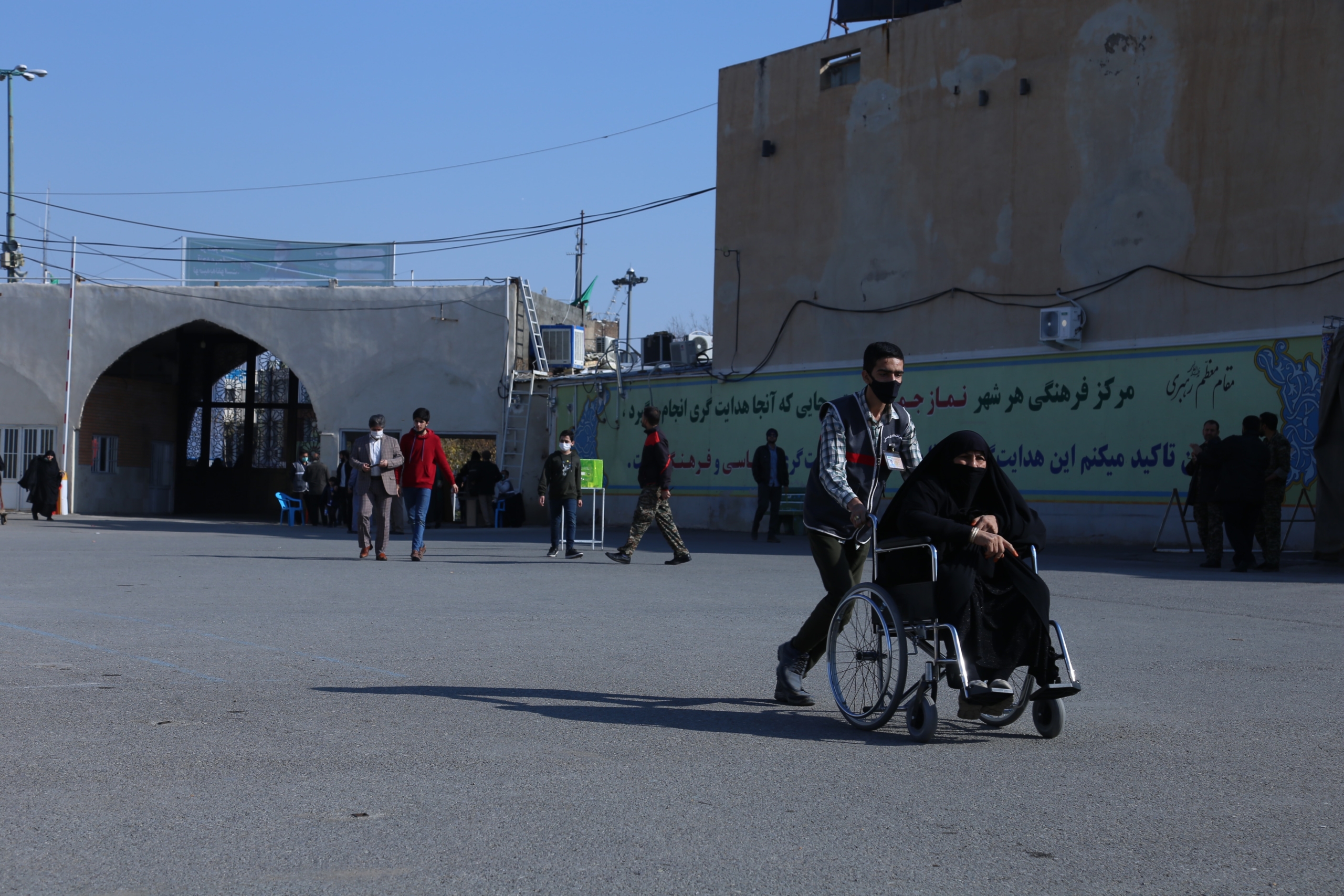
10 Facts About Human Rights in Iran That Show Its People’s Struggles

10 Facts About Human Rights in Iran
In March 2018, the U.N. Human Rights Council and the U.S. Mission in Geneva restated their concerns about the state of human rights in Iran, such as the rigorously restricted rights of both expression and freedom that are enforced by Iranian authorities. People are arrested and imprisoned for expressing different beliefs and the punishments for crimes include floggings and amputations. Iranian authorities have refused to allow U.N. specialists to get involved. These facts about human rights in Iran explore some of the recent and ongoing issues in the country.

Facts About Human Rights in Iran

  1. In the presidential elections of May 2017, President Hassan Rouhani was elected for a second term. However, he was elected due to a discriminatory election process that included the disqualification of candidates based on their gender, religion or political opinions.
  2. The first large-scale anti-establishment protest since 2009 happened at the end of December 2017. Many Iranians protested against the ongoing poverty, corruption and political restrictions in their country.
  3. In 2016, 203 people were executed by law enforcement by October. Different human rights groups also say that the number may be higher, stating that more than 437 people were killed because the majority of executions occurred during the second part of the year.
  4. The U.S. imposed its first injunction on Iran for violations of human rights in 2010. As a result, 10 different Iranian administrators were given financial constraints and were banned from traveling to the U.S.
  5. The United Nations Children’s Rights Committee stated in March 2016 that flogging continued to be used as a lawful punishment for boys and girls who had been sentenced for crimes. Despite amendments to Iran’s penal code, children were still being executed in 2016.
  6. Another fact about human rights in Iran is that there have been continuing restrictions on media and obstructions of foreign television stations. In addition, Iranian authorities have banned 152 journalists from making any financial transactions.
  7. Iranian authorities continue to restrict medical care for prisoners. These prisoners are forced to live in horrible conditions, including overcrowding, little to no hot water, insect infestations and poor food quality.
  8. Different intelligence organizations in Iran continuously monitor citizens’ activity on social media websites like Twitter and Facebook. Multiple civilians active on social media have been arrested for comments made on the platforms.
  9. Women in Iran face heavy discrimination in personal matters like child custody, marriage and divorce. A law that is still in place today is that women need a male guardian’s permission to get married, even if the woman is an adult.
  10. Trials in Iran continue to be unfair, including prejudices against Iranians with dual citizenship. These citizens and foreigners endure lengthy prison sentences, unfair trials and capricious arrests.

These facts about human rights in Iran shed light on the maltreatment Iranian people have to endure. President Rouhani has been in office for three years, and though he based his campaign on improving human rights conditions, the situation remains the same in Iran.

– Alyssa Hannam
Photo: Flickr

August 29, 2018
https://borgenproject.org/wp-content/uploads/borgen-project-logo.svg 0 0 Borgen Project https://borgenproject.org/wp-content/uploads/borgen-project-logo.svg Borgen Project2018-08-29 07:30:192019-08-08 12:25:3710 Facts About Human Rights in Iran That Show Its People’s Struggles
Economy, Global Poverty

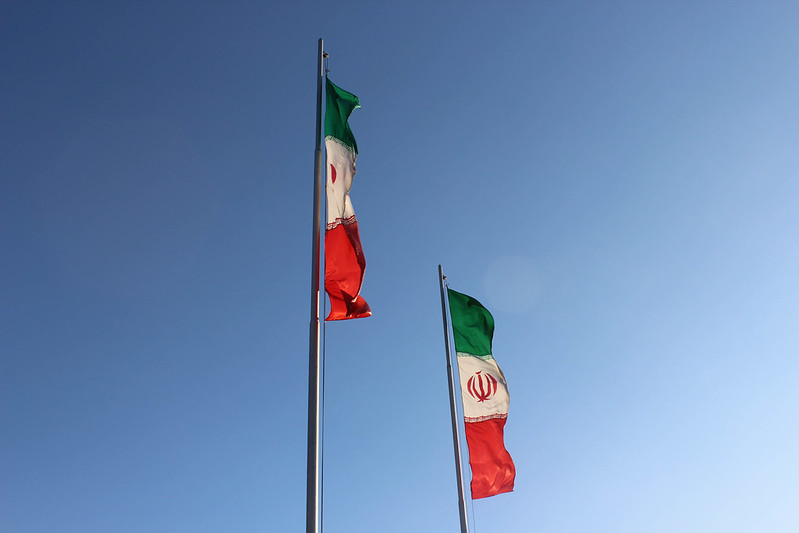
The Future Course of Alleviating Poverty in Iran

Poverty in Iran

As Iran is currently at the epicenter of geopolitics and regional conflicts in the turbulent Middle East, the country’s role in international affairs is steadily growing in importance. Moreover, the Iran nuclear deal is also revitalizing Iran’s presence and significance on the global stage at the same time.

The Current Situation in Iran

According to the World Bank Group, Iran’s GDP in 2017 was $439.5 billion while its population peaked at 80.6 million. On the poverty alleviation front, poverty in Iran fell from 13.1 percent to 8.1 percent between the years 2009 to 2013. Also, in the changing dynamic of its domestic politics and a new wave of secularism and liberalism brought on by a burgeoning young population in the country, addressing poverty in Iran is a very key objective for various stakeholder groups.

However, according to a report by the Independent from Dec. 2017, the economic situation in Iran appears rather bleak in some regard because food prices are on the rise and unemployment figures are at an all-time high at over 12.4 percent. Expanding income inequalities in the country are also becoming quite widespread due to major deficiencies in the taxation and welfare systems offered to the people.

How Iran’s Political Climate Could Affect Poverty

Historically, since the culmination of the Pahlavi dynasty and revolution in Iran in 1979, the country’s social and economic progress has been a vital priority. In recent years, owing to the perceived threat of its nuclear arsenal, Iran’s diplomatic relations with its western counterparts have impacted its trade and commerce majorly due to the imposition of crippling international sanctions.

Furthermore, the changing attitudes of the Trump administration are a major threat to the deal as it may be detrimental to the future economic and diplomatic recovery Iran is trying to seek. Unfortunately, the collapse of the deal could be a major hindrance to countering poverty in Iran.

The Iran nuclear deal can help greatly bolster the capacity to alleviate poverty in Iran due to the level of investment Iran could easily achieve in the future with the expansion of its oil market, given its vast and abundant reserves. Iran can boost its oil output, GDP and household incomes in the future with diminished sanctions.

Consequently, the introduction of the Iran nuclear deal was followed by noticeable economic recovery in the country with Iran’s economy growing at an annual rate of about 12.5 percent after a sizeable contraction of about 1.6 percent in the year 2015. The country hopes to maintain growth amounting to four percent annually.

Alleviating Poverty in Iran through Investment

Moreover, remediating poverty in Iran can also be achieved by increasing the level of investment and tapping into Iran’s potential. Iran is beginning to expand and diversify its industries, especially its hydrocarbon, agriculture and services sectors, and is also continuing to focus on boosting its financial and manufacturing capabilities as well. Additionally, this may help decrease Iran’s over-reliance on its oil market as prices have often tended to remain quite volatile, especially in recent years.

The government is also implementing its twentieth-year vision and sixth five-year development plan in order to focus more on market-based reforms and techniques. This strategy is targeting three important realms: economy, science and technology. The subsidy reforms orchestrated by the government will directly help reduce poverty in Iran as they aim to target price adjustment and further increase cash transfers to low-income households in the country.

Alleviating poverty in Iran shall largely depend on existing and future initiatives that involve opening up the economy further, engaging in economic and trade liberalization with its key trading partners and embarking on further domestic structural reforms.

– Shivani Ekkanath
Photo: Flickr

June 10, 2018
https://borgenproject.org/wp-content/uploads/borgen-project-logo.svg 0 0 Borgen Project https://borgenproject.org/wp-content/uploads/borgen-project-logo.svg Borgen Project2018-06-10 10:25:202019-10-13 17:45:08The Future Course of Alleviating Poverty in Iran
Global Poverty

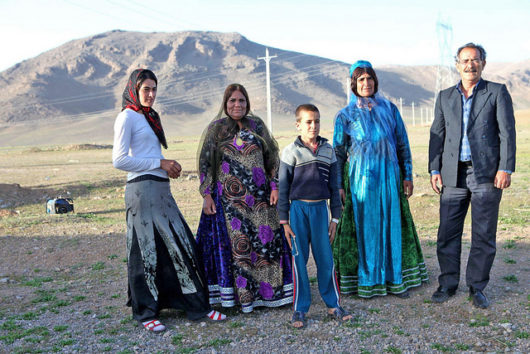
What Are the Causes of Poverty in Iran?

Causes of Poverty in IranIn 2016, about 80 percent of people in Iran were impoverished. Poverty in Iran can lead to a variety of other issues, including negative effects on the mental health of the country’s youth. Mental health issues in Iranians are found to be linked to a plethora of factors, economic pressure being one of them. Due to the poverty faced by many, suicide is becoming a more common issue.
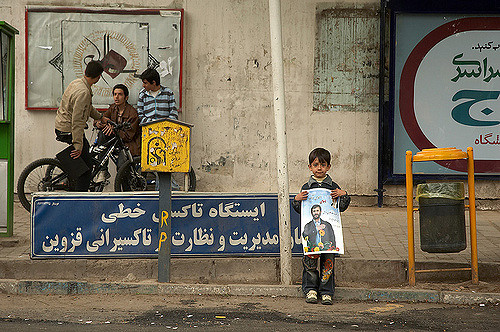
In addition to affecting the mental health of young people in Iran, the country’s high poverty rate also impacts people’s physical health. With how negatively poverty has affected the people of Iran, it is essential to consider what the causes of poverty in Iran are.

Top Causes of Poverty in Iran

  1. Sanctions in Iran are cited as a cause of the country’s high poverty rate. These sanctions have affected multiple groups, one of which is Iran’s millions of Afghan refugees. Statistics have demonstrated that Afghans who are able to find work are self-sufficient and actually better the economy of Iran.
  2. Inflation is another cause of poverty in Iran. In early 2013, Iran’s inflation rate stood at nearly 40 percent. The depreciation of the country’s money has lead to an increase in the unemployment rate, which has driven many Iranians into poverty. A solution to this issue that the government of Iran has sought in the past was rationing, which prevented the country’s impoverished populations from being as affected by inflation.
  3. Besides sanctions and inflation, another cause of poverty in Iran is high medical costs. Each year, 7.5 percent of Iranians are driven into poverty because of their medical expenses. Among the top three most common illnesses to affect Iranians is cancer. Many times, the cost of treatment for families is so high that those affected by illness are not able to complete their treatment.

The high poverty rate in Iran has affected millions of Iranian citizens and has taken a toll on the mental health of the country’s youth. Among the most prominent causes of poverty in Iran are sanctions, inflation and medical expenses. As of mid-2017, the government of Iran is working toward implementing a reform agenda, which aims to help businesses and labor markets. The reform agenda is targeted at Iran’s overall goal of reducing its poverty rate. Though they face hard times as a result of their medical and economic status, children and families remain hopeful for the future.

– Haley Rogers

Photo: Flickr

November 11, 2017
https://borgenproject.org/wp-content/uploads/borgen-project-logo.svg 0 0 Borgen Project https://borgenproject.org/wp-content/uploads/borgen-project-logo.svg Borgen Project2017-11-11 07:30:342024-05-29 22:27:53What Are the Causes of Poverty in Iran?
Global Poverty

Causes of Poverty in Iran

Causes of Poverty in Iran
Poverty in Iran? Big yes. Iran’s economy grew at an accelerated pace of 9.2 percent at the close of the Iranian fiscal year, an auspicious preview to the “economic revolution” promised by President Hassan Rouhani in his inauguration earlier this year. However, developments from the economic sector did little to create jobs for Iranians and failed to translate to any significant impact in addressing poverty in Iran. Over 70 percent of Iranians still live in poor conditions, while 30 percent were classified as absolute poor at the end of 2016.

Unemployment due to the lack of available jobs is still a grave concern among citizens, as the government is still unable to improve from the annual job creation rate of 600,000. This dismal number presents an even graver issue to be addressed: with over a million students graduating from college every year, most of these young Iranians are not able to find work and a source of income. One out of four young Iranians are unemployed, and most of them end up falling into the 61 percent of the population who are neither employed nor looking for employment.

Even graduating with a higher degree (for example a master’s degree or a Ph.D.) does not guarantee anybody a job upon graduation. Many of these people have struggled to find jobs that are in line with their specializations and often opt for blue-collar jobs with meager salaries just to put food on the table. Mehdi Ebrahimi, an Iranian man who received a master’s degree from Tehran’s Payame Noor University, has chosen to carry heavy loads in border areas to be able to earn income and fend for his family, instead of embarking on a painstaking search for work in line with his degree.


What Causes Poverty in Iran


Hardship does not end with securing a job, however, since 90 percent of the labor force lives below the poverty line. Disgruntled workers argue that the minimum wage income of 8,112,000 Iranian rials (roughly $246) is barely enough to cover basic necessities. For a family of four, surviving requires roughly twice the amount.

“Many workers cannot even afford the basic products they need for survival. Many of these items are now considered luxuries,” said Rahmatollah Poormoussa, head of Iran’s state labor organization.

To put the wage disadvantage that these workers have in contrast to their international counterparts, the Iranian minimum hourly wage of roughly $1 is a tenth of the average minimum wage in Western countries and only a third of the wage taken home by workers in Turkey. China, notorious for paying workers the lowest minimum wage, pays about 1.2 times more than their Iranian counterparts.

Contractual employment is also a challenge for these workers. For irregular laborers, contractual work often means an unstable and unreliable flow of income. Most of these workers are not paid until weeks after they are due their wage, and most of the time their wage does not come before their stock of basic necessities is depleted. It is no surprise that 95 percent of contractual workers fall under the poverty line.

Subsequently, they and their dependents suffer from the insecurity of not knowing when breadwinners will be able to take their wages and buy food and other needs. Contractual workers and their families comprise a large amount of the 70 percent of Iranians who reported to be food insecure.

The difficulty of creating jobs may likely be a result of long political turmoil, caused by national and international conflicts, as well as the previous closure of industrial and manufacturing units. Economic conditions have become slightly better after sanctions against the country were lifted, but it has still not been enough to promote the well-being of citizens and alleviate conditions for the poor.

Critics of the Rouhani’s administration have also cited the regime’s pouring of funds into foreign conflicts and military spending rather than on infrastructural and social welfare projects as a reason for the ineffectiveness of government to address poverty in Iran. If Rouhani’s government really wants to jumpstart the “economic revolution” he has promised his people, they say, he must begin to see infrastructural and welfare projects as a top priority for his administration.

Investing in these projects will be a good starting point in fixing the market, improving the quality of lives of workers and subsequently address the growing problem of poverty in Iran.

– Bella Suansing

Photo: Flickr

September 14, 2017
https://borgenproject.org/wp-content/uploads/borgen-project-logo.svg 0 0 Borgen Project https://borgenproject.org/wp-content/uploads/borgen-project-logo.svg Borgen Project2017-09-14 01:30:252024-05-28 00:16:20Causes of Poverty in Iran
Global Poverty, Politics

Can Re-Elected President Hassan Rouhani Help Fix the Poverty in Iran?

Can Re-Elected President Hassan Rouhani Help Fix the Poverty in Iran?
During Iran’s recent presidential election, one issue was on the minds of most citizens: how is the new president going to end poverty in Iran?

In 2016, Iran’s unemployment rates reached 70 percent in at least 1,200 towns. Fifteen million Iranians are deprived of even the most basic social services. Much of this unemployment and consequent poverty suggests that the assets gained from the suspension of economic sanctions from the 2015 nuclear deal did not reach the population. The new president has the power to dictate whether Iran becomes a bigger part of the global economy. This led to the deal which passed, rather than pursuing the traditional economic isolation that the country previously had.

With all this going on in Iran, poverty was on the minds of many during this election. Candidates Mostafa Aqa-Mirsalim and Mohammad Baqer Qalibaf both pledged to tackle corruption and poverty in Iran should they be elected. Qalibaf criticized the former Iranian president, Hassan Rouhani, on his economic performances. “There are many poor people with low incomes in a country rich in both natural and human resources,” Qalibaf said in an interview with PressTV. “We have made plans to salvage the economy by the agency of the very people. The country has the capacity, but this cannot come about through traditional, conservative and rent-seeking-based management styles.”

In the elections, held on May 19, Hassan Rouhani won re-election by a landslide with 57 percent of the vote. Despite poor economic conditions, the people of Iran have decided to give Rouhani a second chance to deliver on his promises of alleviating poverty and reforming the government. Iran’s current government is run by a religious leader, with the president playing a big role in foreign affairs and other political decisions.

However, many Iranians want a government that supports more human rights and social freedoms. While Iran now has more access to social media and the internet, activists and journalists are still being jailed for speaking out against the government.

With Rouhani in office, the people of Iran hope that he will take the uphill climb to help Iran’s economy and social situations.

– Kelsey Jackson

Photo: Flickr

June 23, 2017
https://borgenproject.org/wp-content/uploads/borgen-project-logo.svg 0 0 Borgen Project https://borgenproject.org/wp-content/uploads/borgen-project-logo.svg Borgen Project2017-06-23 01:30:272024-12-13 17:58:08Can Re-Elected President Hassan Rouhani Help Fix the Poverty in Iran?
Global Poverty, Poverty Reduction

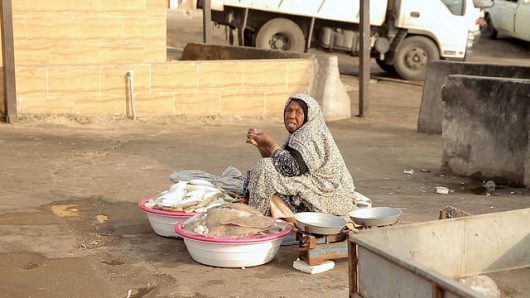
Poverty in Tehran

Socioeconomic conditions in Iran, and Tehran in particular, are declining at a rapid rate. The country is home to high unemployment rates, dire poverty, rising inflation, and an unsustainably low minimum wage. Tehran teems with street vendors — many of whom are children — who engage in their dangerous work out of sheer desperation. Meanwhile, the nation’s rich continue to grow wealthier. The result is an ever-widening gap between Tehran’s rich and poor.

Nearly 40 years after the Iranian revolution, the nation’s leaders have yet to ensure equal distribution of wealth and opportunity to its citizens. Iran is currently home to seven million people living in absolute poverty, struggling to find enough food to eat each day.

Meanwhile, there are also five million people living in Iran who are tremendously wealthy, with Labor Minister Ali Rabiee deeming their financial statuses comparable to those of the wealthiest Americans. Nearly all of Iran’s national government officials are multimillionaires — a fact that the nation’s working class has protested over the years — and the country gains a considerable amount of wealth from its lucrative oil exports.

More detailed figures describing poverty data in Iran remain hard to come by, as news sources have criticized the government for withholding such information. This tendency to shy away from revealing relevant statistics is in no way a new trend; when former president Mahmoud Ahmadinejad was in office, the government similarly refused to comply with the United Nations’ requests for official data reflecting poverty levels in Iran. This remained the case despite the passage of Iran’s Fourth Development Plan, which required the Welfare Ministry to make such information accessible.

Despite the ongoing secrecy, current Iranian President Haxdsssan Rouhani has been vocal about making poverty a top focus since assuming office, declaring in an October speech that there was “no evil worse than unemployment and poverty.”

Since taking over the presidency in 2013, President Rouhani has implemented several measures intended to address the nation’s growing poverty problems. Some of these measures have proven successful in helping to curb rising inflation levels and bringing a timely end to two full years of negative growth. However, it remains to be seen whether the president will be able to address the issue as fully as it demands; critics point out that the largest parts of Iran’s economy are heavily controlled by the government or semi-private bodies that remain intricately linked with the nation’s power players.

Officials believe that unemployment will only grow in the years to come, as approximately four million new college graduates leave their universities and struggle to find employment, joining the four million people in Iran who are currently in need of jobs. In the last fiscal year, nearly one quarter of all households in the nation were entirely unemployed.

In Tehran, many of the poorest city-dwellers turn to establishing informal businesses on the streets as a means of survival. It is common to see such vendors setting up makeshift “shops” on sidewalks or simply carrying their goods for sale throughout the city, peddling items like balloons, hair ties and socks to passersby. These street peddlers face instability and even danger in the face of constantly changing city ordinances and brutal security officials who try to extort them for protection money. Some peddlers, when confronted by rogue officials, are forced to regularly pay them in order to avoid harassment. If they refuse, the officers simply take all of the sellers’ earnings.

The situational poverty in Tehran goes beyond an economic problem to a human rights issue.

– Shenel Ozisik

Sources: The Borgen Project, PBS, Al-Monitor, FIDH, The Guardian, The Baltimore Sun
Photo: Payvand

January 26, 2015
https://borgenproject.org/wp-content/uploads/borgen-project-logo.svg 0 0 Borgen Project https://borgenproject.org/wp-content/uploads/borgen-project-logo.svg Borgen Project2015-01-26 12:00:252024-05-27 09:23:12Poverty in Tehran
Page 3 of 3123

Get Smarter

  • Global Poverty 101
  • Global Poverty… The Good News
  • Global Poverty & U.S. Jobs
  • Global Poverty and National Security
  • Innovative Solutions to Poverty
  • Global Poverty & Aid FAQ’s
Search Search

Take Action

  • Call Congress
  • Email Congress
  • Donate
  • 30 Ways to Help
  • Volunteer Ops
  • Internships
  • Courses & Certificates
  • The Podcast
Borgen Project

“The Borgen Project is an incredible nonprofit organization that is addressing poverty and hunger and working towards ending them.”

-The Huffington Post

Inside The Borgen Project

  • Contact
  • About
  • Financials
  • President
  • Board of Directors
  • Board of Advisors

International Links

  • UK Email Parliament
  • UK Donate
  • Canada Email Parliament

Get Smarter

  • Global Poverty 101
  • Global Poverty… The Good News
  • Global Poverty & U.S. Jobs
  • Global Poverty and National Security
  • Innovative Solutions to Poverty
  • Global Poverty & Aid FAQ’s

Ways to Help

  • Call Congress
  • Email Congress
  • Donate
  • 30 Ways to Help
  • Volunteer Ops
  • Internships
  • Courses & Certificates
  • The Podcast
Scroll to top Scroll to top Scroll to top