• Link to X
  • Link to Facebook
  • Link to Instagram
  • Link to TikTok
  • Link to Youtube
  • About
    • About Us
      • President
      • Board of Directors
      • Board of Advisors
      • Financials
      • Our Methodology
      • Success Tracker
      • Contact
  • Act Now
    • 30 Ways to Help
      • Email Congress
      • Call Congress
      • Volunteer
      • Courses & Certificates
      • Be a Donor
    • Internships
      • In-Office Internships
      • Remote Internships
    • Legislation
      • Politics 101
  • The Blog
  • The Podcast
  • Magazine
  • Donate
  • Click to open the search input field Click to open the search input field Search
  • Menu Menu

Tag Archive for: Malnutrition

Posts

Food Security, Global Poverty, Malnourishment

Malnutrition in Madagascar

malnutrition in madagascarMadagascar is a large, rural island country and has a relatively young population, with 41% of citizens aged 15 years and under. The predominant public health issue in Madagascar is malnutrition, with the region fourth highest in the world in terms of its rates of chronic malnutrition. Approximately 50% of the Madagascan population has stunted growth, a key indicator of chronic malnutrition.

Natural Disasters and Malnutrition

Madagascar is highly susceptible to extreme weather patterns, with an average of three natural disasters per year occurring, according to USAID. Studies indicate that natural disasters impact approximately 5 million people, with a further 8.8 million facing food insecurity. Natural disasters cause flooding, spread disease, and are one of the key precipitators of malnutrition in Madagascar, USAID reports.

Recently in 2022, Madagascar experienced two life-threatening cyclones – Batsirai and Emnati – which decimated infrastructure and destroyed crops through wind and flooding which significantly diminished living conditions The Batsirai and Emnati cyclones wiped out crops through high winds and devastating floods, with the majority of crops destroyed in areas hit by the cyclones. This significantly reduced the accessibility, availability and capacity of agricultural fields, food supply and production, resulting in food insecurity and malnutrition.

Floods also cause a spike in diarrheal infections as they increase the frequency of water parasites, according to Harvard T.H. Chan. Contamination of rivers as a result of flooding means that infections such as diarrhea and malaria are highly prevalent amongst rural populations, contributing to malnutrition as people do not have the resources to eat well following infection. In 2022 alone, 19,195 children aged 5 years and under were malnourished in Madagascar, according to Medecins Sans Frontiers (MSF).

Frequent Disruption of Agriculture

Natural disasters in Madagascar are recurring, and so is malnutrition. The frequent disruption of agricultural fields and contamination of water culminates in extreme hunger, with very few people able to access hospitals or obtain medicine.

In the South of Madagascar, 340,000 children could be experiencing malnutrition in some form as a result of extreme drought. Precipitation in Southern Madagascar has been decreasing for the last two decades and researchers have predicted that drought will continue to increase in intensity, duration and rate of occurrence, according to the International Monetary Fund (IMF). The constant lack of rainfall has disastrous implications on agriculture and food supply, with dried-out fields and vegetables common. The U.N. has found that many people have adopted coping mechanisms to subsist the drought, such as selling assets, cattle and houses in exchange for food and resources. According to UNICEF, 115,000 children in the Southeastern areas of Madagascar have acute malnutrition and require treatment.

Effects of Malnutrition

After 24 months of chronic malnutrition, the physical and psychological implications are irreversible. The effects of malnutrition on children include stunted growth, anemia, cognitive impairment and depleted resistance to disease. These effects are prolonged and will impact affected people for life, such as depleting the ability to concentrate and having a low height for their age. Those struggling with malnutrition may also have low energy levels, making it more difficult to attend school or work. As a result, their life prosperity is impaired and their already limited access to opportunity is limited further.

Fighting Malnutrition in Madagascar

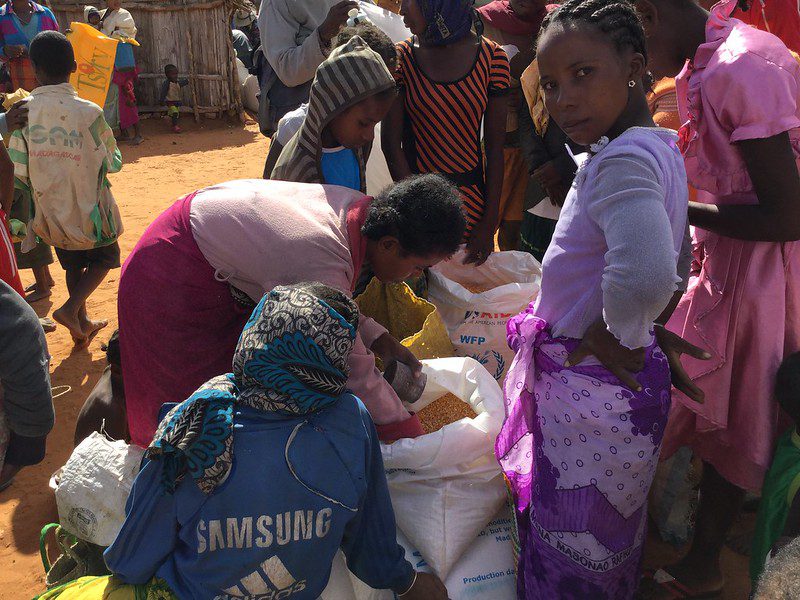
The World Food Program (WFP) is helping to alleviate malnutrition in Madagascar through a series of support programs. Namely, the WFP supplies emergency food assistance to those who have experienced crises such as natural disasters like flooding and drought. It functions in the South and Southeast of Madagascar and aims to promote community building and help people prepare for emergencies.

To support regions vulnerable to natural disasters, the WFP provides short-cycle farming activities, cash transfers and disaster-resistant seed. The organization also distributes climate-related warnings to inform people of how and when to respond to natural disasters.

Additionally, the WFP offers technical and practical training and workshops that enhance the capabilities of communities across the country. It also issues national authorities with equipment to help in the event of an emergency. These schemes help to prepare communities for likely natural disasters so that they have the resources to survive and be properly nourished following climate changes such as floods and drought. In doing so, measures are in place to prevent malnutrition caused by natural disasters.

The WFP also supplies nutritional information and support to 42,000 children, pregnant women and breastfeeding women through the MIARO approach. This aims to act as a preventive measure for malnutrition, as the project offers feeding and activities that educate on market gardening and nutrition. This project strives to enhance community knowledge, access and availability of nourishing food and ameliorate malnutrition.

– Ella Dorman

Ella is based in Worcestershire, UK and focuses on Global Health for The Borgen Project.

Photo: Flickr

January 15, 2025
https://borgenproject.org/wp-content/uploads/borgen-project-logo.svg 0 0 Naida Jahic https://borgenproject.org/wp-content/uploads/borgen-project-logo.svg Naida Jahic2025-01-15 01:30:532025-01-15 00:17:03Malnutrition in Madagascar
Global Poverty, Hunger

Top 10 Facts About Hunger in New Zealand

Hunger in New ZealandNew Zealand, located in the southwestern Pacific Ocean, is one of 14 countries comprising the region of Oceania. Originally a British colony, it gained independence in 1907 and remains a member of the British Commonwealth. It boasts a high-income economy of over five million people, with strong manufacturing, agriculture and tourism sectors. Nevertheless, the country is not without issues of hunger and food security, especially for particular segments of the society.

10 Facts about Hunger in New Zealand

  1. World Vision reported that in 2023, despite an overall global decrease in food prices, New Zealand joined some of the world’s poorest countries in the cost of an average food basket, with a 56% increase over 2022. The impact of climate change, along with import costs and lack of competition, were seen as the causes of this change. At the same time, however, the average New Zealander worked fewer hours—three hours as compared to 25 days in the Central African Republic—to pay for the same basket of food items.
  2. The prevalence of food insecurity in New Zealand was reported to have increased from 10% in 2014-2016 to 16% in 2020-2023. According to the New Zealand Health Survey, between 2021/22 and 2022/23, the proportion of children living in households where the food runs out sometimes or often increased from almost 50%, to 21.3%. Tamariki Māori and Pasifika were the worst affected, with 35.1% and 39.6% respectively living in such households.
  3. The Ministry of Health’s 2022/23 Annual Update of the New Zealand Health Survey reported that 45% of adults ate the recommended amount of fruit and but only 11% ate the recommended amount of vegetables; respective figures for children ages 2 to14-years-old were 70% and 5%. Almost a third of adults were classified as obese, as were 13.5% of children ages 2 to14-years-old.
  4. Obesity was a disproportionately greater problem among the Māori and Pasifika children, children in the most deprived neighborhoods and disabled adults and children. 
  5. Over 20% of children lived in households where the food sometimes or often ran out (an almost 50% increase), with higher percentages among the indigenous children, as well as for the disabled and those in deprived neighborhoods.
  6. The years 2022-2023 saw the biggest increase in children’s food insecurity in a decade. A 2022 study by the Program for International Student Achievement for the first time including measures of food poverty, saw a drop in NZ teenagers’ math, science and reading proficiency, at least in part ascribed to missing meals for financial reasons. New Zealand had the second worst ranking for missed meals in the OECD, and these students were up to four years behind students not so classified.
  7. Recently, the country has seen increasing efforts to tackle hunger. New Zealand Food Network, the country’s largest not-for-profit food distribution service, reports demand for food up 42% (2023-2024), an increase of 83% since 2021. In 2023, 630,000 people were supported, a third of whom received this assistance for the first time. Seniors were especially affected. 
  8. Ka Ora, Ka Ako, Health Schools Lunches Programme, which was initiated by the government in 2019 as a free school lunch program, addressed food insecurity by providing daily nutritious lunches to school students in greatest need of this support. They were helping approximately 235,000 students in about a quarter of the most disadvantaged schools through four different delivery models. By 2024, the government planned to abandon Ka Ora, Ka Ako to save money. In spring 2024, Health Coalition Aotearoa, a coalition of organizations advocating for evidence-based policies, organized a campaign that petitioned the government not to cut the free school lunches. They referenced the Ka Ora, Ka Ako assessments of program success, and collected 70,000 signatures of support. 
  9. The government at first agreed not to include primary schools in the cuts, but in October 2024 they decided to “downsize” lunches for all students up to age 13. The cuts affected up to over half of schools on the internal model (food cooked and delivered within the school) to over 66% for schools using external providers.
  10. As of the first week in December 2024, there was expressed dissatisfaction with the new government program, especially regarding meal size. The government claimed that the new $3 per meal budget would save $30 million, while principals criticized the expectation that identical meals for children in all grades, from 1 to 8, would equally satisfy both hungry teenagers and primary school students.  It remains to be seen whether the government’s plan will survive or the more individualized local efforts will return.

– Staff Reports
Photo: Flickr – Daniel Orth

December 12, 2024
https://borgenproject.org/wp-content/uploads/borgen-project-logo.svg 0 0 Kim Thelwell https://borgenproject.org/wp-content/uploads/borgen-project-logo.svg Kim Thelwell2024-12-12 01:30:162024-12-12 03:50:02Top 10 Facts About Hunger in New Zealand
Developing Countries, Global Poverty

Poverty in Nauru: The Country That Had and Lost It All

Poverty in NauruNauru is a small island country in the Pacific Ocean with a population of slightly more than 12,000 people. Once known as the world’s wealthiest nation, it now ranks among the lowest in national income, with an average gross domestic product (GDP) per capita of $10,000 to $12,000. About one in four people live below the basic needs poverty line, giving Nauru the worst human development indicators in the region.

In Nauru, poverty often reflects a lack of opportunity to participate fully in socioeconomic life and insufficient resources to meet household and community needs, according to the 2006 Household Income and Expenditure Survey (HIES) report. Living in poverty in Nauru is challenging due to limited social services and resources, which can lead to restricted access to education, health care and other necessities.

Historical Background

Nauru gained independence from Australia in 1968 and simultaneously became the owner of a highly profitable phosphate industry. Considering the size of its population and territory, which can be equated to that of an international airport, the income generated from phosphate mining made Nauru one of the wealthiest countries in the world. From 1970 to the early ’80s, Nauruans benefited from universal health care and education and many were unemployed by choice.

Yet, inadequate governmental management and the notion that the nation’s financial standing was never-ending drove it into its current impoverished state. By 1990, the land had been stripped of its natural resources and the phosphate mining industry collapsed, sending Nauru into a deep socioeconomic crisis. In an attempt to reestablish its vigorous economy, the government attempted to sell banking licenses and passports. However, this decision further fueled Nauru’s debacle as, in 2002, the U.S. treasury defined it as a “money-laundering state” for allowing the “establishment of offshore banks with no physical presence.”

Health Care

Health care specialists and Nauruans consider the health care system unsatisfactory and less equipped to serve the community. The Nauruan government faces a worsening health crisis. Although Australia invests considerably in Nauruan health facilities, the medical treatment is still inadequate.

Patients often required medical treatment overseas, as many doctors and residents alike described the Republic of Nauru hospital as “substandard, poorly staffed and ill-equipped,” according to Dr. Nick Martin in an article for The Guardian. Nonetheless, many have been denied transfer to Australian hospitals, which has led to exacerbated health concerns and fatal consequences.

Food Poverty

One of the most prominent issues in Nauru is food poverty and malnutrition. The original Nauruan diet mainly consisted of seafood and various vegetables. However, after 20 paradisiacal years that transformed Nauru into a consumer society and left behind an environmental wasteland, the people moved away from fishing and agriculture in favor of less expensive and more convenient imports.

Mass imports of alcohol and industrial foods further encouraged a sedentary lifestyle, which Nauruans still need to recover from. Consequently, Nauru has the highest obesity and type 2 diabetes rates in the world, with 71% of the population classified as obese and more than 90% considered overweight.

In a 2021 ministerial statement at the U.N. Food Systems Summit, Rennier Gadabu, Nauru’s minister for commerce, industry and environment, called for increased cooperation to prevent price spikes and food shortages in “vulnerable countries,” as Nauru relies heavily on imported food. Gadabu also reaffirmed Nauru’s commitment to restructuring its agriculture to boost domestic food production and improve food security and nutrition.

Education

Nauru is currently facing high levels of truancy, which results in decreased youth literacy and numeracy rates. A lack of job prospects primarily fuels this as graduates fail to see returns from their investment in education. In response, the Waqa government implemented the Nauru Education Assistance Trust Scheme (NEATS). NEATS provides trust funds for primary and secondary school students, who receive $5 each day they attend school.

According to teachers and school officials, this scheme has already produced efficient outcomes in reversing truancy rates. “Every day the children come to school, they’re investing in their future with the allowance they receive, because it’s not given to them on a daily basis but put into a trust fund which they can access when they leave school,” said Charmain Scotty, Nauru’s Minister for Education. In addition, the scheme will be monitored to encourage responsible spending and the money saved will be invested toward a bright future, “such as starting a business or buying a home.”

Measures and Possible Solutions

Australia is Nauru’s largest bilateral donor. Australian official development assistance (ODA) to Nauru totaled $32 million in 2022-23, with an estimated $46 million for 2023-24. The aid aims to improve public sector management, invest in infrastructure and support human development. Nauru’s 2024-25 development plan prioritizes health, education and climate-resilient infrastructure. Australia’s program aligns with these goals, supporting broader health initiatives, including funding for talent, training and infrastructure to strengthen medical services and the Ministry of Health.

Furthermore, the Raña Tsimorum (“Look After Your Life”) program will be implemented in 2025 to support specific population groups and bolster the Nauruan health system. The program aims to build a more robust health system through health-strengthening interventions and the efficient delivery of quality health services, including public health. It also seeks to improve health outcomes focused on demand, as prioritized in the National Health Strategy.

Further plans focus on reinforcing governance and resource allocation and enabling an environment for economic diversification through the Nauru-Australia Partnership on Economic Governance. As of May 2024, Australia reassured its commitment to supporting Nauru’s financial sustainability and contributing to its long-term budgetary self-reliance as a Nauru Intergenerational Trust Fund Committee member. More than ever, it is of utmost importance to build a more sustainable culture and society so that Nauruans can return to their once healthy and prosperous lifestyle, alleviating the challenges of experiencing poverty in Nauru.

– Beatriz Cicci

Beatriz Cicci is based in London, UK and focuses on Good News and Politics for The Borgen Project.

Photo: Flickr

November 17, 2024
https://borgenproject.org/wp-content/uploads/borgen-project-logo.svg 0 0 Lynsey 2 https://borgenproject.org/wp-content/uploads/borgen-project-logo.svg Lynsey 22024-11-17 01:30:522024-11-17 01:06:35Poverty in Nauru: The Country That Had and Lost It All
Global Poverty, Innovations, Technology

Tackling Malnutrition with Sanku’s Dosifier Technology

Sanku’s dosifier technologyFood insecurity and malnutrition remain critical global issues, with 821 million people worldwide suffering. Among the most affected regions are countries like Nigeria, Somalia, Yemen and South Sudan. Malnutrition affects 52 million children under 5, with $3.6 billion needed annually to combat the issue. To combat this, Sanku is using innovative technology with fortified flour and equipping small-scale flour mills in Africa. By doing so, it is bringing essential nutrients to millions of people in some of the most vulnerable communities. 

The Problem of Micronutrient Malnutrition

Micronutrient malnutrition, often referred to as ‘hidden hunger,’ affects 2 billion people globally. This type of malnutrition results from a lack of essential vitamins and minerals, which can lead to severe health issues. In rural communities in Africa, where poverty rates in Africa are high, nutritious food is limited. In Tanzania, 95% of the population, more than 50 million people, do not benefit from large-scale food fortification programs because they rely on small-scale mills that cannot fortify their flour. These people mainly consume maize flour. Maize flour, although calorie-dense, is nutritionally low. This, in turn, makes them susceptible to preventable diseases and increased mortality rates. 

Sanku’s Innovative Dosifier

Sanku’s solution to this is its award-winning dosifier, a device designed specifically for small rural mills in East Africa. The dosifier adds precise amounts of critical nutrients such as iron, zinc, folic acid and vitamin B12 to the calorie-dense maize flour during the milling process. By partnering with local millers, the organization ensures that the fortified flour reaches those who need it most. Sanku has installed nearly 500 dosifiers across 400 mills in Tanzania and Kenya and, therefore, provides this fortified flour to 7.1 million people. The dosifier allows millers to sell the fortified flour at the same price as unfortified flour. 

Leveraging IoT

To further expand its reach, Sanku had partnered with Vodafone, incorporating Internet of Things (IoT) technology into its dosifiers. This partnership allows for real-time monitoring of the fortification process, ensuring they are working effectively. With Vodafone’s IoT SIM cards, one Sanku working can now monitor 100 mills, fortifying flour for 500,000 people. This real-time data helps Sanku track maintenance needs, power supply and fortification levels remotely. Moreover, Vodafone’s mobile payment service, M-Pesa, simplifies financial transactions for millers, making it easier for them to purchase fortification premix. 

Reaching Millions

Sanku’s ambition is to reach 25 million people in East Africa by 2025, ultimately preventing malnutrition-based diseases, In 2023, the organization also launched a nutrient-premix facility in Tanzania, giving it more control over its supply chain and reducing cost. Sanku’s impact extends beyond just health improvements. By providing fortified flour to vulnerable communities, the organization saves billions in GDP and helps boost productivity. In 2019, Sanku’s dosifier technology was recognized by Time Magazine as one of the top 100 inventions of 2019, highlighting its potential to transform food insecurity globally. 

Vision 2030

Sanku’s long-term goal is to reach 100 million people with fortified flour by 2030. The organization is already scaling its efforts beyond Tanzania and Kenya with plans to expand into Malawi and Rwanda. With the continued support of partners like Vodafone, it is set to make a significant dent in global malnutrition. Sanku’s dosifier technology represents a breakthrough in the fight against hidden hunger by enabling small-scale mills to fortify flour with essential micronutrients. With ambitious plans to scale further and reach 100 million people by 2030, Sanku is on its way to making a lasting impact on global food security. 

– Ellisha Hicken

Ellisha is based in London, UK and focuses on Technology and Solutions for The Borgen Project.

Photo: Flickr

October 20, 2024
https://borgenproject.org/wp-content/uploads/borgen-project-logo.svg 0 0 Precious Sheidu https://borgenproject.org/wp-content/uploads/borgen-project-logo.svg Precious Sheidu2024-10-20 07:30:022024-10-20 07:07:05Tackling Malnutrition with Sanku’s Dosifier Technology
Aid, Food Security, Global Poverty

Biofortified Sweet Potato: A Solution for Food Insecurity

Biofortified Sweet PotatoVitamin A deficiency affects approximately 140 million children worldwide, posing serious public health challenges, including weakened immunity, stunted growth and potential blindness. Since 2009, the International Potato Center (CIP), a component of CGIAR, has led initiatives to combat this deficiency, especially in Africa and Asia. Their solution includes the development of a climate-resilient, biofortified orange-fleshed sweet potato (OFSP). This innovation aims to address significant global challenges like malnutrition and food scarcity.

Combating Vitamin A Deficiency

CIP’s innovative crop plays a crucial role in combating vitamin A deficiency. Consuming just 125 grams of boiled orange-fleshed sweet potato (OFSP) can fulfill the daily vitamin A requirements for preschool-aged children, addressing malnutrition effectively. Researchers have released more than 100 pro-vitamin A sweet potato varieties in more than 20 countries, adapting each to local environmental conditions to ensure their success.

Nutritional and Health Benefits

While OFSP is rich in pro-vitamin A, biofortified potatoes developed by CIP also provide a wealth of essential nutrients. 100 grams of boiled potatoes can provide 16% of the daily potassium and 30% of the daily vitamin C needs. Recently, new varieties contain 40 to 80% more iron and zinc, with an absorption rate of 29%.  Due to OFSP, there has been a 22% reduction in vitamin A deficiency in 17 African countries.

Reaching Households

CIP’s biofortified sweet potato initiative currently benefits more than 6.4 million households, a number that’s projected to climb as the organization aims to reach 10 million households within the next five years. Studies reveal significant nutritional impacts: in Mozambique, incorporating Orange-Fleshed Sweet Potatoes (OFSP) into children’s diets has slashed vitamin A deficiency by 15%. Meanwhile, in Kenya, the incorporation of sweet potato puree into bread and buns has not only enriched food with essential nutrients but also spurred economic activity, generating more than $1 million in annual sales. Consuming just two slices of bread made with OFSP puree meets 10% of an adult’s daily vitamin A requirement.

Biofortified Sweet Potatoes in the Face of Harsh Climates

The continent of Africa contributes less than 5% of global greenhouse gas emissions and yet it is disproportionately impacted by changing weather patterns. By 2040, temperatures are expected to rise by 2 degrees Celsius. This not only presents a huge risk to food security but will have a severe impact on smallholder farmers who produce 90% of sub-Saharan Africa’s food. OFSP is a drought-resistant crop. More than 10 million households in Africa and South Asia now grow this crop. Furthermore, in addition to OFSP, CGIAR is developing more than 350 biofortified and climate-resistant crop varieties to benefit more than 50 million people in 41 countries. 

Future Prospects

The sweet potato program at the International Potato Center (CIP) has gained acclaim for its significant impact on global food security. In 2016, CIP researchers received the World Food Prize for their work in enhancing nutrition and food security through the cultivation of this crop. Continuing into the 2022-2024 period under the CGIAR Investment Prospectus, there is a strategic focus on transforming systems and bolstering resilient agrifood systems. This initiative champions the development of nutrient-rich and climate-resilient crops, including the biofortified sweet potato, aiming to secure a sustainable future for millions of smallholder farming families worldwide.

– Ellisha Hicken

Ellisha is based in London, UK and focuses on Technology and Solutions for The Borgen Project.

Photo: Flickr

September 19, 2024
https://borgenproject.org/wp-content/uploads/borgen-project-logo.svg 0 0 Precious Sheidu https://borgenproject.org/wp-content/uploads/borgen-project-logo.svg Precious Sheidu2024-09-19 01:30:212024-09-19 01:21:23Biofortified Sweet Potato: A Solution for Food Insecurity
Developing Countries, Global Poverty

Poverty in Pakistan: Ongoing Reduction Efforts

Poverty in PakistanAffected by political turmoil, Pakistan has faced numerous socioeconomic challenges. By 2018, these issues culminated in record levels of poverty, with more than 39% of Pakistan living below the poverty line. Amid widespread unemployment, the government has also grappled with nutritional poverty, particularly affecting the youth. This has led to significant issues, such as nationwide stunting in growth, which is directly linked to these dietary deficiencies. Here are some of the initiatives that are tackling these problems:

Prime Minister’s Youth Skill Development Program

This initiative, led by Prime Minister Shehbaz Sharif, offers vocational training in various industries, helping young people haul themselves out of poverty and find work. With more than 25,000 youths trained nationwide, the program has played a crucial role in decreasing national poverty. Most notably, the focal point concentrating on an intake of 35% girls has ensured that the marginalized remain a focus. Ultimately, these efforts have contributed to the limitation of poverty and increased job prospects among the youth.

The Sehat Sahulat Program

Initially launched in 2015, the Sehat Sahulat Program is a social health insurance initiative providing free health care services for Pakistan’s underprivileged groups. As a result of the program, the most disadvantaged are supported by free health care. The initiative covers a range of conditions, including cancer and diabetes. Ultimately, the scheme provides financial protection and access to sustainable, quality health care to those most in need.

UNICEF Nutrition Counseling

With more than a third of children suffering from severe food poverty, the country faces an endemic in which its young are at a heightened risk of malnutrition and an unbalanced, scarce diet. The United Nations Children’s Fund’s (UNICEF) initiative develops cooking demonstrations tailored to new and soon-to-be mothers, ensuring their children can be fed and energized correctly.

Alongside nutritional education, the sessions aim to educate women about the importance of hygiene and its strict relationship with food, with a particular emphasis placed on washing hands before and after preparing food. This focus has been adopted worldwide and in 2022, UNICEF counseling reached 79.3 million people globally.

Combat Against Nationwide Stunting

In Pakistan, more than 40% of children younger than 5 are stunted. A product of long-term malnutrition, stunting “impairs cognitive and physical development, which in turn impacts a child’s potential and productivity.’’ With a large proportion of pregnant women living below the poverty line, many children experience stunted growth in the womb due to their mothers’ poor diet, leading to inhibited development.

The government has launched several initiatives to fight malnutrition to address this issue, with the Ehsaas Nashonuma Program being the most prominent. The program provides nutritional education and cash transfers to pregnant or nursing women. The quarterly stipend is about $5 for mothers and boys and $7 for girls. Nongovernmental organizations (NGOs) have also played a crucial role in the fight against stunting. Water, Sanitation and Hygiene Services (WASH) initiatives have thrived with the support of NGOs like HANDS. In 2022-23, HANDS conducted 16 WASH projects in 34 districts and nearly 2,000 villages in Pakistan, benefiting more than 1.8 million people.

Nutritional awareness is fundamental to the resurgence of the health of the next generation in Pakistan, pulling them out of poverty. The government has guaranteed that various schemes are in place to tackle widespread poverty. Additionally, it has ensured that the health and hygiene of the population of Pakistan are also addressed. It’s both transparent and reassuring that while the government recognizes this importance, various NGOs share the same concern.

– Jonny Wilkinson

Jonny is based in London, UK and focuses on Global Health for The Borgen Project.

Photo: Pexels

September 18, 2024
https://borgenproject.org/wp-content/uploads/borgen-project-logo.svg 0 0 Lynsey 2 https://borgenproject.org/wp-content/uploads/borgen-project-logo.svg Lynsey 22024-09-18 01:30:302024-09-18 00:32:46Poverty in Pakistan: Ongoing Reduction Efforts
Developing Countries, Global Poverty, Refugees

The Sahrawi Refugee Response Plan

Sahrawi refugeeThe Sahrawi refugee crisis, one of the longest-standing in the world after the displacement of Palestinians in 1948, continues to persist with little resolution in sight. Since 1975, following Spain’s withdrawal from Western Sahara and the ensuing armed conflict between Moroccan forces and the Polisario Front, approximately 173,600 Sahrawi refugees have lived in five camps near Tindouf, Algeria.

Current Situation

The Sahrawi refugees are scattered across five camps on the unforgiving “hammada,” a vast and remote desert plain in the Sahara. The most distant camp lies 170 kilometers southwest of the Algerian city of Tindouf, in an area marked by isolation and a lack of economic opportunities. The harsh climate, with temperatures soaring to 50 degrees Celsius in the summer, frequent sandstorms and occasional floods, further exacerbates challenges facing the refugees, such as limited access to necessities and health risks.

Food insecurity is a dire issue, with nearly 90% of the “Sahrawi refugees either food insecure or vulnerable to food insecurity.” A 2022 Joint Assessment Mission and Nutrition survey by the World Food Programme (WFP) reveals a worsening nutrition crisis. The prevalence of life-threatening wasting among children aged 6 months to 59 months has risen from 7.6% in 2019 to 10.7% in 2022. More than half of these children suffer from anemia, two-thirds do not receive the diverse diet needed for healthy development and nearly a third suffer from chronic malnutrition.

Furthermore, the refugees’ heavy dependence on international humanitarian aid, severe living conditions and food shortages have forced many households to cut back on health expenditures or sell off their livestock. Inadequate infrastructure severely hampers the delivery of essential services such as education and health care, leading to high child and maternal mortality rates and adversely affecting the population’s overall health and well-being.

Additionally, employment opportunities within the camps are minimal, leaving a third of Sahrawi refugees without any income and 60% economically inactive. The extreme climate and remoteness of the camps have curtailed traditional income sources like agriculture and livestock rearing. This is particularly detrimental to young people who, due to economic frustrations, may resort to high-risk activities such as smuggling and theft.

The Sahrawi Refugee Response Plan

In response to the myriad of challenges the Sahrawi refugees face, in 2003, the United Nations High Commissioner for Refugees (UNHCR) launched the interagency Sahrawi Refugee Response Plan (SRRP). This initiative, requiring a total of $214 million, represents the first unified effort to address the needs of the Sahrawi refugee population. The plan brings together 28 partners, including the Algerian Red Crescent and the University of Madrid, to deliver coordinated humanitarian assistance.

The SRRP

The SRRP outlines several key priorities, including ensuring refugee protection and legal assistance and providing essential services such as food, shelter, health care and education. The plan also aims to improve water, sanitation and hygiene (WASH) conditions in the camps, which are critical given the harsh desert environment.

In addition to these immediate needs, the SRRP aims to support livelihoods by providing essential supplies, vocational training and income-generating activities. This includes the distribution of 1,500 high-quality cooking stoves and 3,000 bales of second-hand clothes from UNIQLO. On the health care front, the plan addresses the prevalent malnutrition with supplementation, including iron and folic acid, systematic deworming and outpatient care for particularly severe cases.

Education is another focal point, with the SRRP aiming to improve the quality of instruction by training teachers and educational personnel. By tackling a broad scope of issues and closely coordinating with the Algerian government, nongovernmental organizations (NGOs) and other United Nations (U.N.) agencies, the SRRP aims to deliver a comprehensive and effective response, ideally addressing the immediate and long-term needs of the Sahrawi refugee population.

Challenges and Way Forward

A U.N. press briefing from November 2023 confirms that, although the plan has received some donor support, operations remain underfunded. The U.N. actively calls for additional contributions to implement the plan and fully sustain refugee humanitarian assistance. The success of the fundraising efforts is still being determined, but the plan is set to run through 2024 and 2025. By the end of this period, it will be evident whether these initiatives have provided the support needed to improve the livelihoods of the Sahrawi people and move them closer toward long-term stability and self-reliance.

– Asma Issa

Asma is based in London, UK and focuses on Politics for The Borgen Project.

Photo: Flickr

August 25, 2024
https://borgenproject.org/wp-content/uploads/borgen-project-logo.svg 0 0 Lynsey 2 https://borgenproject.org/wp-content/uploads/borgen-project-logo.svg Lynsey 22024-08-25 03:00:562024-08-24 23:23:48The Sahrawi Refugee Response Plan
Global Poverty, Nonprofit Organizations and NGOs

The Fight to End Malnutrition in Ethiopia

The Fight to Better Malnutrition in EthiopiaMalnutrition has been a significant problem in Ethiopia, starting with the 1983 hunger shortage that left many without food and nutritional value. Then in the early 2020s, Ethiopia suffered from a severe drought which caused almost 6.8 million livestock to pass away. As a country that heavily depends on agriculture, drought has caused an increase in food insecurity and malnutrition, according to Disaster Philanthropy. Crop production also fell due to pests that roamed the farms, leading to a downfall in maize production from 25 million tons to more than four million tons. However, three organizations have currently been on the road to improving malnutrition in Ethiopia.

United Nations International Children’s Emergency Fund

The United Nations International Children’s Emergency Fund (UNICEF) has primarily been working with the government to resolve this issue. It supports the government’s nutrition program called the Health Extention Program which was developed in 2004. The main focus of this program is to increase awareness about nutrition actions in households, limit bacteria with vaccinations and promote healthy behaviors. In addition, it allows for family health services, putting the spotlight on helping adolescent nutrition. 

UNICEF also works with the pilot program that allows for a new innovative way of growing crops, which has been especially beneficial in preventing damage from sudden hits by natural disasters. Through this new method in hydroponic vegetable farming, malnutrition rates have gone down, especially for children. This practice allows farmers to grow food with little soil and water, perfect for situations of extreme drought. Not only did self-sufficiency increase through this process, allowing farmers to cultivate year-round, but it also has made farming practices sustainable, as this process promises generations of this usage.

United States Agency for International Development

The United States Agency for International Development (USAID) has accomplished many tasks involving increasing nutrition access. Feed the Future movement which aims to end world hunger is one of its most influential successes. This organization not only aims to increase the amount of agricultural produce, but it also seeks to increase wages earned through their produce to increase their income and buy products to lift them out of poverty. 

In Ethiopia specifically, there are three main steps that USAID and Feed the Future have been following to aid poverty. The three steps are as follows:

  1. Supporting sustainable agricultural growth with an increase in market accessibility, providing further job opportunities and creating a range of crops and cattle to make use of.
  2. Increasing the flexibility in agriculture by modernizing their system’s ability to adapt to new conditions, especially with natural disasters and also bettering the organization of different resources.
  3. Improving nutrition, particularly for the more vulnerable demographics like women and children, by implementing new ways to address and target specific malnutrition problems like providing financial literacy. 

Results for Development

Results for Development (R4D) is a global nonprofit that works with government officials and social leaders to create grand changes in health and nutrition. R4D has aimed to integrate wasting treatment into the health care routine of Ethiopia, especially when wasting has become one of the largest mortality causes for small children.

By incorporating ready-to-use therapeutic food (RUTF), R4D has begun to address the severe underweight problem caused by malnutrition. But even though this product is made with high quality and is cost-effective, it is not widely available to minorities. This issue is currently on the road to becoming resolved through market shaping which would introduce more access to RUTFs. Ethiopia is one of the countries that has access to this solution through R4D. This organization is looking to increase funding for RUTF to increase its presence in markets and create a set of cost-effective recipes. 

Looking Forward

Malnutrition is a heavily prevalent issue in Ethiopia, with more than 5 million children in Ethiopia suffering. However, through actions provided by these three organizations, UNICEF, USAID and R4D, malnutrition is on its way to being tackled in this country. 

– Linda Yoonseo Lee

Linda is based in Phoenix, AZ, USA and focuses on Good News for The Borgen Project.

Photo: Flickr

August 11, 2024
https://borgenproject.org/wp-content/uploads/borgen-project-logo.svg 0 0 Precious Sheidu https://borgenproject.org/wp-content/uploads/borgen-project-logo.svg Precious Sheidu2024-08-11 01:30:132024-08-10 14:02:02The Fight to End Malnutrition in Ethiopia
Child Poverty, Conflict, Global Poverty

Olive Kids Foundation Supports Displaced Palestinian Children

Displaced Palestinian ChildrenThe United Nations (U.N.) confirms a rise of more than 155% in violations against children in Israel and Palestine. The effects of the October 7 attack and the push for emancipation of the Gaza Strip since 1949 have sparked conflict. Despite multiple ceasefire attempts in Gaza, more than one million Palestinian children had been displaced by December 6 and more than 13,800

The situation in Gaza remains critical. Millions have fled, but those civilians who continue to live in the northern side of the Gaza Strip are surrounded by rubble, limited access to electricity and food and water shortages, which the U.N. reports are on the brink of famine. According to the United Nations Children’s Fund (UNICEF), about nine in 10 Palestinians are displaced, with children making up half of the estimated 1.9 million people affected. Furthermore, this displacement leads to separation, loss of property, abuse, exploitation and a lack of psychosocial support. Many displaced families struggle with the high costs of frequent relocations.

The Olive Kids Foundation

Amid this turmoil, the Olive Kids Foundation stands as a beacon of hope, providing essential support to the most vulnerable. Here’s how it is making a difference:

  • Child Sponsorship: A Lifeline for Orphaned Children: Orphaned children under the Olive Kids Association receive sponsorship from donors to cover their living expenses in Al-Amal. Additionally, 40% of the funds go toward their higher education, accessible once they turn 18. The foundation has successfully raised $90,000, ensuring these children have a stable future and access to quality education.
  • Medical Aid: Life-Saving Surgeries and Training: Olive Kids facilitates medical missions by sending Australian pediatric surgeons to local Palestinian hospitals and shelters. These missions include performing complex surgeries and training local medical professionals. In partnership with the Children First Foundation, severely injured Palestinian children are brought to Australia for life-changing surgeries. Additionally, the program provides immediate medical relief and builds local capacity through skill transfer.
  • Nutrition Initiative: Combating Malnutrition: Years of blockades have led to widespread malnutrition among Palestinian children. Furthermore, the recent conflict has worsened the situation, making nutritional support more critical. In response, Olive Kids has implemented a comprehensive nutrition initiative in its local orphanage, focusing on improving dietary habits. This program provides balanced meals and educates orphans, their families and staff about healthy eating practices.
  • Education: Building a Brighter Future: Olive Kids supports a range of educational initiatives to ensure that displaced children receive a well-rounded education. The Girls P/E Teacher program funds salaries for physical education teachers and provides sports kits, encouraging healthy social activities. Additionally, a supplementary program helps children with learning difficulties, offering specialized teaching methods to expand their skills.
  • Scholarships: Empowering the Next Generation: To encourage more Palestinian students to enter the medical field, Olive Kids offers scholarships. This initiative has seen a significant increase in graduates since its inception, with only three medical students graduating in 2019. The scholarship program has since expanded, providing crucial financial support and educational opportunities for aspiring medical professionals.

Making a Lasting Impact

The Olive Kids Foundation’s alumni often return to assist other children in similarly dire situations, creating a cycle of support and empowerment. Through their continuous efforts, the foundation aims to raise more donations to support displaced Palestinian children during this ongoing crisis.

– Lydie Udofia

Lydie  is based in London, UK and focuses on Global Health for The Borgen Project.

Photo: Flickr

August 10, 2024
https://borgenproject.org/wp-content/uploads/borgen-project-logo.svg 0 0 Lynsey 2 https://borgenproject.org/wp-content/uploads/borgen-project-logo.svg Lynsey 22024-08-10 07:30:542024-08-10 03:09:47Olive Kids Foundation Supports Displaced Palestinian Children
Africa, Food & Hunger, Global Poverty

TebuTebu: Changing Lives With Peanut Butter

TebuTebuEdith Ndebele, a single mother from Zimbabwe, has changed her life using peanut butter. Using a metal drum in a junkyard in Bulawayo, Zimbabwe’s second-largest city, Ndebele has been producing peanut butter for her local community to support herself and her children and has since gone on to start her own company, TebuTebu Enterprises.

Why Is Peanut Butter the Answer?

As has been discovered, peanut butter can be used as a powerful weapon against global hunger, a strategy already implemented successfully in Malawi. Dr. Mark Manary recognized this potential and put his theory to the test. He observed a 95% success rate among his patients by feeding starving children fortified peanut butter. Peanut butter does not require cooking or refrigeration, is easy to transport and has a much longer shelf life than other foods for treating starvation. It is calorically dense, contains zinc and protein and is easy to digest.

Doctors even believe that allergies will not be an issue if children are exposed to peanuts at an early age. These factors present an irrefutably convincing case for the potential of peanut butter in the struggle against starvation. The World Health Organization (WHO) has recognized this potential and declared it a valuable treatment for malnutrition.

TebuTebu Enterprises

In 2021, amid the COVID pandemic, Ndebele was a single mother struggling to support her children. By 2024, she will own her own company and serve as the chair of a group of female entrepreneurs. She transformed her life using peanut butter. To improve her children’s lives, she began grinding and roasting peanuts to produce peanut butter to sell to her community.

Using a metal drum heated by firewood, she perfected her recipe. She can now produce peanut butter just the way her customers like it. Her product is available in various-sized containers. Ndebele carefully selects ingredients to maximize quality; she chooses the best peanuts to retain the iconic golden color.

TebuTebu Enterprises (named after her youngest son Teboho) also produces detergent due to her peanut butter success, providing the family with a steady income thanks to Ndebele’s efforts. The World Food Programme (WFP) noticed Ndebele’s innovation and donated a new roasting drum, allowing her to streamline production by cutting cooking time in half, saving both time and firewood. Not only has she turned her own life around, but she is also providing her community with a substance that has been proven to curb starvation.

In urban areas in Zimbabwe, only 10.4% of children receive the minimum nutrition they need, making Ndebele’s operation all the more critical.

The Problem of El Niño

El Niño, caused by the routine warming of the eastern Pacific Ocean, occurs once every seven years. It hit Zimbabwe and surrounding countries halfway through 2023, impacting rain cycles and prompting the governments of Zimbabwe, Malawi and Zambia to declare a national emergency. Like many, Ndebele has been affected by this phenomenon.

The lack of rainfall has created hardships for farmers, impacting peanut production. As a result, Ndebele has had to import peanuts from Zambia, leading to higher prices due to rising costs. Financial difficulties have forced her to reduce her workforce, letting go of one employee. Despite these challenges, Ndebele remains committed to improving her community’s lives and securing a better future for her children.

Summary

Despite the challenges posed by El Niño, Ndebele’s peanut butter production has been vastly beneficial for all parties involved. She has supported her children, lifted them out of poverty and provided her customers with a product that has been crucial in delivering vital nutrients. With the help of the WFP, Ndebele has changed her life and positively impacted her community using peanut butter.

– Molly Ralph

Molly is based in Dorset, UK and focuses on Good News and Global Health for The Borgen Project.

Photo: Flickr

August 8, 2024
https://borgenproject.org/wp-content/uploads/borgen-project-logo.svg 0 0 Lynsey 2 https://borgenproject.org/wp-content/uploads/borgen-project-logo.svg Lynsey 22024-08-08 07:30:572024-08-08 01:02:58TebuTebu: Changing Lives With Peanut Butter
Page 4 of 19«‹23456›»

Get Smarter

  • Global Poverty 101
  • Global Poverty… The Good News
  • Global Poverty & U.S. Jobs
  • Global Poverty and National Security
  • Innovative Solutions to Poverty
  • Global Poverty & Aid FAQ’s
Search Search

Take Action

  • Call Congress
  • Email Congress
  • Donate
  • 30 Ways to Help
  • Volunteer Ops
  • Internships
  • Courses & Certificates
  • The Podcast
Borgen Project

“The Borgen Project is an incredible nonprofit organization that is addressing poverty and hunger and working towards ending them.”

-The Huffington Post

Inside The Borgen Project

  • Contact
  • About
  • Financials
  • President
  • Board of Directors
  • Board of Advisors

International Links

  • UK Email Parliament
  • UK Donate
  • Canada Email Parliament

Get Smarter

  • Global Poverty 101
  • Global Poverty… The Good News
  • Global Poverty & U.S. Jobs
  • Global Poverty and National Security
  • Innovative Solutions to Poverty
  • Global Poverty & Aid FAQ’s

Ways to Help

  • Call Congress
  • Email Congress
  • Donate
  • 30 Ways to Help
  • Volunteer Ops
  • Internships
  • Courses & Certificates
  • The Podcast
Scroll to top Scroll to top Scroll to top