• Link to X
  • Link to Facebook
  • Link to Instagram
  • Link to TikTok
  • Link to Youtube
  • About
    • About Us
      • President
      • Board of Directors
      • Board of Advisors
      • Financials
      • Our Methodology
      • Success Tracker
      • Contact
  • Act Now
    • 30 Ways to Help
      • Email Congress
      • Call Congress
      • Volunteer
      • Courses & Certificates
      • Be a Donor
    • Internships
      • In-Office Internships
      • Remote Internships
    • Legislation
      • Politics 101
  • The Blog
  • The Podcast
  • Magazine
  • Donate
  • Click to open the search input field Click to open the search input field Search
  • Menu Menu

Tag Archive for: Internet Access

Posts

Development, Global Poverty, Technology

The Digital Divide

Digital Divide
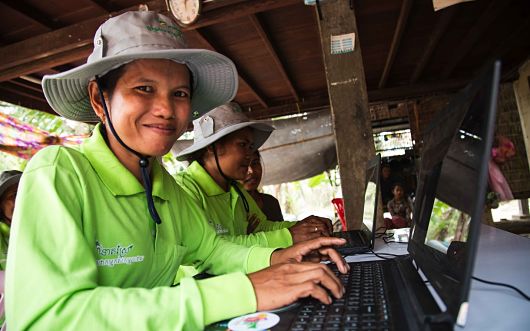
A report released by the World Bank shows that while technology has expanded, more people have remained poor. This phenomenon is often referred to as the digital divide.

The World Bank finds that more households in developing countries own a mobile phone than have access to electricity or clean water, according to “Digital Dividends,” its 2016 World Development Report.

The digital divide is created because most benefits for private enterprises arrive instantly, such as streamlined communication and information, online convenience and social connectivity throughout the global community.

The investments from these enterprises would ideally generate employment growth and services for those in the developing world — but progress there is more stagnant.

According to the World Bank report, digital dividends have not grown at the same rate as digital technologies because 60 percent of the world’s population does not have Internet access and are therefore unable to participate in the digital economy.

There are also emerging risks – such as polarized labor markets and inequality – that contribute to the digital divide. Routine jobs are replaced when technological advancements are made, which means more unskilled individuals compete for fewer low-wage jobs.

To combat these effects, solutions include infrastructure investment, providing worldwide Internet access and monitoring offline factors of technologies by region.

“While technology can be extremely helpful in many ways, it’s not going to help us circumvent the failures of development over the last couple of decades. You still have to get the basics right: education, business climate and accountability in government,” said Digital Dividends Co-Director Uwe Deichmann.

Education in the developing world can provide people with the skills needed to utilize digital technologies and become more productive in the workplace, which reduces polarity within the job market, according to the World Bank.

Accountable government agencies should implement policies and regulations that create a competitive digital market so that information costs go down and societies have the opportunity to become more inclusive.

Though growth has slowed in the developing world, organizations have found ways for the poor to benefit from the information and communication technology sector.

Question Box exists as a telecommunications network that provides populations suffering from high illiteracy rates and social or technical barriers with access to information.

According to the Guardian, Question Box has installed a series of ‘call boxes’ in areas of Uganda, that connect disconnected communities to someone with Internet access who can relay answers to questions regarding health, employment or other related issues.

Otherwise disconnected communities have the ability to create successful societies if given access to the digital information many of us take for granted.

– Kelsey Lay

Sources: The Guardian, Question Box, World Bank 1, World Bank 2
Photo: Google Images

February 19, 2016
https://borgenproject.org/wp-content/uploads/borgen-project-logo.svg 0 0 Borgen Project https://borgenproject.org/wp-content/uploads/borgen-project-logo.svg Borgen Project2016-02-19 01:30:112020-06-23 13:17:08The Digital Divide
Development, Global Poverty, Technology

Project Loon Helps Internet Access Soar to New Heights

project_loon
Project Loon, a product of Google X, the semi-secret research and development facility run by Google, is an innovative operation providing inexpensive or free wi-fi to people living in remote rural areas around the world via a fleet of huge helium-filled balloons floating in the stratosphere.

According to Google, these balloons can deliver widespread economic and social benefits by bringing internet access to the 60 percent of the world’s population who don’t have it. A large portion of those 4.3 billion people live in rural or extremely remote areas where telecommunications companies haven’t found it worthwhile to build cell towers or other infrastructure.

Here’s how Project Loon will work: steered by wind and equipped with solar panels with enough power to charge the battery for use at night, each balloon will be able to power itself using entirely renewable energy sources.

Constructed out of a thin plastic similar to a heavyweight trash bag, the balloons float in the stratosphere, a layer of the earth’s atmosphere stretching about 32 miles above the surface. Flying twice as high as airplanes and operating above the weather, the balloons help mobile operators extend wireless networks into more sparsely populated and remote terrain.

With a lifespan currently lasting just over 100 days, each balloon can provide connectivity to a ground area of about 50 miles in diameter using LTE wireless communications technology. LTE, short for long-term evolution, is the standard for wireless communications in high-speed data for mobile phones and data terminals.

In order to use LTE, Project Loon partners with telecommunications companies to share cellular spectrum so that people will be able to access the internet directly from their phones or other LTE-enabled devices. The signal is then passed across the balloon network and back down to the global internet on Earth.

In Indonesia, Project Loon is teaming up with the country’s three largest wireless carriers in 2016 to test its high-altitude, wind propelled balloons. Their lofty goal is to deliver internet coverage across large pockets of the nation where 83 percent of the population currently is without internet access.

If successful, Project Loon’s collaboration with Indonesian mobile operators Indosat, Telkomel and XL Axiata would result in speeds fast enough to surf websites, stream videos or make purchases. It is estimated that 100 million people in Indonesia who are not currently connected to the internet will gain access through Project Loon.

“This is a way of changing the world,” says Mike Cassidy, Project Loon’s leader in an interview with MIT Technology Review. For just hundreds of dollars per day, the operation of one Loon balloon should be able to serve a few thousand connections at any time.

For a school principal in a rural area of northeastern Brazil, where Linoca Gayoso Castelo Branco School resides and internet service is nonexistent, she experienced the benefits of the balloons firsthand.

“It was just for some minutes, but it was wonderful,” says ­Silvana Pereira. That day’s lesson on Portugal was enhanced by Wikipedia and online maps. “They were so involved that the 45 minutes of a regular class wouldn’t be enough to satisfy their demand for knowledge,” says Pereira.

And that is just the beginning.

– Kara Buckley

Sources: Google 1, Google 2, Google 3, Technology Review 1, Technology Review 2, USA Today
Photo: Wikimedia

November 13, 2015
https://borgenproject.org/wp-content/uploads/borgen-project-logo.svg 0 0 Borgen Project https://borgenproject.org/wp-content/uploads/borgen-project-logo.svg Borgen Project2015-11-13 01:30:482024-05-27 09:28:19Project Loon Helps Internet Access Soar to New Heights
Global Poverty

Internet Access: Ending Extreme Poverty

ENDING_Extreme_Poverty
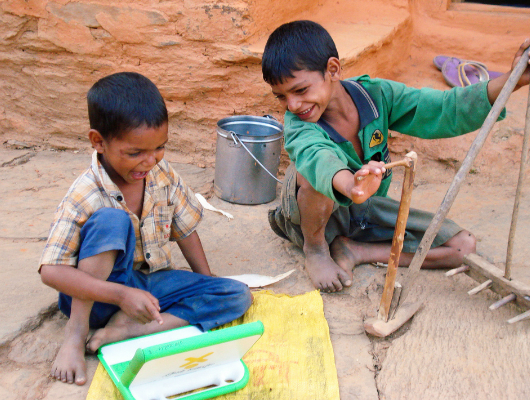
3.9 billion people around the world do not have access to the Internet, a necessity most take for granted. Since the Internet has become a crucial part of daily life and a constant source of communication, what if the entire world were connected?

Usually, most people do not realize how essential technology and the Internet have impacted society until they really think about it.

What would people do without their iPhones at their beck and call? The world of technology has completely changed how society stays connected with one another.

Since global connectivity is essential, the United Nations have agreed to connect underdeveloped countries to the world of the Internet by 2020.

Supporters of the UN’s decision include the Bill & Melinda Gates Foundation, Bono and Facebook CEO Mark Zuckerberg.

During the UN’s September summit, Zuckerberg discussed how Internet access is the key to ending extreme poverty. “When communities are connected, we can lift them out of poverty,” he said. “We can and must do more,” said Zuckerberg.

Currently, the lowest levels of Internet access are found in sub-Saharan Africa, where Internet access is available to less than 2 percent of the populations in Guinea, Somalia, Burundi and Eritrea.

To do more, Zuckerberg and Facebook have created a free mobile application called Free Basics, launched in May 2015.

“This is a set of basic websites and services to introduce people to the value of the internet, and that we hope to add value to their lives. These websites are very simple and data-efficient, so operators can offer these for free in an economically sustainable way. Web sites do not pay to be included, and operators don’t charge developers for the data people use their services,” said Facebook in a statement.

With access to the Internet, there are vast possibilities when it comes to ending extreme poverty and improving the lives of those living in unfavorable conditions:

  • Farmers in rural areas can plan for unpredictable weather and watch the prices of goods in the stock market.
  • Families can receive money from relatives overseas.
  • Parents could teach their children basic education.

Truly, the possibilities are endless.

With Internet accessibility, developing countries can finally be on the same playing field and understand the benefits of Internet access.

“We have a simple message,” Zuckerberg wrote. “By giving people access to the tools, knowledge and opportunities of the Internet, we can give a voice to the voiceless and power to the powerless.”

– Alexandra Korman

Sources: Arc, CNN, One, UN News Centre
Photo: Flickr

October 5, 2015
https://borgenproject.org/wp-content/uploads/borgen-project-logo.svg 0 0 Borgen Project https://borgenproject.org/wp-content/uploads/borgen-project-logo.svg Borgen Project2015-10-05 03:14:452024-12-13 17:54:09Internet Access: Ending Extreme Poverty
Global Poverty

Colombia to Have Nationwide Internet Access by End of 2015

Internet_Access
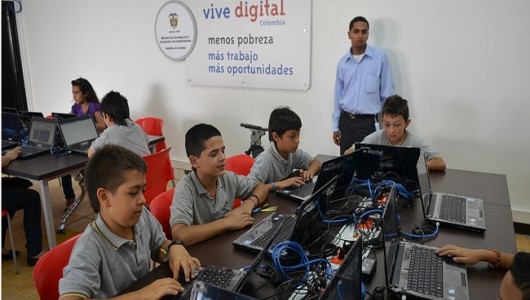
Four years ago, the newly formed Colombian Ministry of Information Technology and Communications pledged to have 100 percent Internet access across the country by 2015. That goal is soon becoming a reality, with 96 percent of the country already connected via fiber-optic or satellite Internet.

The program is called “Vive Digital,” which means “Live Digital,” and its goal is to bridge the gap between connected urban Colombians and those living in rural communities who had no Internet access until recently. The Ministry of ICT states the increasingly well known fact that greater digital connectivity leads to higher employment, greater economic output and significantly reduced poverty rates.

Colombia is following the lead of another South American country. Chile recently achieved universal Internet access, and has since seen a 2.6 percent drop in nationwide unemployment. Colombia hopes for similar results.

The Ministry of ICT and the Colombian government hope that “Vive Digital” will inspire development in rural communities as well as bolster the ICT sector within Colombia’s urban areas. “It’s been proven that there’s a direct correlation between that massification, job creation and poverty reduction. Removing barriers to technology access is key to this objective,” said the minister of ICT, David Luna.

The initiative has seen some 8,000 Internet access points and hot spots set up across the country. These facilities house computers, printers, scanners and phones so as to connect all communities across Colombia. In addition the Ministry has provided 1 million computers to public schools and launched ICT training programs for publicly employed teachers. The Ministry of ICT expects to meet its 100 percent goal by the end of 2015.

– Joe Kitaj

Sources: Mintic, FOX News/span>, University of Pittsburgh
Photo: Sucre Communicaciones

August 30, 2015
https://borgenproject.org/wp-content/uploads/borgen-project-logo.svg 0 0 Borgen Project https://borgenproject.org/wp-content/uploads/borgen-project-logo.svg Borgen Project2015-08-30 01:30:532024-06-05 03:46:42Colombia to Have Nationwide Internet Access by End of 2015
Education, Technology

E-Library Program to Improve Literacy in South Africa

e-library
For centuries libraries have functioned as centers of knowledge and learning. Today, with information and communication technology (ICT) developments and ever-growing Internet access, people are turning to e-libraries as the next literacy-promotion frontier.

In partnership, Vodacom, Huawei Technologies, the Department of Basic Education and the Nelson Mandela Foundation have created an e-libraries program that will span 61 Vodacom ICT resource centers across South Africa.

This program will provide 400 tablets, courtesy of Huawei Technologies, loaded with content spanning a variety of subjects, including business and entrepreneurship, African literature and history, in addition to fictional e-books. The vast array of reading material will be available in all 11 official languages of South Africa, ensuring unbiased access.

Each resource center will be equipped with at least six tablets preloaded with e-book content that are also Web-accessible, enabling users to download materials from the Internet. Vodacom promises to supply Wi-Fi to students and members of the communities serviced by the e-library tablets.

The e-libraries initiative offers an efficient means of keeping learning materials up-to-date, as Vodacom’s Mthobeli Thengimfene explained: “We are able to continuously update the content remotely without having to go to the centers and people will be able to download the books they are interested in.”

Although South Africa ranks higher than Sub-Saharan countries for simple literacy, some 5 million South African adults’ education does not even extend to completion of the seventh grade.

In order to ensure that South Africa’s population achieves true literacy, including the ability to comprehend the meaning of written material, supplemental instruction and resources become important factors. Unfortunately, there is a shortage of these resources.

“Access to reading material is a major challenge in South Africa,” said Vodacom Group CEO, Shameel Joosub. A large number of the country’s students are unable to utilize traditional library resources or reading material, Joosub went on to explain.

However, many South Africans have access to smartphones and the savvy to engage with ICT devices. The e-library program seeks to build on this affinity to engage more people in literacy programs.

“We want to encourage learning. It’s not only about the books but it is also about forming reading clubs around each of the centers,” Thengimfene said.

The e-libraries initiative is just a small part of Vodacom’s Mobile Education Program, a seven-aspect plan that focuses on teacher-development. However, the solid partnership behind the e-libraries initiative gives it an extra edge. It is clear that all the organizations are passionate about literacy and the new equity they hope it will promote.

“Between 2015 and 2030 we do not only speak about quality education,” said Enver Surty, Deputy Minister of Basic Education, “but about quality education that is a human right and that is a public good and a public interest.”

– Emma-Claire LaSaine

Sources: IT News Africa, IT Web Africa
Photo: E-book Creators

July 27, 2015
https://borgenproject.org/wp-content/uploads/borgen-project-logo.svg 0 0 Borgen Project https://borgenproject.org/wp-content/uploads/borgen-project-logo.svg Borgen Project2015-07-27 08:22:382024-06-04 03:53:06E-Library Program to Improve Literacy in South Africa
Global Poverty

Angonix is Connecting Angola to the World Wide Web

AngonixA platform for neutral Internet traffic exchange was set up in Luanda, the capital of Angola. It is called Angonix and it is meant to help serve all Internet users with improved content viewing by structuring a better connection with global networks and content providers. With a previously less optimal experience in Angola, Angonix will expand Internet usage to the South African Development Community and elsewhere.

Angonix will change the connection performance. Content delivered by outside sources had provided minimal performance and high latency. The main goal of Angonix is to ensure every member connected to the platform will have low latency and improved content.

Angonix is operated by Angola Cables, who also oversee the connectivity of Angola with the world’s undersea fibre-optic cables. With Angonix, quality service to content will enable the progression of African Internet outreach and global connection. Places in Africa, such as Zambia, still rely on satellite Internet connectivity, which is ultimately unreliable.

Launched March 16, 2015, the expected traffic has enhanced quality content especially in exchanging information between clients and providers. In the past, local clients had to travel some distance to interconnect. This was thanks to configuration problems of network providers.

Working to minimize that distance, providers will have easy access in communicating with clients and vice versa. This development is meant to dramatically change the African Internet landscape. It’s been designed to reach beyond Angola and to help provide low latency between Africa, East Asia and the Americas.

iHub is an online and offline community that hosts a place for 50 companies to connect to clients and has held 500 events. It is a space for online developers working with technology software and is a very well known site in Africa.
Sites like this need to be able to connect elsewhere on the continent. Governments are currently struggling with net neutrality debates and whether or not laws should be in place to support investments that connect rural Africa to enabled environments.

Fibre-optic cables are still needed in South Africa to improve Internet access and link those citizens to the world. The problem is that homes and businesses cannot connect.

Rural Africa is the untapped market. Lesser-developed regions such as Somalia had 200 users in 2000, but 163,185 users in 2014 with a population of 10 million. The Congo Democratic Republic had 500 users in 2000, but 1.7 million users in 2014 with a population of 77 million.

The Communication Commission of Kenya reported 330 thousand mobile users in 2001, and 30 million in 2013. The Angola population had 30 thousand people using the Internet in the year 2000, and 4 million in 2014 with a population of 19 million. Kenya had 200 thousand Internet users in 2000, but 21 million users in 2014 with a population of 45 million.

In sub-Saharan Africa there are over 754 million connections and over 35 mobile networks operators. An SMS-based banking system called M-Pesa in Kenya transfers $24 million daily. Zimbabwe’s EcoCash signed up 2.3 million people in more than a year, after starting in 2011. More than a million accounts push $200 million through EcoCash monthly.

Yet, the continent produces less than one Terabits per second. Angola produces 20 gigabits per second. The demand of improved, constant Internet access is supposed to raise Terabit per second to 10 by 2020, according to TeleGeography.

Projects like West African Cables Systems and South Africa Cable Systems improve connectivity as Angonix improves capacity services. With this, better quality increases capacity of performance, communication and outreach.

The Southern African Development Community has advanced its Internet market. The opportunity for expansion and innovation comes from this improvement. Angola Cables is working to better the growth of Africa with its new technologies in providing services. By improving outreach to the World Wide Web Africa’s communication and business, practices will continue to enhance and expand to rural areas.

– Katie Groe

Sources: IT News Africa, Angola Cables, Angonix 1, Angonix 2, UN, Internet Word Stats
Photo: Africa 21

July 13, 2015
https://borgenproject.org/wp-content/uploads/borgen-project-logo.svg 0 0 Borgen Project https://borgenproject.org/wp-content/uploads/borgen-project-logo.svg Borgen Project2015-07-13 14:12:392024-12-13 17:51:51Angonix is Connecting Angola to the World Wide Web
Technology

FCC Proposal Seeks to Bridge the Digital Divide

FCC-Proposal-Bridges-Digital-DivideThe head of the Federal Communications Commission has proposed an update to the FCC’s 30-year-old Lifeline program. The program was created in 1985 as a way of ensuring that low-income households would not lose phone service if company rates were raised. Under the old provisions of the program, the FCC provides these households with a subsidy of $9.25 to use to pay for mobile/landline phone service.

At the time of the program’s conception, it was phones that were considered crucial to participation in the economy and society. In the modern day, however, it is the internet that is most useful in the rapid exchange of information. FCC Head Tom Wheeler recognizes that the internet serves as a vital gateway to economic opportunity and recently proposed a new dimension of the program—giving the subsidy recipients the choice of putting the money toward internet, phone service, or some combination of the two. Wheeler argues that the existing Lifeline program doesn’t provide enough, as broadband rates are too high; the current subsidy barely covers cell phone bills.

What would an update to the program cost? The proposal outlines that the expanded program will be covered by the universal service fee that consumers pay on the bills from landline telephone companies and wireless phone service providers. In 2014, at least 12 million households were served by Lifeline at the cost of $1.7 billion, paid for by surcharges on customer phone bills.

Although internet access seems pervasive in American society today, only 48% of American adults making under $30,000 have access to internet, in contrast to the 95% in the $150,000 and up income bracket. This means no access to educational programs, employment opportunities, or online social programs that could help pull these households above the poverty line. The reason isn’t that low-income consumers don’t see the benefits of the internet. They simply cannot afford the often astronomical broadband rates.

Providers like CenturyLink, Cox, and Comcast already have programs helping to grant internet access to low-income families, but these efforts have come under attack. Comcast, for example, offers an Internet Essential program at a monthly cost of $10. A limited number of customers are eligible for the program, however, and it has been criticized for very slow speeds of 5MB per second. Broadband, as defined by the FCC, should have download speeds of up to 25MB per second and higher.

Non-profit organizations hope that the proposed change will help bridge the so-called “digital divide” that contributes to the vast income gap. If America paves the way on this issue, perhaps other countries will follow suit in assisting their underprivileged populations.

Wheeler believes that if the subsidy helps to make even a marginal difference, internet providers will see the benefits in giving discounts to low-income consumers. The private sector will gain access to a whole new market.

In addition to the suggestion of an expanded subsidy, some point out that the government could alternately pay subsidies directly to broadband providers. This way, they could get a better deal than low-income families can get on their own.

The new proposal is scheduled to undergo voting on June 18, and a final vote is expected to take place by the end of the year.

– Katie Pickle

Sources: Wired, Tech Times
Photo: Trinity P3

June 15, 2015
https://borgenproject.org/wp-content/uploads/borgen-project-logo.svg 0 0 Borgen Project https://borgenproject.org/wp-content/uploads/borgen-project-logo.svg Borgen Project2015-06-15 01:18:222020-07-16 12:24:52FCC Proposal Seeks to Bridge the Digital Divide
Global Poverty

Internet Could Solve Poverty in Colombia


The range of wealth in Colombia is vast. The richest people are six socioeconomic brackets higher than the poorest, and a fraction of the size. 88 percent of the population belong to the lower half of the pyramid.

The Colombian government wants to erase the gap between the wealthy and the poor and they want to use the Internet to do so. The plan is to connect 63 percent of the population to the Internet by 2018.

When the initiative began in 2010, 2.2 million people were connected to the Internet. Today, Colombia’s Ministry of Information and Communication Technology’s Live Digital Plan (Vive Digital) has increased that number to 8.8 million.

Diego Molano is Colombia’s minister for information and communications technology. He attributes the 2.5 million people lifted out of poverty in Colombia in the past three years to the program.

“When we connect, for example…a small school in the middle of the jungle to the Internet, those kids…have effectively the same opportunity to access the whole of information society—just like any kid in New York, London, or Paris,” Molano explains.

Molano recognizes, however, that connecting people to the Internet is not all that is needed. The Internet, he explains, is designed for the wealthy. It does not have applications for the rural shop-owner. “If you tried to sell Internet to them today…they say, ‘Why?’…no applications that impact their daily cash flow.”

The challenge becomes finding a way to provide Internet to Colombia’s poor rural populations as well as make it useful for them. To help with the challenge, Colombia has reached out to U.S. tech companies such as SAP, Google, Oracle and Facebook.

“Colombia is the perfect lab for them because poor people are already connected in this country,” Molano says.

One major issue, Molano has not addressed is that of electricity. In order to have Internet there needs to be access to electricity, and many parts of the country do not have that. An anonymous employee of Vive Digital told Colombia Reports that while he has delivered many computers to schools, a substantial portion have not been used because there was no access to electricity.

Colombia’s Internet initiative sees the equalizing power of the Internet, but is also finding challenges in its application.
“When you connect a potato grower in the Andean mountains, and he doubles his income thanks to Internet, you are reducing inequality,” Morano says, describing the ideal situation.

– Julianne O’Connor

Sources: Colombia Reports, Washington Post
Photo: Elespectador

August 15, 2014
https://borgenproject.org/wp-content/uploads/borgen-project-logo.svg 0 0 Borgen Project https://borgenproject.org/wp-content/uploads/borgen-project-logo.svg Borgen Project2014-08-15 04:00:362024-12-13 17:51:05Internet Could Solve Poverty in Colombia
Technology

Internet.org

Currently two-thirds of the world’s population, a staggering 5 billion, live without access to basic internet. A lifestyle difficult to imagine here in the U.S. and other countries that have integrated internet into virtually every aspect of our daily lives. Internet.org, a group of powerful allies, is dedicated to utilizing their combined resources to change this.

Internet.org is an innovative partnership spearheaded by Mark Zuckerberg, the founder of Facebook,who is  committed to reducing the cost of bringing internet access to the world. The plan is to provide universal access to internet by lowering the cost of serving data by tenfold and reducing the amount of data required to run basic apps by the same amount. These major cost reductions are the keys to reducing the cost of internet access 100-fold. This is the amount of cost reduction that would make it possible to for a worldwide internet providing infrastructure to exist and this group is determined that it can be achieved through technological innovation.

According to Internet.org, providing universal internet access is a fundamental step in the struggle for global resource equality. Access power is so valuable today because the internet is “the backbone of the knowledge-based economy.” This statement recognizes the global shift currently taking place since the advent of the internet that is moving society from a mainly resource-based economy to knowledge-based economy. By providing another 5 billion people across the world to the knowledge economy an unprecedented change could take place., driving the economy up, and impacting poverty worldwide.

“The internet’s impact on global growth is rising rapidly. The internet accounted for 21% of GDP growth over the last five years among developed countries… the internet is also a catalyst for job creation,” according to McKinsey & Co. While this kind of economic growth may not be immediate, the plan has potential to stimulate economies worldwide.

In order to achieve this feat, Internet.org is delving into some large-scale innovative projects to combat even larger technological and socal challenges. Some of these include high-altitude, long-endurance planes, satellite systems and even lasers.

The founding members of this group are impressive, including tech giants Ericsson, Mediatek, Opera, Samsung, Nokia and Qualcomm. Looking at this short list of big names, it is not surprising that some have immediately questioned whether there are purely capitalist motives for these companies that are being disguised behind a humanitarian agenda.

However, in Deloitte’s study on the “Value of Connectivity” they found that “expanding internet access in developing countries to levels seen today in developed economies, we could increase productivity by as much as 25 percent, generating $2.2 trillion in GDP and more than 140 million new jobs, lifting 160 million people out of poverty,” while also having the ability to “deliver critical information on nutrition, hygiene and disease prevention. Once connected, people gain access to basic tools like health information, financial services and education that can help them live fuller, better lives and join the worldwide economy.” With the promise of this kind of massive economic benefit in the developing world, many believe that the motives behind this cooperative effort are somewhat irrelevant.

The concern over hidden agendas may provide the project with the high level of visibility both from those who are critical and those who are supportive. Ultimately, time will be what tells us if this project is able to have the kind of success that will drive the change that it expects.

– Leonna Spilman

Sources: Internet.org, McKinsey & Company

Photo: La Nacion

April 21, 2014
https://borgenproject.org/wp-content/uploads/borgen-project-logo.svg 0 0 Borgen Project https://borgenproject.org/wp-content/uploads/borgen-project-logo.svg Borgen Project2014-04-21 04:00:062024-12-13 17:50:14Internet.org
Page 4 of 41234

Get Smarter

  • Global Poverty 101
  • Global Poverty… The Good News
  • Global Poverty & U.S. Jobs
  • Global Poverty and National Security
  • Innovative Solutions to Poverty
  • Global Poverty & Aid FAQ’s
Search Search

Take Action

  • Call Congress
  • Email Congress
  • Donate
  • 30 Ways to Help
  • Volunteer Ops
  • Internships
  • Courses & Certificates
  • The Podcast
Borgen Project

“The Borgen Project is an incredible nonprofit organization that is addressing poverty and hunger and working towards ending them.”

-The Huffington Post

Inside The Borgen Project

  • Contact
  • About
  • Financials
  • President
  • Board of Directors
  • Board of Advisors

International Links

  • UK Email Parliament
  • UK Donate
  • Canada Email Parliament

Get Smarter

  • Global Poverty 101
  • Global Poverty… The Good News
  • Global Poverty & U.S. Jobs
  • Global Poverty and National Security
  • Innovative Solutions to Poverty
  • Global Poverty & Aid FAQ’s

Ways to Help

  • Call Congress
  • Email Congress
  • Donate
  • 30 Ways to Help
  • Volunteer Ops
  • Internships
  • Courses & Certificates
  • The Podcast
Scroll to top Scroll to top Scroll to top