• Link to X
  • Link to Facebook
  • Link to Instagram
  • Link to TikTok
  • Link to Youtube
  • About
    • About Us
      • President
      • Board of Directors
      • Board of Advisors
      • Financials
      • Our Methodology
      • Success Tracker
      • Contact
  • Act Now
    • 30 Ways to Help
      • Email Congress
      • Call Congress
      • Volunteer
      • Courses & Certificates
      • Be a Donor
    • Internships
      • In-Office Internships
      • Remote Internships
    • Legislation
      • Politics 101
  • The Blog
  • The Podcast
  • Magazine
  • Donate
  • Click to open the search input field Click to open the search input field Search
  • Menu Menu

Tag Archive for: Clean Energy

Posts

Development, Global Poverty

SolarAid: Addressing the Energy Crisis in Malawi

Electricity_solar_africa

In Malawi, only nine percent of the population is connected to the electricity grid. In rural areas, this number drops to one percent. In a country with a population of 16.7 million, growing at three percent a year; this is not sustainable.

The country’s economic and social development will slow drastically, if the energy crisis in Malawi persists.

According to a report by the BBC, the Malawian government is attempting to connect more people to the grid by opening the energy market to independent producers. Although this will make a significant difference, it comes at a price.

Malawi’s Energy Minister, Bright Msaka, said that Malawi could produce an extra 200 Mega Watts of solar energy by 2019, adding to the current capacity of 300 Mega Watts.

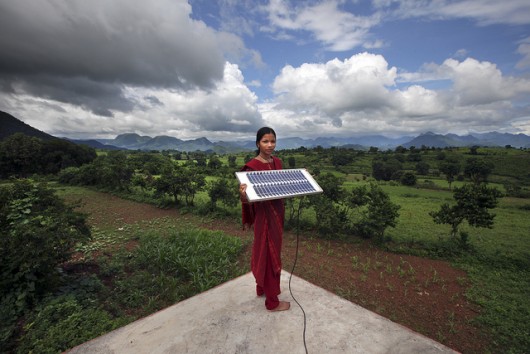
In the meantime, SolarAid is providing a cheaper and cleaner solution to the energy crisis in Malawi through its solar-powered lamps which can also charge mobile phones.

According to the charity’s website, many households in countries across Africa use homemade kerosene lamps. These are dangerous, emitting toxic black smoke; they are a weak light source and on average use up a significant portion of a family’s household, budget.

“A solar lamp is a compact, portable device that uses a photovoltaic panel to produce up to 10 watts of power,” according to a statement on SolarAid’s website. They typically take eight hours to charge, but can emit light for several hours.

The charity has introduced a pay-as-you-go ownership system at a cost of $12. In order to make the lamps more accessible, the organization offers a payment plan over the course of 3 or 4 months.

SolarAid’s social enterprise, SunnyMoney, is the largest distributor of solar lights in Africa. SunnyMoney has worked with Powered World Initiative USA to provide more students with solar lights that can make studying at home much easier.

“The amount of light that you get is linked to the amount of money you pay,” said Brave Mhonie, the national sales co-ordinator for SolarAid, in an interview with the BBC. While this is not a sustainable long-term solution, it is a strategy that can provide many with electricity, when they otherwise would be unable to access it.

The lamps help to address the energy crisis in Malawi, by providing a much safer alternative to kerosene, candles, or battery-powered torches. So far, SolarAid has sold 1,844,592 solar lamps and counting.

– Michelle Simon

Photo:  Flickr
May 5, 2016
https://borgenproject.org/wp-content/uploads/borgen-project-logo.svg 0 0 Borgen Project https://borgenproject.org/wp-content/uploads/borgen-project-logo.svg Borgen Project2016-05-05 01:30:012024-12-13 17:54:21SolarAid: Addressing the Energy Crisis in Malawi
Global Poverty

Solar Power in Developing Countries: An Affordable Future?

Solar Power in Developing CountriesNonprofit, INTASAVE-CARIBSAVE Group is seeking to improve lives globally by introducing solar power in developing countries.

While those who grew up in the United States may take electric devices such as heaters and computers for granted, many people around the world remain off-the-grid. According to INTASAVE-CARIBSAVE’s website, about 1.5 billion people worldwide currently do not have access to energy.

The organization believes that introducing solar power in developing countries will be a key strategy for reducing the negative effects of global poverty. Access to electricity translates to better health, nutrition and overall quality of life.

The vision of INTASAVE-CARIBSAVE is to help build a “world that responds to the opportunities and challenges of a changing climate and provides an equitable and sustainable future for all.” In order to achieve this goal, the organization focuses on using innovation to create solutions for problems facing communities in developing countries.

One of the most recent projects has been efforts to bring energy to rural Africa through solar power advancement. INSTASAVE’s energy division has expertise in developing Solar Nano Grids – or “SONGs” – which are designed to work efficiently and be installed easily in even the remotest of locations.

The SONGs bring clean, affordable energy, which does not burden African families with burdensome equipment. The devices do not even use cables, like the outdated and cumbersome grid model offered to rural communities.

The implications of INSTASAVE-CARIBSAVE’s efforts are vast and powerful. Not only does clean energy improve life expectancy and healthcare outcomes by bringing reliable electricity to hospitals and pollution from charcoal-burning out of homes, but it also has the potential to empower entrepreneurs in their businesses. For example, a cattle farmer with access to power can keep milk up for sale longer with the help of an electric refrigerator.

Dr. Murray Simpson is the mastermind behind this important branch of the nonprofit’s work. “It’s not energy just for energy’s sake, but actually providing positive impacts in terms of development,” Simpson said in an interview with Planet Experts. He explained that this work empowers women and helps children in terms of health and education. “It means micro-credit and environmental impacts, building impacts, and enabling micro-enterprise and entrepreneurialism across the African continent,” he said.

– Jen Diamond

Sources: Intasave, Enviroliteracy , Huffingtonpost, Planet Experts
Photo: Flickr

April 11, 2016
https://borgenproject.org/wp-content/uploads/borgen-project-logo.svg 0 0 Borgen Project https://borgenproject.org/wp-content/uploads/borgen-project-logo.svg Borgen Project2016-04-11 01:30:512024-12-13 18:05:57Solar Power in Developing Countries: An Affordable Future?
Activism, Global Poverty

Bill Gates’s Breakthrough Energy Coalition

Breakthrough Energy CoalitionParis hosted the global climate conference with heads of government and businesses in attendance. This was the 21st conference of this kind, and many maintain that it was the most productive thanks to Bill Gates’s Breakthrough Energy Coalition.

At the climate event, known as COP-21, Gates announced his plan to help address climate change. It is a collection of some of the most influential entrepreneurs, and it is known as the Breakthrough Energy Coalition.

The group includes well-known business leaders such as Richard Branson, Jack Ma and Jeff Bezos.

The coalition, led by Gates, pledges to work in tandem with national governments to increase funding for clean energy research. They will also invest in risky clean energy projects that have a long return on investment but a high potential for success.

Many of the ideas coming from existing clean energy research and development are too insecure for traditional investors. They do not want to put money into an idea that might never make it to the market. This difficult journey from innovative idea to commercial product is known as the “valley of death,” and Gates’s coalition plans to bridge it.

The Breakthrough Energy Coalition will invest in those risky ideas and be patient with the returns. Gates cites flow batteries and solar paint as two such existing products that need private sector investment. If successful, solar paint could transform any surface into a solar panel.

A crucial component of this plan is national governments. The research and development for clean energy technology must start with the government because only they have the mandate and resources to do so. Business alone cannot lead the charge.

Furthermore, government-funded programs have successfully created whole new industries that from space, defense and medical research. Gates’s coalition believes governments are key to creating the clean energy industries of the future.

In association with Gates’ announcement, President Obama and leaders around the world pledged to increase public-sector spending for research and development in clean energy. This pledge, in combination with Gates’, will constitute the biggest investment in clean energy in history.

The public sector initiative is known as Mission Innovation, including 20 nations. Each participating country agrees to double its existing funding for clean energy technology within the next five years.

This pledge will increase the budget of the 20 nations to $20 billion for clean energy. These new funds will go to research and development, and the creation of new ideas and technologies.

Gates’ Breakthrough Energy Coalition will then use their business acumen to wisely invest in technology that has the greatest potential. With patient and consistent investment, the products will bypass the “valley of death.”

These historic investments from government and businesses reflect the urgency for action. Both realize the impact climate change can have on their respect areas. It can cause unrest and war for governments, and a loss of profits for businesses.

The developing world, though, has the most to lose. Man-made climate change is primarily caused by industrialization from the developed world, but affects the developed world in a greater magnitude. This harsh irony will be reduced with the teaming up of the Breakthrough Energy Coalition and Mission Innovations.

Clean energy will allow the developing world to grow and avoid the ravages of climate change. Bill Gates’ Breakthrough Energy Coalition will not only address climate change, but also fight poverty.

– Andrew Wildes

Sources: Breakthrough Energy Coalition, Mashable, The Guardian
Photo: Here & Now

February 8, 2016
https://borgenproject.org/wp-content/uploads/borgen-project-logo.svg 0 0 Borgen Project https://borgenproject.org/wp-content/uploads/borgen-project-logo.svg Borgen Project2016-02-08 01:30:042024-05-27 09:28:36Bill Gates’s Breakthrough Energy Coalition
Global Poverty

Tony Abbott on India’s Energy Poverty

Tony_Abbott
100 million people are currently living without power in rural India, and despite Australian prime minister Tony Abbott’s claims, the coal industry isn’t going to save them.

A proposal for the Carmichael coal mine, which is one of the largest coal mines in Australian history, was overturned by the Australian federal court this week. This ruling has received considerable outrage from coal industry advocates and government members alike, most notably Tony Abbott.

“This coal will power up the lives of 100 million people in India,” Abbott said, “so this is a very important project, not just for Australia, but for the wider world, and if we get to the stage where the rules are such that projects like this can be endlessly frustrated, that’s dangerous for our country and it’s tragic for the wider world.”

Unfortunately for Abbott, his claims aren’t entirely true and probably would never come to fruition. India’s energy minister has stated that India is planning on stopping all thermal coal imports within three years. The World Bank has also stated that coal-based energy is not the answer to “energy poverty.”

According to the Institute of Energy Economics and Financial Analysis, coal prices from the Galilee Basin, where the Carmichael mine is located, are twice as expensive as the current cost of wholesale electricity. Even if coal was the best option for India, the country would find a better deal in importing cheaper Indonesian coal, which is significantly less expensive.

According to a recent Vasuda Foundation study, solar and off-grid energy solutions are far more cost-effective than shipping and importing conventional energy sources like coal. The environmental impact of a resource like coal is also light years more harmful than solar and electrical energy.

So, no, coal is not the answer to India’s energy crisis. Far from it, in fact. Sorry Tony Abbott.

– Alexander Jones

Sources: Kohl, Sarma, Taylor
Photo: The Guardian

August 15, 2015
https://borgenproject.org/wp-content/uploads/borgen-project-logo.svg 0 0 Borgen Project https://borgenproject.org/wp-content/uploads/borgen-project-logo.svg Borgen Project2015-08-15 01:30:442020-07-02 18:46:43Tony Abbott on India’s Energy Poverty
Developing Countries, Global Poverty

How Wood Stoves Can Save Lives

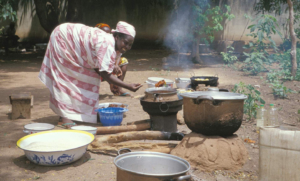
wood stovesEach day, 3 billion people cook meals over a fire, producing air pollution that results in 4.3 million deaths a year. To reduce this number, wood stoves can be used as an alternative to open fires. Providing a safe wood-burning cook stove would be a three-fold win for the millions of people in the developing world because:
  1. It would directly improve their health by reducing smoke inhalation.
  2. It would aid the environment by reducing the amount of wood needed for fuel.
  3. It would reduce poverty by minimizing the amount of time spent gathering wood and cooking food each day.

Potential Energy is a nonprofit dedicated to making and adapting life-changing technologies to be used in the developing world. With this goal in mind, they created the Berkeley-Darfur Stoves to improve the lives of women and their families.

Potential Energy first designed the stove in the Lawrence Berkeley National Laboratory. The stoves are low-cost and high-efficiency. They reduce the amount of fuel used by 50 percent, saving the women and families time and money. In addition, they asked for input from Darfuri women to maximize usage.

Some of the modifications that arose from the Darfuri women’s suggestions were a tapered wind color to maintain efficiency in the windy Darfur environment. The stove itself has feet for stability and stakes in case additional stability is needed. Most importantly, there is a small firebox, which prevents the user from putting in more wood than is absolutely necessary.

Once the designing and production processes were set in place, Potential Energy opened up local workshops where they now produce about 100 stoves per day, creating jobs and local business. There are two facets to the business, sales and distribution, and both of these bring a steady income to the employees, all of who are from the area.

Potential Energy teams up with local community and women’s organizations to distribute the stoves to those most in need. As of 2014, 42,000 stoves have been distributed to areas in Sudan and Ethiopia.

– Hannah Resnick

Sources: Cookstoves, Potential Energy, Smithsonian
Photo: Wikimedia Commons

August 4, 2015
https://borgenproject.org/wp-content/uploads/borgen-project-logo.svg 0 0 Borgen Project https://borgenproject.org/wp-content/uploads/borgen-project-logo.svg Borgen Project2015-08-04 01:30:472020-07-03 10:37:14How Wood Stoves Can Save Lives
Global Poverty, Technology

5 Technologies That Promise to Clean the World

clean the worldThe following are five technologies that provide significant contributions to clean the world:

1. Algae

For some, this may not be seen as a technology per se, but algae is actually classified as a biofuel. Making algae involves growing acres upon acres of crops, but they can help clean our planet in a very important way. They can be used to fuel vehicles such as cars and planes. James Murray of the BusinessGreen website says, “those eco-warriors in the US Air Force have already successfully trialed biofuels containing algae, and wider test flights are imminent.”

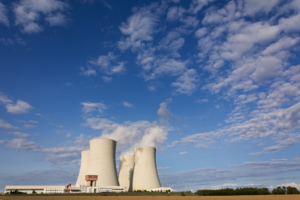
2. Nuclear Energy

When Albert Einstein reviewed the technology involved with these carbon chains, they were first intended to be used as weaponry. Therefore, he refused to be involved in the Manhattan Project that led to the production of the atomic bomb. However, this same technology has the potential to clean the environment via depletion of greenhouse gas emissions. According to David Doody, writer for GreenBiz, “Nuclear reactor design company Transatomic Power’s Waste-Annihilating Molten Salt Reactor and Bill Gates-backed traveling wave reactors are designed to use byproducts of conventional nuclear power production as fuel.” So, rather than use carbon chains as a weapon or create more greenhouse gases, we would use nuclear energy as fuel.

3. Solar Glass

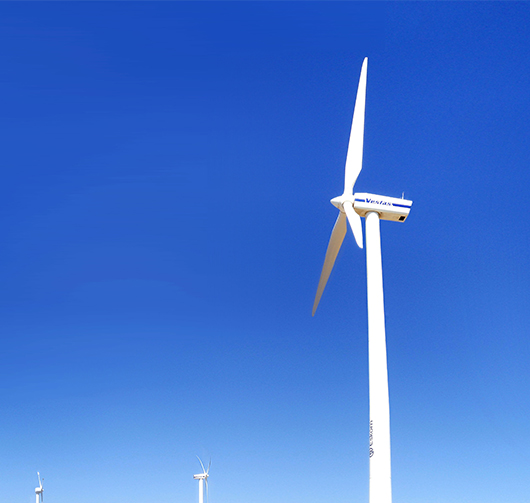
Normally, the first thing people think about when broaching the subject of eco-efficient technology, they might think of wind farms and solar technology. Solar is, at the moment, the most promising renewable energy source. James Murray of BusinessGreen describes solar glass as lightweight and flexible, and the solar cells can be integrated into clothes and even to car park canopies. Eventually, solar cells could be integrated into almost anything.

4. Chemicals

Awareness is continuously being spread about the downsides of using chemicals to clean water. That being said, it’s also possible to clean water with chemicals. There are is a demonstration plant being built in Pennsylvania that aims to clean the water used in the fracking process. This way, oil is still attainable and the water used to attain it can be cleaned. William Kohl, the head of business development for Advanced Water Recovery, say,s “this firm can desalinate water for 70 percent less than current technologies. Cost is generally the biggest factor, keeping more drought-prone regions from building these plants.” That being said, he’s also planning to move in on projects to make drinking water from seawater.

5. Commercialized Carbon

Nuclear technologies that are carbon-based have already been discussed, but what about pure carbon? It can be put underground, but newer companies can harness carbon with their technology and create products, like baking soda or chairs, that people use in their everyday lives. “Once captured through these companies’ technologies, carbon can be used in industrial or commercial production, to produce low-carbon fuels or for other applications.” Yet another solution that can combat climate change and global warming.

– Anna Brailow

Sources: Buzzfeed, Greenbiz, CNN
Photo: LibreShot

August 1, 2015
https://borgenproject.org/wp-content/uploads/borgen-project-logo.svg 0 0 Borgen Project https://borgenproject.org/wp-content/uploads/borgen-project-logo.svg Borgen Project2015-08-01 01:17:592024-12-13 18:04:355 Technologies That Promise to Clean the World
Global Poverty

Wind Power in Africa

Wind_Power

Construction has begun on the Lake Turkana Wind Power Project, which will become Africa’s largest wind power farm. It is estimated to be finished by 2017 and the farm will produce a fifth of Kenya’s total energy. Additionally, Kenya Power has signed a contract to purchase energy from the farm for the next 20 years. The 40,000-acre farm has 365 turbines and will take advantage of a low-level jet stream known as the “Turkana Corridor Winds,” which blow year round.

Regarding the powerful wind speeds and the energy potential, Carlo Van Wageningen, director of the Lake Turkana Wind Project, states, “On average, we obtain 11.8 metres per second. Now, if you make a comparison with onshore wind farms in Europe, you’re looking at a good wind site being about 7.5 to 8 metres a second at best.”

Investors from the European Union have financed the USD $690 million project with the African Development Bank. The program is a milestone in a broader global effort to maximize Africa’s wind power production. Wind power has taken off already in many African countries, such as Morocco, Sudan and South Africa. More than two thirds of Africa’s total population does not have access to electricity. These efforts aim to provide universal access for impoverished Africans living in both urban and rural areas.

In January, a transmission line failure caused a power outage that left over half the country without electricity for four hours. It is absolutely necessary for a country of 4 million people to have a more reliable and accessible source of energy. While power interruptions are becoming increasingly less common, these blackouts can have severe implications for families living in poverty.

The wind farm’s completion is coming at a crucial time for the country. Approximately 80,000 South Sudanese have taken refuge in Kenya to escape their civil war. This massive migration has greatly increased the need for electricity, both for native Kenyans and for refugee camps. Less than 25 percent of Kenyans have access to electricity, but it is estimated that the farm’s energy will provide the majority of the population with access to electricity.

Additionally, the farm will provide temporary construction work for almost 2,500 Kenyans and will employ 200 full-time upon completion.

The outlook for the future is quite promising as well. Eight African countries have the most wind energy potential among developing world nations. The International Energy Agency (IEA) estimates that sub-Saharan Africa alone could produce twice the energy that Africa as a continent currently consumes.

The IEA estimates that by 2040, wind power capacity in sub-Saharan Africa will increase by 12 gigawatts. There are one billion watts per gigawatt and a single LED light bulb requires approximately 15 watts. For a continent that is so severely energy-deprived, a seemingly basic amenity like a light bulb can make a monumental impact.

– The Borgen Project

Sources: QZ, AFKInsider, CNBC
Photo: Flickr

July 26, 2015
https://borgenproject.org/wp-content/uploads/borgen-project-logo.svg 0 0 Borgen Project https://borgenproject.org/wp-content/uploads/borgen-project-logo.svg Borgen Project2015-07-26 09:06:032024-12-13 17:52:00Wind Power in Africa
Activism, Global Poverty

NYU Student Fights Energy Poverty in India

mansi_prakash
The fate of the future now lies in the hands of Generation Y, and millennials must rise to the task of eradicating global poverty. One kid is doing just that, and all before graduating from college.

A 20-year-old economics major at New York University, Mansi Prakash is bringing clean energy to developing countries. After visiting her grandparents’ Indian village in 2010, Prakash became inspired by the energy crisis and went on to discover Brighter Today, a nonprofit that promotes the use of eco-friendly light bulbs as a tool to lessen poverty.

Prakash learned that most families did not use their light bulbs because they could not afford to pay the electricity bill. Immediately, a metaphorical light bulb turned on in her head—eliminate the energy-efficient 600-watt incandescent bulbs that work for just two months for 20 cents a bulb and replace them with 11-watt compact fluorescent lamp bulbs that work for 3 to 4 years and cost $2 per bulb. And so Prakash began her fight against energy poverty in India.

Although the original bulb appears more cost effective at just 20 cents, the switch ultimately decreases electricity bill payments by 80%.

In March 2014, Prakash presented her brilliant idea at the Clinton Global Initiative University Conference, where she was awarded a fellowship to begin her project in India and formed a partnership with Philips, a tech company focused on healthcare, lighting and electronics. Together, Philips and Prakash brought cost-effective and eco-friendly light to 5,300 residents of Behlana Village.

This year, after winning Glamour magazine’s 2015 Top 10 College Women contest, Prakash was awarded a $20,000 grand prize, which seriously advanced her fight against energy poverty.

Prakash is now focused on a project for the Philippines called Light for Life, developing a solar panel powered by daylight. Made possible by the money from Glamour, the solar panel will provide constant light and sustainable power to many homes for free.

An energy transformation saves a lot of money for many families, money that Prakash would like to see put towards food, health and education. Furthermore, efficient and long lasting light provides families with more time in the day for productivity, thus improving their overall quality of life, Prakash’s goal from the start.

– Sarah Sheppard

Sources: Take Part, Glamour, Brighter Today
Photo: The Christian Science Monitor

July 25, 2015
https://borgenproject.org/wp-content/uploads/borgen-project-logo.svg 0 0 Borgen Project https://borgenproject.org/wp-content/uploads/borgen-project-logo.svg Borgen Project2015-07-25 08:31:062024-05-27 09:26:00NYU Student Fights Energy Poverty in India
Global Poverty, Technology

Green Technology

Action Against Hunger Foundation
Go Green. Green is good. These are just a pair of expressions that represent society’s current attitude towards energy and environmental matters. In 2015, being environmentally conscience is progressive. People make more of an effort today than ever before to recycle and take care of resources. Another norm in our modern society is technology. Advances in technology occur more rapidly each year, constantly improving aspects of society. Pairing a positive environmental attitude with a rapid technological development gives us green energy, as a potential future power source.

The idea of green technology was born from Tokamak Energy, a start-up company that aims at pioneering fusion energy for the near future. An excerpt from Tokamak’s website explains the process by which this can be achieved. The website says, “Tokamak Energy aims to accelerate the development of fusion energy by combining two emerging technologies – spherical tokamaks and high-temperature superconductors. Tokamaks are the most advanced fusion concept in the world, but we take an innovative approach to develop fusion faster.” A tokamak is “a device using a magnetic field to confine a plasma in the shape of a torus.” By using advanced fusion technology, scientists are getting closer to creating a clean, renewable energy source for the future.

Fusion energy is gaining more and more momentum, garnering large investments for humanitarians and tech giants alike. No investment will likely be bigger than Bill Gates’ healthy contribution of two billion dollars. An article from Financial Times reported on the boom coming from green energy building around Tokamak Energy. Gates is the focal point of the piece as his commitment to green energy has started to garner public attention.

An excerpt from the article reads, “Gates is also calling for a tripling of public support for renewables research, to help fight climate change, from the present level of about $6 billion a year worldwide.” With Gates leading the charge, clean energy has a chance to become a reality in only a few years rather than in the previously anticipated decades.

– Diego Alejandro Catala

Sources: FT, Tokamak Energy

July 1, 2015
https://borgenproject.org/wp-content/uploads/borgen-project-logo.svg 0 0 Borgen Project https://borgenproject.org/wp-content/uploads/borgen-project-logo.svg Borgen Project2015-07-01 00:07:222020-07-14 14:45:37Green Technology
Technology

Tesla’s New Home Battery: The Powerwall

Tesla-Home-Battery-Powerwall
As we burn up some of our nonrenewable resources, we face a grim ultimatum: continue using the same resources until we’ve depleted them all (which could have catastrophic consequences) or find a way that everyone on Earth can benefit from electricity without burning our nonrenewable resources. Elon Musk, the CEO of Tesla Motors, is trying to find a way to solve this and he has recently created a battery that may do just that.

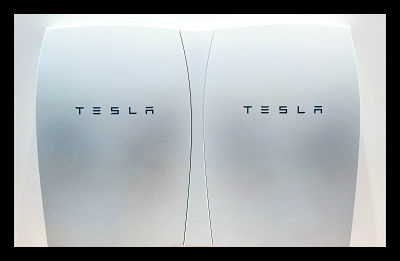
Powerwall is a home battery that uses solar power in order to provide the battery with a charge. The battery is capable of powering an entire house when utilities are low. When a storm comes rolling into town and knocks the power out, the Powerwall is capable of providing the emergency power.

The compact design of the battery allows you to mount it on any wall that is desired; it is also an aesthetically pleasing piece of equipment. The entire system that collects and distributes electricity through the Powerwall is relatively simple. There are three essential parts:the Solar Panel, the Home Battery (Powerwall) and the Inverter.

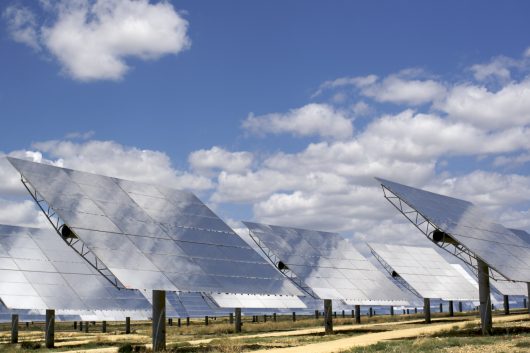
The solar panel, which is installed on the roof, collects and converts sunlight into electricity. That surplus electricity is stored in the Powerwall during the day or even when the rates of the utility grid are low. The Inverter converts the electricity from DC to AC. AC is the type of electricity used for household electronics.

Building an invention as groundbreaking as this has many benefits. The battery can provide financial savings to its owner by charging during low rate periods when demand for electricity is lower, and, conversely, discharging when the rates are high. Owning a Powerwall also increases the consumption of solar power generation, which is one of the cleanest, renewable energy sources around. This allows for reduced CO2 emissions.

As this technology progresses, it can be used to address poverty and help provide electricity to areas that aren’t near power plants. Once there is a way to produce these types of rechargeable lithium-ion batteries cheaply, then we will be able to see them popping up in developing, remote areas, such as sub-Saharan Africa. The U.S. Congress has made bringing electricity to remote areas in Africa a major goal. The U.S. Agency for International Development is headlining that mission under the Electrify Africa Act.

The Powerwall is considered the automobile of its industry; it is pioneering technology. Once there are even better ways to produce the Powerwall, the technology will become more accessible. Once more accessible, more people will be able to utilize renewable energy. This is the underlying purpose of this technology; to reduce the amount of nonrenewable energy used by burning fossil fuels by providing a renewable alternative.

– Erik Nelson

Sources: Congress, Tesla Motors 1, Tesla Motors 2
Photo: Wired

May 24, 2015
https://borgenproject.org/wp-content/uploads/borgen-project-logo.svg 0 0 Borgen Project https://borgenproject.org/wp-content/uploads/borgen-project-logo.svg Borgen Project2015-05-24 12:00:352020-07-18 02:14:34Tesla’s New Home Battery: The Powerwall
Page 3 of 41234

Get Smarter

  • Global Poverty 101
  • Global Poverty… The Good News
  • Global Poverty & U.S. Jobs
  • Global Poverty and National Security
  • Innovative Solutions to Poverty
  • Global Poverty & Aid FAQ’s
Search Search

Take Action

  • Call Congress
  • Email Congress
  • Donate
  • 30 Ways to Help
  • Volunteer Ops
  • Internships
  • Courses & Certificates
  • The Podcast
Borgen Project

“The Borgen Project is an incredible nonprofit organization that is addressing poverty and hunger and working towards ending them.”

-The Huffington Post

Inside The Borgen Project

  • Contact
  • About
  • Financials
  • President
  • Board of Directors
  • Board of Advisors

International Links

  • UK Email Parliament
  • UK Donate
  • Canada Email Parliament

Get Smarter

  • Global Poverty 101
  • Global Poverty… The Good News
  • Global Poverty & U.S. Jobs
  • Global Poverty and National Security
  • Innovative Solutions to Poverty
  • Global Poverty & Aid FAQ’s

Ways to Help

  • Call Congress
  • Email Congress
  • Donate
  • 30 Ways to Help
  • Volunteer Ops
  • Internships
  • Courses & Certificates
  • The Podcast
Scroll to top Scroll to top Scroll to top