• Link to X
  • Link to Facebook
  • Link to Instagram
  • Link to TikTok
  • Link to Youtube
  • About
    • About Us
      • President
      • Board of Directors
      • Board of Advisors
      • Financials
      • Our Methodology
      • Success Tracker
      • Contact
  • Act Now
    • 30 Ways to Help
      • Email Congress
      • Call Congress
      • Volunteer
      • Courses & Certificates
      • Be a Donor
    • Internships
      • In-Office Internships
      • Remote Internships
    • Legislation
      • Politics 101
  • The Blog
  • The Podcast
  • Magazine
  • Donate
  • Click to open the search input field Click to open the search input field Search
  • Menu Menu
Blog - Latest News
Development, Global Poverty

SolarAid: Addressing the Energy Crisis in Malawi
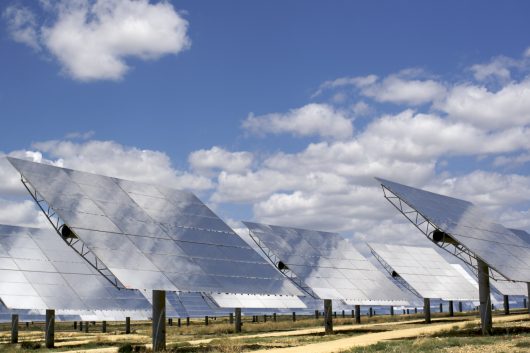
Electricity_solar_africa

In Malawi, only nine percent of the population is connected to the electricity grid. In rural areas, this number drops to one percent. In a country with a population of 16.7 million, growing at three percent a year; this is not sustainable.

The country’s economic and social development will slow drastically, if the energy crisis in Malawi persists.

According to a report by the BBC, the Malawian government is attempting to connect more people to the grid by opening the energy market to independent producers. Although this will make a significant difference, it comes at a price.

Malawi’s Energy Minister, Bright Msaka, said that Malawi could produce an extra 200 Mega Watts of solar energy by 2019, adding to the current capacity of 300 Mega Watts.

In the meantime, SolarAid is providing a cheaper and cleaner solution to the energy crisis in Malawi through its solar-powered lamps which can also charge mobile phones.

According to the charity’s website, many households in countries across Africa use homemade kerosene lamps. These are dangerous, emitting toxic black smoke; they are a weak light source and on average use up a significant portion of a family’s household, budget.

“A solar lamp is a compact, portable device that uses a photovoltaic panel to produce up to 10 watts of power,” according to a statement on SolarAid’s website. They typically take eight hours to charge, but can emit light for several hours.

The charity has introduced a pay-as-you-go ownership system at a cost of $12. In order to make the lamps more accessible, the organization offers a payment plan over the course of 3 or 4 months.

SolarAid’s social enterprise, SunnyMoney, is the largest distributor of solar lights in Africa. SunnyMoney has worked with Powered World Initiative USA to provide more students with solar lights that can make studying at home much easier.

“The amount of light that you get is linked to the amount of money you pay,” said Brave Mhonie, the national sales co-ordinator for SolarAid, in an interview with the BBC. While this is not a sustainable long-term solution, it is a strategy that can provide many with electricity, when they otherwise would be unable to access it.

The lamps help to address the energy crisis in Malawi, by providing a much safer alternative to kerosene, candles, or battery-powered torches. So far, SolarAid has sold 1,844,592 solar lamps and counting.

– Michelle Simon

Photo:  Flickr

May 5, 2016
Share this entry
  • Share on Facebook
  • Share on X
  • Share on WhatsApp
  • Share on Pinterest
  • Share on LinkedIn
  • Share on Tumblr
  • Share on Vk
  • Share on Reddit
  • Share by Mail
https://borgenproject.org/wp-content/uploads/borgen-project-logo.svg 0 0 Borgen Project https://borgenproject.org/wp-content/uploads/borgen-project-logo.svg Borgen Project2016-05-05 01:30:012024-12-13 17:54:21SolarAid: Addressing the Energy Crisis in Malawi

Get Smarter

  • Global Poverty 101
  • Global Poverty… The Good News
  • Global Poverty & U.S. Jobs
  • Global Poverty and National Security
  • Innovative Solutions to Poverty
  • Global Poverty & Aid FAQ’s
Search Search

Take Action

  • Call Congress
  • Email Congress
  • Donate
  • 30 Ways to Help
  • Volunteer Ops
  • Internships
  • Courses & Certificates
  • The Podcast
Borgen Project

“The Borgen Project is an incredible nonprofit organization that is addressing poverty and hunger and working towards ending them.”

-The Huffington Post

Inside The Borgen Project

  • Contact
  • About
  • Financials
  • President
  • Board of Directors
  • Board of Advisors

International Links

  • UK Email Parliament
  • UK Donate
  • Canada Email Parliament

Get Smarter

  • Global Poverty 101
  • Global Poverty… The Good News
  • Global Poverty & U.S. Jobs
  • Global Poverty and National Security
  • Innovative Solutions to Poverty
  • Global Poverty & Aid FAQ’s

Ways to Help

  • Call Congress
  • Email Congress
  • Donate
  • 30 Ways to Help
  • Volunteer Ops
  • Internships
  • Courses & Certificates
  • The Podcast
Link to: World’s First Vaccine for Dengue Fever Link to: World’s First Vaccine for Dengue Fever World’s First Vaccine for Dengue Fever Link to: Making the Link: Technology & Education in Sub-Saharan Africa Link to: Making the Link: Technology & Education in Sub-Saharan Africa Making the Link: Technology & Education in Sub-Saharan Africa
Scroll to top Scroll to top Scroll to top