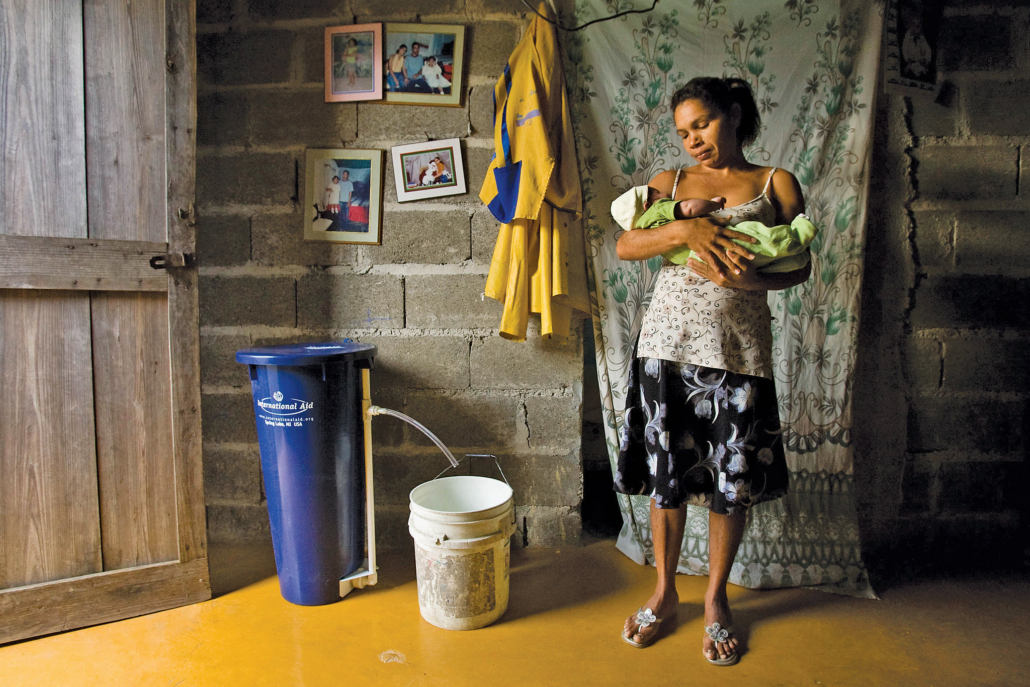
 Venezuela faces a time of profound instability. Not only due to piling political unrest but further exacerbated by changing climates and insufficient funding reach. Maternal and perinatal conditions claim approximately 8,000 lives each year and the World Health Organization (WHO) has determined that hypertensive disorders account for 20% of those maternal deaths.
This alarming reality demands immediate intervention. Organizations including UNICEF are already responding, deploying strategies to expand healthcare access and strengthen training in obstetric neonatal and pediatric emergency care. Here is more information about maternal hypertensive disorders in Venezuela and how they are being addressed.
The Government
To understand Venezuela’s healthcare emergency, one must first understand its economic catastrophe. For decades, oil revenues financed nearly two-thirds of the government budget. In 2014, when oil prices collapsed and the central bank responded by printing more money, the country entered one of the worst hyperinflation periods in modern history. Ordinary Venezuelans have felt these impacts the most as political turmoil has been further exacerbated by exchange rate volatility and the recent capture of Nicolas Maduro.
Due to this, more than one quarter of the population need humanitarian assistance. Significantly, the most severe impacts befall the health systems from this economic collapse. Domestic general government health expenditure under Maduro was merely 3.6%, with out-of-pocket spending accounting up to 30% of health expenditure. For Venezuelans where the official minimum wages remain below $2/month, this basic healthcare need remains inaccessible. Furthermore, known as the ‘brain drain’ roughly half of the country’s doctors have emigrated, leaving hospitals understaffed and unable to perform basic tasks such as routine obstetric check-ups. For pregnant women and children, especially in indigenous communities, this has had detrimental effects.
Hypertensive Disorders
Hypertensive disorders affect 1.4 billion people globally. However, prevalence is skewed toward low- and middle- income countries. Such disorders are huge risk factors for developing heart disease, stroke and, in pregnant individuals, pre-eclampsia. These disorders are frequently and easily missed as key symptoms presenting as vision loss and headaches. Tests for such disorders require equipment which is inaccessible in rural areas of Venezuela and when untreated, leads to seizures and hemorrhage.
In Venezuela, hypertensive disorders cause roughly 20% of maternal deaths with other confounding causes being maternal hemorrhage. This had evident effects as shown by the growing ratios of maternal mortality. This impacts 226.7 individuals per 100,000 live births and worsening by +25% points since 2019. Simple low-cost training to help healthcare workers identify early warning signs of hypertensive diseases combined with targeted education campaigns for pregnant women, could meaningfully improve outcomes and empower women to advocate for their own care.
Who Is Helping?
Despite the fact that many organizations have received just 17% of the >$600 million that Venezuela’s humanitarian response plan requires, many organizations, governmental and non-governmental alike are implementing strategies to ameliorate the maternal health crisis. These strategies are offering hope for the future. Many individuals must walk miles to reach a suitable healthcare facilities, however pregnant women with hypertensive disorders cannot afford this time.
At Project HOPE, local health partners are receiving training and increasing accessibility to maternal healthcare at the Venezuela-Columbia border. Alongside initiatives provided by the International Medical Corps, hope is in sight for these vulnerable Venezuelan’s. Since its implementation, the International Medical Corps (IMC) has provided more than $1.8 million in equipment, medical supplies and facilities.
Medical units mobilized by this organization aid in improving maternal outcomes for those in remote areas, specifically indigenous communities. Furthermore, continuous efforts from UNICEF demonstrate significant advancements for access to healthcare with 129,871 children and 31,273 women accessing their implemented facilities in the first half of 2025. Increased training in partnership with the ministry of health resulted in 29,788 safe deliveries, 3,289 of which were from indigenous communities. If efforts like this continue to prevail, much needed relief may be provided to the mothers to be of Venezuela when aiming to reduce mortality due to hypertensive disorders.
Conclusion
While maternal hypertensive disorders are manageable themselves when early detection and low-cost diagnostic equipment is available, this is not available in many areas of Venezuela. This cannot be divorced from the broader poverty issue which lies within this country. Thus, Venezuela’s maternal health crisis is a story about compounding vulnerabilities. Economic collapse has gutted public health funding and hyperinflation pushing basic care out of reach. Sustained funding, continued education of local health workers and community level education for pregnant women offers credible paths forward to address maternal hypertensive disorders in Venezuela.
– Juliette Dall’Aglio
Juliette is based in London, UK and focuses on Technology and Global Health for The Borgen Project.
Photo: Flickr
 A
A
 Across the globe, women remain at a significant